
Malmesbury Abbey
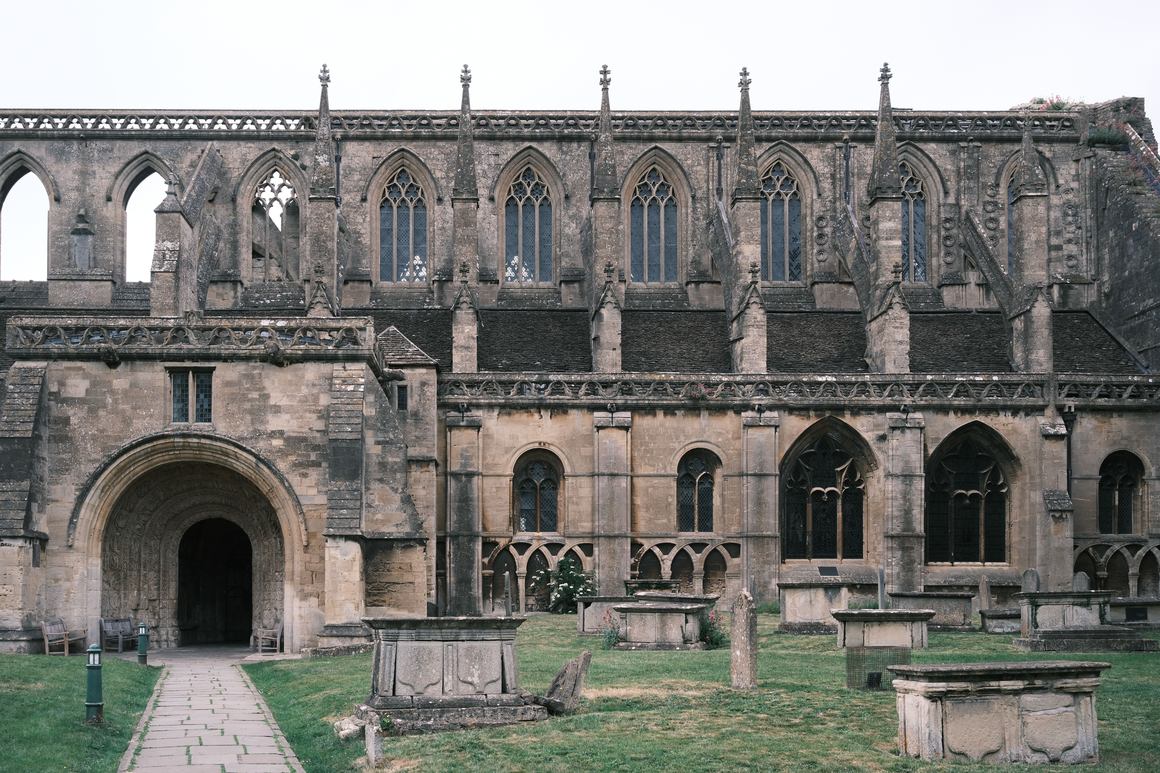
Malmesbury Abbey is half a building, and the half that survives is magnificent. The great Norman church on its Wiltshire hilltop once had a spire said to be taller than Salisbury’s; it fell, the west tower fell after it, and today the parish worships in the nave between two sets of ruins. But the south porch keeps some of the finest Romanesque sculpture in England, and the abbey’s story takes in England’s first king, its first great historian since Bede and a monk who tried to fly.
Aldhelm, Athelstan and the Normans
A monastery was founded here in the seventh century by an Irish teacher, Maildubh, whose name the town still carries; around 676 his pupil Aldhelm, scholar, poet and later the first Bishop of Sherborne, became its abbot. In 939 King Athelstan, who had united the English kingdoms, was buried in the abbey. In the early eleventh century the monk Eilmer made his famous attempt to fly, and in the twelfth century William of Malmesbury wrote his histories of England here.
The present church was built in the twelfth century and largely complete by about 1180. A spire was later raised over the crossing; it collapsed around 1500, destroying much of the east end, and the west tower fell in the sixteenth century. At the Dissolution in 1539 the wealthy clothier William Stumpe bought the abbey, set up looms in its buildings, and gave the church to the town, which has used it as the parish church since 1541.
The visitor's cheat sheet
| Where | Gloucester Street, Malmesbury, Wiltshire, at the top of the hilltop town |
|---|---|
| Getting there | No station in Malmesbury (nearest Kemble and Chippenham); Long Stay car park, or town-centre short stay (2 hours Mon–Sat, free on Sundays) |
| Opening hours | Mon–Sat 9.30am–4pm; Sun 12.30pm–3.30pm. Closed after Christmas and on New Year’s Day, and occasionally for services or events |
| Admission | Free; a gift of £5–£10 is suggested |
| How long | About 45 minutes |
| Best time | A weekday, when the café is open |
| Dress code | No formal code; respectful dress as in any working church |
| Tours | No regular tours; ask the abbey office about groups |
Hours and admission checked against the official site in October 2026. They change; the official site is always the last word.
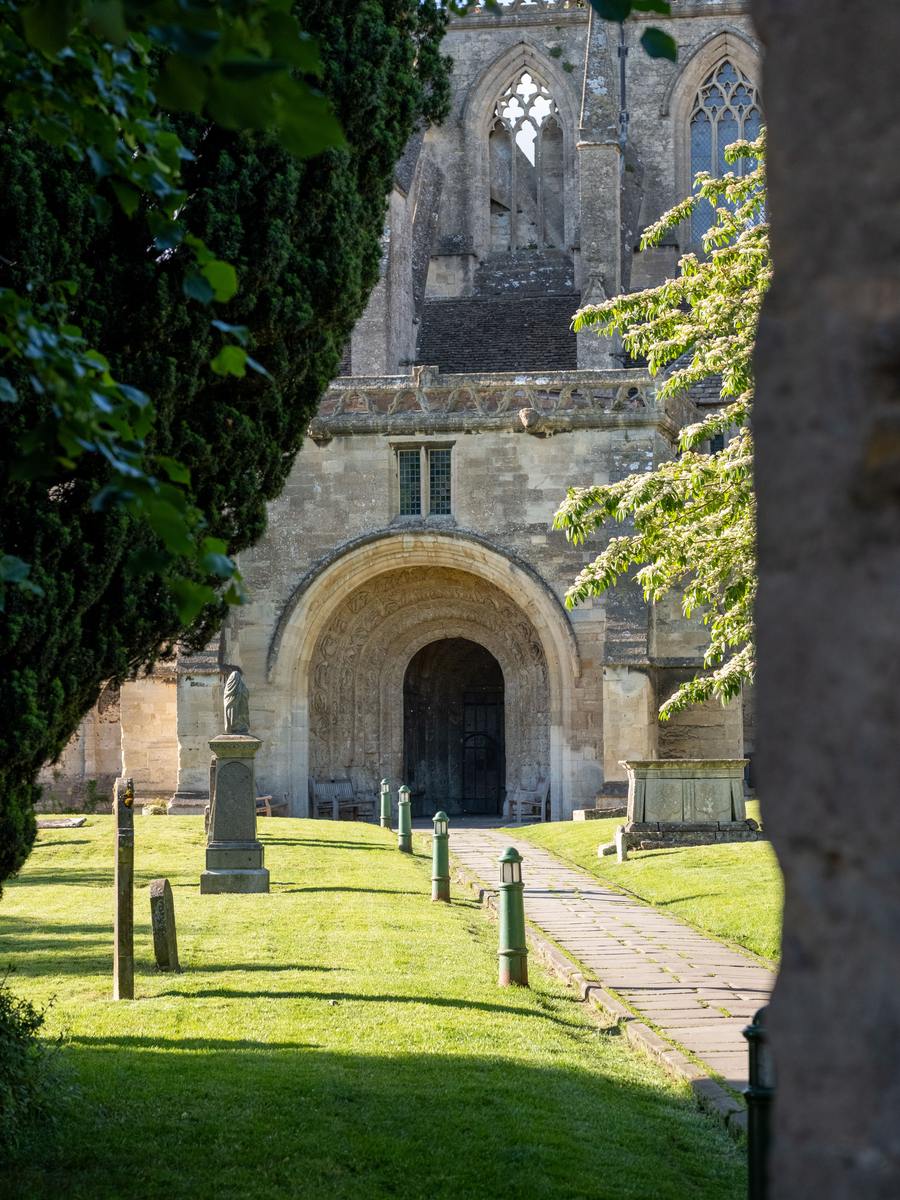
Killed by a tiger. In the churchyard is the gravestone of Hannah Twynnoy, a barmaid at the White Lion inn who was killed in 1703 by a tiger from a travelling menagerie — believed to be the first person in England killed by a tiger.
What to see, in the order you meet it
The south porch
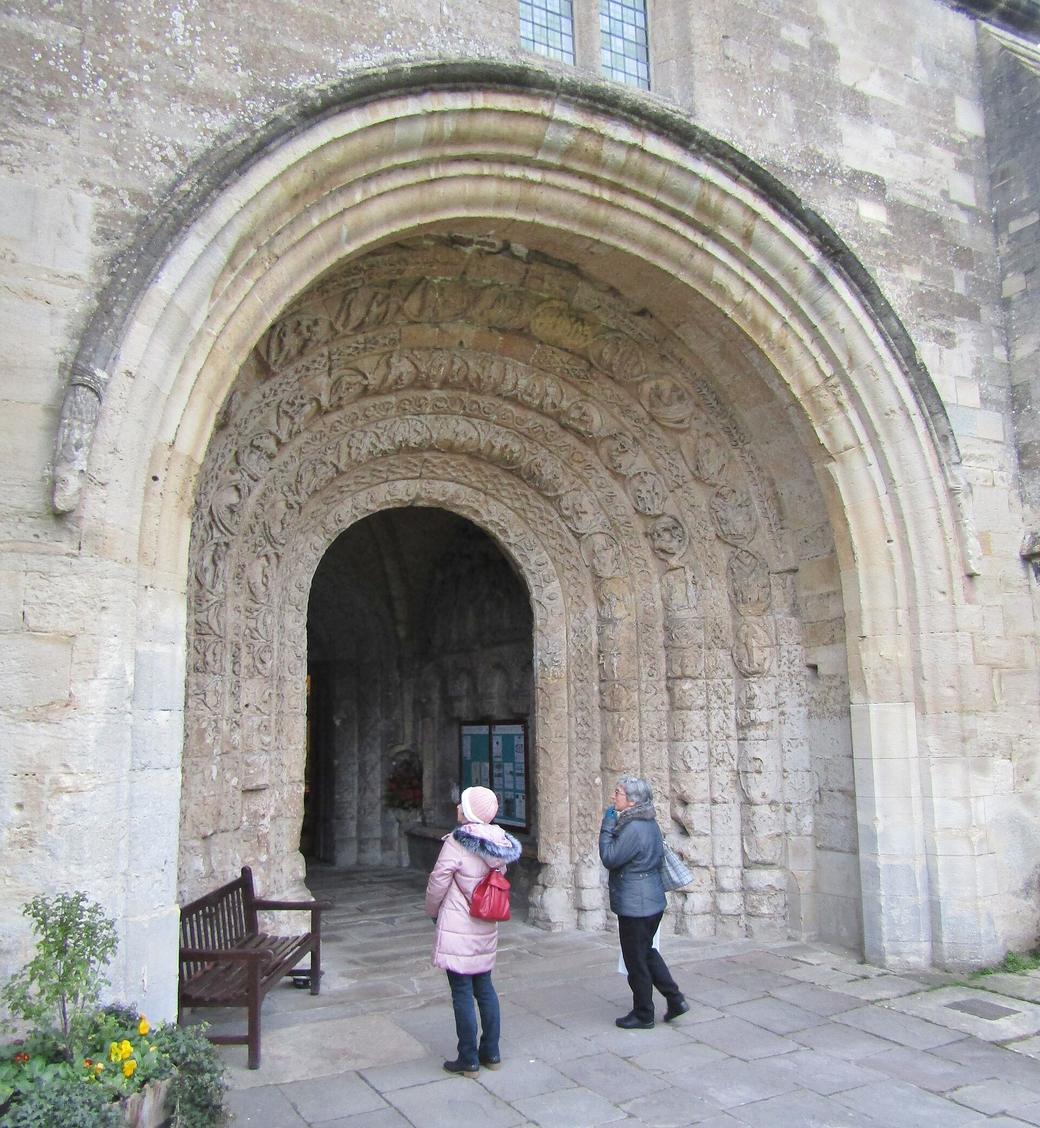
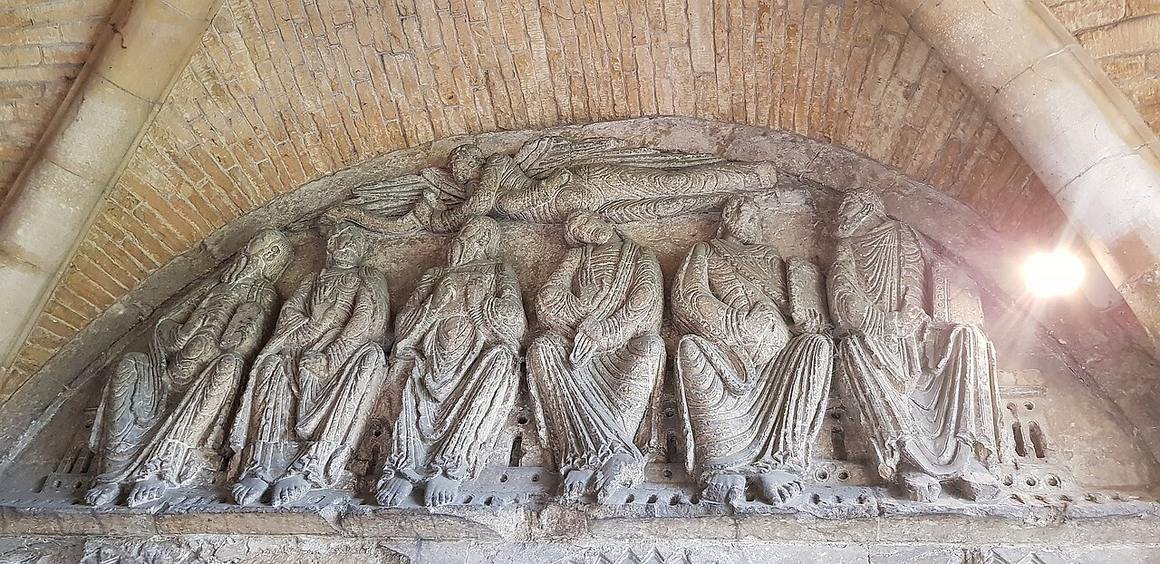
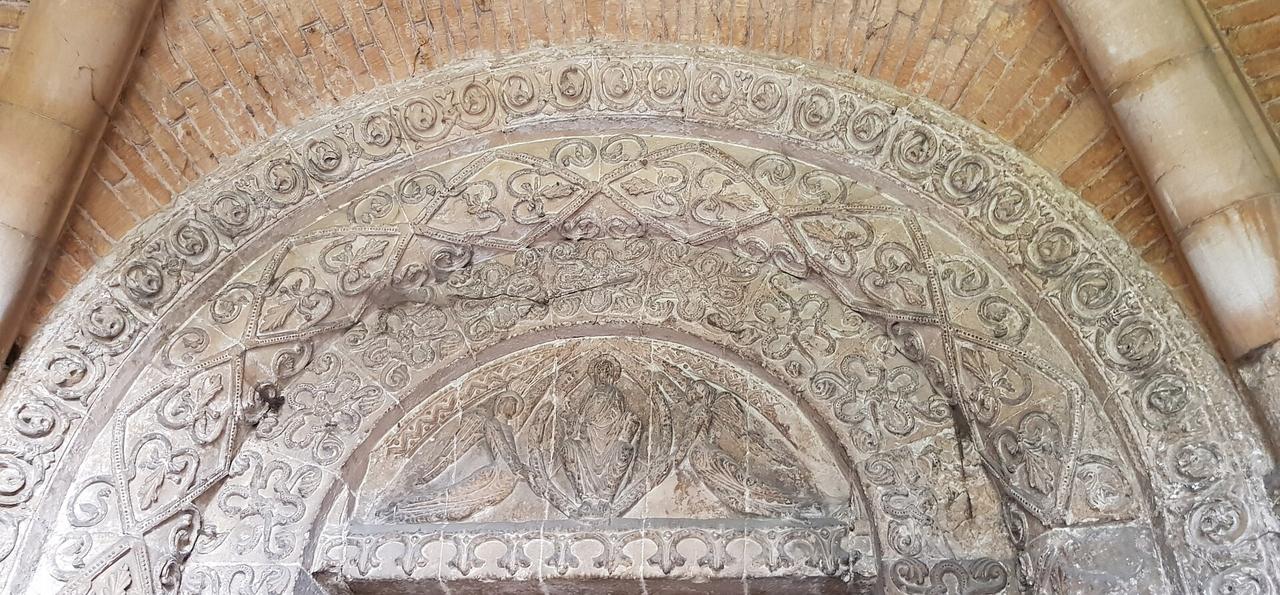
You enter through the south porch, the abbey’s great treasure. The outer arch is carved in bands with scenes from the Bible, from the Creation to the life of Christ. Inside the porch, each side wall has six seated apostles beneath a flying angel, and over the inner door Christ sits in majesty, held up by angels. The carvings date from the later twelfth century.
The nave
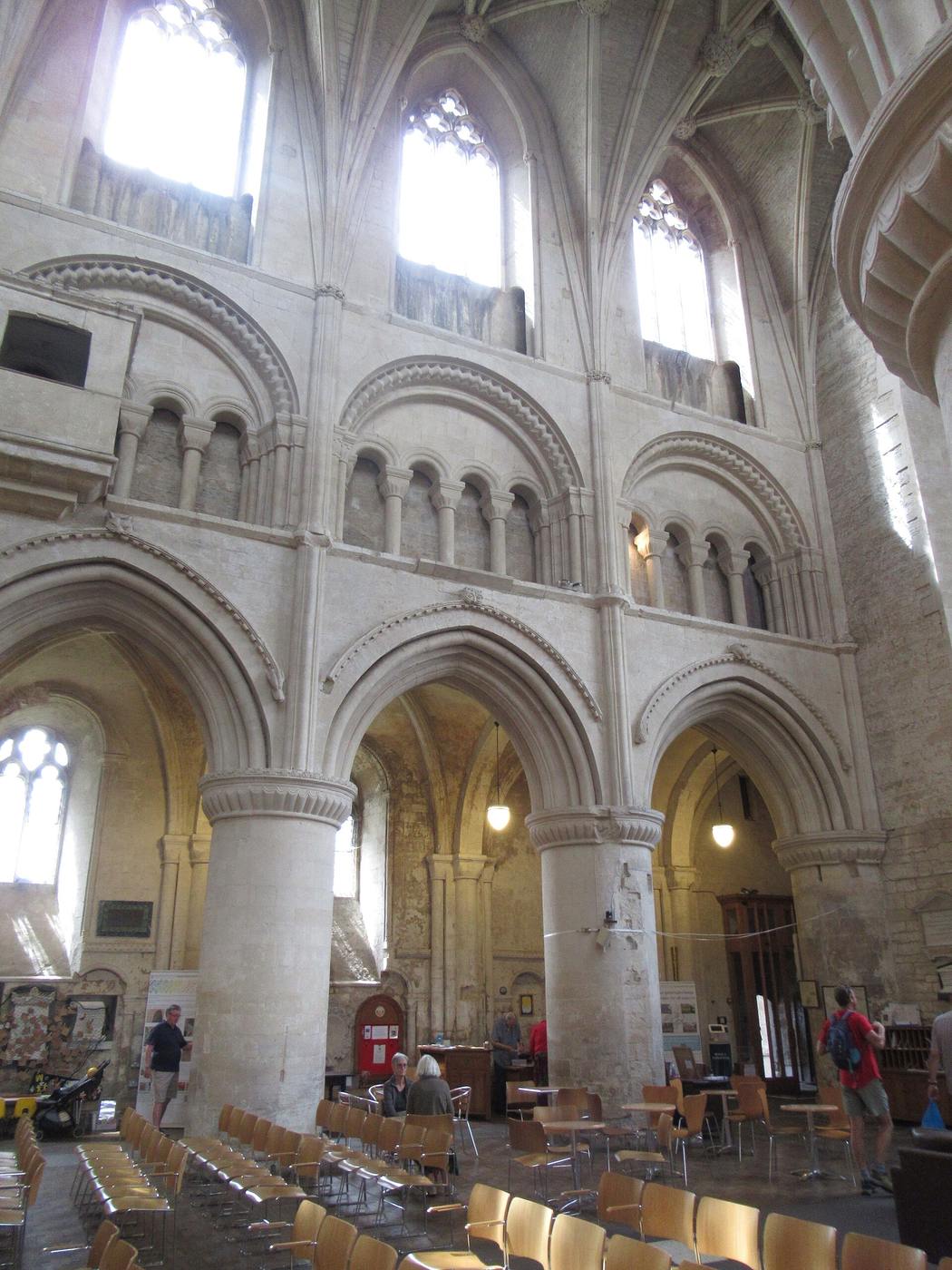
Inside, the nave has massive round Norman piers carrying early pointed arches, and above them a later vault. High on the south side is a small stone watching loft that looks down into the nave.
Athelstan's tomb
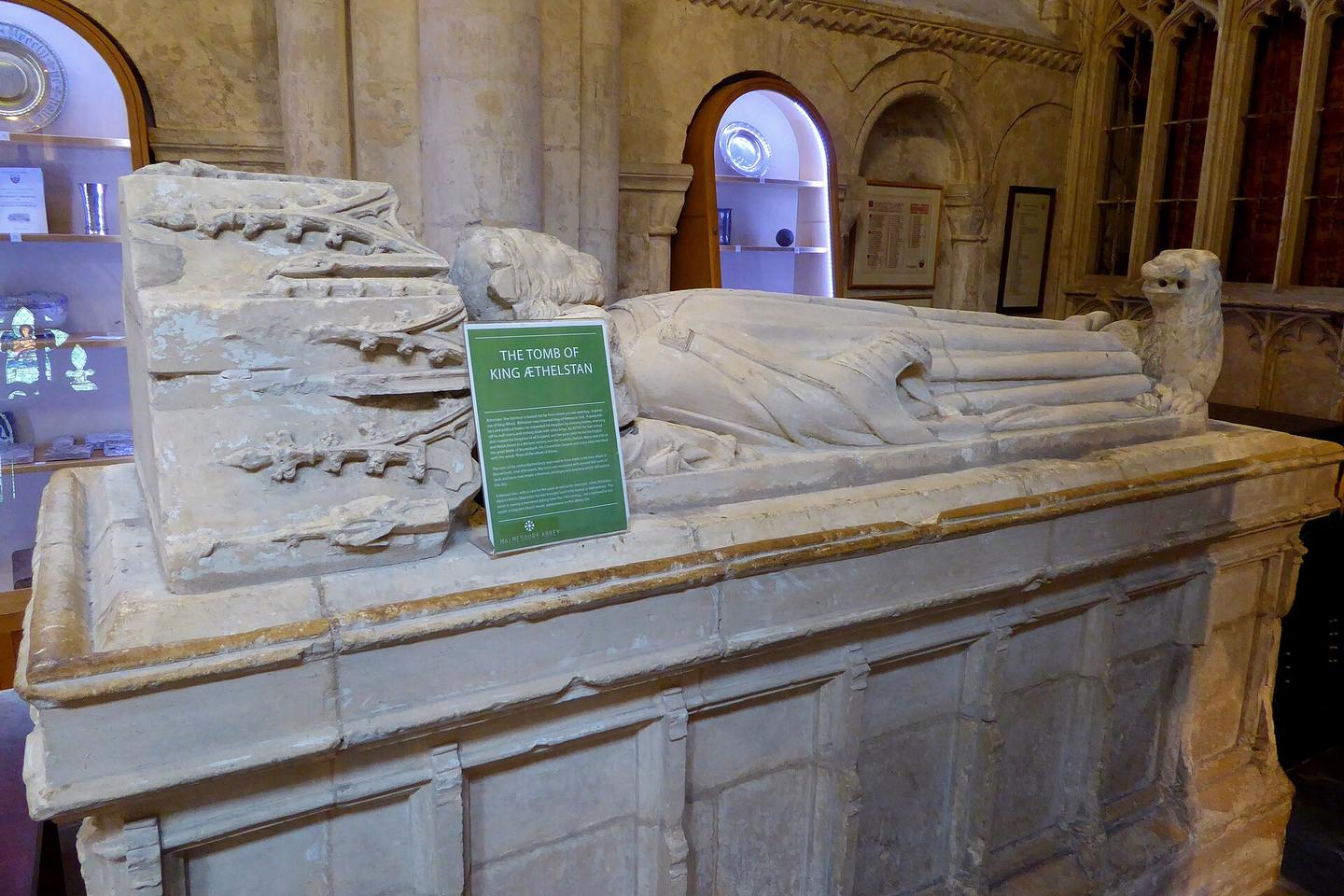
In the north aisle is the tomb of King Athelstan, with a crowned effigy. It was made in the fifteenth century, long after his death, and his remains are not in it.
The ruins
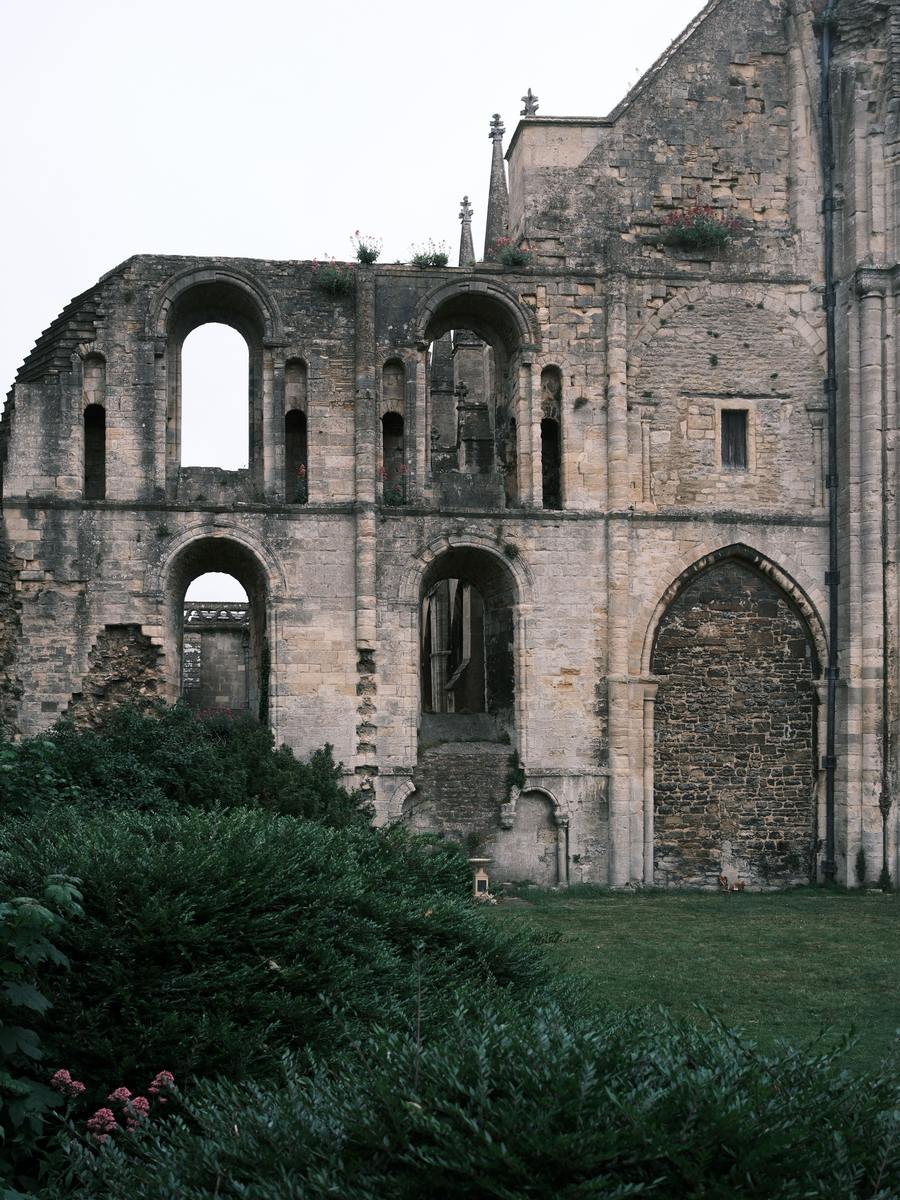
Walk round the outside to see the roofless west end, left open when the west tower fell, and the broken east end where the crossing and spire once stood.
Tickets and tours
Free to visit
Admission is free; the abbey suggests a gift of £5–£10 towards its work. There are no regular public tours. The café serves coffee, light lunches and afternoon tea from Monday to Saturday, 9.30am–3.30pm, and the bookshop keeps the same hours.
The hotel link goes to Booking.com. This site earns nothing from it at present — it is here because it is the quickest way to check what is actually available.
Don't miss
- The south porch Some of the finest Romanesque carving in England.
- The apostles Six on each side of the porch.
- Athelstan's tomb The first king of England, remembered.
- The ruins The broken ends of a much bigger church.
- Hannah Twynnoy The gravestone of the woman killed by a tiger.
- Eilmer The monk who flew from the tower.
Insider tips
Mind the steps. The quickest way up from the Long Stay car park is the 63 Abbey Steps; if you would rather avoid them, the abbey suggests the town-centre short-stay car park. Malmesbury claims to be England’s oldest borough, and the Athelstan Museum in the town tells its story.
Malmesbury is a small market town on a hill above the Avon, and makes an easy stop between Bath and the Cotswolds.
Common questions
Is Malmesbury Abbey free to visit?
Yes. Admission is free, and the abbey asks visitors to consider giving £5–£10 towards its work.
Is King Athelstan buried at Malmesbury?
He was. Athelstan, often called the first king of England, died in 939 and was buried in the abbey. The tomb with his effigy in the north aisle dates from the fifteenth century and is empty; the location of his remains is not known.
Who was the flying monk?
Eilmer, a monk of Malmesbury, who early in the eleventh century strapped wings to his arms and feet and jumped from a tower. He is said to have flown more than 200 yards before crashing and breaking both legs.
Why is half the abbey in ruins?
Its great spire collapsed around 1500, taking much of the east end with it, and the west tower fell in the sixteenth century. At the Dissolution the clothier William Stumpe bought the abbey and gave the church to the town; only the surviving nave was kept in use.
How do you get to Malmesbury Abbey?
Malmesbury has no station; the nearest are Kemble and Chippenham, a short drive or bus ride away. Drivers can use the Long Stay car park or the town-centre short-stay car park.
Where to stay and eat nearby
The High Street and the market cross have pubs, cafés and old coaching inns; the Old Bell, next to the abbey, is one of the oldest hotels in England.
More English churches
- Bath Abbey — the abbey church of Bath, about an hour away
- Sherborne Abbey — where Aldhelm became bishop
- Tewkesbury Abbey — another Norman abbey saved by its town
See all the cathedrals and churches worth visiting in England →