
Pershore Abbey
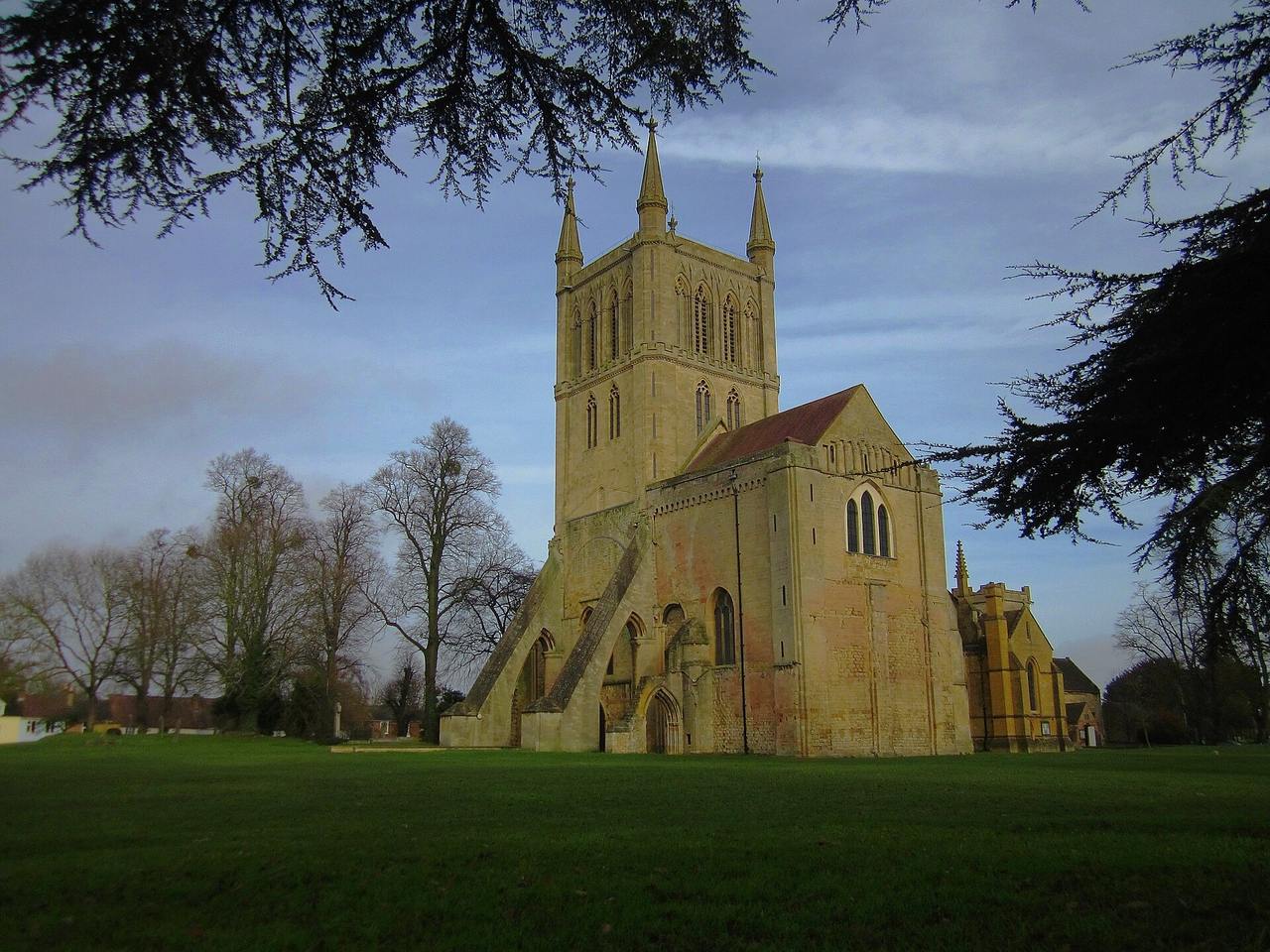
Pershore Abbey is the eastern half of a great Benedictine church, standing alone in a park in a Worcestershire market town. The nave was pulled down after the Dissolution, but what the townspeople saved is outstanding: a soaring thirteenth-century choir under one of the earliest lierne vaults in England, and a tower whose bellringers stand on a floor hung high in its lantern.
A monastery for a thousand years
A monastery was founded at Pershore in the late seventh century, and it was refounded as a Benedictine abbey in the tenth, around 972, under King Edgar. From the twelfth century it claimed the relics of St Eadburh, and the church is still the Abbey Church of the Holy Cross with St Edburga. The great Norman church was begun around 1100; the choir was rebuilt in the thirteenth century after a fire, and the tower was added in the fourteenth.
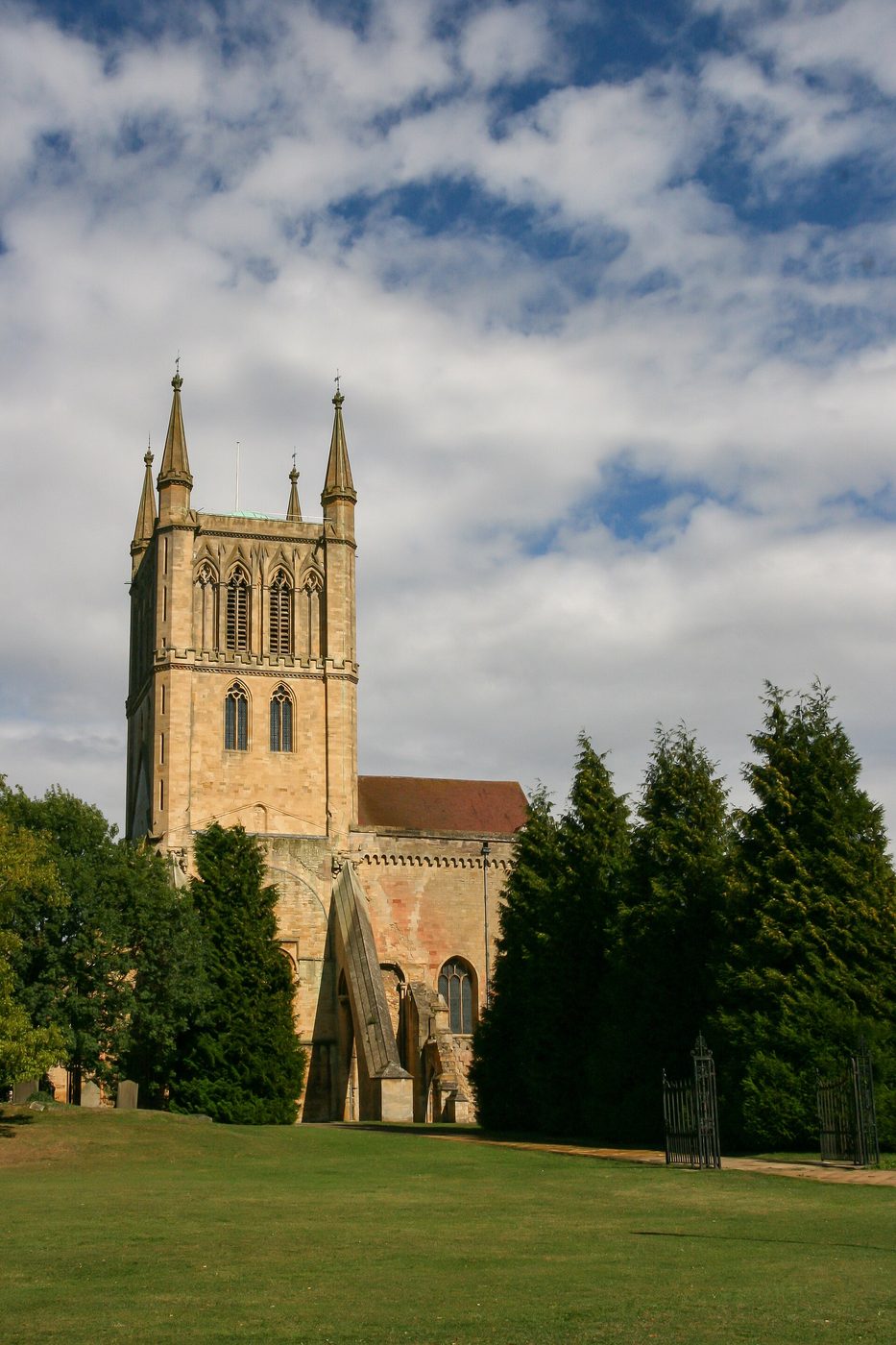
The monastery was dissolved in 1539–40. Much of the church, including the Norman nave, was demolished, but the people of Pershore kept the tower, the choir and the south transept as their parish church. The north transept collapsed later. George Gilbert Scott restored the building in the 1860s.
The visitor's cheat sheet
| Where | Church Row, Pershore, Worcestershire, WR10 1DT, in a park near the town centre |
|---|---|
| Getting there | Pershore station is outside the town, about a mile and a half away; buses from Worcester and Evesham |
| Opening hours | Daily 8am–5.30pm; occasional funerals and memorial services on weekdays |
| Admission | Free; donations welcome. History tours £4, tower tours £5 |
| How long | 30–45 minutes; longer with a tour |
| Best time | Any day; book a tower tour ahead |
| Dress code | No formal code; respectful dress as in any working church |
| Tours | History tours (30–40 minutes) £4, children 7–14 £2; tower tours £5, children 7–15 £2, no under-7s; book through the Abbey Office |
Hours and admission checked against the official site in October 2026. They change; the official site is always the last word.
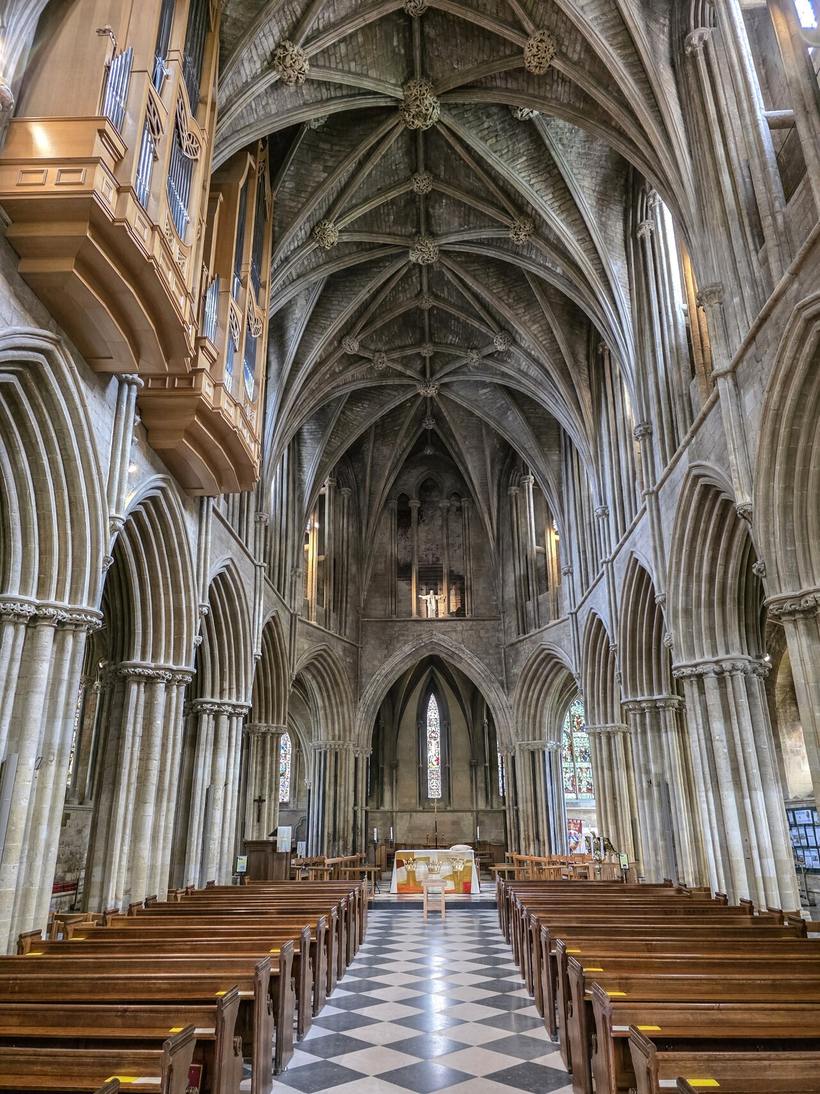
A church turned round. What is now the nave was the monks’ choir. The congregation sits where the monks sang, and the great west arch of the crossing, now blocked, once opened into the vanished Norman nave.
What to see, in the order you meet it
The choir and its vault
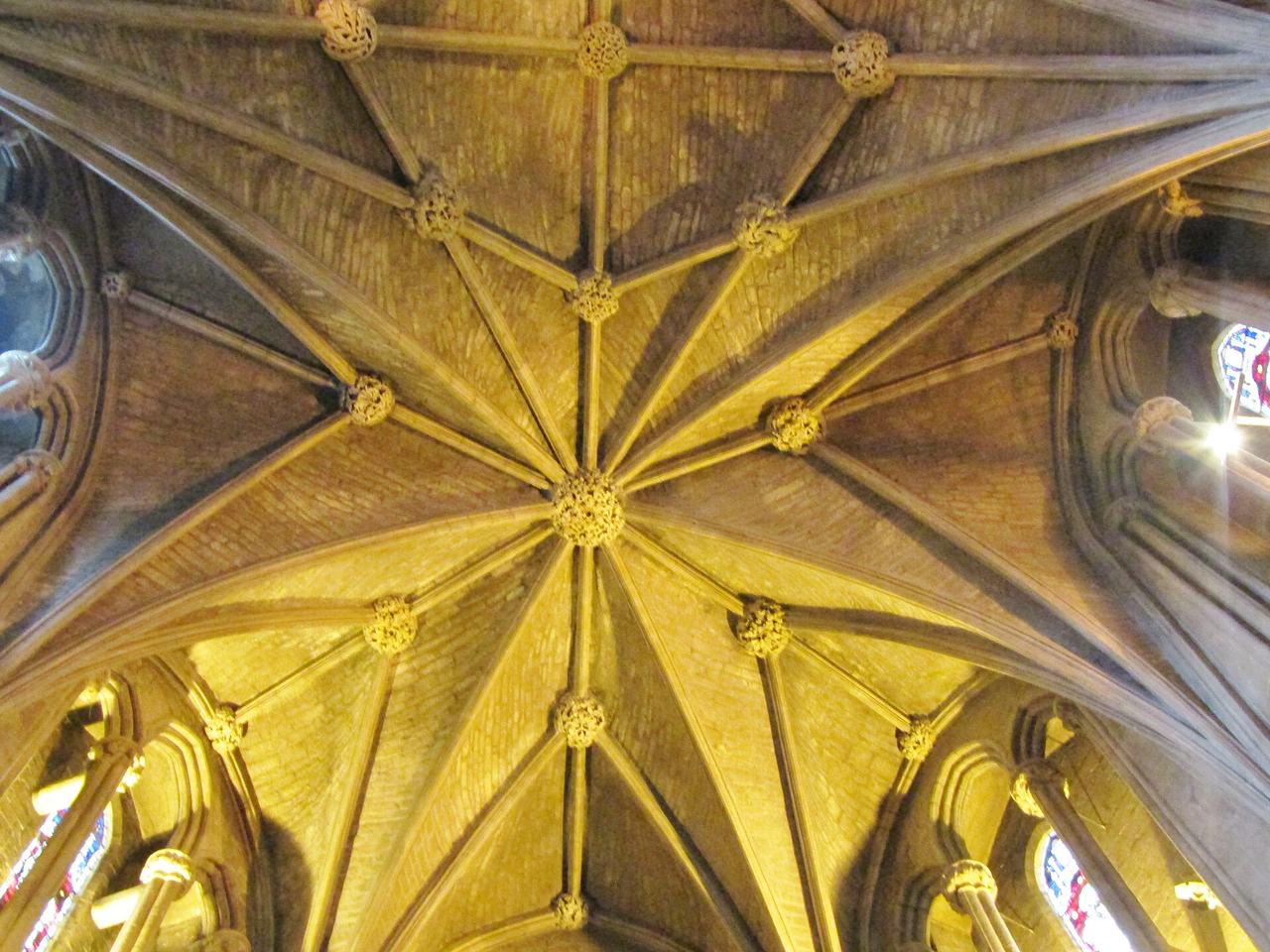
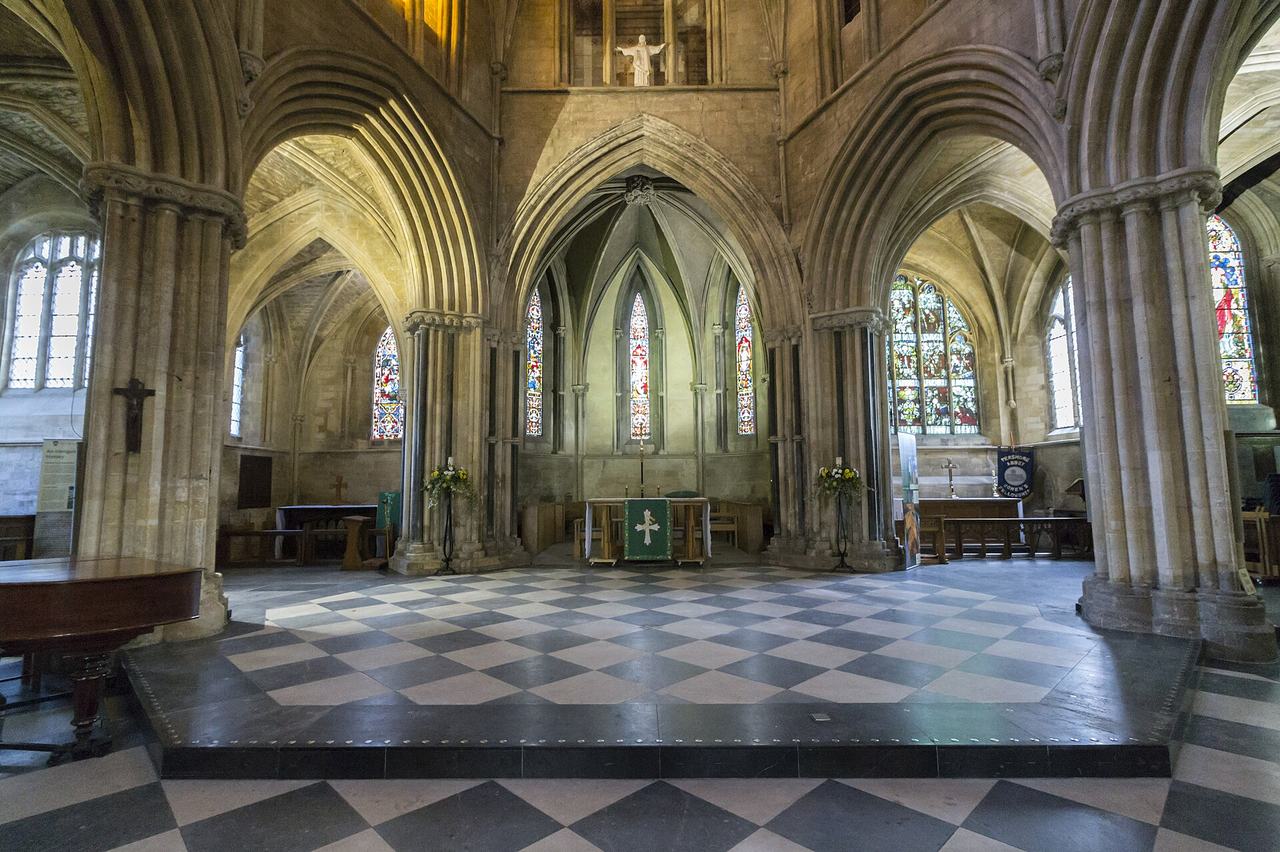
The thirteenth-century choir is the glory of Pershore: tall arcades, with the triforium and clerestory combined into a single tier, and above them a rib vault with many extra ribs, known as the “ploughshare” vault. Carved bosses mark where the ribs meet.
The tower and the ringing floor
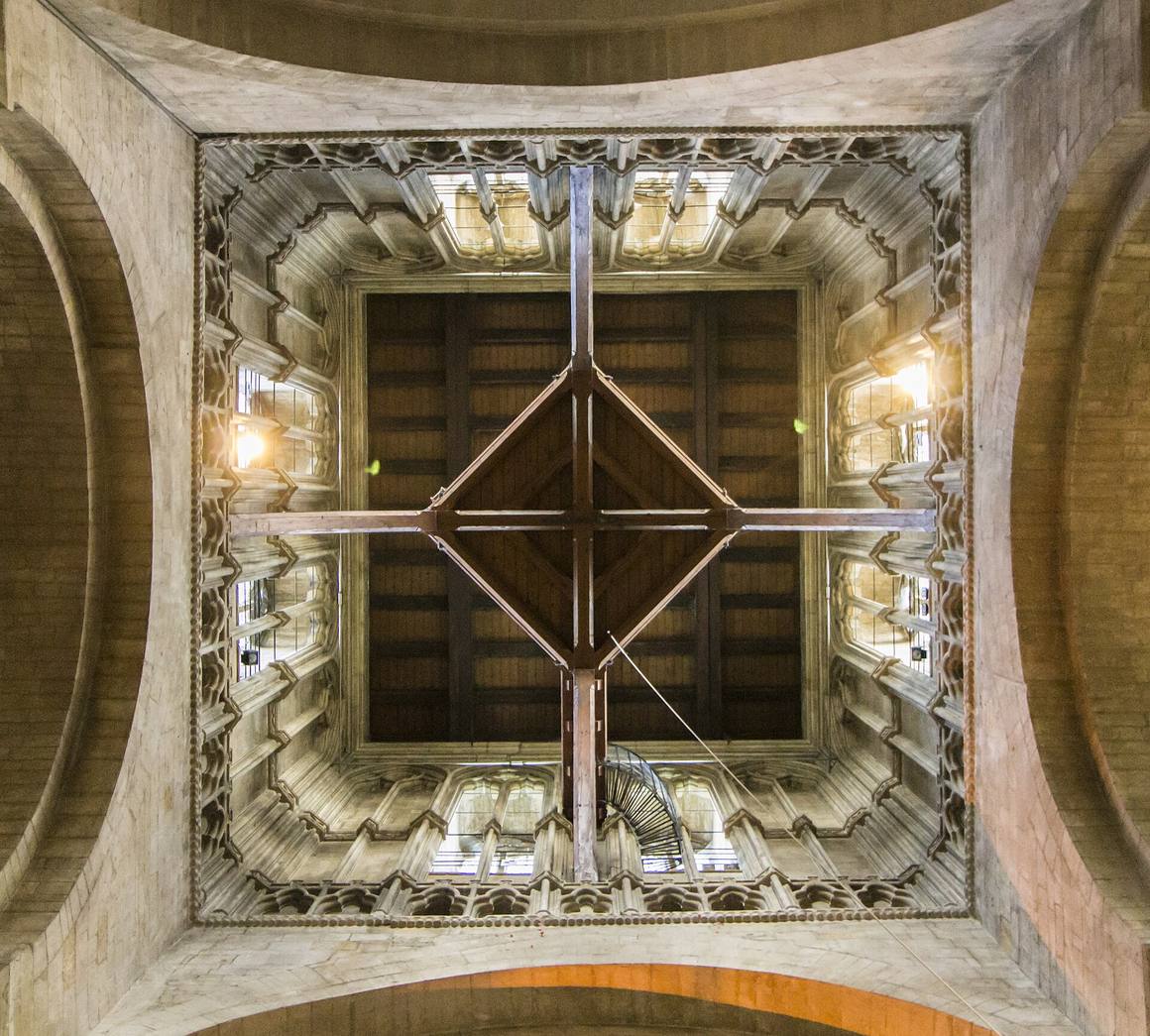
Stand under the crossing and look up. The ringing floor hangs high inside the lantern of the tower, leaving the lantern open to view from below, a design introduced during Scott’s restoration.
The south transept and the font
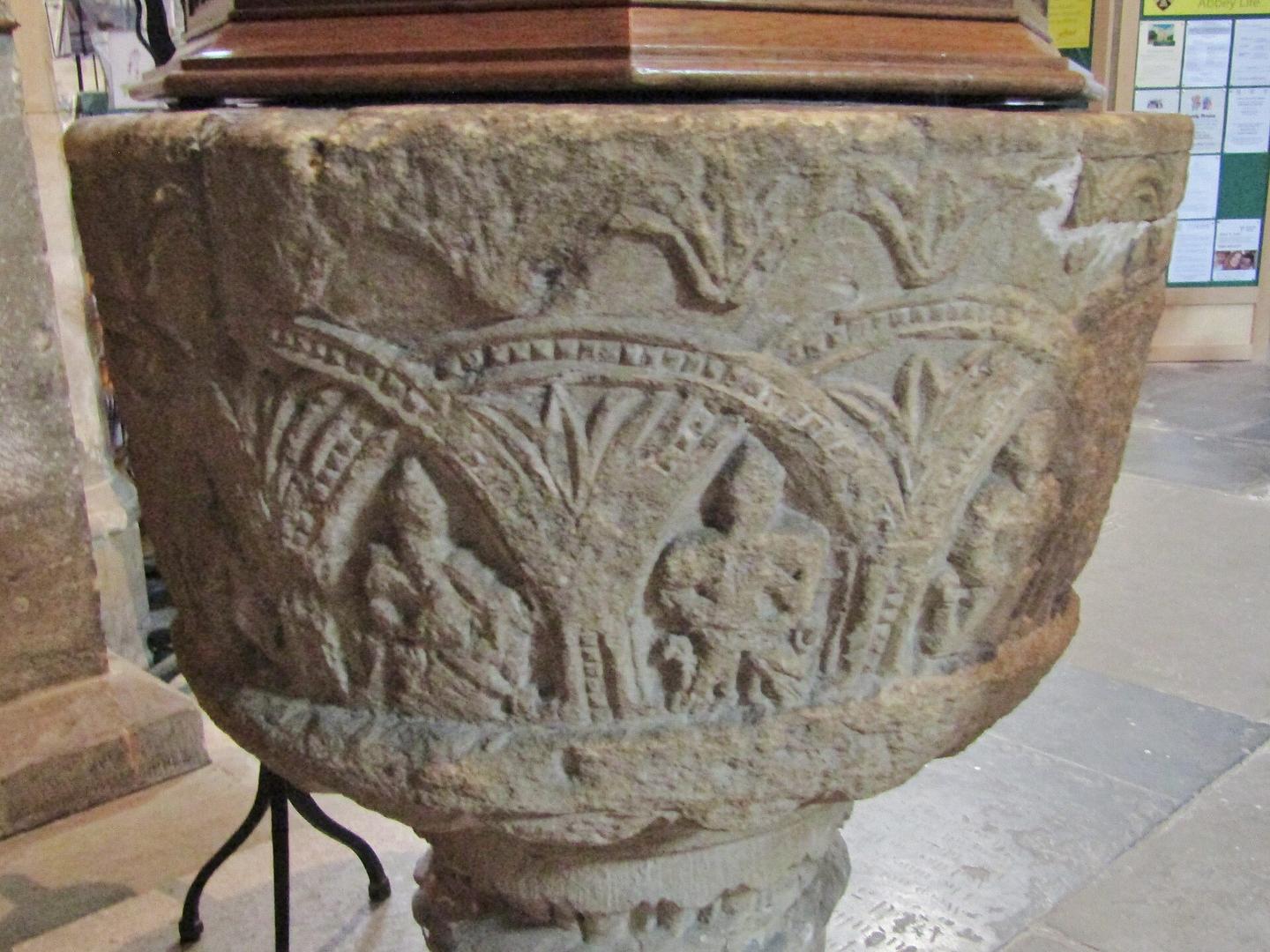
The south transept keeps its Norman walls, the oldest part of the church. The Norman font, carved with figures under round arches, was thrown out in the 1840s, used as a cattle trough and a garden ornament, and later brought back.
Tickets and tours
Free to visit; tours by booking
Entry is free. History tours of 30–40 minutes cost £4 for adults (15 and over) and £2 for children aged 7 to 14. Tower tours of 30–40 minutes cost £5 for adults (16 and over) and £2 for children aged 7 to 15, take no more than 12 people and are not open to under-7s; there are about 200 steps. Both must be booked in advance through the Abbey Office.
The hotel link goes to Booking.com. This site earns nothing from it at present — it is here because it is the quickest way to check what is actually available.
Don't miss
- The ploughshare vault One of the earliest lierne vaults in England.
- The choir Thirteenth-century Gothic at its most elegant.
- The ringing floor Hung high in the tower lantern.
- The tower Climb about 200 steps on a booked tour.
- The Norman font Carved figures under arches.
- The park Where the vanished nave once stood.
Insider tips
Walk round the outside. From the park you can trace where the Norman nave and the north transept stood. The abbey is open from 8am, so it fits easily into a day with Worcester, Evesham or Tewkesbury, and dogs are welcome.
Pershore is a Georgian market town on the River Avon, known for its plums; the Vale of Evesham and the Cotswolds are close by.
Common questions
Is Pershore Abbey free to visit?
Yes. Entry is free and donations towards the building are welcome. Guided history tours and tower tours have a small charge and must be booked in advance.
Can you climb the tower?
Yes, on booked tower tours of 30–40 minutes. They cost £5 for adults (16 and over) and £2 for children aged 7 to 15; under-7s are not admitted. There are about 200 steps, some narrow, steep and uneven, and groups are limited to 12.
Why is Pershore Abbey only part of a church?
At the Dissolution the monastery was closed and much of the church was pulled down, including the nave. The townspeople kept the tower, the monks’ choir and the south transept as their parish church; the north transept collapsed later.
What is special about the ringing floor?
The bellringers stand on a floor suspended high inside the lantern of the tower, so that visitors below can look up through the tower. It was installed during George Gilbert Scott’s restoration in the 1860s.
Are dogs allowed in Pershore Abbey?
Yes. Dogs are welcome.
Where to stay and eat nearby
Broad Street and the High Street have pubs, cafés and restaurants, a few minutes’ walk from the abbey.
More English churches
- Tewkesbury Abbey — a whole Norman abbey church, a short drive away
- Worcester Cathedral — the cathedral of the county
- Malmesbury Abbey — another half-surviving Benedictine church
See all the cathedrals and churches worth visiting in England →