
Great Malvern Priory
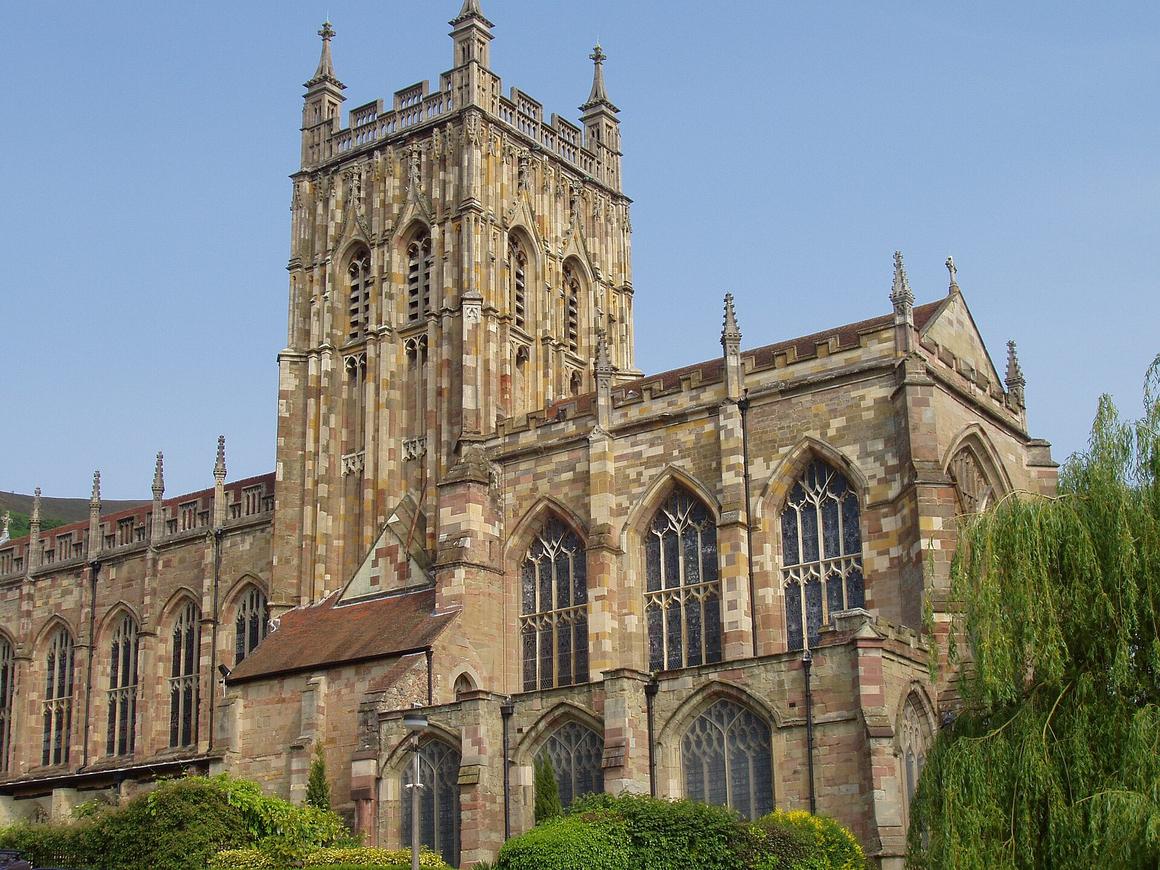
Great Malvern Priory sits on the slope of the Malvern Hills above the old spa town, a Benedictine priory church that its townspeople bought for twenty pounds. Inside, round Norman piers of the eleventh century carry a fifteenth-century church of light, glazed with one of the largest collections of medieval stained glass in England, and lined with more than a thousand medieval tiles made beside the priory.
A priory in the forest
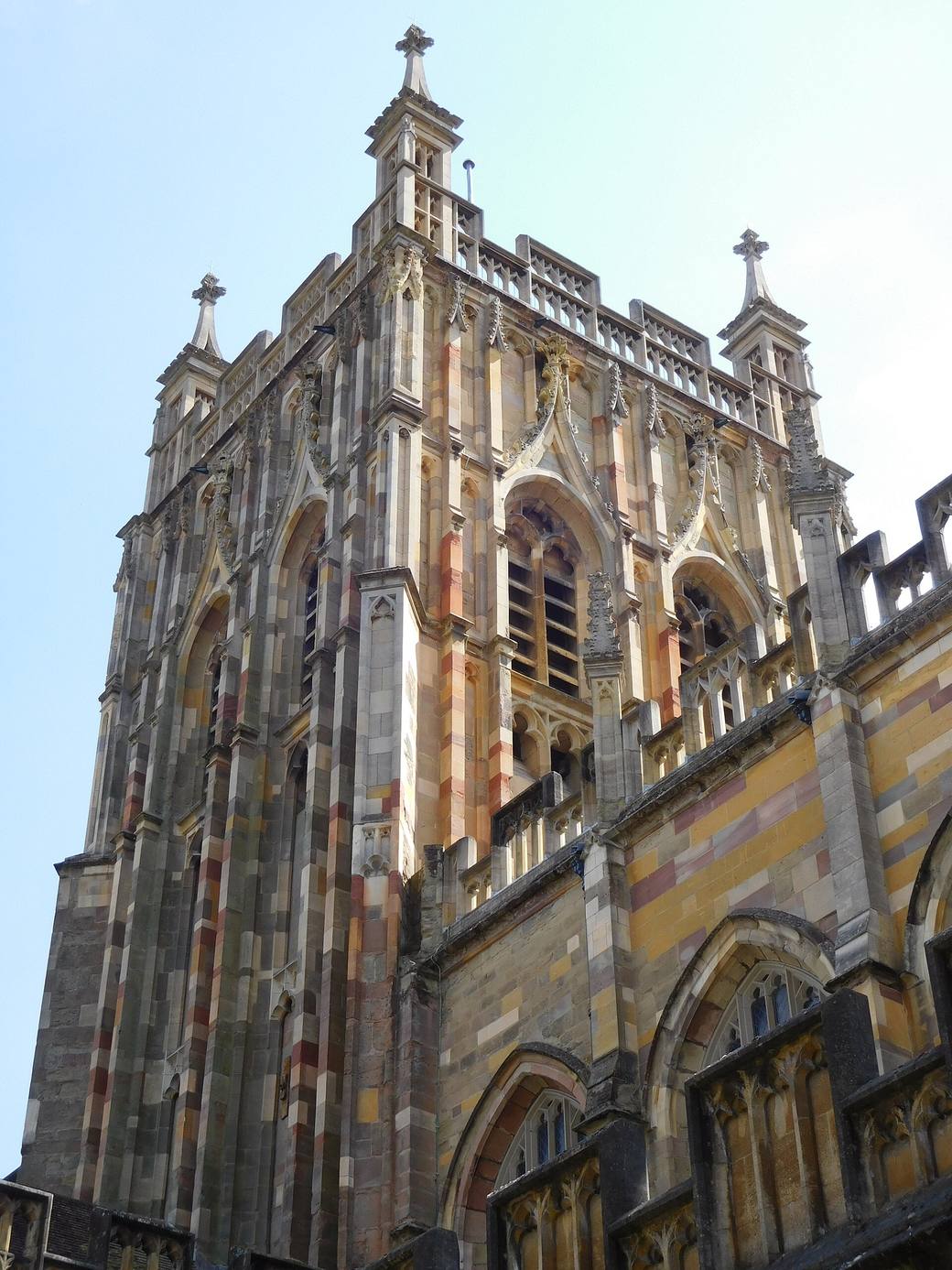
The priory was founded about 1085 by a hermit monk, Aldwyn, with the encouragement of St Wulfstan, Bishop of Worcester, in what was then the wilderness of Malvern Chase. The Norman church was built soon after, and its nave piers survive. In the fifteenth century the monks rebuilt almost everything else in the Perpendicular style, a work finished by 1502; the central tower, like Gloucester’s, was built by the same masons.
At the Dissolution in 1541 the priory was closed and most of its buildings pulled down, but the people of Malvern raised £20 to buy the church in place of their decaying parish church. Sir George Gilbert Scott restored it in 1860.
The visitor's cheat sheet
| Where | Church Street, Great Malvern, Worcestershire, WR14 2AY, in the town centre |
|---|---|
| Getting there | Great Malvern station is about 10 minutes’ walk, uphill; car parks in the town |
| Opening hours | Mon–Sat 9am–5pm (last entry 4.45pm); Sundays for services. Some weekday hours are shortened for services and events, and access may be restricted at short notice during building work |
| Admission | Free; donations welcome |
| How long | About 1 hour |
| Best time | A Saturday morning, for the free 11am tour |
| Dress code | No formal code; respectful dress as in any working church |
| Tours | Free guided tours most Saturdays at 11am (sometimes 2pm); tower tours on selected Saturdays, April to late November, hourly 11am–3pm, with a charge |
Hours and admission checked against the official site in October 2026. They change; the official site is always the last word.
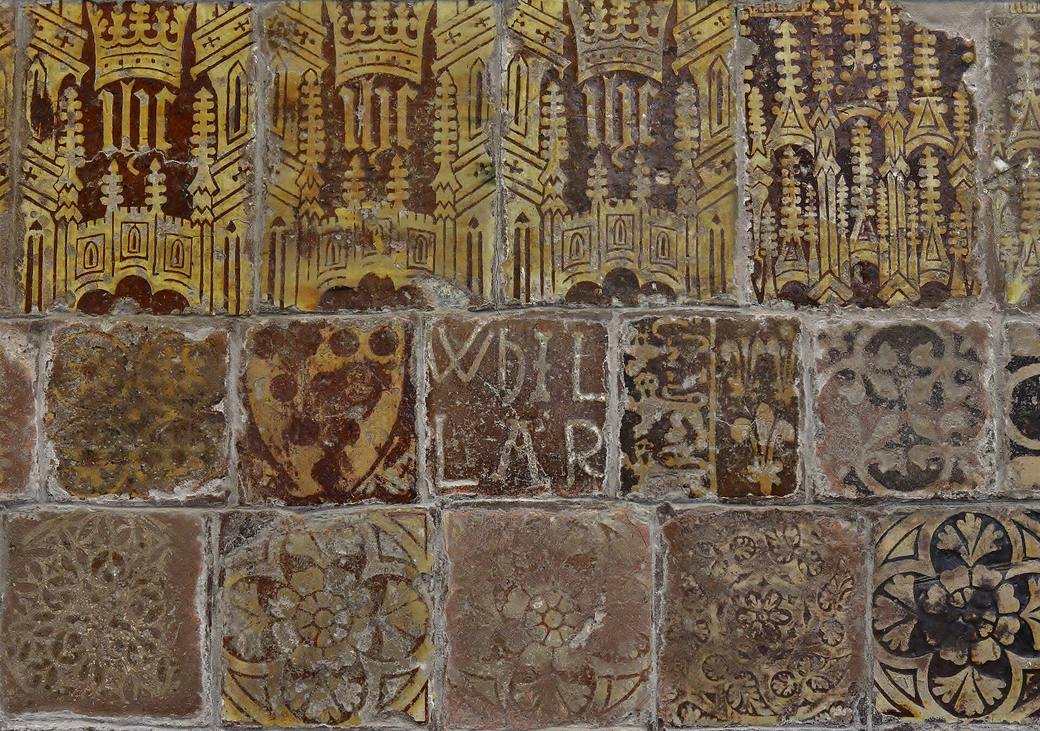
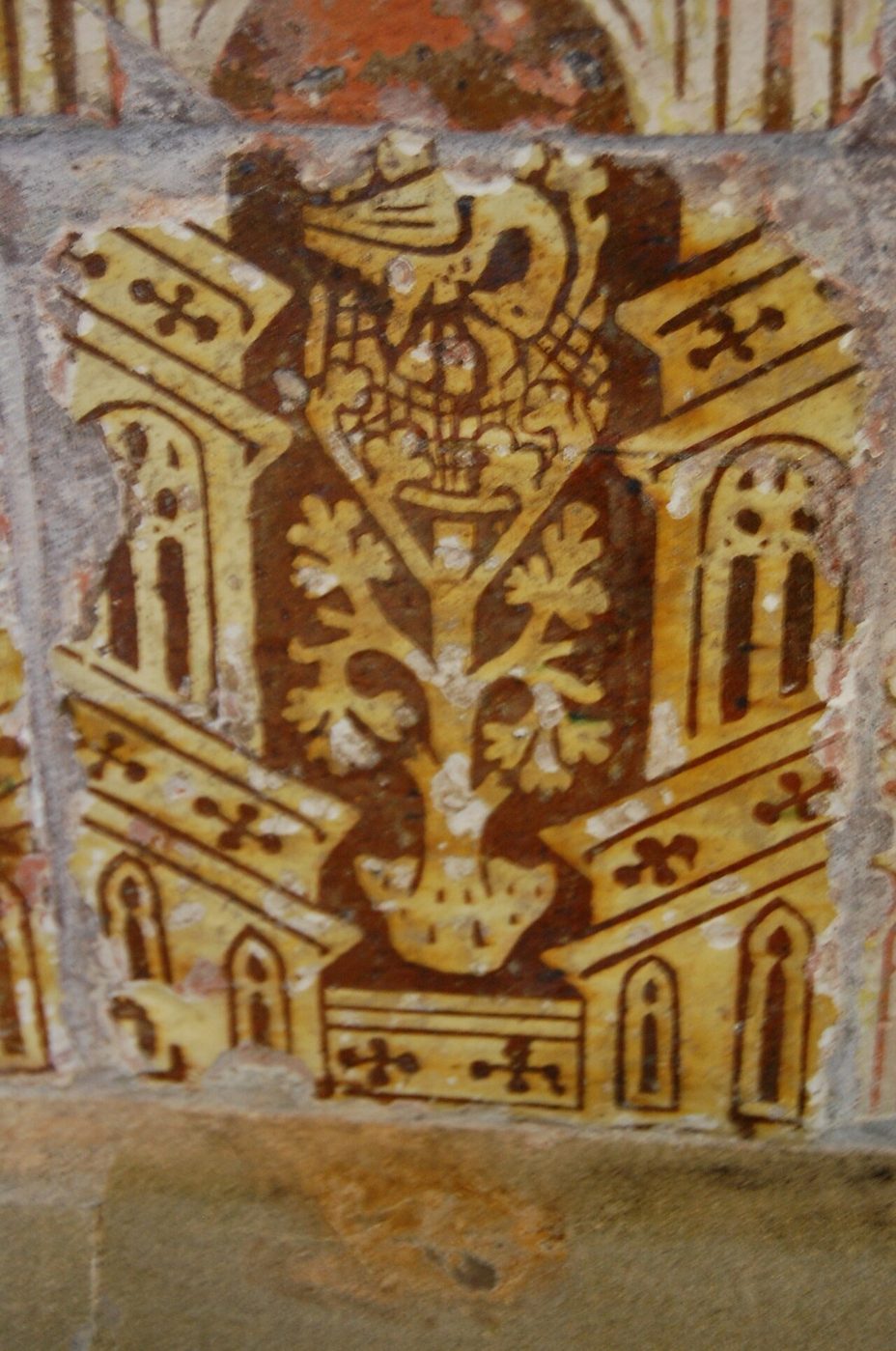
Tiles made on the spot. The Priory has over a thousand medieval wall tiles, most made between 1453 and 1458 in a kiln beside the priory. Unlike floor tiles, they were made to be fixed to the walls, and medieval wall tiles like these survive in place nowhere else in England.
What to see, in the order you meet it
The nave
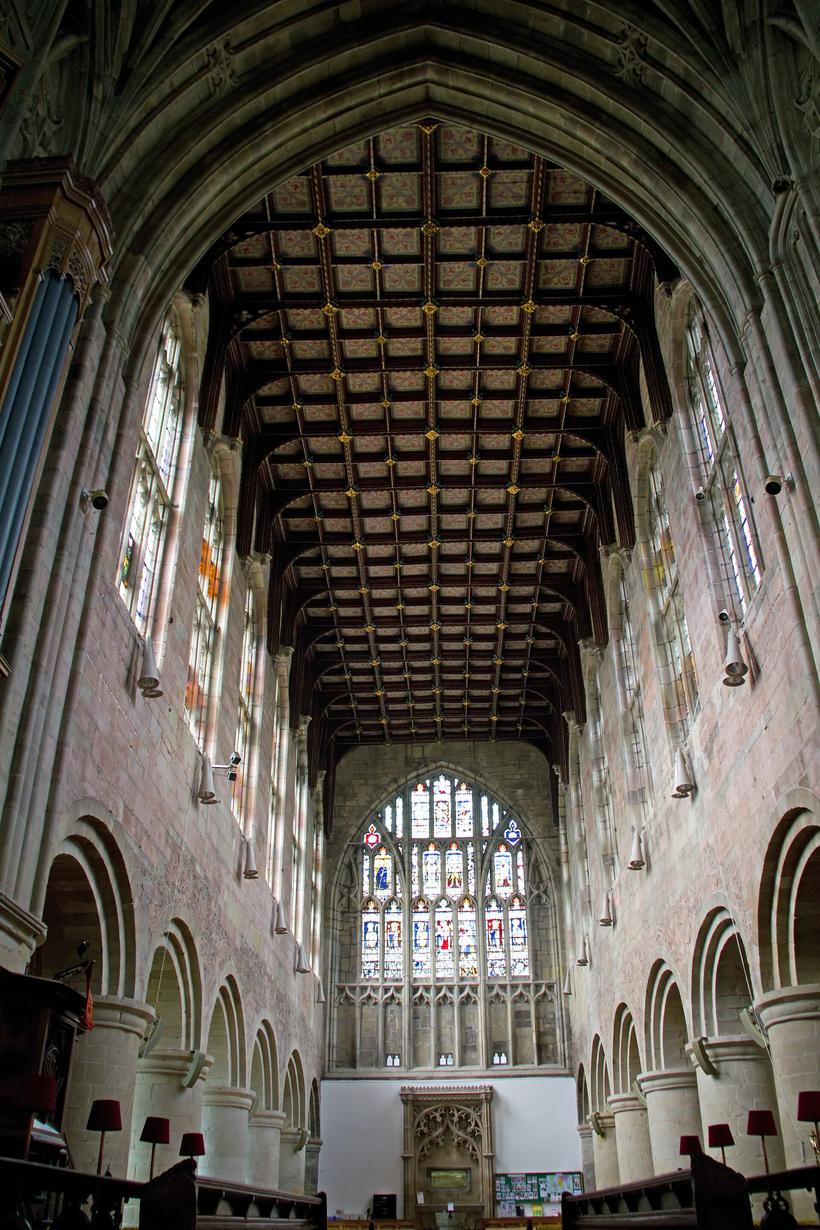
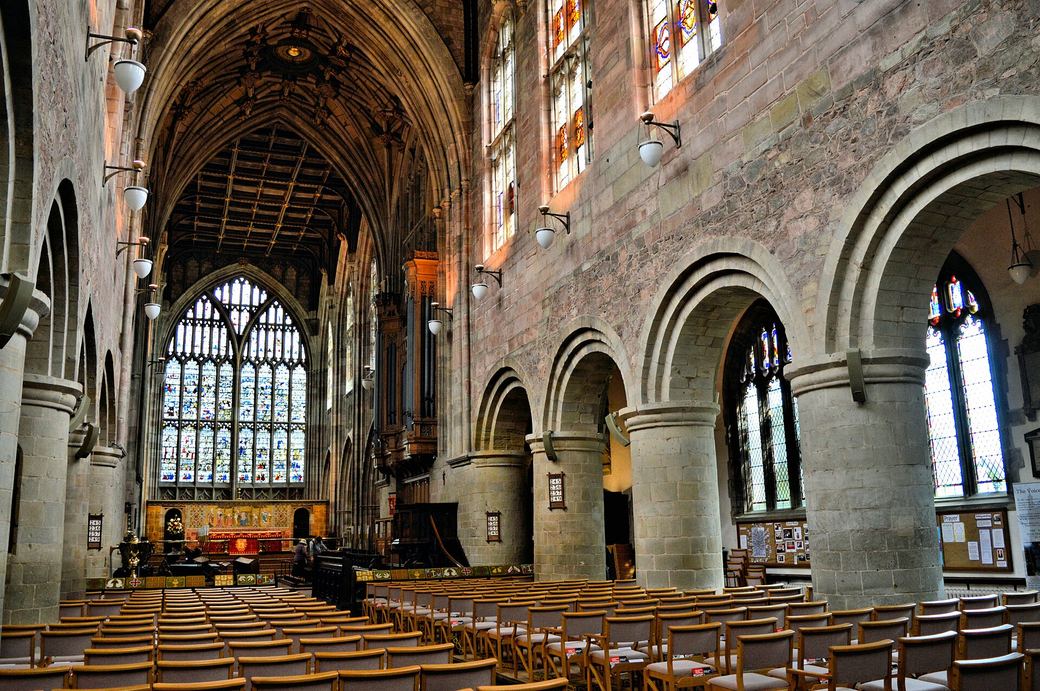
Enter by the North Porch. The nave has stout round Norman piers of the 1080s, with a light fifteenth-century clerestory above them, under a timber roof.
The glass
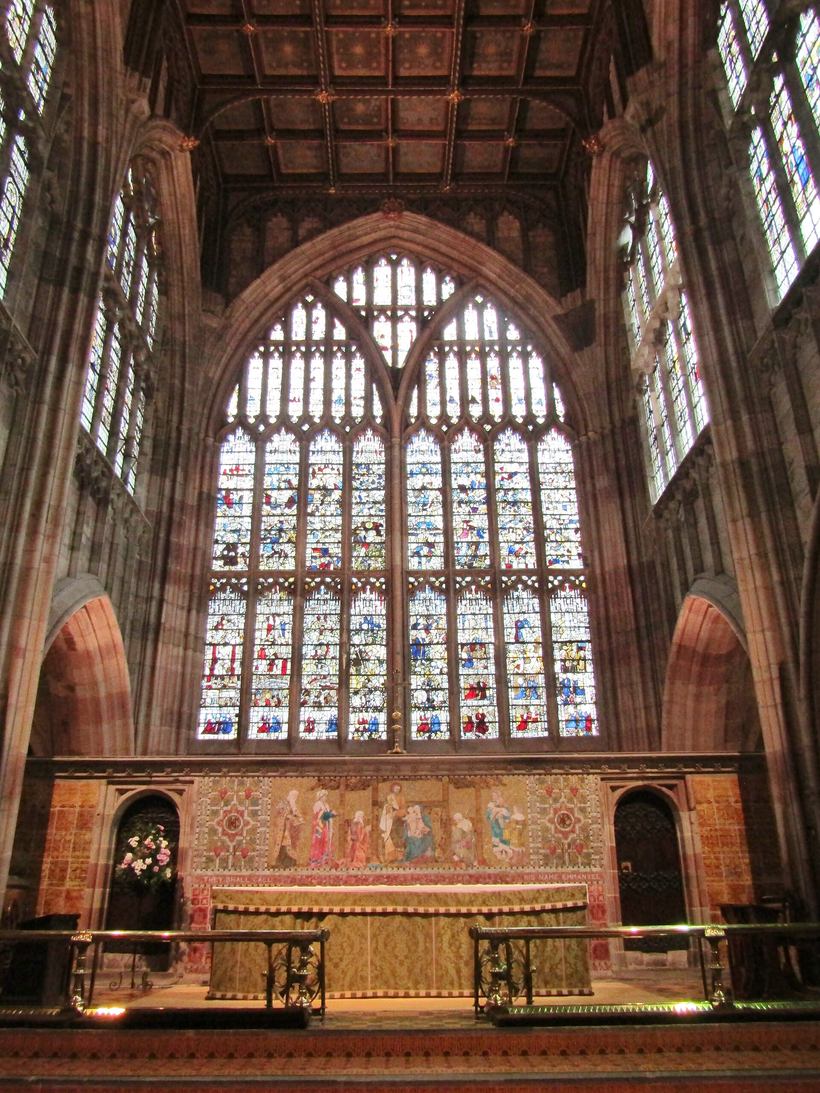
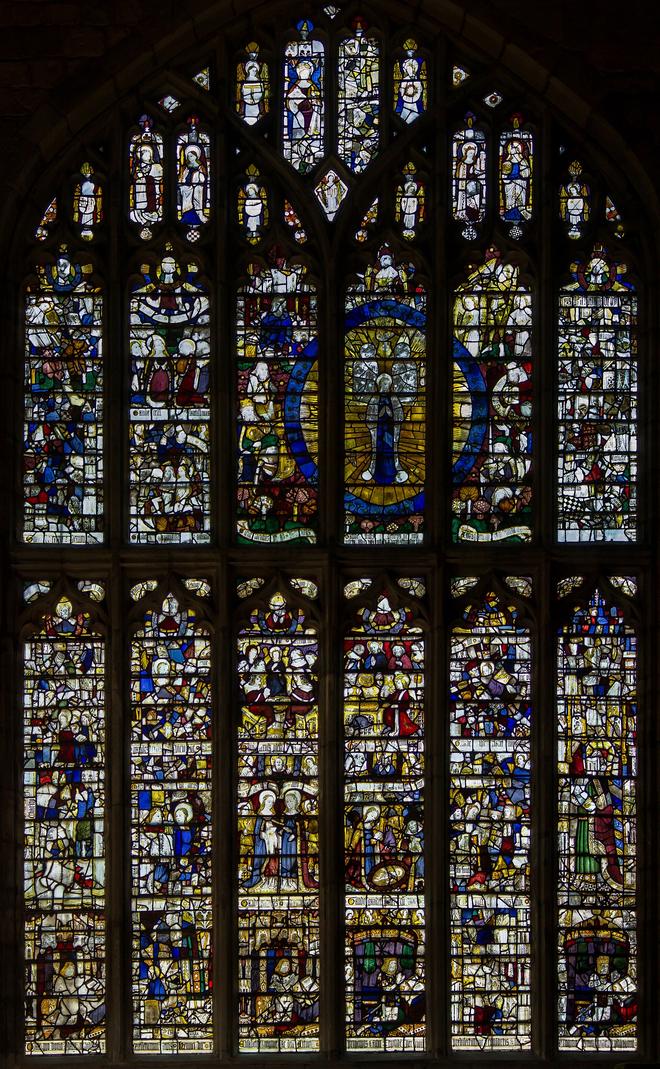
The Priory’s glass is its glory. The great east window and the Magnificat window in the north transept, given by Henry VII in 1501, are filled with fifteenth-century glass; much of the rest of the medieval glass was gathered into the choir and its aisles.
The tiles and the misericords
Behind the high altar and around the east end are the medieval wall tiles, with patterns, heraldry, inscriptions and symbols such as the pelican in her piety. In the choir are twenty-two fifteenth-century misericords, carved with mythical beasts and the Labours of the Months.
Tickets and tours
Free tours on Saturdays
There is no charge to visit. Volunteer guides lead free tours on most Saturday mornings at 11am, and sometimes at 2pm; you can turn up or reserve a place, and donations are welcome. Tower tours run hourly from 11am to 3pm on selected Saturdays between April and late November, with a charge, and are not open to children under 8. Group tours at other times are booked through the Friends of the Priory.
The hotel link goes to Booking.com. This site earns nothing from it at present — it is here because it is the quickest way to check what is actually available.
Don't miss
- The medieval glass One of the largest collections in England.
- The Magnificat window A gift from Henry VII.
- The wall tiles Over a thousand, made in Malvern.
- The Norman piers The priory of the 1080s, still standing.
- The misericords Beasts and the Labours of the Months.
- The tower Views over the town and the Severn Vale, on tour days.
Insider tips
Check before you go. The Priory is preparing a major conservation project, Project Light and Space, and access to parts of the building may be restricted at short notice; the weekly opening hours are posted on its website. Afterwards, walk up to the Malvern Hills, which rise straight behind the town.
The Priory Gatehouse, one of the few surviving monastic buildings, now houses Malvern Museum. Great Malvern grew as a Victorian spa town around the springs of the hills.
Common questions
Is Great Malvern Priory free to visit?
Yes. There is no charge to visit, and the Saturday guided tours are free too, though donations towards the building are welcome. Tower tours and group tours have a charge.
Can you climb the tower?
On selected Saturdays from April to late November, tower tours run hourly from 11am, with the last at 3pm, weather permitting. There is a charge for adults and for children aged 8 to 16; children under 8 may not climb. Dates are on the Priory’s calendar.
What is special about the stained glass?
Great Malvern has one of the largest collections of fifteenth-century stained glass in England, including the great east window and the Magnificat window in the north transept, a gift from Henry VII in 1501.
How did the Priory survive the Dissolution?
When the monastery was dissolved in 1541, the people of Malvern raised £20 to buy the church to replace their own decaying parish church. It has been the parish church ever since.
Are there toilets and disabled access?
Toilets are in the North Porch, but they are not accessible and have no baby change. Disabled access is through the North Transept entrance, signed outside, to the left of the main door. Well-behaved dogs on a lead are welcome.
Where to stay and eat nearby
Church Street and Belle Vue Terrace, just below the Priory, have cafés, pubs and restaurants, and Malvern has hotels in the town and on the hills.
More English churches
- Worcester Cathedral — St Wulfstan’s cathedral, twenty minutes away
- Gloucester Cathedral — the tower Malvern’s resembles
- Pershore Abbey — another Benedictine church saved by its town
See all the cathedrals and churches worth visiting in England →