
St Botolph's, Boston: the Boston Stump
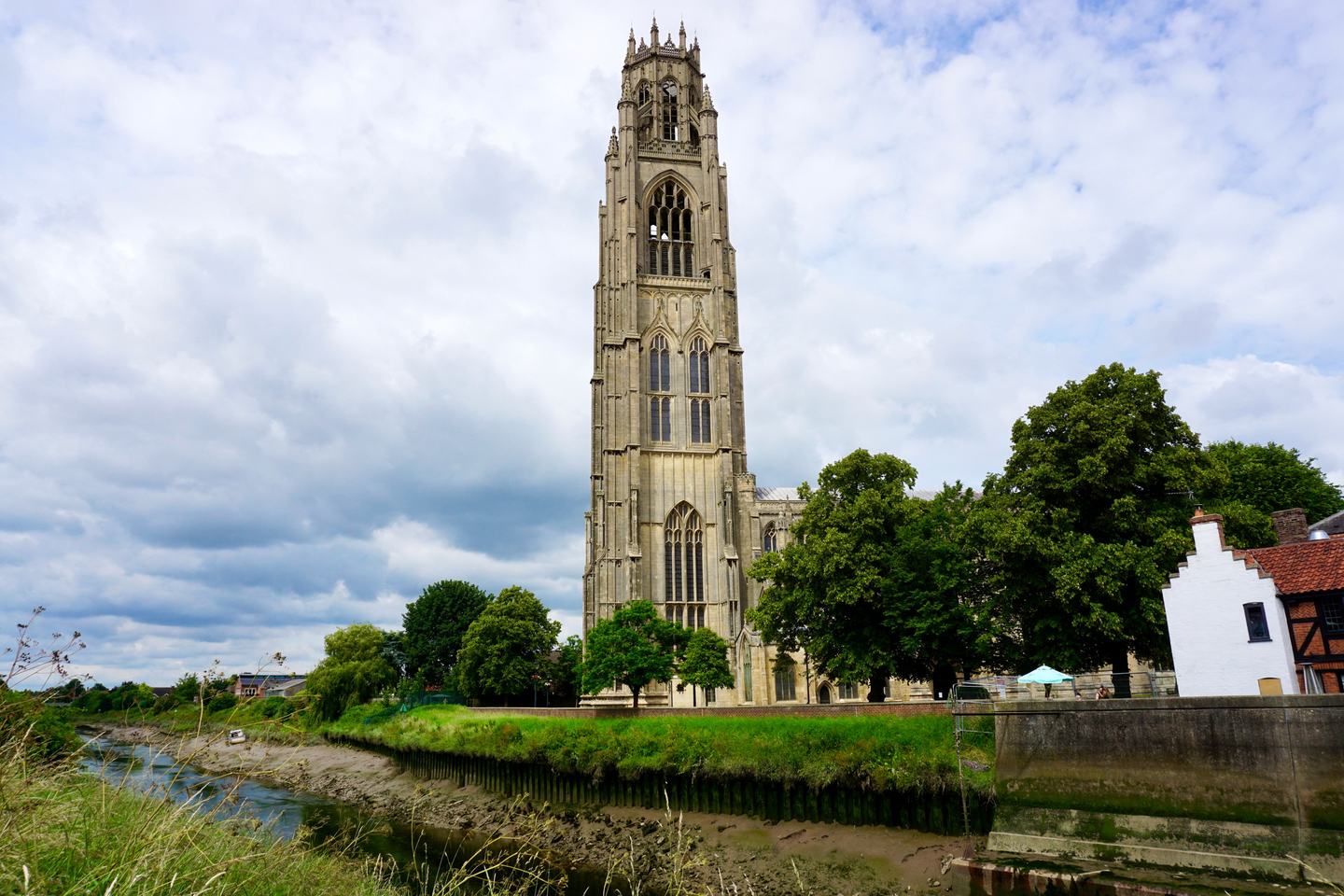
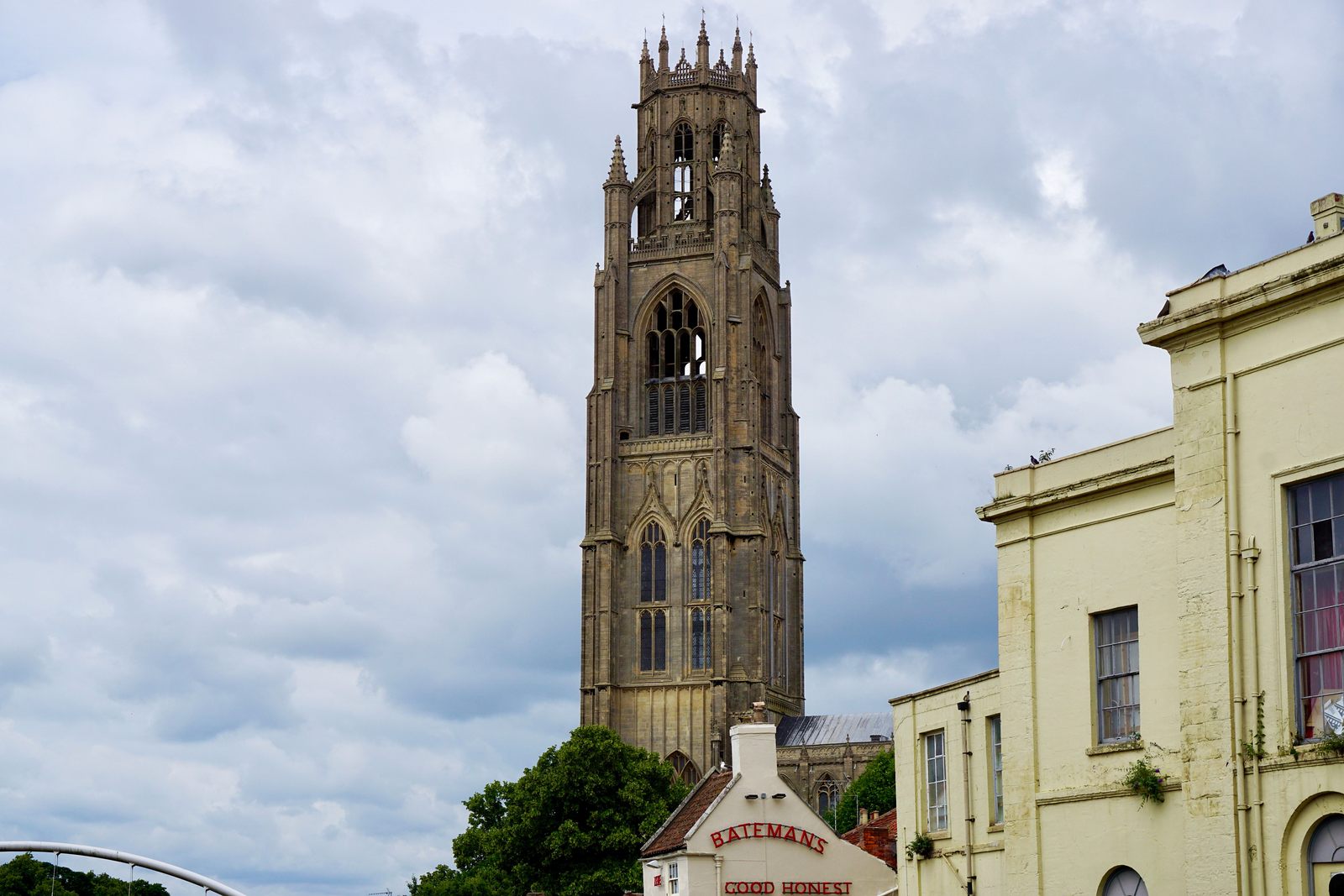
For six hundred years the tower of St Botolph’s has stood over the flat fenland of Lincolnshire, a landmark for travellers on land and for sailors coming in from the Wash. The Boston Stump is among the tallest medieval church towers in England, and the church beneath it is among the largest parish churches in the country — built when Boston was one of the richest ports in England, and the mother town of Boston, Massachusetts.
A church built on wool
In the Middle Ages Boston was one of England’s busiest ports, shipping wool to the Continent, and its merchants rebuilt their parish church on a vast scale. Work began in 1309 with the chancel, and the nave was built by about 1390. The tower was begun in the second quarter of the fifteenth century and finished between 1510 and 1520, in the Perpendicular style, topped by an octagonal lantern ringed with pinnacles. Some 266 feet high, it was said to have been lit as a beacon for shipping.
In the seventeenth century Boston became a centre of Puritan preaching. John Cotton, vicar from 1612, left for New England in 1633 and became a leading minister of the young town of Boston, Massachusetts. Three centuries later, between 1929 and 1933, the citizens of the American Boston helped pay for a major restoration of the church.
The visitor's cheat sheet
| Where | Church Street, Boston, Lincolnshire, PE21 6NW, beside the market place |
|---|---|
| Getting there | Boston station is about 10 minutes’ walk; car parks in the town |
| Opening hours | Mon–Fri 9am–3pm; Sat 10am–4pm; Sun 10am–2pm |
| Admission | Free; donations appreciated. Tower climb £5 (children free with an adult) |
| How long | About 1 hour, with the tower |
| Best time | A clear weekday morning, for the view from the tower |
| Dress code | No formal code; respectful dress as in any working church |
| Tours | Self-guided tower climb Mon–Fri 9.30am–2.30pm and Sat 10am–3.30pm, 209 steps; guided tours can be arranged |
Hours and admission checked against the official site in October 2026. They change; the official site is always the last word.
Thirty miles of Fens. From the gallery round the tower, 209 steps up, the view on a clear day stretches across the Fens and out to the Wash. On the best days, they say, you can see Lincoln Cathedral to the north-west.
What to see, in the order you meet it
The tower
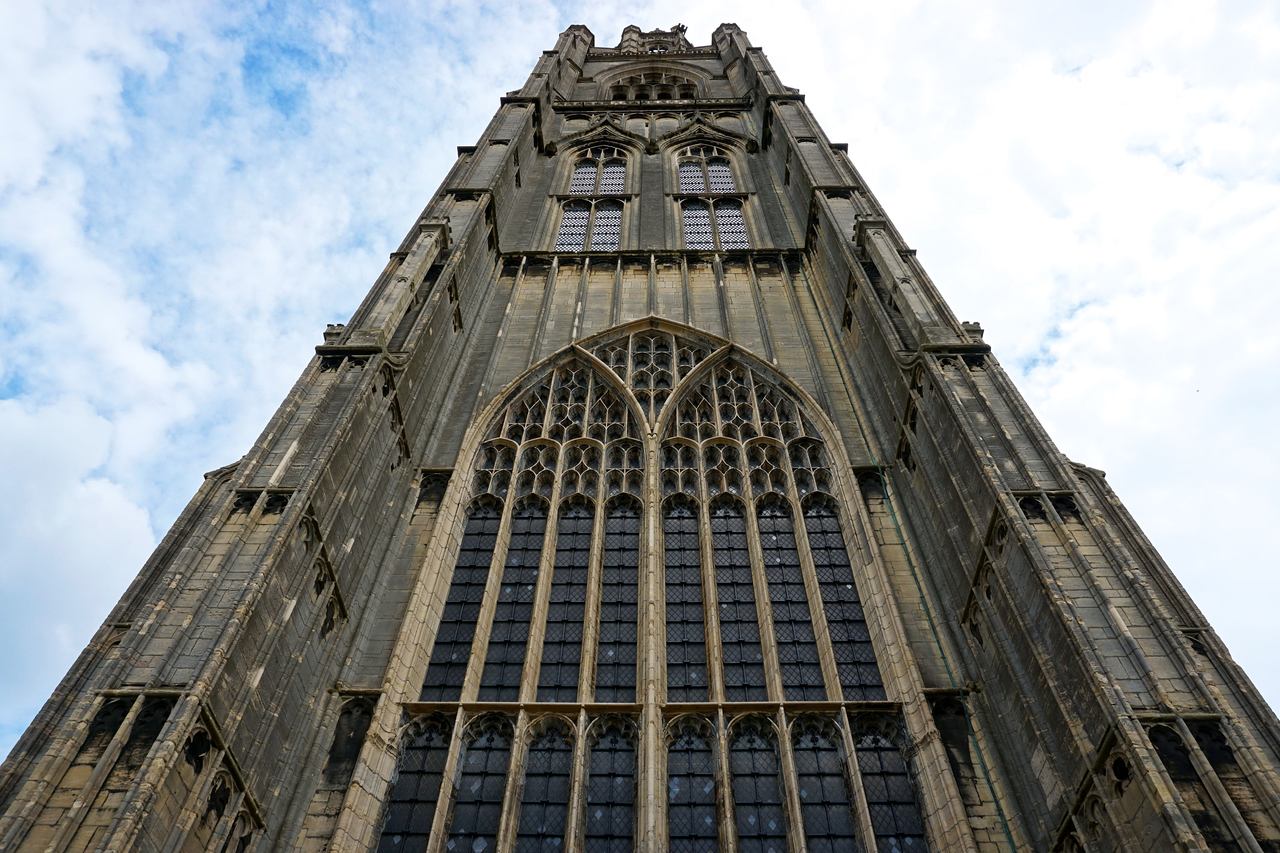
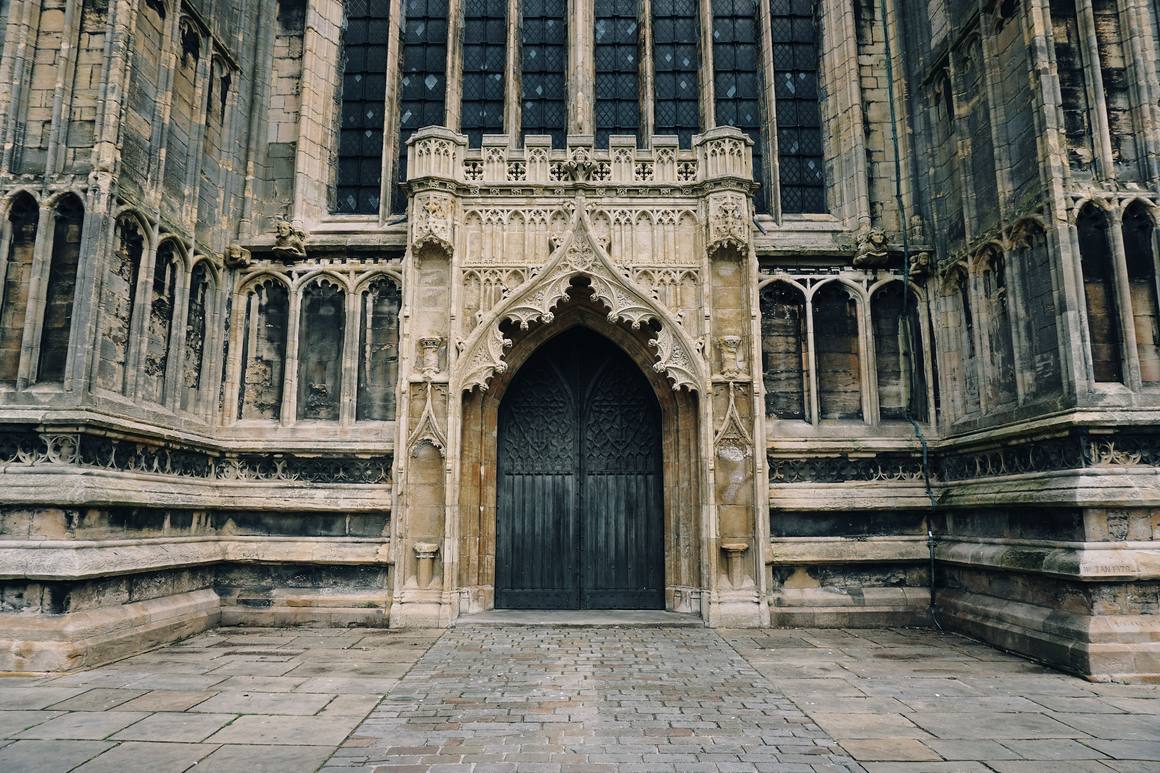
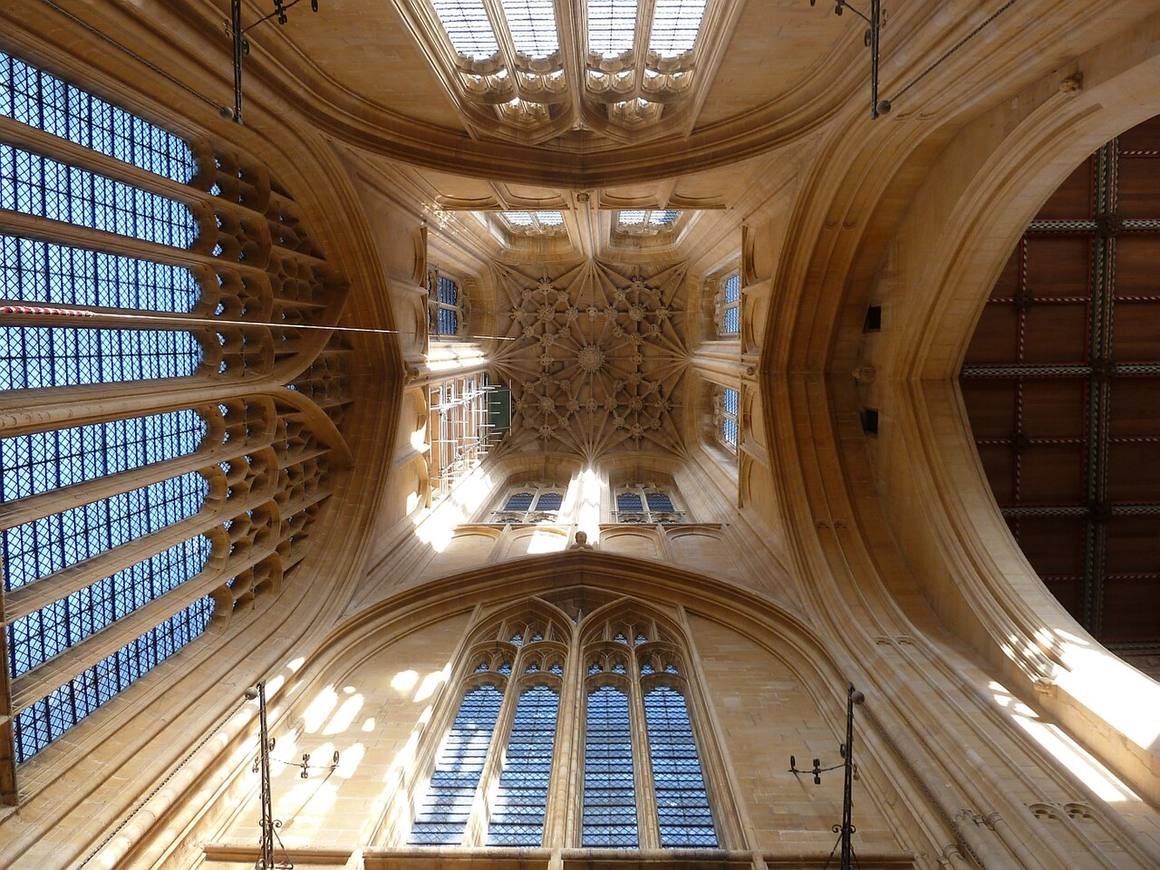
You enter at the foot of the tower. Step inside and look up: the base of the tower is open to a stone vault far above, completed in the twentieth century on medieval springers, one of the most dramatic spaces in any English parish church.
The nave
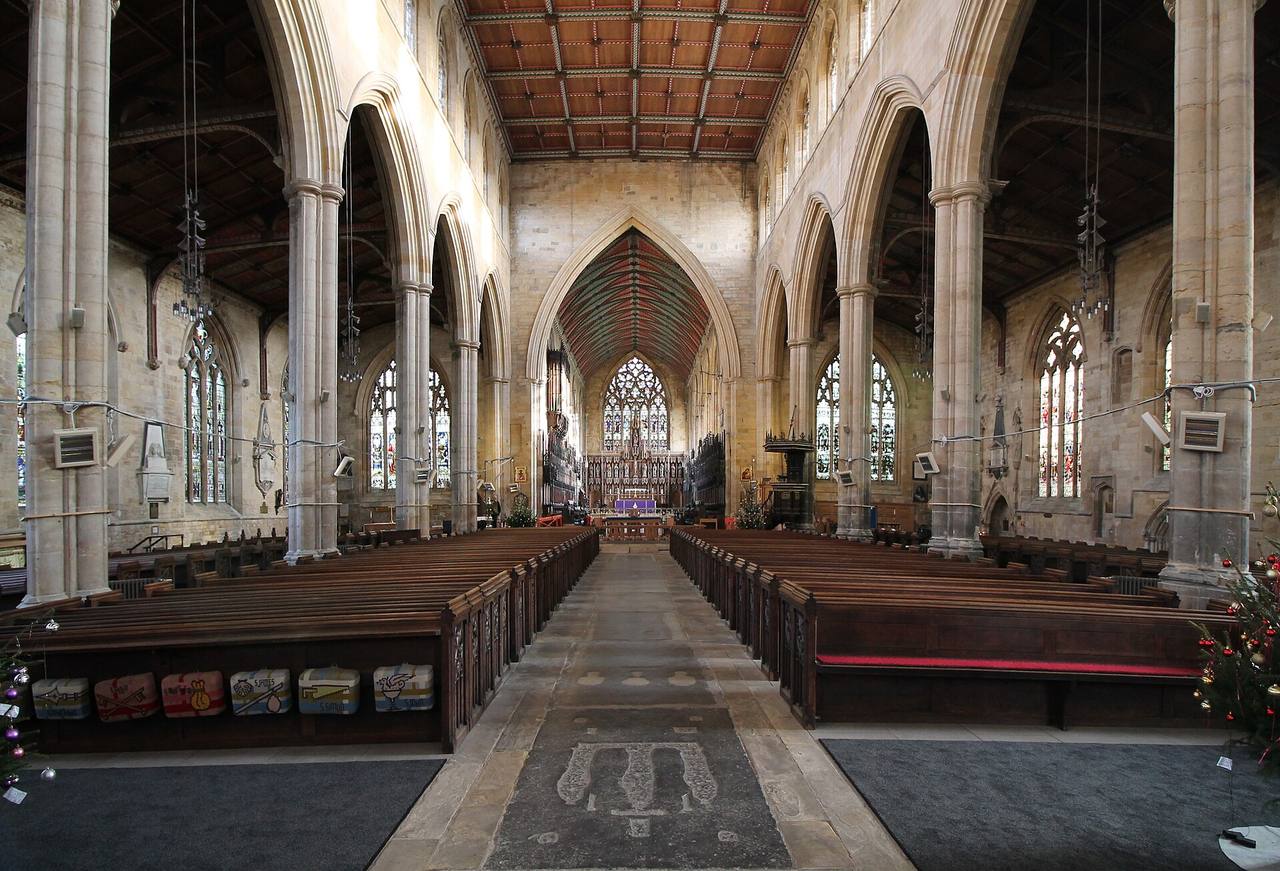
The nave is enormous: St Botolph’s claims to be the widest parish church in England and the tallest to its roof. Its tall arcades and wide aisles were built for a rich town’s processions and guild chapels. On the south side, the Cotton Chapel commemorates John Cotton.
The chancel and the misericords
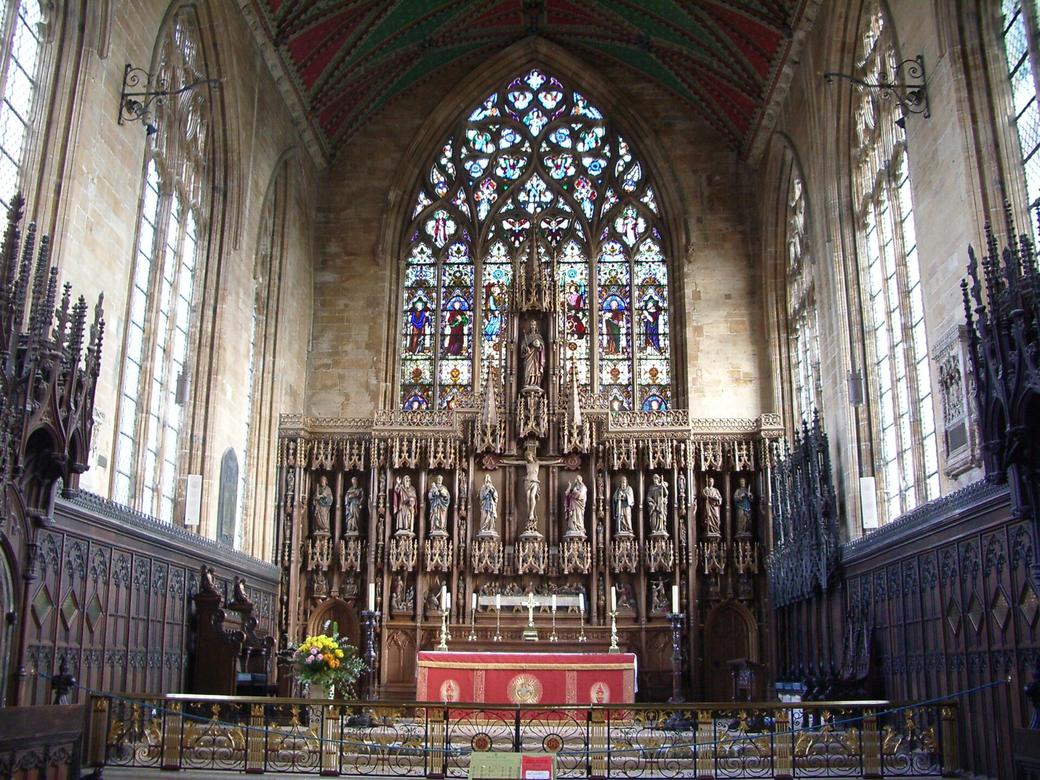
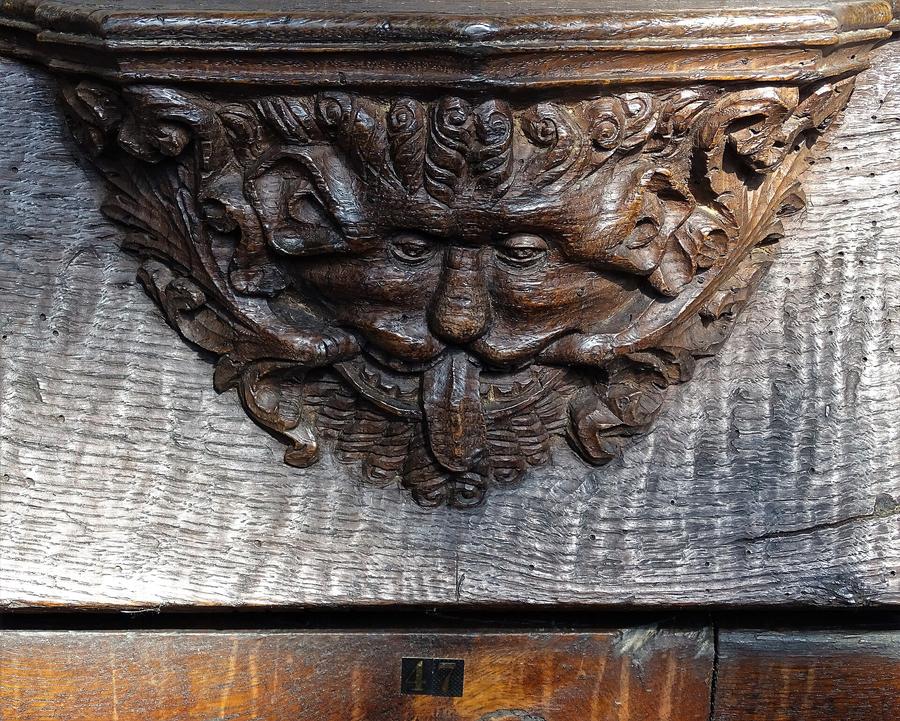
In the chancel the choir stalls keep sixty-two misericords of about 1390, carved with heraldry, legends and scenes of everyday life. Above the south porch is the parish library, with over 1,500 old volumes, kept high up away from the floods.
Tickets and tours
Free church, £5 tower
There is no entry fee. The tower is climbed on your own, not on a tour: it costs £5 for adults, with children free when accompanied by an adult, and is open Monday to Friday 9.30am–2.30pm and Saturday 10am–3.30pm, closed on Sundays and in bad weather. Last entry is 30 minutes before the church closes, and no bags are allowed. Guided tours of the church can be arranged.
The hotel link goes to Booking.com. This site earns nothing from it at present — it is here because it is the quickest way to check what is actually available.
Don't miss
- The tower climb 209 steps to a view over the Fens.
- The lantern An octagon of pinnacles, once a beacon.
- The tower vault Look straight up from the entrance.
- The misericords Sixty-two, carved about 1390.
- The Cotton Chapel The link with Boston, Massachusetts.
- The library Above the porch, safe from floods.
Insider tips
Come on a weekday. The tower is closed on Sundays and the church keeps short hours, so a weekday morning gives you time for both. The Refectory café in the church is open Monday to Friday 9am–2.30pm and Saturday 10am–1.30pm.
The medieval Guildhall nearby, now a museum, is where the Pilgrim Fathers were held after a failed attempt to sail for Holland in 1607. Boston’s market, on Wednesdays and Saturdays, fills the square beside the church.
Common questions
Is St Botolph's free to visit?
Yes. There is no entry fee and donations are appreciated. Climbing the tower costs £5 for adults; children go free with an adult.
Can you climb the Boston Stump?
Yes. The climb is not a guided tour: visitors go up on their own, 209 steps to a viewing gallery that runs round the tower. It is open Monday to Friday 9.30am–2.30pm and Saturday 10am–3.30pm, not on Sundays, and may close in bad weather. Under-18s must be with an adult, no bags are allowed, and it is not suitable for people with heart or breathing conditions.
Why is it called the Stump?
Nobody is sure. It may be because the tower looked like a stump during the decades it took to build, because a spire was planned and never built, or simply because of the way it rises out of the flat Fens.
What is the connection with Boston, Massachusetts?
John Cotton, vicar of St Botolph’s, sailed for New England in 1633 and became a leading minister of the new town of Boston, Massachusetts. The Cotton Chapel remembers him, and citizens of the American Boston helped pay for the restoration of the church in the 1930s.
How do you get to St Botolph's?
Boston station is about ten minutes’ walk. The church stands by the River Witham at the corner of the market place.
Where to stay and eat nearby
The market place and the streets around it have pubs, cafés and hotels, and Lincoln is about an hour away.
More English churches
- Lincoln Cathedral — the cathedral of the county, on its hill
- Ely Cathedral — the Ship of the Fens
- Peterborough Cathedral — on the western edge of the Fens
See all the cathedrals and churches worth visiting in England →