
Lanercost Priory
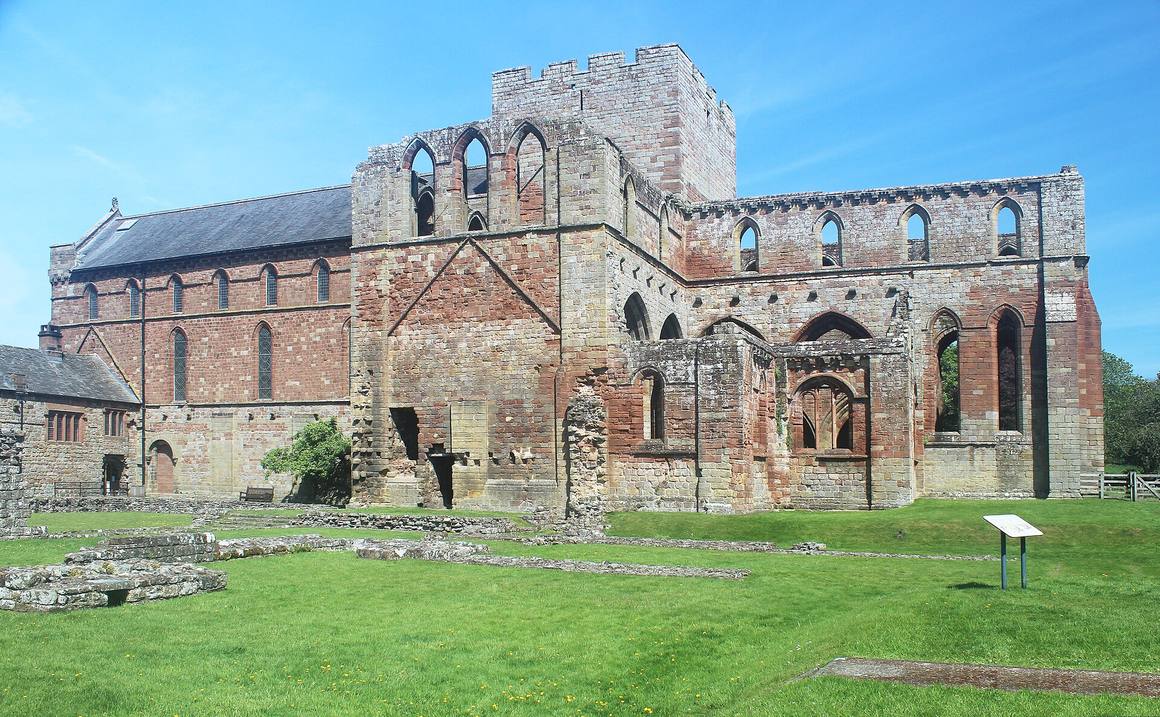
In a quiet valley just below Hadrian’s Wall, Lanercost Priory is two places in one: a living parish church in the nave of an Augustinian priory, and a roofless ruin beyond it. It was built partly from Roman stones, raided by the Scots, home for a winter to a dying Edward I, and finished, seven centuries later, with glass by Edward Burne-Jones.
A priory on the border
Robert de Vaux founded the priory for Augustinian canons in about 1169 and dedicated it to St Mary Magdalene. Much of the church was built in the thirteenth century, and its builders helped themselves to dressed stone from Hadrian’s Wall, a short walk to the north. Roman stones are still built into the walls.
Being so close to Scotland, Lanercost suffered in the border wars. Scottish armies raided it in 1296 and 1297; Edward I spent the whole winter of 1306–07 here, ill and preparing a campaign; Robert the Bruce made it his headquarters for three days in 1311, and David II sacked it in 1346. The canons also wrote the Lanercost Chronicle, an important history of the wars. At the Dissolution in 1537 the east end was unroofed and the monastic buildings went to the Dacre family, but the nave was kept as the parish church, which it still is.
The visitor's cheat sheet
| Where | Lanercost, near Brampton, Cumbria, CA8 2HQ, just south of Hadrian’s Wall |
|---|---|
| Getting there | By car, or Brampton station then a taxi or the seasonal Hadrian’s Wall bus; car park at the priory |
| Opening hours | Priory church open every day. Ruins (English Heritage) daily 10am–5pm, last entry 4.30pm, from late March to the autumn; closed in winter |
| Admission | Priory church free; donations welcome. Ruins: English Heritage ticket, roughly £7–£9 for adults, cheaper booked online; free for members |
| How long | About 1 hour for the church and the ruins |
| Best time | A summer afternoon, combined with Hadrian’s Wall |
| Dress code | No formal code; the nave is a working parish church |
| Tours | Self-guided; English Heritage sells a guidebook |
Hours and admission checked against the official site in October 2026. They change; the official site is always the last word.
Two owners, one building. The nave is the parish church of St Mary Magdalene, free and open every day. The roofless east end, the cloister and the monastic buildings belong to English Heritage, with a ticket and seasonal hours. You can see the church at any time of year.
What to see, in the order you meet it
The west front and the nave
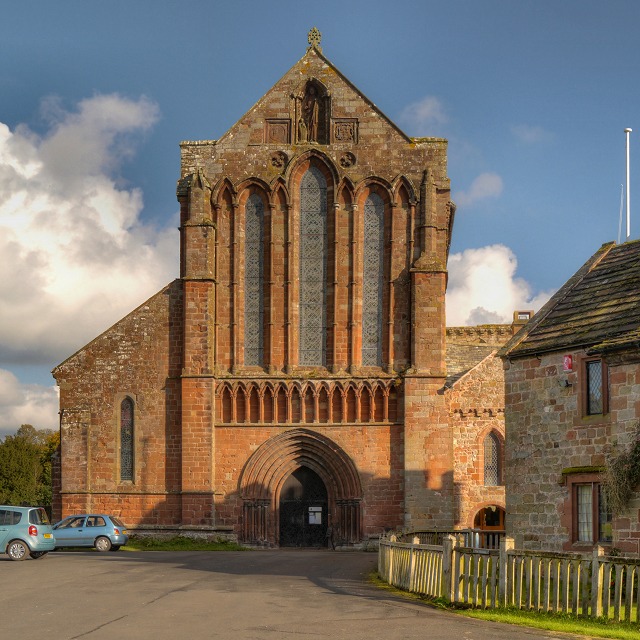
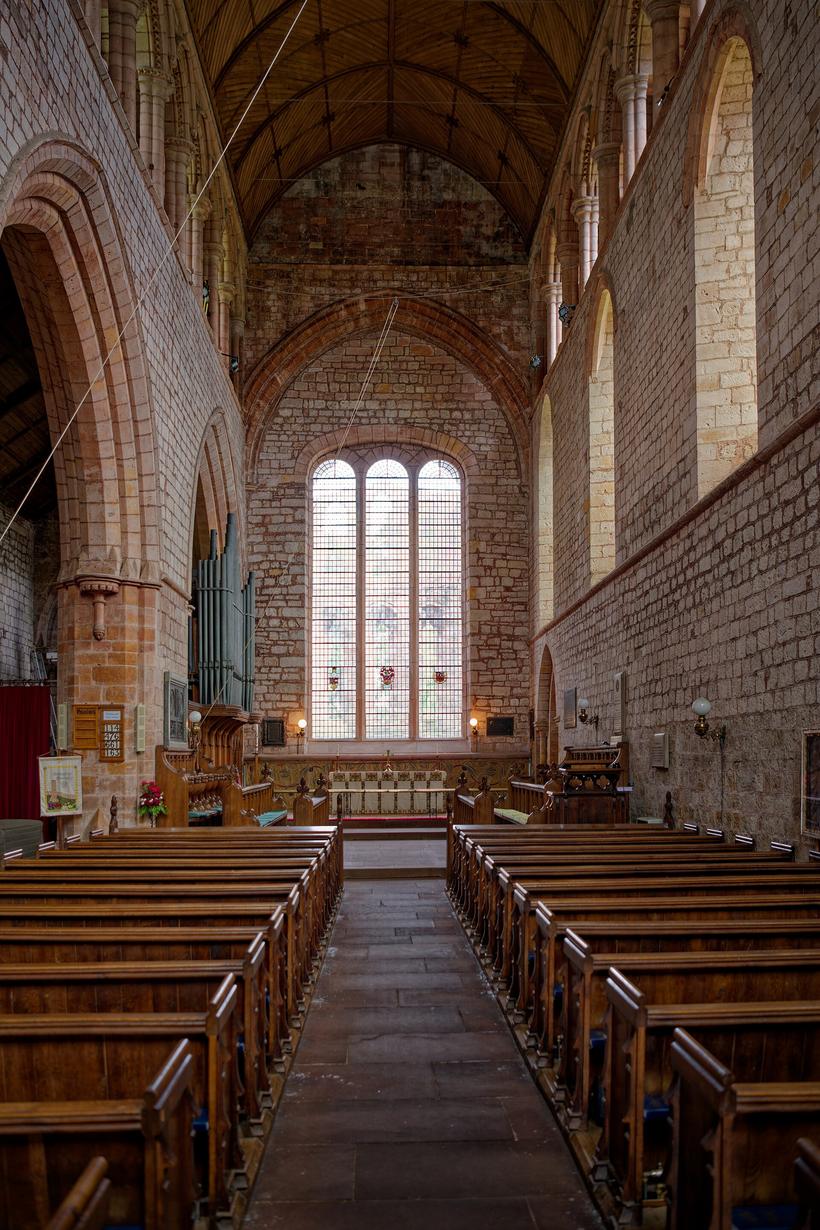
The tall thirteenth-century west front has a statue of Mary Magdalene in a niche high up, said to be the gift of Edward I. Inside, the nave was restored by Anthony Salvin in the 1840s after decades of decay. There is an aisle on the north side only; the south wall backed on to the cloister.
The Burne-Jones glass
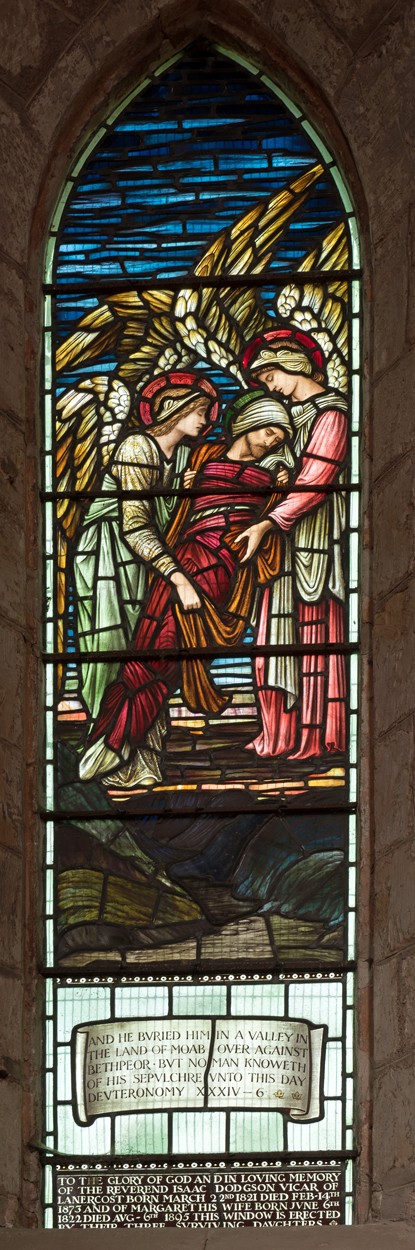
The church’s stained glass was designed by Edward Burne-Jones and made by Morris & Co between the late nineteenth and early twentieth centuries, for the Howard family of Naworth Castle, who were friends of the Pre-Raphaelites. A wall hanging designed by William Morris in 1881 has been restored and hangs behind the altar.
The ruined east end
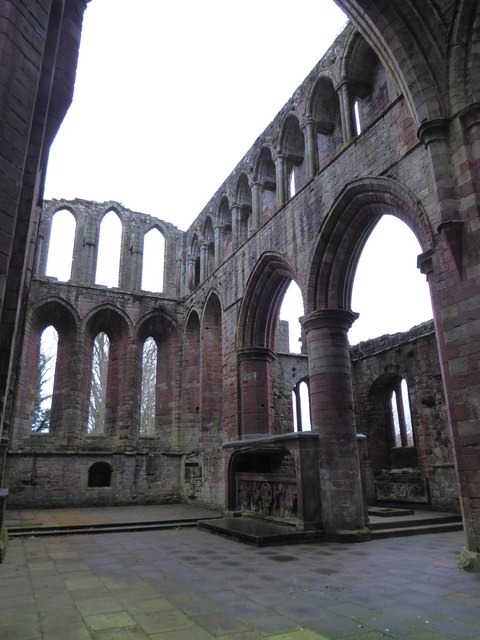
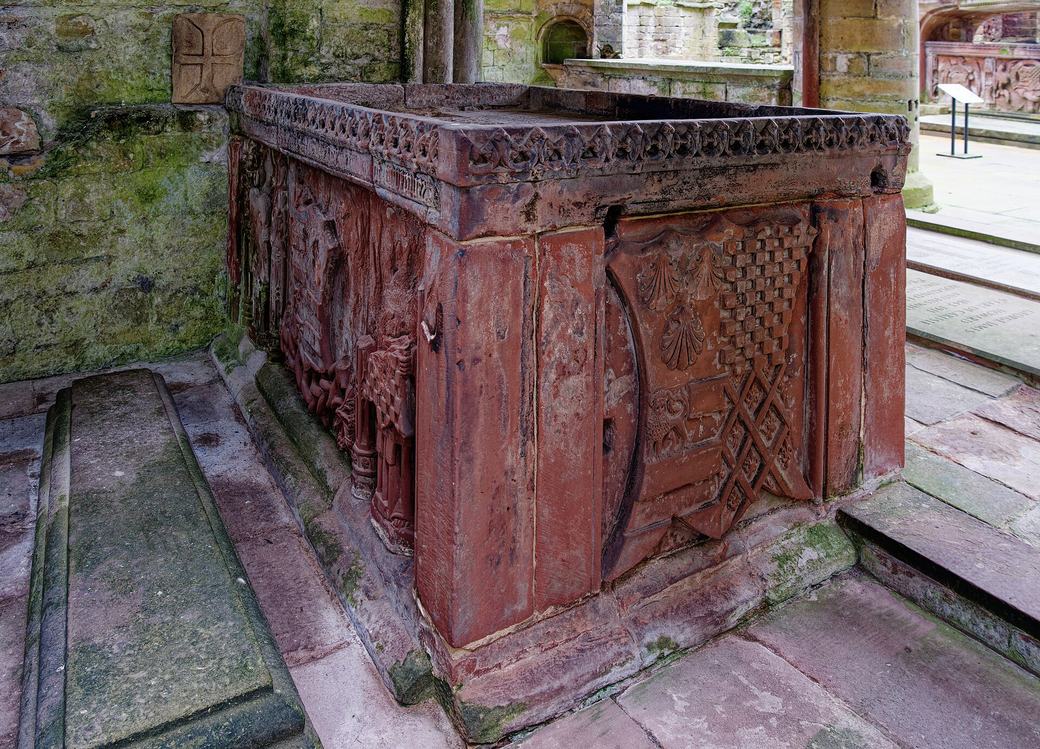
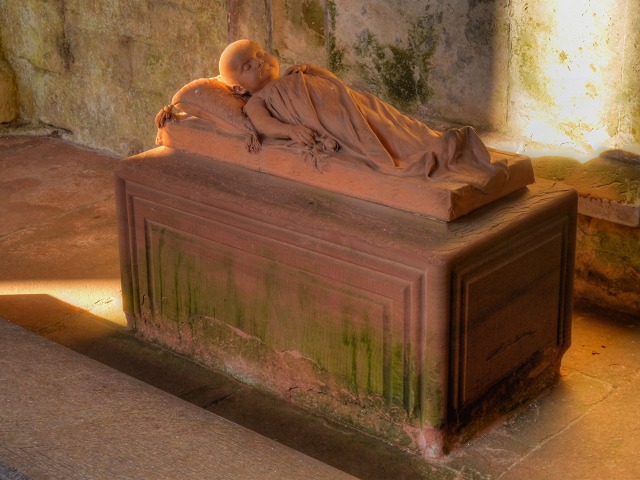
Beyond the nave, in the English Heritage ruins, the thirteenth-century presbytery and crossing, finished about 1260, stand almost to the eaves, with three tiers of arches. The vaulted chapels beside it hold the tombs of the Dacres and the Howards, including the touching Victorian effigy of Elizabeth Dacre Howard, who died aged four months.
The cloister and the undercroft
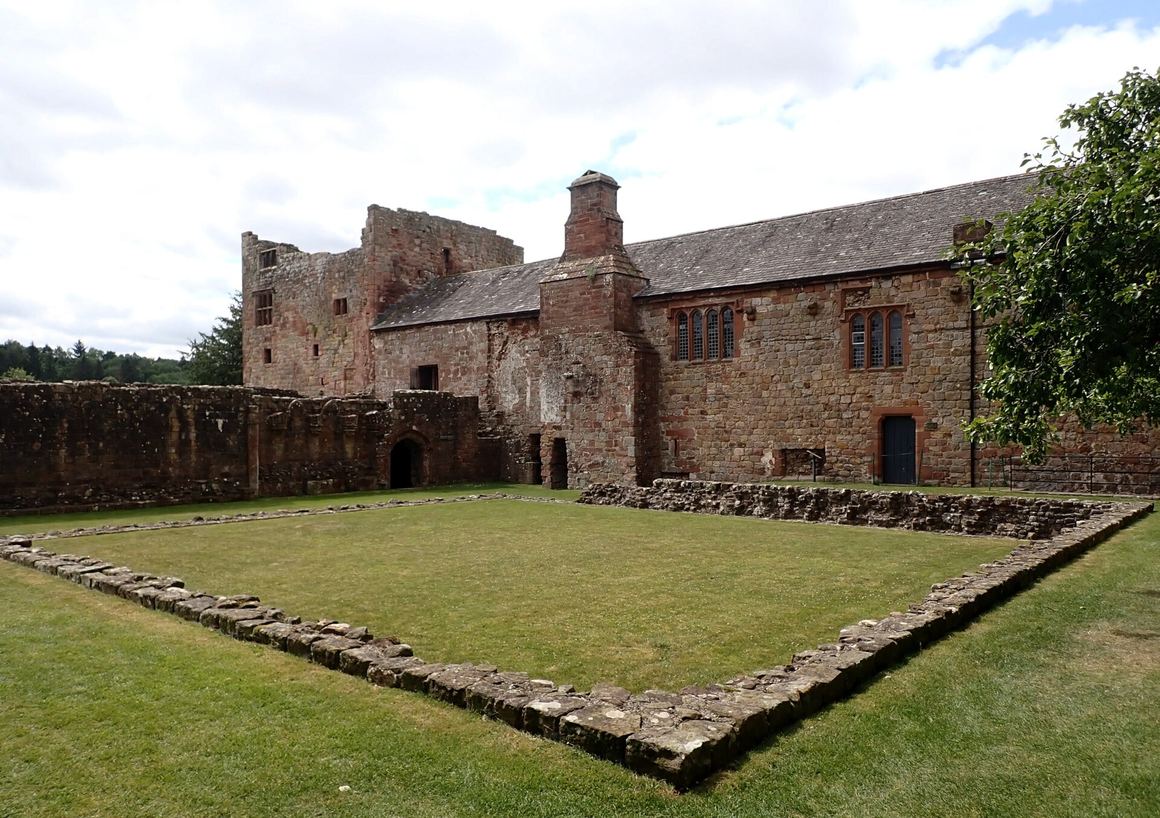
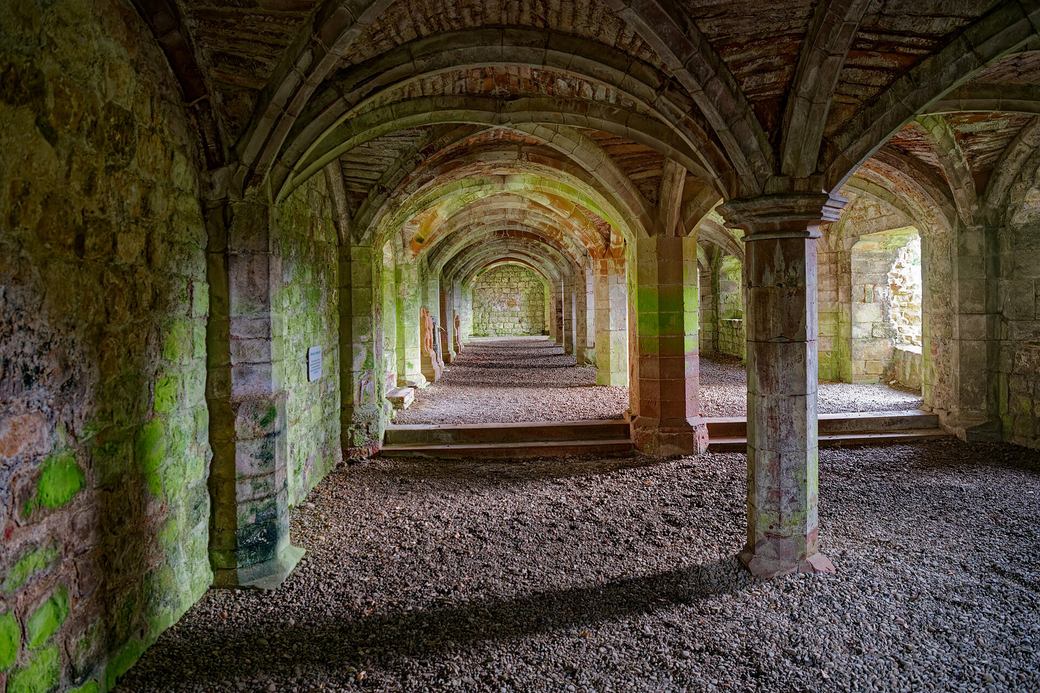
The cloister is now a lawn. The Dacres turned the west range into a house, with the Dacre Tower and Dacre Hall; beneath the south range the rib-vaulted undercroft of the canons’ refectory survives. Look too for the Lanercost Cross, whose shaft, carved with an inscription of 1214, is now kept inside.
Tickets and tours
Free church, ticketed ruins
The priory church is free and open every day. The ruins need an English Heritage ticket, roughly £7–£9 for an adult on the day, with savings for booking online in advance; members go free. They open daily in the main season, 10am to 5pm, and close in winter. Prices and dates change, so check the English Heritage website before you travel.
The hotel link goes to Booking.com. This site earns nothing from it at present — it is here because it is the quickest way to check what is actually available.
Don't miss
- The west front And Edward I’s statue of Mary Magdalene.
- The Burne-Jones windows Pre-Raphaelite glass in a medieval nave.
- The presbytery Three tiers of arches, open to the sky.
- The Dacre tombs Under the surviving vaults.
- Roman stones Taken from Hadrian’s Wall.
- The Lanercost Cross With its inscription of 1214.
Insider tips
Pair it with the Wall. Birdoswald Roman Fort and some of the best-preserved stretches of Hadrian’s Wall are a few miles east. Out of season, when the ruins are closed, the church is still open and you can see much of the east end from the churchyard. The tea room by the priory is run separately from English Heritage.
The old bridge over the River Irthing below the priory is a pleasant spot, and Naworth Castle, the Dacre and Howard seat, is close by, though it is not usually open to visitors.
Common questions
Is Lanercost Priory free to visit?
The priory church, which is the parish church, is free and open every day of the year. The ruins of the east end and the monastic buildings are cared for by English Heritage and need a ticket, roughly £7–£9 for an adult and less if you book online. English Heritage members go free.
When are the ruins open?
The English Heritage ruins open daily from 10am to 5pm (last entry 4.30pm) in the main season, from late March to the autumn, and close for the winter. Check the English Heritage website for this year’s dates. The church itself stays open all year.
What is the connection with Edward I?
Edward I stayed at Lanercost several times. His last visit, ill and on his way to fight the Scots, lasted the whole winter of 1306–07, about five months, and was a heavy burden on the priory. He died a few months later at Burgh by Sands, near Carlisle.
Is Lanercost near Hadrian’s Wall?
Yes. The priory was partly built of stone taken from the Wall, which runs just to the north. Birdoswald Roman Fort is a few miles east, and the Hadrian’s Wall Path passes close by.
How do you get to Lanercost Priory?
Lanercost is about two miles north-east of Brampton, off the road to Birdoswald. The nearest station is Brampton, on the Carlisle–Newcastle line, and the Hadrian’s Wall bus calls in season. There is a car park at the priory.
Where to stay and eat nearby
Brampton has inns and cafés, and Carlisle is about twenty minutes away by car.
More English churches
- Carlisle Cathedral — the cathedral of the border, also founded for Augustinian canons
- Hexham Abbey — on the other side of the Wall, burned by the same Scottish raiders
- Durham Cathedral — the great Norman church of the north
See all the cathedrals and churches worth visiting in England →