
St Stephen’s Cathedral, Vienna
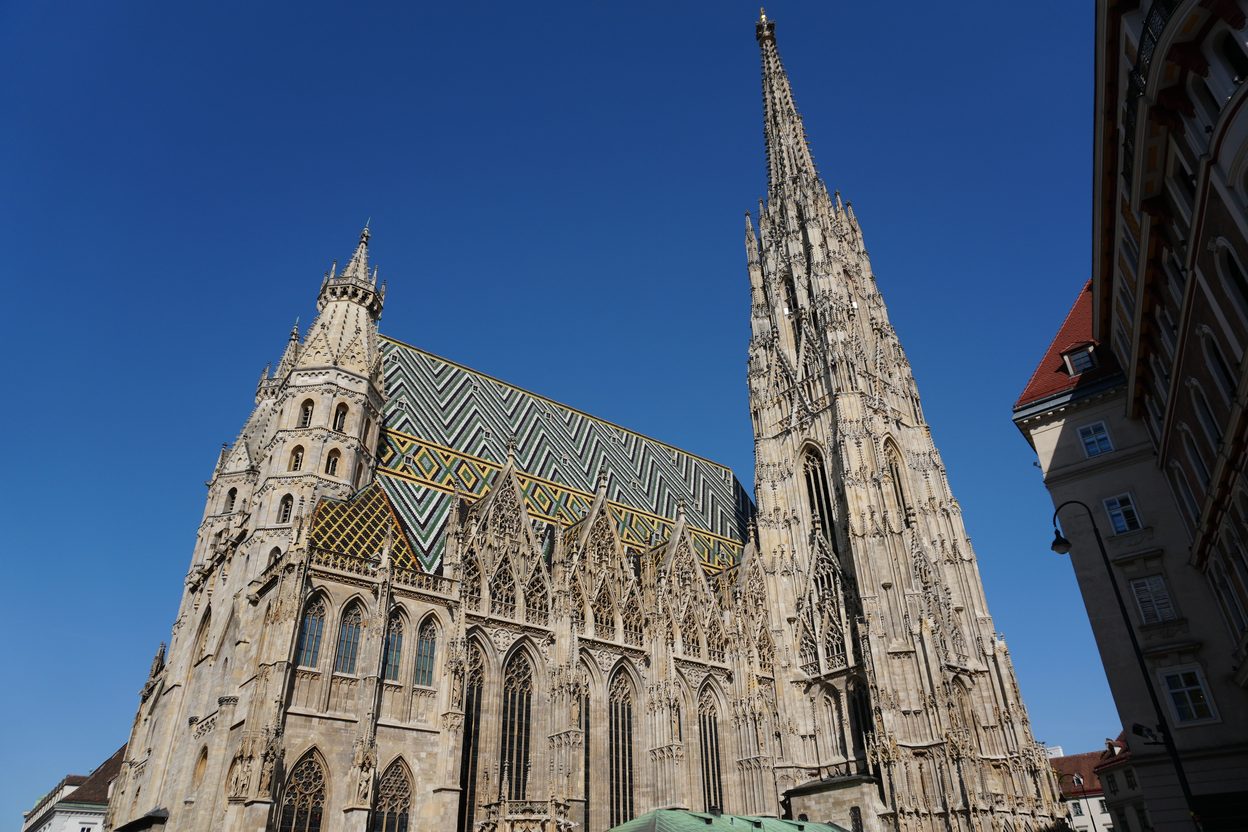
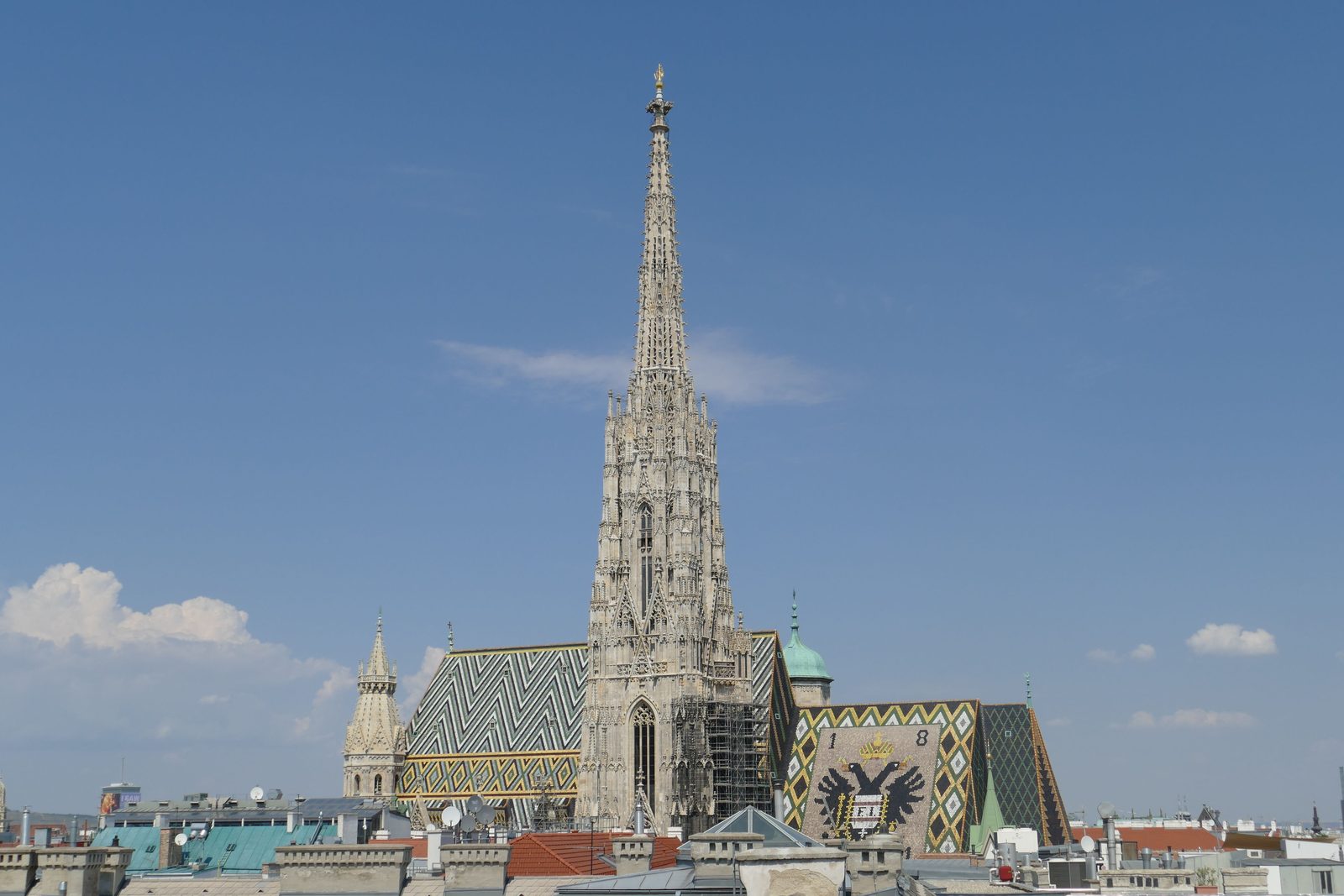
The Stephansdom is the middle of Vienna in every sense: the U-Bahn comes up at its door, the city’s streets radiate from its square, and its south tower, the Steffl, has been the skyline’s fixed point since 1433. The great roof of glazed tiles, with the double-headed eagle picked out in colour, is the image everyone knows. The church is open from early morning until late at night, and the back of it is free. What surprises many visitors is that the nave itself, with the pulpit, the tombs and the high altar, needs a ticket.
A Romanesque church that grew Gothic
A first church here was consecrated in 1147, outside what were then the city walls. In the early thirteenth century a larger late-Romanesque church replaced it; it was damaged by fire in 1258, but its west front survives: the Giant’s Door and the two Heathens’ Towers either side, built partly with reused Roman stone. Everything east of them is Gothic. The three-aisled Albertine Choir was consecrated in 1340, and in 1359 Duke Rudolf IV, the Founder, laid the foundation stone of the nave. The south tower was finished in 1433, 136.4 metres tall, and served as the city’s lookout in the Ottoman sieges of 1529 and 1683. Its twin to the north was abandoned in 1511 at about 68 metres and capped in 1578.
St Stephen’s became a cathedral when the diocese of Vienna was founded in 1469. Mozart was married here in 1782, and his funeral service was held here in 1791. In April 1945, in the last days of the war, fire spread from looted shops nearby; the roof burned and the great bell, the Pummerin, fell and shattered. Every Austrian province gave something to the rebuilding — Upper Austria the new Pummerin, Tyrol the windows, the city of Vienna the roof — and the cathedral reopened fully in 1952.
The visitor’s cheat sheet
| Where | Stephansplatz 3, 1010 Vienna, in the middle of the old city; U1 and U3 to Stephansplatz |
|---|---|
| Opening hours | Monday–Saturday 6am–10pm; Sundays and holidays 7am–10pm. Sightseeing in the nave Monday–Saturday 9–11.30am and 1–4.30pm, Sundays and holidays 1–4.30pm only |
| Admission | Free to the entrance area. Nave €8, children €3; All-Inclusive ticket €29, children €7 |
| Towers | South tower 343 steps, last ascent 6.15pm; north tower by lift, last ascent 6.30pm. Each €8, children €3; daily 9am–7pm |
| Catacombs | Guided only, €8. Monday–Saturday several tours from 10am to 4.30pm; Sundays and holidays 1.30pm, 2.30pm, 3.30pm and 4.30pm |
| Guided tour | In English at 10.30am, Monday–Friday, €8; meet in front of the cathedral shop |
| Treasury | In the Dom Museum Wien across the square, Stephansplatz 6 |
| Dress and bags | Shoulders and knees covered, hats off; no large cases, and no left luggage |
Hours and admission checked against the official site in October 2026. They change; the official site is always the last word.
The church is free; the nave is not. The entrance area at the back, used for prayer, is open to everyone from 6am (7am on Sundays) to 10pm. To walk the nave you need a sightseeing ticket (€8), sold only during visiting hours: Monday to Saturday 9 to 11.30am and 1 to 4.30pm, and on Sundays and holidays only in the afternoon. The towers keep their own longer hours, until 7pm. If you plan to do several things, the €29 All-Inclusive ticket covers the lot.
What to see, in the order you meet it
The Giant’s Door
You go in by the west door, the Riesentor, set in a deep, funnel-shaped porch carved with beasts and figures, with Christ in majesty in the tympanum. Why it is called the Giant’s Door is disputed: one story says a mammoth’s thighbone dug up in 1443 hung here as a giant’s bone. Look up at the Heathens’ Towers on either side, about 65 metres tall.

The roof
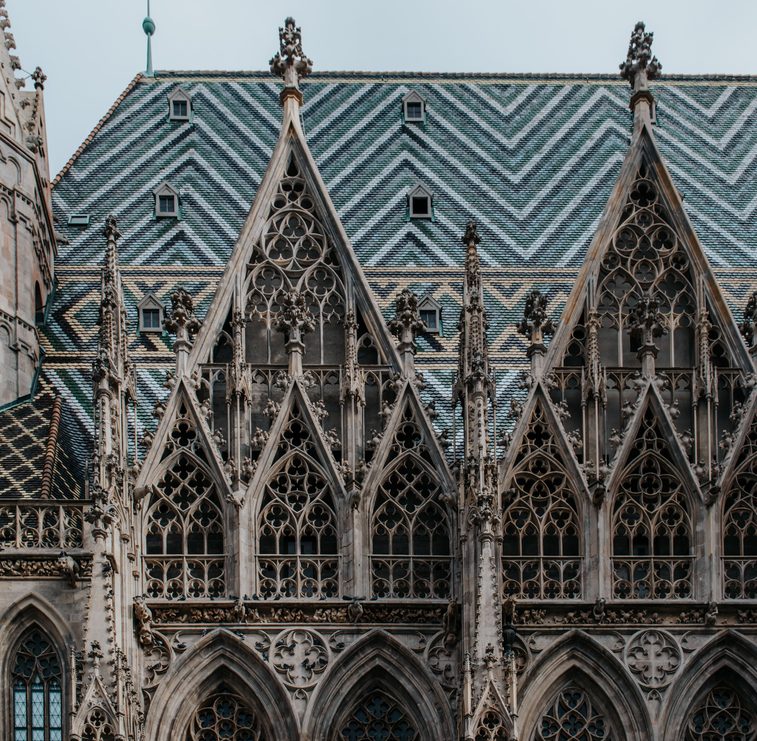
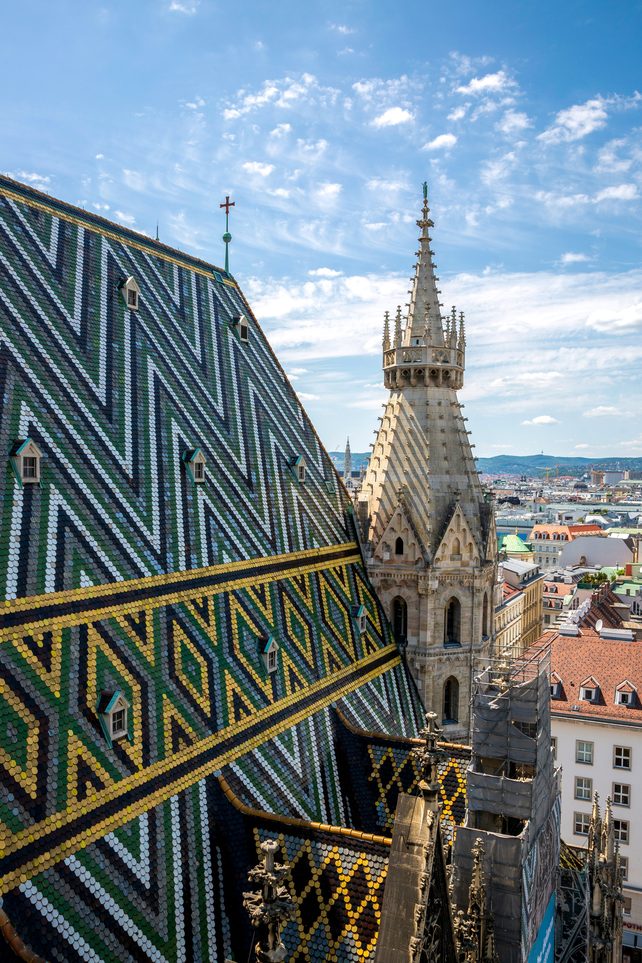
The roof is about 111 metres long and covered with around 230,000 glazed tiles. On the south side they form the double-headed imperial eagle, dated 1831; on the north, the arms of Vienna and Austria, dated 1950, after the post-war rebuilding. The roof frame is now steel. The best views of it are from the north tower and from the square on the south side.

The nave and the pulpit
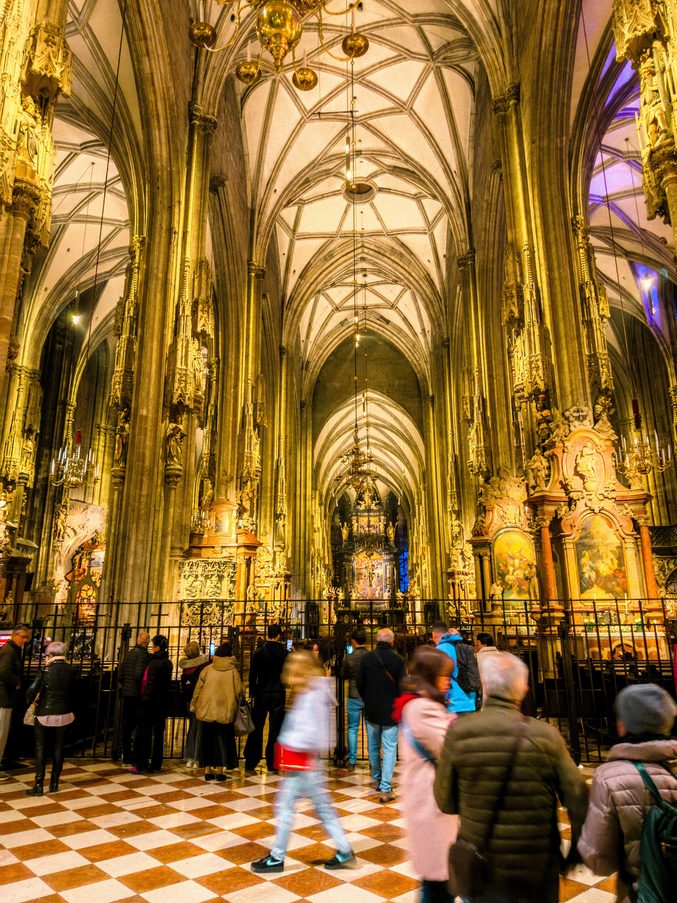
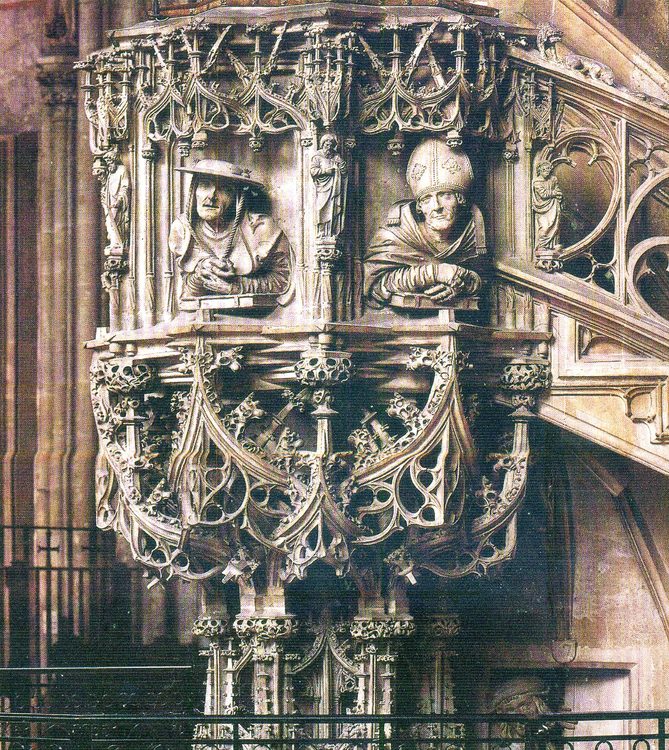
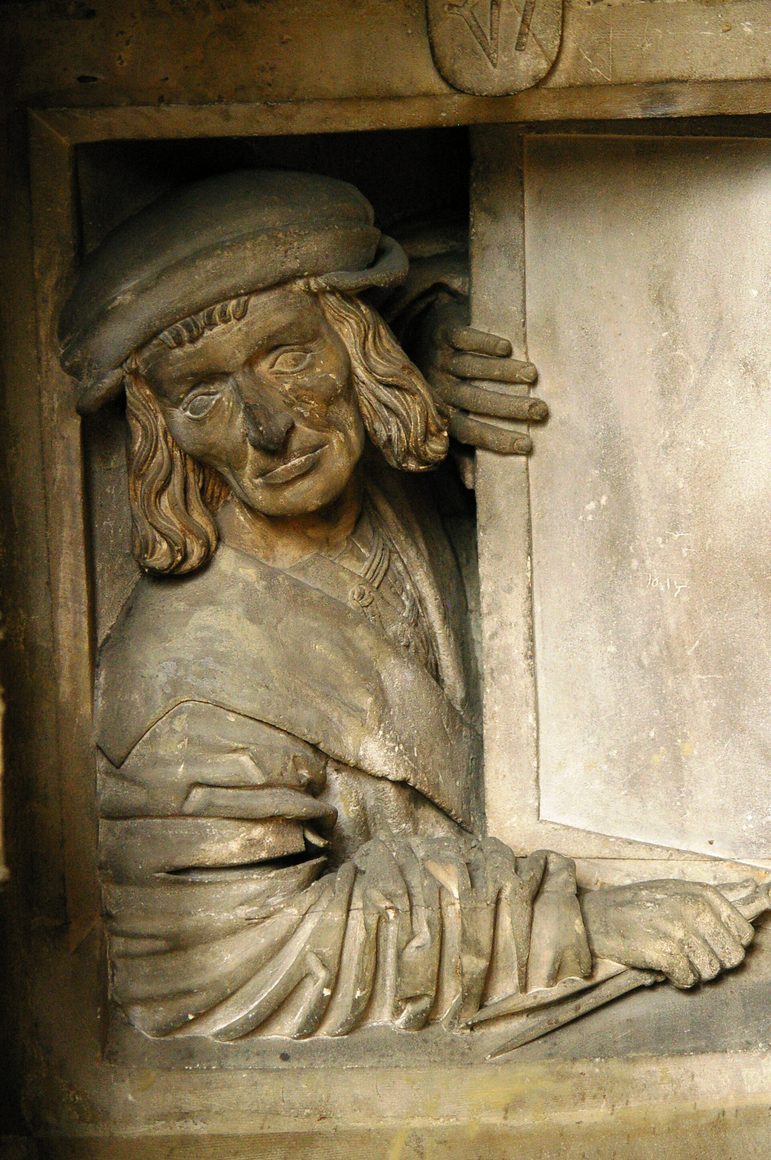
Inside, the nave is tall, dark and crowded with altars, statues and canopies. On a pier on the left is the late-Gothic stone pulpit, of about 1500 to 1515, its sides carved with the four Fathers of the Church and its stair rail crawling with toads and lizards. Beneath the stair a carved man leans out of a window: the ‘window gazer’, traditionally taken as a self-portrait of the sculptor Anton Pilgram, though who carved the pulpit is now debated. Pilgram’s signed self-portrait is elsewhere in the nave, on the north wall at the base of the old organ loft.
The east end
At the head of the north choir is the Wiener Neustädter Altar of 1447, a carved and painted Gothic altarpiece, and in the south choir the tomb of the Emperor Frederick III, who died in 1493: a great chest of red marble carved with some 240 figures, which survived 1945 because it had been walled up for protection. The Baroque high altar in the middle shows the stoning of St Stephen.

The catacombs
Below the church lie the Ducal Crypt, begun by Rudolf IV, where 78 containers hold the remains, among them many hearts and entrails, of 72 Habsburgs, and ossuaries with the bones of more than 11,000 people, moved here when the city’s cemeteries closed in the eighteenth century. You can only go down with a guide.
The towers
The south tower climb is 343 steps up a tight spiral to the old watchmen’s room at 67 metres. The north tower has a lift to an open platform beside the Pummerin, recast in 1951 partly from the metal of the old one and at about 20 tonnes the largest bell in Austria. It rings in the New Year on national radio and television.
Tickets and tours
Nave, towers and catacombs
Each part is €8, sold at the cathedral; the All-Inclusive ticket (€29) is also sold online and is valid for a year. Tour companies combine the cathedral with walks round the old city and the Hofburg.
Tour and hotel links go to GetYourGuide and Booking.com. This site earns nothing from them at present — they are here because they are the quickest way to check what is actually available.
Don’t miss
- The Giant’s Door The Romanesque west portal you enter by.
- The pulpit And the window gazer beneath its stair.
- Frederick III’s tomb In the south choir.
- The Wiener Neustädter Altar At the head of the north choir.
- The roof tiles Best seen from the north tower.
- The Pummerin Austria’s largest bell, in the north tower.
Insider tips
Do the nave first, the towers last. Sightseeing in the nave stops at 4.30pm, but the towers stay open until 7pm, so leave the climb until late afternoon, when the light over the city is softer. On Sundays the nave opens to visitors only in the afternoon.
To hear the cathedral at its best, go to the High Mass at 10.15am on Sundays, usually with choir and organ. Mass is free; just don’t wander round during it.
The cathedral’s treasury is no longer shown in the church. It is in the Dom Museum Wien, across the square at Stephansplatz 6, which is included in the All-Inclusive ticket.
Walk round the outside before you go: the north side has the pulpit from which St John of Capistrano preached against the Ottomans in 1451, and on the outer wall near the Giant’s Door there are iron bars once used as official measures of length for cloth and linen.
Common questions
Is St Stephen's Cathedral free to enter?
The entrance area at the back of the church is free during opening hours. To walk round the nave, with the pulpit and the high altar, you need a sightseeing ticket, €8 for adults and €3 for children.
Can you climb the tower of St Stephen's Cathedral?
Yes. The south tower is 343 steps, with no lift, up to the old watchmen’s room at 67 metres. The north tower has a lift to a platform beside the Pummerin bell. Each costs €8, and both open daily from 9am to 7pm.
Which tower should I choose?
The south tower is higher and has the classic view over Vienna, but it is all stairs. The north tower has a lift, the great bell, and the best look at the patterned roof tiles.
How do you see the catacombs?
Only on a guided tour, €8, which runs several times a day and needs no booking. The tours start at the catacomb stairs inside the cathedral, and they are not accessible to wheelchairs.
Is there a combined ticket for St Stephen's Cathedral?
Yes, the All-Inclusive ticket, €29 for adults and €7 for children, valid for a year. It covers the nave with an audio guide, both towers, a catacomb tour and the Dom Museum, which holds the cathedral treasury.
Was Mozart married at St Stephen's Cathedral?
Yes. Mozart married Constanze Weber here on 4 August 1782, and his funeral service was held in the Chapel of the Cross on 6 December 1791.
Where to stay and eat nearby
The cathedral is the centre of Vienna, within walking distance of the Hofburg, the Opera and most of the old city’s hotels. The streets round the square are full of cafés; step a block or two away from Stephansplatz for better value.
More churches
- St Vitus Cathedral, Prague — the other great Gothic cathedral of central Europe, four hours away by train.
- Cologne Cathedral — another Gothic giant, finished centuries later.
- Karlskirche — Vienna’s great baroque church, 15 minutes’ walk south.
- Melk Abbey — the baroque abbey on the Danube, an hour by train.