
Melk Abbey, Austria
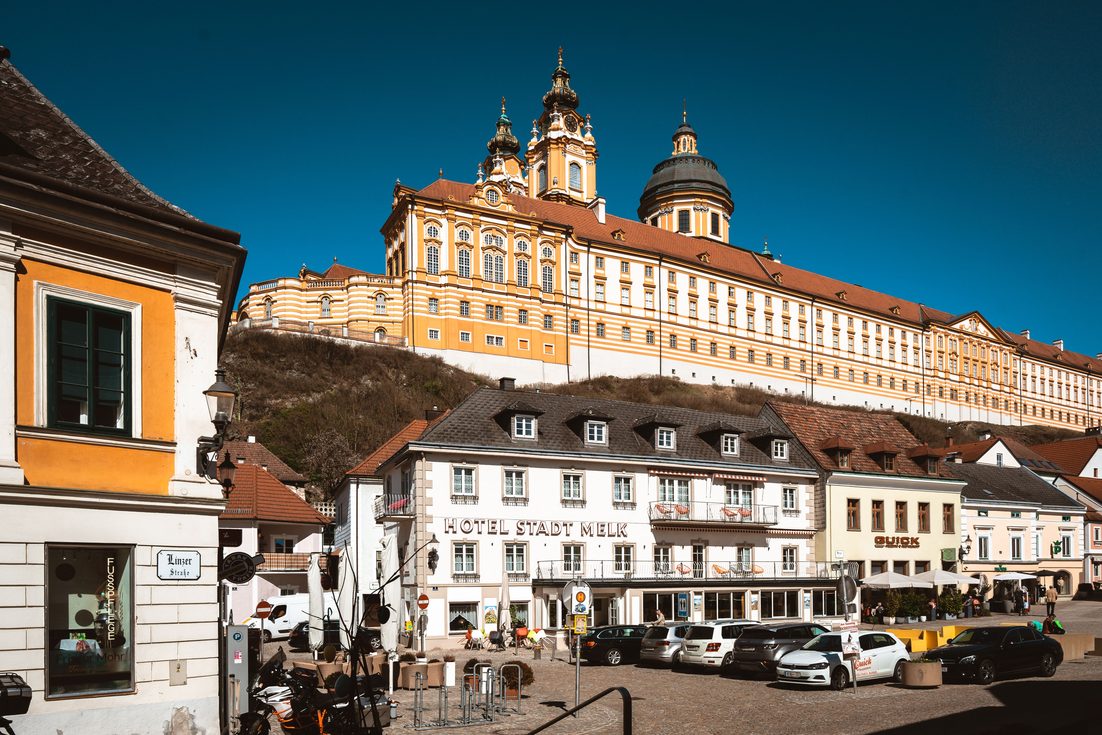
Melk Abbey is one of the great baroque monasteries of Europe: a long golden-yellow palace of a Benedictine abbey on a rock above the Danube, at the western gateway to the Wachau valley. Monks have lived here for more than 900 years. The visit takes in the imperial rooms, the Marble Hall, the library and a church that is a blaze of gold and fresco. It is about an hour from Vienna by train.
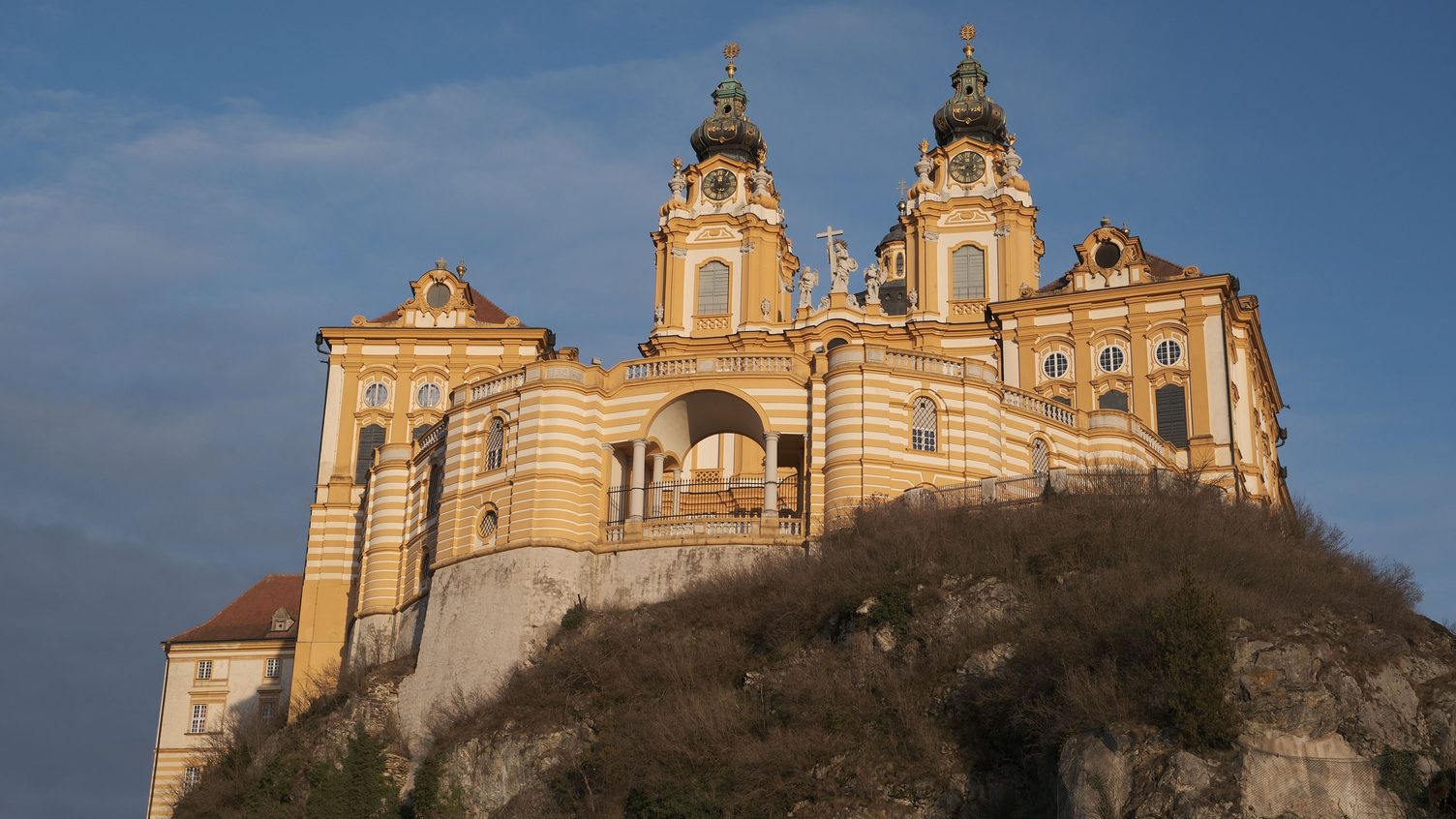
Nine hundred years of monks
In 1089 Margrave Leopold II of Austria gave his castle at Melk to Benedictine monks from Lambach, and the community has lived here ever since. The abbey you see today was built for Abbot Berthold Dietmayr, who in 1702 began rebuilding it to designs by the architect Jakob Prandtauer. Painters such as Johann Michael Rottmayr and Paul Troger covered its ceilings with frescoes. A fire in 1738 badly damaged the new buildings, and the work was finished only after the abbot’s death.
The abbey still runs a large school, and the monks still pray in the church. Umberto Eco named the narrator of The Name of the Rose, Adso of Melk, after the abbey.
The visitor’s cheat sheet
| Where | Abt-Berthold-Dietmayr-Straße 1, Melk, Lower Austria; about 15 minutes’ walk from Melk station |
|---|---|
| Opening hours | 1 April–31 October: daily 9am–5.30pm, last entry 5pm. 2 November–6 January: 10am–4.30pm. 7 January–February and March weekdays: guided tours only |
| Admission | Adults €16, students to 27 €8, family (children to 16) €32; guided tour €4 extra; park only €5.50 (2026) |
| Tours in English | April–October, usually 10.55am and 2.55pm, plus 1.55pm from May to September; winter tours at 11am, 1.30pm and 3pm; winter tours at 11am, 1.30pm and 3pm; winter tours at 11am, 1.30pm and 3pm |
| Photography | Not allowed inside the abbey |
| How long | Two and a half hours, more with the park |
Hours and admission checked against the official site in October 2026. They change; the official site is always the last word.
No photos inside. Photography is not allowed anywhere inside the abbey, including the church and the library. From January to March much of the time it can only be seen on guided tours.
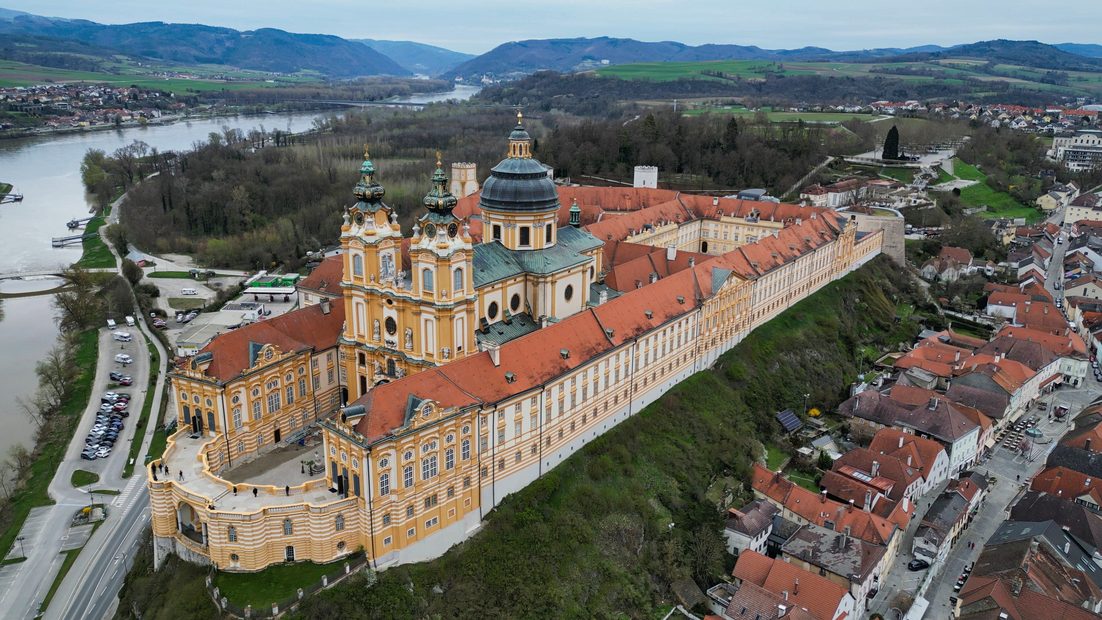
What to see
The imperial rooms and museum
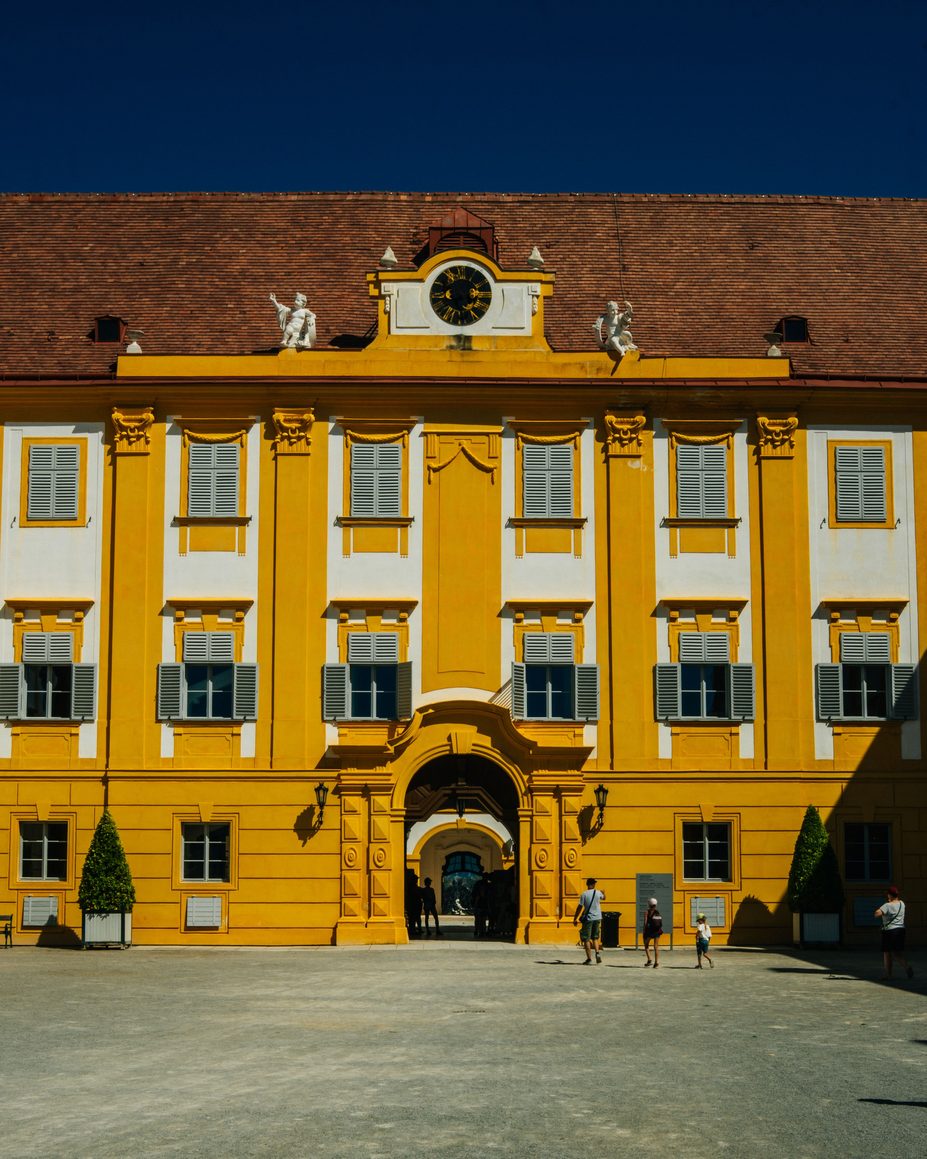
The visit begins through the forecourts and up the Emperor’s Staircase to the imperial corridor, nearly 200 metres long, where the rooms once kept for visiting Habsburgs now hold the abbey museum. The abbey’s greatest treasure, the medieval Melk Cross, is shown only on special occasions.
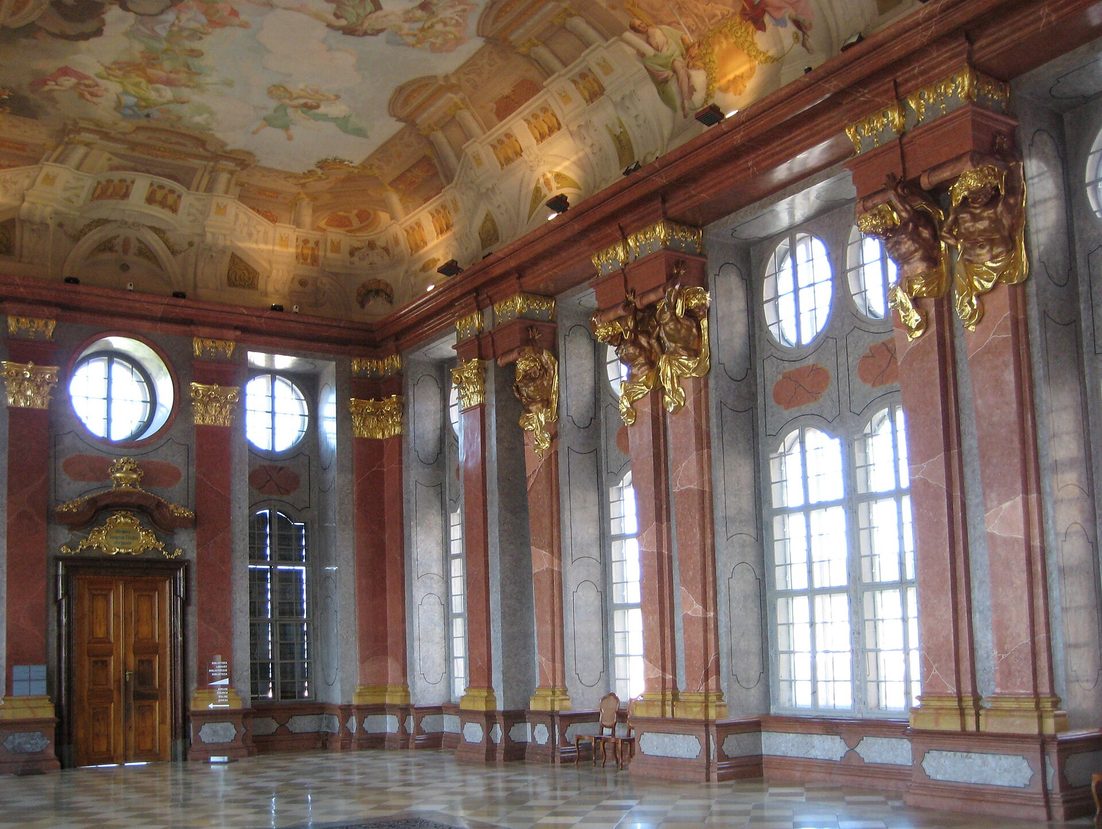
The Marble Hall
The banqueting hall for the abbey’s guests is lined with pink and grey marble, most of it painted plaster. Its ceiling, by Paul Troger, shows the goddess Pallas Athene leading humanity from darkness into light. From here a curving terrace in front of the church leads to the library, with a view along the Danube.
The library
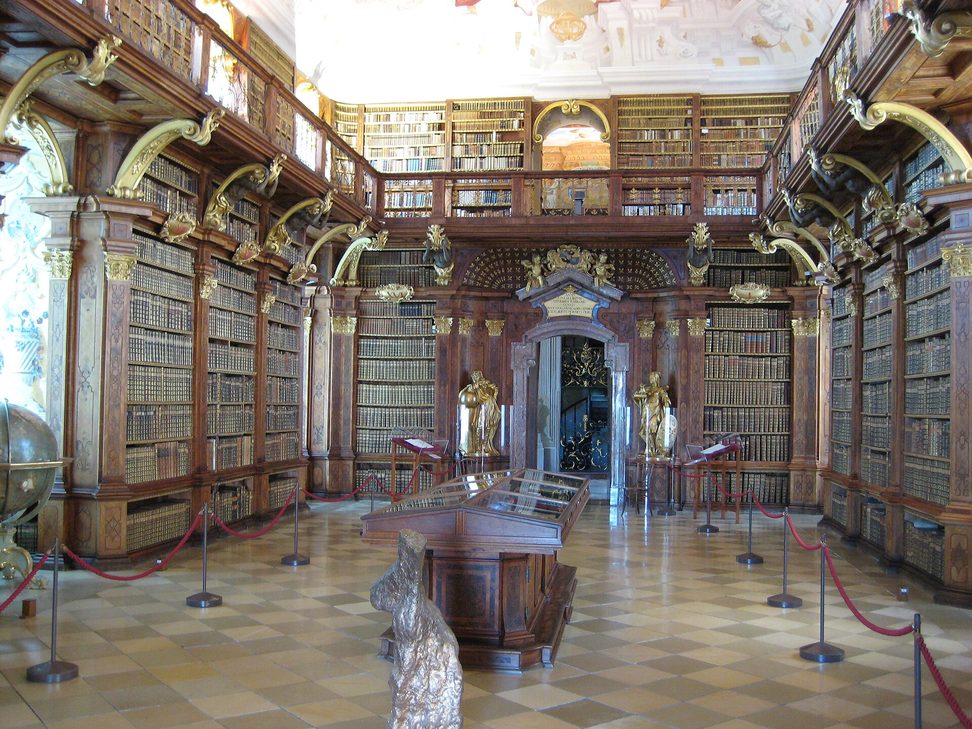
The library holds around 100,000 books, with some 1,800 manuscripts, in gilded walnut cases under another Troger ceiling. Only the two main rooms are on show, and some of the shelves may be under restoration.
The abbey church
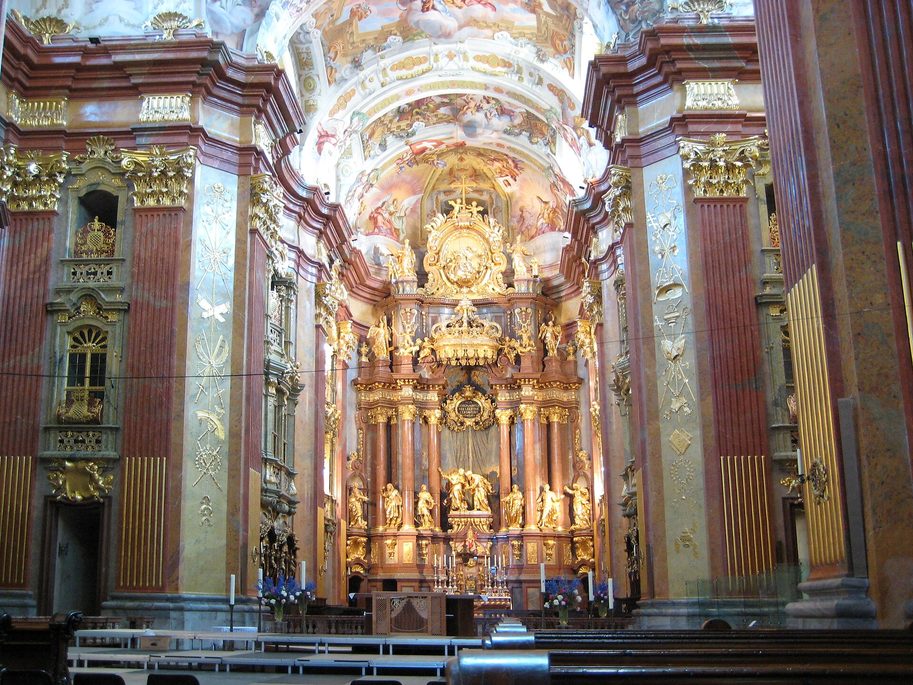
A spiral staircase leads down to the church, dedicated to Saints Peter and Paul, with Rottmayr’s frescoes on the ceiling and dome, red and gold marble, and a high altar showing the two apostles taking leave of each other before their martyrdom. Few baroque churches are as rich.

The park
Below the abbey is a baroque garden with a garden pavilion painted with exotic landscapes by Johann Wenzel Bergl. From April to October it is included in the abbey ticket, or can be visited on its own.
Getting there
Trains from Vienna take about an hour, sometimes with a change at St Pölten; from Melk station it is about 15 minutes’ walk uphill through the town. Parking at the abbey is free for visitors. In summer, boats run along the Danube between Melk and Krems through the Wachau, a lovely way to arrive or leave.
Where to stay
Tickets are sold at the abbey and on its website. Melk and the Wachau make a good overnight stop, with wine taverns and hotels in the town and along the river.
The hotel link goes to Booking.com. This site earns nothing from it at present — it is here because it is the quickest way to check what is actually available.
Don’t miss
- The library Gilded shelves and a painted ceiling.
- The church Gold, marble and fresco.
- The terrace Looking down the Danube.
- The Marble Hall Troger’s ceiling.
- The garden pavilion Bergl’s painted landscapes.
Insider tips
Come early or late. Coach tours and river-cruise groups fill the abbey in the middle of the day in summer. Arrive at 9am, or in the late afternoon, and finish in the park.
Common questions
How much does Melk Abbey cost?
In 2026 a ticket for the abbey costs €16 for adults, €8 for students up to 27 and €32 for a family. A guided tour costs €4 more, and the park and garden pavilion alone €5.50.
When is Melk Abbey open?
From 1 April to 31 October, daily from 9am to 5.30pm, with last entry at 5pm. From 2 November to 6 January it opens 10am to 4.30pm; from 7 January to the end of February, and on weekdays in March, it can only be seen on guided tours, so check the times before you go.
Can you take photos inside Melk Abbey?
No. Photography is not allowed anywhere inside, including the church and library. You can take photos on the terraces, in the courtyards and in the park.
How do you get to Melk Abbey from Vienna?
By train, about an hour from Vienna, sometimes with a change at St Pölten; the abbey is about 15 minutes’ walk uphill from Melk station. In summer, boats run along the Danube through the Wachau between Melk and Krems.
Is there an English tour of Melk Abbey?
Yes. From April to October, usually at 10.55am and 2.55pm, with an extra tour at 1.55pm from May to September; in winter, tours in German and English run at 11am, 1.30pm and 3pm. You can also visit on your own for most of the year.
More churches in Austria
- St Stephen’s Cathedral — in the heart of Vienna.
- Karlskirche — Vienna’s great baroque domed church.
- Hallstatt Charnel House — painted skulls in the Salzkammergut.