
Hallstatt Charnel House
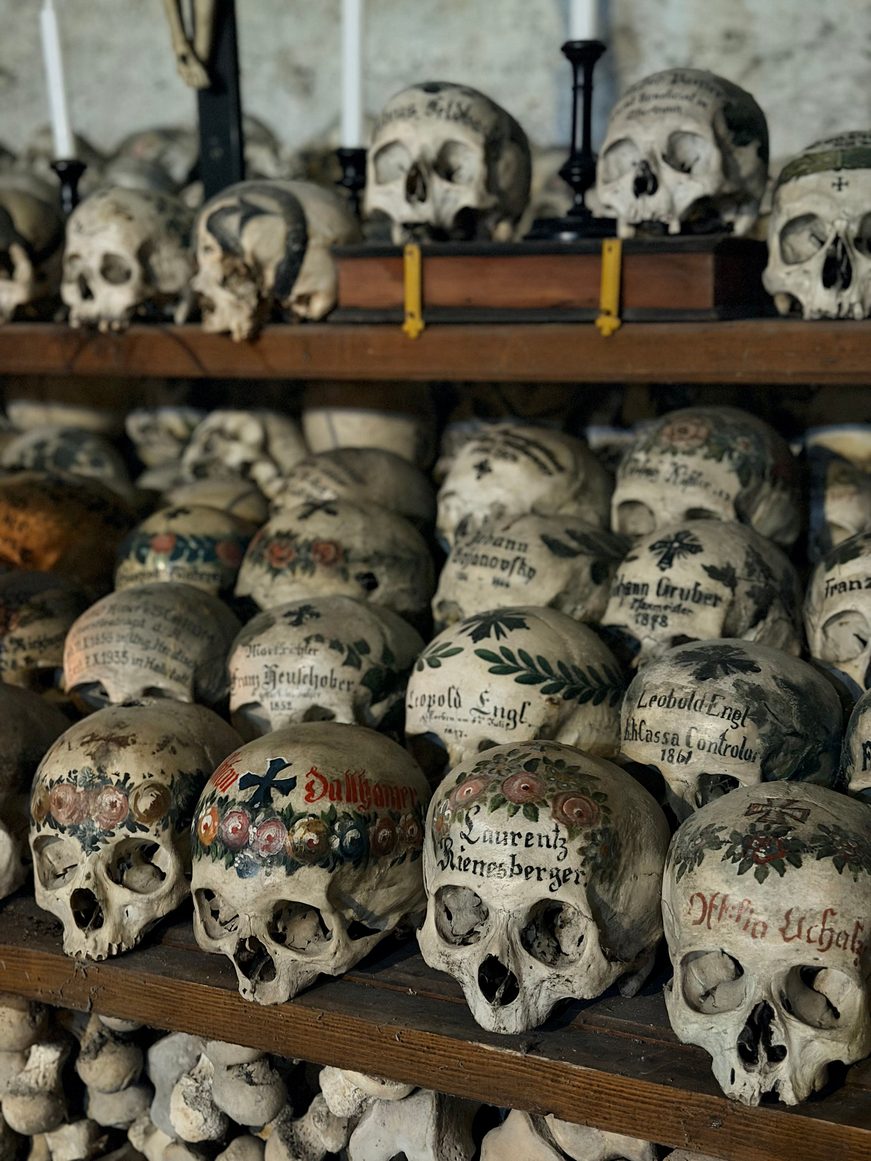
In a small chapel above the lake at Hallstatt, about 1,200 human skulls are stacked on wooden shelves, and around 610 of them are painted with wreaths of flowers or leaves, crosses, names and the dates their owners died. The charnel house, the Beinhaus, exists because the village cemetery is wedged on a ledge between mountain and lake and has never had room to grow. It costs €2, cash only, and is one of the most extraordinary small rooms in Europe.
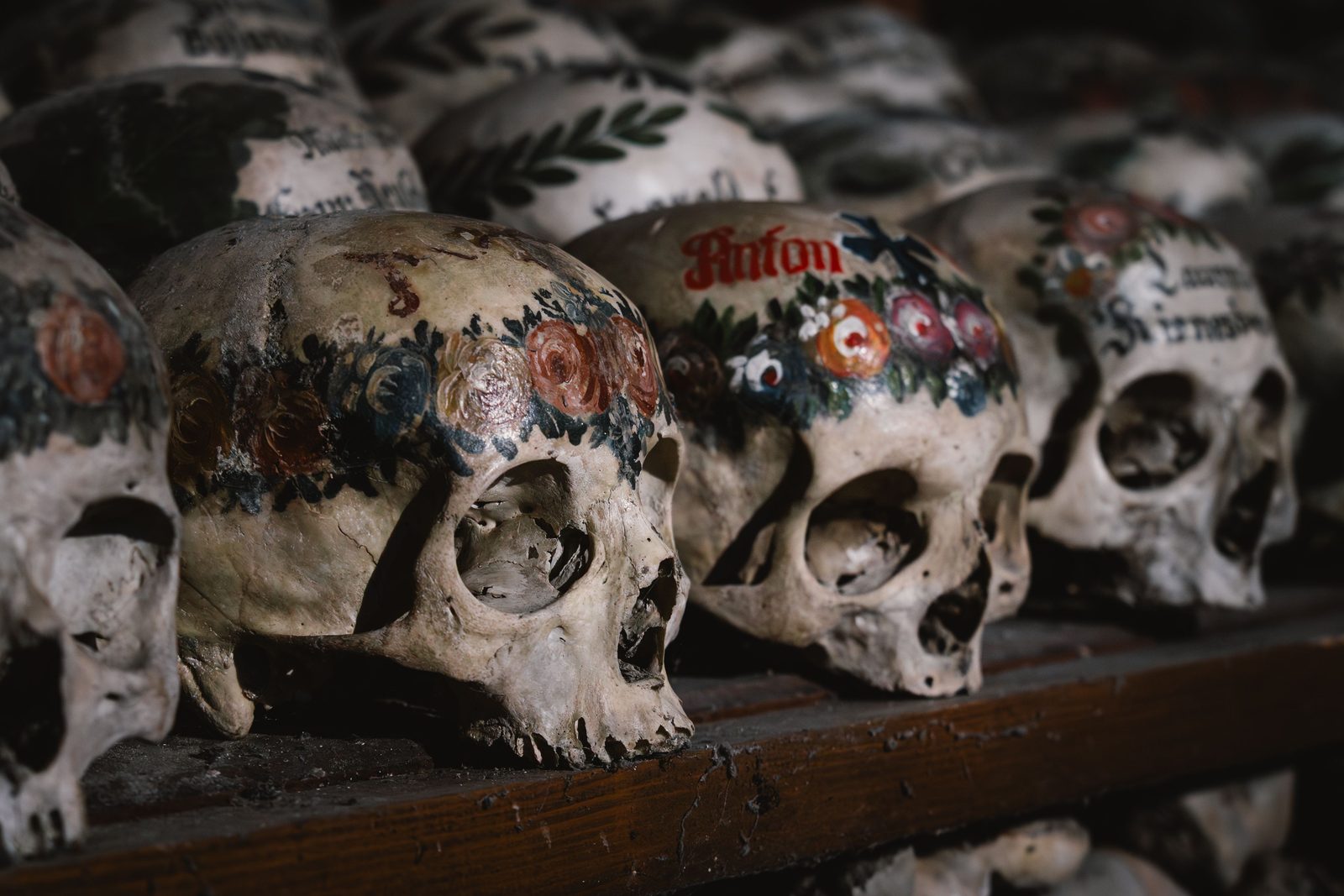
Why the skulls are here
Hallstatt has been a salt-mining village for thousands of years, built on a strip of land at the foot of the mountain. Its Catholic cemetery is a terrace of rock beside the parish church. With no space to expand and cremation not allowed, graves were opened again after ten to fifteen years. The skulls and long bones were taken out, cleaned, bleached in the sun and moonlight, and placed in the charnel house on the lower floor of St Michael’s Chapel, a medieval chapel traditionally dated to the twelfth century. Parish records list some 30,000 burials up to 1900, so the bones here are only a fraction of the village’s dead.
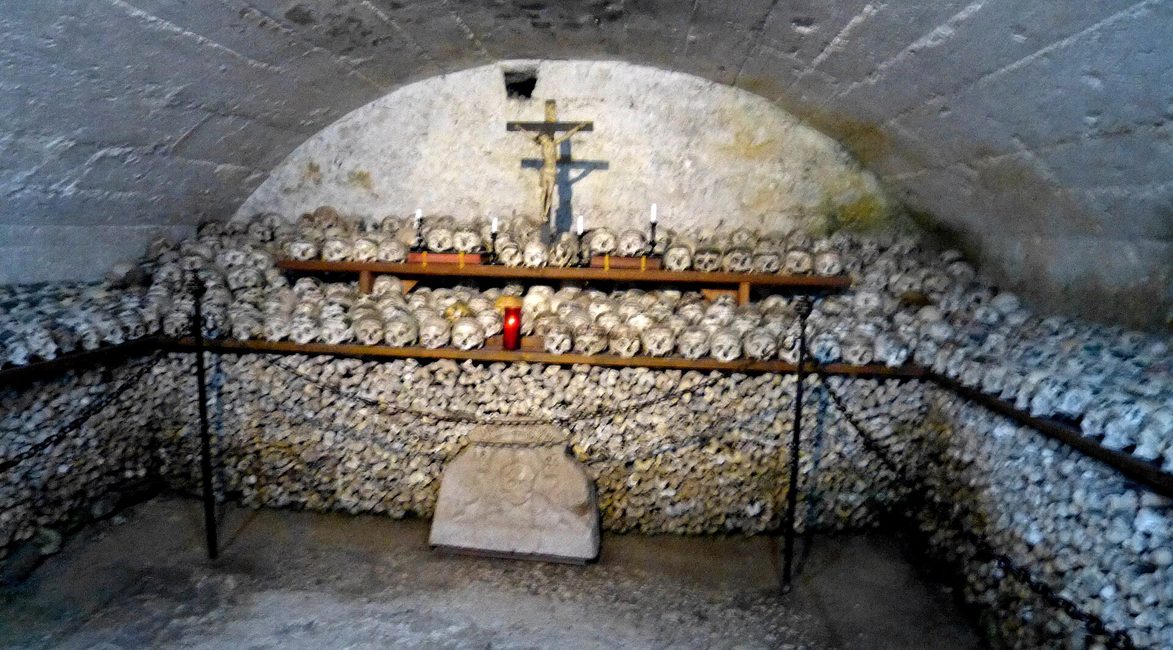
From around 1720 families began to have the skulls painted. The oldest have dark, heavy wreaths; later came crosses, flowers on the forehead, and sprigs of oak, ivy or oleander at the temples. Many carry the name and the date of death, some in Latin, and they are arranged by family. Most of the painting was done in the nineteenth century. The last skull, that of a woman who died in 1983, was added in 1995 at her own request; it sits to the right of the cross.
The visitor’s cheat sheet
| Where | Kirchenweg 40, 4830 Hallstatt, beside the Catholic parish church, up steps from the market square |
|---|---|
| Opening hours | May–September daily 10am–6pm; October daily 10am–5pm; November–April short midday hours, so ring the parish office (+43 6134 8279) first |
| Admission | €2, children 6–15 50 cents; cash only. The parish church is free, daily 9am–5pm |
| Getting there | Hallstatt station is across the lake: the ferry meets the trains and is a short crossing (€4, cash only). Bus 541 from Bad Ischl, changing at Gosaumühle to the 543. Cars use car parks P1 or P2 on the edge of the village |
| Access | Reached by steep lanes and steps; the room is very small |
| How long | Twenty minutes for the charnel house; half an hour more for the church and cemetery |
Hours and admission checked against the official site in October 2026. They change; the official site is always the last word.
Bring cash, and check winter hours. The charnel house takes cash only, and so does the ferry from Hallstatt station. From May to October it is open every day; from November to April it opens only for a few hours around the middle of the day, and the official sources do not agree on which days, so ring ahead. It is a working cemetery and a place of prayer: speak quietly, keep off the graves, and never use flash.
What to see, in the order you meet it
The climb to the church
From the market square, steep lanes and flights of steps lead up to the terrace of the Catholic parish church, Maria am Berg. The church has a twelfth-century tower and a late Gothic hall built out over the rock, finished in the early 1500s. Over the main door are Passion frescoes of around 1500.
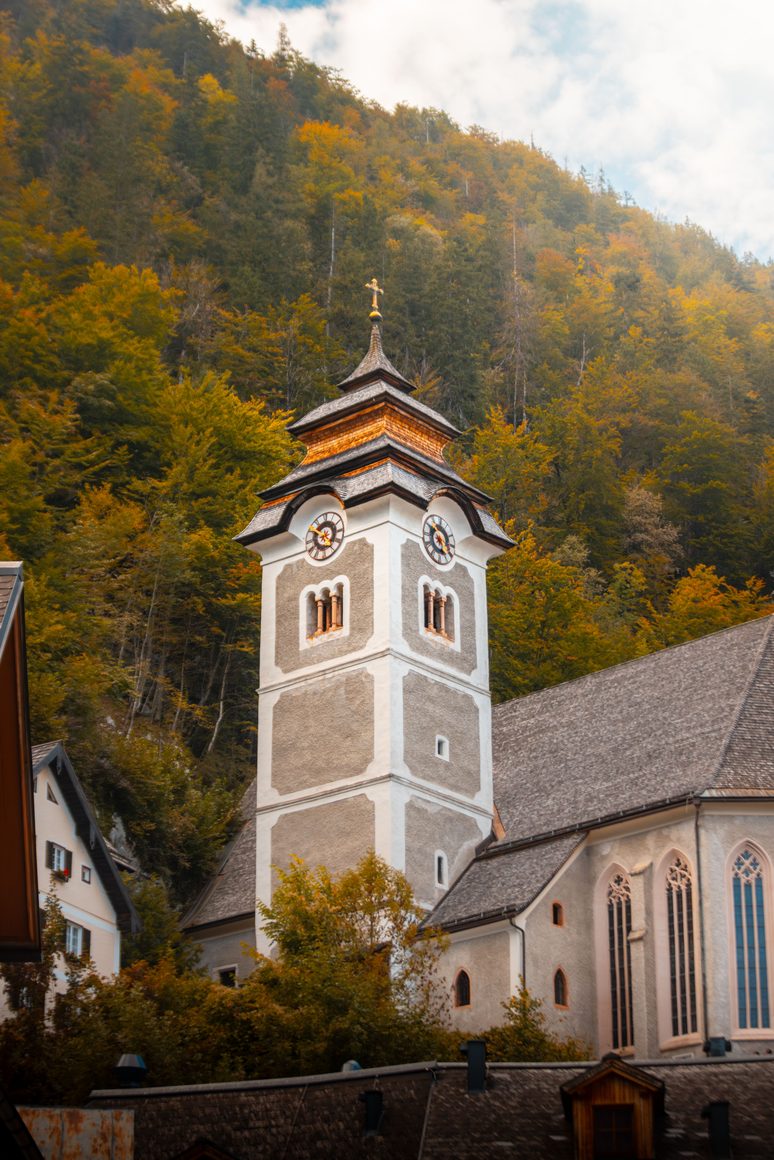
The parish church
Inside, the great carved winged altar is by Leonhard Astl, given by the salt miners and completed around 1520. In the shrine the Virgin and Child stand between St Catherine, patron of the woodcutters, and St Barbara, patron of the miners. A smaller Gothic altar of about 1450 by the north door had four of its painted panels stolen in 1987; they were recovered in Italy in 2016–17 and have been back in the church since 2018. Entry to the church is free.
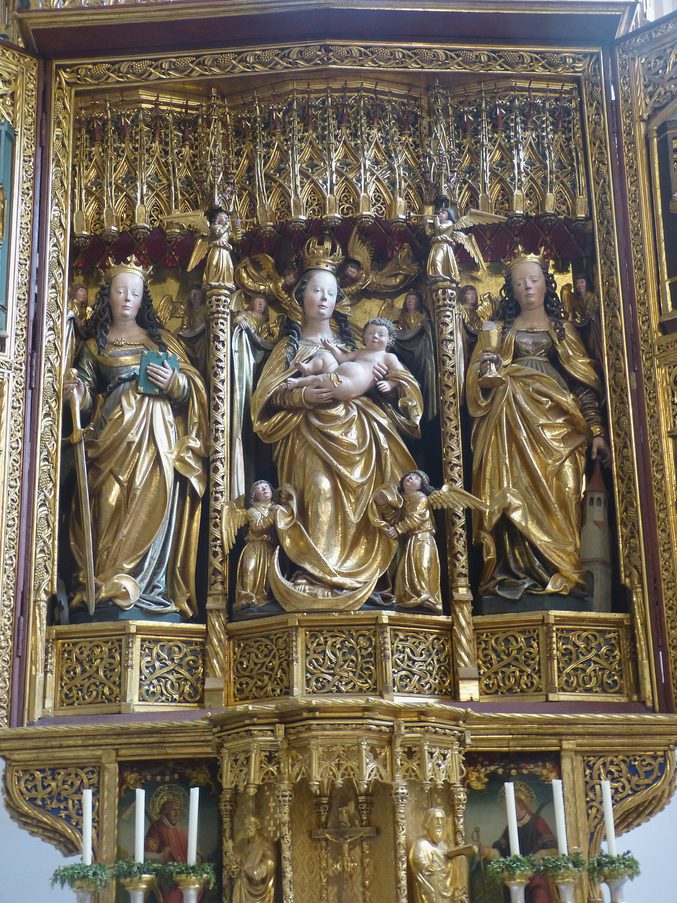
The cemetery
The cemetery is laid out on rock terraces around the church, crowded with wooden and wrought-iron crosses and flowers, with one of the best views of the lake in the village. Graves can still be reused after ten years, and there are no family plots.
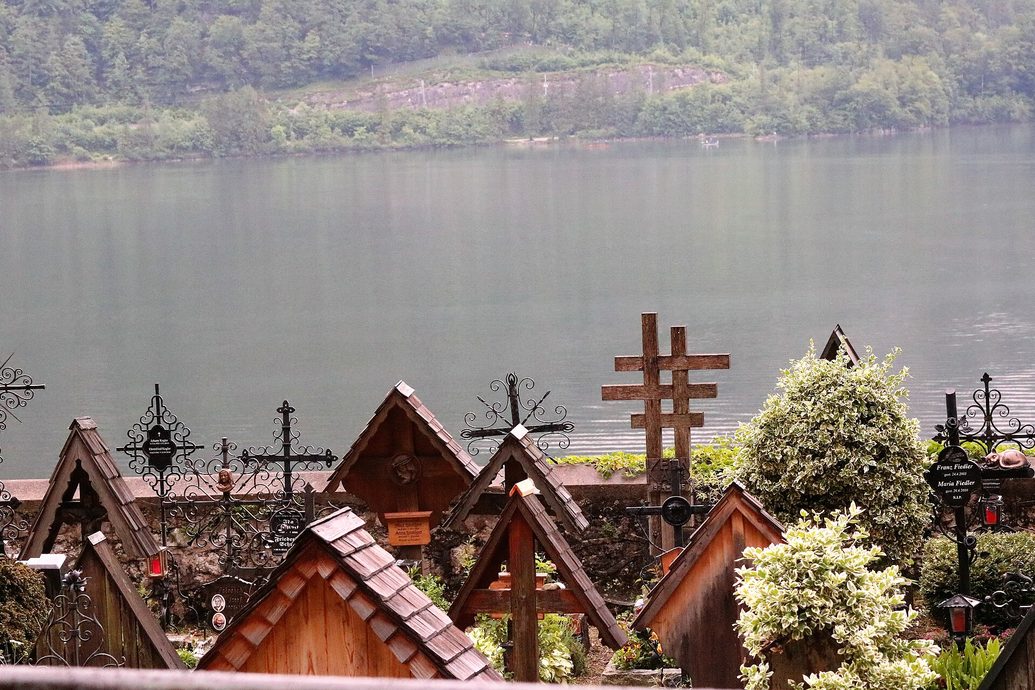
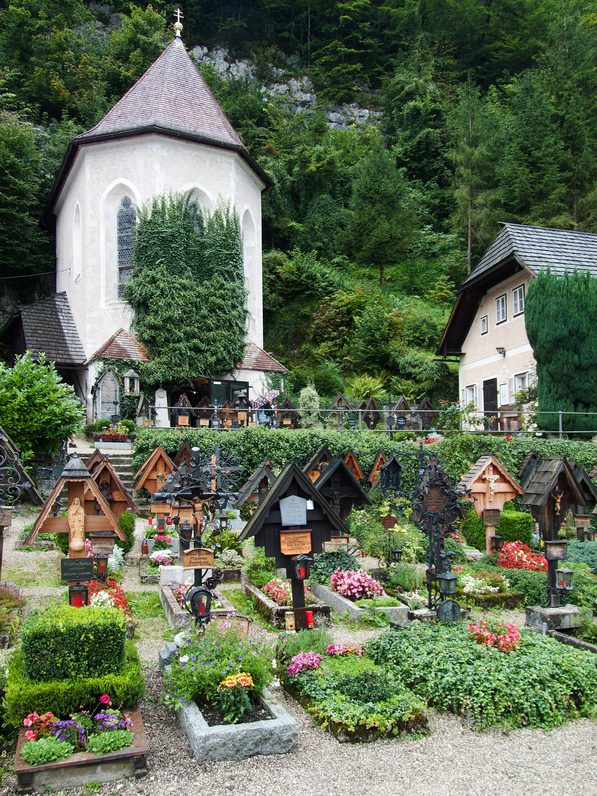
The charnel house
The charnel house is on the lower floor of St Michael’s Chapel. Inside the small room the skulls are lined up on shelves, family by family, with long bones stacked beneath them. Look for the different styles of wreath, the crosses on the foreheads, the names, and the last skull of 1995 beside the cross. Upstairs, St Michael’s Chapel has a St Michael altar of 1612.

Tours and tickets
Hallstatt tours and where to stay
There is no booking for the charnel house: pay in cash at the door. Most visitors come on a day trip from Salzburg or Vienna, and many tours combine the village with the salt mine and the Skywalk viewing platform above it. Staying overnight lets you see the village before the day trippers arrive.
Tour and hotel links go to GetYourGuide and Booking.com. This site earns nothing from them at present — they are here because they are the quickest way to check what is actually available.
Don’t miss
- The painted skulls About 610 of them, with names and dates.
- The last skull Added in 1995, to the right of the cross.
- The Astl altar The miners’ winged altar in the parish church.
- The cemetery On its terraces above the lake.
Insider tips
Come early or late. Day-trip coaches start arriving in the morning and fill the lanes from mid-morning. The charnel house is tiny, and at the busiest times there can be a short wait to go in. Opening time, or the last hour of the day, is quietest.
Day visitors cannot drive into the village: use car park P1 (open all year) or P2 (summer only), 5 to 20 minutes’ walk from the sights. Parking cannot be booked ahead. The train and ferry avoid the problem altogether, and the ferry runs all year.
Above the village, the new Salzbergbahn funicular, opened in August 2026, climbs to the salt mine and the Skywalk platform; the serpentine footpath up is currently closed for safety reasons.
Remember that Hallstatt is a village where people live. Do not fly drones, and keep to the paths in the cemetery.
Common questions
How much does the Hallstatt charnel house cost?
€2 for adults and 50 cents for children aged 6 to 15. It is cash only. The parish church next door is free.
When is the Hallstatt charnel house open?
From May to September daily 10am to 6pm, and in October 10am to 5pm. From November to April the hours are much shorter, around the middle of the day, and the two official sources disagree about which days, so ring the parish office on +43 6134 8279 before a winter visit.
How many skulls are in the Hallstatt charnel house?
The tourist board counts about 1,200, of which around 610 are painted; an older survey counted more. The tourist board dates the custom of painting them to 1720; it was at its height in the nineteenth century.
Why were the bones dug up?
The cemetery sits on a narrow ledge between the mountain and the lake and could not grow, and cremation was not allowed. After ten to fifteen years graves were reused, and the skulls and long bones were cleaned, bleached in the sun and moved to the charnel house.
Are skulls still added to the charnel house?
Very rarely. The last was added in 1995: the skull of a woman who died in 1983 and asked to be placed there. It is still possible if it is requested in a will.
Which church is the one by the lake in the famous photo?
That is the Protestant Christ Church of 1863. The charnel house is beside the Catholic parish church, higher up the hill behind it.
Where to stay and eat nearby
Hallstatt has a handful of hotels and guesthouses in the village, and more at Obertraun at the south end of the lake and in Bad Goisern and Bad Ischl to the north. Most of the restaurants are around the market square and along the lakeshore.
More churches in Austria
- St Stephen’s Cathedral, Vienna — whose catacombs hold the bones of more than 11,000 people.
- The Sedlec Ossuary — in the Czech Republic, decorated with the bones of tens of thousands of people.
- Melk Abbey — the great baroque abbey of the Danube.