
Carlisle Cathedral
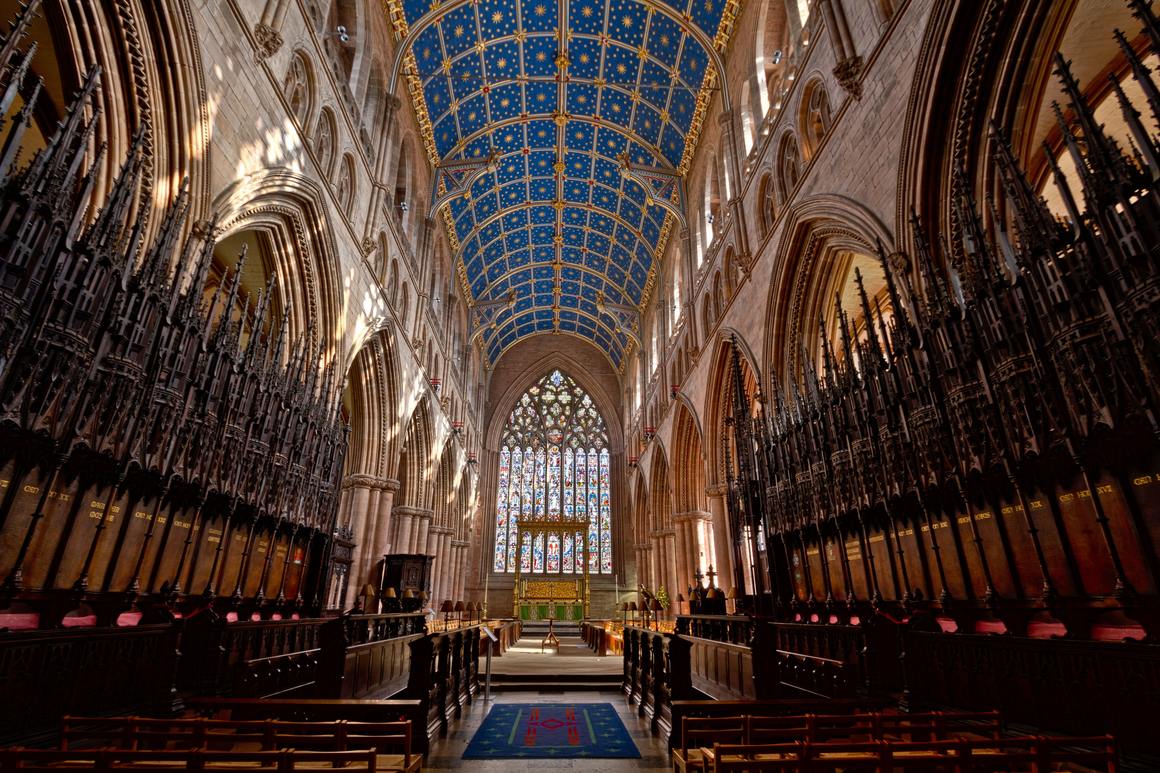
Carlisle is a border city, fought over by the English and the Scots for five hundred years, and its cathedral shows the scars. Most of the Norman nave was pulled down during the Civil War to repair the castle and the city’s defences, leaving a church that looks cut off at the west end. But walk in and turn east, and Carlisle springs its surprise: a choir under a barrel ceiling painted deep blue and scattered with gold stars, medieval stalls with painted legends on their backs, and one of the most beautiful windows in England.
An Augustinian cathedral on the border
Carlisle was taken from the Scots by William II in 1092, and in 1122 Henry I founded a priory of Augustinian canons here. In 1133 he made it the seat of a new bishop, for the newly English lands of Cumberland, and the priory church became a cathedral — the only one in medieval England run by Augustinian canons rather than Benedictine monks or secular priests. The Norman church was built of the local red sandstone.
In the thirteenth century the canons began a much larger choir in the Gothic style. A fire in 1292 destroyed much of it, and the rebuilding took most of the next century, which is why the choir has thirteenth-century arcades below and fourteenth-century work above. At the Reformation the priory was dissolved but the cathedral kept, with its last prior, Lancelot Salkeld, as its first dean.
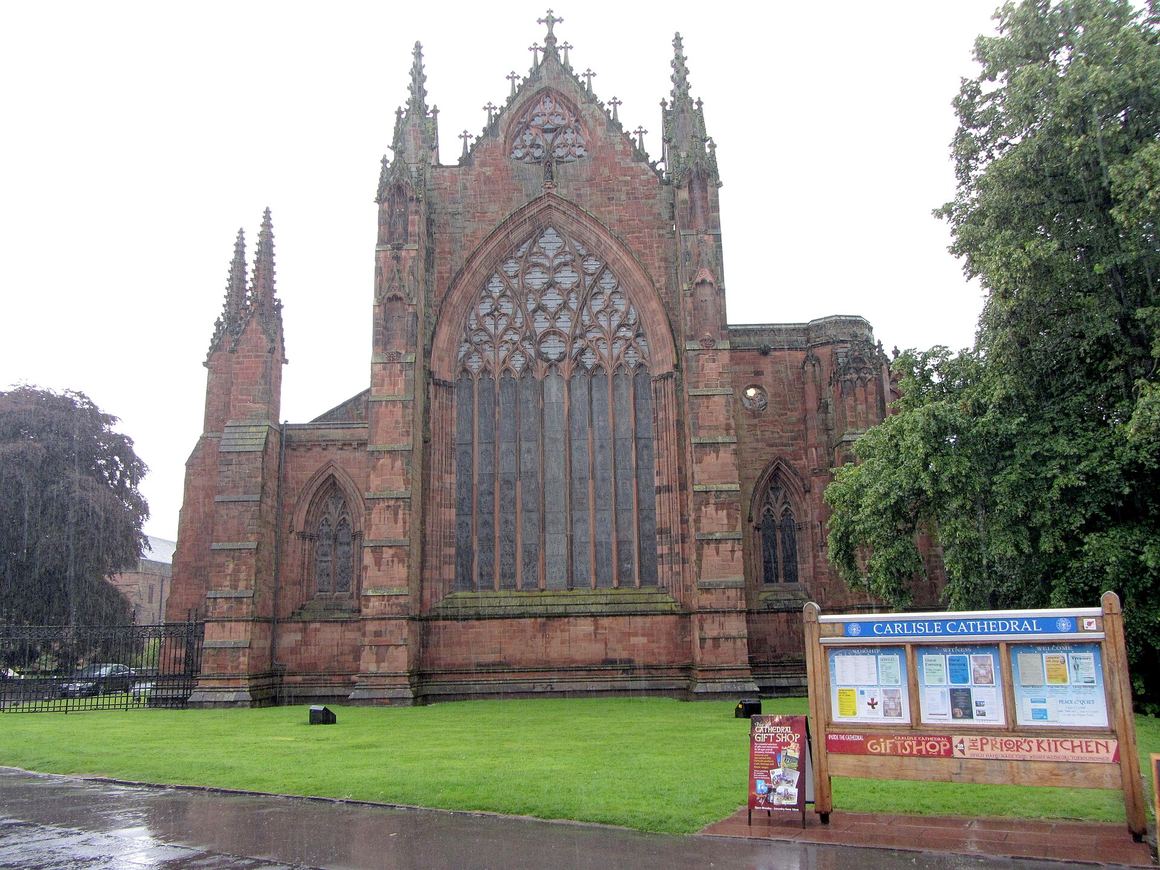
During the Civil War Carlisle held out for the king through a long siege in 1644–45. In 1646 the Scottish army that then held the city pulled down most of the nave, with the cloister and chapter house, and used the stone to repair the castle and the defences. Two bays of the nave survive. In 1797 the novelist Walter Scott was married here, on Christmas Eve.
The visitor's cheat sheet
| Where | 7 The Abbey, Carlisle, Cumbria, CA3 8TZ, in the city centre between the castle and the market |
|---|---|
| Getting there | Carlisle station is about 10 minutes’ walk; direct trains from London, Glasgow, Manchester and Newcastle. Public car parks nearby |
| Opening hours | Daily 10am–4pm for visitors. The building is open from early morning for services and prayer; check the cathedral’s website for any changes |
| Admission | Free; donations welcome. Free guided tours by volunteers |
| How long | About 1 hour; longer with the Treasury and the Fratry |
| Best time | Any day; combine with Carlisle Castle, five minutes’ walk away |
| Dress code | No formal code; respectful dress as in any working church |
| Food | Café in the Fratry undercroft, beside the cathedral |
Hours and admission checked against the official site in October 2026. They change; the official site is always the last word.
Small, and better for it. Carlisle is the second-smallest of England’s medieval cathedrals, after Christ Church in Oxford. It takes an hour to see properly, it is free, and it is rarely busy — and its choir is one of the great interiors of the north.
What to see, in the order you meet it
The Norman nave
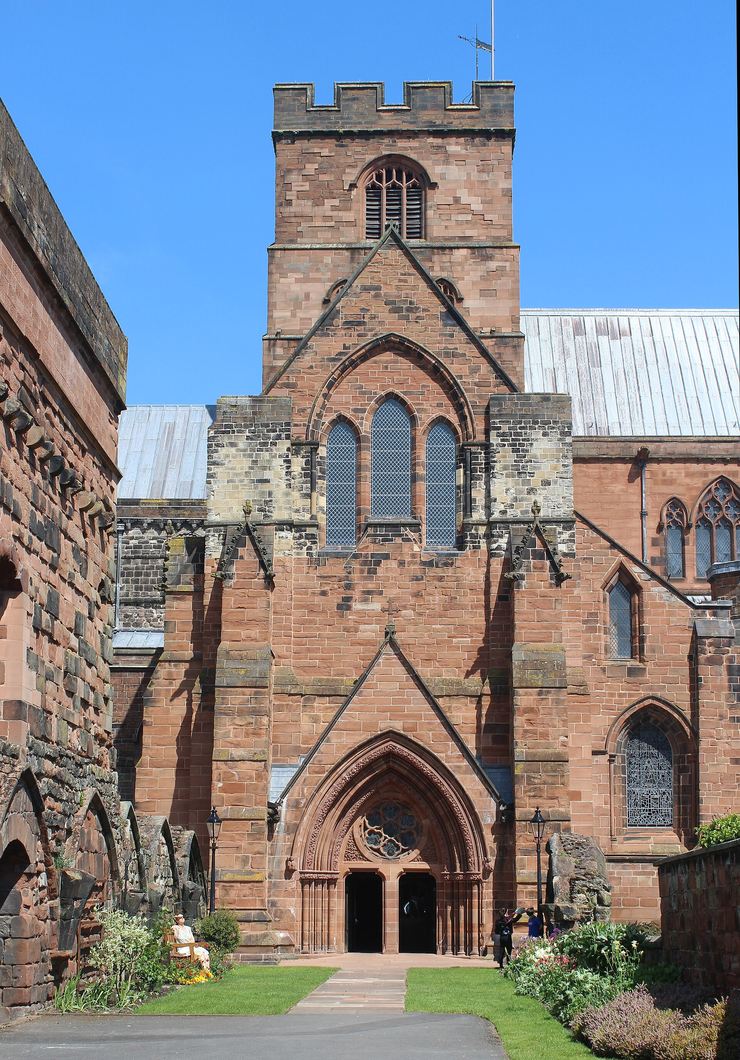
You enter through the south door into what is left of the nave: two bays of massive Norman pillars and round arches, now used as the regimental chapel of the Border Regiment. Look at the arches themselves. Several have sagged and distorted, pushed out of shape over nine centuries by the weight of the tower and by settlement in the ground; they are safe, but they are startlingly crooked.
The choir and its ceiling
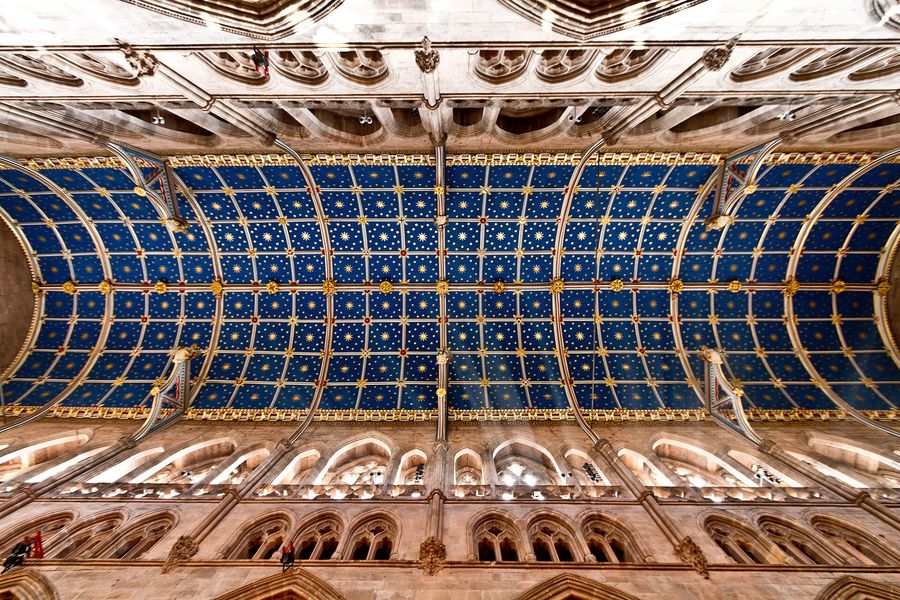
Go east, under the crossing, and into the choir. The tall arcades are of the thirteenth century; the upper parts and the roof are later. The wooden barrel ceiling, painted dark blue and powdered with gold stars, was restored and repainted in the 1850s to designs by the Victorian designer Owen Jones. It is the first thing every visitor looks at, and it is unforgettable.
Before you look at anything else, look at the tops of the choir piers. Their capitals are carved with the labours of the months, a medieval calendar in stone: pruning, sowing, reaping, threshing, killing the pig, feasting by the fire. They date from the rebuilding after the fire of 1292, and they are among the best of their kind in England.
The east window
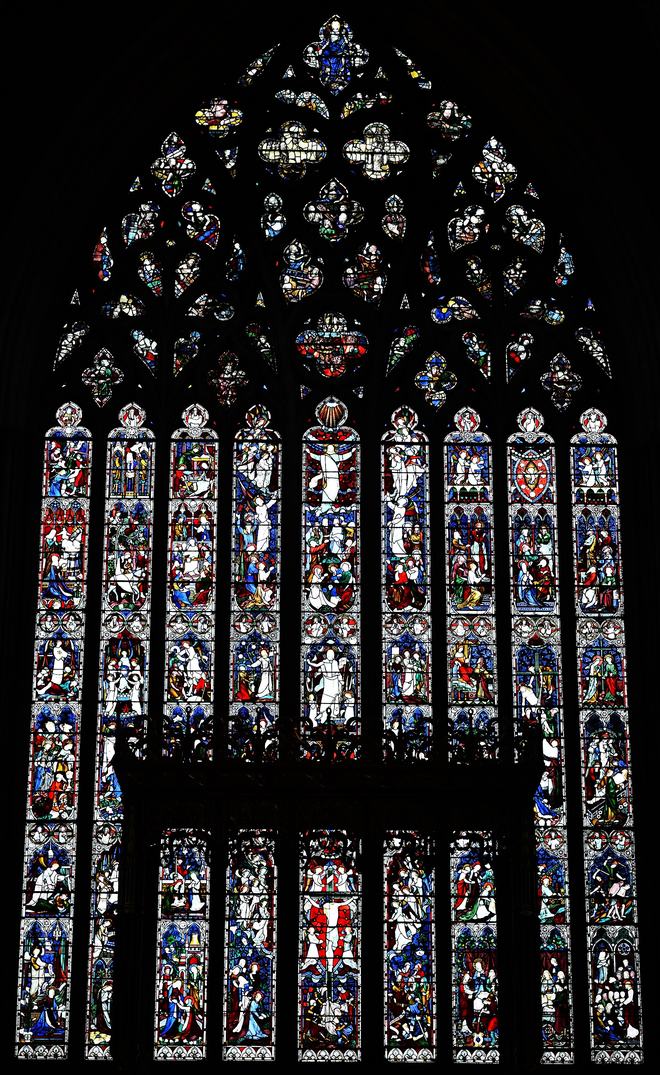
The east window fills the end of the choir. It is about 15 metres high, and its tracery, of the mid-fourteenth century, is a flowing pattern of curving lines, the high point of the English Decorated style. Most of the glass in the main lights is Victorian, but the small pieces in the tracery at the top are medieval, showing the Last Judgement.
The choir stalls and the painted panels
The choir stalls were made in the early fifteenth century, with carved misericords under the seats. On the backs of the stalls, facing the aisles, are painted wooden panels of the late fifteenth century, telling chiefly the legends of three saints — Augustine, Anthony and Cuthbert — in pictures with rhyming captions, like a medieval strip cartoon. Walk round the choir aisles to see them.
The Salkeld Screen and the Brougham Triptych
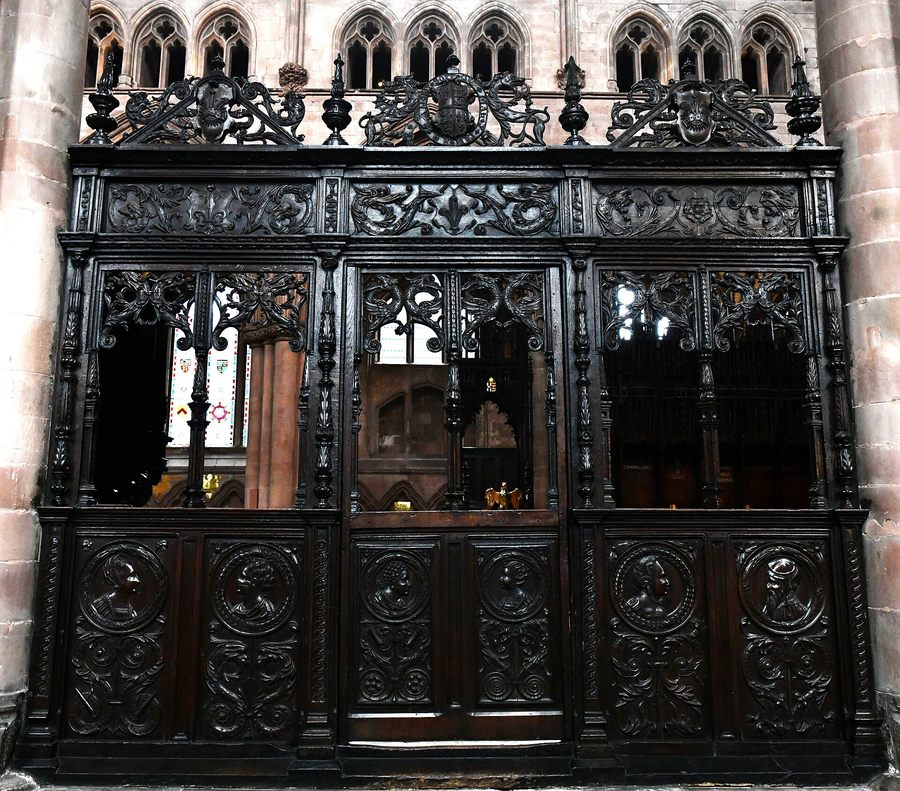
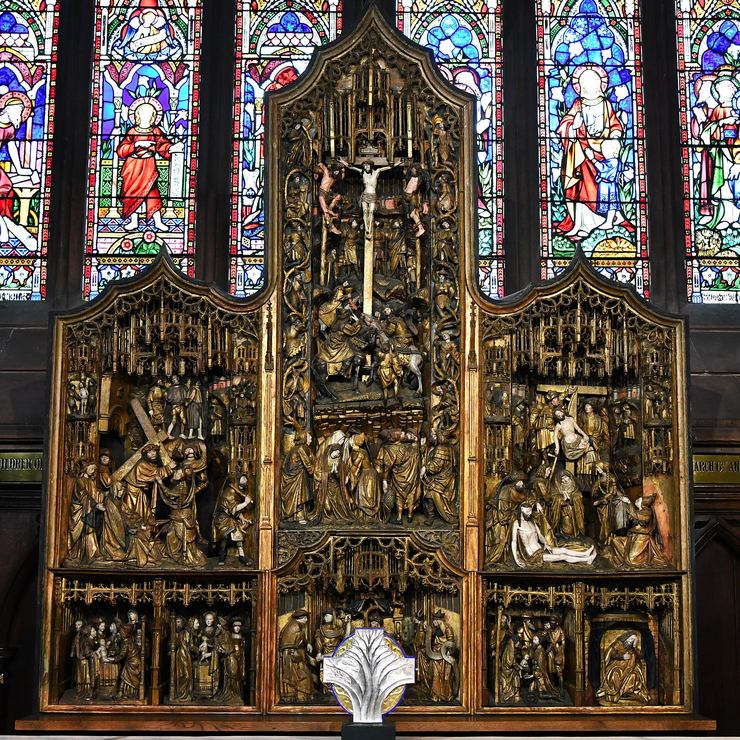
In the north choir aisle stands the Salkeld Screen, a wooden screen carved in the early Renaissance style for Lancelot Salkeld, the first dean, in the 1540s, with medallion heads, putti and his initials. At the west end of the cathedral, the Brougham Triptych is a carved and gilded altarpiece made in Antwerp in about 1520, showing scenes from the life of Christ; it came to the cathedral from St Wilfrid’s Chapel at Brougham, near Penrith.
The Treasury and the Fratry
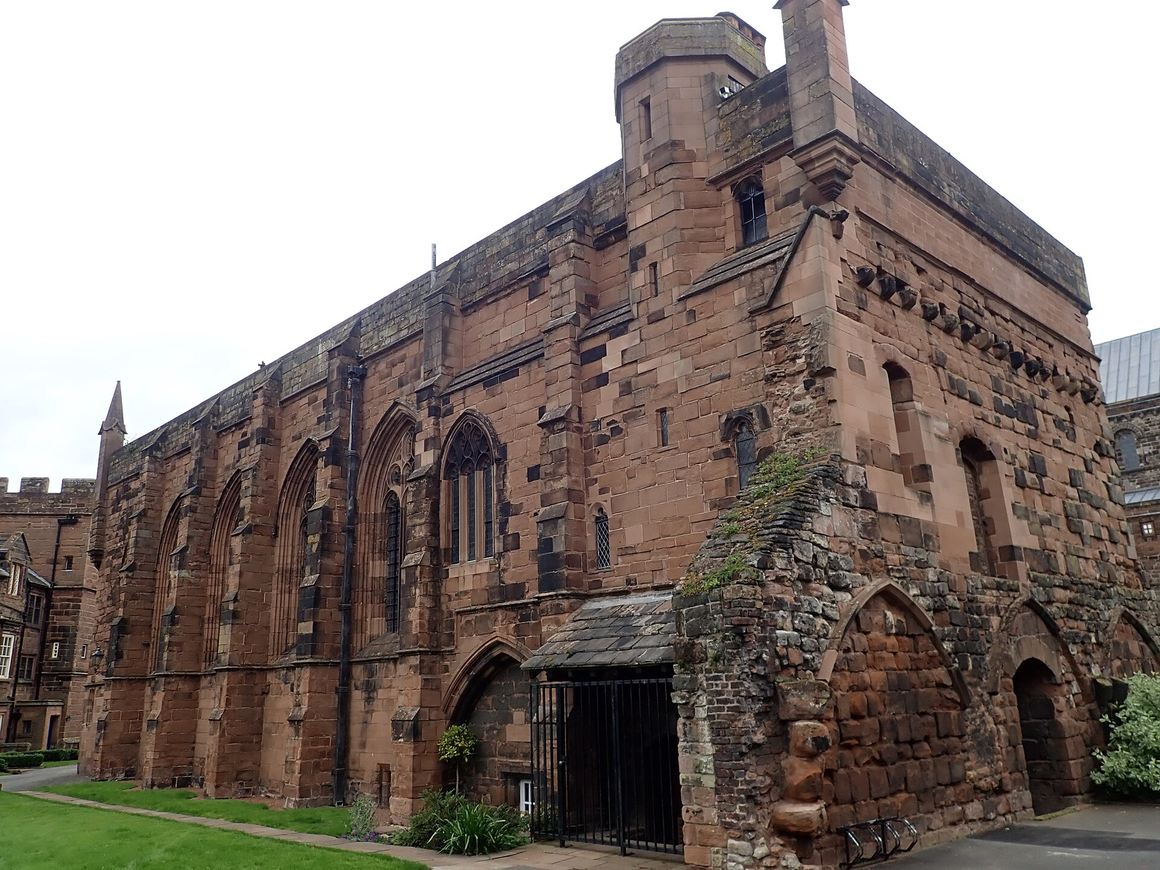
Below the choir, the Treasury displays the cathedral and diocesan plate and objects from the cathedral’s history. Outside, on the south side, the Fratry was the canons’ dining hall, rebuilt in about 1500; its vaulted undercroft is now the cathedral café.
Tickets and tours
Free, with free tours
There is no admission charge. Volunteer guides are often on duty and give free tours, and there are trails for children. Groups should book in advance. Donations keep the cathedral open.
The hotel link goes to Booking.com. This site earns nothing from it at present — it is here because it is the quickest way to check what is actually available.
Don't miss
- The starry ceiling Blue and gold, over the choir.
- The east window Fourteenth-century tracery and medieval glass at the top.
- The capitals The labours of the months, carved in stone.
- The painted panels Saints’ lives on the backs of the stalls.
- The crooked arches In the stump of the Norman nave.
- The Brougham Triptych Flemish carving of about 1520.
Insider tips
Do the castle the same day. Carlisle Castle, run by English Heritage, is five minutes’ walk away, and Tullie House museum, with Roman and border history, is between the two. Together with the cathedral they make a full day, and they tell the same story: a city built to be fought over.
Carlisle is the western end of Hadrian’s Wall country, and the city is a good base for the wall and for the northern Lakes. The cathedral is a short walk from the station, so it also makes a good stop on a journey north to Scotland.
Common questions
Is Carlisle Cathedral free to visit?
Yes. There is no admission charge, and donations are welcome. Volunteer guides are often on hand and give free tours.
Why is Carlisle Cathedral so short?
Most of its Norman nave was pulled down in 1646, during the Civil War, by the Scottish army holding the city, and the stone was used to repair the castle and defences. Only two bays of the nave survive, which is why the west end looks cut off. Carlisle is the second-smallest of England’s ancient cathedrals.
What is special about Carlisle Cathedral's east window?
It is about 15 metres high and has some of the finest flowing Decorated tracery in England, from the mid-fourteenth century. The glass in the tracery at the top is largely medieval; the lights below were filled with Victorian glass.
When is Carlisle Cathedral open?
It is open to visitors from 10am to 4pm every day, and earlier and later for services and private prayer. The cathedral publishes any changes on its website.
How do you get to Carlisle Cathedral?
Carlisle station, on the West Coast Main Line from London and Glasgow and the line from Newcastle, is about ten minutes’ walk. The cathedral is in the city centre, a few minutes from Carlisle Castle and Tullie House museum.
Where to stay and eat nearby
The Fratry café is beside the cathedral. The city centre, a few minutes away, has pubs, restaurants and hotels, and the station is close.
More English churches
- Durham Cathedral — the great Norman cathedral of the north-east
- Glasgow Cathedral — across the border, about an hour and a quarter by train
- York Minster — the mother church of the north
See all the cathedrals and churches worth visiting in England →