
St Mary Redcliffe
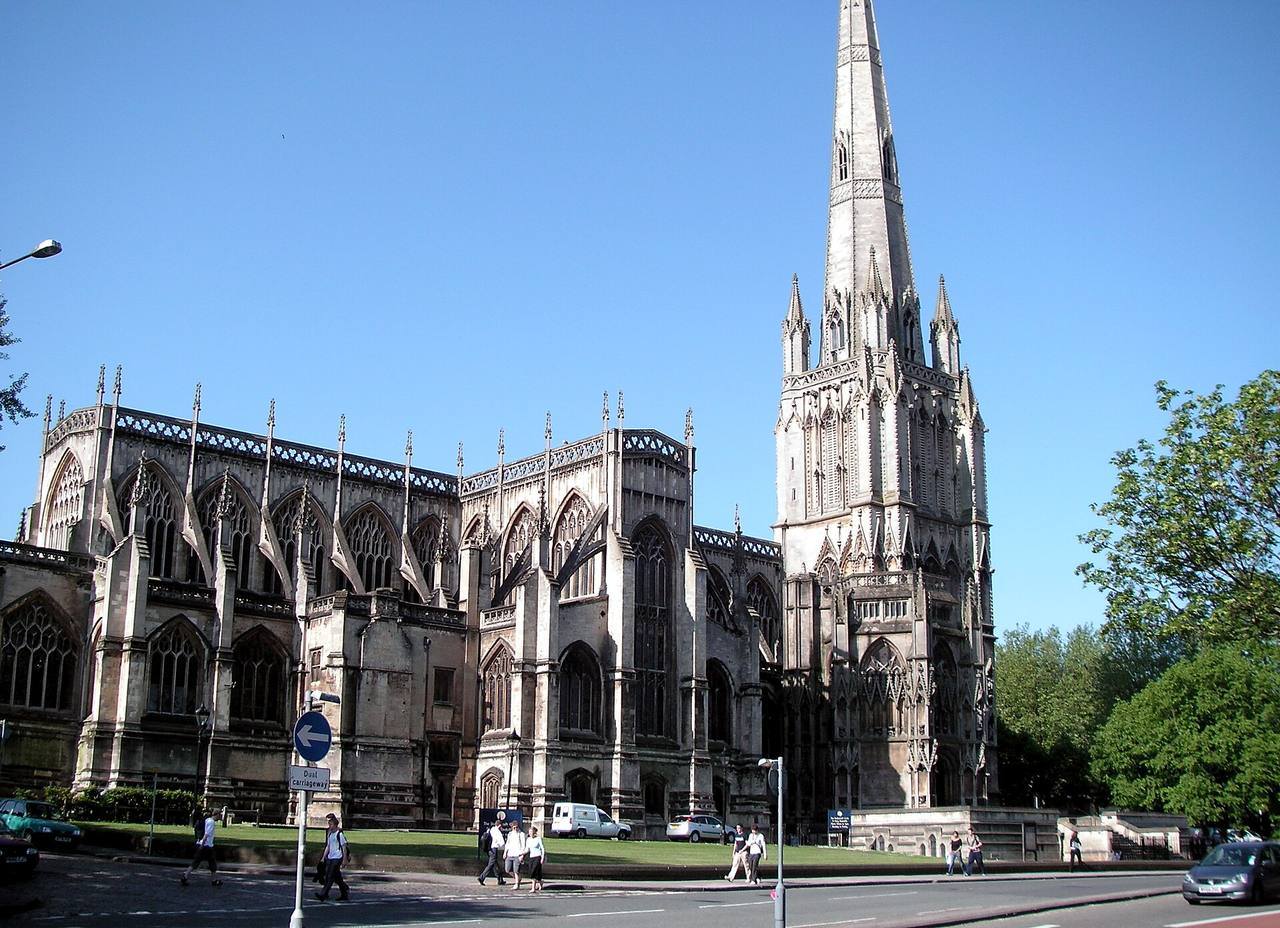
St Mary Redcliffe is a parish church with the ambitions of a cathedral. Built by the merchants of medieval Bristol on a red sandstone cliff above the harbour, it has a stone vault over every part of the building, more than a thousand gilded bosses, a hexagonal porch with few equals in England, and a spire that was a stump for over four hundred years. Elizabeth I is said to have called it the fairest parish church in England.
A merchants' church
Christians have worshipped here for over eight hundred years. The oldest part of the present church is the inner north porch, of about 1185. The rest was rebuilt between the thirteenth and fifteenth centuries, paid for by the wealthy merchants of Redcliffe, above all William Canynges, five times mayor of Bristol, who after his wife’s death became a priest. He is commemorated by two tombs in the south transept.
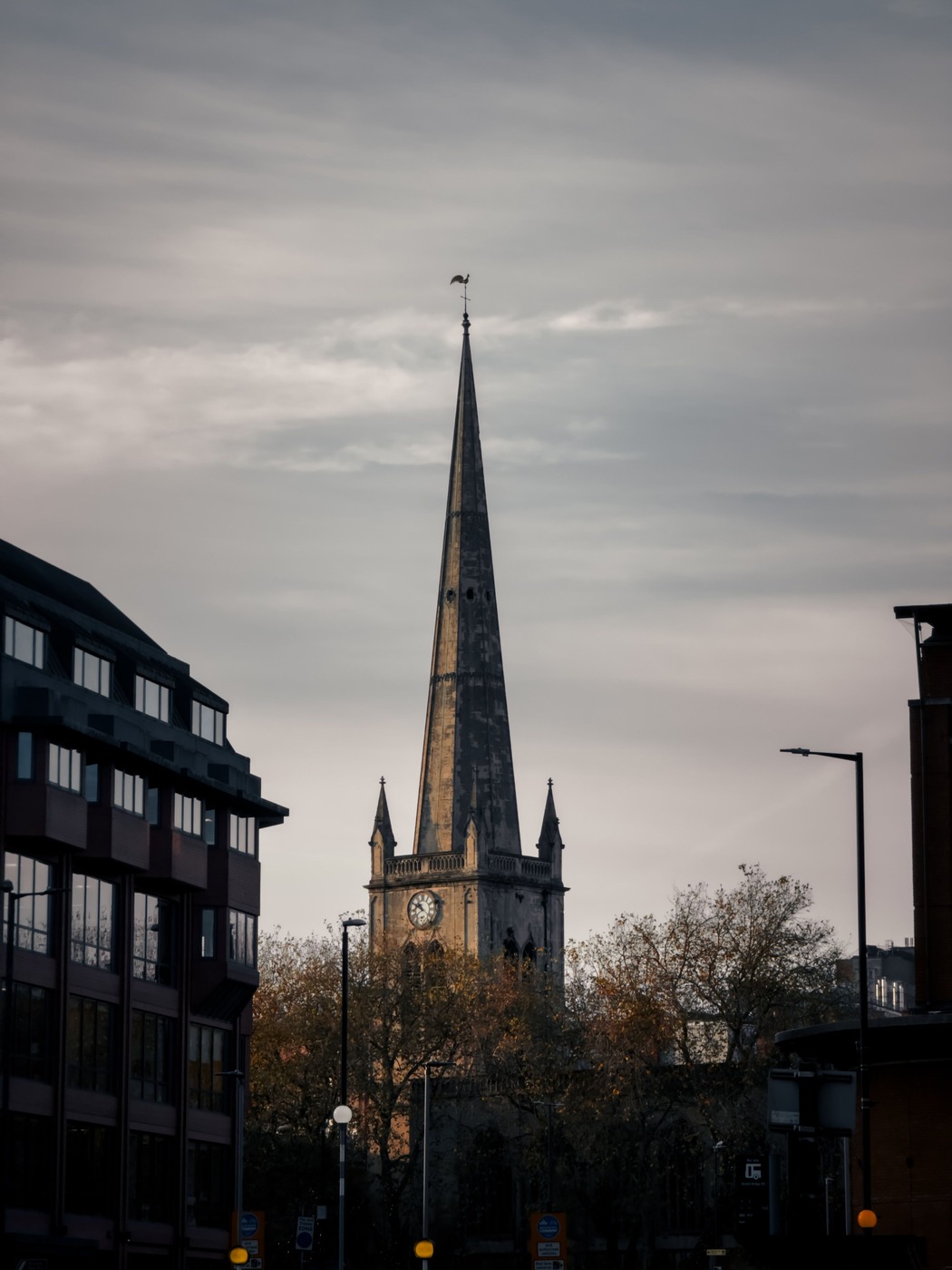
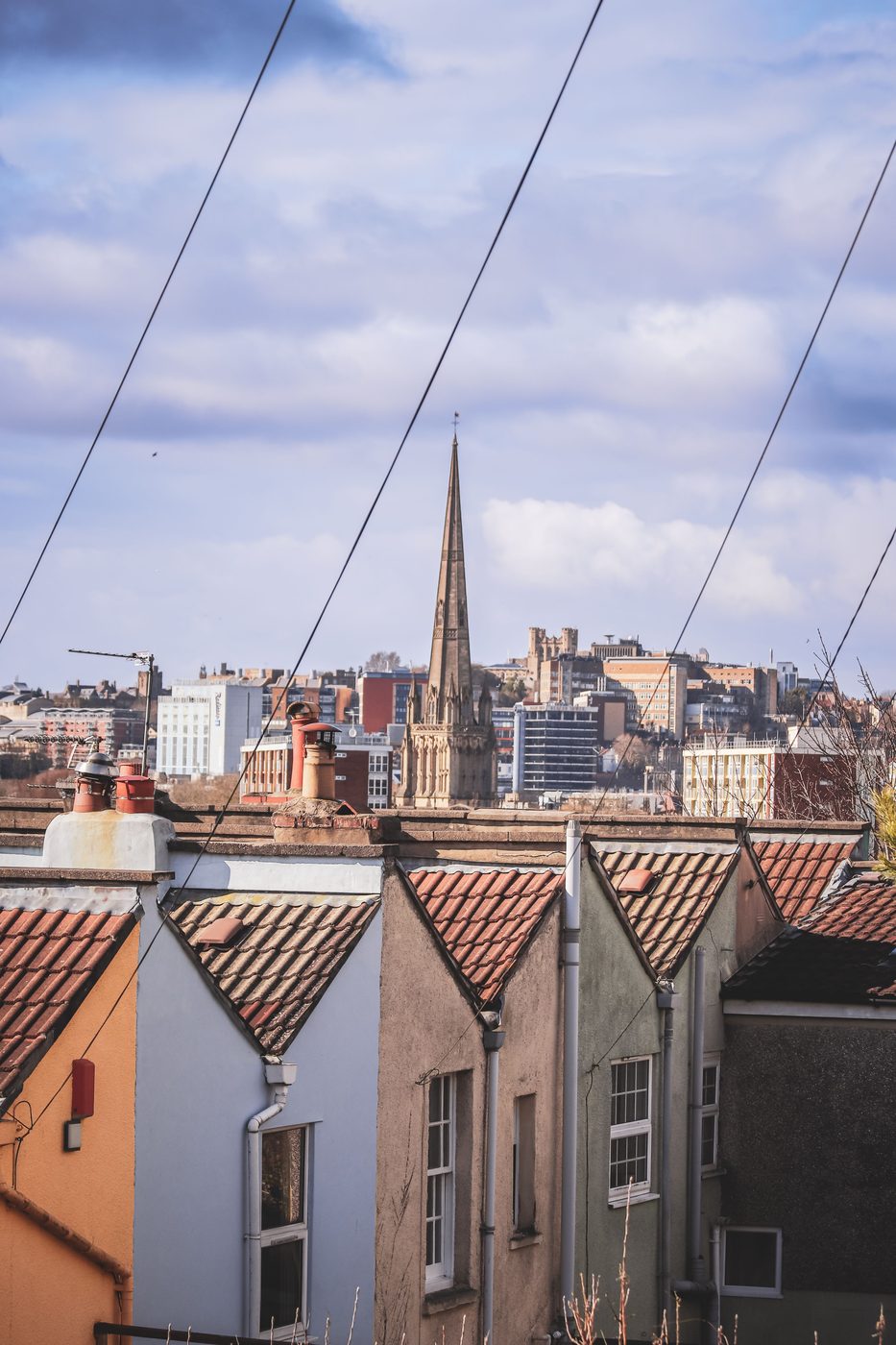
Lightning struck the spire in 1445 or 1446 and brought its upper part down; it stayed a stump until 1870–72, when it was rebuilt to its full height, about 262 feet to the capstone, and the Mayor of Bristol laid the capstone on 9 May 1872. The church survived the bombing of Bristol in the Second World War almost unscathed.
The visitor's cheat sheet
| Where | Redcliffe Way, Bristol, BS1 6RA, between Temple Meads station and the harbour |
|---|---|
| Getting there | A short walk from Bristol Temple Meads station |
| Opening hours | Mon–Sat 8am–4pm; Sun 7am–7pm. Closed to visitors during weddings and funerals |
| Admission | Free. Guided tours £10 |
| How long | About 1 hour; 90 minutes with a tour |
| Best time | A Friday or Saturday, for a guided tour |
| Dress code | No formal code; respectful dress as in any working church |
| Tours | 90-minute guided tours, £10: Fridays 11am, 12.40pm and 2.30pm; Saturdays 11am and 1pm; booked online |
Hours and admission checked against the official site in October 2026. They change; the official site is always the last word.
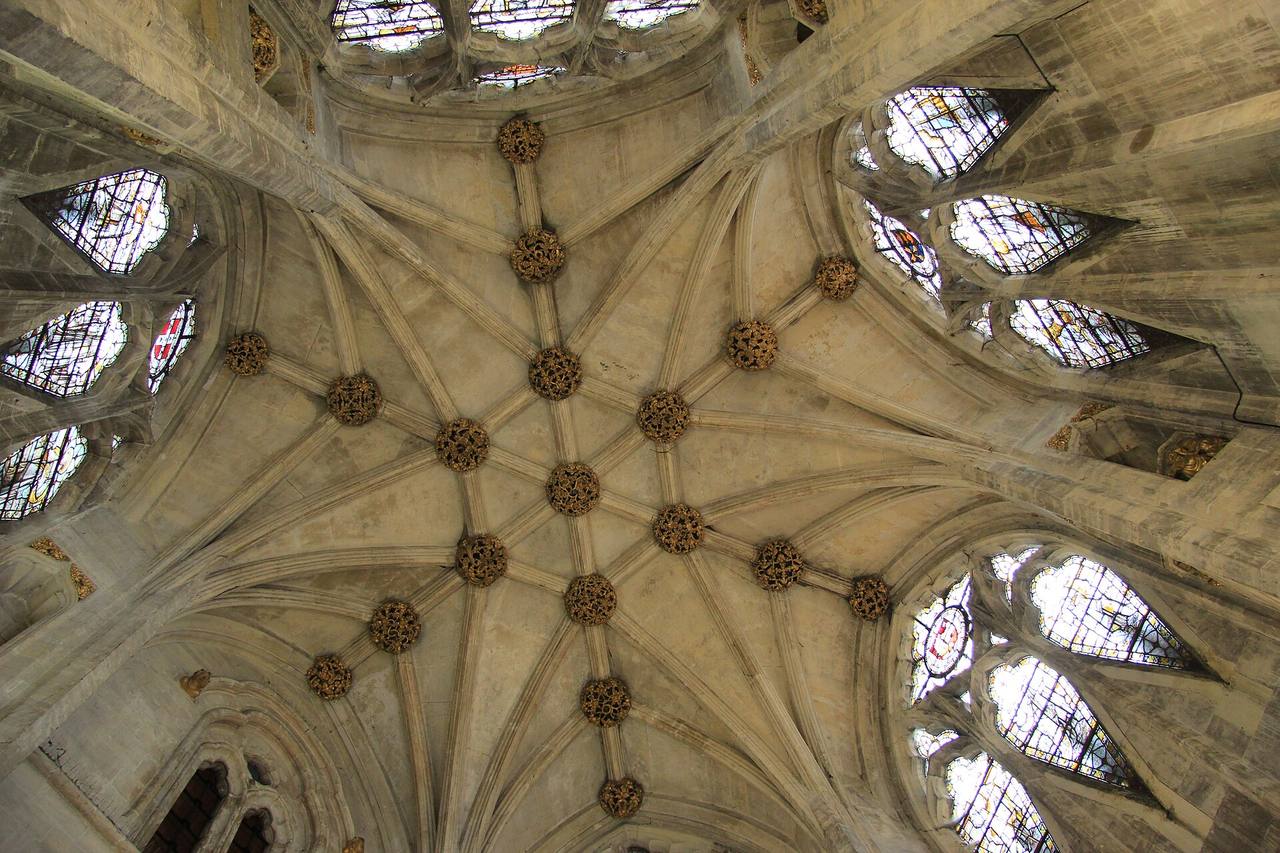
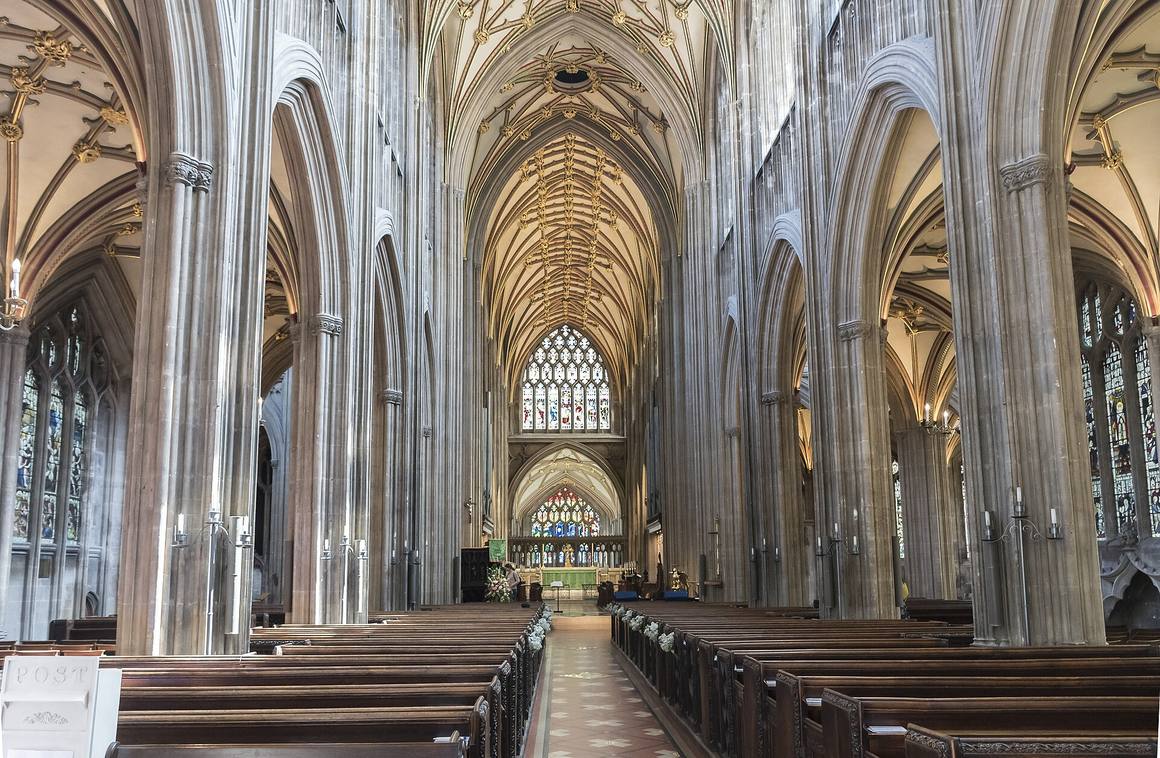
Vaulted in stone. Most English parish churches have timber roofs. St Mary Redcliffe is vaulted in stone throughout, like a cathedral, and the vaults of the nave are studded with more than a thousand carved bosses, picked out in gold.
What to see, in the order you meet it
The north porch
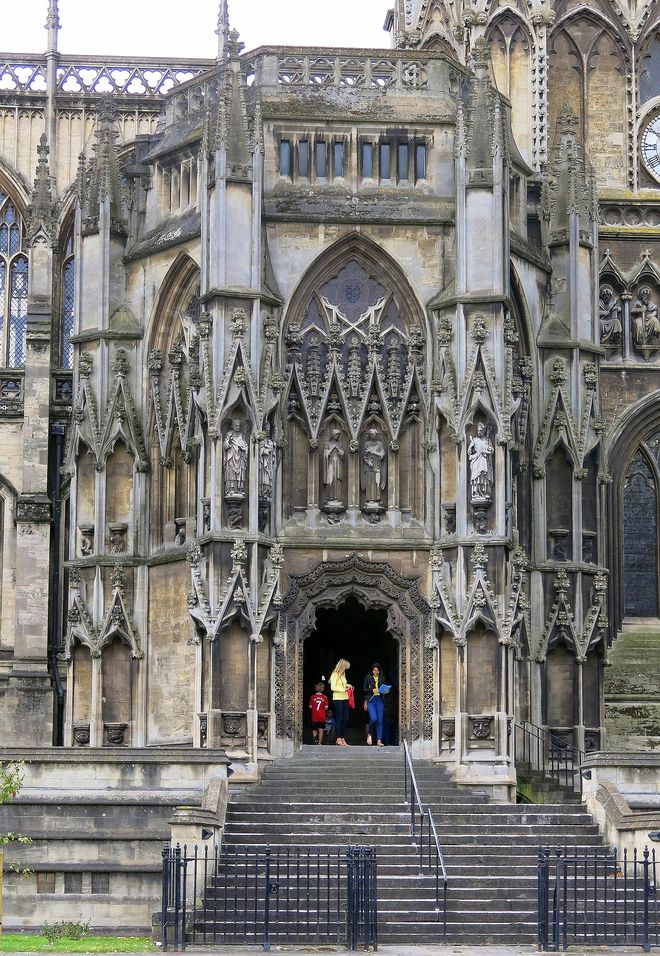
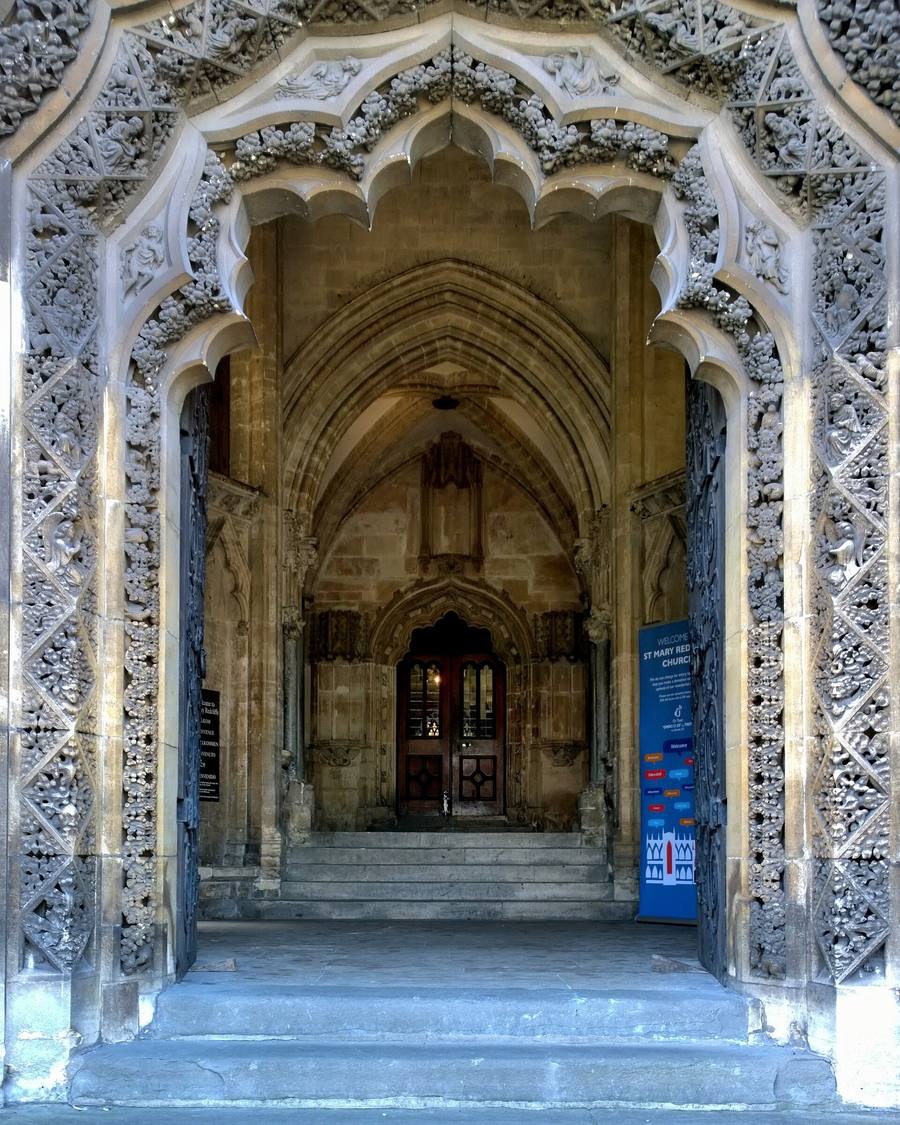
Climb the steps from Redcliffe Way to the outer north porch, built about 1325: a hexagon of stone carved so densely that it looks almost Eastern, one of only three medieval hexagonal porches in England. Inside, it leads to the plainer inner porch of about 1185. The room above the porch, the muniment room, is where the young poet Thomas Chatterton claimed to have found the medieval poems he had in fact written himself.
The nave and the bosses
The nave is tall, light and vaulted in stone, with slender piers running straight up into the ribs. Look up at the bosses: foliage, faces and, among them, a small maze.
Canynges, Penn and Cabot
In the south transept are the tombs of William Canynges. Hanging in the church are the helm and half-armour of Admiral Sir William Penn, father of the founder of Pennsylvania, who is buried here. Look too for the rib of a whale said to have been brought back by John Cabot from his voyage to North America in 1497.
The churchyard
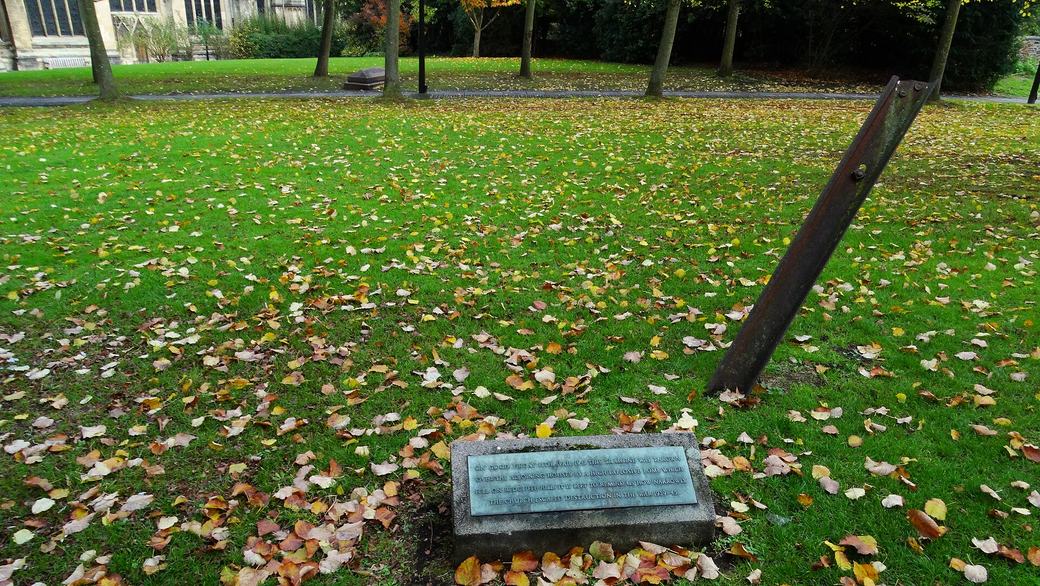
Outside, a length of tram rail sticks out of the grass: it was thrown there by a bomb in 1941, and left as a memorial.
Tickets and tours
Free entry; guided tours on Fridays and Saturdays
Entry is free. Volunteer guides lead 90-minute tours, including the Chatterton Room above the north porch (reached by a flight of stairs), on Fridays at 11am, 12.40pm and 2.30pm and Saturdays at 11am and 1pm. Tickets cost £10 and are booked online through the church’s website.
The hotel link goes to Booking.com. This site earns nothing from it at present — it is here because it is the quickest way to check what is actually available.
Don't miss
- The hexagonal north porch One of only three medieval examples in England.
- The gilded bosses Over a thousand of them, in stone vaults.
- The Chatterton Room Where the boy poet “found” his medieval verse.
- Penn's armour For the father of the founder of Pennsylvania.
- Cabot's whale bone A souvenir of the voyage of 1497.
- The tram rail The Blitz, left where it landed.
Insider tips
Use the south door. The north porch is reached by steps; step-free, ramped access is by the south porch. The café in the church is open Tuesday to Saturday, 8.30am–3.30pm. On Rush Sunday, around Whitsun, the Lord Mayor attends a civic service held for some five hundred years, with rushes strewn on the floor.
Bristol Cathedral and the harbourside are about fifteen minutes’ walk away, and Temple Meads station, for trains to Bath and London, is just across the road.
Common questions
Is St Mary Redcliffe free to visit?
Yes. Entry to the church is free. Guided tours of 90 minutes cost £10 and are booked online through the church’s website.
Did Elizabeth I really call it the fairest parish church in England?
Tradition says that on her visit in 1574 she called it “the fairest, goodliest and most famous parish church in England”. Historians doubt she used those exact words, but the description has stuck.
Who was Thomas Chatterton?
A Bristol poet, born near the church in 1752, who as a teenager passed off his own poems as the work of a fifteenth-century monk, “Thomas Rowley”, claiming to have found them in the muniment room above the north porch. He died in London aged seventeen. The room is now the Chatterton Room.
Why is there a tram rail in the churchyard?
During an air raid in 1941 a bomb exploded in the road nearby and hurled a length of tram rail into the churchyard. It was left where it landed, as a reminder of how narrowly the church escaped.
How do you get to St Mary Redcliffe?
It is a short walk from Bristol Temple Meads station, across Redcliffe Way, and about fifteen minutes’ walk from the harbourside.
Where to stay and eat nearby
Redcliffe and the harbourside have hotels, restaurants and bars, and the city centre is a short walk away.
More English churches
- Bristol Cathedral — the hall church across the harbour
- Bath Abbey — fan vaults, a short train ride away
- Wells Cathedral — the great Gothic cathedral of Somerset
See all the cathedrals and churches worth visiting in England →