
Roskilde Cathedral
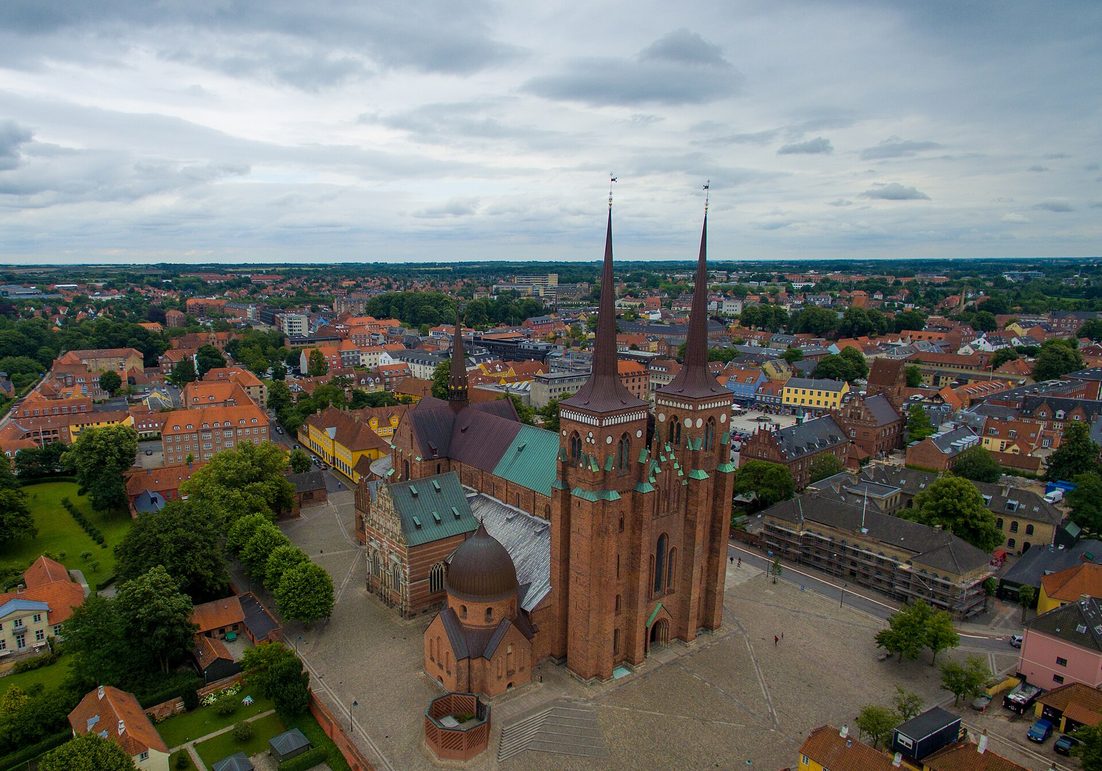
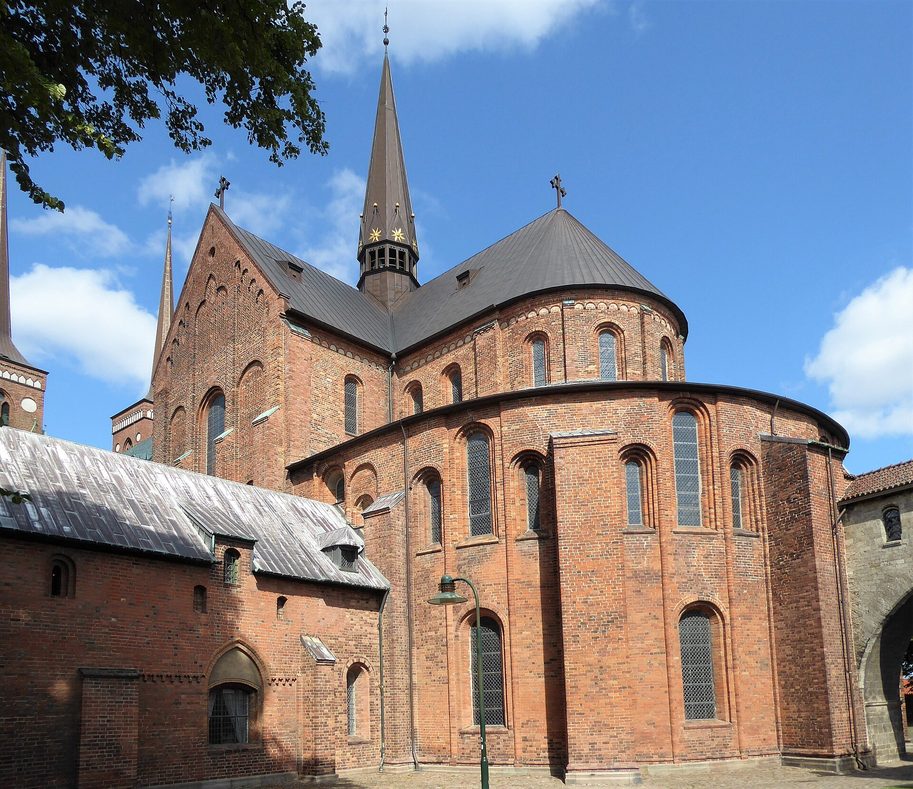
Half an hour from Copenhagen, the twin spires of Roskilde Cathedral rise over a small market town that was once Denmark’s capital. Begun around 1200, it was one of the first great Gothic churches in Northern Europe built of brick, and for six centuries it has been the burial church of Denmark’s kings and queens, who lie in chapels added one after another round its walls. It is a UNESCO World Heritage Site.
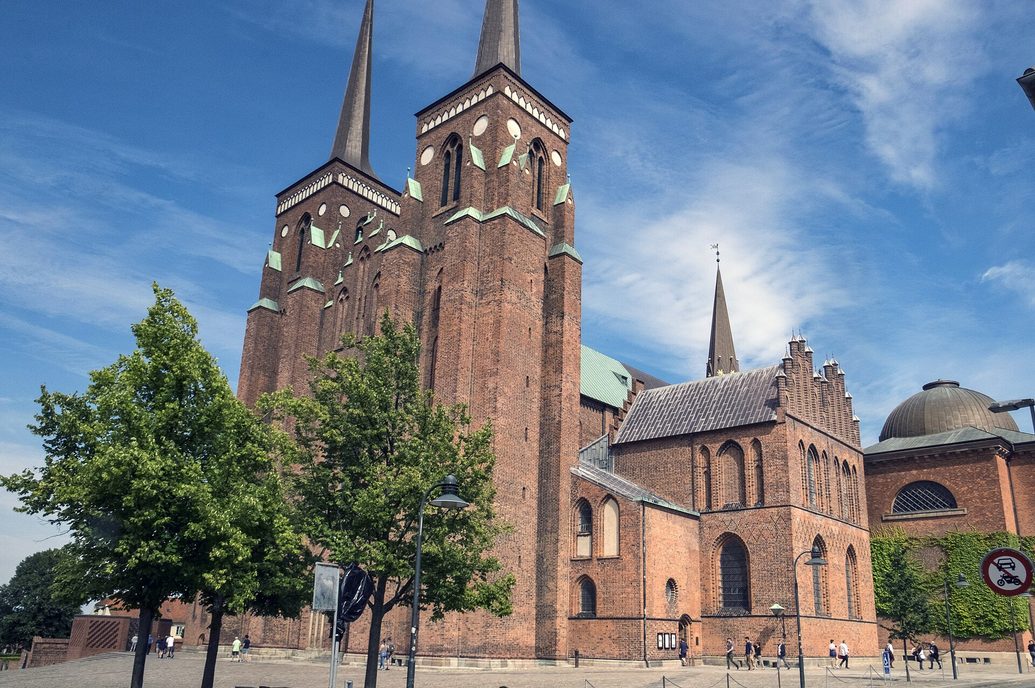
A brick cathedral and a royal mausoleum
Roskilde was the seat of Danish kings and bishops in the Middle Ages. Earlier churches stood on the site, and tradition says Harald Bluetooth, who died around 986, was buried in one of them. The present brick church was begun around 1200; its choir was consecrated in 1225 and its west towers finished by about 1400, and Christian IV gave them their tall spires in 1635. The oldest certain royal grave is that of Sweyn Estridsen, who died in 1074 or 1076.
About forty kings and queens are buried here. As each dynasty added its own chapels, the cathedral became a gallery of royal tombs in every style, from medieval stone to Renaissance marble, Baroque black coffins and Neoclassical monuments.
The visitor’s cheat sheet
| Opening hours | Oct–Apr Mon–Sat 10am–4pm; May to 5pm; Jun–Sep to 6pm. Sun 1pm–4pm all year |
|---|---|
| Admission | 2026: adults 80 DKK, over-67s and students 60 DKK, under-18s free; Copenhagen Card free |
| Closures | May close after 1pm on Tuesdays, Thursdays and Fridays for funerals and services, and often on spring and summer Saturdays for weddings and confirmations; a day with no hours in the calendar means closed |
| Tours | Private guides in English (950 DKK plus entry); occasional roof tours in Danish (210 DKK, age 13 and over) |
| Getting there | Train from Copenhagen Central about 25 minutes; 10–15 minutes’ walk from Roskilde station |
| How long | About an hour; longer with the museum and gallery |
Hours and admission checked against the official site in November 2026. They change; the official site is always the last word.
What to see
The nave, the altarpiece and the organ
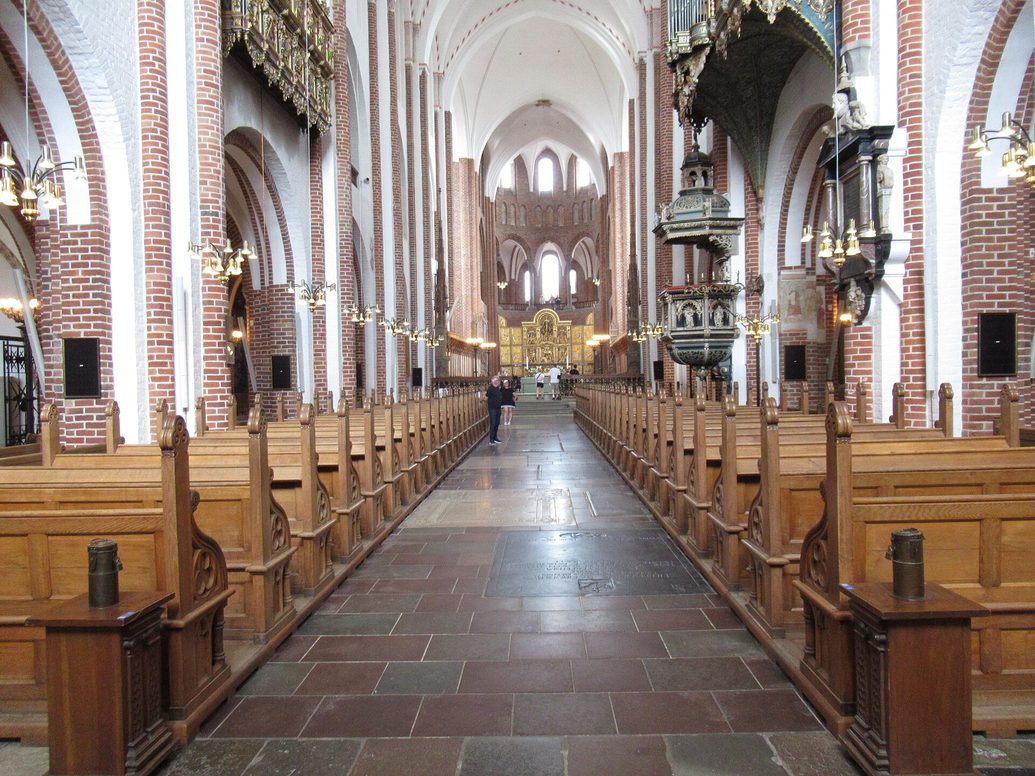
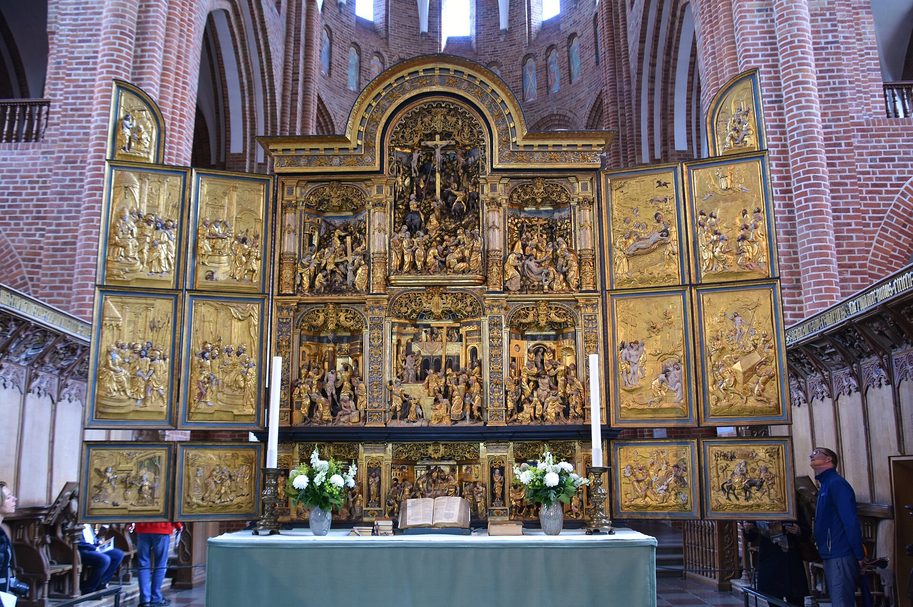
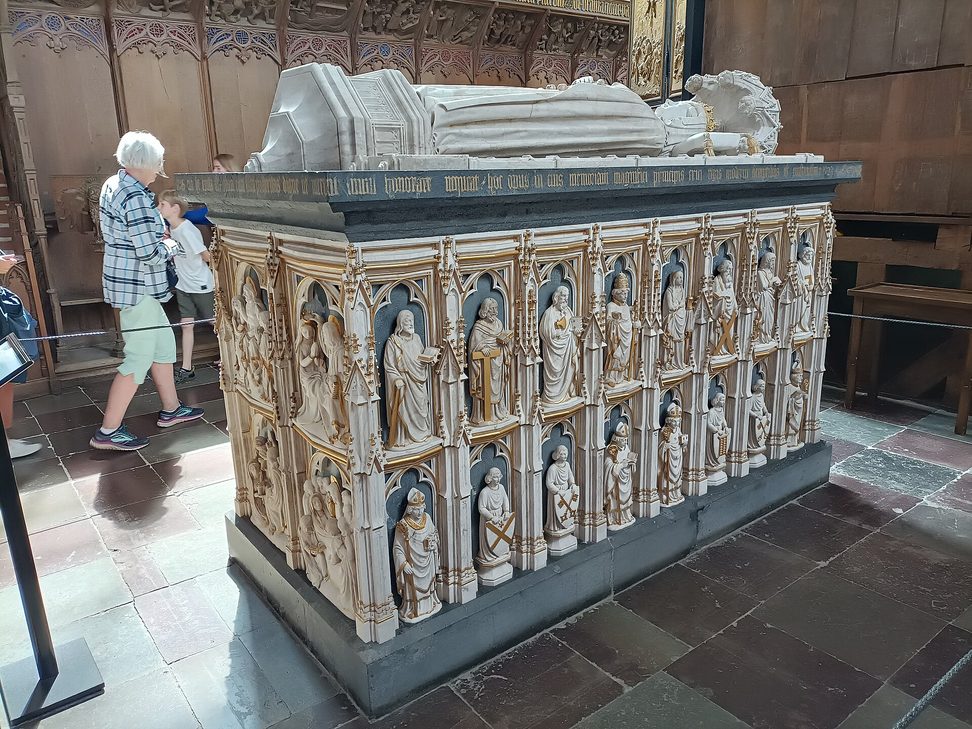
The long brick nave leads to a gilded altarpiece carved in Antwerp around 1560, with small scenes of the life of Christ. Behind the high altar lies Queen Margrete I, who united Denmark, Norway and Sweden in the Kalmar Union, under an alabaster sarcophagus set up in 1423. The organ, in a gallery partly of the 1400s, was rebuilt in 1554 and 1654 and restored to its 17th-century sound in 1988–91.
The royal chapels
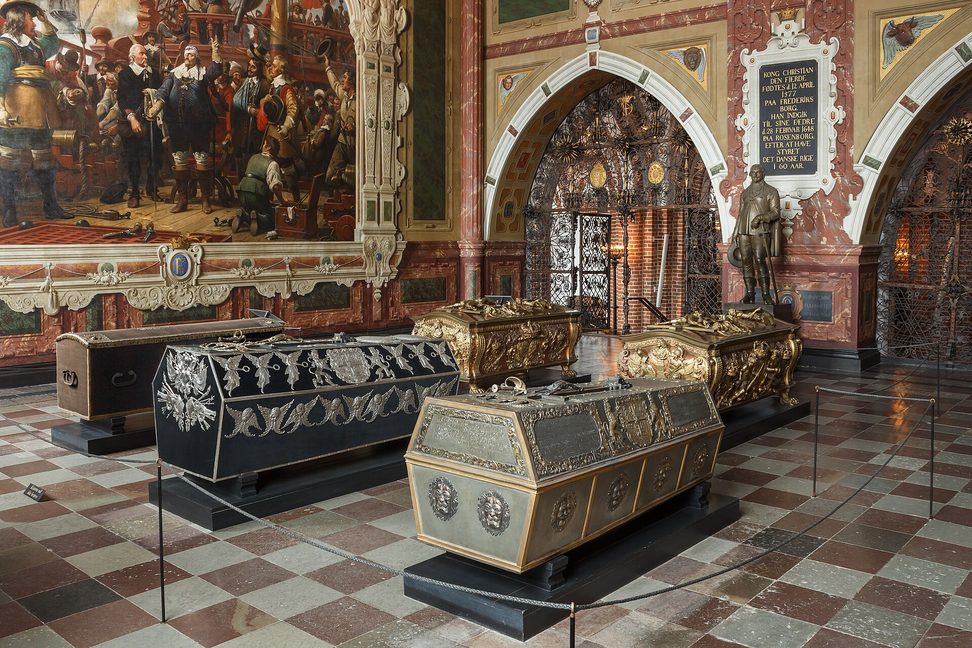
On the south side, the first chapel you reach, the Chapel of the Three Kings, has wall paintings of about 1465 and the Renaissance tombs of Christian III and Frederik II. On the north side, the chapel of Christian IV, the builder king, holds his coffin and those of his family, with large 19th-century paintings of his reign and a bronze statue of him by Bertel Thorvaldsen. Further chapels hold the kings of the 18th to 20th centuries. Queen Margrethe II, who stepped down in 2024, has her own planned tomb in St Bridget’s Chapel, covered until it is needed.
The King’s Pillar
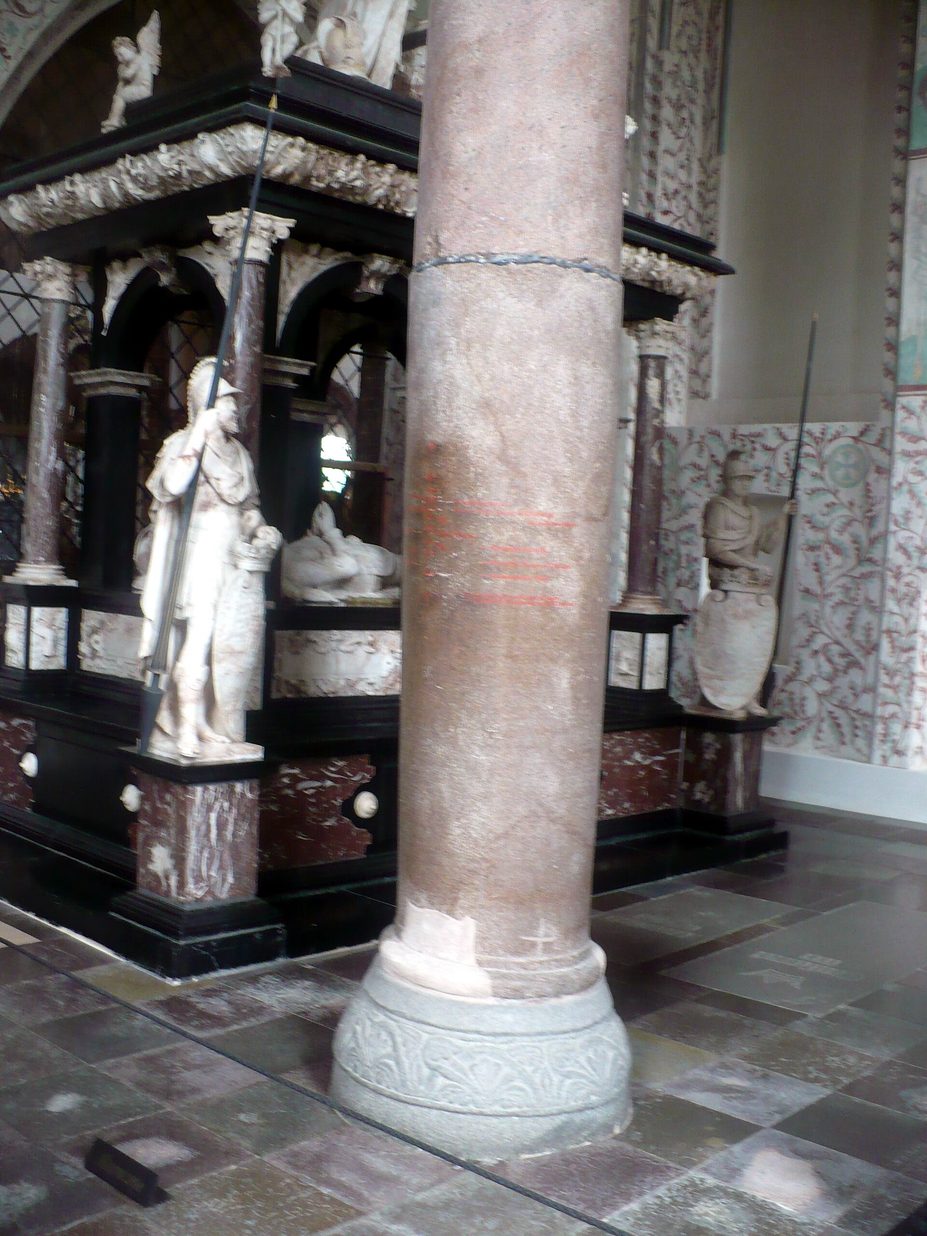
In the Chapel of the Three Kings, a pillar is marked with the heights of royal visitors, measured since the 16th century. The highest mark, for Christian I, stands at 219.5 cm, which is not his true height; Peter the Great’s mark, at 208.5 cm, is thought to date from his visit in 1716.
The clock
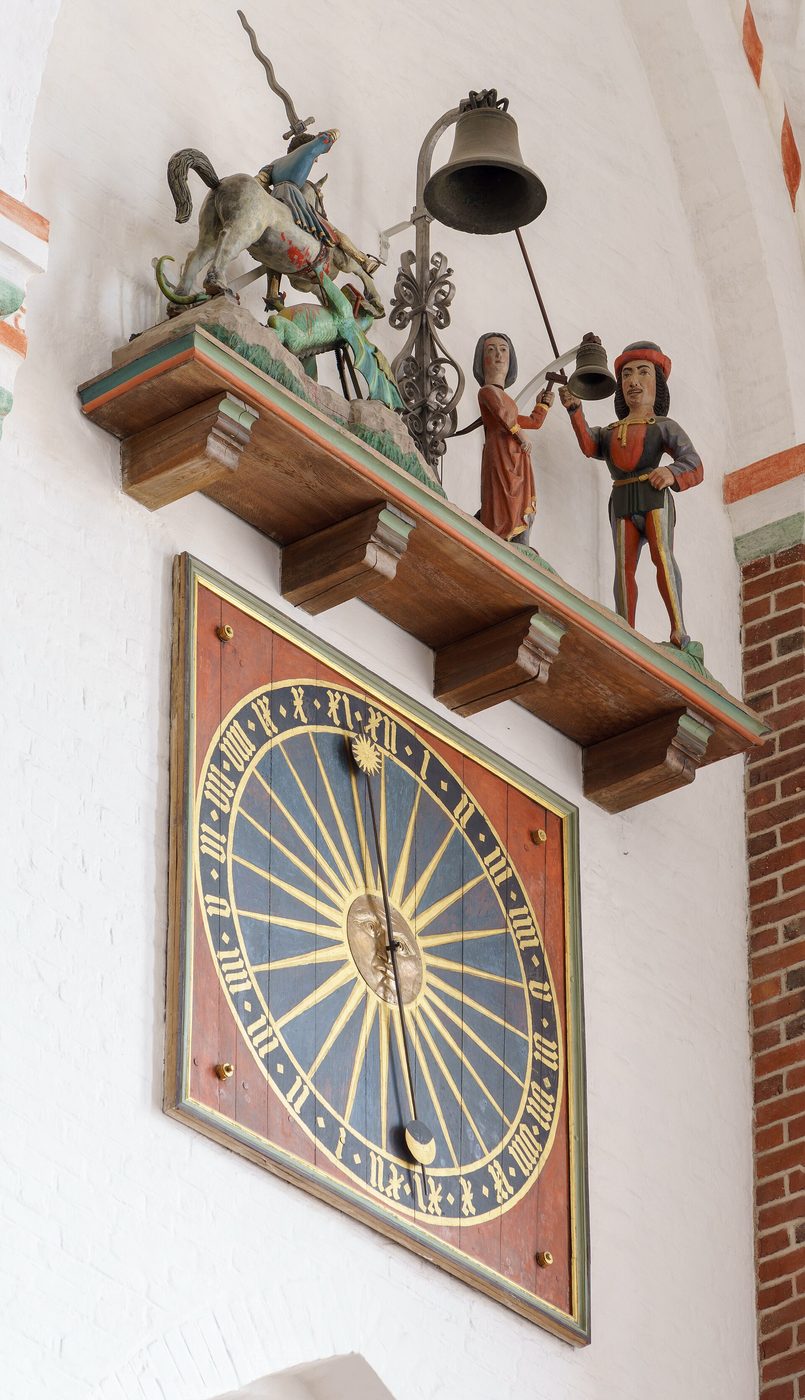
High on the wall at the west end, in the tower bay, an old clock of about 1500 has small painted figures on top. On the hour, St George on horseback strikes the dragon, which lets out a howl, and two other figures strike the hours and quarters.
Getting there
The cathedral is at Domkirkepladsen 3 in the centre of Roskilde. Trains from Copenhagen Central Station take about 25 minutes, and almost all trains heading west stop at Roskilde; the walk from the station to the cathedral takes 10 to 15 minutes. The Viking Ship Museum, on the fjord, is a short walk downhill from the cathedral.
Tours and where to stay
Tickets are sold at the cathedral. Day trips from Copenhagen often combine it with the Viking Ship Museum.
These links go to GetYourGuide and Booking.com. This site earns nothing from them at present — they are here because they are the quickest way to check what is actually available.
Don’t miss
- St George and the dragon On the hour, at the west end.
- The King’s Pillar In the Chapel of the Three Kings.
- Christian IV’s chapel On the north side.
- Margrete I’s tomb Behind the high altar.
Insider tips
Check the calendar the day before. The cathedral is a working church and closes for funerals, services and weddings, sometimes for whole afternoons.
Be there on the hour. Stand under the clock at the west end to see St George slay the dragon.
Common questions
How much does it cost to visit Roskilde Cathedral?
In 2026 tickets cost 80 DKK for adults and 60 DKK for over-67s and students; under-18s go free. The ticket covers the royal tombs, chapels and museum, and includes a guidebook. Copenhagen Card holders enter free.
What are the opening hours?
From October to April, Monday to Saturday 10am to 4pm and Sunday 1pm to 4pm; in May to 5pm, and from June to September to 6pm, Monday to Saturday. The cathedral may close after 1pm on Tuesdays, Thursdays and Fridays for funerals and services, and on many spring and summer Saturdays for weddings, so check its calendar.
How many kings and queens are buried here?
About forty kings and queens of Denmark lie here, from the Middle Ages to the 20th century, along with many other members of the royal family.
How do I get there from Copenhagen?
By train from Copenhagen Central Station to Roskilde, about 25 minutes, then 10 to 15 minutes’ walk up to the cathedral. Trains run often through the day.
Is there anything else to see in Roskilde?
The Viking Ship Museum, with five Viking ships raised from the fjord, is a short walk downhill from the cathedral.