
Santa Maria delle Grazie and the Last Supper, Milan
On the wall of the old dining hall of this Dominican convent, Leonardo da Vinci painted the Last Supper, one of the most famous pictures in the world. Seeing it takes planning: a named ticket for a fifteen-minute slot, sold in blocks months ahead and quickly gone. The church itself, with Bramante’s domed tribune, is free and needs no booking, and is well worth the visit even if the painting is sold out.

A Sforza church
The Dominicans began the church and convent in 1463, to designs by Guiniforte Solari, who built the Gothic nave; the church was finished by 1482. Ludovico Sforza, Duke of Milan, chose it as his family’s burial church and in the 1490s had the east end rebuilt as a great domed tribune, attributed to Bramante. His wife, Beatrice d’Este, was buried here in 1497. At the same time he paid Leonardo, then working at his court, to paint the Last Supper on the end wall of the friars’ refectory. It was finished by early 1498.
Leonardo experimented with tempera and oil on a dry wall instead of painting in true fresco, and the picture began to flake within twenty years. Over the next centuries it was damaged by damp, a doorway cut through the bottom, Napoleon’s troops and clumsy restorers. On the night of 15–16 August 1943 a bomb destroyed most of the refectory, but the wall, shored up with sandbags, survived. The great restoration led by Pinin Brambilla Barcilon lasted from 1978 to 1999. The church and refectory have been a World Heritage site since 1980.
The visitor’s cheat sheet
| Where | Piazza di Santa Maria delle Grazie 2, 20123 Milan; Last Supper entrance and ticket office to the left of the church |
|---|---|
| Opening hours | Last Supper Tuesday–Sunday 8.15am–7pm (last entry 6.45pm); closed Mondays, 1 January and 25 December. Church Monday–Saturday 7am–1pm and 3–7.30pm, Sunday 7.30am–12.30pm and 3–9pm; no visits during services |
| Admission | Church free. Last Supper €15; ages 18–25 €2; under-18s free but must book; everyone free on the first Sunday of the month |
| Booking | Last Supper only by named, timed ticket: online at the official ticket site or by phone, +39 02 92800360. Released quarterly, plus extra tickets every Wednesday at noon |
| Visit length | Fifteen minutes in the refectory, groups of up to 40; arrive 30 minutes early |
| Bags | No large bags; free lockers at the ticket office |
| Getting there | Metro M1 Conciliazione or M1/M2 Cadorna; tram 16 to Santa Maria delle Grazie; about 25 minutes’ walk from the Duomo |
Hours and admission checked against the official site in October 2026. They change; the official site is always the last word.
Book the Last Supper the day sales open. Tickets are released about three months at a time, and the popular dates go within days. They are named and cannot be changed or refunded, so bring ID. A few more are released every Wednesday at noon for the following week. Be at the ticket office at least 30 minutes before your slot.
What to see
The Last Supper
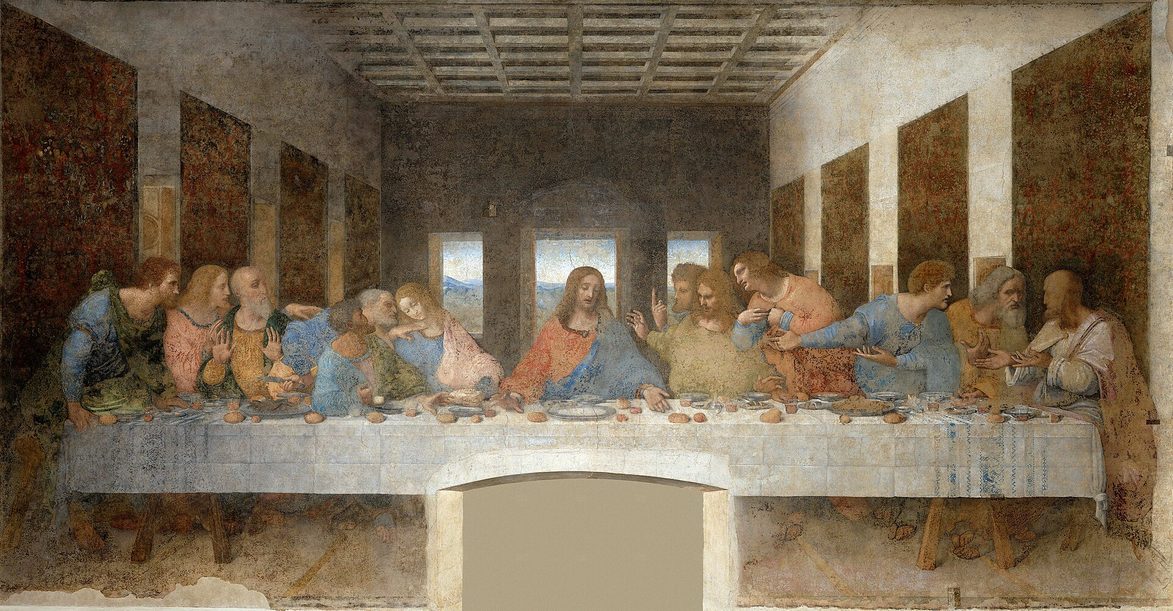
The refectory, the Cenacolo Vinciano, is entered from the left of the church, through a series of glass chambers that filter the air. Leonardo shows the moment after Christ says that one of the apostles will betray him: the twelve react in groups of three, recoiling, protesting and questioning, while Judas, clutching his money bag, draws back into shadow. The painting is about 4.6 metres high and 8.8 metres wide. On the opposite wall is Donato Montorfano’s Crucifixion of 1495, crowded and brightly coloured, to which Leonardo added portraits of the Sforza family, now almost lost.

The church
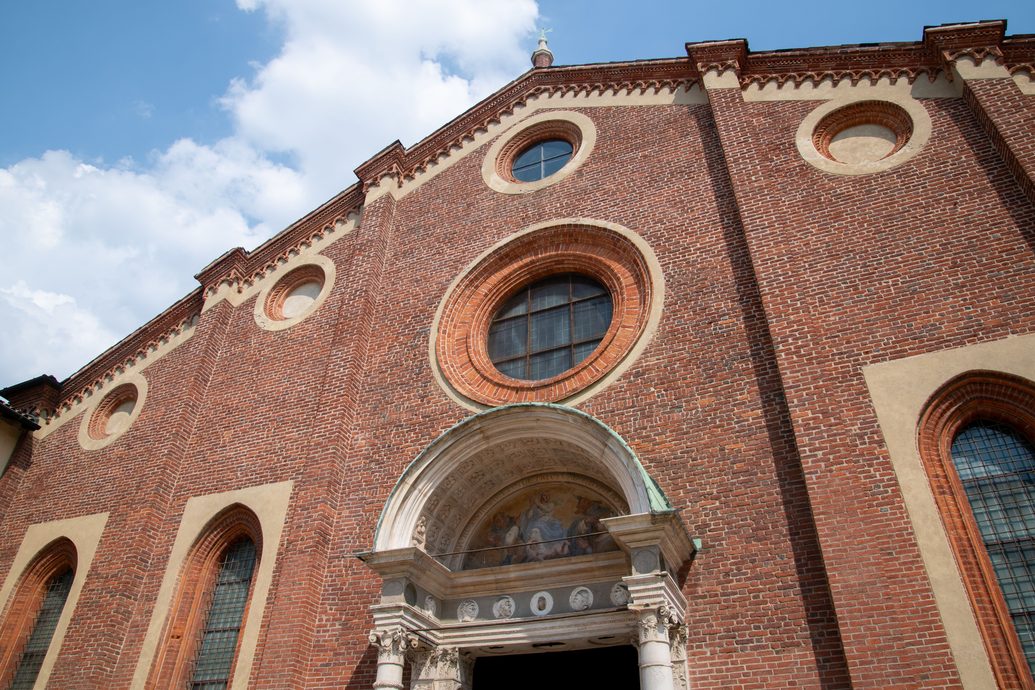
The nave is Gothic, its vaults and arches painted, with chapels down both sides; in the chapel of the Holy Crown, on the right, Gaudenzio Ferrari painted scenes of the Passion around 1540. At the east end the space opens into Bramante’s tribune, a light, square Renaissance crossing under a high dome, in complete contrast to the nave. Titian’s Crowning with Thorns once hung here; French troops took it in 1797, and it is now in the Louvre.


The tribune from outside, and the cloister
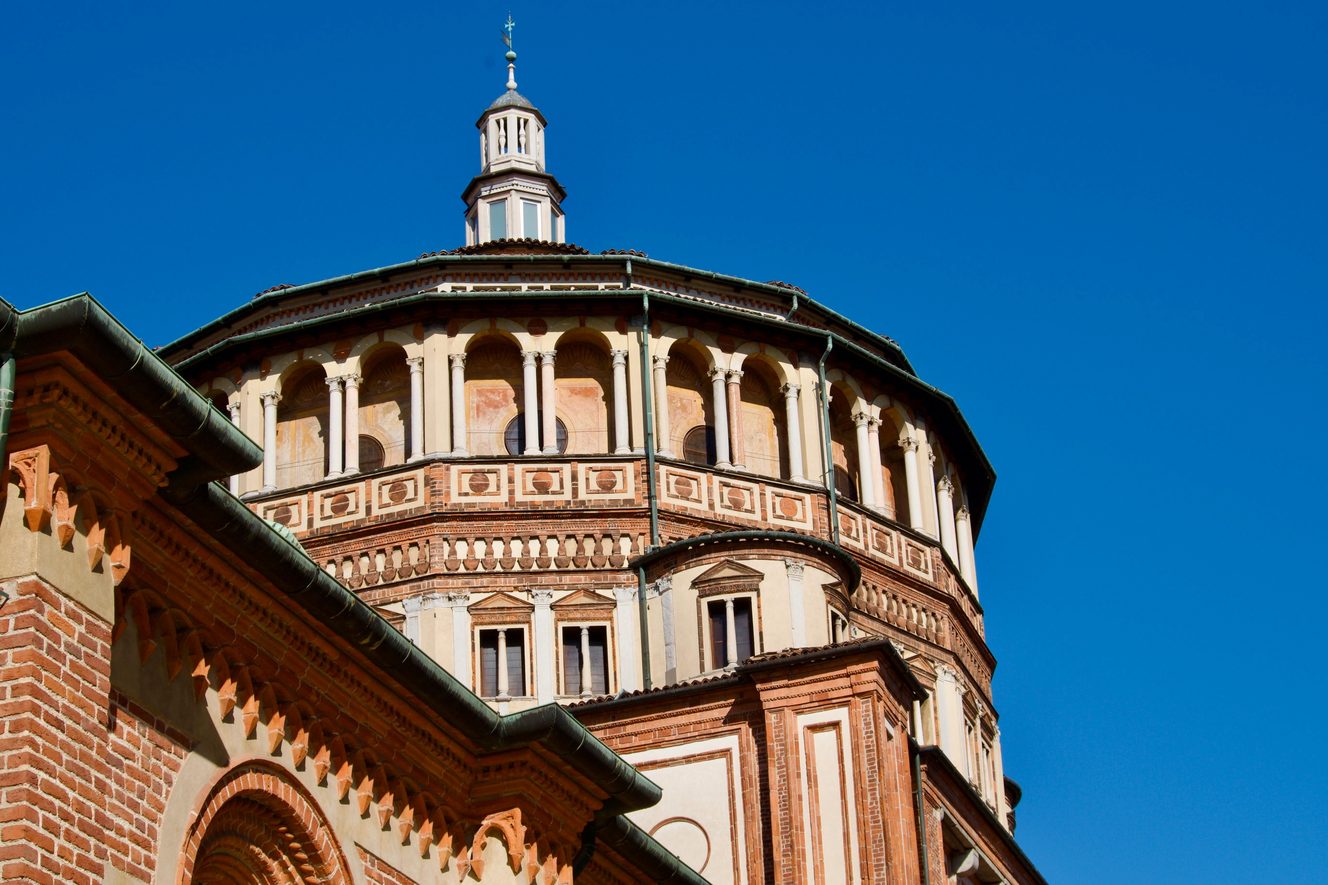
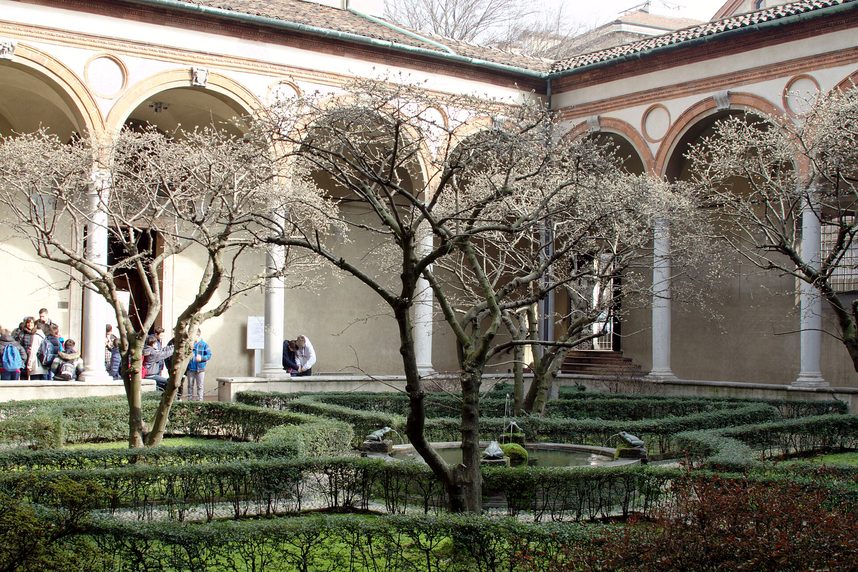
Walk round the outside to see the tribune’s brick and terracotta drum, decorated with roundels and topped by a little arcaded gallery. Beside it, the small cloister has a garden in the middle; Bramante’s old sacristy, off it, opens only for exhibitions and events.
Tickets and tours
Last Supper tickets and hotels
Official tickets are sold online through the museum’s ticket site and by the call centre, +39 02 92800360, up to five per person a year. When the official tickets are gone, agencies sell guided tours that include entry, at a much higher price. The church needs no ticket.
The hotel link goes to Booking.com. This site earns nothing from it at present — it is here because it is the quickest way to check what is actually available.
Don’t miss
- The Last Supper Fifteen minutes; look for Judas and the money bag.
- Montorfano’s Crucifixion On the wall behind you in the refectory.
- Bramante’s tribune Inside the church, and from the street behind.
- Gaudenzio Ferrari’s Passion In the chapel of the Holy Crown.
- The little cloister Beside the tribune.
Insider tips
See the church first. It is free and open in the morning and afternoon, so arrive early for your Last Supper slot and spend the waiting time in the church. Remember that it closes at lunchtime, and that sightseeing stops during services.
Leonardo’s Vineyard, in the Casa degli Atellani across Corso Magenta, has been closed to the public since 2023 while the house is renovated. The Last Supper is closed on Mondays, but the church is open.
The area is inside Milan’s Area C congestion-charge zone, so come by metro or tram.
Common questions
How much does it cost to see the Last Supper?
€15 for adults, €2 for ages 18–25, and free for under-18s, who still need a booked ticket. Entry is free for everyone on the first Sunday of the month, with tickets released online from noon on the Wednesday before. The church itself is free.
When do Last Supper tickets go on sale?
In blocks of about three months: tickets for September to December 2026 went on sale on 23 June. Extra tickets are released every Wednesday at noon for the following week. Popular dates sell out within days, so book the moment a block opens.
What if the Last Supper is sold out?
Try the online Wednesday release and the official call centre (+39 02 92800360), or book a guided tour from an agency, which costs more but includes the ticket. The church next door is free and needs no booking.
How long do you get with the Last Supper?
Fifteen minutes, in groups of up to 40. Arrive at least 30 minutes before your slot to collect your ticket at the office beside the entrance, or you may lose your place.
Is the Last Supper a fresco?
No. Leonardo painted it in tempera and oil on a dry wall rather than in true fresco, which let him work slowly but meant the paint began flaking within his lifetime. A twenty-year restoration finished in 1999.
Can I take photographs of the Last Supper?
Photographs without flash are tolerated, but not video. Phones must be silent, and food, drink and large bags are not allowed in the refectory; free lockers are provided at the ticket office.
Where to stay and eat nearby
The streets around Corso Magenta are among the most elegant in Milan, with cafés and pasticcerie, and the Duomo is about 25 minutes’ walk away. Sant’Ambrogio, Milan’s oldest great church, is ten minutes south.
More churches in Italy
- Milan Cathedral — the Duomo and its roof, 25 minutes’ walk away.
- Sant’Ambrogio — St Ambrose’s Romanesque basilica, about ten minutes’ walk away.