
Basilica of Sant’Ambrogio, Milan
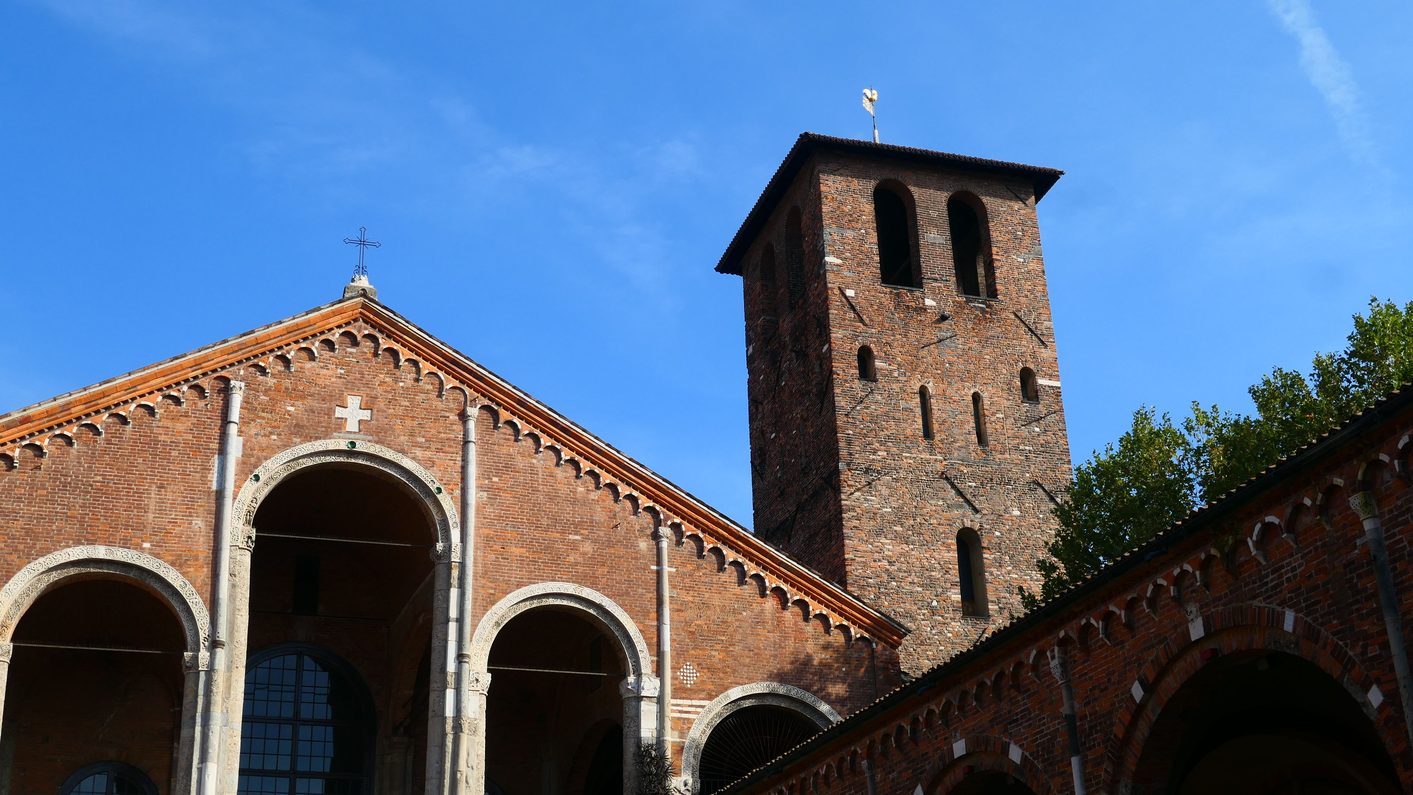
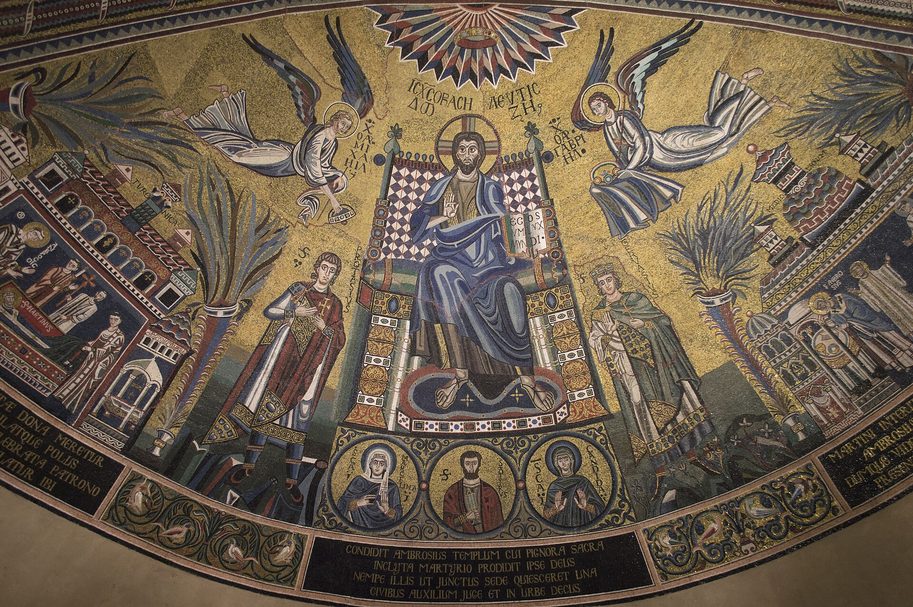
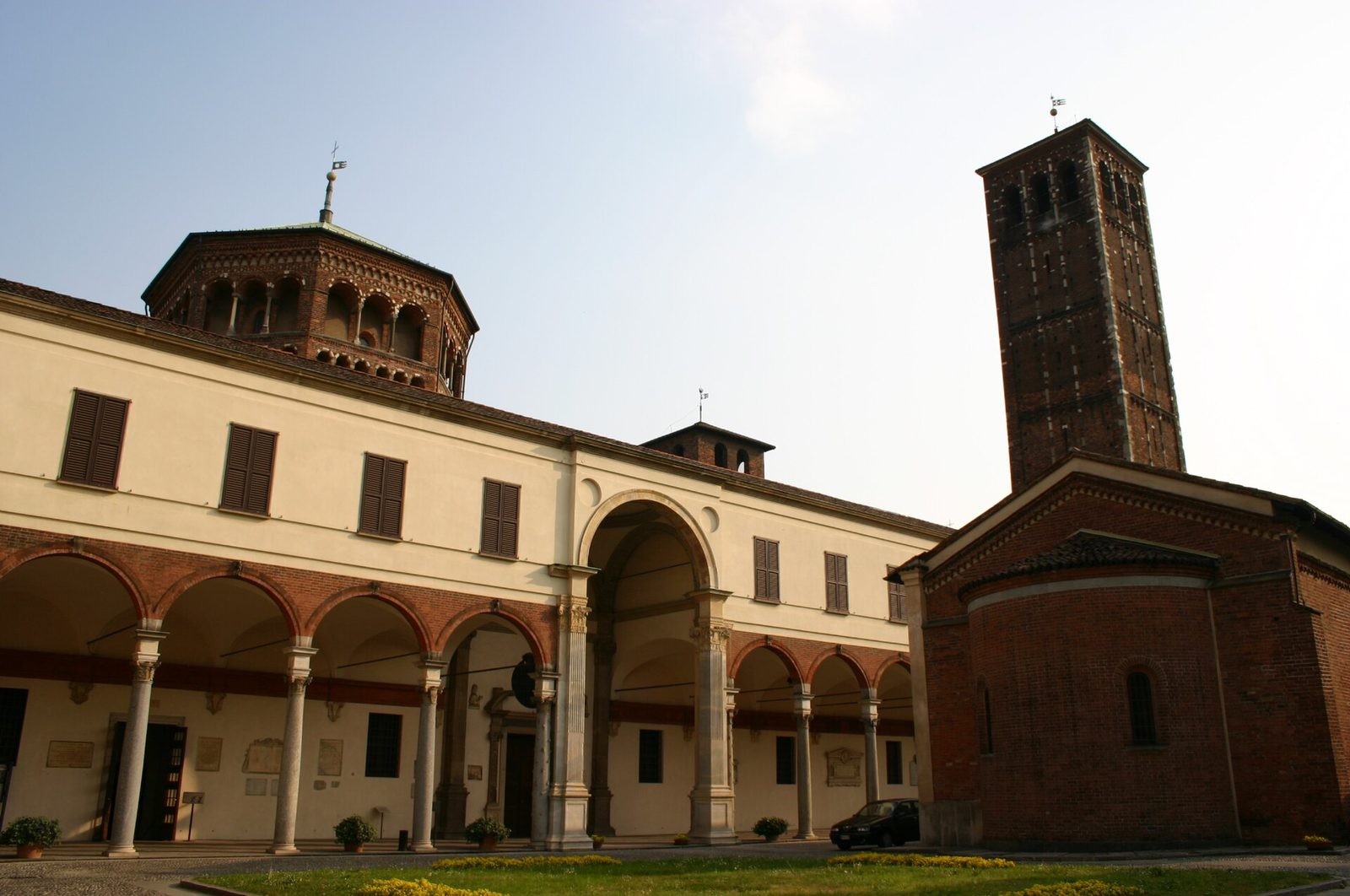
Sant’Ambrogio is one of Milan’s oldest churches and, for many, its most beautiful: a red-brick Romanesque basilica behind an arcaded atrium, founded in the 4th century by St Ambrose, who is buried in it. Inside are a golden altar of the 9th century, the oldest portrait of Ambrose in mosaic, and the quiet that the Duomo lacks. The church is free.
Ambrose’s church
Ambrose, the Roman governor who became bishop of Milan in 374, began this church in 379 in a cemetery outside the city walls. In 386 he found the bodies of two martyrs, Gervasius and Protasius, and laid them under its altar; when he died in 397 he was buried beside them. It was known at first as the Basilica of the Martyrs.
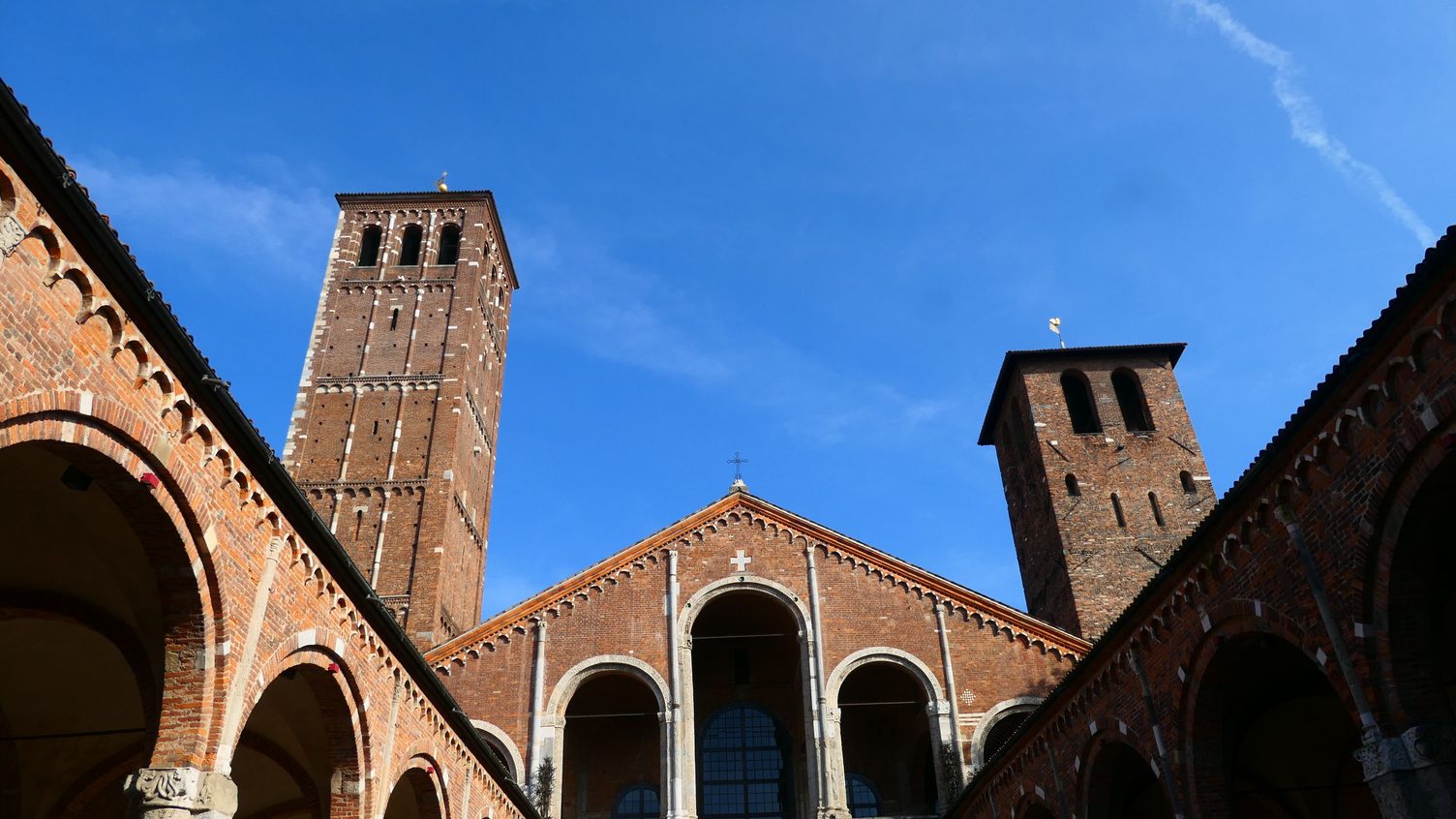
The church was served both by a Benedictine monastery, founded beside it in 784, and by a chapter of canons, and the two quarrelled for centuries, which is why the church has two bell towers: the monks’ tower, of the 9th century, and the taller canons’ tower, begun in 1128. The church itself was rebuilt in the Romanesque style in the late 11th and early 12th centuries, and became the model for churches all over Lombardy. In August 1943 Allied bombs brought down the apse; it was carefully rebuilt after the war.
The visitor’s cheat sheet
| Where | Piazza Sant’Ambrogio 15, Milan; metro M2 or M4 to Sant’Ambrogio |
|---|---|
| Opening hours | Church: weekdays 7.30am–12.30pm and 2.30–7pm; Sundays and holidays 8am–1pm and 3–8pm. Sightseeing: Monday–Saturday 10am–noon and 2.30–6pm, Sunday 3–5pm |
| Admission | Free; Ambrosius treasury museum with San Vittore in Ciel d’Oro €5, under-18s €3; guided tour €12 extra |
| Mass | Monday–Friday 8am, 9am and 6.30pm; Saturday 9am and 6.30pm (vigil); Sundays 9am, 10.30am, noon (Latin) and 7pm; reduced timetable in summer |
| Feast | 7 December, St Ambrose, Milan’s patron |
| How long | Forty-five minutes; an hour and a half with the museum |
Hours and admission checked against the official site in October 2026. They change; the official site is always the last word.
Mind the lunch break and Sunday mornings. The church closes from 12.30 to 2.30pm on weekdays, and on Sundays sightseeing is asked for only between 3 and 5pm. The treasury museum, Ambrosius, opened in December 2025 and has its own ticket office in the square, by the Devil’s Column.
What to see
The atrium and the front
You enter through a long arcaded courtyard, named after Archbishop Ansperto (868–881), traditionally credited with the first one; the present arcades are Romanesque, with carved capitals of beasts and monsters. At the far end the front of the church rises in two tiers of brick arches between the two towers.
The nave and the golden altar
Inside, the nave is dim and broad under brick rib vaults. On a column on the left stands a bronze serpent, said to have been sent from Constantinople in 1007, which legend identifies with the serpent Moses raised in the desert. Over the high altar stands a ciborium on porphyry columns, with painted stucco reliefs of the 10th century, and under it the golden altar, made in the 9th century for Archbishop Angilbert II by a goldsmith who signed himself Vuolvinius: gold and silver panels, gems and enamel, with the life of Christ on the front and the life of Ambrose on the back.


The apse and the crypt
In the apse, a gold mosaic shows Christ enthroned between the martyrs Gervasius and Protasius, with scenes from the life of Ambrose; it was badly damaged in 1943 and pieced together again. Beneath it, in the crypt, Ambrose, Gervasius and Protasius lie together in a glass and silver urn.
San Vittore in Ciel d’Oro
Off the right aisle, and now part of the Ambrosius museum ticket, is the little chapel of San Vittore in Ciel d’Oro, “in the sky of gold”, its dome covered in gold mosaic in the 5th century. On its walls stand six saints, one of them Ambrose himself: the oldest known picture of him, made within a century of his death.

The Stilicho sarcophagus
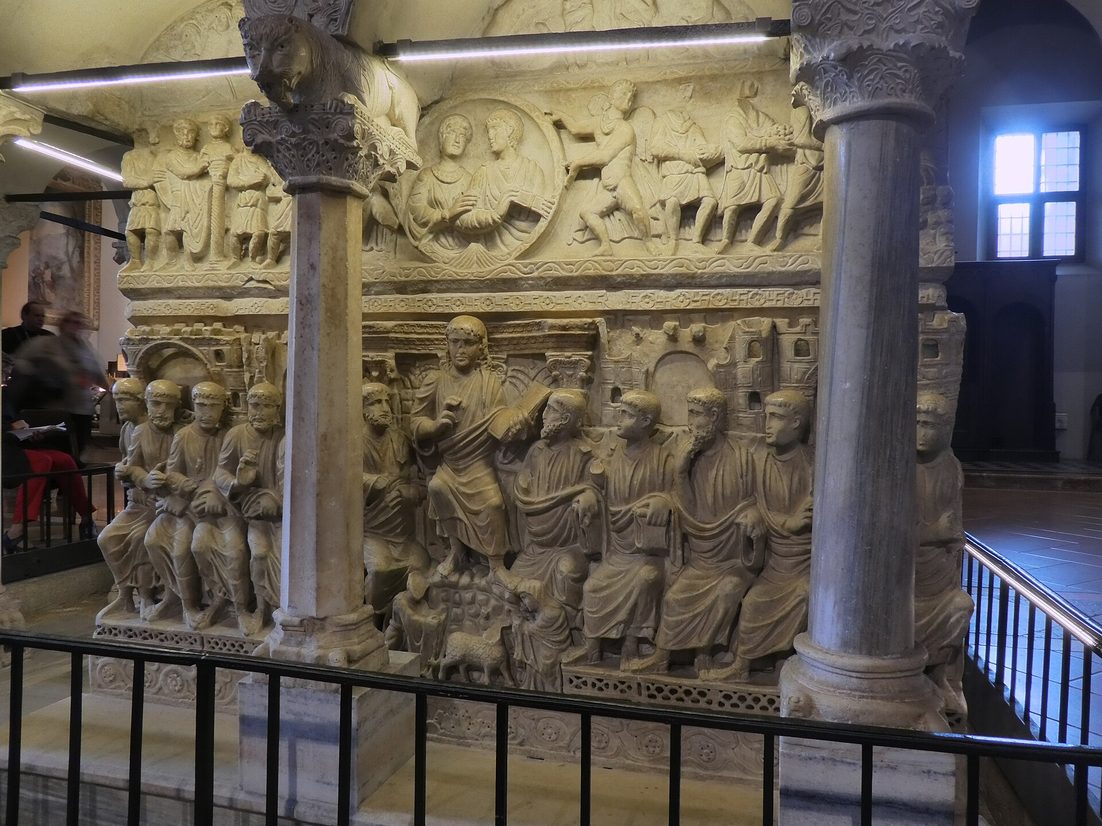
Under the pulpit on the left of the nave is a carved Roman sarcophagus of the 4th century, called, only by tradition, the tomb of Stilicho, the general who was the real power in the western empire around 400. The Romanesque pulpit above it reuses older carvings.
Bramante’s portico
On the left of the church, the canonry has a portico designed by Donato Bramante in 1492 and left unfinished when he went to Rome, wrecked by the bombs of 1943 and rebuilt after the war; four of its columns are carved to look like tree trunks with the branches cut off. The cloisters he designed for the monastery are now part of the Catholic University.
Tours and where to stay
The church is free; museum tickets are sold at the Ambrosius ticket office in the square and online. Santa Maria delle Grazie and Leonardo’s Last Supper are about ten minutes’ walk away.
These links go to GetYourGuide and Booking.com. This site earns nothing from them at present — they are here because they are the quickest way to check what is actually available.
Don’t miss
- The golden altar Carolingian gold and gems.
- Ambrose’s portrait In San Vittore in Ciel d’Oro.
- The bronze serpent On its column in the nave.
- The atrium capitals Beasts and monsters.
- The Devil’s Column Outside, with its two holes.
Insider tips
Look at the Devil’s Column. Outside the church, beside the museum ticket office, stands a Roman column with two holes in it, which, legend says, the devil made with his horns when he lunged at Ambrose and missed. Put your ear to them and you are supposed to hear hell.
Common questions
Is Sant’Ambrogio free to visit?
Yes, the basilica is free. The treasury museum, Ambrosius, which includes the chapel of San Vittore in Ciel d’Oro with its 5th-century mosaics, costs €5 (€3 for under-18s); a guided tour costs €12 more.
When can you visit Sant’Ambrogio?
The church is open for prayer from early morning, but sightseeing is asked for Monday to Saturday 10am–noon and 2.30–6pm, and on Sundays only 3–5pm. It closes at lunchtime, and visits stop during services.
Is St Ambrose buried in Sant’Ambrogio?
Yes. Ambrose, bishop of Milan, built the church in 379–386 and was buried there in 397, beside the martyrs Gervasius and Protasius. The three lie together in the crypt beneath the high altar.
Was St Augustine baptised at Sant’Ambrogio?
No. Ambrose baptised Augustine at Easter 387 in the baptistery of San Giovanni alle Fonti, whose remains are under Piazza del Duomo and are reached from inside the cathedral (Duomo ticket needed).
When is the feast of St Ambrose?
7 December, the anniversary of his consecration as bishop in 374. It is a holiday in Milan, the day La Scala opens its season, and the time of the Oh Bej! Oh Bej! Christmas fair, now held round the Castello Sforzesco.
More churches in Milan
- Santa Maria delle Grazie — Leonardo’s Last Supper, a short walk away.
- Milan Cathedral — the Duomo, and the baptistery where Ambrose baptised Augustine.