
Milan Cathedral
The Duomo di Milano was begun in 1386 and has never quite been finished: the Veneranda Fabbrica, the body set up in 1387 to build it, still runs its own marble quarry and still replaces its statues stone by stone. It is the largest church in Italy, a mountain of pink-veined white marble with 135 spires and more than 3,400 statues, and the best of it is on the roof. Two things catch out almost everybody: there is no free walk-in — even the cathedral on its own needs a ticket — and the dress code at the door is enforced.
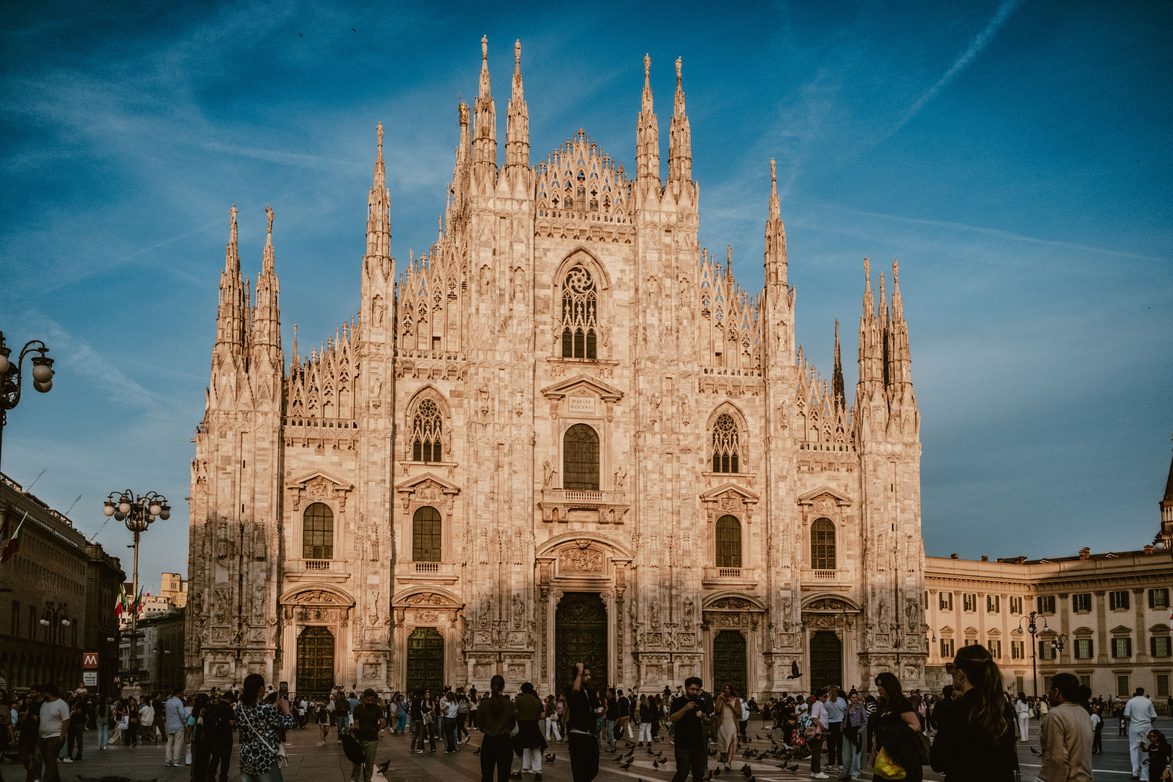
Six centuries in marble
The cathedral stands where Milan’s cathedral has always stood, on the site of the early Christian basilicas of Santa Maria Maggiore and Santa Tecla. It was begun in 1386 under the archbishop, and taken up in 1387 by the ruler of Milan, Gian Galeazzo Visconti, who set up the Veneranda Fabbrica del Duomo to build it and gave it the right to quarry marble at Candoglia, on Lake Maggiore, and to carry it toll-free down the canals to the city. Milan built in brick; this was to be different.
Masons and engineers came from France and Germany as well as Lombardy, and argued for decades about how to build it; Leonardo da Vinci was among those consulted about the crossing tower. The high altar was consecrated by Pope Martin V in 1418, but the building went on for centuries. The main spire and its Madonnina followed in the 1760s and 1770s. The façade was completed only after Napoleon, who was crowned King of Italy here in 1805, ordered it finished, and its bronze doors were added through the twentieth century, the last in 1965.
The visitor’s cheat sheet
| Where | Piazza del Duomo, 20122 Milan. Ticket offices and the DuomoInfopoint are on the south side of the cathedral; the roof lifts are on both sides |
|---|---|
| Opening hours | Cathedral from about 8am and terraces from 9am, until about 7pm, last entry about 6.10pm; sources differ, so check the calendar. The terraces close in bad weather. The Duomo Museum is closed on Wednesdays. The cathedral closes to visitors during major services |
| Admission | Ticket required, even for the cathedral alone. 2026 prices: Culture Pass €15 (cathedral, museum, archaeological area and San Gottardo); Duomo Pass with the terraces €22 by the stairs or €26 by lift, both valid 72 hours. Terraces only, without the cathedral, €16 by the stairs or €18 by lift. Half price for ages 6–17, students and over-65s; under-6s free |
| Book | Online, for a timed entry. In spring and summer terrace slots can go days ahead, and the ticket-office queue can be long |
| Dress code | Shoulders and knees covered, no hats. No sleeveless or low-cut tops, shorts or miniskirts. Cover-ups are sold at the ticket office |
| Security | Bag check for everyone. No large rucksacks, suitcases, helmets, glass or food |
| Getting there | Metro M1 and M3 to Duomo, which comes up in the piazza. About 10–15 minutes from Milano Centrale on the M3 |
| How long | An hour for the cathedral, an hour or more for the terraces, an hour for the museum |
Hours and admission checked against the official site in October 2026. They change; the official site is always the last word.
Book a timed ticket, and dress for the door. There is no free entry for sightseeing, and the queue at the ticket office can be long, so buy online for a set time. Then make sure you can get in: shoulders and knees covered, no hats, and the staff at the door check. A terraces-only ticket does not include the inside of the cathedral; the Duomo Pass covers both.
What to see, in the order you meet it
The façade and the doors
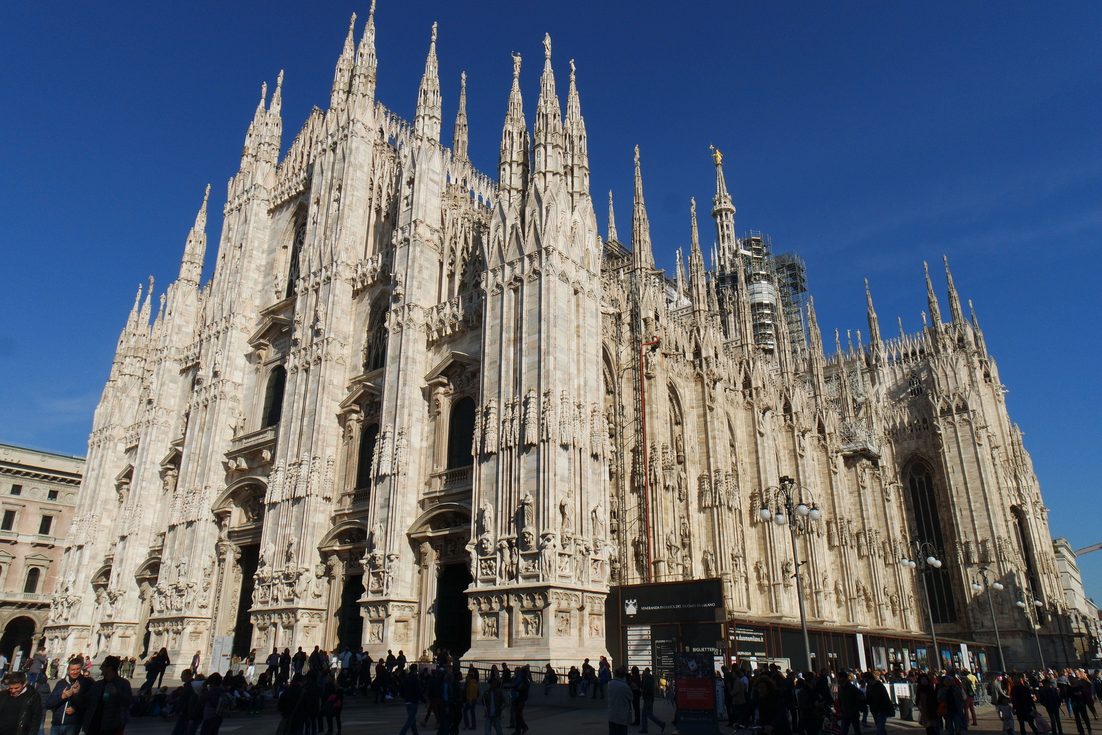
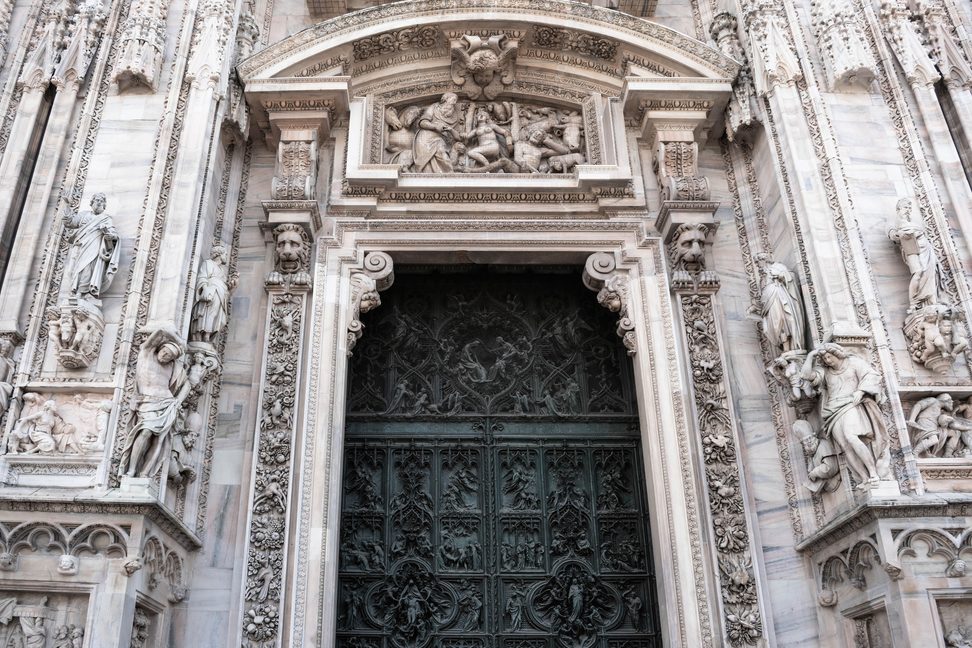
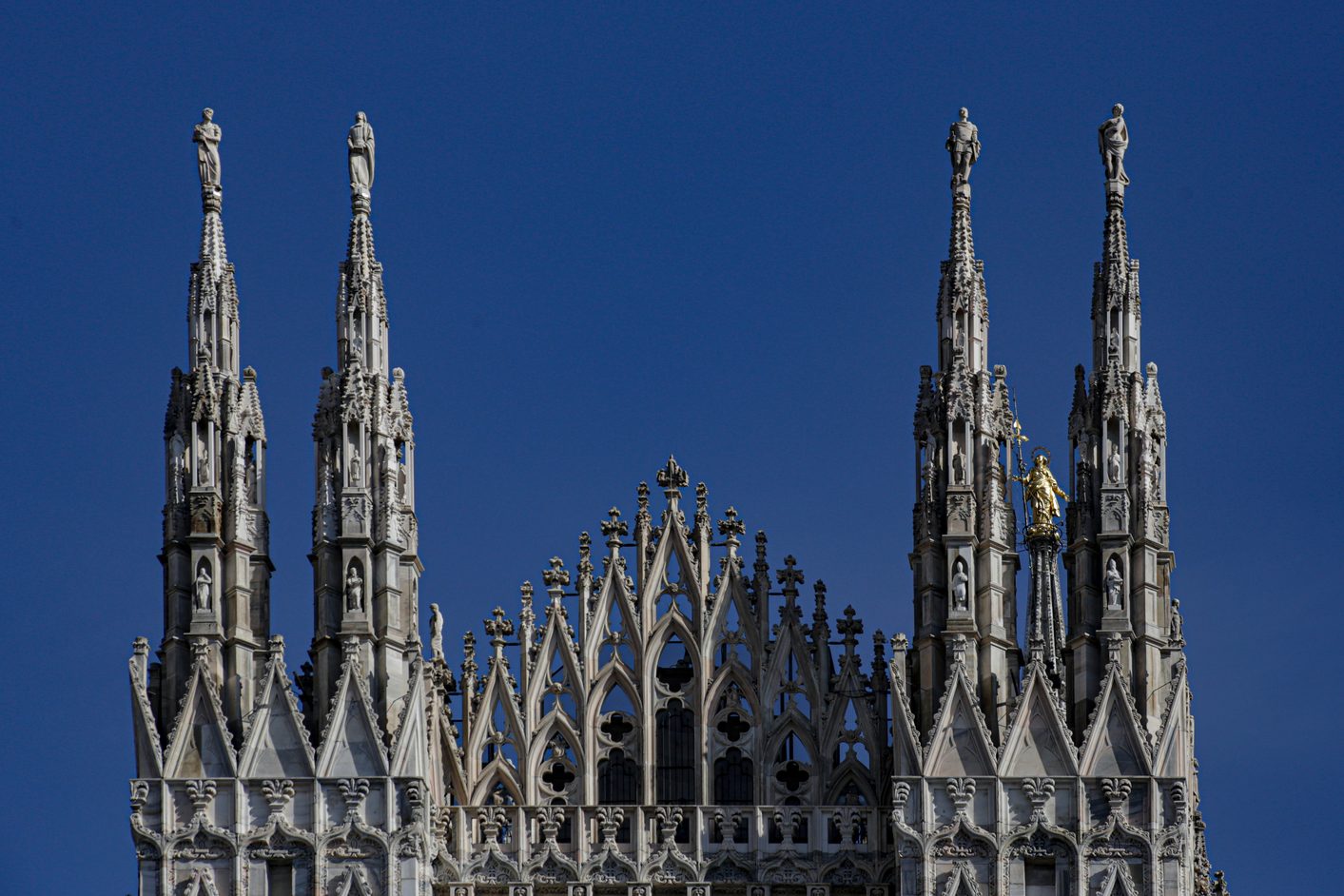
From the piazza the cathedral looks like a Gothic church with a classical front grafted on, which is almost what it is. The lower windows and doorways were designed in the seventeenth century in a classical style; the Gothic upper parts and pinnacles were added in the Napoleonic campaign of the 1800s and 1810s. The five great bronze doors are modern, added through the twentieth century, and the central one, with scenes from the life of the Virgin, has panels polished bright by hands that touch them for luck.
The nave
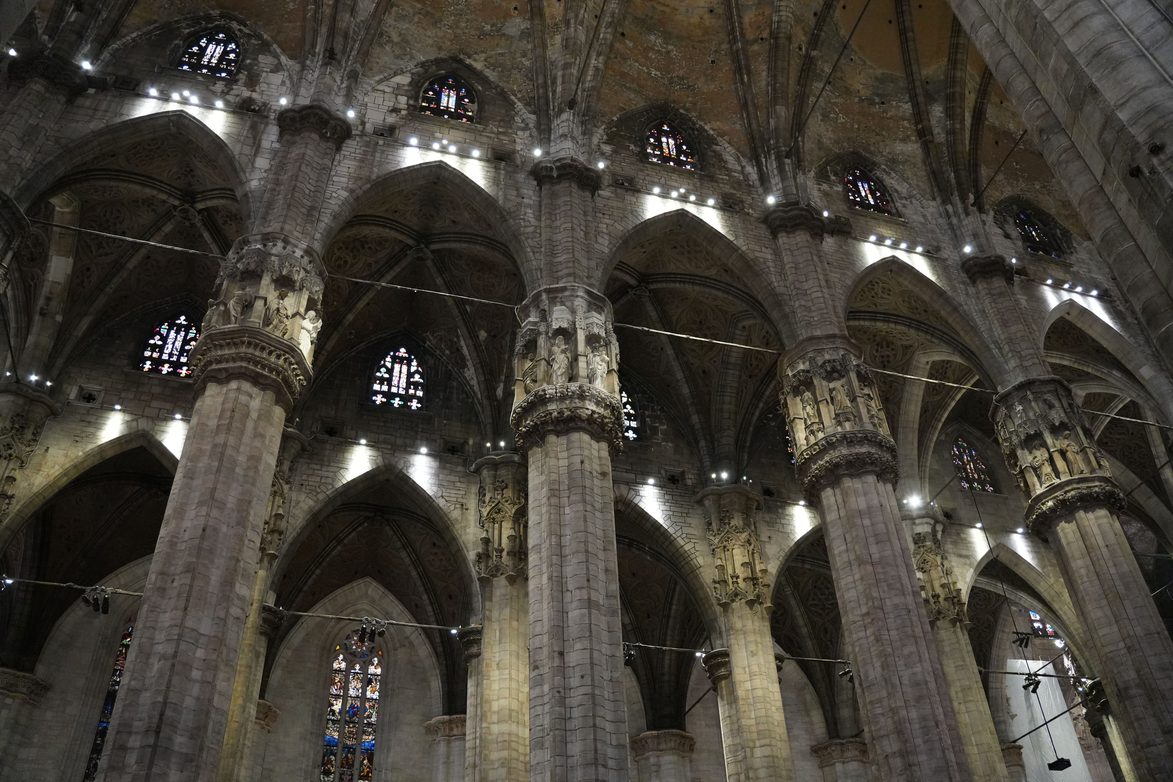
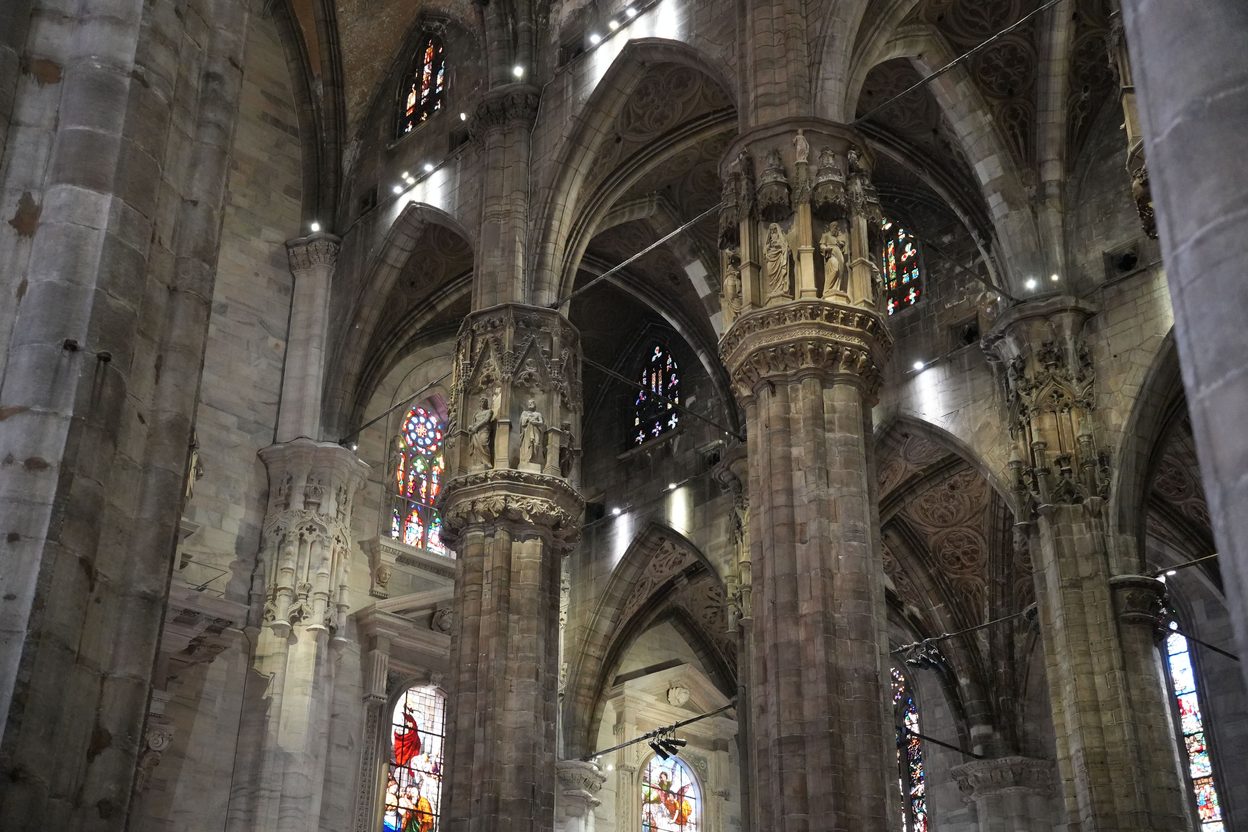
Inside, the scale takes over. Five aisles, fifty-two clustered piers, and capitals so big that each carries a ring of statues in niches where in a lesser church there would be carved leaves. The building is about 158 metres long and holds tens of thousands of people. Look down at the floor near the entrance for the bronze meridian line set into it by the astronomers of Brera in 1786: at noon, a ray of sun from a hole in the vault falls on it, marking the day of the year.

The windows
The huge windows of the apse are among the oldest parts of the building, and the glass along the aisles runs from the fifteenth century to the twentieth, much of it replaced in the 1800s. It is brightest in the morning, when the sun is in the east end.
St Bartholomew flayed
In the left transept, near the altar, stands the statue most people photograph: the apostle Bartholomew, who was skinned alive, carved by Marco d’Agrate in 1562 with his own skin thrown over his shoulders like a stole. Every muscle and vein is there. The inscription on the base is traditionally read as “not Praxiteles but Marco d’Agrate made me”, which tells you how he felt about it.

The Holy Nail
Above the apse, in the vault over the high altar, a small red light marks where the cathedral keeps one of the nails said to be from the Cross. Once a year, in September, the archbishop is raised up to it in the nivola, a cloud-shaped lift decorated with angels, to bring it down for the feast of the Holy Cross.
Beneath the floor
Steps near the entrance lead down to the archaeological area: the foundations of the fourth-century Baptistery of San Giovanni alle Fonti, where St Ambrose baptised St Augustine at Easter in 387. The octagonal font is still there. Under the choir, the crypt of St Charles Borromeo holds the relics of the sixteenth-century archbishop who rebuilt the Church in Milan after the Council of Trent.

The terraces
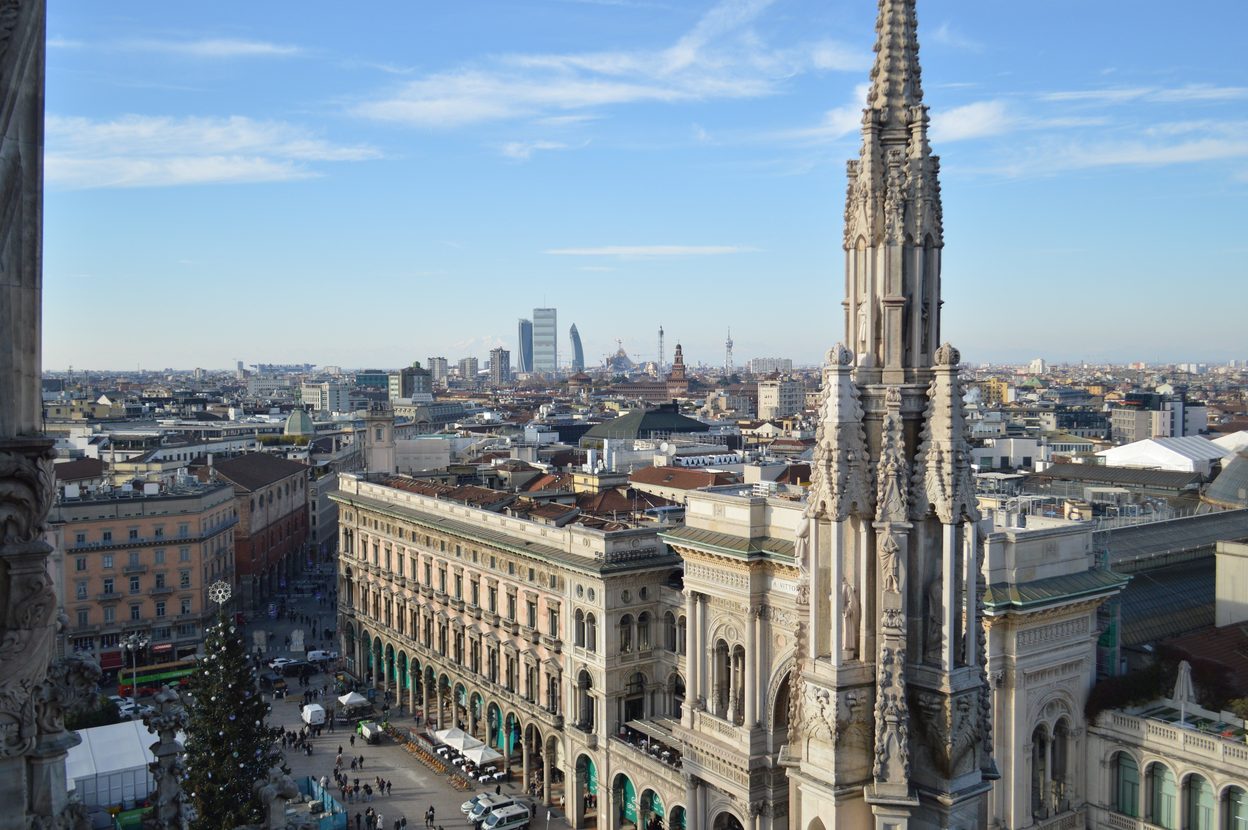
Then go up. The roof is the reason to come: a walk among the pinnacles and flying buttresses, over the marble roof of the nave, with the statues at arm’s length and the city below. You can climb about 250 steps or take the lift most of the way; everyone comes down by the stairs. On a clear day, especially in winter, you can see the Alps.

The Madonnina
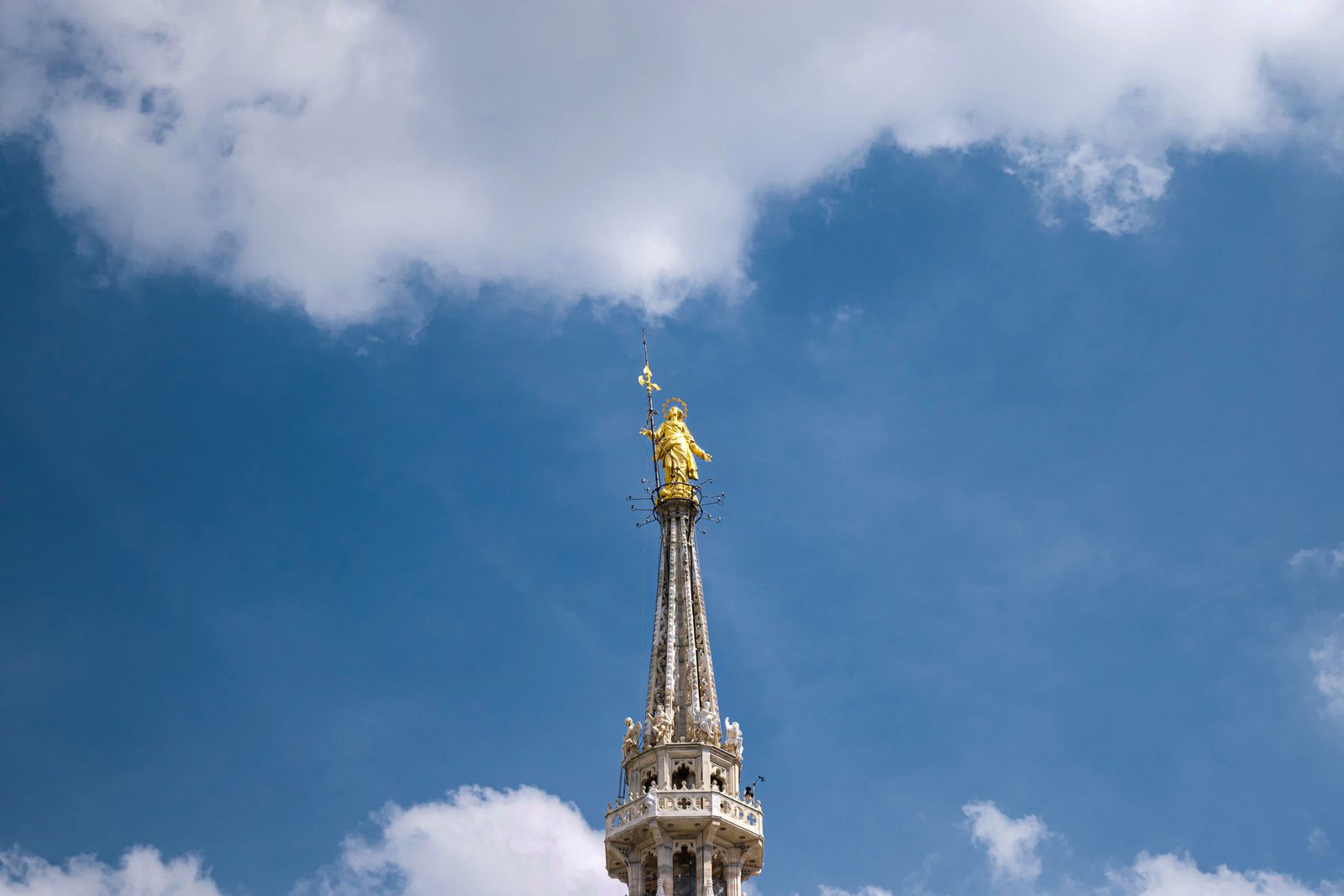
Above the central terrace rises the main spire, completed in the late 1760s, and on top of it the Madonnina: a statue of the Virgin by Giuseppe Perego, made of thirty-three gilded copper plates, 4.16 metres tall, and in place since 1774. In the war she was wrapped in grey cloth so as not to guide the bombers. By an old tradition no building in Milan was to stand higher. When the Pirelli Tower broke the rule in the 1950s, a copy of her went on its roof, and the city’s newer towers have followed suit.
The Duomo Museum
In the Palazzo Reale on the south side of the piazza, the museum holds what has been taken down from the cathedral over six centuries: original statues and gargoyles, stained glass, tapestries, and the wooden model of the cathedral begun in 1519. Ticket holders can also see the little church of San Gottardo in Corte behind it, the Visconti palace chapel of 1336 with a brick bell tower that once carried Milan’s first public clock. The museum is closed on Wednesdays.
Tickets and tours
Buy the Duomo Pass, online, for a set time
For a first visit the Duomo Pass is the one to have: the cathedral, the terraces, the museum, the archaeological area and San Gottardo, valid for 72 hours, at €22 by the stairs or €26 by lift. Buy it from the Veneranda Fabbrica’s own website. Fast-track tickets and guided tours cost more and shorten the wait, which in summer is worth something.
Tour and hotel links go to GetYourGuide and Booking.com. This site earns nothing from them at present — they are here because they are the quickest way to check what is actually available.
Don’t miss
- The roof Walking on the marble over the nave, among the pinnacles.
- The Madonnina Gilded, 4.16 metres tall, and higher than anything in old Milan.
- St Bartholomew Flayed, and wearing it.
- The meridian line A strip of brass in the floor that the sun finds at noon.
- St Ambrose’s baptistery Under the piazza, where Augustine was baptised.
- The red light in the vault Where the Holy Nail is kept, high over the altar.
Insider tips
Go up early or late. The terraces are calmest at opening time and in the last hour, and the low sun makes the marble glow. In bad weather they close, so in a doubtful forecast book the roof for the first day of the 72-hour pass and keep the inside for later.
Keep something to cover your shoulders in your bag in summer, and leave the large rucksack behind: the security check turns them away, and there is nowhere to leave one.
Wednesday is a good day for the cathedral and the roof, and the wrong day for the museum, which is shut; terraces-only tickets are cheaper that day.
Leonardo’s Last Supper is about 25 minutes’ walk away at Santa Maria delle Grazie, but it is booked months ahead. If you want both on one trip, book the Last Supper first and fit the Duomo round it.
Common questions
Is Milan Cathedral free to enter?
Not for sightseeing. There is no paid cathedral-only ticket: the cheapest that includes the cathedral, the Culture Pass, is €15. Worshippers go in free by a separate entrance. A Duomo Pass with the terraces is €22 by the stairs or €26 by lift. The Veneranda Fabbrica opens the cathedral free on a few days a year, including the feast of St Charles Borromeo on 4 November, but you still need to book a free ticket online.
What is the dress code for Milan Cathedral?
Shoulders and knees covered, and no hats. The cathedral’s rules exclude sleeveless and low-cut tops, shorts and miniskirts, and staff check at the door. Cover-ups are sold at the ticket office if you are caught out.
Should I take the stairs or the lift to the roof?
The lift ticket costs a little more and saves most of the 250-odd steps. Everyone comes back down by the stairs, and there are some steps on the roof itself, so ask at the DuomoInfopoint about step-free access.
Is the Duomo Museum open on Wednesdays?
No. The Duomo Museum is closed on Wednesdays. The cathedral and the terraces are open, so Wednesday is a good day for the roof and a poor one for the museum.
Can I bring a backpack into Milan Cathedral?
Small bags only. Everyone goes through a security check, and large rucksacks, suitcases, helmets and glass bottles are refused. There is no proper cloakroom, so leave the big bag at the hotel.
What is the golden statue on top of Milan Cathedral?
The Madonnina, a statue of the Virgin in gilded copper, 4.16 metres high, placed on the main spire in 1774. By tradition nothing in Milan stood higher; when skyscrapers broke the rule, copies of her were put on their roofs.
Where to stay and eat nearby
The Galleria Vittorio Emanuele II opens off the north side of the piazza, and La Scala is at its far end. Hotels right on the piazza are expensive; Brera, a few minutes north, is better for restaurants and only a short walk from the Duomo.
More churches in Italy
- Sant’Ambrogio — one of Milan’s oldest churches, where St Ambrose is buried.
- Florence Cathedral — begun a century earlier, and finished with Brunelleschi’s dome instead of spires.
- St Mark’s Basilica — under two and a half hours away by fast train.
- St Peter’s Basilica — the only bigger church in the country, and strictly it is in the Vatican.
- Strasbourg Cathedral — another Gothic giant in pink stone, north of the Alps.