
Cappella Sansevero, Naples
The Cappella Sansevero is a small private chapel in the old centre of Naples, built as the burial chapel of the princes of Sansevero, and it holds one of the most famous sculptures in the world: Giuseppe Sanmartino’s Veiled Christ, a dead Christ under a veil of marble so fine that it looks like wet cloth. Around it are other virtuoso marbles, and in the crypt two 18th-century anatomical models. Booking is compulsory, tickets are €12, and photography is banned.
A family chapel and an extraordinary prince
According to tradition, a section of the di Sangro garden wall collapsed in the late 16th century and revealed an image of the Madonna, to which an innocent prisoner and then the sick Duke Giovan Francesco di Sangro prayed; in thanks the duke built a small chapel, Santa Maria della Pietà, known as the “Pietatella”, in around 1590. In 1613 Alessandro di Sangro enlarged it into the family’s burial chapel.
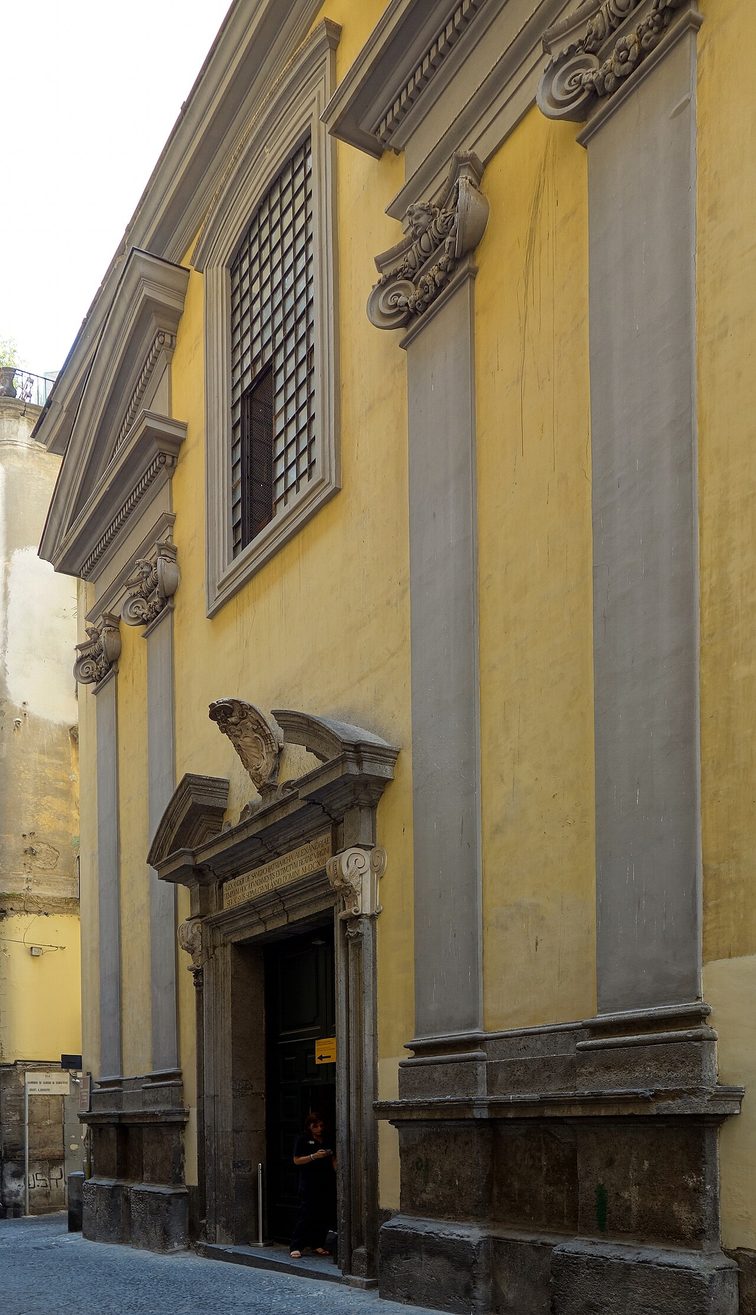
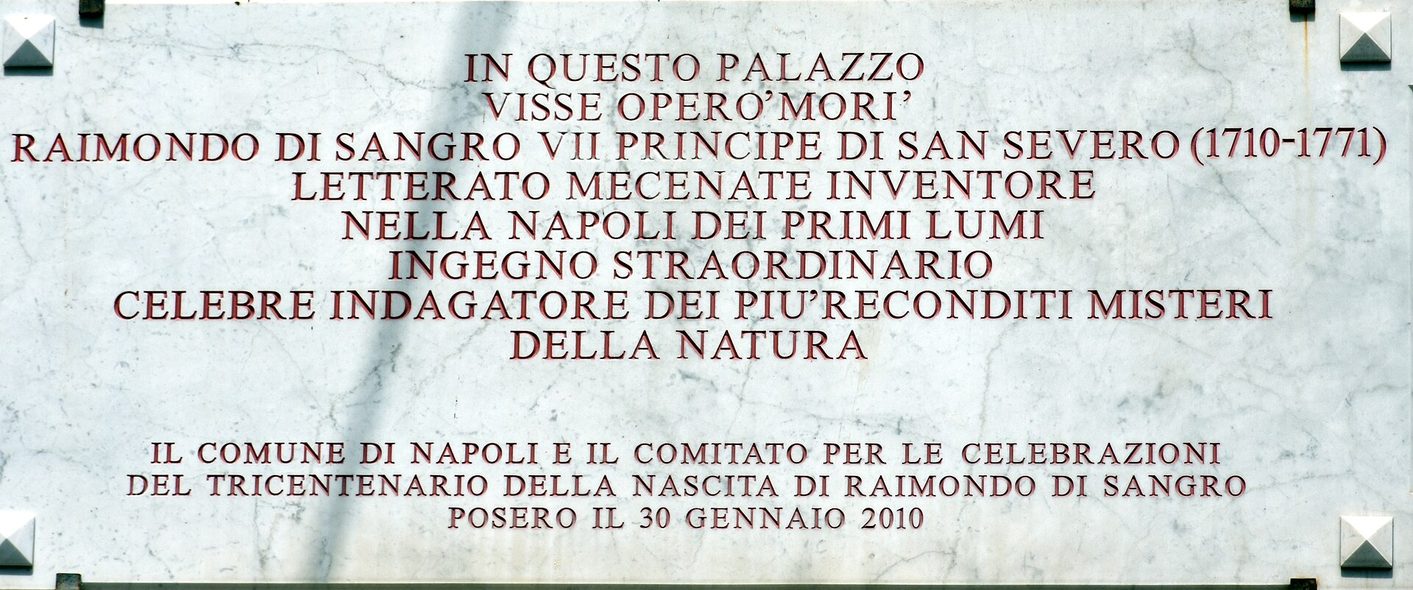
It was transformed from the 1740s by Raimondo di Sangro, seventh Prince of Sansevero (1710–1771): soldier, scholar, inventor and for a time head of the Freemasons of Naples. He experimented with chemistry, coloured fireworks, printing and a paddle-wheeled “sea carriage” that he drove across the bay, and his reputation as an alchemist grew into dark legends. He hired the best sculptors he could find to fill the chapel with allegories of the virtues of his family. A walkway once linked it to the family palace on the piazza; it collapsed in the late 1880s. The chapel is run as a private museum.
The visitor’s cheat sheet
| Where | Via Francesco De Sanctis 19/21, Naples; off Piazza San Domenico Maggiore |
|---|---|
| Opening hours | 9am–7pm, last entry 6.30pm; closed Tuesdays (open on some Tuesdays around holidays and in August) and 25 December; 9am–2pm on 24 and 31 December; to 8.30pm on some holiday dates |
| Admission | €12; ages 18–26 €8; ages 10–17 €6; under 10 free; audio guide €3.50 |
| Booking | Compulsory, for a timed slot, on the museum’s ticket site; on sale 60 days ahead |
| Ticket office | Temporarily at Via Raimondo di Sangro 12, a few steps away; online tickets go straight to the entrance |
| Rules | No photography, filming or phones; no food or drink |
| How long | 30–45 minutes; longer with the audio guide |
Hours and admission checked against the official site in October 2026. They change; the official site is always the last word.
What to see
The Veiled Christ
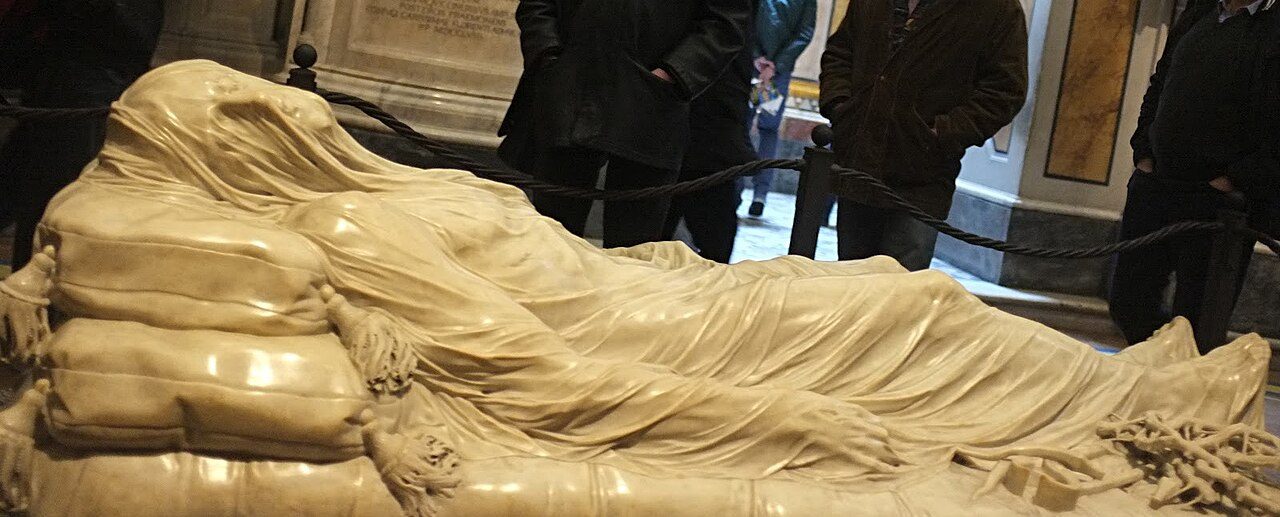
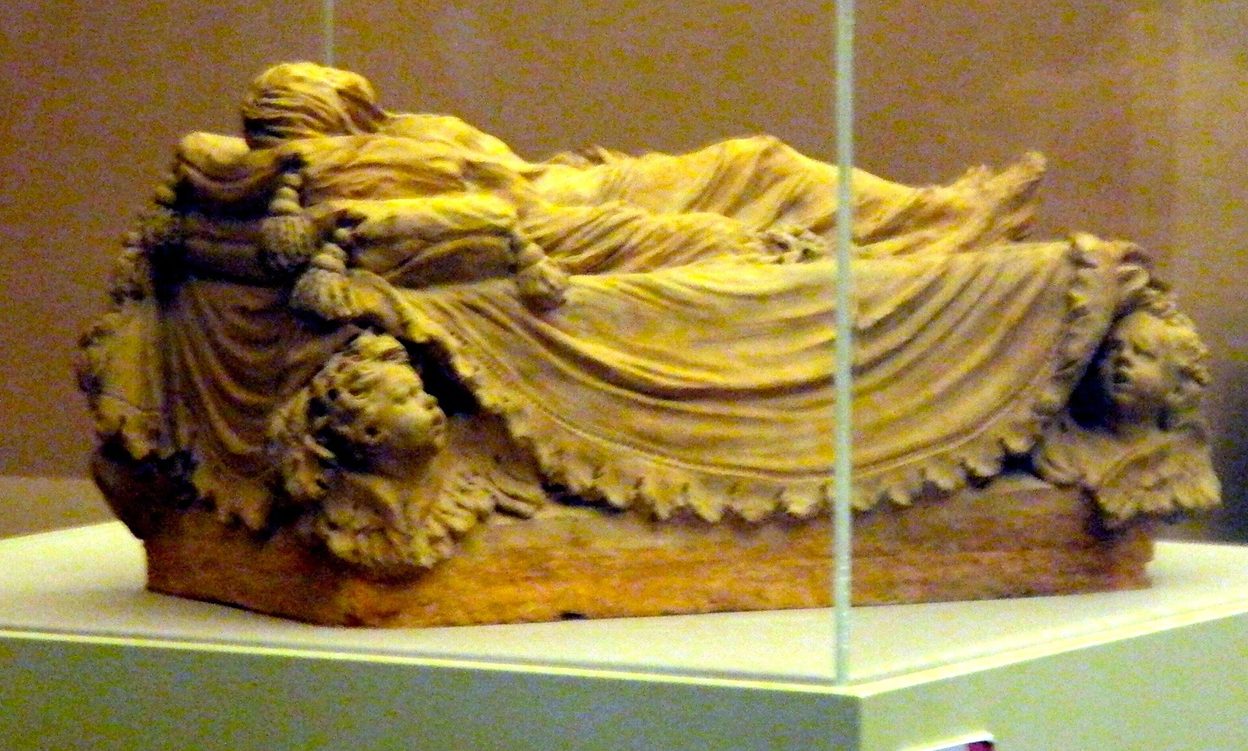
The statue lies in the middle of the nave. Raimondo first gave the commission to the Venetian Antonio Corradini, who made a terracotta model before he died in 1752; the young Neapolitan Giuseppe Sanmartino then carved the statue, signing and dating it in 1753. The veil seems to show the face, the nail wounds in the hands and feet, and the swollen vein on the forehead through it. A legend says the prince laid a real veil over the statue and turned it to marble by alchemy, but the documents say otherwise: a payment order of 16 December 1752, signed by Raimondo and now in the Historical Archive of the Banco di Napoli, pays Sanmartino 50 ducats on account for the “statue of Our Dead Lord covered by a veil, also of marble”, and Raimondo wrote that the shroud was cut from the same block.
Modesty and Disillusion
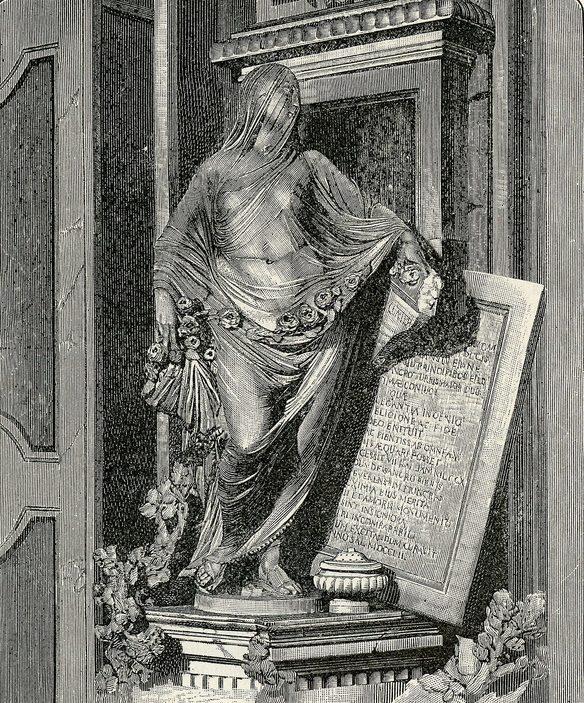
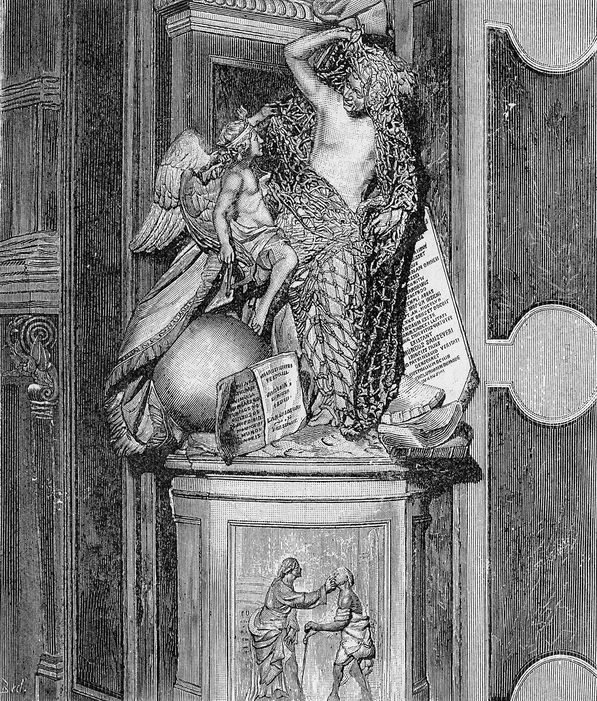
On the pillars either side of the high-altar area are two more feats of marble. Modesty (La Pudicizia), by Corradini, 1752, is the monument to Raimondo’s mother, Cecilia Gaetani dell’Aquila d’Aragona, who died in 1710, before he was a year old: a woman wrapped in a veil that clings to her body. Disillusion (Il Disinganno), by the Genoese Francesco Queirolo, 1753–54, is the monument to his father, Antonio, who, after a dissolute life, spent his last years as a priest: a man freeing himself from a net, carved in openwork marble, with a winged spirit helping him.
The ceiling, the floor and the high altar
Above it all is Francesco Maria Russo’s ceiling fresco of the Glory of Paradise (1749), its colours still bright. The floor was once a black and white labyrinth, often read as a Masonic symbol; most of the present floor dates from 1901, and only a fragment of the labyrinth survives, in the passage in front of Raimondo’s tomb. The high altar carries Francesco Celebrano’s marble high relief of the Lamentation (1760s), often called the Deposition.
The anatomical machines
Down a narrow spiral staircase, in the underground chamber, stand two skeletons, a man and a woman, with their arteries and veins reproduced around them. The prince bought the man in 1756, after its maker, the Palermo doctor Giuseppe Salerno, exhibited it in Naples, and then commissioned the woman. Legend says Raimondo had two servants injected with a substance that turned their blood vessels to metal; modern analysis has found the vessels to be modelled in beeswax, colour, iron wire and silk. The stairs are not accessible to wheelchair users.
Getting there
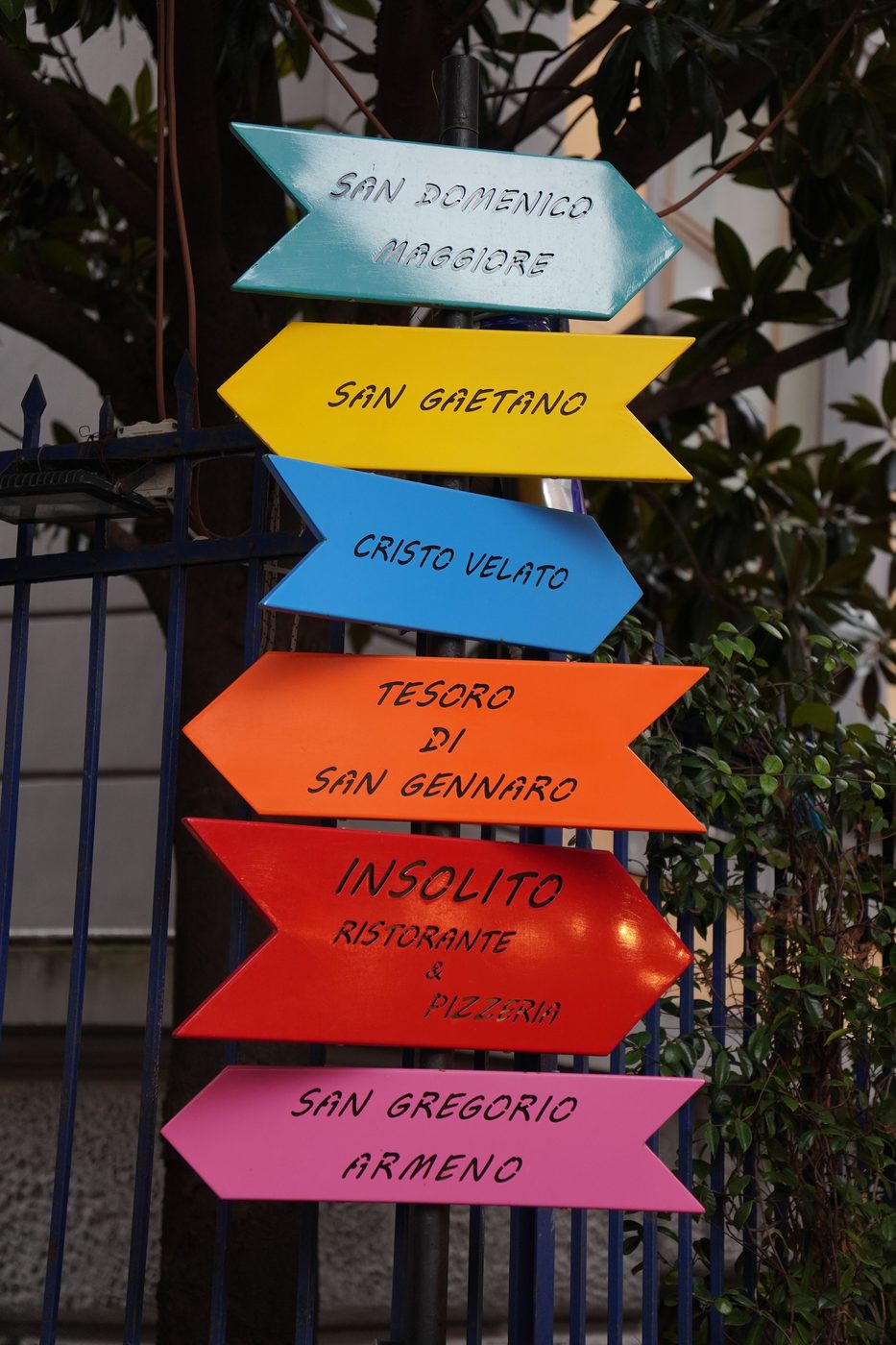
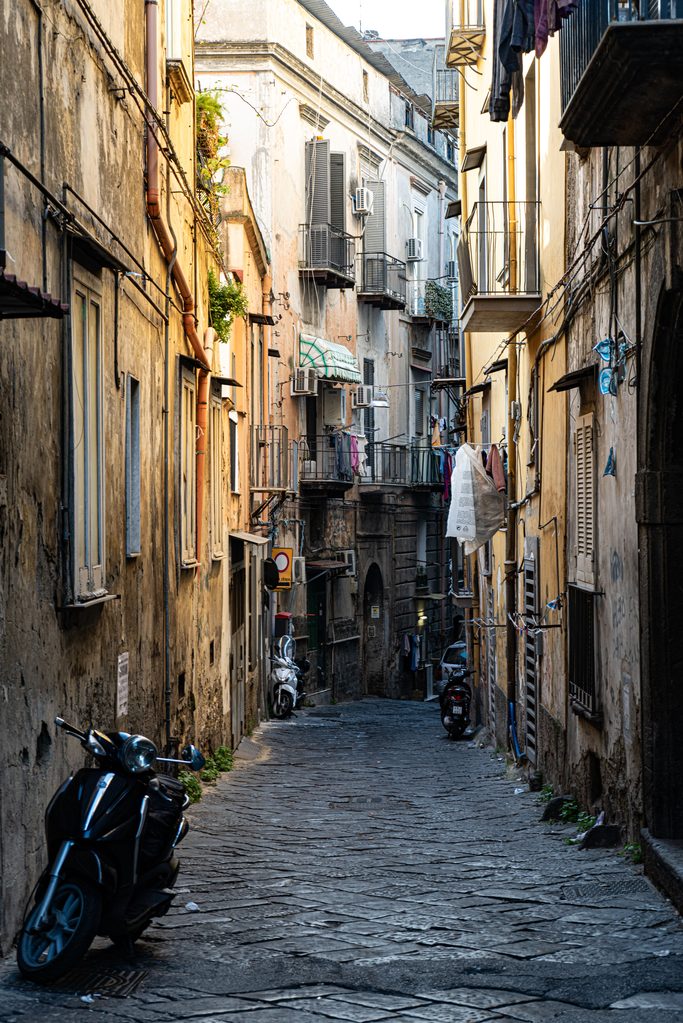
The chapel is in a lane just off Piazza San Domenico Maggiore, between Spaccanapoli and Via dei Tribunali. The nearest metro station is Dante on Line 1, about 400 metres as the crow flies, a 6–8 minute walk; Museo (Line 1) and Piazza Cavour (Line 2) are each about ten minutes’ walk. San Domenico Maggiore is round the corner, Santa Chiara and the Gesù Nuovo five minutes west, and the Duomo, with the chapel of San Gennaro, ten minutes north-east.
Tours and where to stay
Book the timed ticket first, from the museum’s own site; walking tours of the old centre that include the chapel are worth considering when slots are sold out. Staying in the centro storico puts you within a few minutes’ walk.
These links go to GetYourGuide and Booking.com. This site earns nothing from them at present — they are here because they are the quickest way to check what is actually available.
Don’t miss
- The Veiled Christ Look for the vein on the forehead.
- Disillusion A net carved from marble.
- Modesty The veiled woman by Corradini.
- The ceiling The Glory of Paradise, 1749.
- The anatomical machines Down the spiral stairs.
Insider tips
Book the first slot of the day. The chapel is small and slots often sell out in busy periods, at weekends and over holidays; the first visitors of the day get the Veiled Christ with the fewest people round it. If your date has gone, check again two days before, when more tickets are released.
Common questions
Do you need to book the Cappella Sansevero?
Yes. Every visit must be booked in advance for a timed slot, normally online on the museum’s ticket site (the ticket office sells any remaining places for the same day and the next week); tickets go on sale 60 days ahead, and more are released two days before each date. Tickets cannot be changed or refunded.
How much are tickets?
€12; €8 for ages 18–26; €6 for ages 10–17; free up to age 9. The audio guide is €3.50. A small booking fee is added online.
Can you take photos of the Veiled Christ?
No. Photography and filming are not allowed anywhere inside, and visitors may not use their phones.
Is the veil really marble?
Yes. A legend says the prince turned a real cloth into stone by alchemy, but a payment order of 16 December 1752 pays Sanmartino for a statue “covered by a veil, also of marble”, and the prince himself wrote that the shroud was carved from the same block as the statue.
When is the Cappella Sansevero closed?
On Tuesdays (it opens on some Tuesdays around holidays and in August) and on Christmas Day. It closes early, at 2pm, on 24 and 31 December, and stays open until 8.30pm on some holiday dates.
More churches in Italy
- Amalfi Cathedral — an easy day trip down the coast from Naples.
- St Peter’s Basilica — for Michelangelo’s Pietà, the other great marble dead Christ.
- Monreale Cathedral — Sicily, overnight by ferry from Naples.
- Naples Cathedral — San Gennaro’s chapel and the ancient baptistery, ten minutes’ walk away.