
Pisa Cathedral
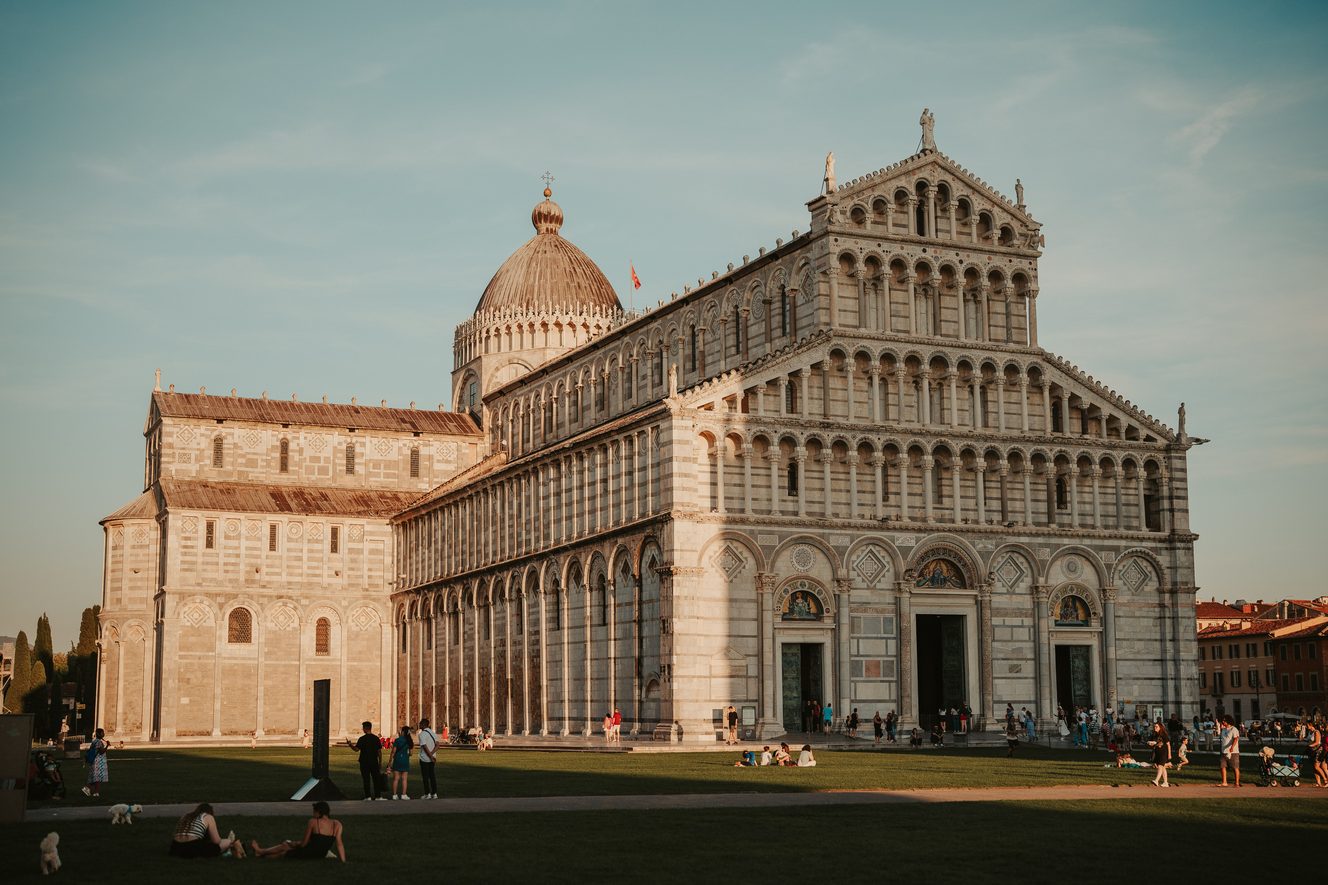
Most visitors come to Pisa for the Leaning Tower, but the tower is only the bell tower of the cathedral, and the cathedral is the real masterpiece: a great white marble Romanesque church of the eleventh century, with Giovanni Pisano’s pulpit and Cimabue’s last mosaic inside. Entry is free, but you need a timed pass from the ticket office, or any paid ticket for the square.
Built on a victory
In the eleventh century Pisa was one of the great sea powers of the Mediterranean, and in 1063 or 1064, after a raid on Muslim Palermo, the city began a cathedral to match. The architect Buscheto designed it; Pope Gelasius II consecrated it in 1118, and in the twelfth century Rainaldo lengthened the nave and built the facade. Its striped marble, arcades and cross-shaped plan became the model for Pisan Romanesque across Tuscany and beyond.
The bell tower was begun in 1173 and started to sink once building reached the second storey, in 1178; it was closed in 1990 and stabilised before reopening in 2001. A fire in 1595 destroyed much of the cathedral’s furnishings and most of its bronze doors. The cathedral, Baptistery, Camposanto and tower have been a World Heritage site since 1987.
The visitor’s cheat sheet
| Where | Piazza del Duomo, 56126 Pisa |
|---|---|
| Opening hours | Usually 10am to 6pm or 7pm in autumn and winter; the other monuments open at 9am, and stay open to 10.30pm in high summer. Last entry 30 minutes before closing. Sunday hours can change for services |
| Admission | Free with a timed pass from the ticket office; included in any paid ticket. Cathedral and one monument €8; all monuments €11; tower and cathedral €20; everything €27 |
| Leaning Tower | Timed slots; ages 8 and up, under-18s with an adult; no bags |
| Getting there | From Pisa San Rossore station, 5–10 minutes’ walk; from Pisa Centrale, 20–25 minutes or bus 1+; trains from Florence about an hour |
| How long | Half an hour for the cathedral; half a day for the whole square |
Hours and admission checked against the official site in October 2026. They change; the official site is always the last word.
Pick up your free pass first. To see the cathedral alone, collect a free pass with an entry time from one of the ticket offices on the square; they cannot be booked in advance. Any paid ticket includes the cathedral at any time. Book the Leaning Tower ahead, arrive on time for your slot, and expect to leave bags in the cloakroom.
What to see, in the order you meet it
The facade and the doors
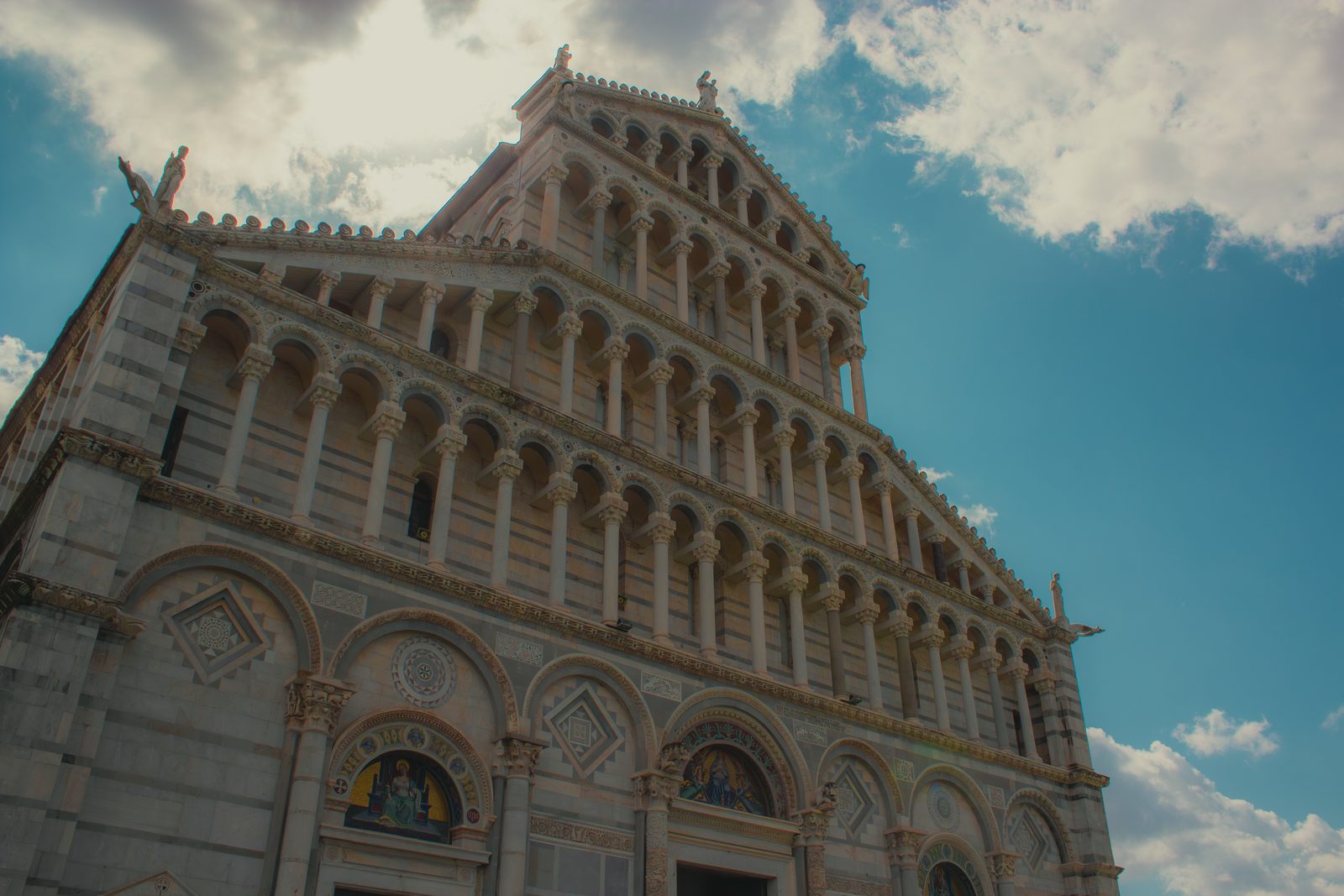
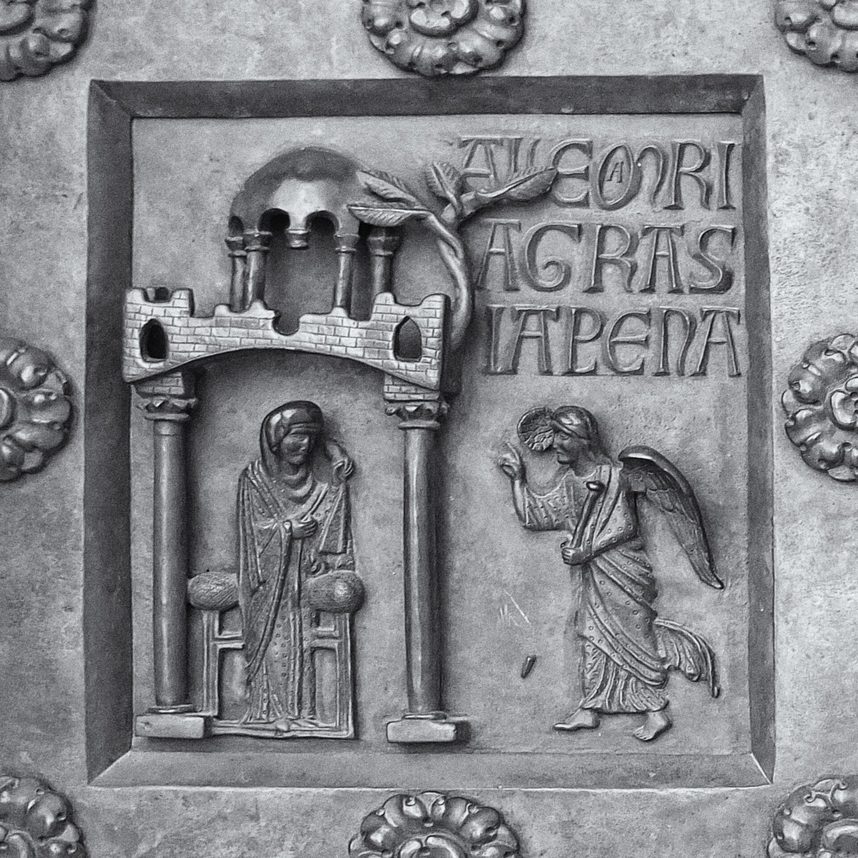
The facade rises in four tiers of little open arcades above three bronze doors of 1602, cast after the fire. Facing the tower, on the end of the south transept, is the Porta di San Ranieri, a copy of the bronze door made by Bonanno Pisano around 1180, the only one to survive the fire; the original, with its stories of the life of Christ, is in the cathedral museum.
The nave
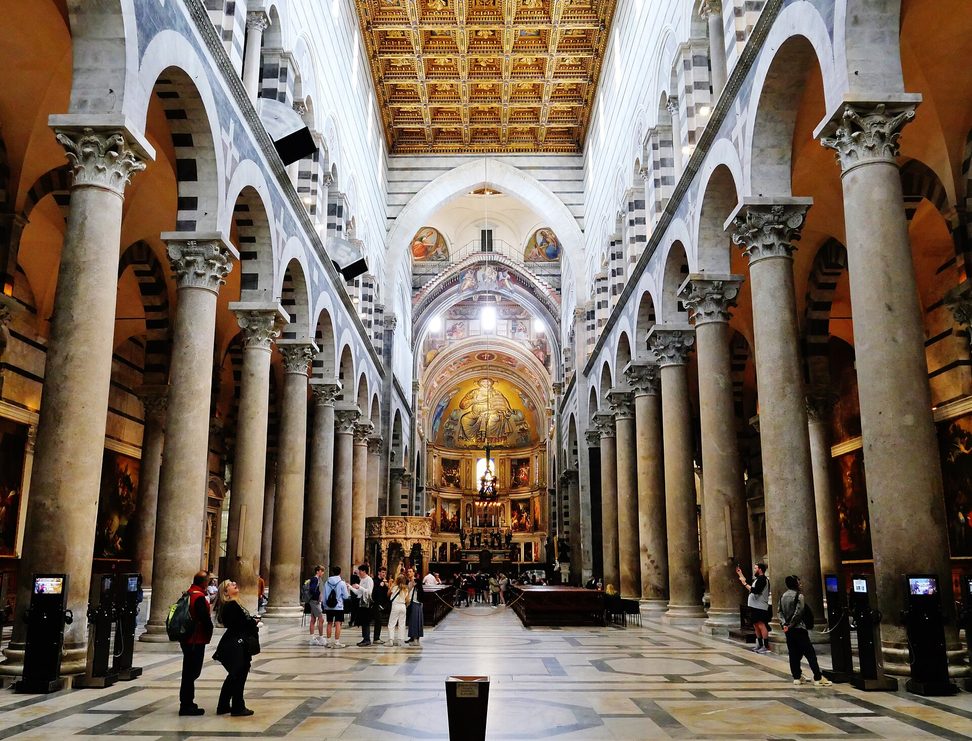
Inside, the nave is lined with granite columns from Elba under a gilded seventeenth-century ceiling, with striped arcades and galleries above. Hanging near the pulpit is the bronze lamp linked, wrongly, with Galileo’s discovery of the pendulum.
Giovanni Pisano’s pulpit
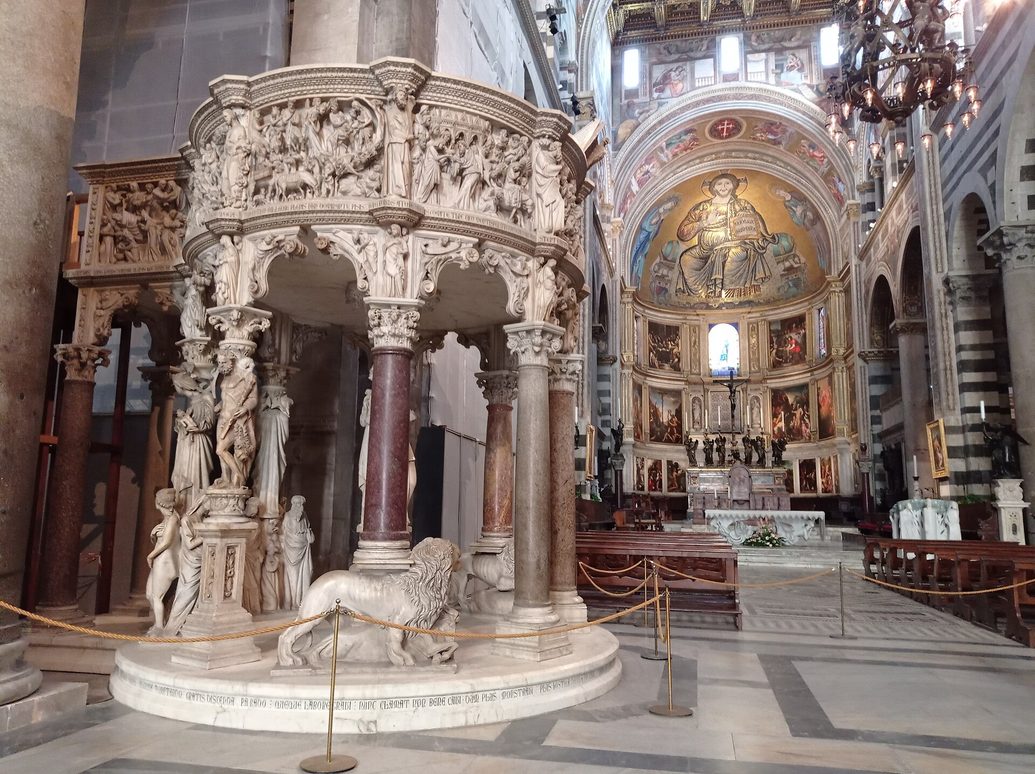
The pulpit, carved by Giovanni Pisano in 1302–10, is the last and largest of the great Pisano pulpits: its panels of the life of Christ and the Last Judgement are crowded with figures, and it stands on columns and statues including the virtues. Taken apart in the restoration after the 1595 fire, it was only reassembled in 1926.
The apse and the tombs
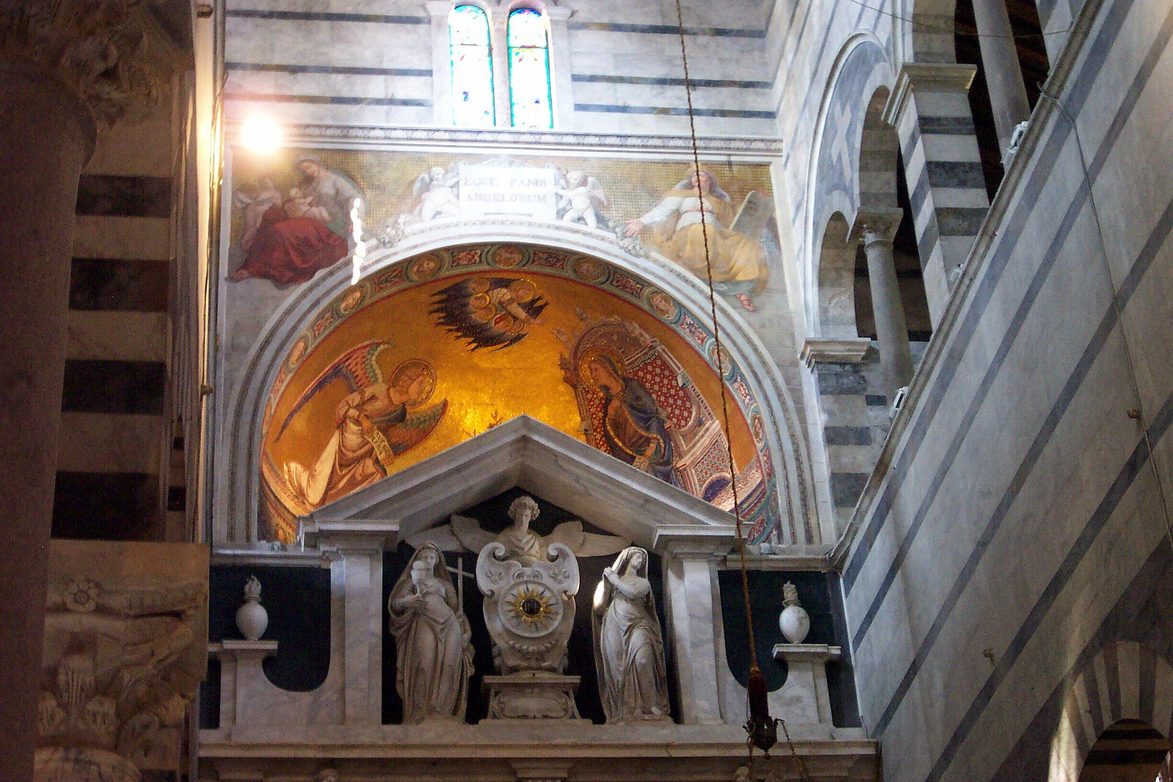
In the gold mosaic of the apse, Christ sits enthroned between the Virgin and St John the Evangelist; the figure of St John was made by Cimabue in 1302, his last known work. In the right transept is the tomb of the Emperor Henry VII, who died near Siena in 1313, carved by Tino di Camaino, and the cathedral keeps the relics of St Ranieri, the patron saint of Pisa.

Tickets and where to stay
Tickets and hotels
Tickets for the tower and the monuments are sold on the official website of the Opera della Primaziale Pisana and at the ticket offices on the square; book the tower in advance, especially in summer. Most visitors come for the day from Florence, but Pisa is quieter and cheaper to stay in.
The hotel link goes to Booking.com. This site earns nothing from it at present — it is here because it is the quickest way to check what is actually available.
Don’t miss
- Giovanni Pisano’s pulpit The finest of the Pisano pulpits.
- Cimabue’s St John In the apse mosaic.
- The Porta di San Ranieri Bonanno’s door, facing the tower.
- The Baptistery For its echo, on the same ticket.
- The Leaning Tower Book a slot ahead.
Insider tips
Get off at San Rossore. Pisa San Rossore station is a few minutes’ walk from the square, far closer than Pisa Centrale. Come early or late in the day: the tour groups arrive mid-morning, and in high summer the square stays open late into the evening.
The Camposanto, the monumental cemetery on the north side of the square, and the Sinopie museum, with the preparatory drawings for its frescoes, are the least crowded parts of the square.
Common questions
Is Pisa Cathedral free?
Yes, but you need a pass. Free passes for a cathedral-only visit, with a set entry time, are given out only at the ticket offices on the square; or the cathedral is included in every paid ticket, at any time. Children under 11 go in free with an adult.
How much is the Leaning Tower?
€20 including the cathedral, for a timed slot; €27 with every monument on the square. Children must be eight or over, and under-18s must be with an adult. Bags go into the cloakroom.
Which ticket should I buy?
For the cathedral alone, the free pass. For the cathedral and one other monument, the Baptistery, the Camposanto, the cathedral museum or the Sinopie museum, €8; for all of them, €11. Add the tower and it is €27. Book the tower in advance; the other tickets are valid for a year.
Did Galileo watch the lamp swing in Pisa Cathedral?
So the story goes: as a young man he is said to have timed a swinging lamp in the cathedral and discovered the regularity of the pendulum. But the bronze lamp now called “Galileo’s lamp” was hung after his observation, so it cannot be the one.
Can I take photographs inside?
Yes, for private use, except during Mass and ceremonies. Dress and behave as in any working church.
Where to stay and eat nearby
The streets around the square are full of souvenir stalls; for better food, walk ten minutes south towards the river and the Borgo Stretto.
More churches in Italy
- Florence Cathedral — about an hour away by train.
- Siena Cathedral — Pisa’s Tuscan rival.