
The Wooden Churches of Chiloé
On the green, rainy island of Chiloé, off the coast of southern Chile, villages are marked from far off by wooden churches with tall towers on the shore. More than 150 churches in the Chilote tradition survive, built by local carpenters in native timber and clad in shingles, and sixteen of them are a UNESCO World Heritage Site: from the yellow-and-violet San Francisco in Castro to the shingled church of Achao, the oldest of all.

The churches and their story
Jesuit missionaries arrived in Chiloé in 1608, and travelled the islands by boat on a “circular mission”, visiting each community in turn. Every village built a chapel for their visits, with a large open space in front and a tower that could be seen from the water. When the Jesuits were expelled in 1767, the Franciscans continued their work, and the churches were rebuilt again and again by the islanders, many of them shipwrights.
The result is a school of architecture found nowhere else: churches of native woods such as cypress, alerce (Patagonian cypress), coihue and mañío, framed with wooden pegs and joinery, with a portico across the front and a tower over it, and outer walls clad in wooden shingles. UNESCO inscribed the churches as a World Heritage Site in 2000; the last two of the sixteen were added in 2001. A foundation, the Fundación Iglesias Patrimoniales de Chiloé, cares for them with the communities that still use them.
The visitor’s cheat sheet
| Where | Across the island of Chiloé and its smaller islands; Castro, the capital, is the best base |
|---|---|
| Opening hours | Spring and summer season: set hours at the main churches (see below; season dates not published); outside it, check before you go |
| Admission | No admission charge is published; a route “passport” is sold at a suggested CLP 3,000 |
| Sunday Mass | Listed windows: Castro 9–11am; Dalcahue, Achao and Chonchi 11am–noon; Nercón noon–1pm; confirm locally |
| Museum | Museo de las Iglesias, Errázuriz 227, Ancud: Tuesday to Saturday 9am–1pm and 2–6pm in season |
| Getting there | Fly to Castro (Mocopulli) or Puerto Montt, then bus and ferry; the Chacao bridge is not yet open |
| How long | A day for Castro, Nercón, Dalcahue and Achao; two or three for more |
Hours and admission checked against the official site in November 2026. They change; the official site is always the last word.
The churches to see
San Francisco, Castro
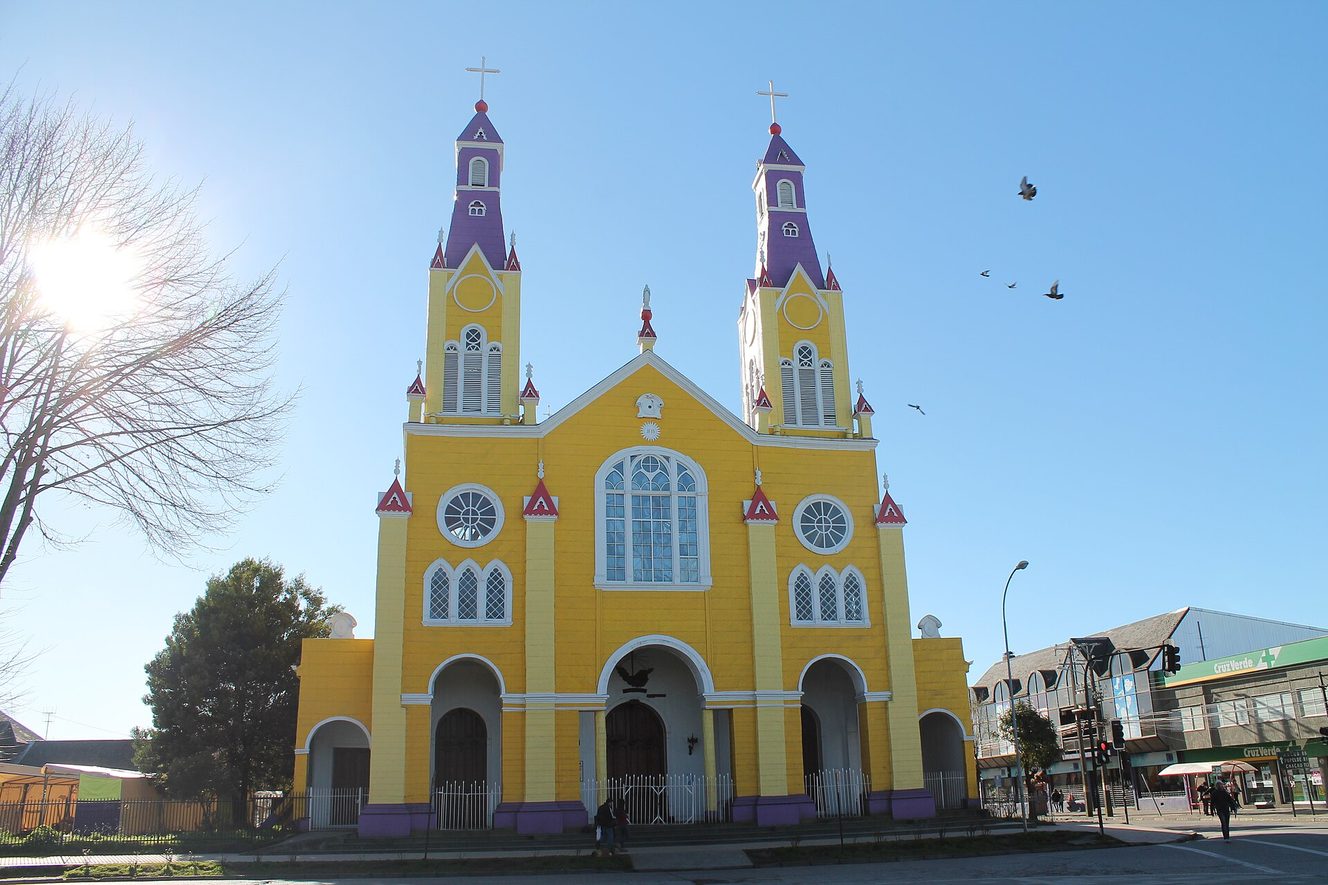
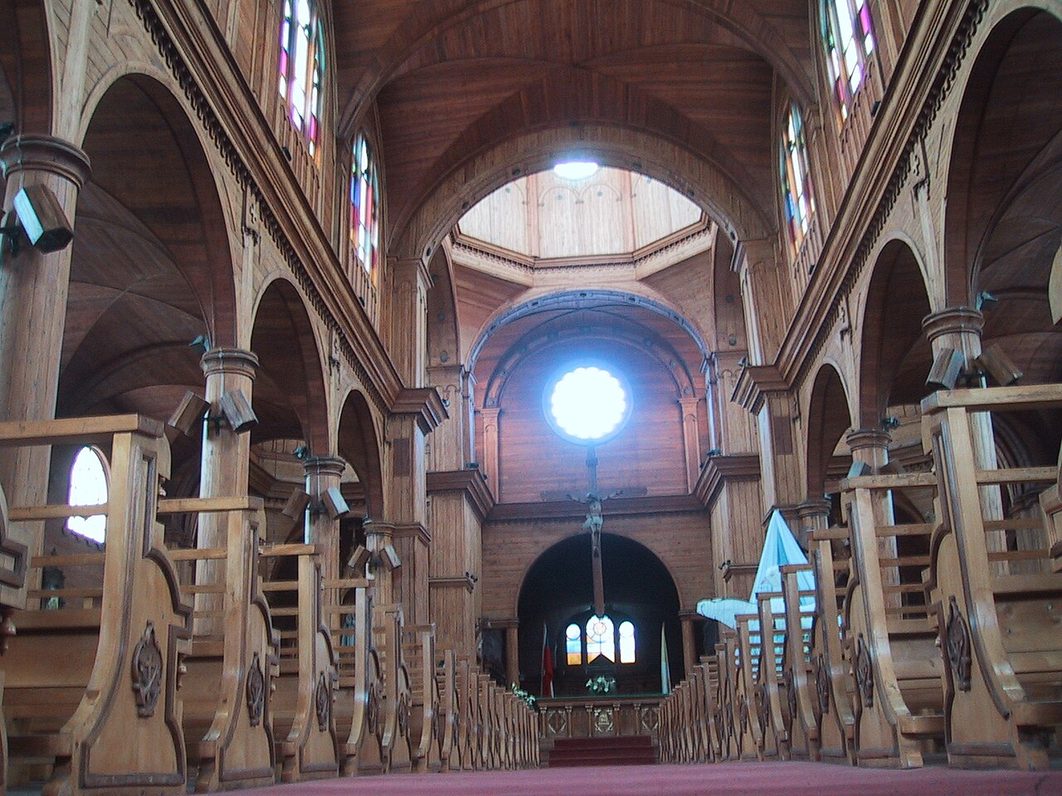
On the main square of Castro, the island’s capital, the largest of the churches was designed by the Italian Franciscan architect Eduardo Provasoli and built by local carpenters after a fire destroyed its predecessor in 1902; it was finished in 1910–12. Outside it is clad in sheet metal painted yellow and violet; inside it is a neo-Gothic church lined with varnished native woods, raulí and olivillo. The foundation lists it open Tuesday to Saturday 10am–12.30pm and 4–8.30pm in the 2026–27 season, with a Sunday Mass window of 9–11am.

Nercón
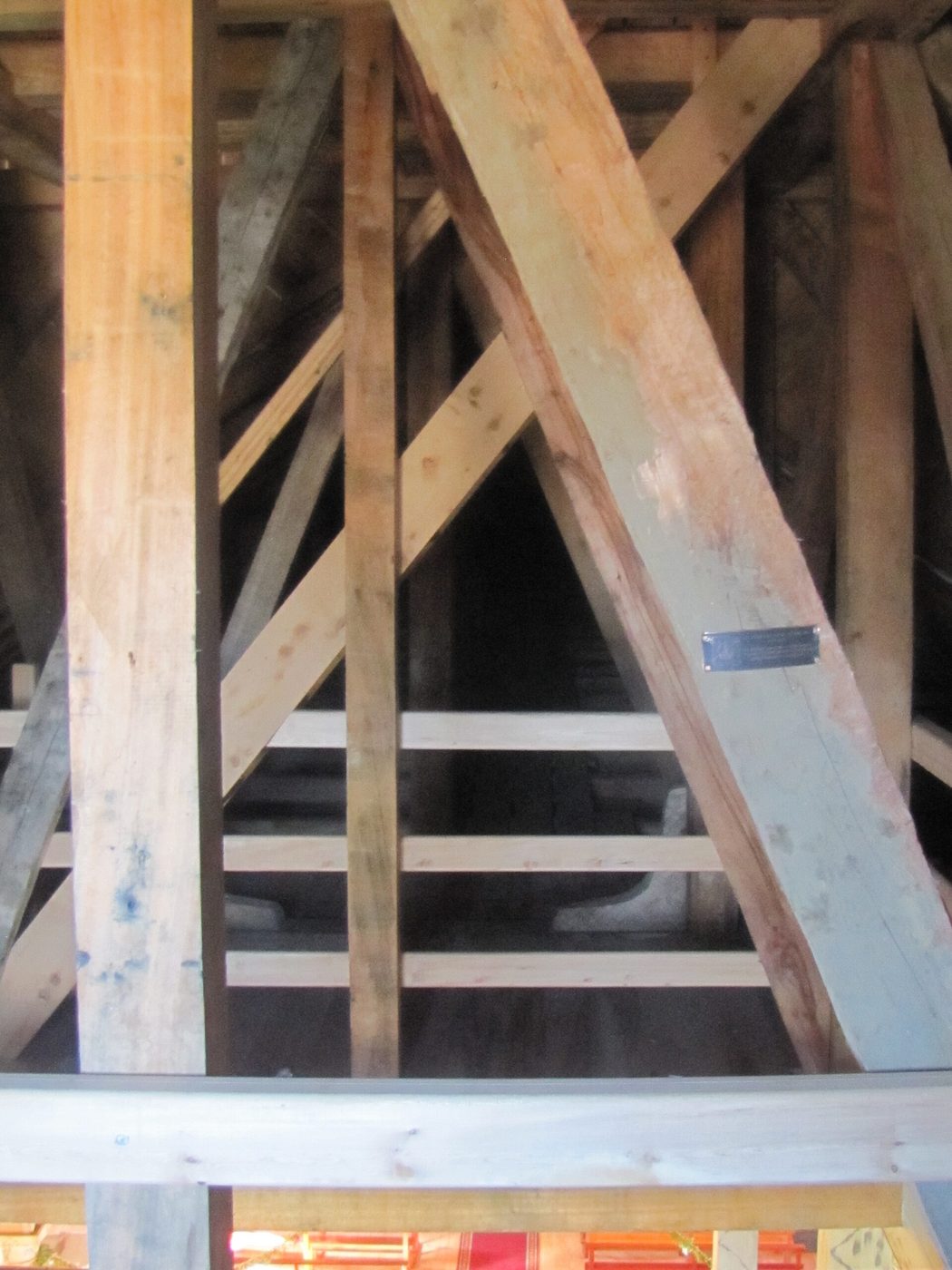
Five kilometres south of Castro, the church of Our Lady of Grace at Nercón (1879) has columns painted to look like marble; since its last restoration the roof frame has been left exposed, and visitors can walk through the attic space (ask locally). It has Sunday Mass at noon; no other opening times are published.

Dalcahue
About 20 km north of Castro, the church of Our Lady of Sorrows at Dalcahue (1893) has a long portico of arches across its front, facing the water, and a craft market on the waterfront on Thursdays and Sundays. Open Tuesday to Saturday 9.30am–1pm and 3–7pm and Sunday 2–6pm in season.


Achao
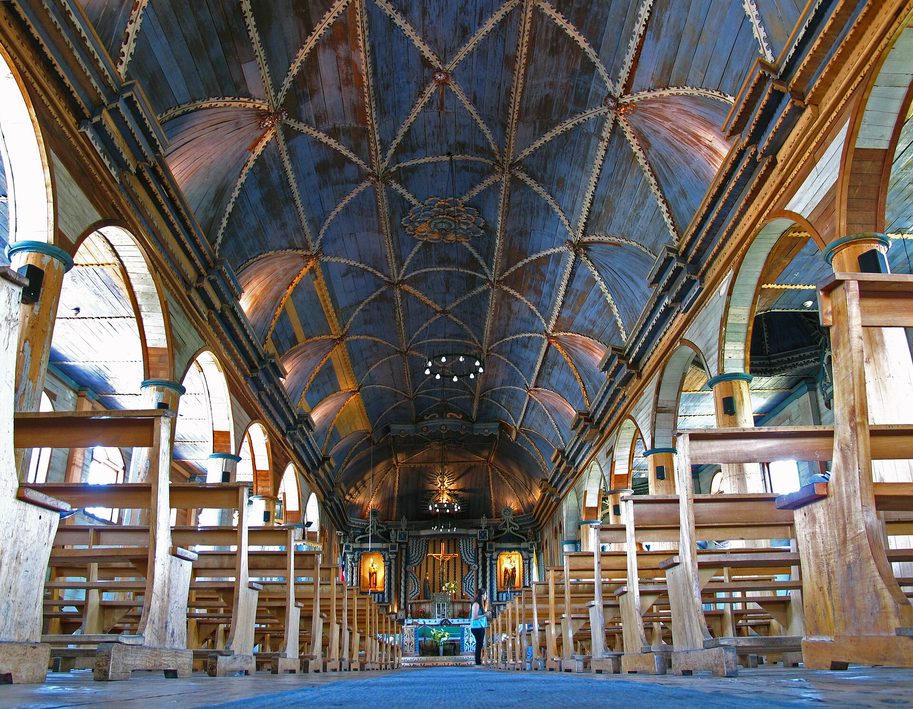
A short ferry crossing from Dalcahue takes you to the island of Quinchao and the village of Achao, where the church of Santa María de Loreto is traditionally regarded as the oldest of the group; the foundation dates it to 1730. Its walls are covered in grey wooden shingles, and inside it has a painted wooden vault and Baroque-style altarpieces. Open Tuesday to Sunday 11am–4pm in season.

Chonchi and Tenáun
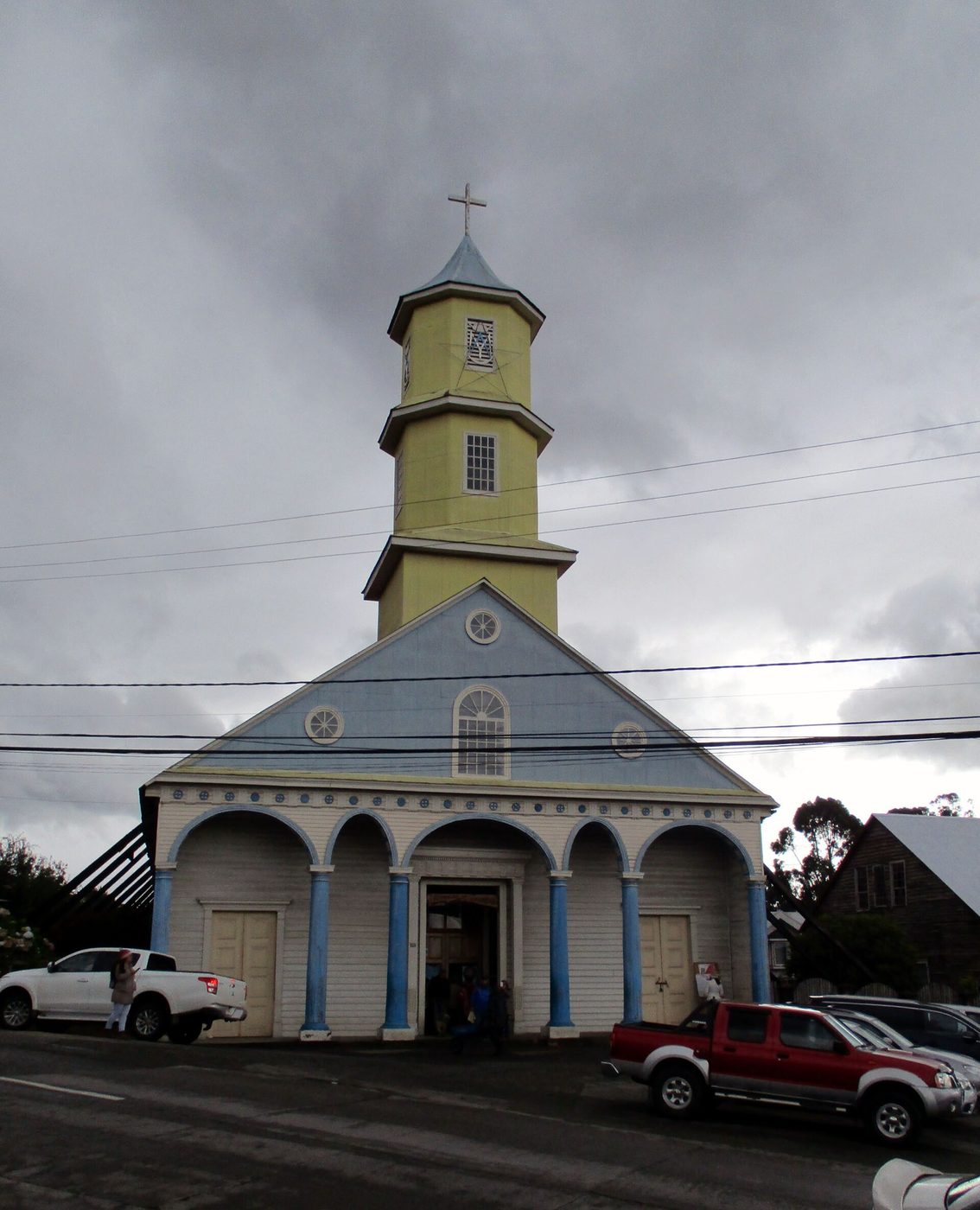
South of Castro, the church of Chonchi (1893), painted blue and yellow, stands at the top of a street of wooden houses; its tower blew down in a storm in 2002 and was rebuilt the next year. It is open daily 9am–8pm in season. On the east coast, the church of Tenáun, with three towers and two large blue stars on its front, faces the square and the sea in a small village.


The Museo de las Iglesias in Ancud, in the north of the island, explains how the churches were built, and sells a bilingual guide to the route.
Getting there
The quickest way is to fly from Santiago to Mocopulli airport, about 19 km north of Castro, though flights are fewer than they were. Otherwise fly or take a bus to Puerto Montt, then continue south: buses drive onto the ferry at Pargua for the half-hour crossing of the Chacao Channel. The bridge over the channel is under construction and not expected to open before 2028. Once on the island, a car is the easiest way to reach the smaller churches, though buses link the main towns.
Where to stay
Castro, with its houses on stilts over the water, is the best base for the churches.
This link goes to Booking.com. This site earns nothing from it at present — it is here because it is the quickest way to check what is actually available.
Don’t miss
- Castro Varnished wood from floor to vault.
- Achao The oldest church, clad in shingles.
- Nercón’s roof The timber frame laid bare.
- Tenáun Three blue towers above the beach.
Insider tips
Come in season. In spring and summer the main churches have opening hours and local hosts; at other times check before you go, as you may find them locked.
Bring a raincoat. Chiloé is one of the wettest places in Chile, even in summer.
Common questions
Do you have to pay to visit the churches of Chiloé?
No admission charge is published for any of the churches. The foundation that looks after them sells a “passport” for the church route at a suggested CLP 3,000, at the churches and the Museo de las Iglesias in Ancud and about 35 partner businesses.
When are the churches open?
In the spring and summer season the main churches open with local hosts (the foundation does not publish the season dates). For 2026–27 the foundation lists Castro Monday 4–7pm, Tuesday to Saturday 10am–12.30pm and 4–8.30pm, Sunday 9am–noon; Dalcahue Tuesday to Saturday 9.30am–1pm and 3–7pm, Sunday 2–6pm; Achao Tuesday to Sunday 11am–4pm; Chonchi daily 9am–8pm. Outside the season, check before you go.
Is there a bridge to Chiloé?
Not yet. The Chacao bridge from the mainland is under construction, with the government aiming to open it in October 2028; until then cars and buses cross the Chacao Channel on ferries from Pargua, a crossing of about half an hour.
Are the churches built without nails?
Mostly, but not entirely. The frames are joined with wooden pegs and joinery, in a tradition close to boat building, but iron nails are used in places such as the floors and cladding.
More churches to visit
- Churches in Norway — the wooden stave churches of the far north.
- Churches in Peru — Cusco Cathedral and San Francisco in Lima.
- La Compañía, Quito — the gilded Jesuit church of Quito.