
Bamberg Cathedral
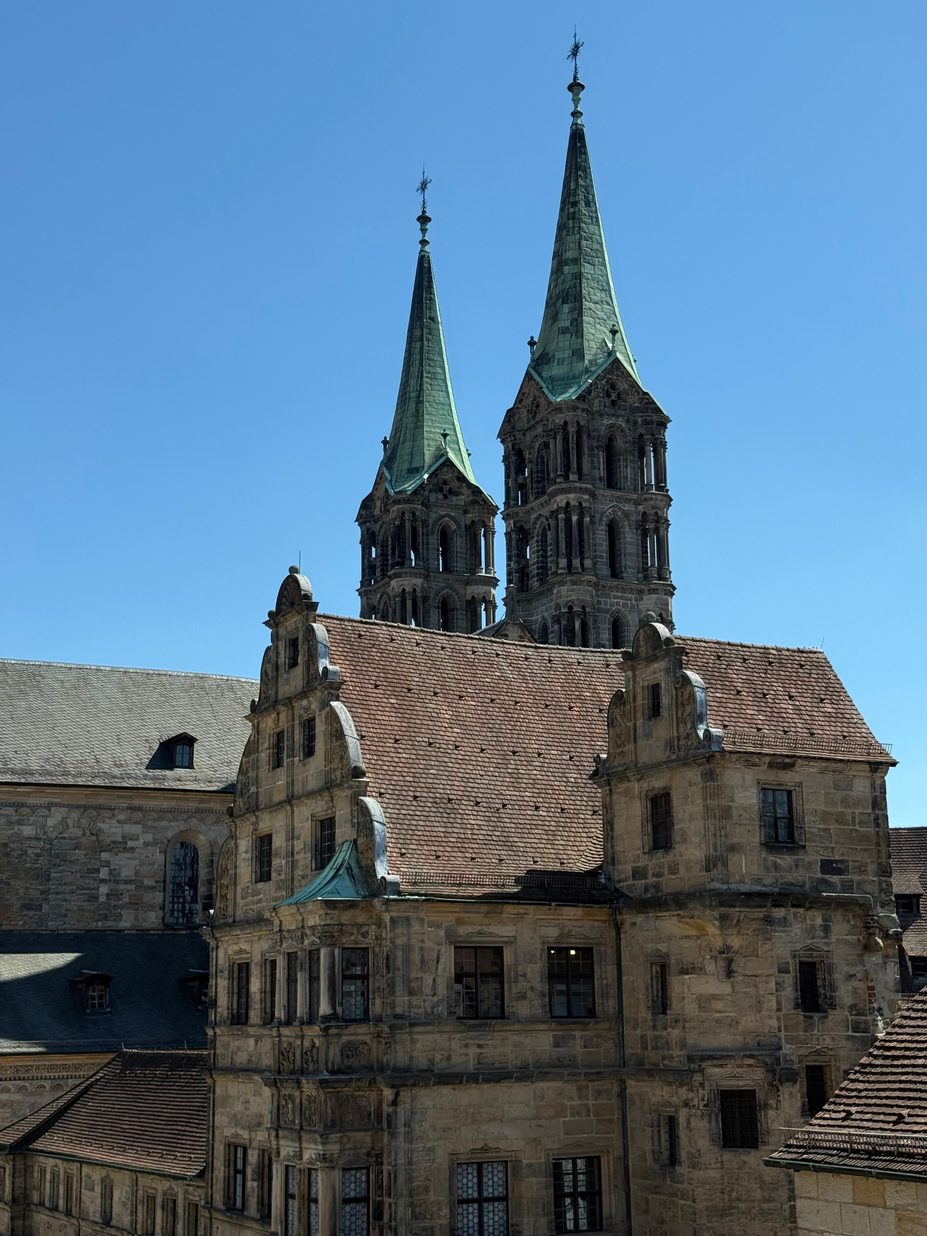
Bamberg Cathedral, the Kaiserdom of St Peter and St George, crowns the hill above one of the best-preserved old towns in Germany. Its four towers, its tomb of an emperor and empress, the only papal tomb north of the Alps and the enigmatic Bamberg Horseman make it one of the great medieval cathedrals of Europe. Entry is free, and it is part of the UNESCO-listed Town of Bamberg.
An emperor’s cathedral
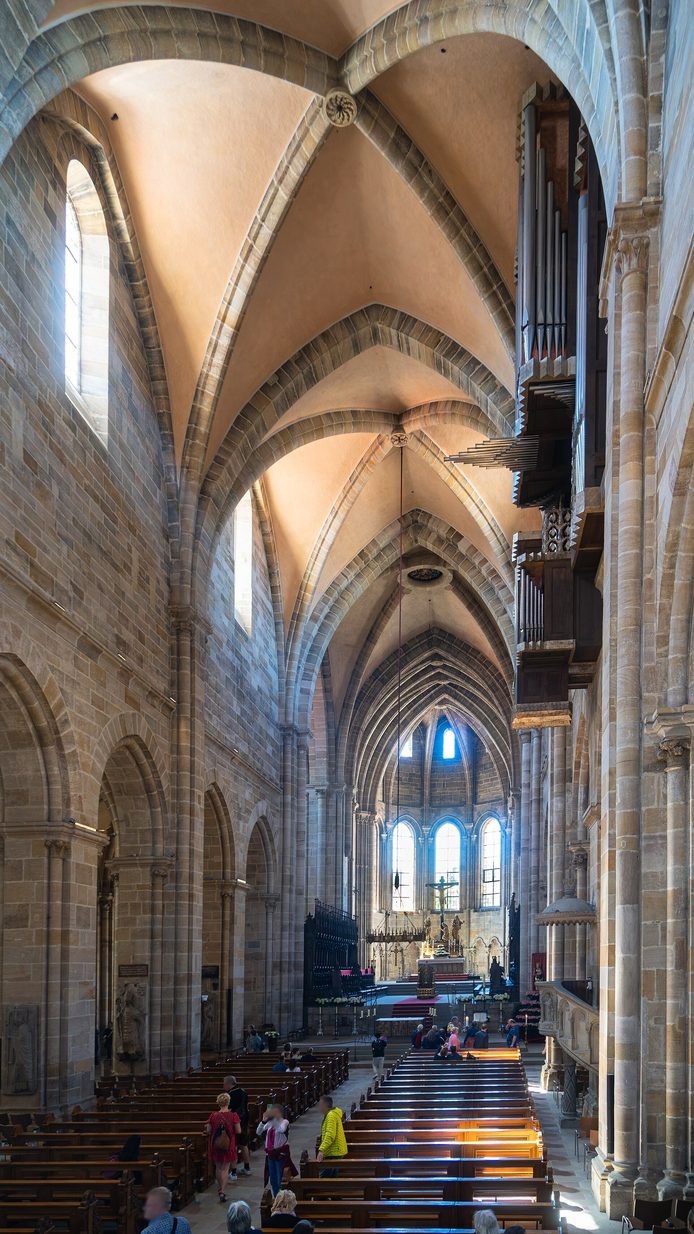
King Henry II, later Holy Roman Emperor, founded the diocese of Bamberg with his wife Kunigunde in 1007, and the first cathedral was consecrated in 1012. It burned in 1081 and again in 1185, and the present building, probably begun in the late 1190s, was consecrated in 1237. It was built over the old plan, with a choir at each end: the east choir is St George’s and the west choir St Peter’s. Because building went on from east to west over some forty years, it looks Romanesque at the east end and early Gothic in the west.
Henry and Kunigunde were both canonised, and their tomb is the centre of the cathedral. In the 1830s King Ludwig I of Bavaria had the Baroque altars and furnishings removed to give the building back its medieval look, and many of them were sold. The town of Bamberg, with its cathedral hill, became a UNESCO World Heritage Site in 1993.
The visitor’s cheat sheet
| Where | Domplatz, 96049 Bamberg, on the Domberg; about 30 minutes’ walk from the station |
|---|---|
| Opening hours | November–March: Mon–Wed 9am–5pm, Thu–Fri 9.30am–5pm, Sat 9am–4.15pm, Sun 1pm–5pm. April–October: closes 6pm (Sat 4.15pm, and May–October closed Sat 11.15am–1pm for the organ concert). No sightseeing during services |
| Admission | Free. Diözesanmuseum €7 (reduced €5); Domberg-Ticket €12 with the Historisches Museum and Neue Residenz |
| Tours | In German, from the Diözesanmuseum ticket desk (Wednesdays: outside the Adamspforte): daily 2pm (90 min, €12) and 3.45pm (25 min, €8); under-18s free |
| Organ | Free half-hour concert on Saturdays at noon, May to October |
| Museum | Diözesanmuseum, Domplatz 5: closed Wednesdays; 10am–5pm, Sundays from 1pm |
| Access | Step-free entrance at the Kunigundenpforte on the far side, from Domstraße; accessible toilets there |
| How long | An hour; two with the museum |
Hours and admission checked against the official site in October 2026. They change; the official site is always the last word.
What to see
The Bamberg Horseman
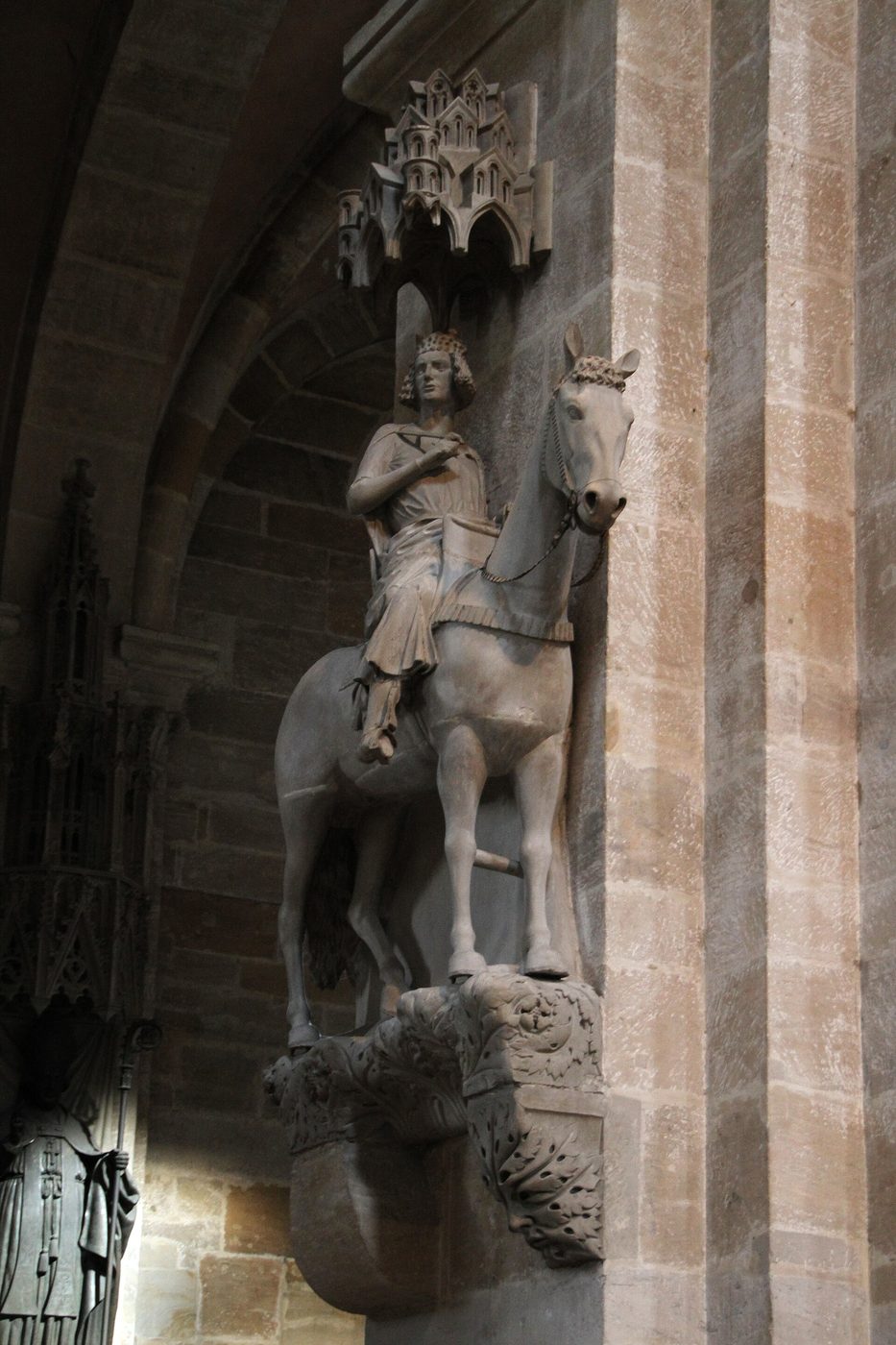
On a pier on the north side of the steps up to the east choir stands the Bamberg Horseman, a crowned rider on a horse, carved in sandstone around 1230 and once painted. It is often described as the oldest surviving life-size medieval equestrian statue in stone. Nobody knows who he is; suggestions range from St Stephen of Hungary to Henry II, Constantine or one of the Three Kings. The Nazis made it an emblem of German identity, a history the image has never quite shaken off.
The imperial tomb
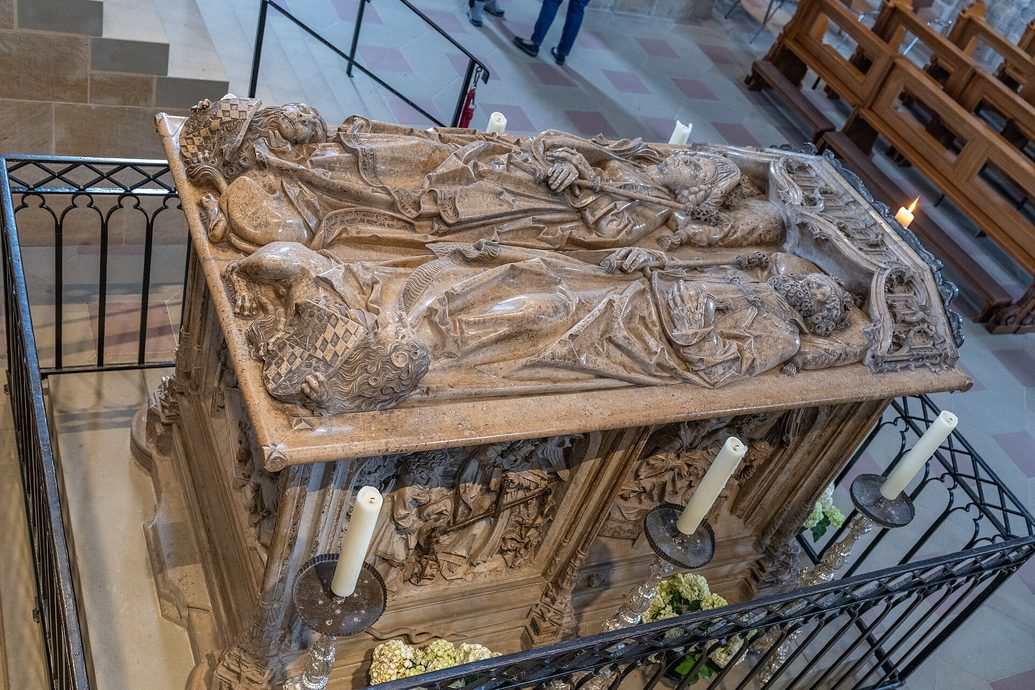
At the east end of the nave, before the steps to the east choir, stands the tomb of Henry II and Kunigunde, carved by Tilman Riemenschneider between 1499 and 1513. The lid shows the couple, and the sides tell their legends: Kunigunde walking over red-hot ploughshares to prove her innocence, and St Lawrence tipping the scales in Henry’s favour as his soul is weighed.
The Veit Stoss altar and the choir screens
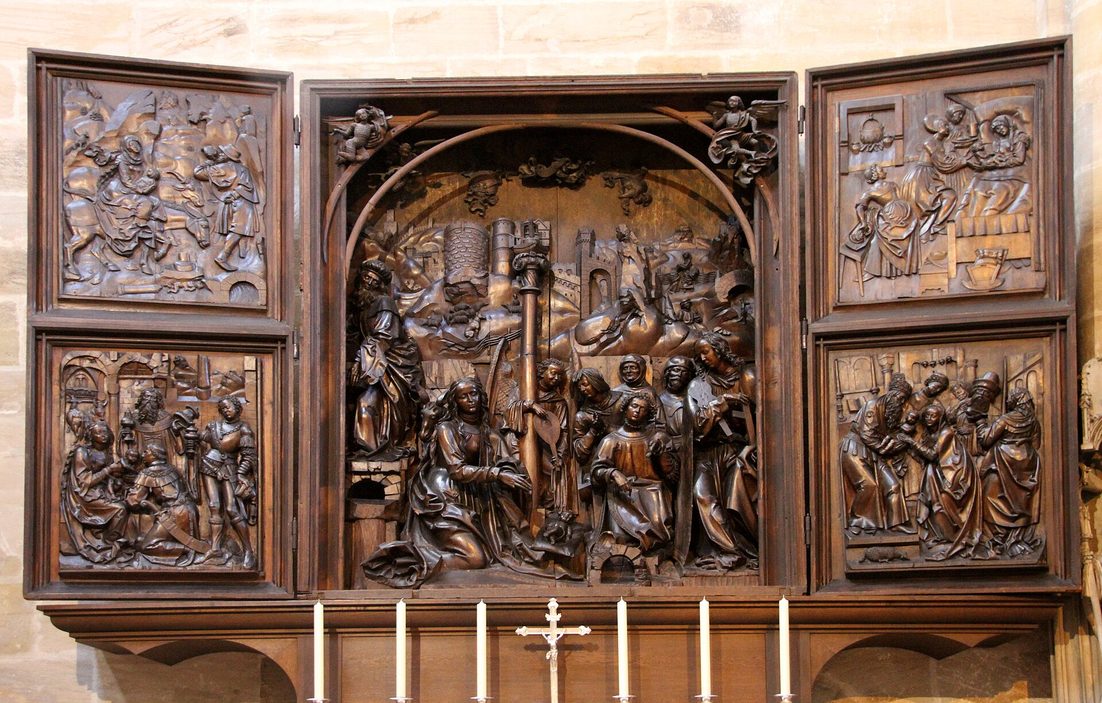
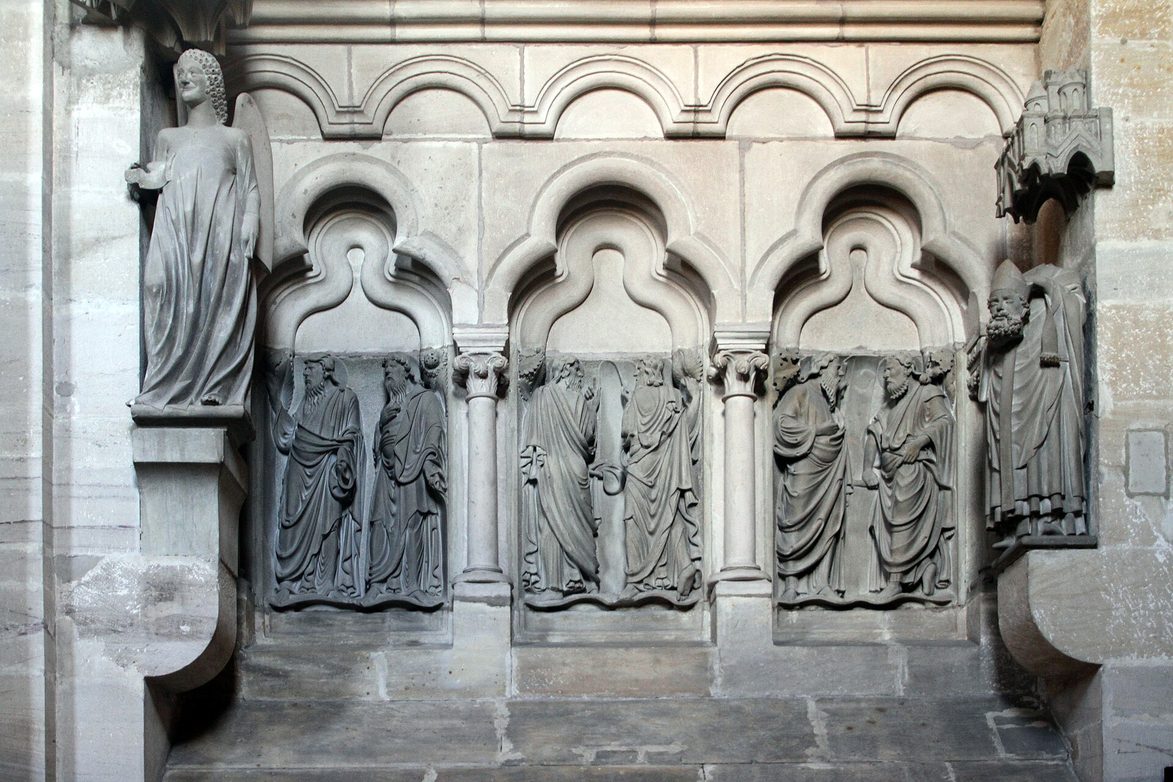
In the south transept stands the Bamberg Altar by Veit Stoss, carved in limewood in 1520–23 for the Carmelites of Nuremberg, who never installed it after the city turned Protestant. It came to the cathedral in 1937. The stone screens of the east choir are carved with apostles on the south side and, on the north, prophets who seem to argue with each other, some of the liveliest Romanesque sculpture in Germany.
The portals
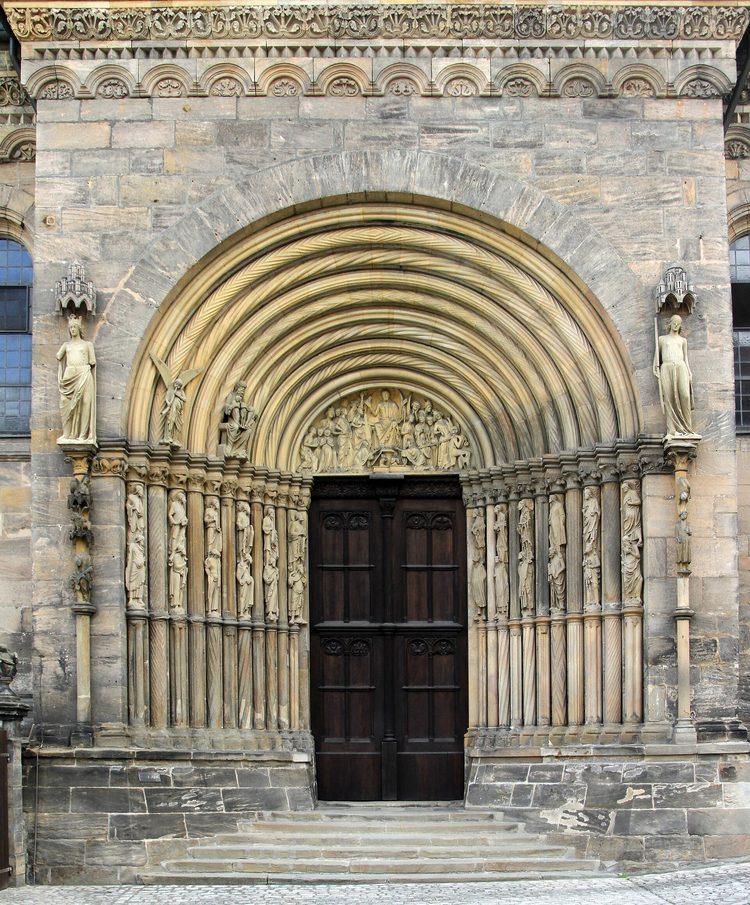
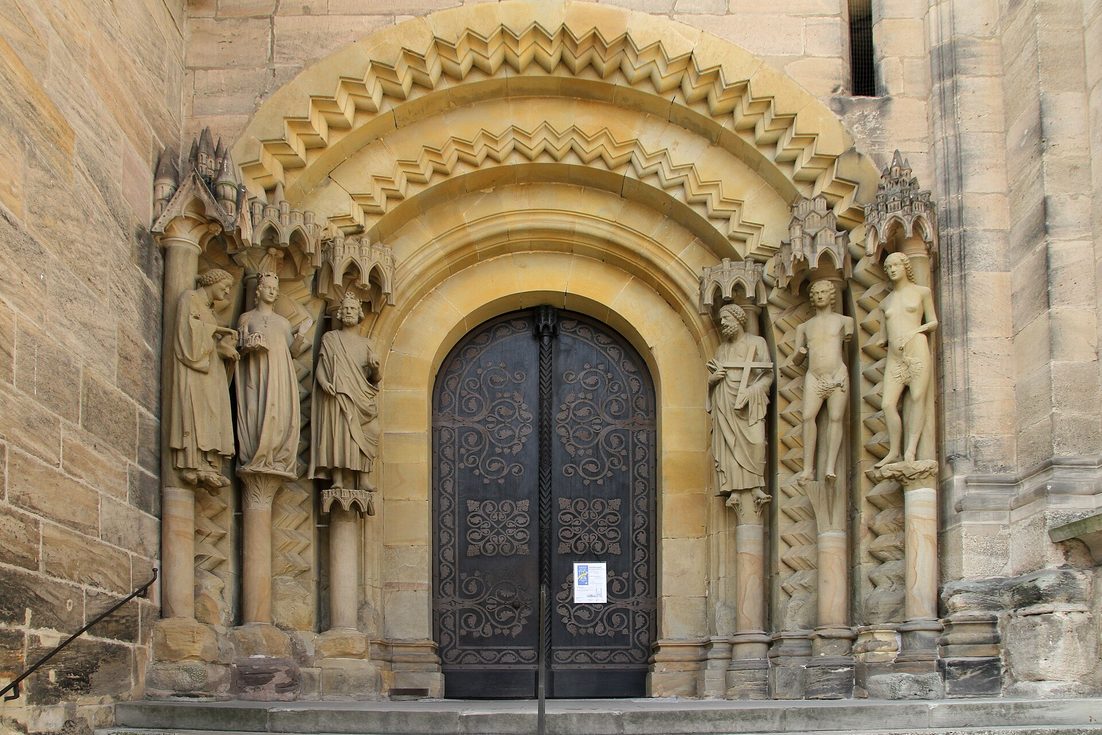
The Fürstenportal on the north side, facing the Domplatz, has the Last Judgement in its tympanum, with the figures of Ecclesia and Synagoga on columns either side. The originals have been inside the cathedral since 1937, replaced outside by copies. The cathedral now explains the anti-Jewish meaning of figures like Synagoga, blindfolded and defeated, in a brochure and notes available inside the church. The Adamspforte at the east end has figures of Henry, Kunigunde, St Stephen, St Peter, Adam and Eve; these too are copies.
The Diözesanmuseum
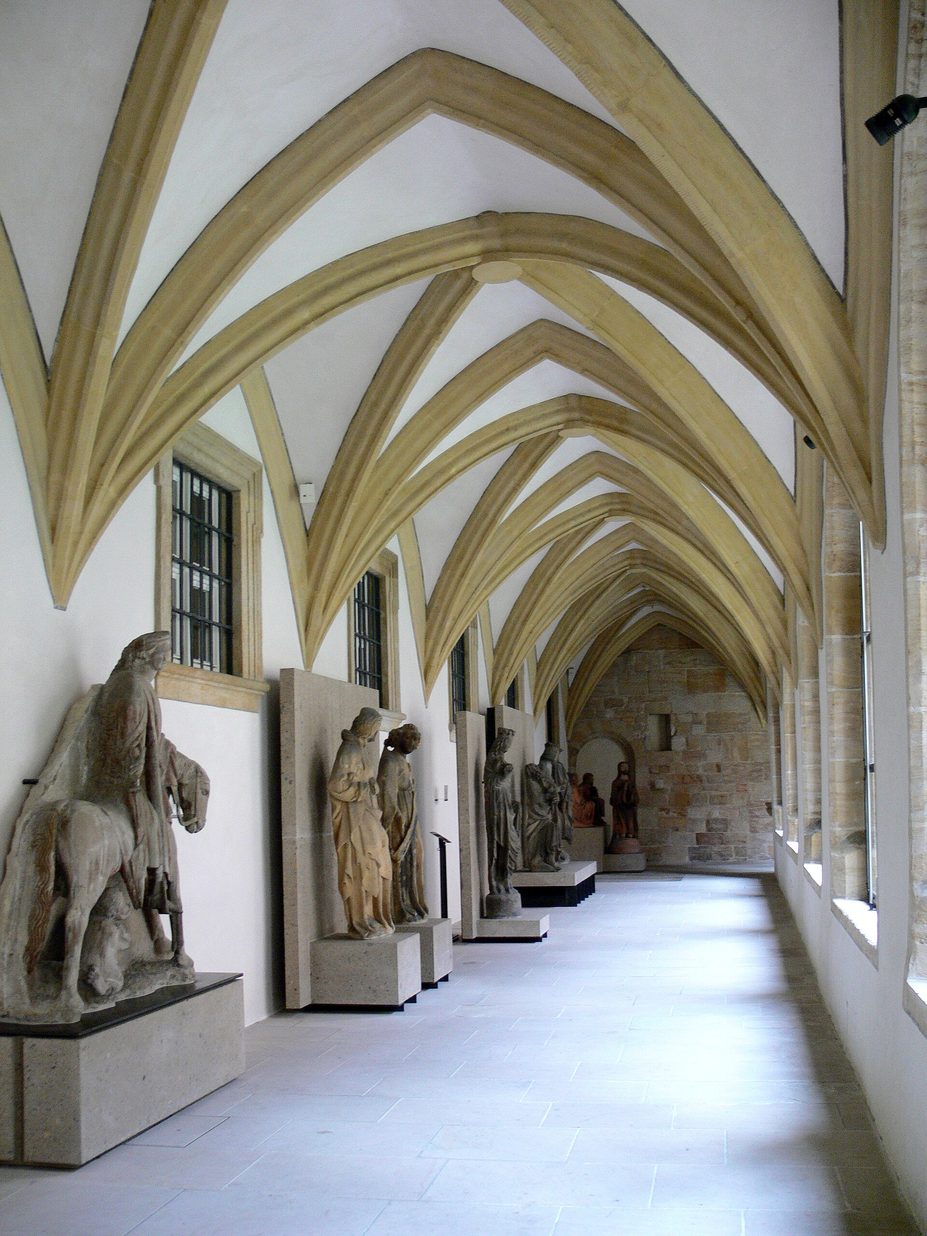
Next door, around the cloister, the Diözesanmuseum keeps the cathedral treasury. Its greatest pieces are textiles: the star mantle of Henry II, Kunigunde’s mantle and the vestments of Pope Clement II. The original Adamspforte figures stand in its lapidarium. It is closed on Wednesdays.
Getting there
Bamberg is on the main line between Nuremberg and Berlin: ICE trains from Nuremberg take about 40 minutes and from Munich under two hours. From the station it is about two kilometres to the cathedral, a walk of roughly half an hour across the river and through the old town, up past the Old Town Hall on its bridge. City bus 910 runs up to the Domplatz. There is no parking on the cathedral hill, and the Domberg is steep and cobbled.
Tours and where to stay
The cathedral’s own tours are in German. For English walking tours of the old town, and for hotels near the Domberg, try these.
These links go to GetYourGuide and Booking.com. This site earns nothing from them at present — they are here because they are the quickest way to check what is actually available.
Don’t miss
- The Bamberg Horseman By the steps to the east choir.
- The imperial tomb Riemenschneider at his finest.
- The Veit Stoss altar In the south transept.
- The arguing prophets On the east choir screens.
- The Rose Garden Of the Neue Residenz, across the square, for the view.
Insider tips
Come on a Saturday in summer. From May to October there is a free half-hour organ concert at noon on Saturdays; the cathedral falls silent from 11.15am. Then walk across the Domplatz to the Rose Garden of the Neue Residenz for the view over the roofs to St Michael’s. Sunday sightseeing only starts at 1pm, after the morning Masses.
Common questions
Is Bamberg Cathedral free?
Yes. Individual visitors can go in free outside service times. The Diözesanmuseum next door costs €7, and guided tours from €8.
When is Bamberg Cathedral open?
From November to March, Monday to Wednesday 9am to 5pm, Thursday and Friday 9.30am to 5pm, Saturday 9am to 4.15pm and Sunday 1pm to 5pm. From April to October it closes at 6pm on weekdays and Sundays, and on Saturdays from May to October it also closes from 11.15am to 1pm for the organ concert. There is no sightseeing during services.
Who is the Bamberg Horseman?
Nobody knows. The life-size stone rider of around 1230 has been identified as St Stephen of Hungary, Emperor Henry II, Constantine and others; the cathedral itself leans towards St Stephen.
Are there tours in English?
Public tours are normally in German. Ask the DoMus visitor service on the Domplatz about booking a guide in English for a group.
Is there a pope buried in Bamberg Cathedral?
Yes. Clement II, Bishop of Bamberg and then pope in 1046–47, is buried in the west choir, the only papal tomb north of the Alps. The choir is not open to visitors, so you can only glimpse it.
More churches in Germany
- Regensburg Cathedral — Bavaria’s great Gothic cathedral, also purged of its Baroque fittings by Ludwig I.
- Speyer Cathedral — the Romanesque imperial cathedral on the Rhine, burial place of emperors.
- Aachen Cathedral — Charlemagne’s chapel and the coronation church of German kings.
- The Wieskirche — Bavarian Rococo at its height, the kind of fitting Bamberg’s cathedral lost.