
St Mary’s Church, Lübeck
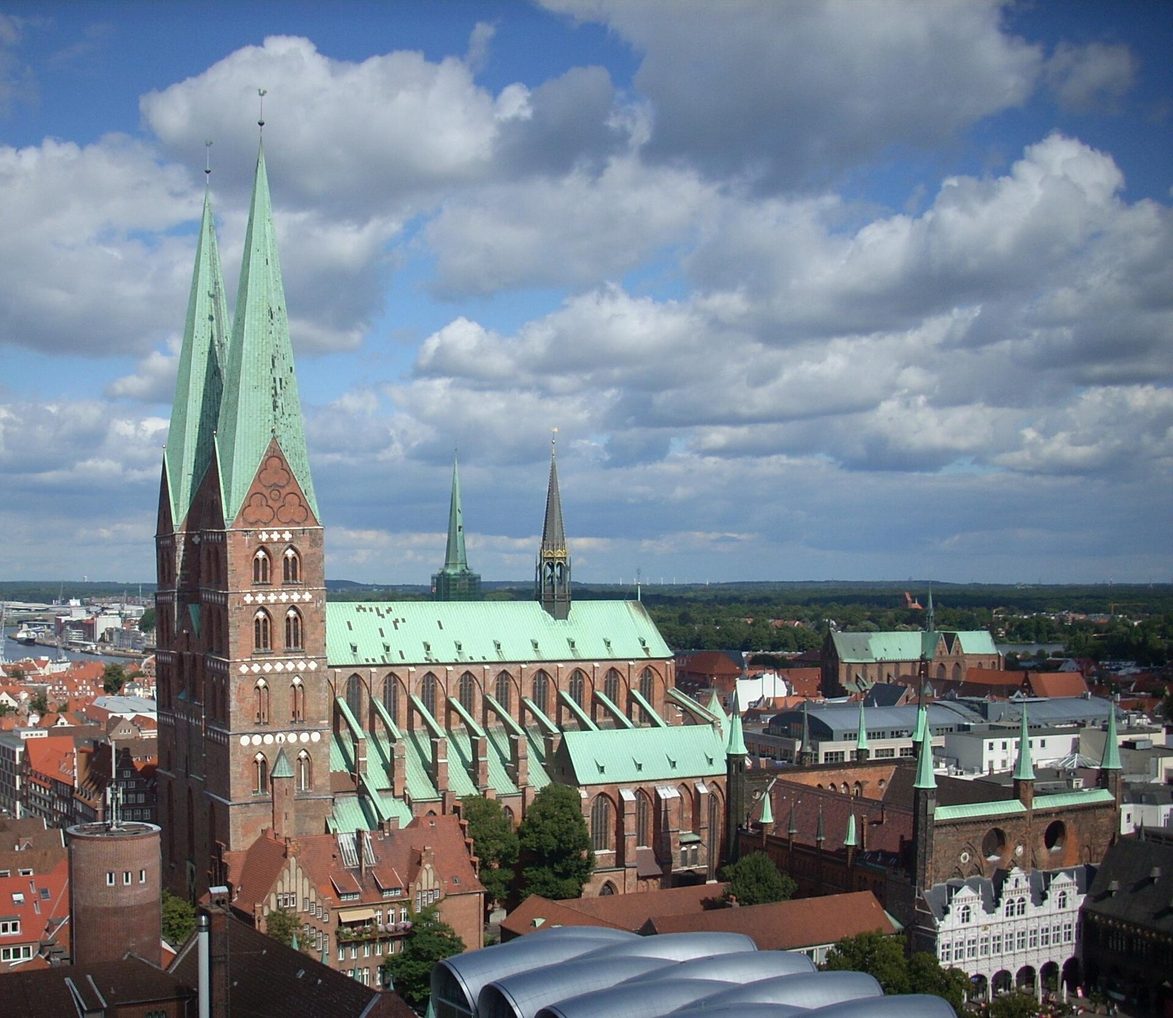
St Mary’s, the Marienkirche, was built by the merchants of Lübeck to outdo their own bishop’s cathedral, and it did: a towering brick church in the French Gothic manner, often called the mother church of Baltic Brick Gothic. It stands behind the Town Hall in the UNESCO-listed old town, with the broken bells of 1942 still lying in its south tower. From 2 November 2026 it is closed for restoration, probably until at least May 2027.
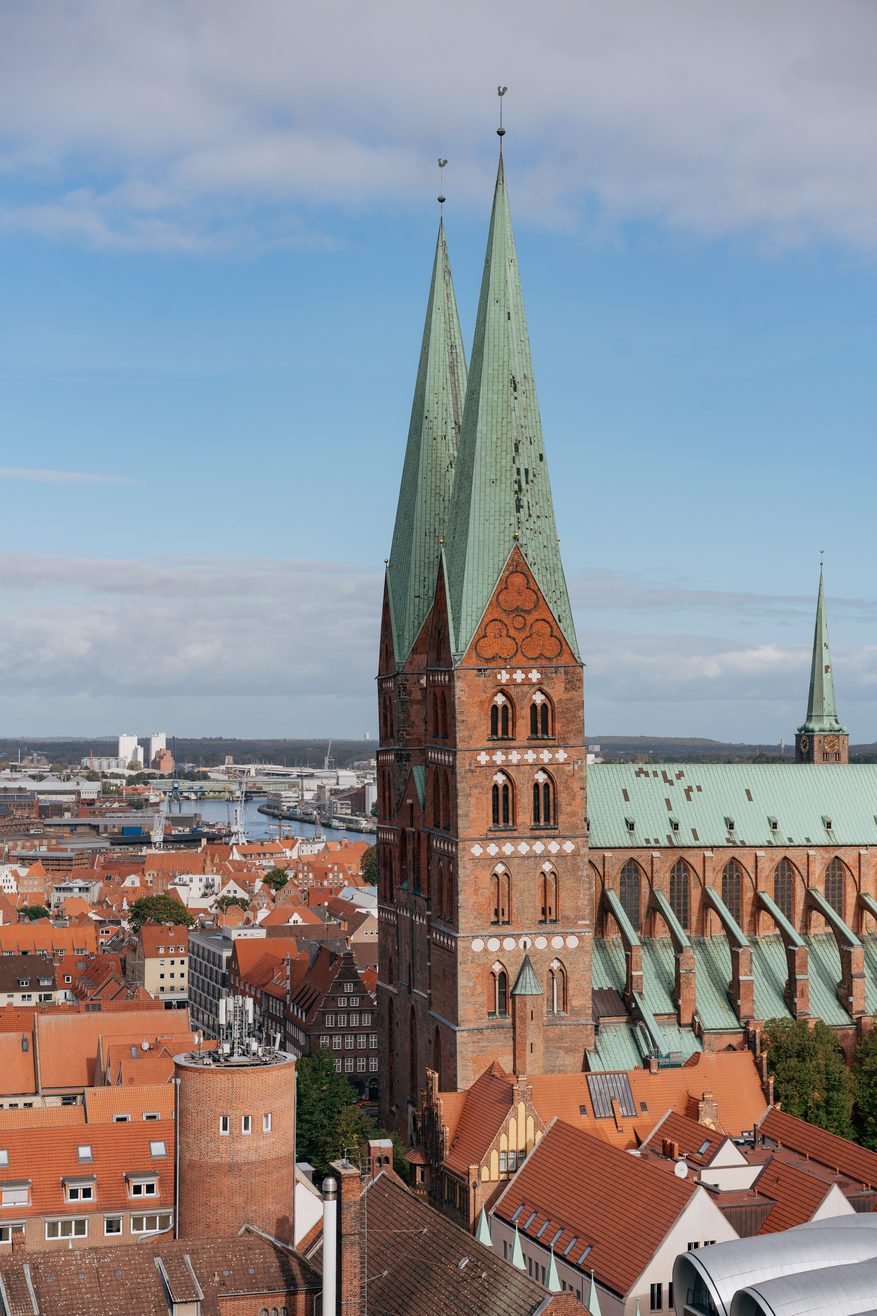
Closed for restoration from 2 November 2026. The church expects to reopen in May 2027 at the earliest, as part of a programme to restore the vaults and windows by 2030. During the closure an information point at the main entrance and the Briefkapelle stay open, and the towers and vaults can still be visited on guided tours. Check the church’s website before you travel.
The merchants’ church
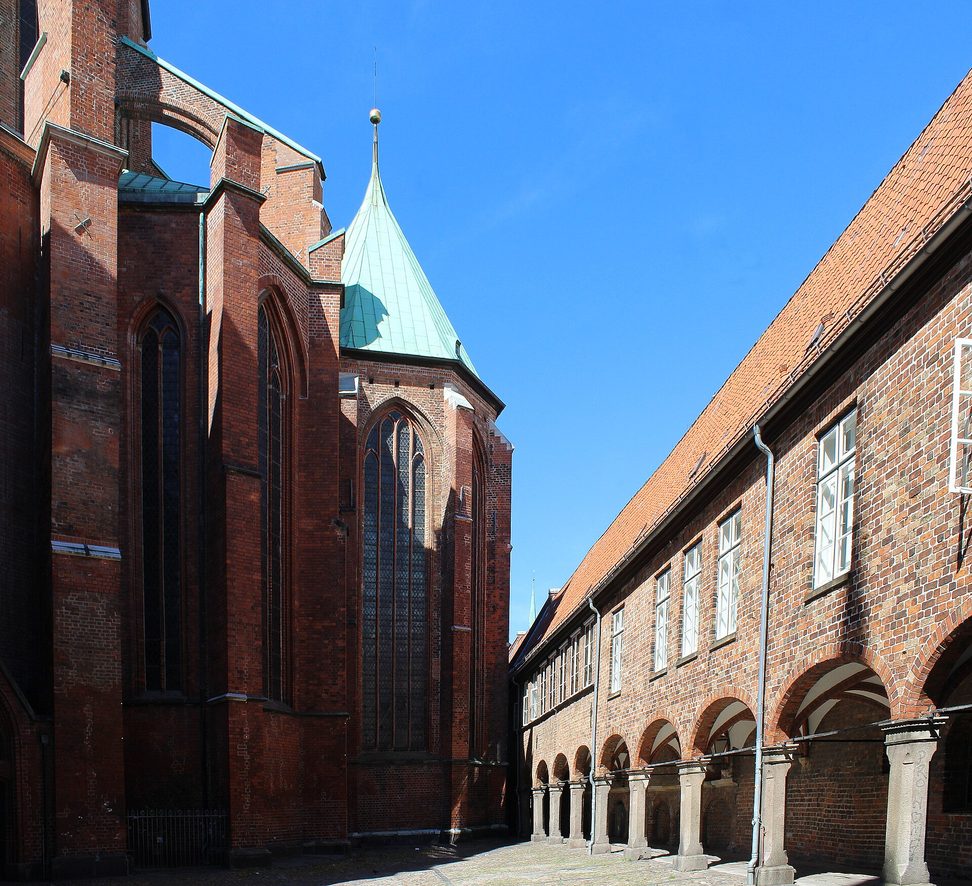
A market church stood here by the late 12th century. The present building was begun around the middle of the 13th century and finished by about 1350. It was meant at first as a hall church, but the council and burghers changed their minds and built a soaring basilica on the model of the French cathedrals, in brick, because the region had no good building stone. The result was larger than the cathedral of Lübeck’s bishop, which was exactly the point: this was the church of the leading citizens and the town council. Its pattern of tall brick nave, flying buttresses and twin towers was copied all round the Baltic.
The church became Lutheran in 1530. Dieterich Buxtehude was its organist from 1668 to 1707, and in 1705 the young Johann Sebastian Bach is said to have walked more than 400 kilometres from Arnstadt to hear him. On the night of 28–29 March 1942 an RAF raid on the old town set St Mary’s on fire: the roofs and spires burned, the bells fell, and the organs and most of the medieval furnishings were destroyed. Rebuilding was largely finished by 1959. Around 1950 the restorer Lothar Malskat painted “medieval” figures in the choir that were in fact his own invention; he confessed in 1952, and they were removed.
The visitor’s cheat sheet
| Where | Marienkirchhof 1, behind the Town Hall in Lübeck old town; 10–15 minutes’ walk from the Hauptbahnhof |
|---|---|
| Current closure | Closed for restoration from 2 November 2026, expected until May 2027 at the earliest. The information point at the main entrance and the Briefkapelle stay open, and tower and vault tours continue |
| Opening hours | When open: Monday to Saturday from 10am, closing 4pm from January to March, 6pm from April to early October and 5pm for the rest of October; Sundays from noon (January to March) or 1pm (October) |
| Admission | €5, reduced €3 (when the church is open); free for children and young people, church members, and for prayer and services |
| Tower tours | Guided, 2–2.5 hours, in German; from €15 (under-18s €7.50) plus booking fee, about €17 (€8.75) in all; minimum age 6 |
| Services | Lutheran worship on Sundays; during the closure services move to the Briefkapelle (check times locally) |
| Access | Step-free in the church apart from the high choir; towers and vaults not accessible. No toilets inside |
| How long | An hour in the church; two to two and a half hours on a tower tour |
Hours and admission checked against the official site in October 2026. They change; the official site is always the last word.
What to see
The nave and the vault
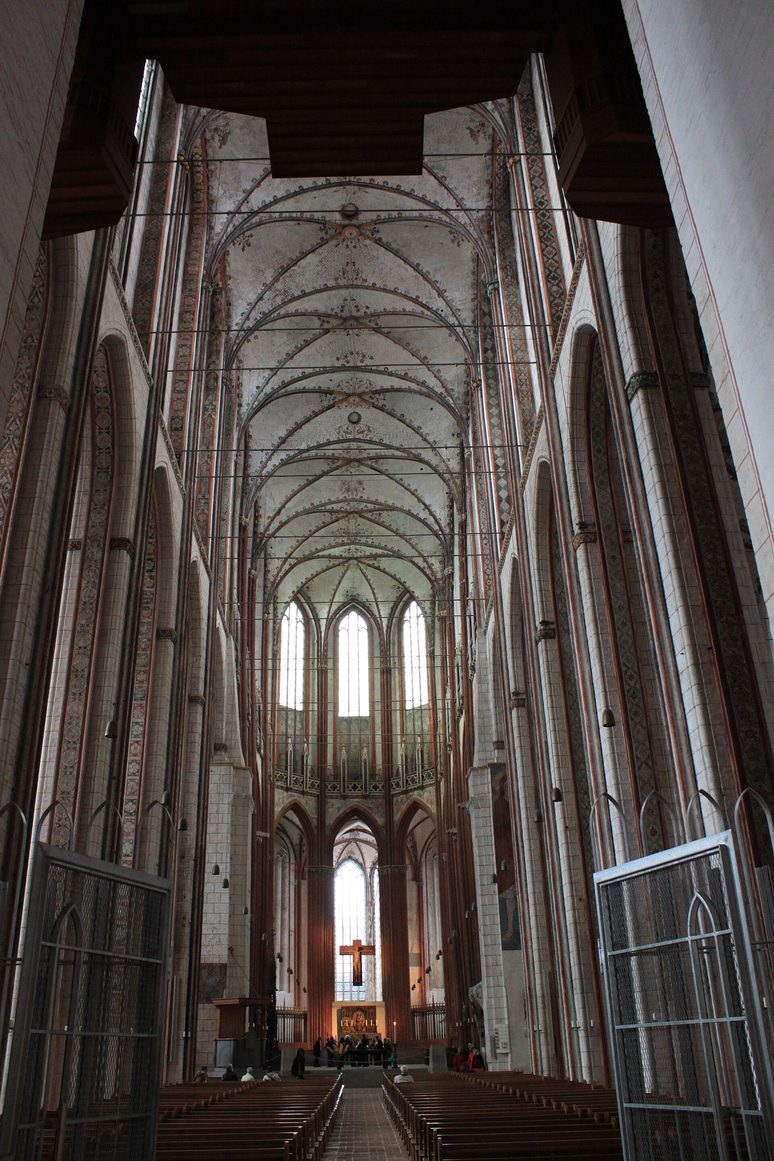
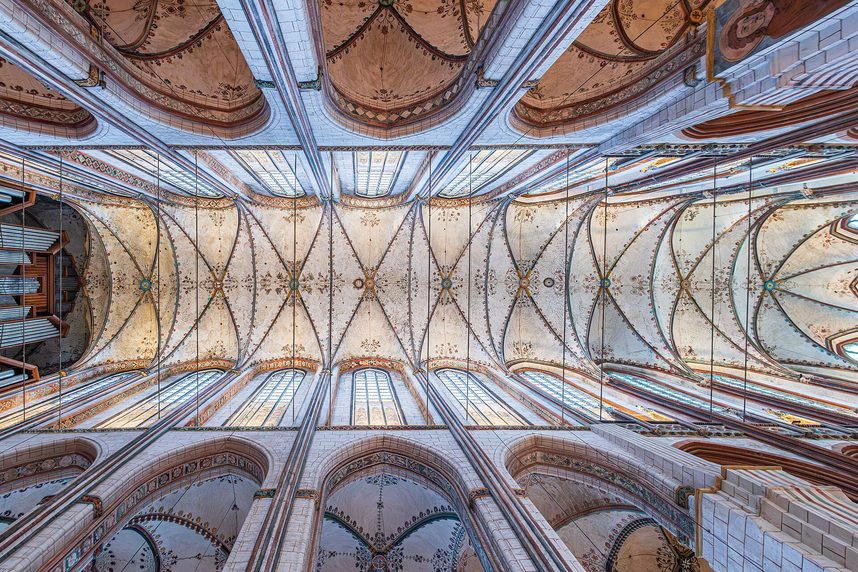
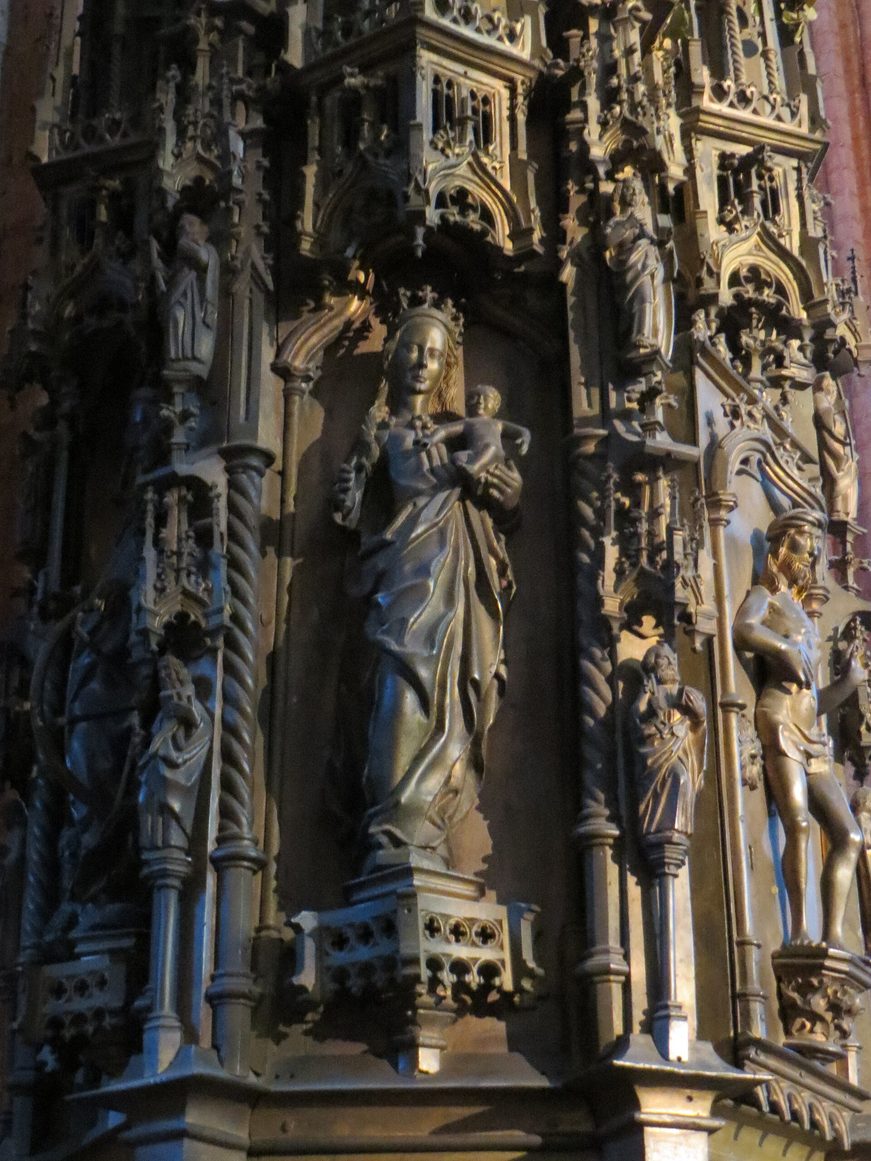
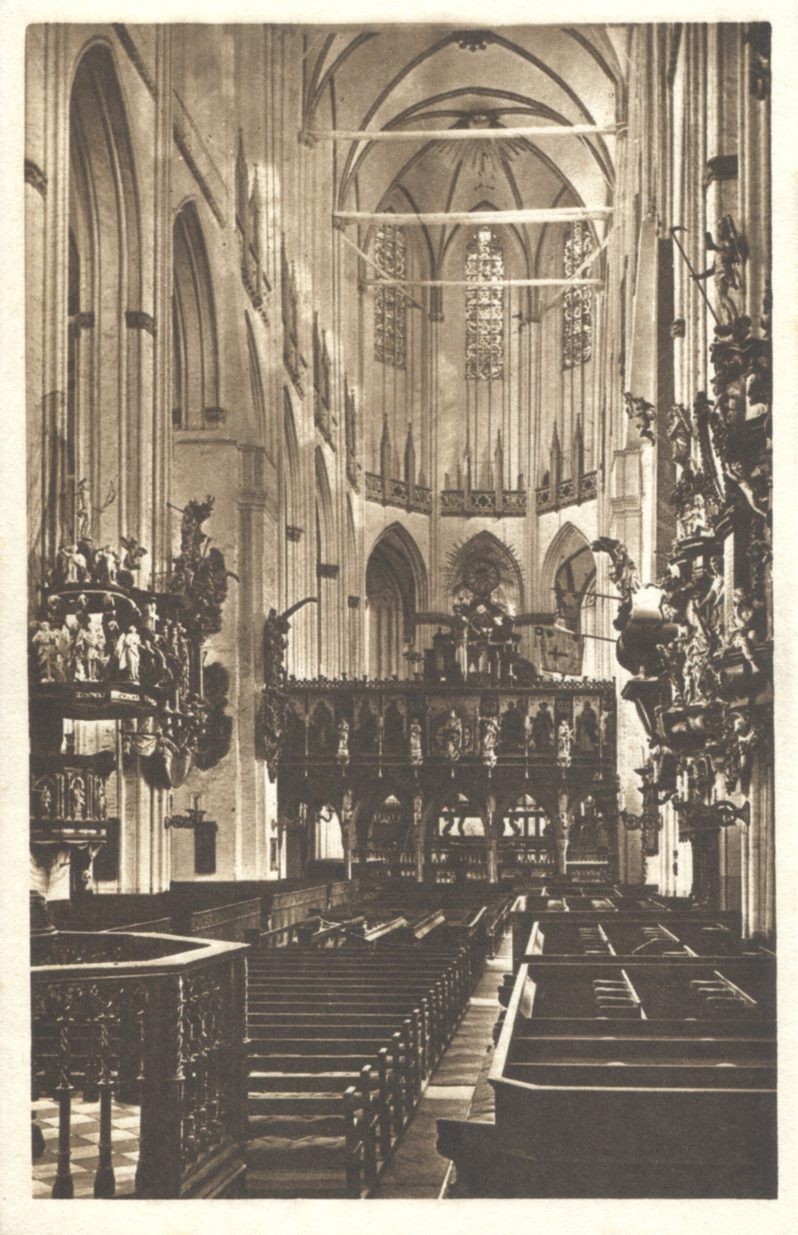
Inside, the whitewashed nave climbs 38.5 metres to its vault, often said to be the highest brick vault in the world. The towers outside are 125 metres high. Look for the painted decoration on the piers and the slender late-Gothic sacrament house of 1479 in the choir, one of the furnishings that survived 1942. The stained glass of the Dance of Death chapel and the west window are modern.
The broken bells
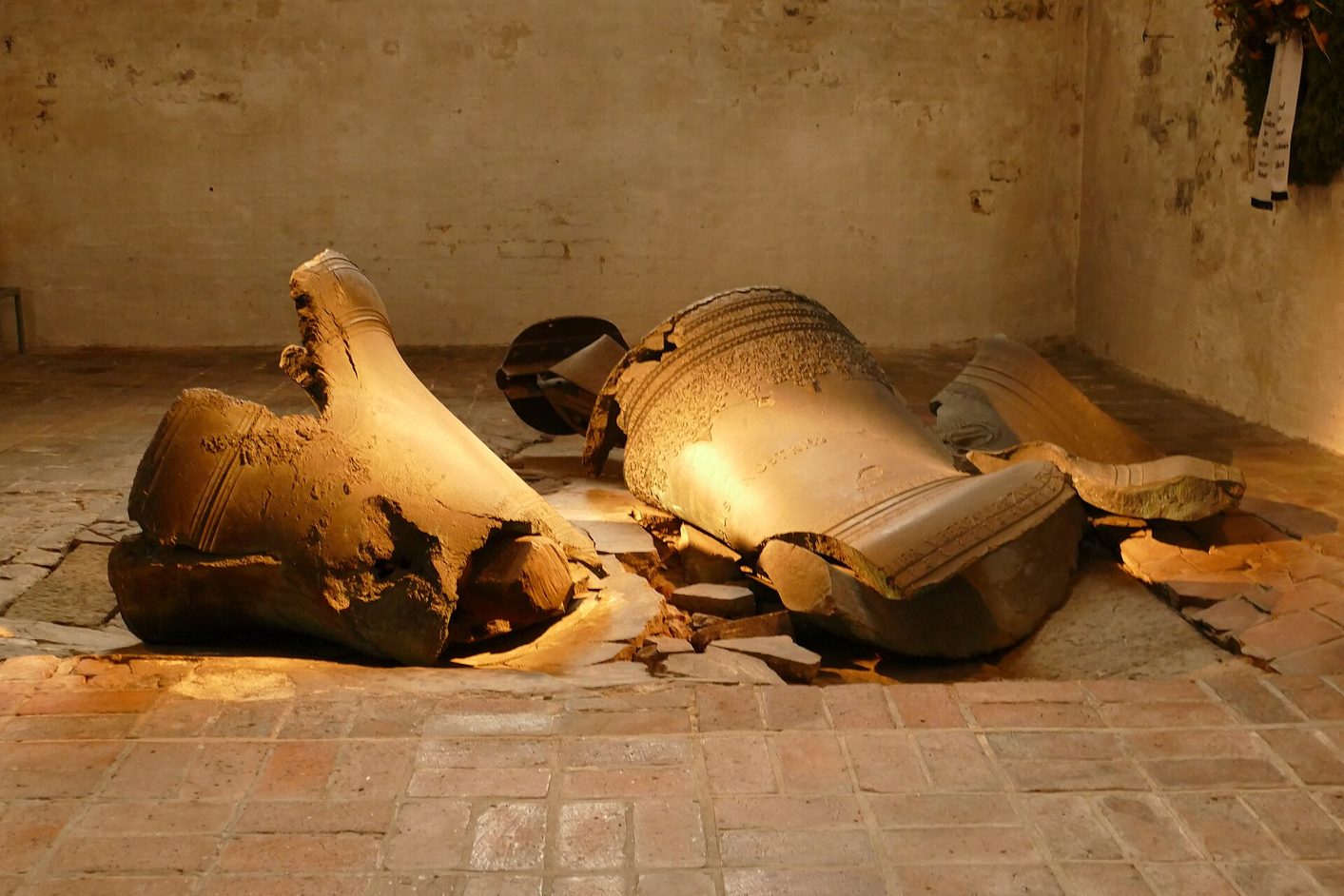
In the chapel at the foot of the south tower, two bells lie shattered on the floor exactly where they fell during the air raid of 1942. The chapel became a memorial in 1951, and St Mary’s has been a Cross of Nails centre, linked with Coventry, since 1971. It is one of the most affecting war memorials in Germany.
What was lost
Before 1942 the church was crammed with altars, epitaphs and screens. The most famous loss was the Dance of Death, a long painted frieze of 1463 by Bernt Notke, replaced by a copy in 1701; the copy burned in the raid. The astronomical clock was rebuilt after the war by the Lübeck clockmaker Paul Behrens and finished in 1967; it has needed repair since the winter of 2024. The Antwerp altar of 1518 in the Briefkapelle survived because it had been kept there.
The towers and vaults tour
The guided tower and vault tour takes two to two and a half hours and climbs some 800 steps, up through the roof spaces and above the vaults. Public tours are in German and run several times a week. Tickets go on sale on the church’s ticket site about six weeks ahead; you can also buy them at the church or at the tourist office in the Holstentor. Children must be at least six, and you need a head for heights.
Getting there
St Mary’s is in the middle of the old town island, behind the Town Hall and the market square. From Lübeck Hauptbahnhof it is a walk of 10 to 15 minutes, past the Holstentor; the nearest bus stop is Kohlmarkt. Regional trains from Hamburg take about 40 minutes and run every half hour for most of the day. There is no parking at the church: use the Parkhaus St. Marien Zentrum or the Parkplatz Laststadie.
Tours and where to stay
Tower and vault tickets are sold through the church itself. For walking tours of the old town and the Hanseatic sights, and for hotels inside the old town, try these.
These links go to GetYourGuide and Booking.com. This site earns nothing from them at present — they are here because they are the quickest way to check what is actually available.
Don’t miss
- The fallen bells In the south tower chapel.
- The vault 38.5 metres of brick.
- The towers and vaults tour Even during the closure.
- The Devil’s stone Outside, to the right of the main door.
- The view from St Petri A lift up the neighbouring church’s tower.
Insider tips
Climb St Petri for the view. The best view of St Mary’s is from the platform on the tower of St Petri, a few minutes away, which has a lift. And look for the granite boulder outside the main door: legend says the Devil helped build the church thinking it was a tavern, and was about to smash it with this stone when he was promised a tavern next door instead — the Ratskeller.
Common questions
Is St Mary's Church in Lübeck open?
The church closes for restoration on 2 November 2026 and is expected to stay closed until May 2027 at the earliest. During the closure an information point by the main entrance and the Briefkapelle stay open, and the towers and vaults can still be seen on guided tours.
How much does it cost to visit St Mary's, Lübeck?
When the church is open, the entry ticket (the “MarienTaler”) is €5, or €3 reduced. Children and young people, church members and anyone coming to pray or for a service go in free.
Can you climb the towers?
Yes, but only on a guided tower and vault tour of two to two and a half hours, with around 800 steps and no lift. Tickets cost from €15 (under-18s €7.50) plus a booking fee, which comes to about €17 (€8.75); special tours cost a little more. Children must be at least six.
What happened to St Mary's in the war?
An RAF raid on the night of 28–29 March 1942 set the church on fire. The roofs and spires burned, the bells crashed down from the south tower, and most of the medieval furnishings were lost. The broken bells still lie where they fell.
Can you hear the organ?
Not the great organ: it has been out of use since 2022 and was dismantled in 2025, and a new instrument is still being discussed. Check the church’s music pages for concerts once it reopens.
More churches in Germany
- Cologne Cathedral — the great stone Gothic cathedral of the Rhineland.
- Dresden Frauenkirche — another Lutheran church destroyed in the war, rebuilt and reconsecrated in 2005.
- Berlin Cathedral — the Protestant cathedral on Museum Island.