
St Mary the Virgin, Iffley
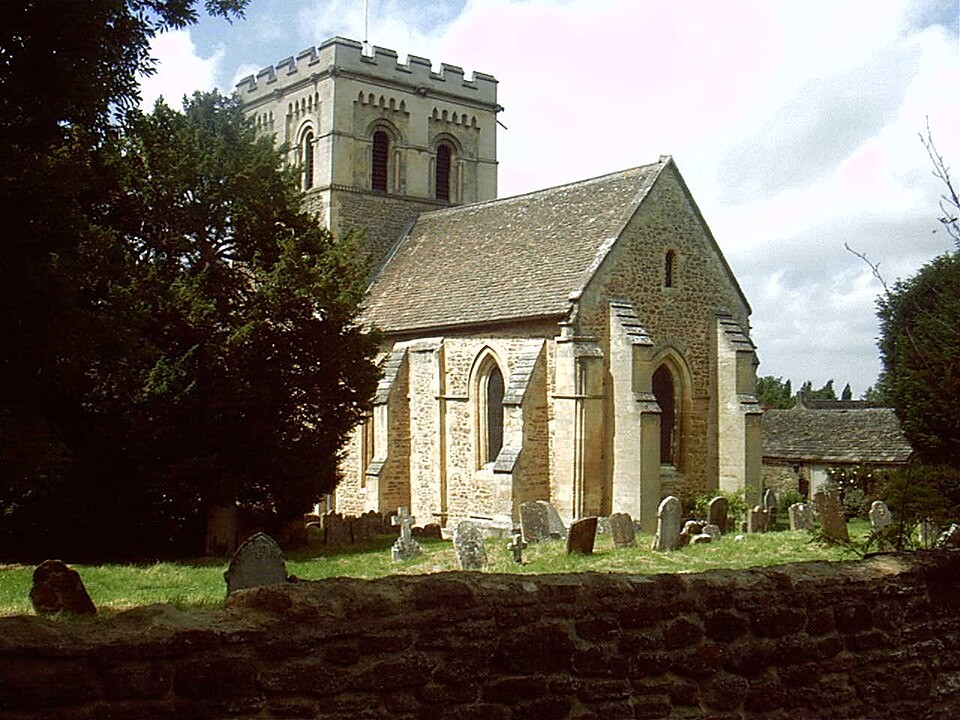
On the edge of Oxford, above the Thames at Iffley Lock, stands one of the finest Norman village churches in England. Built around 1160, St Mary the Virgin has kept its original plan and much of its extraordinary carving: a west front ringed with beakheads and signs of the zodiac, a south doorway full of knights and monsters, and inside, heavy Norman arches leading to a vaulted chancel. Two modern windows, by John Piper and Roger Wagner, add colour to the old stone.
A Norman church that never changed
The church was built around 1160 by the St Remy family, the lords of the manor, probably with money from the de Clintons. It was designed as a single line of spaces — nave, tower and chancel — each richer than the last, and the builders spared nothing on the carving.
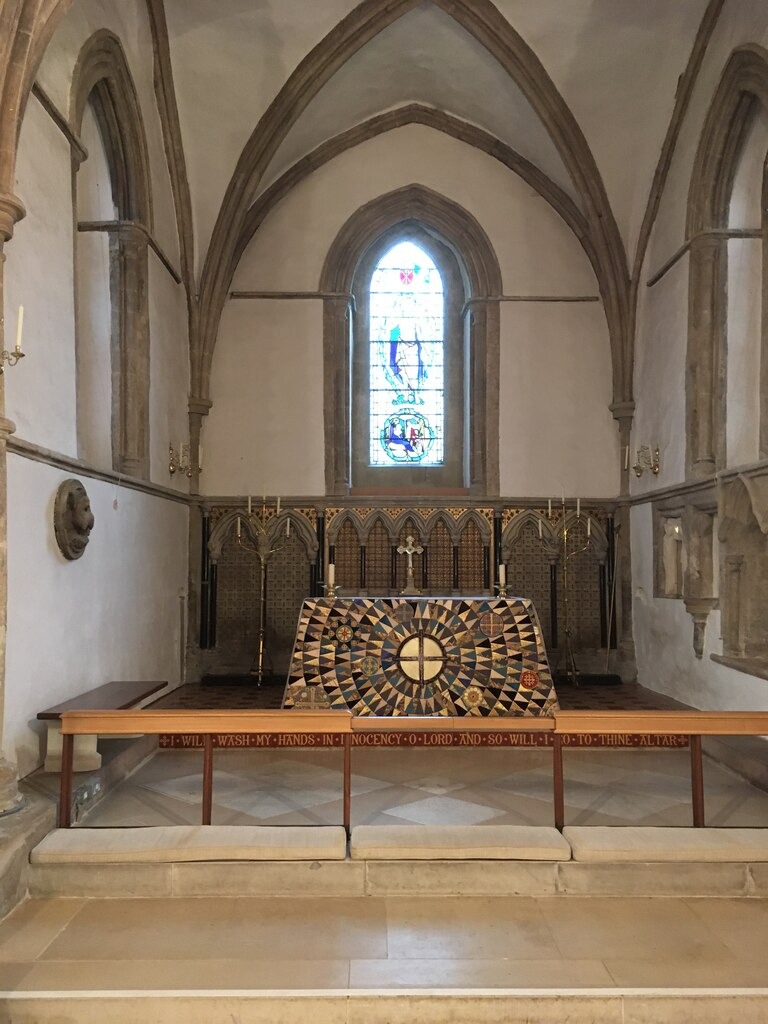
Around 1230 the chancel was extended eastwards in the new Early Gothic style, and a cell was built against its south wall for an anchoress, Annora, who lived there walled in, in prayer. Apart from new windows over the centuries, the church has changed remarkably little since.
The visitor's cheat sheet
| Where | Church Way, Iffley, Oxford, OX4 4EJ |
|---|---|
| Getting there | About 2 miles south-east of central Oxford; buses along Iffley Road, or walk the Thames Path to Iffley Lock; on-street parking |
| Opening hours | Usually open during the day; may be closed for services |
| Admission | Free; donations welcome |
| How long | 30 minutes to an hour |
| Best time | Late afternoon, when the low sun brings out the carving on the west front |
| Dress code | No rule; respectful dress in a working church |
| Tours | Self-guided |
Hours and admission checked against the official site in October 2026. They change; the official site is always the last word.
Romanesque to the last. Iffley was built just as Gothic was arriving in England, but its builders stayed loyal to the round arch, piling on Norman ornament in a final, exuberant flowering of the style.
What to see, in the order you meet it
The west front
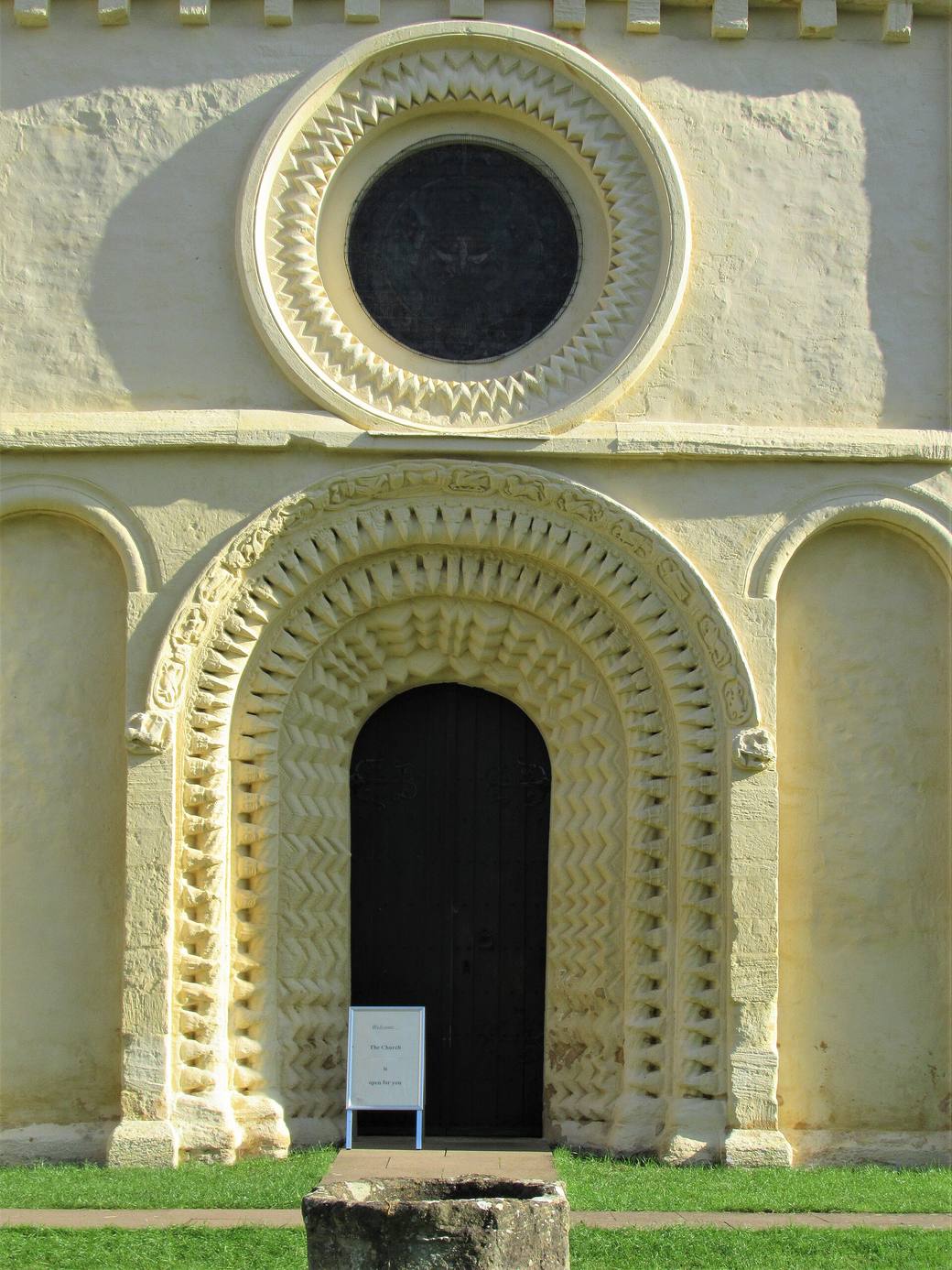
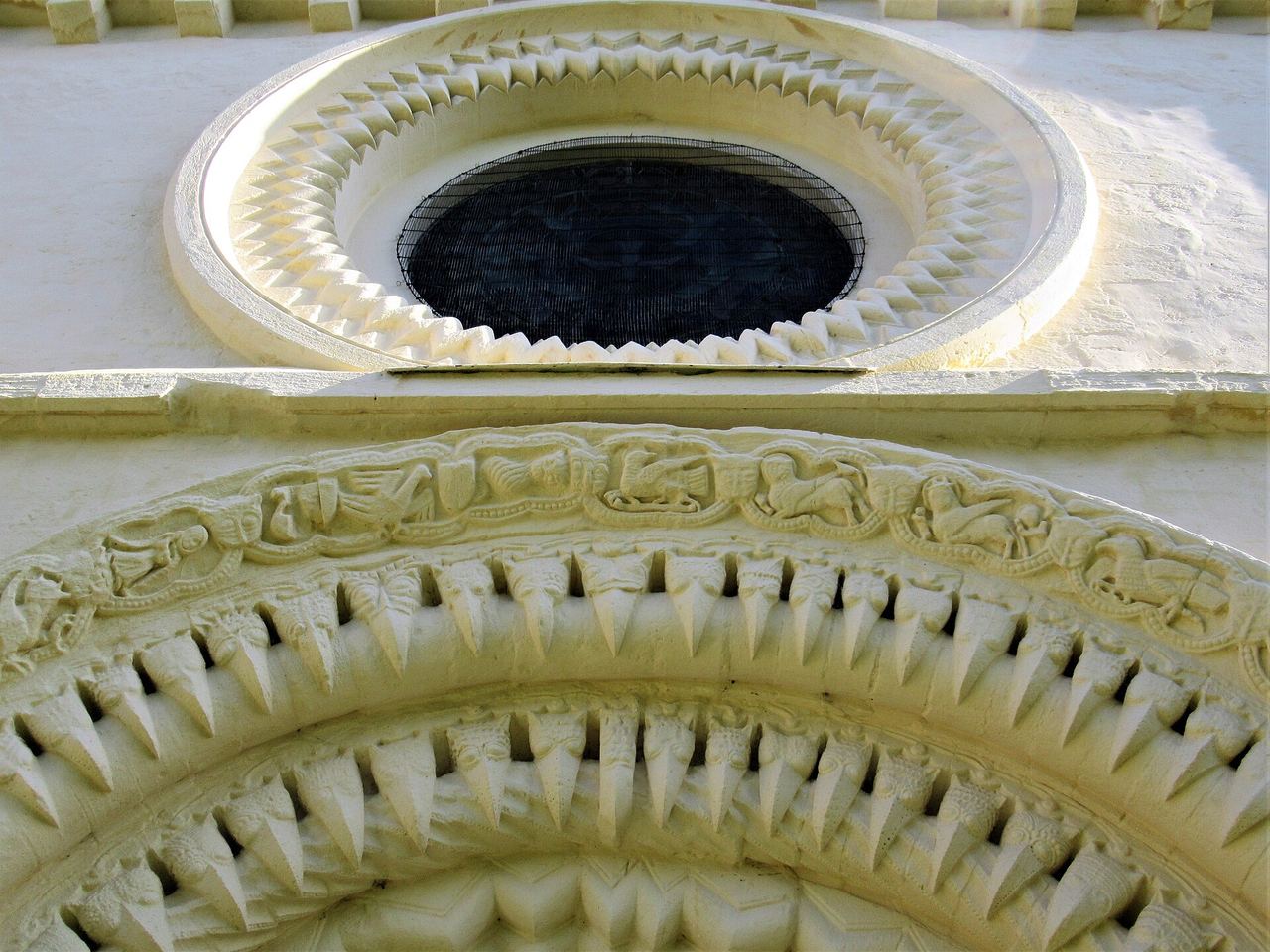
The west doorway is surrounded by two rows of beakheads, carved heads gripping the arch with their beaks and jaws, and an outer ring of medallions with the signs of the zodiac and symbols of the evangelists. Above it is a round window, a nineteenth-century reconstruction of the Norman original, and above that a row of small arches.
The south doorway
Walk round to the south side. The south doorway is carved with fantastic beasts, knights, centaurs and other creatures, all from the twelfth century.
The interior
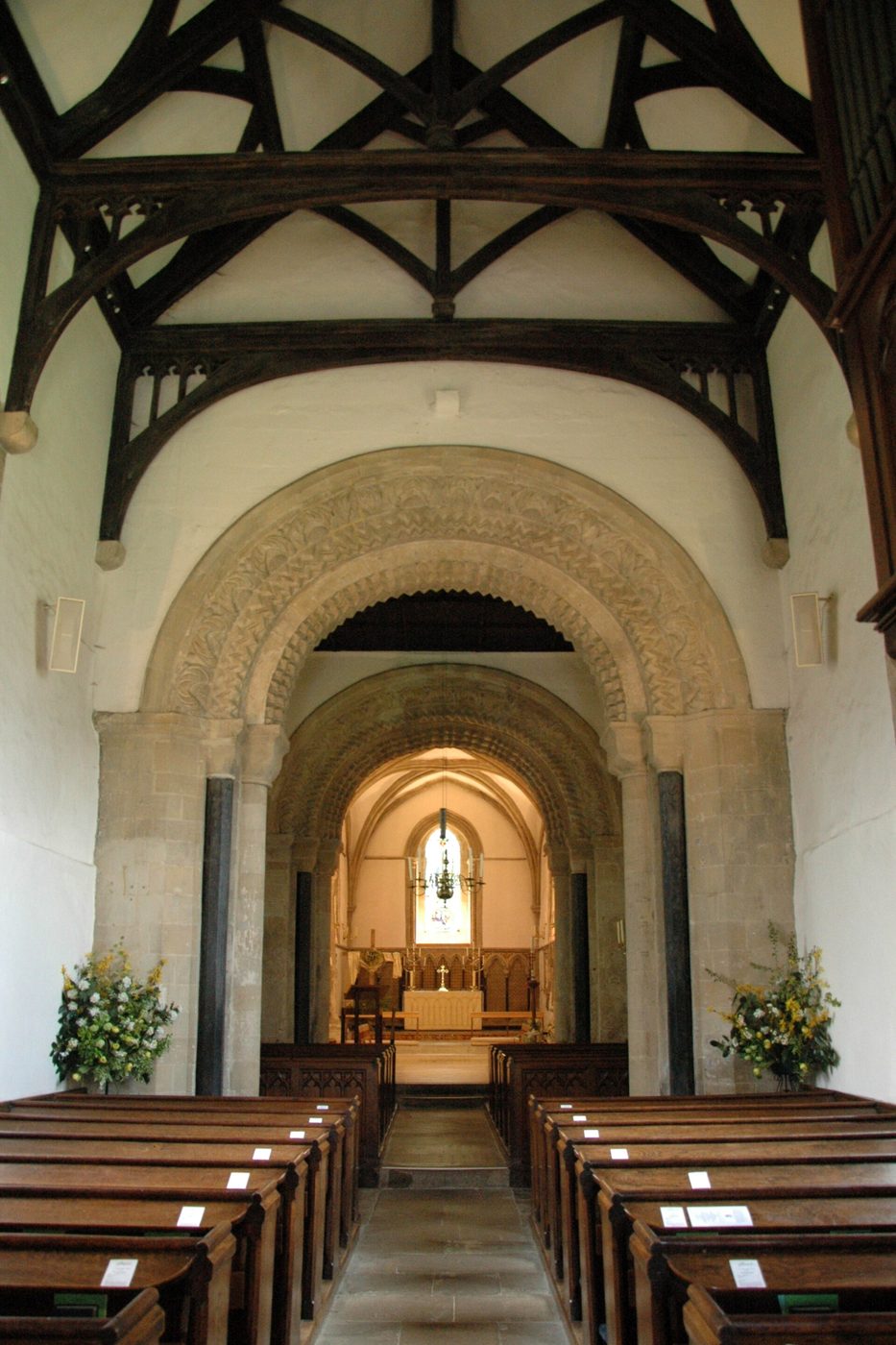
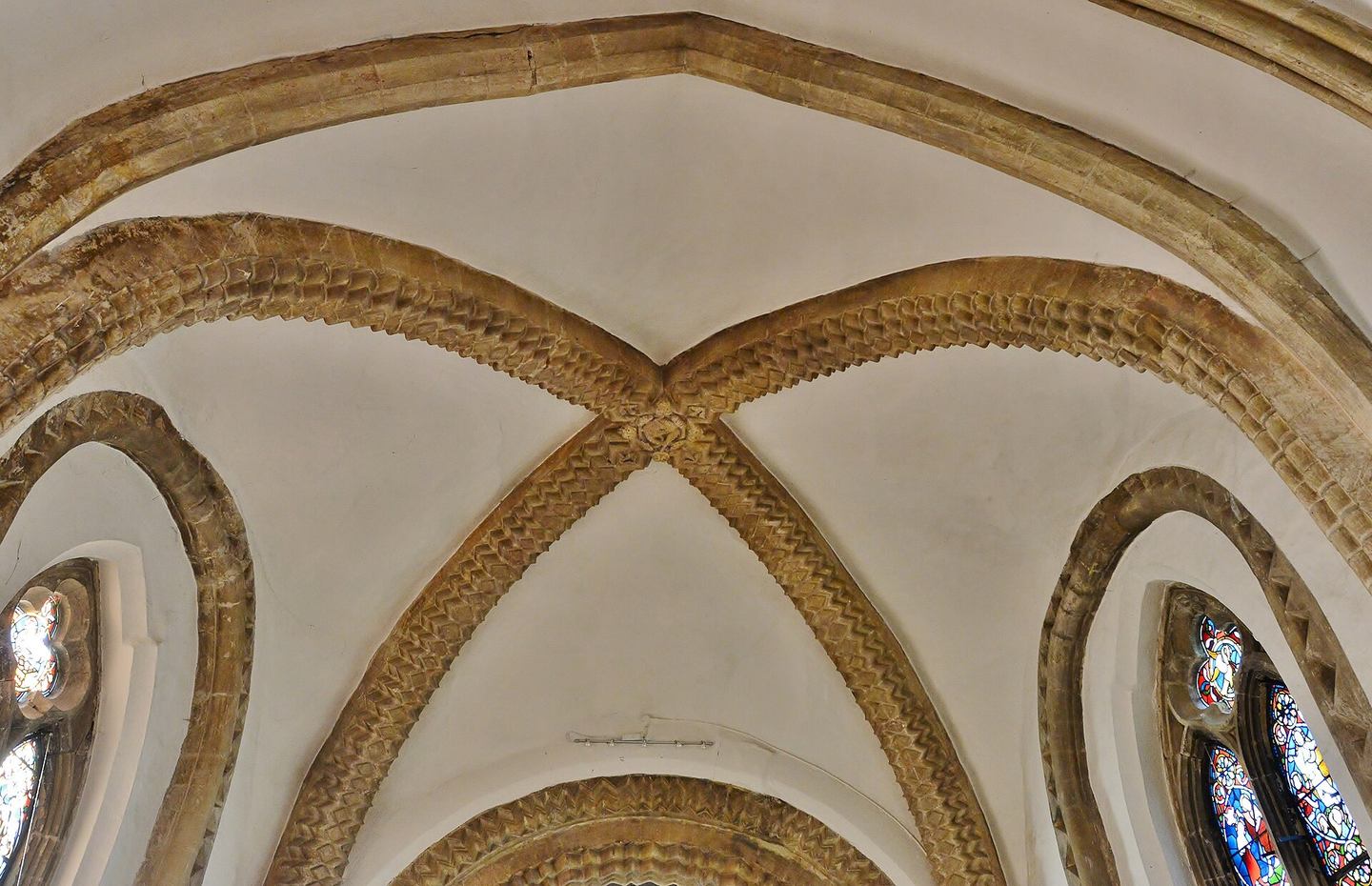
Inside, two massive Norman arches carry the central tower, carved with chevrons and decorated with dark marble shafts. Beyond, the first part of the chancel has a rib vault of the twelfth century; the eastern bay is the Early Gothic extension of about 1230.
The modern windows
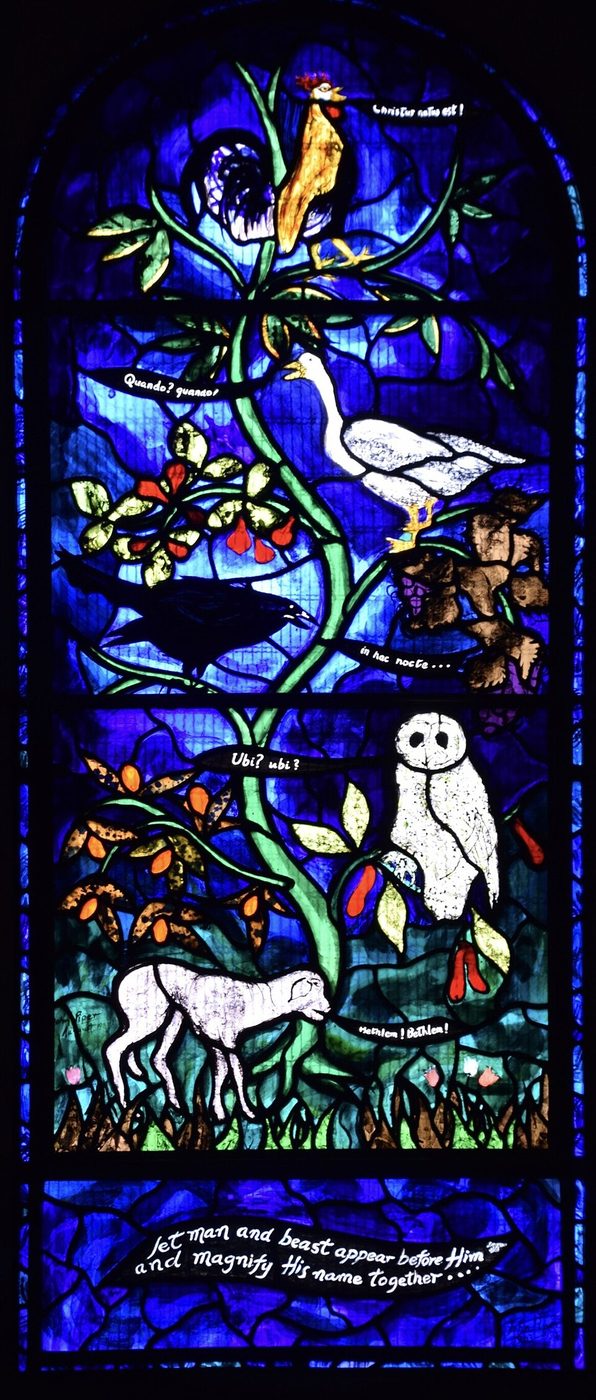
Near the font are two modern windows. John Piper designed the Nativity window, a tree of life full of birds and beasts; it was made in 1982 and installed in 1995, after his death, as a gift from his widow, Myfanwy. Opposite it is Roger Wagner’s Flowering Tree window of 2012, which shows the Cross as a tree in blossom, a symbol of death and resurrection.
Visiting
Free to visit
St Mary’s is free and usually open during the day for visitors and for prayer. It may be closed for services, weddings and funerals. Donations help look after this remarkable building.
The hotel link goes to Booking.com. This site earns nothing from it at present — it is here because it is the quickest way to check what is actually available.
Don't miss
- The west doorway Beakheads and the zodiac.
- The south doorway Knights, centaurs and beasts.
- The tower arches Heavy Norman chevrons.
- The chancel vault Twelfth-century ribs.
- The Piper window The Nativity as a tree of life.
- The Thames Iffley Lock, just below the church.
Insider tips
Walk there along the river. The Thames Path from Folly Bridge in Oxford to Iffley Lock takes about forty minutes and passes the college boathouses. From the lock it is a few minutes up the lane to the church.
Common questions
Does it cost anything to visit Iffley church?
No. St Mary the Virgin is a working parish church and free to visit; donations help to look after it.
When is the church open?
The church is usually open during the day for visitors and for prayer. It may be closed for services, weddings and funerals.
What are beakheads?
A Norman carving motif found mainly in England: a row of heads of birds, beasts or monsters, each with a beak or jaw gripping the roll moulding of an arch. The west doorway at Iffley has two rows of them.
Who lived in the cell by the chancel?
An anchoress called Annora, a noblewoman who chose to be walled into a cell on the south side of the chancel in the thirteenth century, to live a life of prayer. The cell was built when the chancel was extended around 1230.
How do you get to Iffley?
Iffley is about two miles south-east of the centre of Oxford. Buses run from the city centre along Iffley Road, or you can walk or cycle along the Thames Path from Folly Bridge to Iffley Lock and up into the village. There is on-street parking near the church.
Where to stay and eat nearby
Iffley village has a pub, and central Oxford, two miles away, has plenty of places to stay and eat.
More English churches
- Christ Church Cathedral, Oxford — in the city centre
- Dorchester Abbey — down the Thames
- Kilpeck Church — another small Norman church covered in carving
See all the cathedrals and churches worth visiting in England →