
Urnes Stave Church, Norway
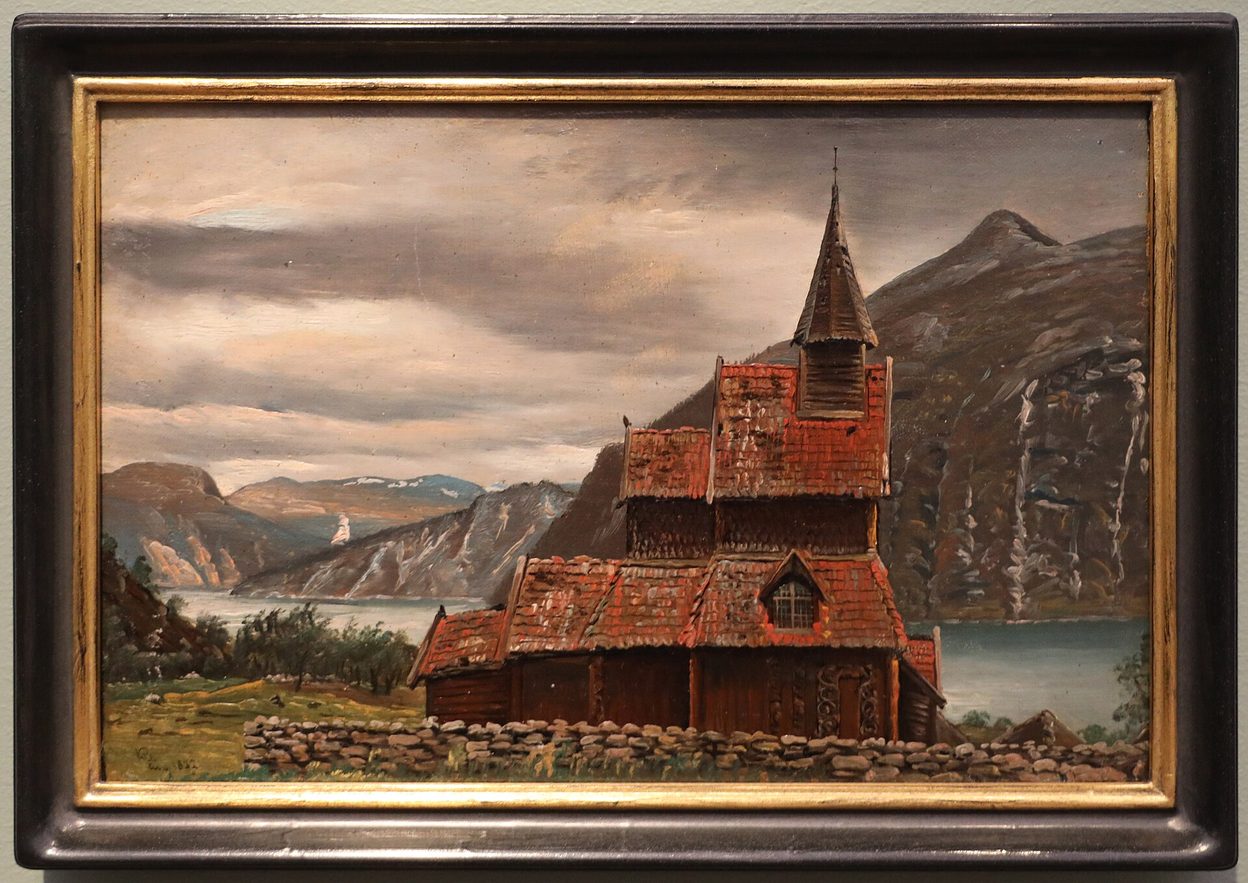
On a green headland high above the Lustrafjord, the innermost arm of the Sognefjord, stands a small, dark wooden church built around 1130. Urnes is one of the oldest stave churches in Norway, and its north wall carries carvings so fine that they gave their name to the last style of Viking art. It has been on UNESCO’s World Heritage list since 1979, and is open with a guided tour in summer.
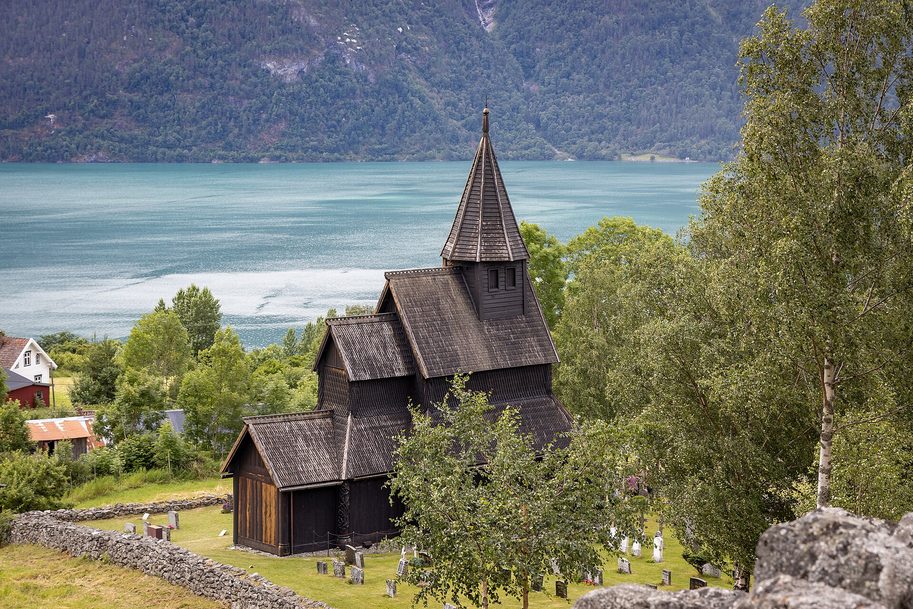
A medieval timber church
Stave churches are built on a frame of upright posts, the staves, standing on sills above the ground. Of perhaps a thousand built in medieval Norway, only 28 survive. Tree-ring dating shows that the timber for Urnes was felled between the winter of 1129–30 and the winter of 1131–32. At least one church stood here before it, and its builders reused that church’s finest carved planks, from about 1070, in the north wall of the new one.
The church was enlarged and refurnished in the seventeenth century, when it gained its painted apostles, pulpit and altarpiece. In 1881 it passed to the Society for the Preservation of Norwegian Ancient Monuments (Fortidsminneforeningen), which still owns and runs it.

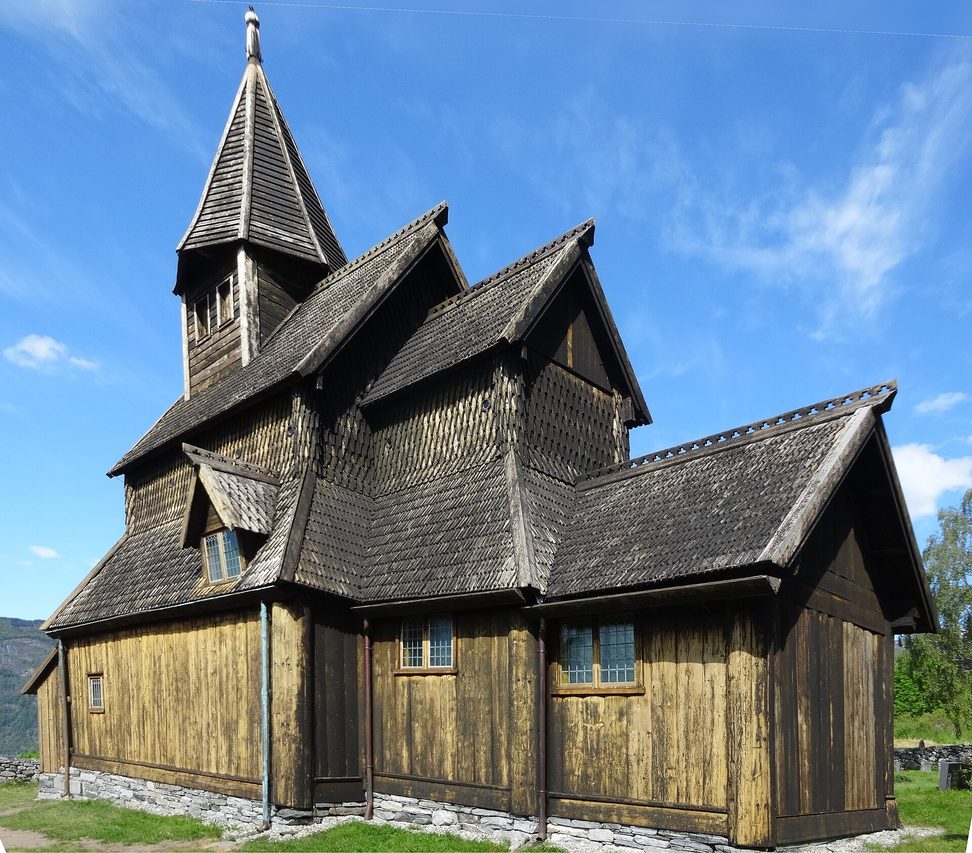
The visitor’s cheat sheet
| Where | Ornes, Luster, on the Lustrafjord, the inner arm of the Sognefjord |
|---|---|
| Season | 2 May–30 September 2026, daily 10.30am–5.45pm (closed 17 May); closed in winter |
| Admission | NOK 150 adults, 130 seniors, 100 children and students, 350 family (2026), guided tour included |
| Tours | Every visit is guided; at most 25 people per tour |
| Ferry | Solvorn–Ornes, about 20 minutes, all year; pay on board; NOK 75 adult foot passenger (2026) |
| From the ferry | About 1 km uphill on foot, around 15 minutes |
| How long | An hour at the church; half a day with the ferry |
Hours and admission checked against the official site in November 2026. They change; the official site is always the last word.
What to see
The north wall and the Urnes style
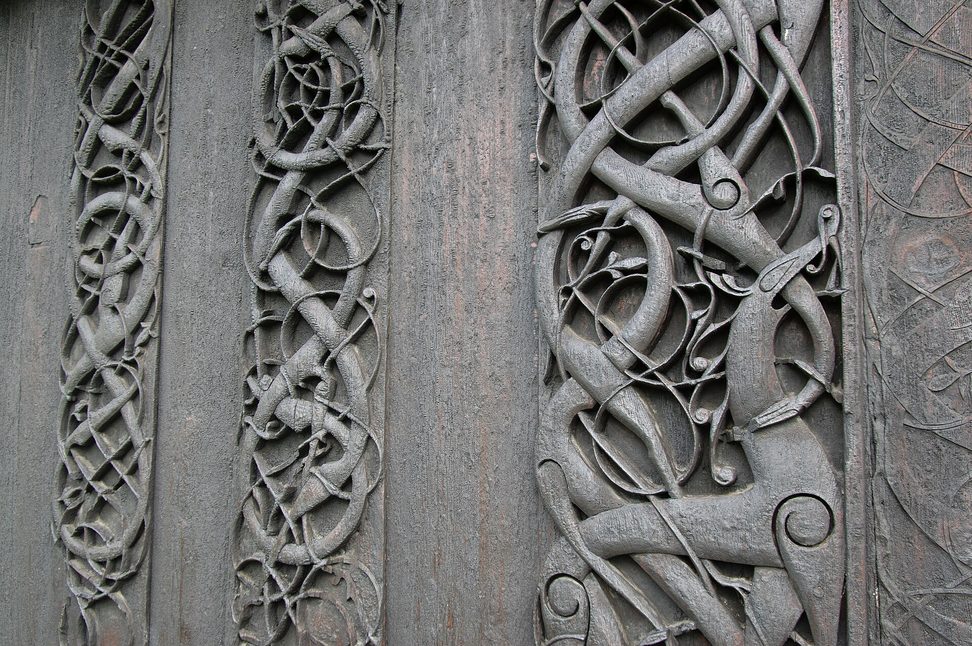
On the north side of the church, the old portal and wall planks are covered in carving: slender, ribbon-like beasts, their bodies looping and biting one another in an endless tangle. Art historians named the last phase of Viking ornament, from the later eleventh century, the Urnes style after these carvings. The guided tour includes a stop outside here.

Inside
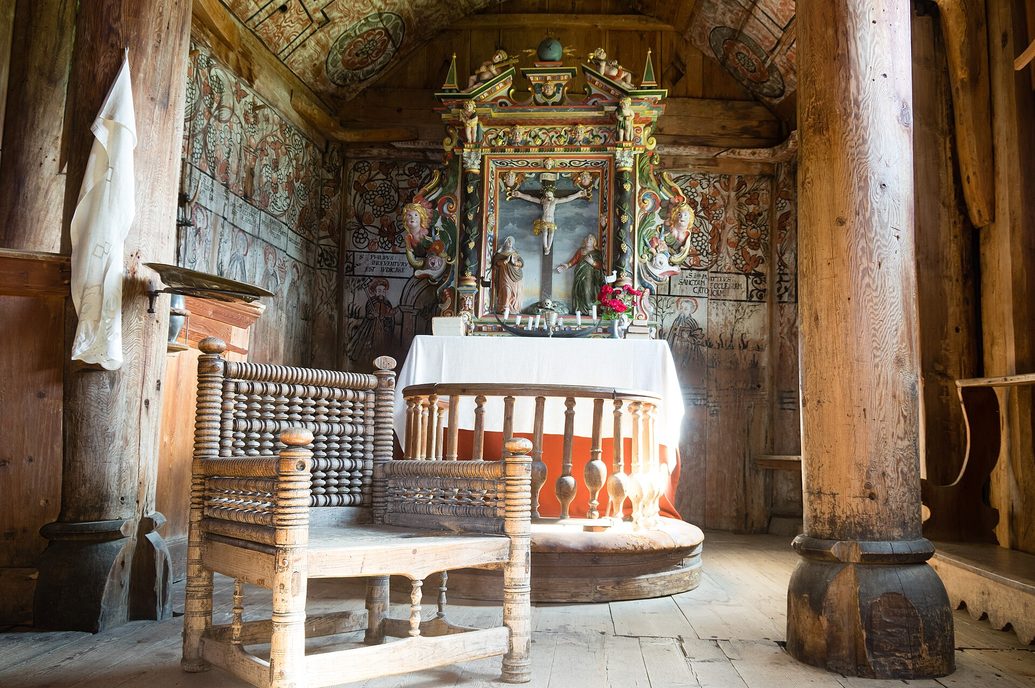
The interior is dim and warm with old wood. The columns carry Romanesque arches and cushion capitals carved with centaurs, griffins, birds and other animals. Over the chancel arch hangs a Calvary group, probably of about 1150, Christ between the Virgin and St John. The pulpit (1695) and altarpiece (1699) date from the church’s seventeenth- century refurnishing.


Getting there
Urnes is on the east side of the Lustrafjord in Luster municipality, Vestland. The easiest way is the small ferry from Solvorn, on the west side, to Ornes, which runs all year (with few sailings in winter, some of which must be booked) and takes about 20 minutes; foot passengers and cars pay on board. In summer it sails roughly hourly during the day, but check the timetable for the last boat back. From Ornes quay it is about a kilometre uphill to the church. By road, you can drive round the head of the fjord via Gaupne and Skjolden, about 55 km from Gaupne. Sogndal, the nearest town, is about 20 minutes’ drive from Solvorn.
Where to stay
Solvorn, across the fjord, has a historic hotel and guesthouses; Sogndal has more choice. The tour is included in the church ticket, which is sold on site.
This link goes to Booking.com. This site earns nothing from it at present — it is here because it is the quickest way to check what is actually available.
Don’t miss
- The north wall carvings Among the finest late Viking-age carving anywhere.
- The carved capitals Griffins, centaurs and birds inside.
- The Calvary group Twelfth-century figures above the chancel arch.
- The view down the fjord From the churchyard wall.
Insider tips
Come early. Tours take at most 25 people, and in summer you may have to wait for a place.
Combine it with Borgund. Borgund stave church, the most complete of them all, is about two hours away by road via Lærdal, including the Solvorn and Mannheller–Fodnes ferries.
Common questions
When is Urnes stave church open?
Only in summer: in 2026 from 2 May to 30 September, daily from 10.30am to 5.45pm (closed 17 May). It is closed in winter. Dates for 2027 had not been published when we checked.
How much does it cost?
In 2026 a ticket cost NOK 150 for adults, NOK 130 for seniors, NOK 100 for children and students and NOK 350 for a family, and every ticket includes a guided tour, inside the church and outside at the carved north wall.
How do you get to Urnes?
Most visitors cross the Lustrafjord on the small car and passenger ferry from Solvorn to Ornes (about 20 minutes), then walk about a kilometre uphill to the church, around 15 minutes. You can also drive round the fjord by the road through Gaupne and Skjolden.
Is Urnes the oldest stave church?
It is one of the oldest. Its timbers were felled in about 1130, and the carved planks on its north wall come from a church built about sixty years earlier.
More churches nearby
- Borgund Stave Church — the best preserved of the stave churches, with its dragon-headed gables.
- Nidaros Cathedral, Trondheim — Norway’s great medieval cathedral.