
Borgund Stave Church, Lærdal
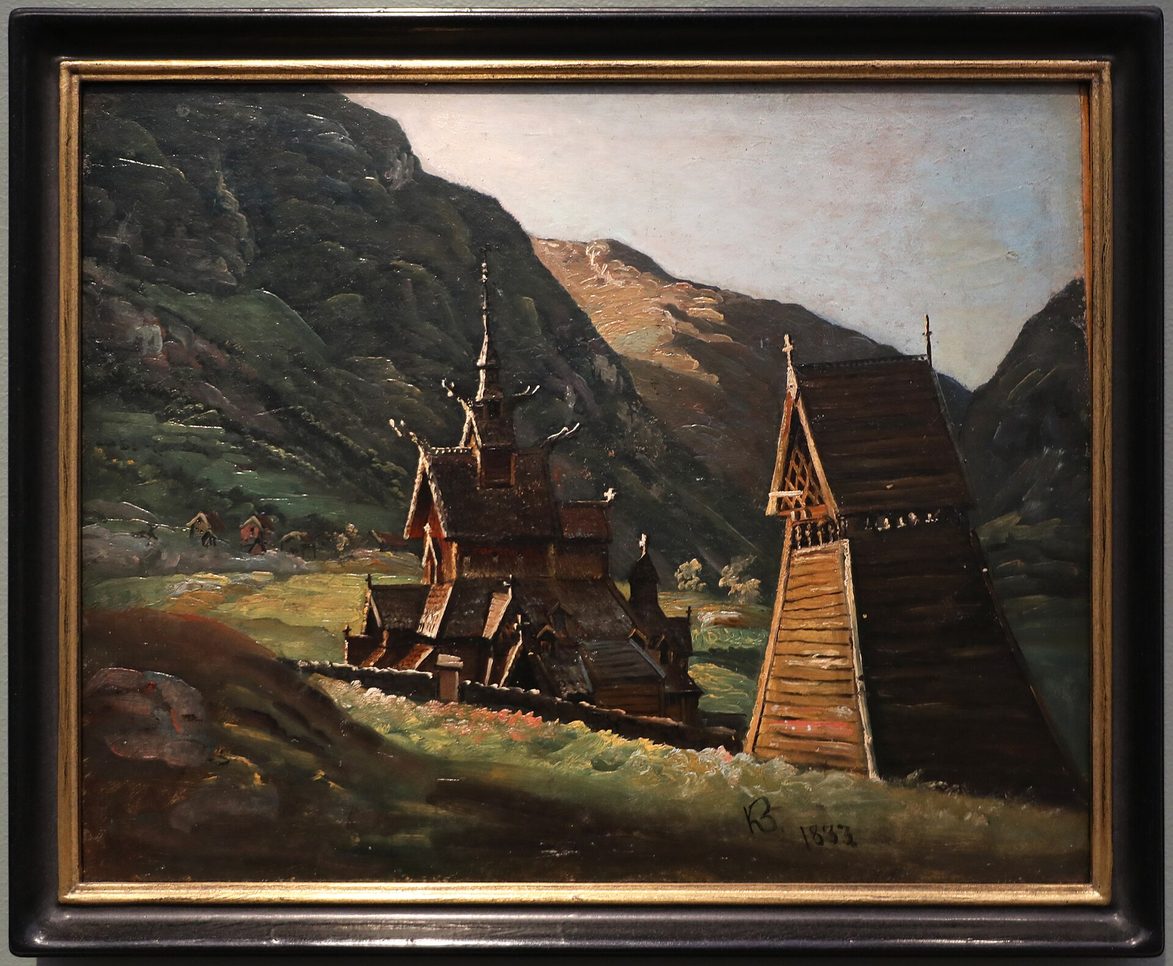
In a narrow mountain valley on the old road between Oslo and Bergen stands one of the best-known wooden churches in Norway. Built around 1180, Borgund Stave Church has hardly changed since the Middle Ages: tier upon tier of shingled roofs, carved dragon heads on the gables and, inside, a dark forest of timber posts. It is widely considered the best preserved of Norway’s 28 surviving stave churches, and open only in summer.
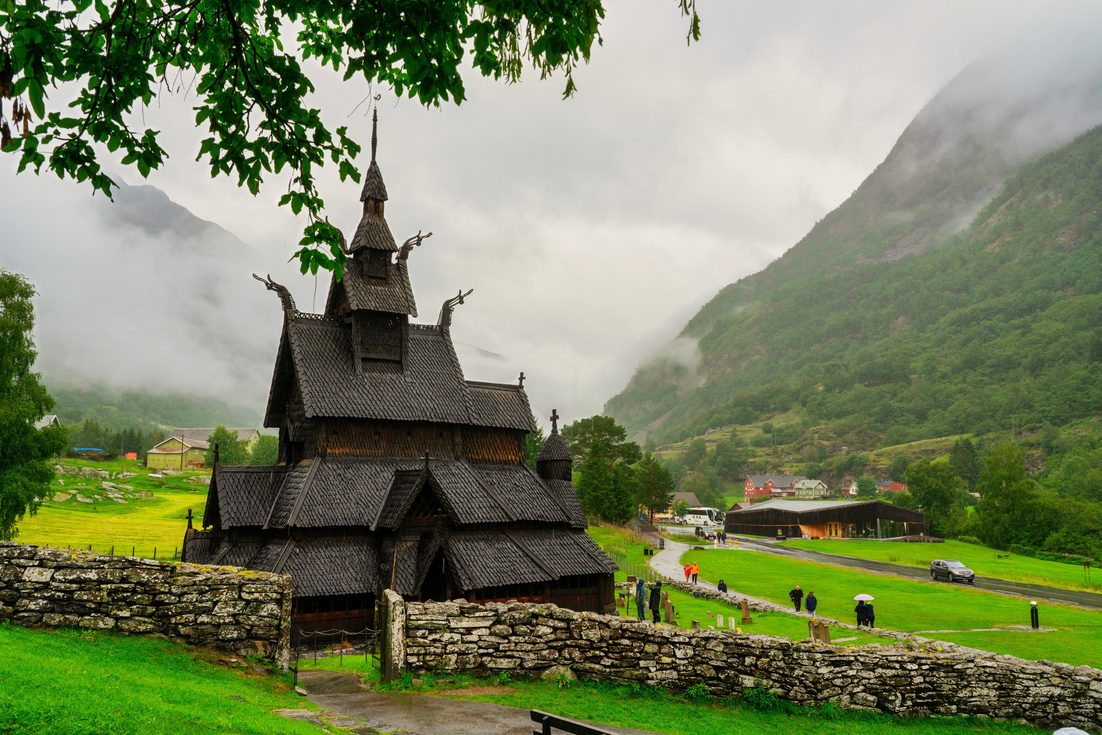
A church of staves
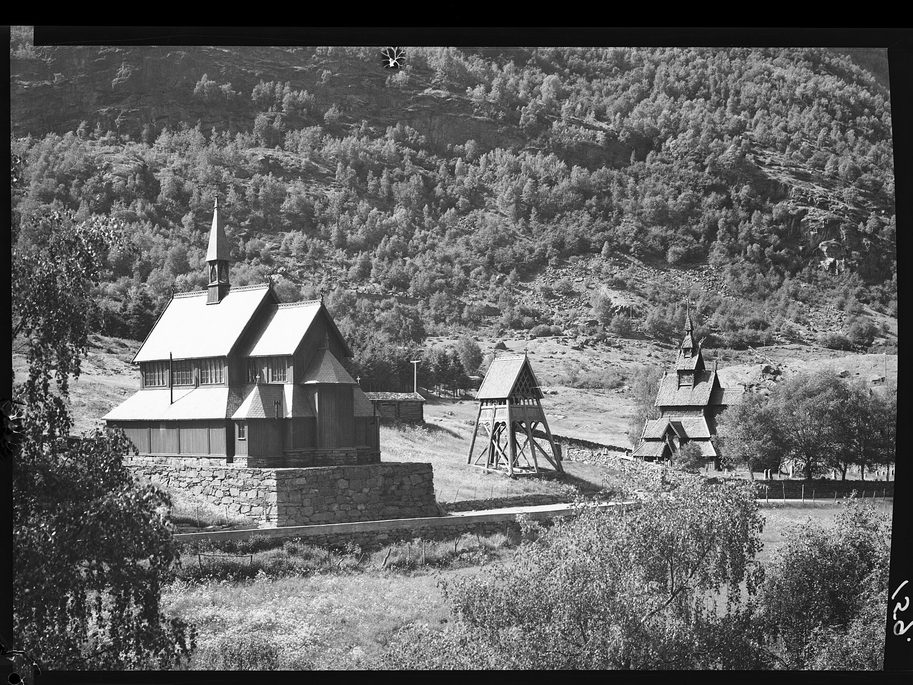
Stave churches take their name from the staves, the great upright posts that carry the building. About a thousand were built in Norway in the Middle Ages; fewer than thirty survive. Borgund’s timbers were felled in the winter of 1180–81, and the church was dedicated to St Andrew. It served the parish until 1868, when a new church was built beside it, and in 1877 it was bought by the society that still looks after it, the National Trust of Norway (Fortidsminneforeningen), so it escaped the fate of many stave churches pulled down in that period.
The visitor’s cheat sheet
| Season | Summer only: 15 April to 14 October in 2026, daily 9.30am–5pm (closed 17 May and 6–7 October); 2027 dates not yet published |
|---|---|
| Admission | 2026: adults 150 NOK, over-65s 130 NOK, students and under-16s 100 NOK, family 350 NOK |
| Inside | At most 20 people at a time; tickets from the visitor centre |
| Photography | No commercial photography or filming; for personal photos, avoid flash and follow staff instructions |
| Driving | From 16 November 2026 the Lærdal Tunnel on the E16 closes every night from 6pm to 6am (not on Saturday nights) for about two years |
| Getting there | Borgund stavkyrkje bus stop, on the Oslo–Bergen coach route and the local bus from Lærdal |
| How long | An hour or so; allow another hour and a half to two hours for the King’s Road walk |
Hours and admission checked against the official site in November 2026. They change; the official site is always the last word.
What to see
The roofs and the dragons
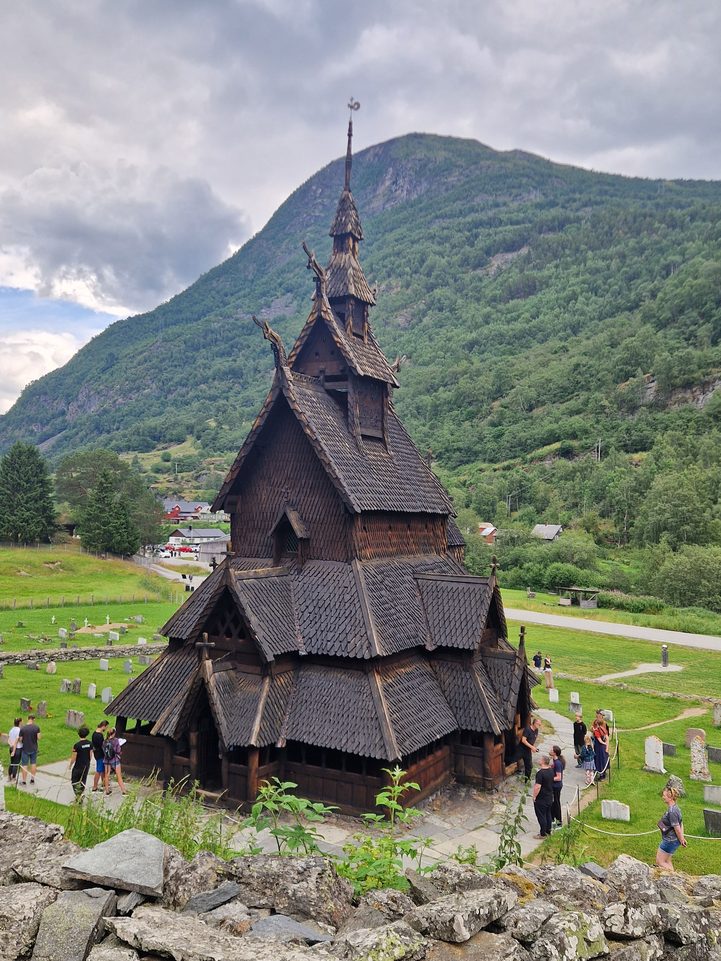
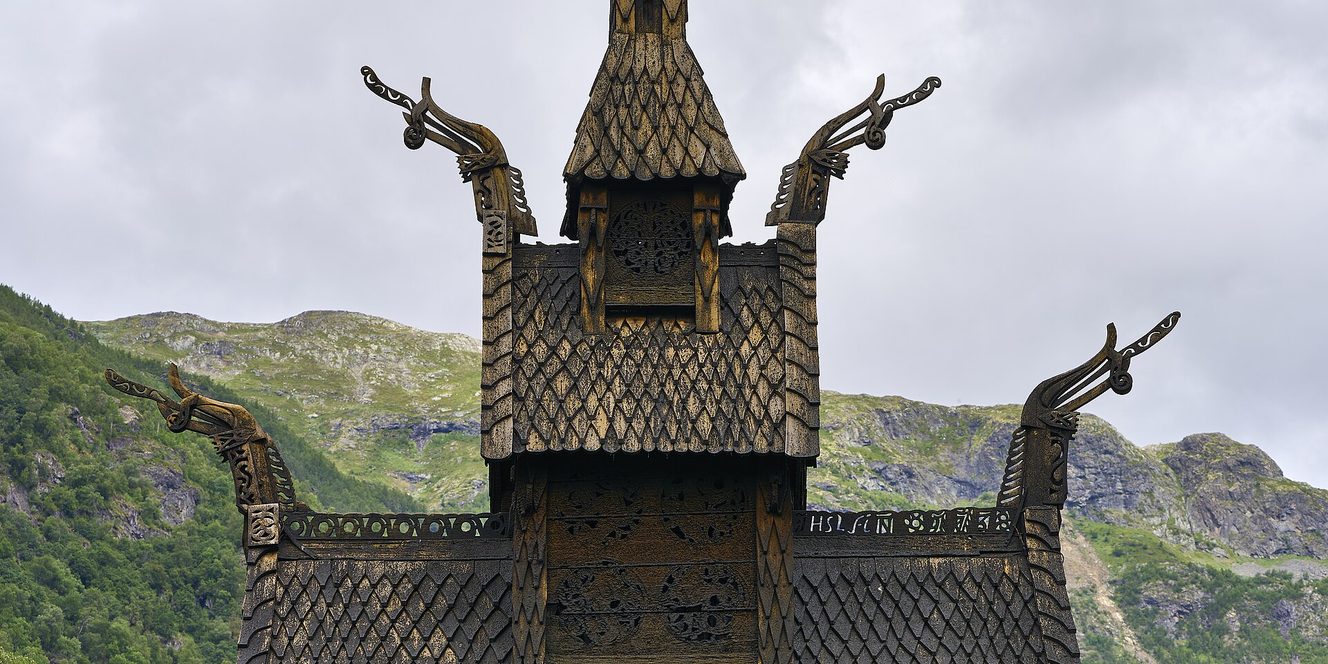
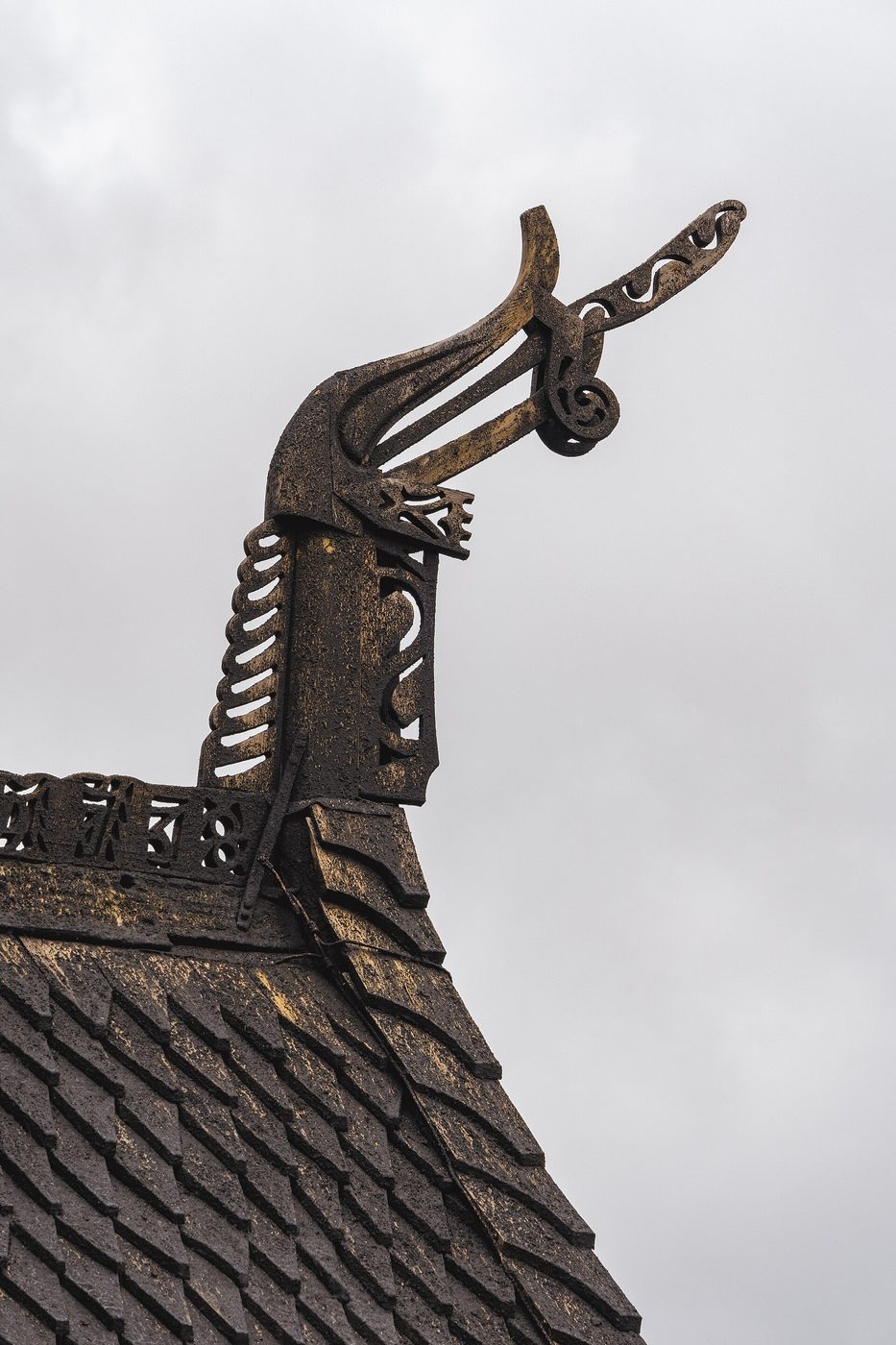
Walk round the outside first. The roofs rise in tiers to a small tower, covered all over with wooden shingles like scales. On the four gable ends of the upper roofs, carved dragon heads rear up, a pagan-looking touch on a Christian church. The west door is framed by carvings of dragons twisting and biting one another.
The gallery
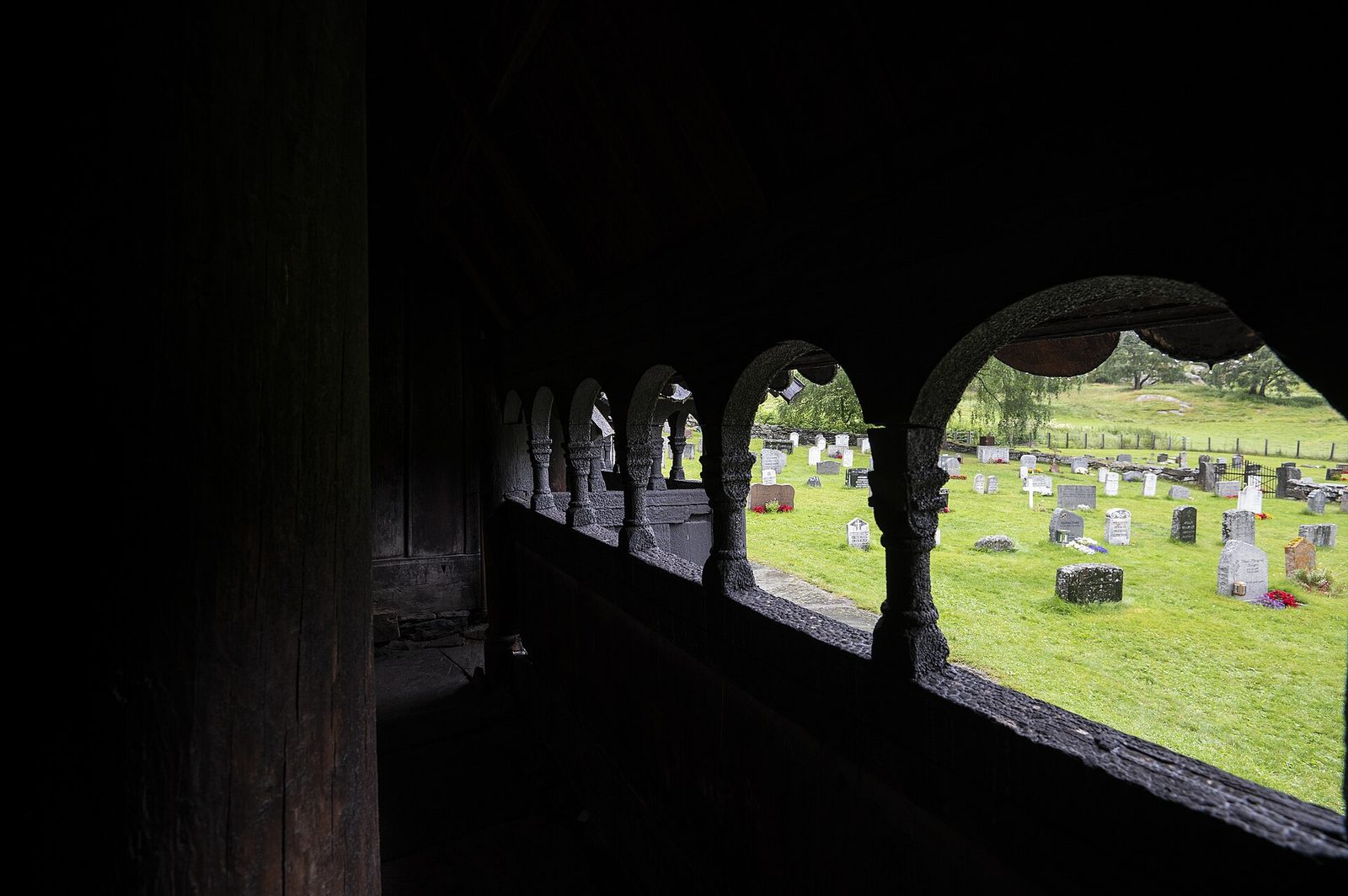
A low covered gallery runs right round the church at ground level, sheltering it from the weather. Its arched openings frame the churchyard and the valley.
Inside
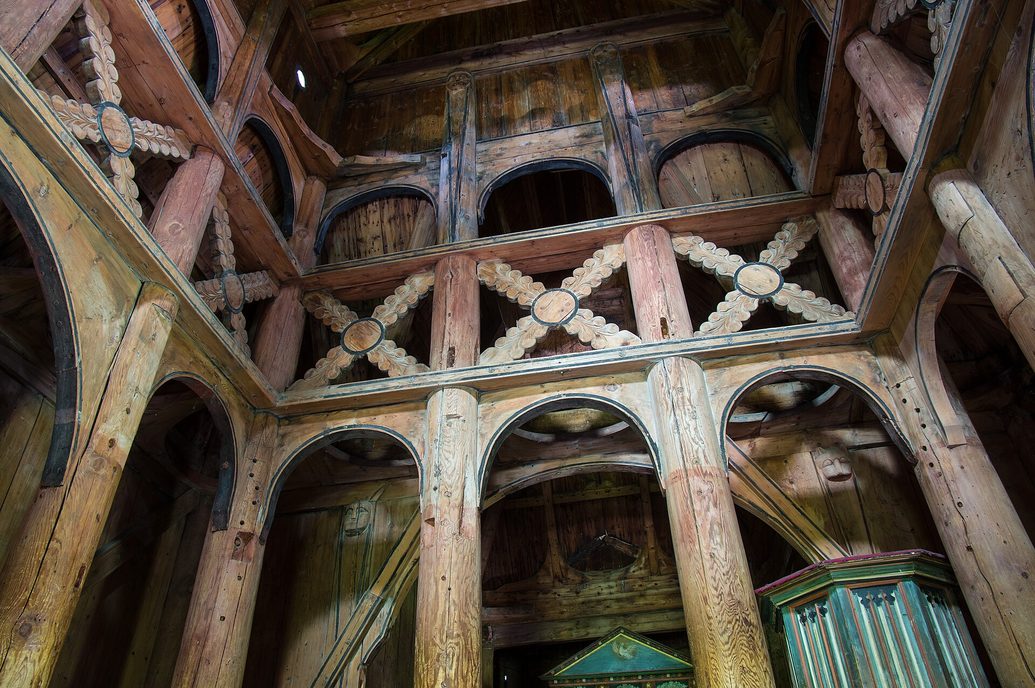
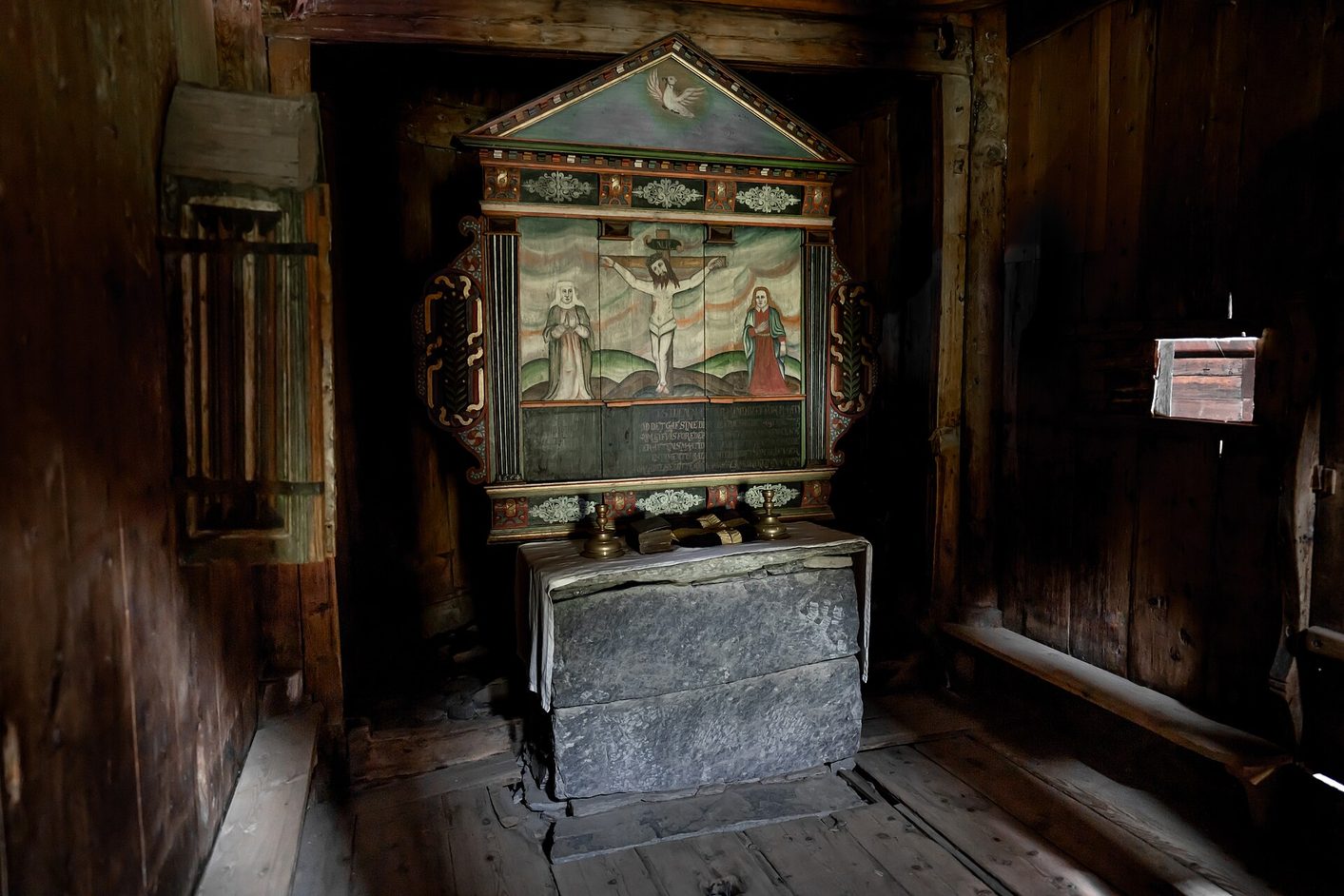
The interior is simple, unpainted and very dark, lit only by small openings high up. Twelve tall posts hold up the raised centre of the nave, braced with X-shaped crosses. Look for runic inscriptions scratched into the choir walls and the west doorway, some of them medieval; the commonest is “Ave Maria”. In the choir are a stone altar, a pulpit of the 16th century and an altarpiece of 1654 showing the crucifixion.
The bell tower and the visitor centre
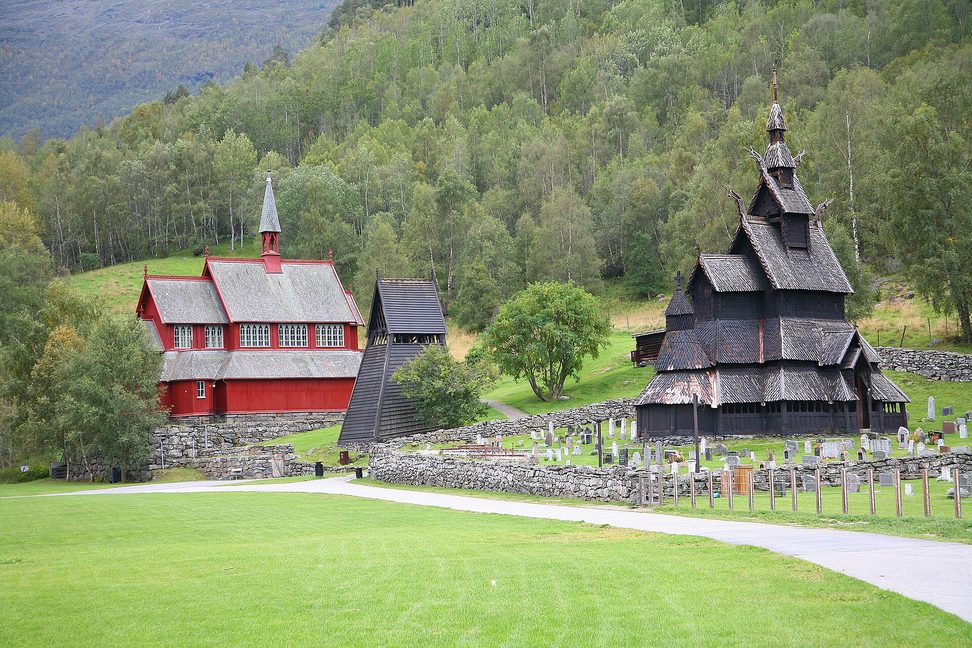
South of the church stands its free-standing wooden bell tower, probably also medieval. The visitor centre, opened in 2005, has an exhibition on stave churches, a café and a shop. Behind the church, a path follows part of the King’s Road over Filefjell, an old route with tight hairpin bends, for a round walk of an hour and a half or two.
Getting there
The church is at Vindhella 606, just off the E16 in the upper Lærdal valley, about 25–30 km from Lærdalsøyri and the Sognefjord. By car from Flåm or Bergen you pass through the 24.5 km Lærdal Tunnel; from 16 November 2026 it closes every night from 6pm to 6am, except Saturday nights, for about two years of works. The Vy express coach between Bergen and Oslo and local buses from Lærdal stop at the “Borgund stavkyrkje” stop, a few minutes’ walk from the church.
Tours and where to stay
Tickets are sold at the visitor centre. Fjord tours from Flåm sometimes include the church.
These links go to GetYourGuide and Booking.com. This site earns nothing from them at present — they are here because they are the quickest way to check what is actually available.
Don’t miss
- The dragon heads On the gables of the upper roofs.
- The west door Framed by carved dragons.
- The runes Scratched into the walls inside.
- The King’s Road The old track behind the church.
Insider tips
Arrive early or late. Coach parties tend to arrive around the middle of the day, and only 20 people can be inside at once.
Walk round the outside first. The best views of the roofs are from the churchyard and the slope above it.
Common questions
When is Borgund Stave Church open?
Only in summer. In 2026 the season ran from 15 April to 14 October, daily from 9.30am to 5pm (10am to 2pm on the last day), closed on 17 May and 6–7 October. The 2027 dates have not been announced; recent seasons have run from mid-April to mid-October. In winter the church is closed.
How much does it cost?
In 2026 tickets cost 150 NOK for adults, 130 NOK for over-65s, 100 NOK for students and children under 16, and 350 NOK for a family. Buy them at the visitor centre; the ticket also gives access to the café and toilets.
Can you go inside?
Yes, but only 20 people are allowed in at a time, so you may have to wait a few minutes in summer. It is dark inside; let your eyes adjust before you look up into the roof.
How do I get there?
Borgund is on the E16 road between Oslo and Bergen, about 25–30 km from Lærdalsøyri. The Vy express coach between Bergen and Oslo (via Fagernes) and the local bus from Lærdal stop at “Borgund stavkyrkje”, a few minutes’ walk away. From Flåm it is about an hour and a half by bus, changing at Lærdal, depending on connections; check entur.no before you travel.
Why are there dragons on a church?
No one knows for certain. The dragon heads on the gables recall the prows of Viking ships, and are usually said to ward off evil; the present heads may be 18th-century replacements of the originals.
More churches in Norway
- Nidaros Cathedral — St Olav’s cathedral in Trondheim.