
Nidaros Cathedral, Trondheim
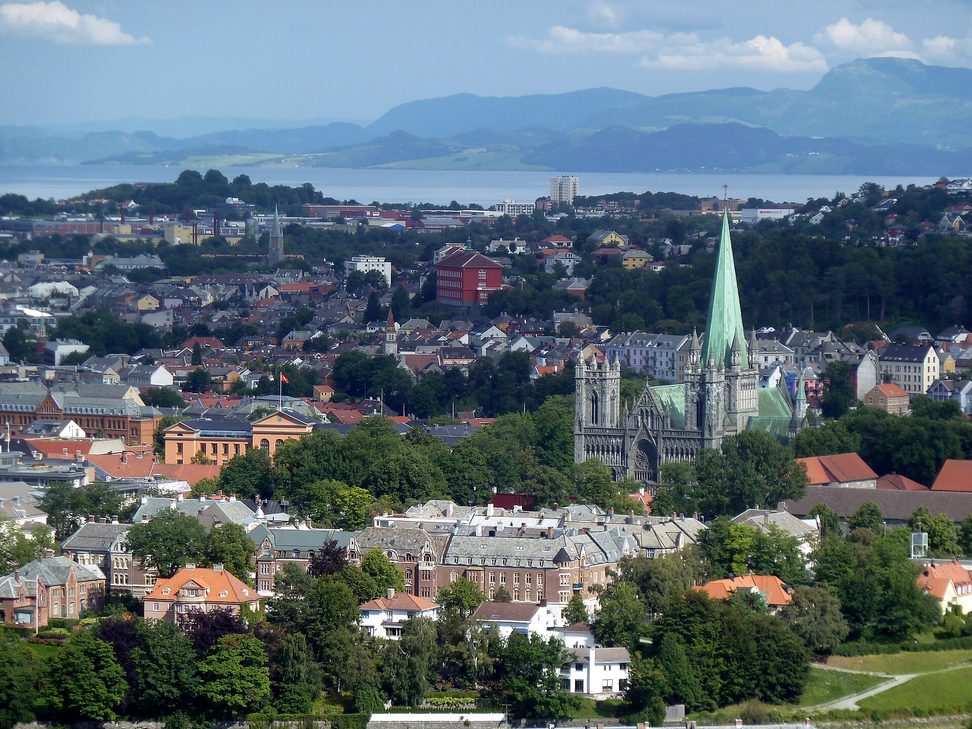
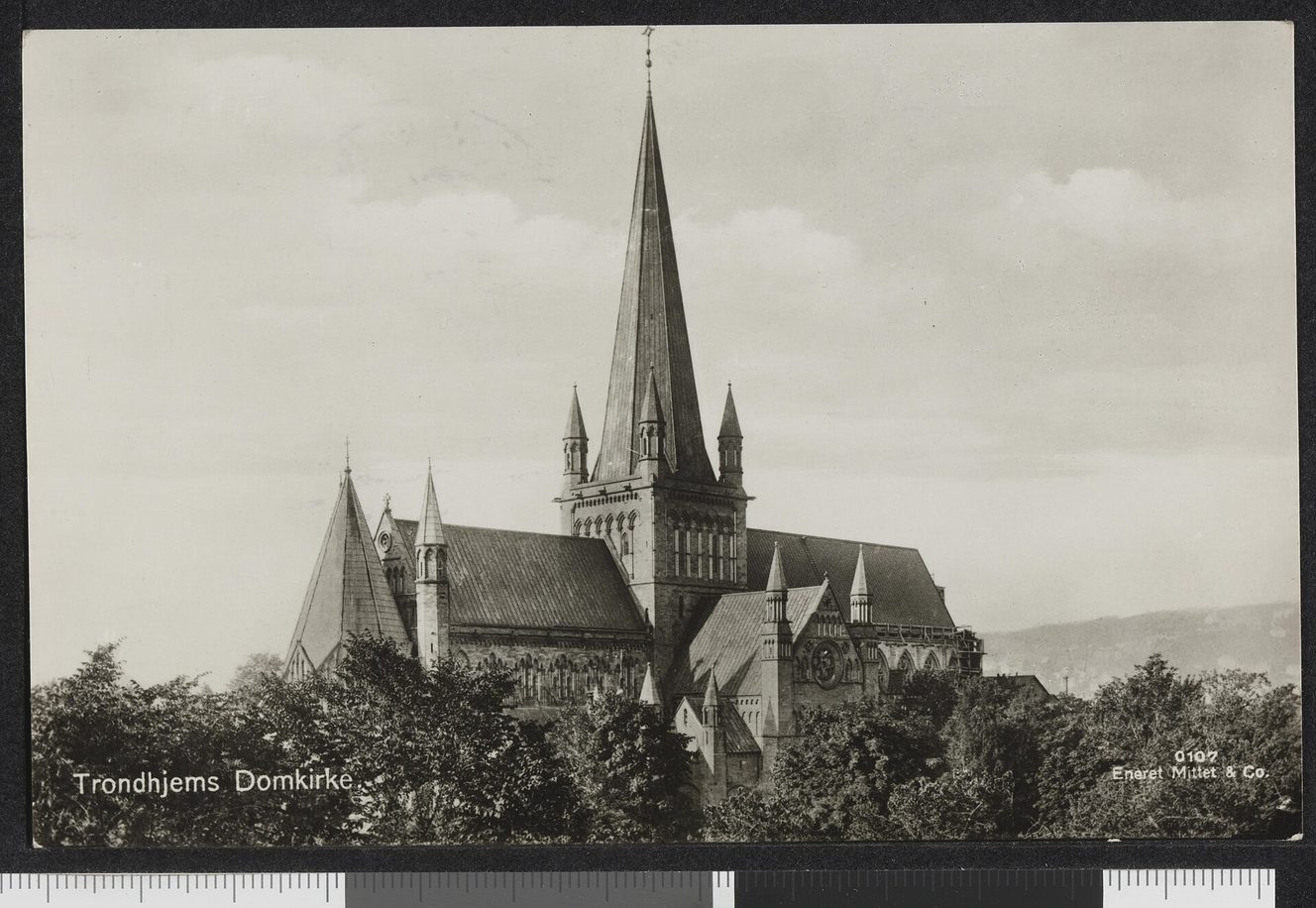
Nidaros Cathedral is Norway’s national shrine and the northernmost medieval cathedral in the world. Built over the grave of St Olav, the Viking king who made Norway Christian, it drew pilgrims from across northern Europe for five centuries, and draws them again today at the end of the St Olav Ways. Its great soapstone walls, ruined after the Reformation, were rebuilt over more than a century; the kings of Norway have been crowned and consecrated here.
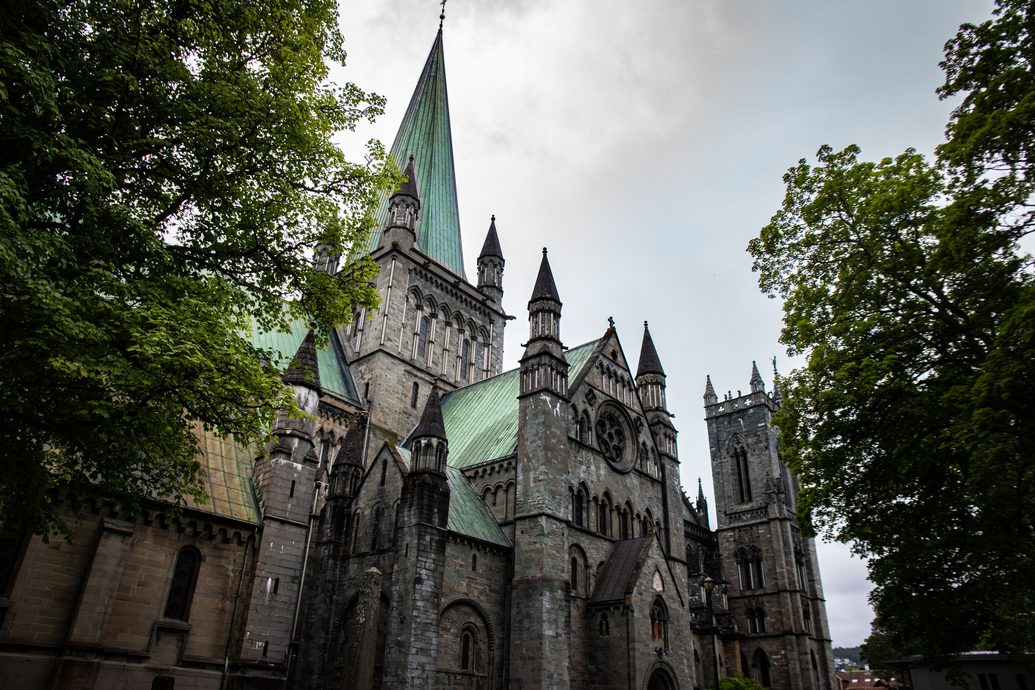
St Olav’s church
Olav Haraldsson was killed at the Battle of Stiklestad on 29 July 1030. A year later his body was found uncorrupted, he was declared a saint, and a church was built over his grave. The present cathedral was begun in about 1070 and enlarged by the archbishops of Nidaros — the old name of Trondheim — first in Romanesque and then in Gothic style, inspired by English cathedrals such as Lincoln. It was largely finished by around 1300.
Fires followed, and after the Reformation of 1537 the nave stood roofless. The 1814 constitution made it Norway’s coronation church (coronations ended in 1908; kings have since been consecrated here instead), and in 1869 the state began a restoration that lasted more than a hundred years. The west front, with its wall of statues, was finished only in the 1980s.
The visitor’s cheat sheet
| Opening hours | Sept–May: Mon–Fri 9am–2pm, Sat 9am–1pm, Sun 1pm–4pm. June–Aug: weekdays until 6pm |
|---|---|
| Admission | 2026: adults 140 NOK, ages 8–25 70 NOK, under-8s free; with the Archbishop’s Palace and Crown Regalia 260 NOK |
| Tower | Summer only: 172 steps, 70 NOK extra, age 8 and over |
| Closed | 23–25 December 2026, and during services and events |
| Pilgrims | Pilgrims enter free; the Olav Letter is given at the pilgrim office, Kjøpmannsgata 1 |
| Getting there | About 15 minutes’ walk from Trondheim station; airport bus or train about 30–35 minutes |
| How long | An hour or two for the cathedral; half a day with the Archbishop’s Palace |
Hours and admission checked against the official site in November 2026. They change; the official site is always the last word.
What to see
The west front
The west front, a screen wall between two towers, is covered with 76 statues of saints, kings and biblical figures, almost all carved in the 20th century by Norwegian sculptors. The rose window is at its centre, and Christ stands at the top of the gable. Stand back on the square in front to take it in.
The nave and the glass
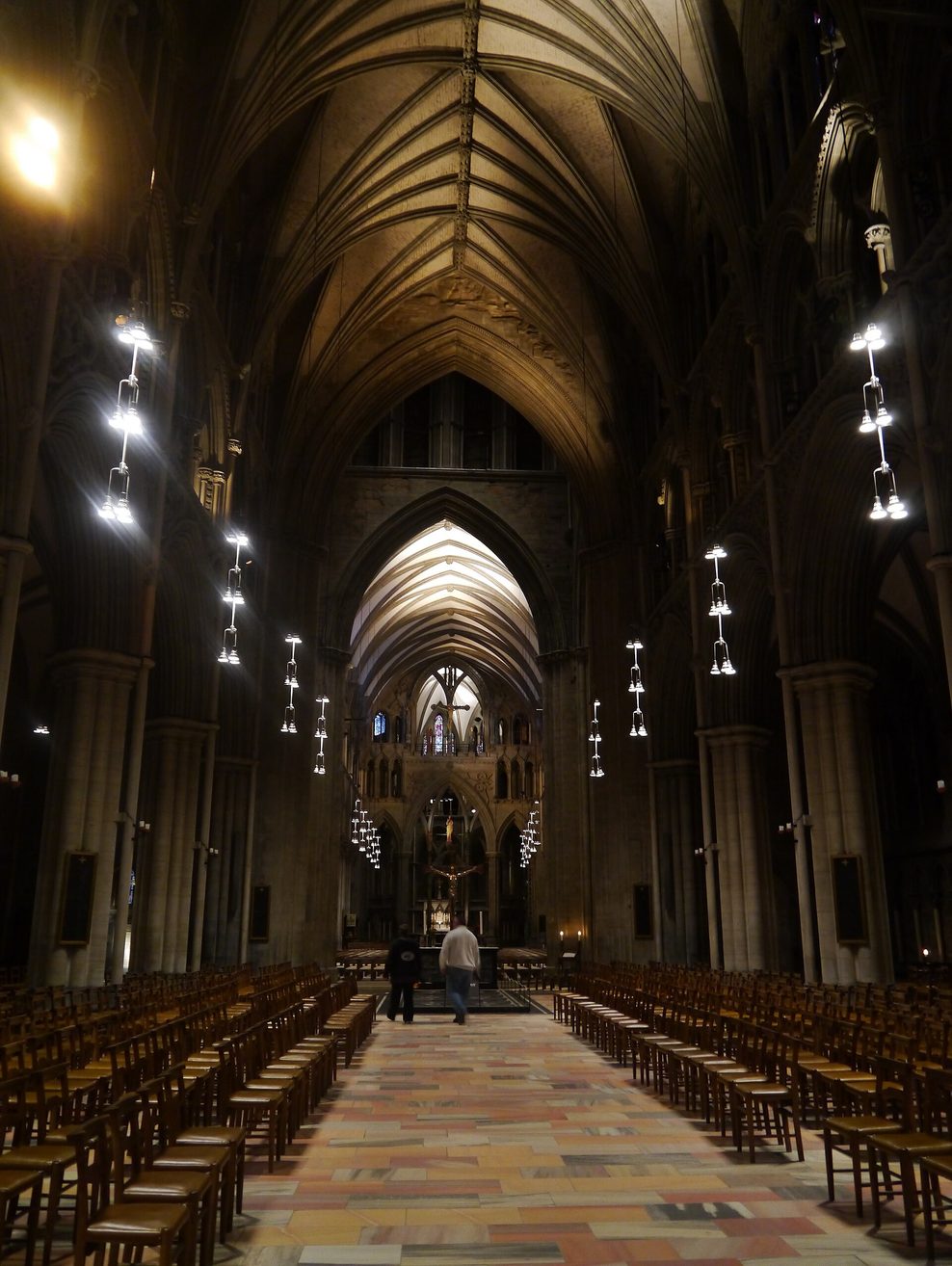
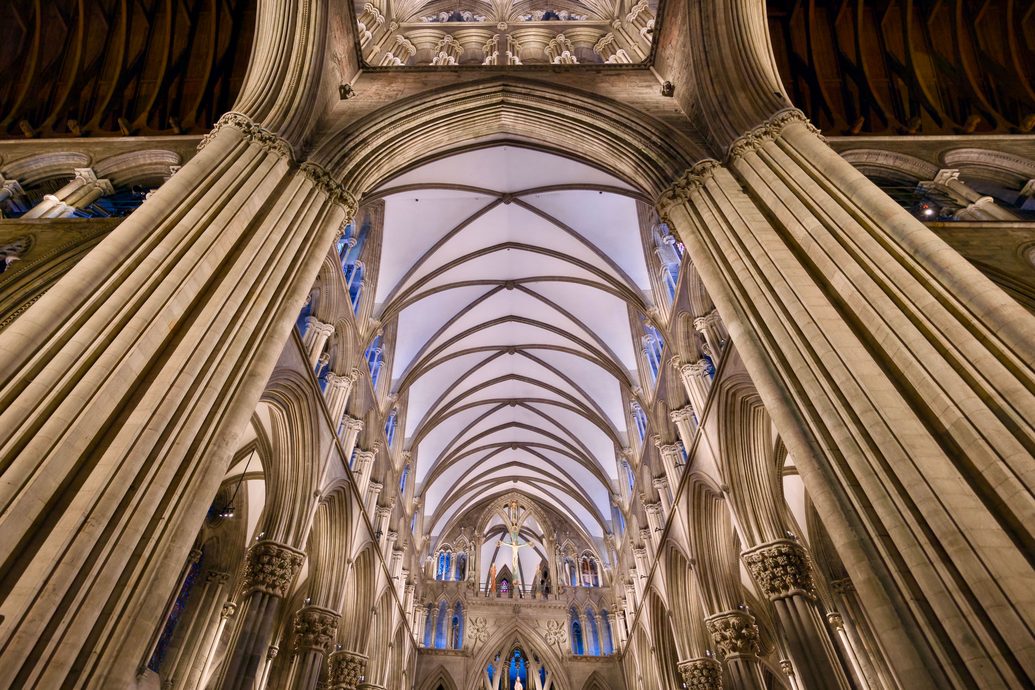
Inside, the long nave is dim and lofty, its windows filled with stained glass made between 1908 and 1934 by Gabriel Kielland: Old Testament scenes on the north side, New Testament on the south. The great rose window at the west end, finished in 1930, shows the Last Judgement. Two organs stand in the church, a Baroque instrument of 1741 by Joachim Wagner and a large Romantic organ of 1930.
The octagon
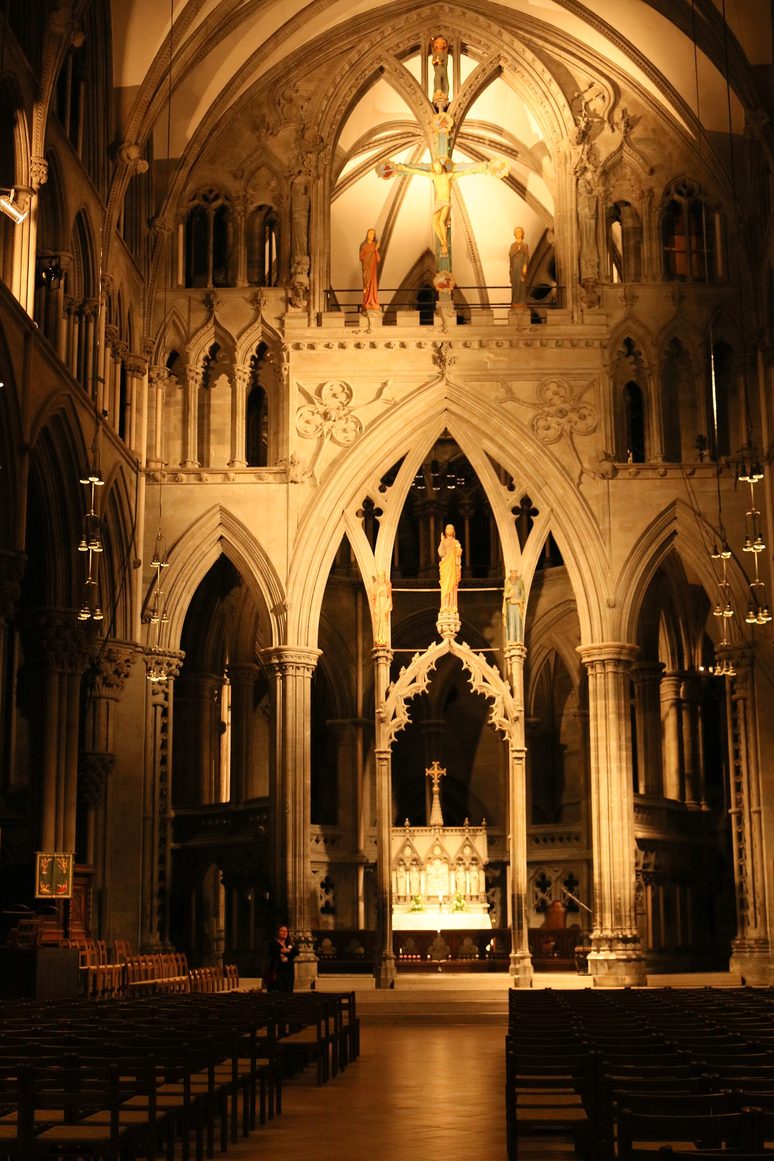
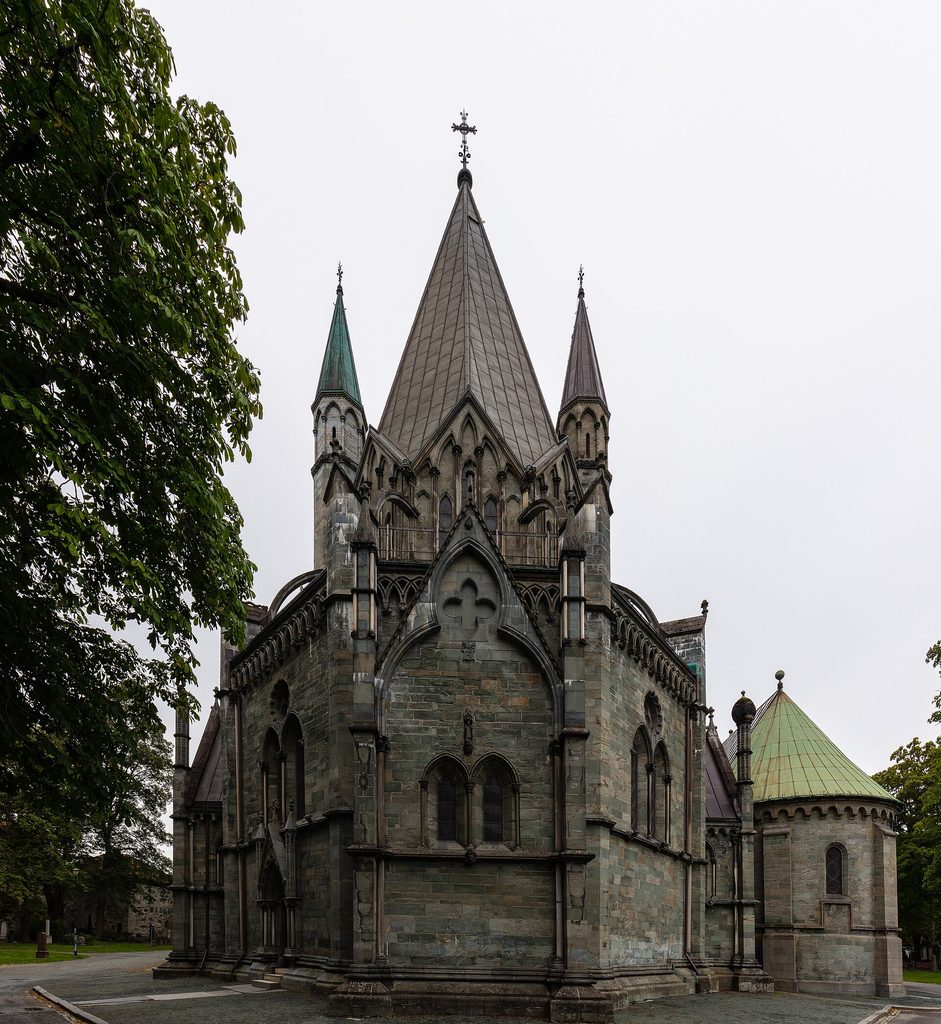
At the east end is the octagon, begun in the 1180s, where the shrine of St Olav stood on the high altar, perhaps inspired by the shrine of Thomas Becket at Canterbury. Pilgrims walked round it in the ambulatory, and passed a well over St Olav’s spring, set into the south-east wall. The shrine itself was lost after the Reformation; the place where it stood is still the heart of the cathedral.
The Archbishop’s Palace and the Crown Regalia
Next to the cathedral, the medieval Archbishop’s Palace holds a museum of original sculpture from the cathedral and finds from excavations, and in its west wing the Crown Regalia of Norway, the crowns and other regalia used at coronations. A combined ticket covers both and the cathedral. In summer you can also climb the central tower, 172 steps up.
Pilgrims and Olsok
The St Olav Ways, Norway’s pilgrim routes, end at the cathedral; the Gudbrandsdal path from Oslo is about 640 kilometres. Walkers who complete the last 100 kilometres can collect the Olav Letter at the pilgrim office. The feast of St Olav, Olsok, falls on 29 July, and the St Olav Festival fills the city from late July into early August, with services, concerts and events in and around the cathedral.
Getting there
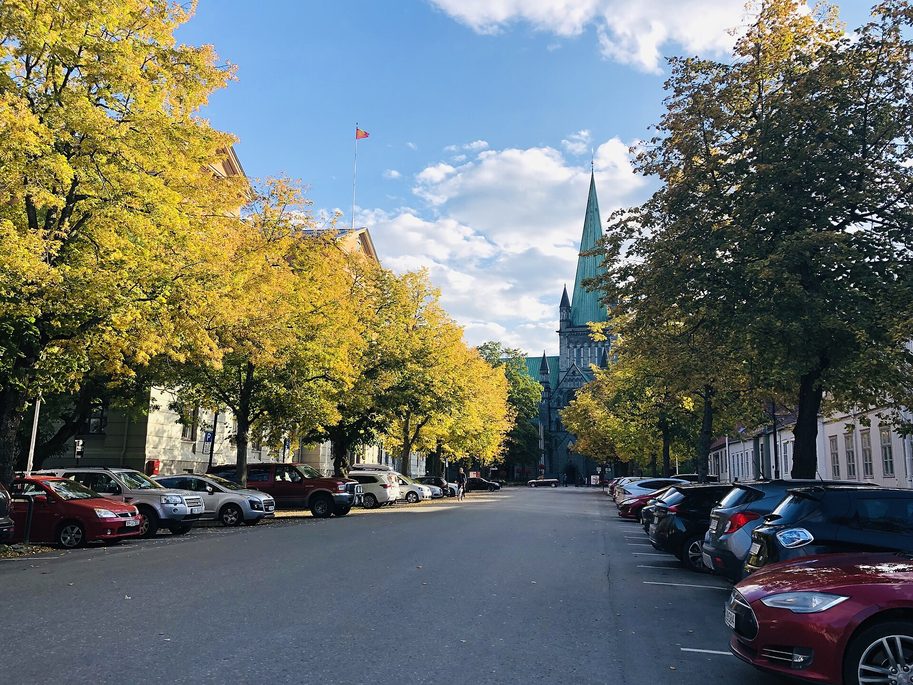
The cathedral is at Bispegata in the centre of Trondheim, about 15 minutes’ walk from the railway station, by way of the old town or Munkegata. Trains from Oslo take about seven hours. From Værnes airport, the airport express bus takes about half an hour and the train about 35 minutes. The visitor centre, with tickets, is next to the cathedral at Bispegata 5.
Tours and where to stay
Tickets are sold at the visitor centre and on the cathedral’s website.
These links go to GetYourGuide and Booking.com. This site earns nothing from them at present — they are here because they are the quickest way to check what is actually available.
Don’t miss
- The west front Seen from the square in front.
- The octagon Where St Olav’s shrine stood.
- The rose window Look back west from the nave.
- The Crown Regalia In the Archbishop’s Palace.
Insider tips
Go in the morning in winter. From September to May the cathedral closes at 2pm on weekdays and 1pm on Saturdays, earlier than many visitors expect.
Buy the combined ticket. At 260 NOK it covers the cathedral, the Archbishop’s Palace and the Crown Regalia, and is valid all day.
Common questions
How much does it cost to visit Nidaros Cathedral?
In 2026 a ticket costs 140 NOK for adults and 70 NOK for ages 8 to 25; under-8s go free. A combined ticket for the cathedral, the Archbishop’s Palace Museum and the Crown Regalia costs 260 NOK (130 NOK reduced). Services are free.
What are the opening hours?
From September to May the cathedral is open Monday to Friday 9am to 2pm, Saturday 9am to 1pm and Sunday 1pm to 4pm. In summer (June to August) it stays open until 6pm on weekdays. It closes over Christmas and for services and special events, so check the cathedral’s website.
Can you climb the tower?
Only in summer: 172 steps to a view over the city, for 70 NOK on top of the cathedral ticket, from age 8. Climbs take about half an hour.
Who was St Olav?
Olav Haraldsson, the Viking king who brought Christianity to Norway. He was killed at the Battle of Stiklestad on 29 July 1030, declared a saint, and buried where the cathedral now stands. Pilgrims walked to his shrine until the Reformation, and have come again since the St Olav Ways reopened in 1997.
How do I get there?
The cathedral is in the centre of Trondheim, about 15 minutes’ walk from the railway station. From Værnes airport, the airport express bus takes about half an hour and the train about 35 minutes.
More churches in Norway
- Borgund Stave Church — often called the best-preserved stave church, in the mountains between Oslo and Bergen.