
Heddal Stave Church, Norway
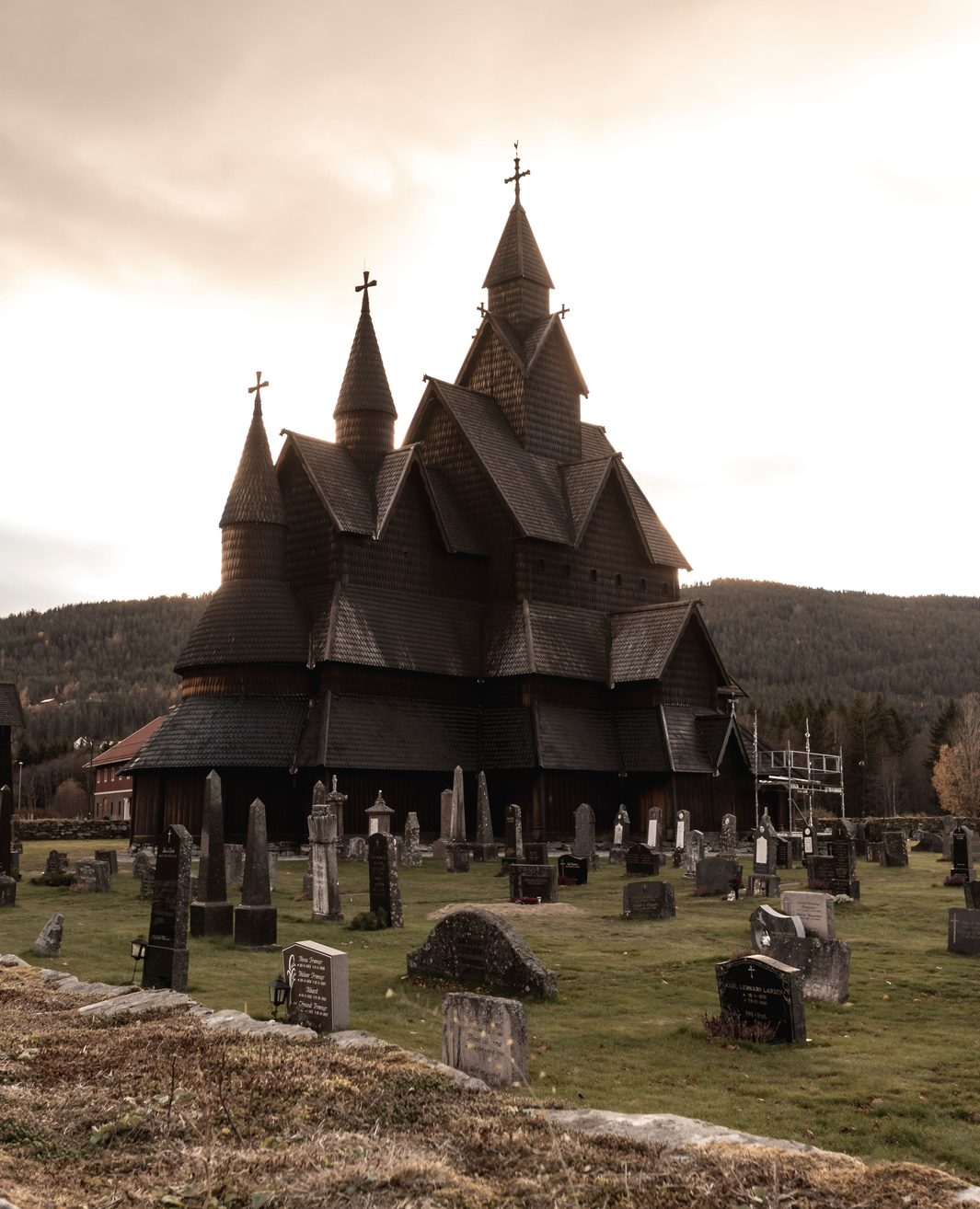
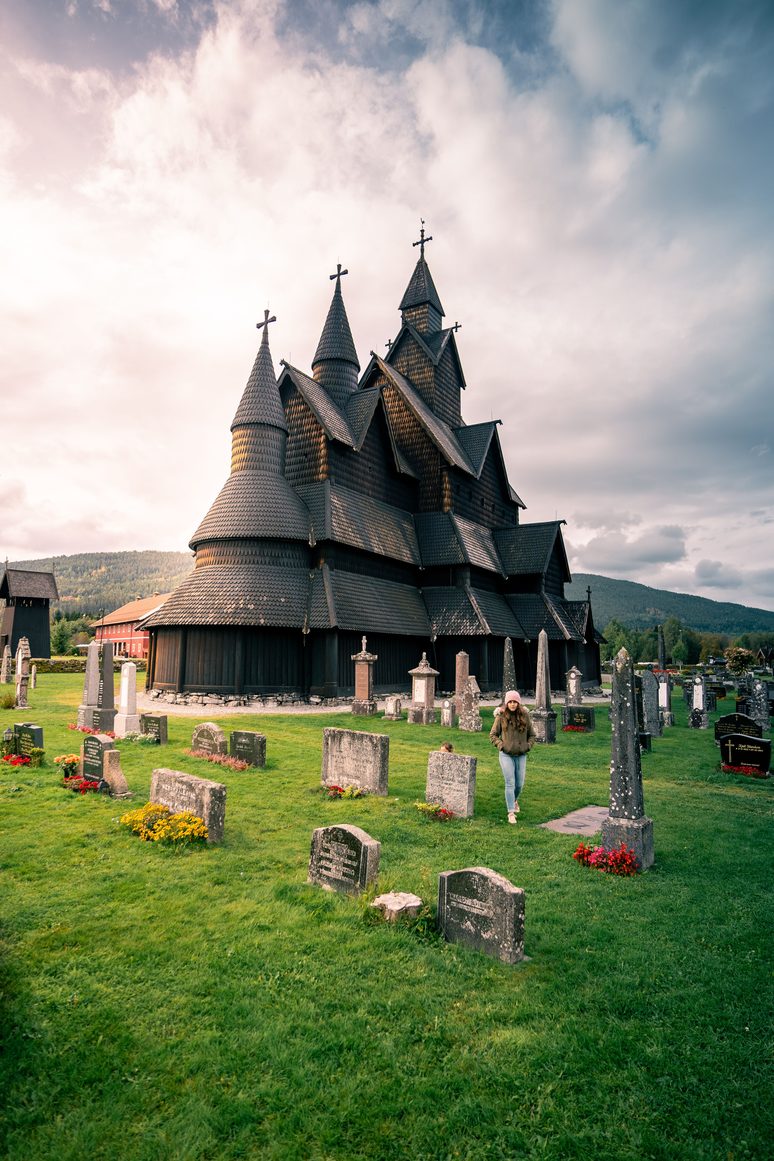
Heddal is the largest stave church in Norway: a dark, tarred timber church of the thirteenth century, rising in tier upon tier of shingled roofs to three turrets, in a green valley in Telemark. It is still the parish church, and in summer it is open almost every day, with a guided tour. It is also among the easiest of the great stave churches to reach from Oslo, under two hours by road.
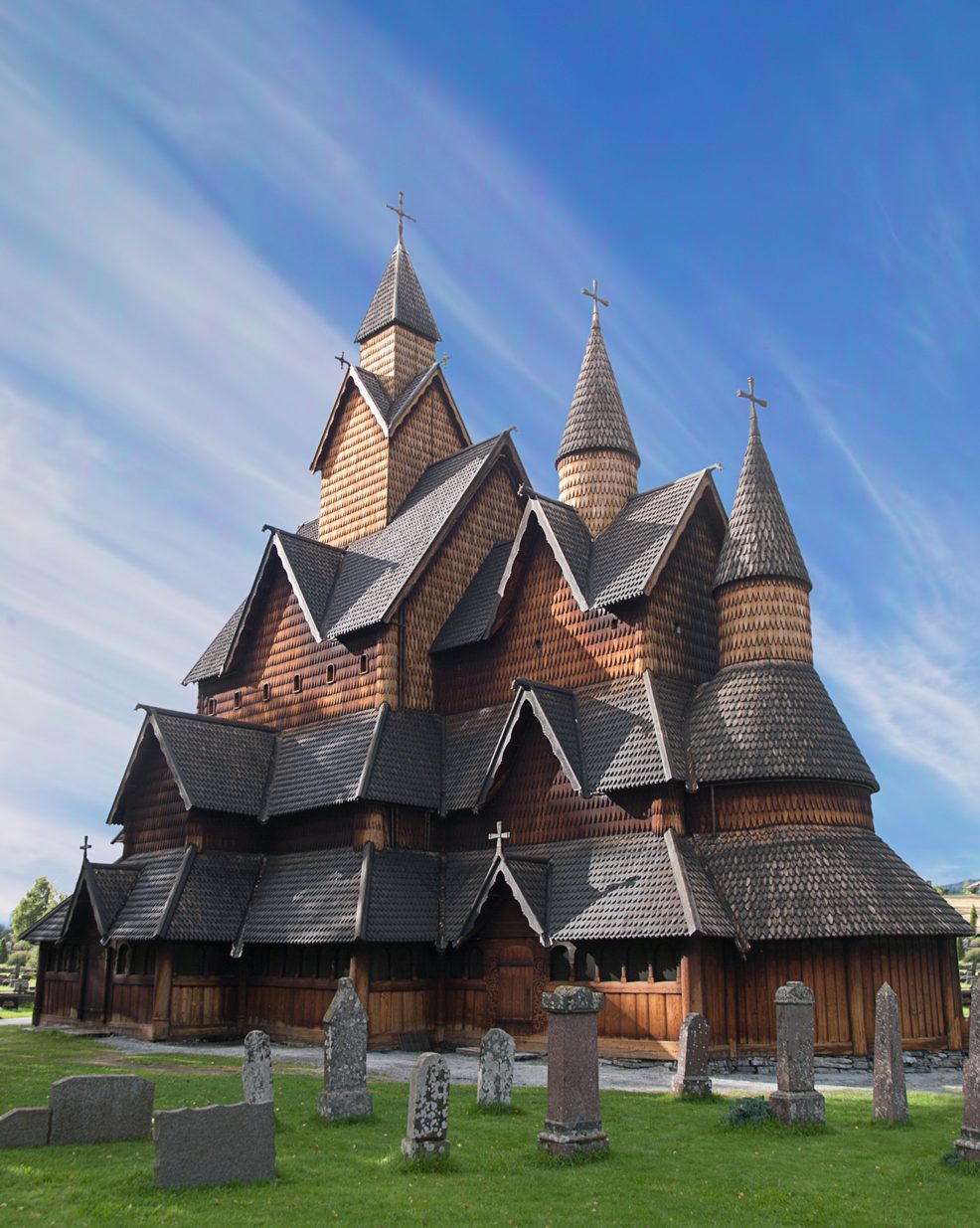
The largest stave church
Stave churches are built on a frame of upright posts, the staves. Medieval Norway had perhaps a thousand of them; 28 survive. Heddal is the biggest, about 20 metres long and roughly 25 metres high, with a covered gallery running round the outside and separate turrets over the nave, the chancel and the apse.
Nobody knows exactly when it was built. Some of its timber is much older and was reused, tree-ring dating has given only earliest-possible dates, and scholars place the church in the thirteenth century, probably around the middle. It was dedicated to the Virgin Mary on 25 October; an old tradition, based on a runic inscription, gives the year as 1242, but the reading is doubted. The church is first mentioned, indirectly, in a document of 1315.

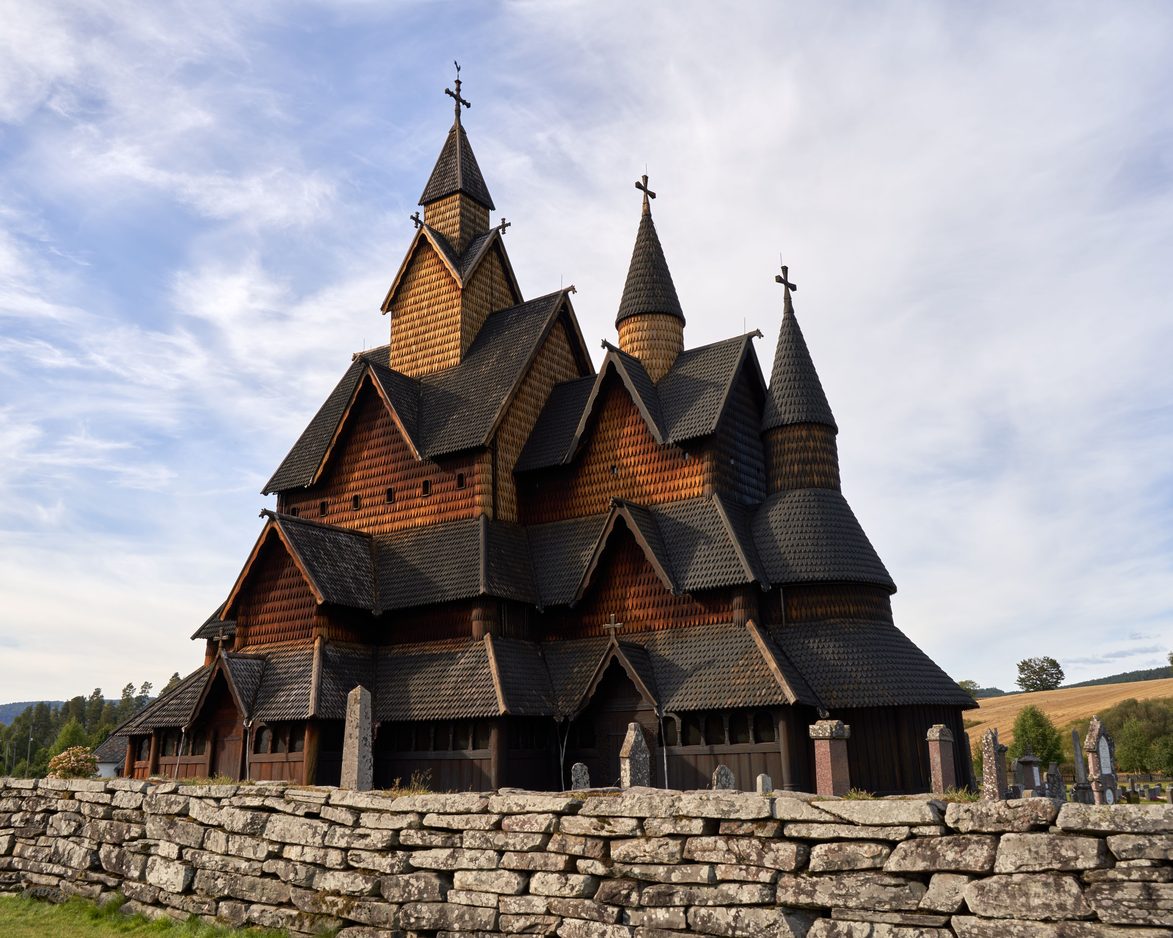
The visitor’s cheat sheet
| Where | Heddalsvegen 412, Heddal, about 5 km west of Notodden, Telemark, beside the E134 |
|---|---|
| Season | 18 May–13 September in 2026, most days 10am–4pm (to 5pm 1 July–20 August), with a few shorter or closed days; by arrangement at other times |
| Admission | NOK 110 adults, NOK 60 students, NOK 30 under-16s (2026), guided tour and barn exhibitions included |
| Tickets | From Café Olea in the vicarage barn, across from the church |
| Tours | Included, in Norwegian or English, roughly hourly in the main season |
| Services | A working parish church: it opens to visitors at 12.15pm on days with a morning service, and Saturday weddings can close it for a time |
| Photography | Personal photos are generally fine; no tripods or selfie sticks |
| Access | The barn, café and toilets are step-free; the stave church is not |
| How long | About an hour with the tour and the barn |
Hours and admission checked against the official site in November 2026. They change; the official site is always the last word.
Twice restored
After the Reformation the church decayed, and in the seventeenth century it was given pews, a flat ceiling and a new altarpiece. In 1849–51 the architect Johan Henrik Nebelong rebuilt it so thoroughly, stripping out the old interior, that the painter J. C. Dahl, who never saw it finished, called the result a “confectioner’s temple”. A second restoration in the 1950s, by Gudolf Blakstad and Herman Munthe-Kaas, undid Nebelong’s work and returned the church to something close to its medieval form. So Heddal is a medieval building much renewed: the plan, many of the great posts, the portals and the paintings are old, while a good deal of the timber is not.
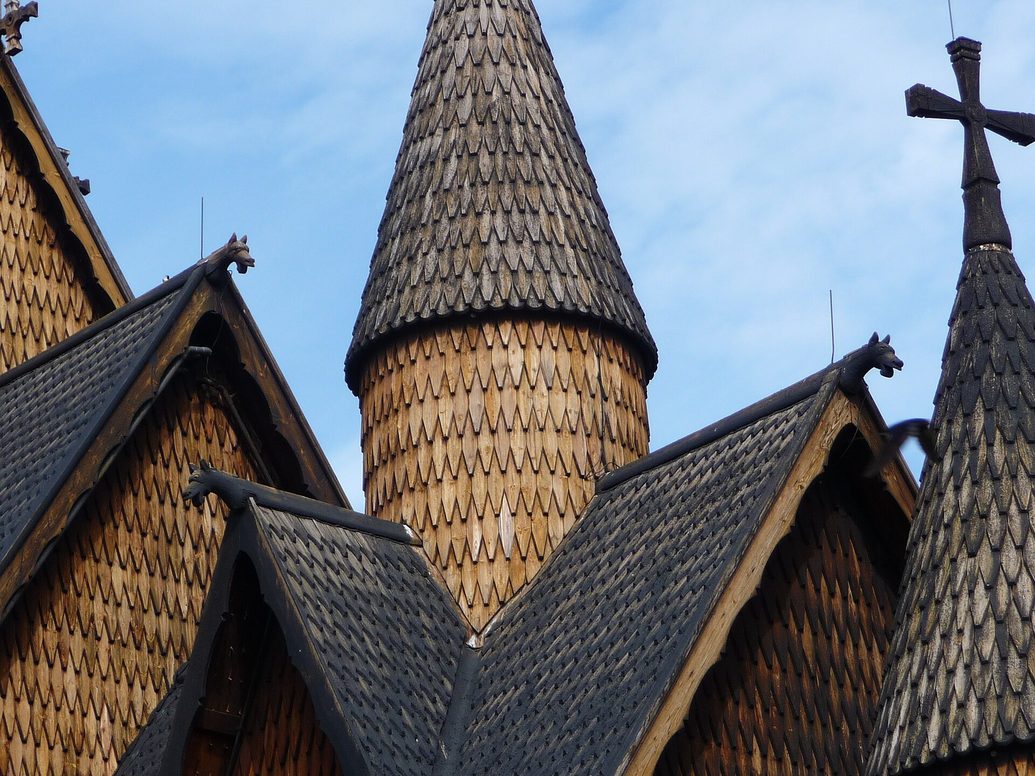
What to see
Outside: roofs, gallery and portals
Walk right round before you go in. The roofs and walls are covered in wooden shingles and tarred, which is what gives the church its dark colour and its smell on a warm day. Under the outer gallery are the church’s carved portals, at the west, south and north doors of the nave and the south door of the chancel, their posts covered in tendrils and beasts. Look on the gallery walls for runes and carved marks.

Inside
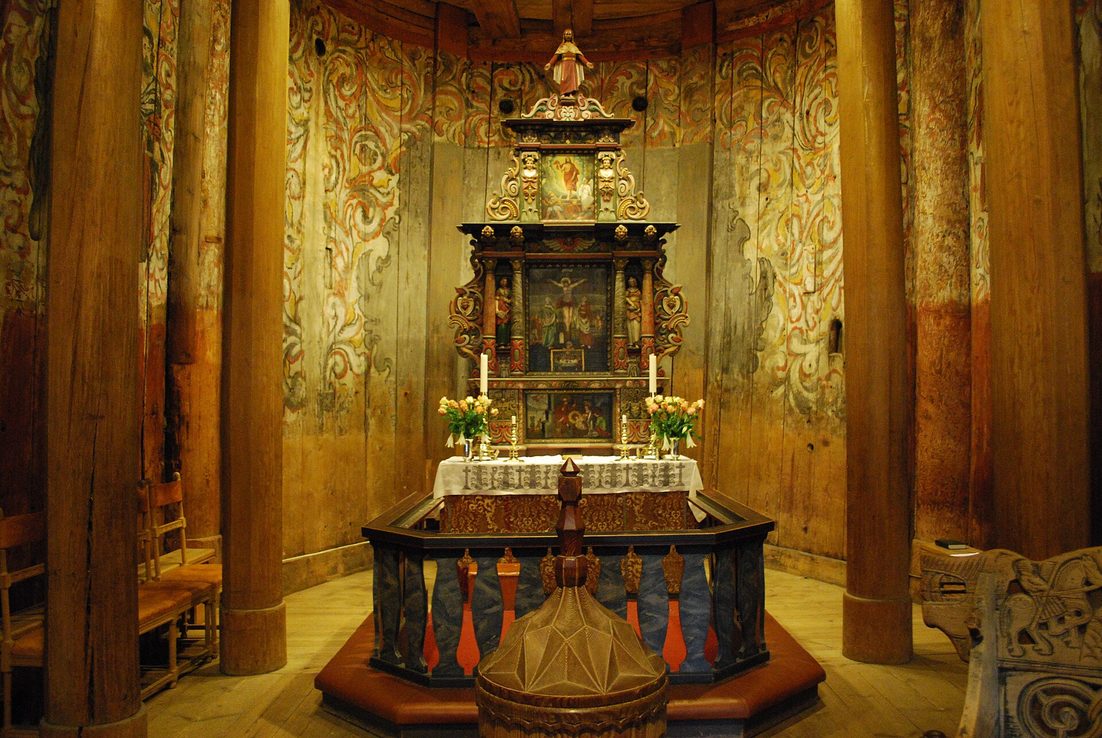
The interior is a hall of tall round posts, cross-braces and arches, dim and scented with tar. At the tops of the posts are carved masks, faces whose meaning nobody now knows. The walls were painted in the 1660s with scrolling foliage, over traces of medieval painting, and the altarpiece, of 1667, shows the Nativity, the Crucifixion and the Resurrection.


The bishop’s chair and the Sigurd carvings
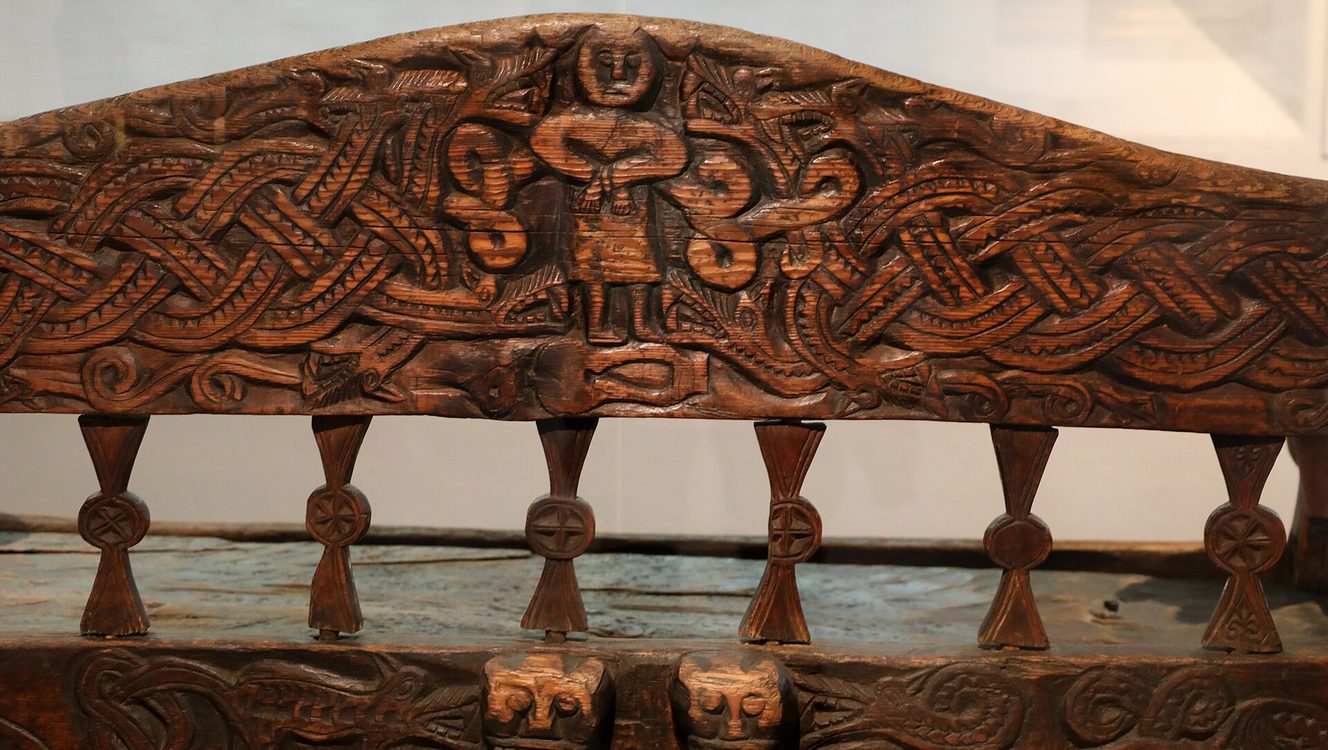
In the chancel stands an old carved chair, probably medieval, known as the bishop’s chair, with a scene on its back from the legend of Sigurd the dragon-slayer and the Volsungs: pagan heroes, carved for a church. A carved bench from Heddal with more of the same story, including Gunnar bound in the snake pit and playing a harp with his toes, was taken to Oslo in the nineteenth century. Copies of the chair and bench are shown in the barn.

The legend of Finn
The local story is that five farmers wanted a church, and a stranger offered to build it in three days. His price was the sun and the moon, or the heart’s blood of the farmer Raud Rygi, unless Raud could guess his name. The timber came on the first night and the spire rose on the second. Wandering in despair, Raud overheard a troll wife singing her child a lullaby that named the father: Finn. Next day he greeted the builder by name, and the troll fled to the mountains, where the sound of church bells could not reach him.
The barn and the farm museum
The old vicarage barn across from the church holds the ticket desk, Café Olea, a shop, the exhibitions and the Barn Church used for winter services. A short walk away is Heddal Bygdetun, an open-air museum of old Telemark farm buildings.
Getting there
Heddal is on the E134, about 5 km west of Notodden and about 120 km from Oslo: take the E18 to Drammen, then the E134 through Kongsberg, a drive of under two hours. There is a car park by the church. By public transport, express buses run from Oslo bus terminal to Notodden in about two hours; from there it is a short taxi ride, as local buses past the church are few.
Where to stay
Notodden, a few minutes away, has the nearest hotels. Tickets for the church are sold on site, with the tour included.
This link goes to Booking.com. This site earns nothing from it at present — it is here because it is the quickest way to check what is actually available.
Don’t miss
- The view from the churchyard Three turrets and tier on tier of shingled roofs.
- The carved portals Under the outer gallery, at the nave and chancel doors.
- The bishop’s chair An old chair, probably medieval, carved with the Sigurd legend.
- The painted walls Scrolling foliage of the 1660s.
Insider tips
Check the day before you set out. On days with a morning service the church opens to visitors only at 12.15pm, and on summer Saturdays weddings can close it for a while.
Out of season, come for the outside. The church is locked from mid-September to mid-May unless you have arranged a visit, but it stands in an open churchyard by the road and is well worth seeing from outside.
Common questions
When is Heddal stave church open?
In summer only. In 2026 the season ran from 18 May to 13 September, generally from 10am to 4pm, and to 5pm from 1 July to 20 August. Dates for 2027 had not been published when we checked. Out of season the church is opened only by arrangement.
How much does it cost?
In 2026 a ticket cost NOK 110 for adults, NOK 60 for students and NOK 30 for children under 16. It includes a short guided tour and the exhibitions in the barn opposite.
Is Heddal the biggest stave church?
Yes. It is the largest of the 28 stave churches that survive in Norway, about 20 metres long, not counting the outer gallery, and roughly 25 metres to the top of its tallest turret.
How old is it?
It was built in the thirteenth century; the exact date is not known. Much of what you see was renewed in the restorations of 1849–51 and the 1950s.
More churches nearby
- Borgund Stave Church — the best preserved of the stave churches, with its dragon-headed gables.
- Urnes Stave Church — the oldest, a World Heritage Site above the Lustrafjord.
- Nidaros Cathedral, Trondheim — Norway’s great medieval cathedral.