
Furness Abbey
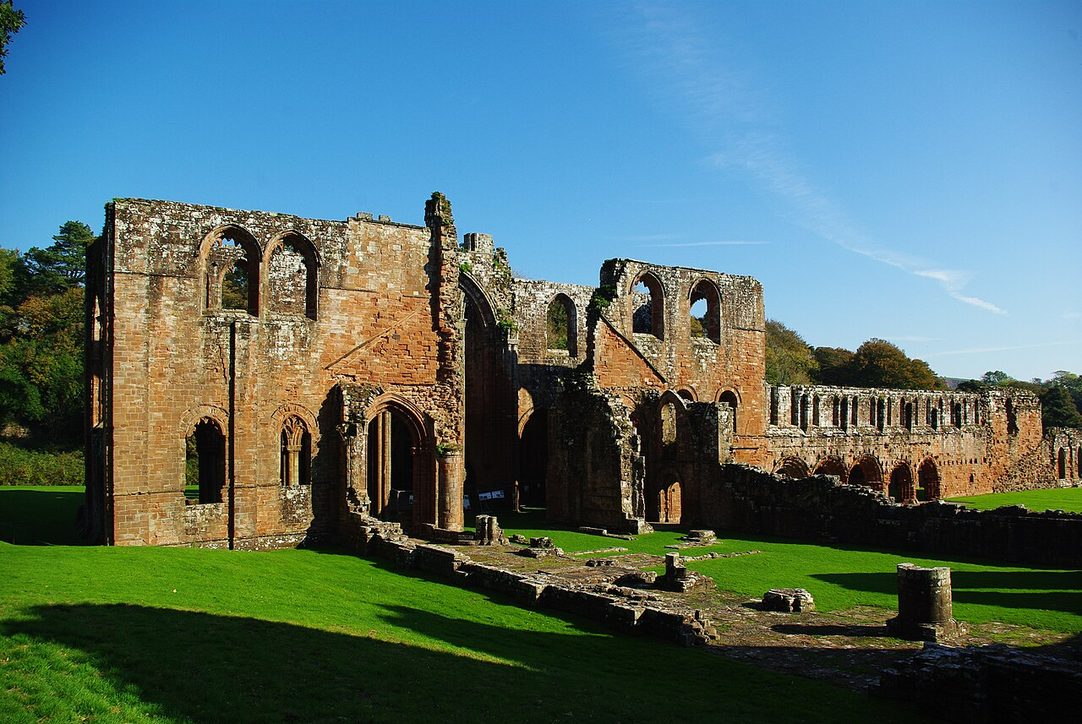
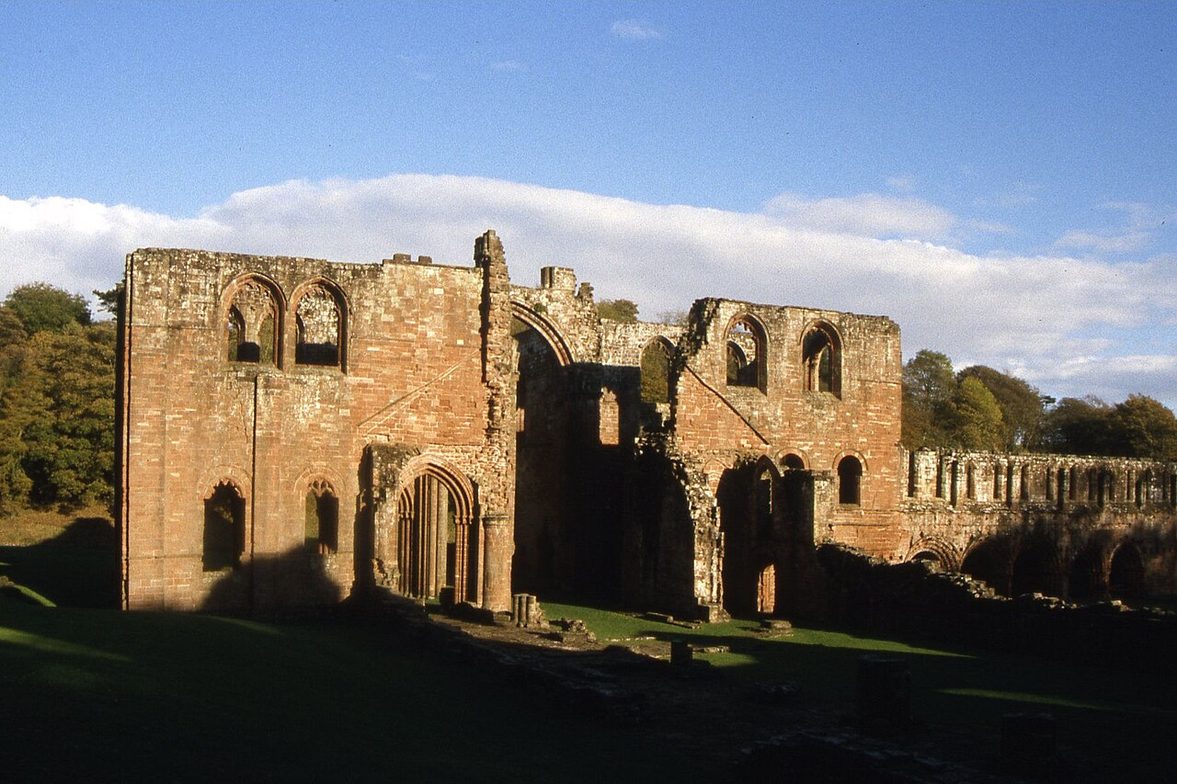
In a quiet wooded valley on the edge of Barrow-in-Furness stand the red sandstone ruins of what was once the second-richest Cistercian monastery in England, after Fountains. Its monks owned much of the Furness peninsula, mines on the Isle of Man and a castle on Piel Island. The transepts and the east end of the church still rise to their full height, and the colour of the stone, from rust to deep red, makes it one of the most beautiful ruins in the north.
From Savigny to the Cistercians
The abbey was founded in 1123 by Stephen, Count of Boulogne, the future King Stephen, for monks of the Order of Savigny, from Normandy. They settled first at Tulketh, near Preston, but moved here in 1127, to a valley known as the Vale of Nightshade. In 1147 the Savigniac houses joined the Cistercians, and over the next two centuries the church was enlarged and rebuilt.
Furness grew rich on sheep, iron and land, and its abbots were the most powerful men in a remote border country. The Scots sacked it in 1316; in 1322 the abbot chose to pay Robert the Bruce rather than see it attacked again, and the monks then fortified Piel Castle to guard their harbour. In 1537 Abbot Roger Pyle surrendered the abbey to Henry VIII, after some of his monks had been implicated in the Pilgrimage of Grace: it was the first of the wealthier monasteries to go.
The visitor's cheat sheet
| Where | Manor Road, Barrow-in-Furness, Cumbria, LA13 0PJ |
|---|---|
| Getting there | On the edge of Barrow-in-Furness; Roose, Dalton and Barrow stations each about 2 miles away; car park by the visitor centre |
| Opening hours | Daily 10am–5pm in the main season, last entry 4.30pm; weekends only with shorter hours in recent winters — check before visiting from November to March |
| Admission | English Heritage ticket, around £10 for adults, cheaper booked online; free for English Heritage members |
| How long | 1 to 1.5 hours, with the exhibition |
| Best time | A sunny late afternoon, when the sandstone glows |
| Dress code | Outdoor site; good shoes, uneven ground |
| Tours | Self-guided; exhibition of carved stones and finds; viewing platform on the night stair |
Hours and admission checked against the official site in October 2026. They change; the official site is always the last word.
Wordsworth’s ruin. The Romantic poets loved Furness. William Wordsworth came here as a schoolboy and wrote about the ruins in The Prelude, and J. M. W. Turner drew them. The railway, which arrived in the 1840s, ran right past the abbey and brought the tourists.
What to see, in the order you meet it
The church
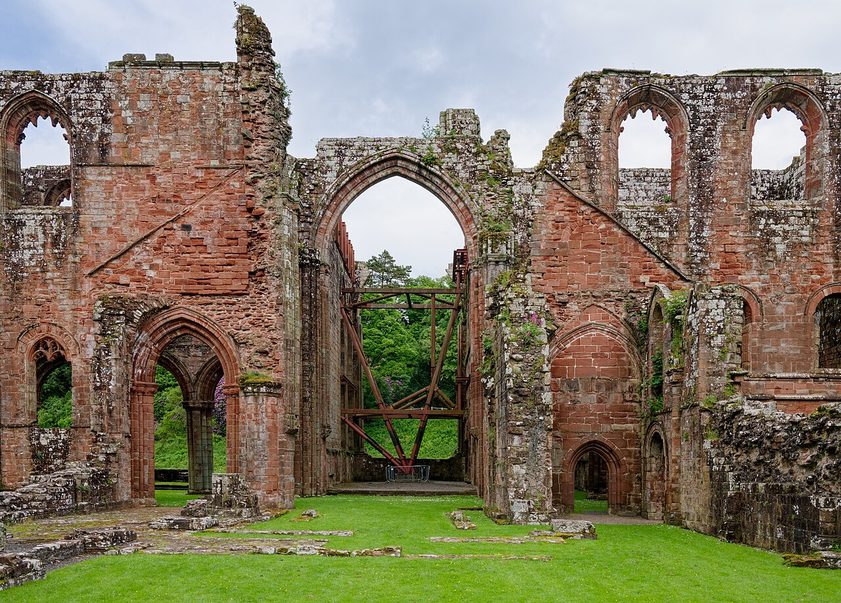
The nave is now little more than its foundations, but enough remains to show that its piers alternated between round and clustered shafts. At the west end stand the lower walls of a great tower, begun in the last years before the Dissolution and never finished. Walk east and the building rises around you: the transepts, built in the late twelfth century, are among the finest early Gothic work of the Cistercians, and still stand to the tops of their walls.
The presbytery and the sedilia
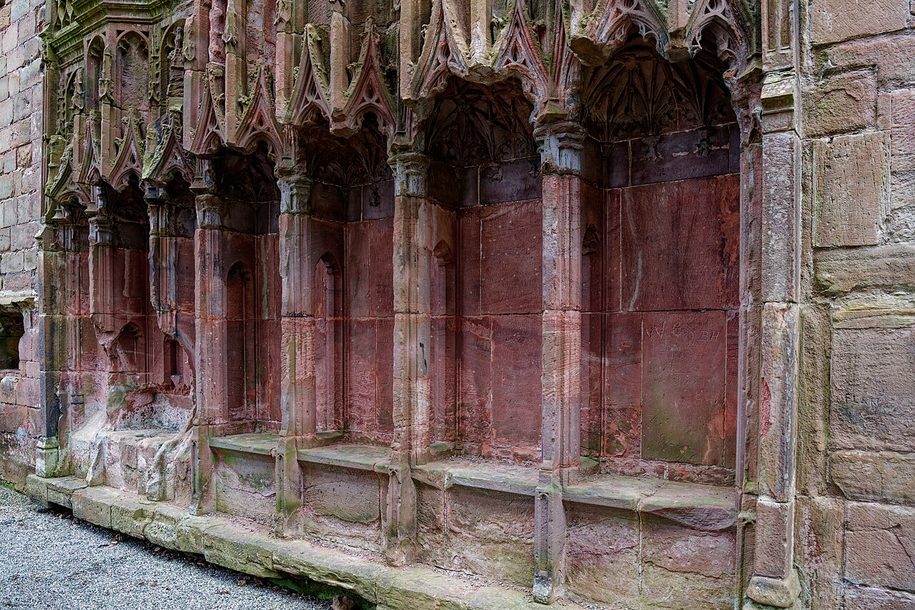
The east end was rebuilt in the fifteenth century, with a huge east window, now empty. In its south wall are the sedilia, the stone seats for the priests at the high altar, under a row of richly carved canopies: the most elaborate carving that survives anywhere at Furness.
The east range and the chapter house
Along the east side of the cloister runs a row of five round-headed arches. They opened into book cupboards, the chapter house, where the monks met every day, a passage and the day room. The chapter house of the thirteenth century, with its tall paired lancets, is the best room in the abbey. The monks’ dormitory ran above, on the first floor.
The infirmary and its chapel
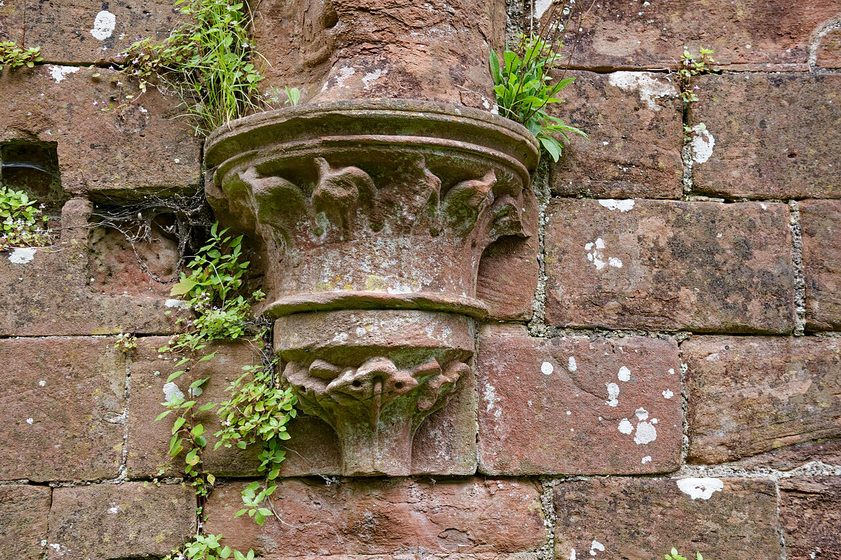
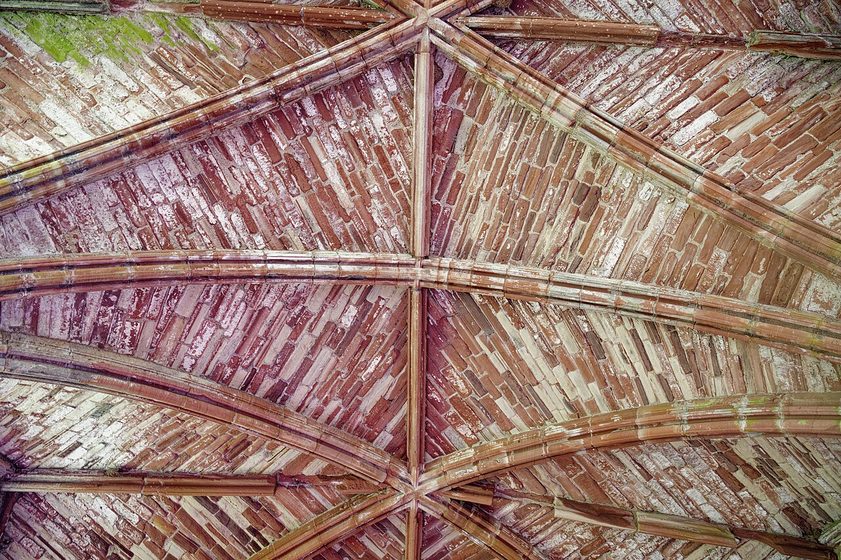
South of the main buildings are the remains of the great infirmary, built in the late thirteenth century for sick and elderly monks. Its chapel still has its stone vault. In the exhibition nearby are carved stones from the abbey and the effigies of knights, together with the crozier and ring found in an abbot’s grave during conservation work.
The night stair
In the south transept is the doorway of the night stair, down which the monks came from their dormitory for the services in the small hours. A new stair and viewing platform have been built here, giving you a view over the ruins from the height of the monks’ doorway.
Visiting
An English Heritage site
Furness is run by English Heritage. Tickets cost around £10 for an adult, less if you book online at least a day ahead, and members go free. In winter the abbey has recently opened at weekends only, so check the hours before you go.
The hotel link goes to Booking.com. This site earns nothing from it at present — it is here because it is the quickest way to check what is actually available.
Don't miss
- The transepts Late Norman and early Gothic work, still full height.
- The sedilia The finest carving left at Furness.
- The chapter house Tall paired lancets off the cloister.
- The night stair A monk’s-eye view of the ruins.
- The exhibition Knights’ effigies and an abbot’s crozier.
- The evening light When the red sandstone glows.
Insider tips
Make a day of the peninsula. Combine Furness with Cartmel Priory, half an hour away across the estuary, which was founded at almost the same time and survived the Dissolution as a parish church. In summer a small ferry crosses from Roa Island to Piel Island, where the ruined castle the monks built still guards the harbour.
Common questions
How much does it cost to visit Furness Abbey?
Furness is run by English Heritage, which sets prices by date: expect around £10 for an adult, less if you book online in advance, with reduced prices for children and families. English Heritage members go free. Check the English Heritage website for today’s price.
When is Furness Abbey open?
In the main season it is open daily from 10am to 5pm, with last entry at 4.30pm. In winter it has in recent years opened at weekends only, with shorter hours, so check the English Heritage website before you travel between November and March.
Why is the abbey red?
It is built of the local red sandstone, quarried in the valley where the abbey stands. The colour changes with the light, from a dull brown on a grey day to a deep glowing red in the evening sun.
Is Furness Abbey in the Lake District?
Not quite. It is on the Furness peninsula, just outside Barrow-in-Furness, on the southern edge of Cumbria. The Lake District National Park begins a few miles to the north, and Coniston and Windermere are within an hour’s drive.
How do you get to Furness Abbey?
The abbey is on Manor Road, on the north-east edge of Barrow-in-Furness, about a mile and a half from the town centre. The nearest stations, Roose, Dalton and Barrow-in-Furness, are each about two miles away, and buses stop within a mile. There is a car park by the visitor centre.
Where to stay and eat nearby
Barrow-in-Furness and the old market town of Ulverston have hotels, pubs and cafés, and the southern Lake District is close by.
More English churches
- Cartmel Priory — the other great church of the peninsula
- Fountains Abbey — the only Cistercian house in England richer than Furness
- Lanercost Priory — another red sandstone ruin, by Hadrian’s Wall
See all the cathedrals and churches worth visiting in England →