
Jervaulx Abbey
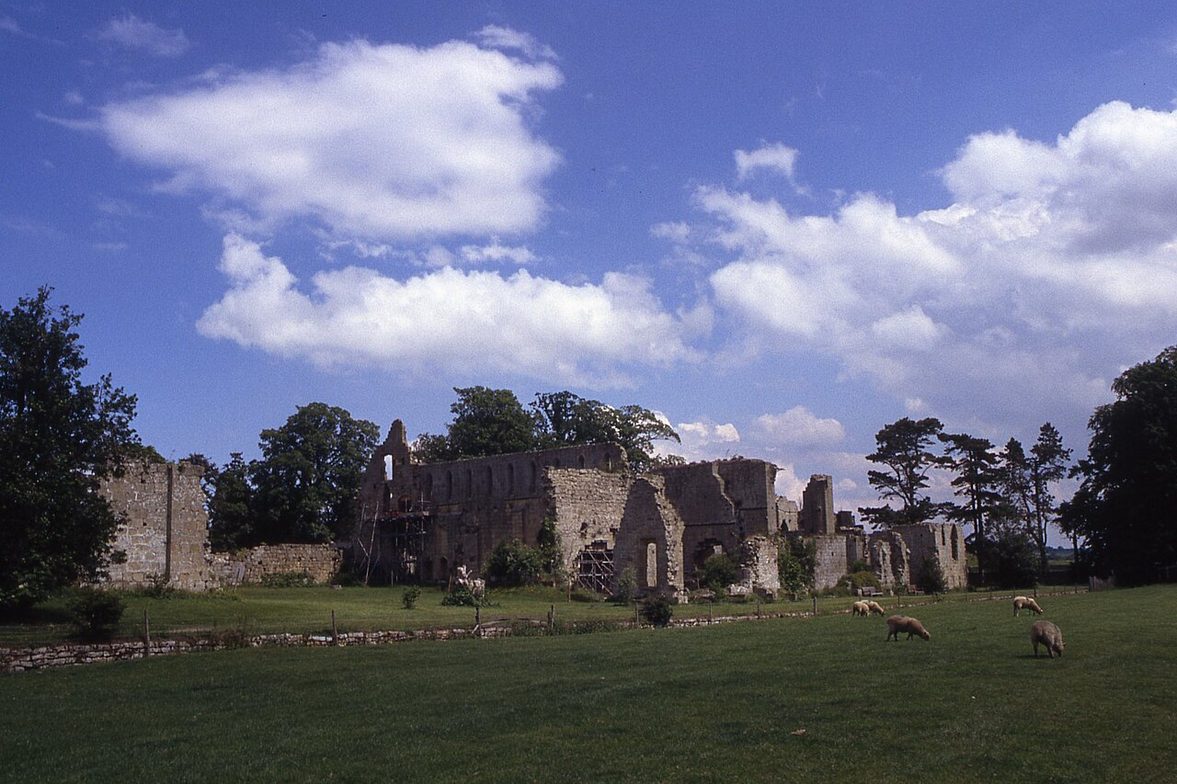
Most of the great abbey ruins of Yorkshire are kept with clipped lawns and neat signs. Jervaulx is different. It belongs to a family, who let wild flowers and climbing plants grow over the walls, so that the ruins of this Cistercian monastery in Wensleydale feel like a garden. It is quieter and more romantic than Fountains or Rievaulx, and you pay what you think fair into an honesty box.
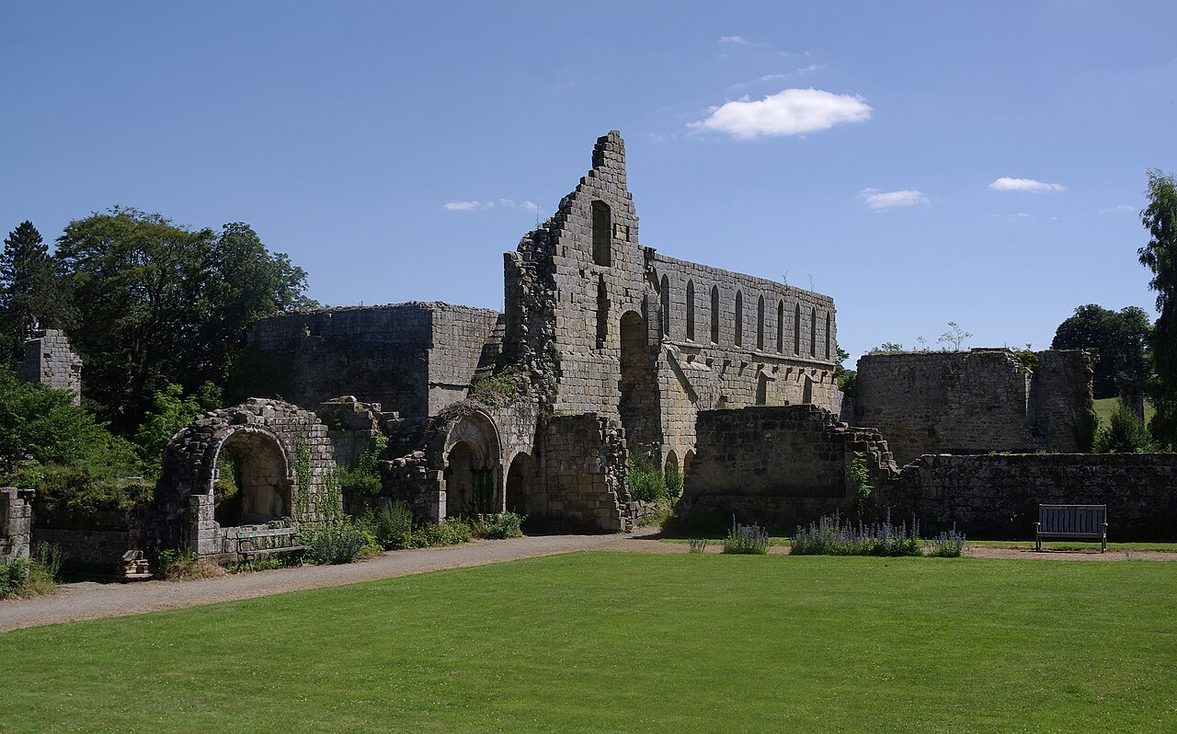
The abbey of the Ure valley
Its name is Norman French for the valley of the Ure, the dale now known as Wensleydale. The monastery was founded in 1145 at Fors, near Aysgarth, by monks from Savigny in Normandy, and taken under the wing of Byland Abbey. The site was poor, and in 1156 the monks moved here, to better land given by Conan, Earl of Richmond. Like other Cistercian houses, it was dedicated to St Mary.
At its height the abbey owned half the dale. Its monks bred horses, a tradition that lives on in the racing stables of nearby Middleham, and are said to have made the first Wensleydale cheese. The last abbot, Adam Sedbergh, joined the Pilgrimage of Grace, the northern rising against Henry VIII, and was hanged at Tyburn in 1537. The abbey was taken by the Crown, and its church was blown up with gunpowder.
The visitor's cheat sheet
| Where | Jervaulx, near Ripon, North Yorkshire, HG4 4PH |
|---|---|
| Getting there | On the A6108 between Masham and Leyburn; satnav to “Park House, HG4 4PH”; car park opposite; no toilets on site |
| Opening hours | Dawn until dusk, no entry after dark; occasional closures for weddings and events |
| Admission | Honesty box at the entrance: no fixed charge, pay what you think fair; online donations accepted |
| How long | An hour |
| Best time | Late spring and early summer, for the wild flowers |
| Dress code | Outdoor site; good shoes; dogs on leads |
| Tours | Self-guided; gravel paths and grass, with some steps |
Hours and admission checked against the official site in October 2026. They change; the official site is always the last word.
A family ruin. Jervaulx was bought in 1971 by Major and Mrs Burdon, and their son runs it today. It is one of the largest Cistercian abbeys in Britain still in private hands, and it depends entirely on visitors’ donations.
What to see, in the order you meet it
The church
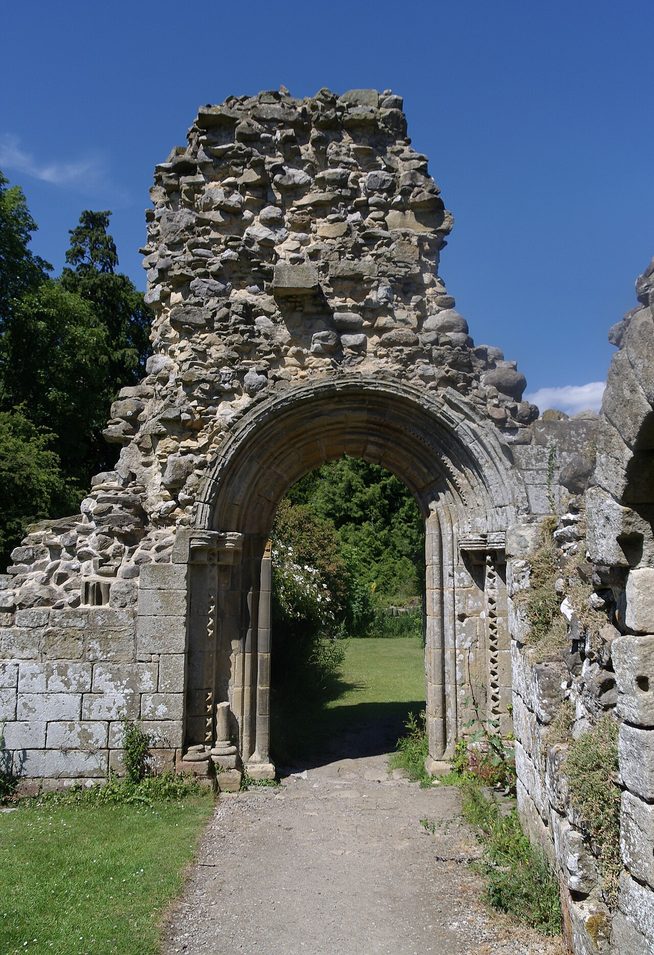
Little is left of the church, which was 270 feet long. Its best survival is the elaborate doorway at the south-west corner, through which the lay brothers came in to pray. In the transepts you can still find an altar with its consecration crosses.
The dormitory
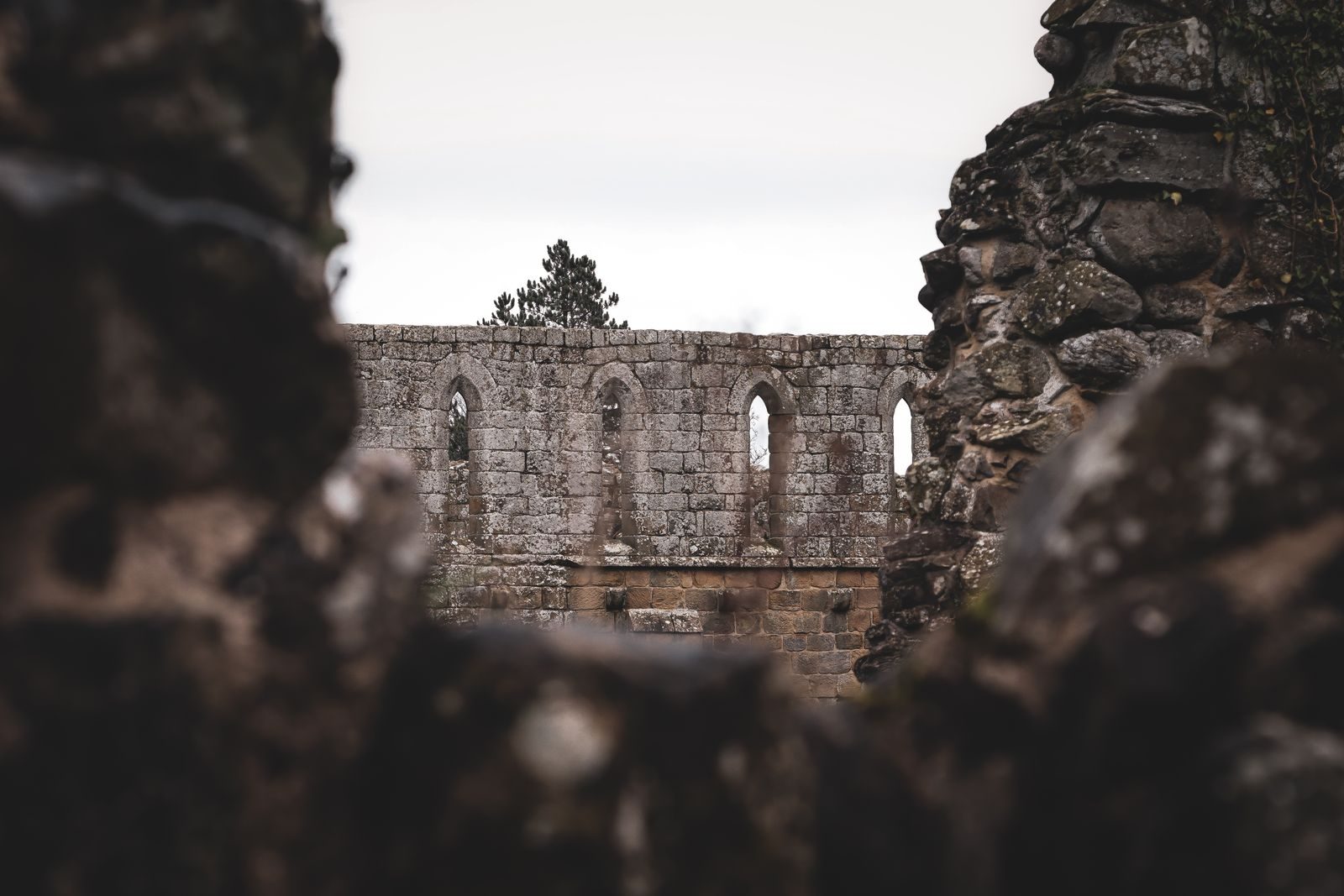
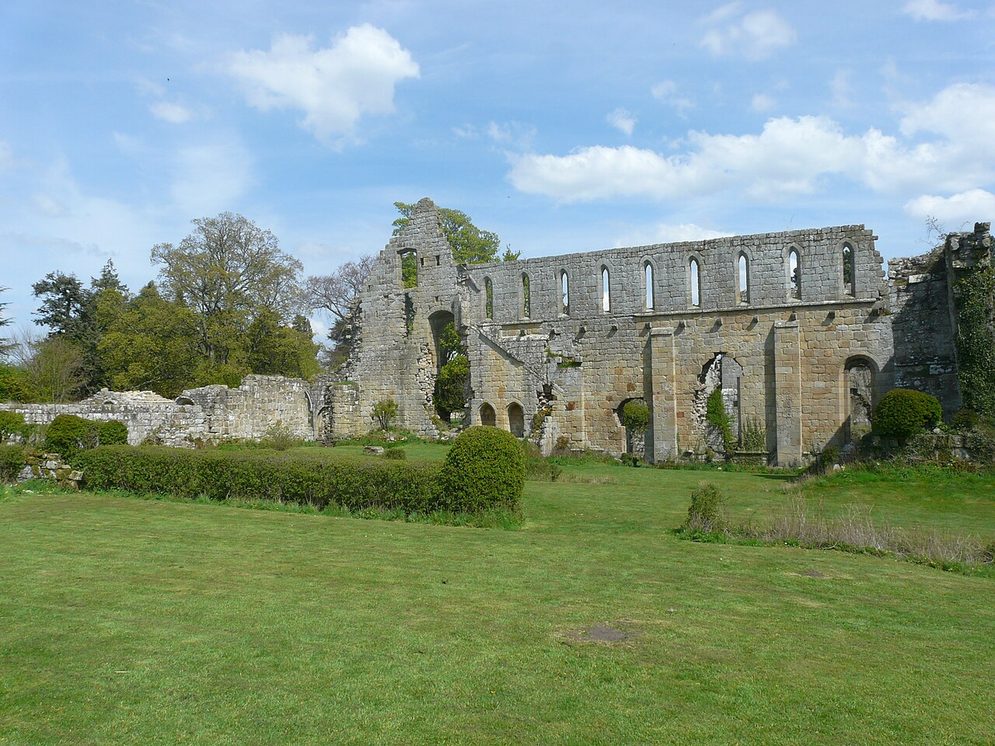
The tallest wall at Jervaulx belongs to the monks’ dormitory, which ran along the first floor of the east range. Its west wall still stands, with a long row of lancet windows, and below it is the vaulted undercroft where the monks may have worked.
The chapter house
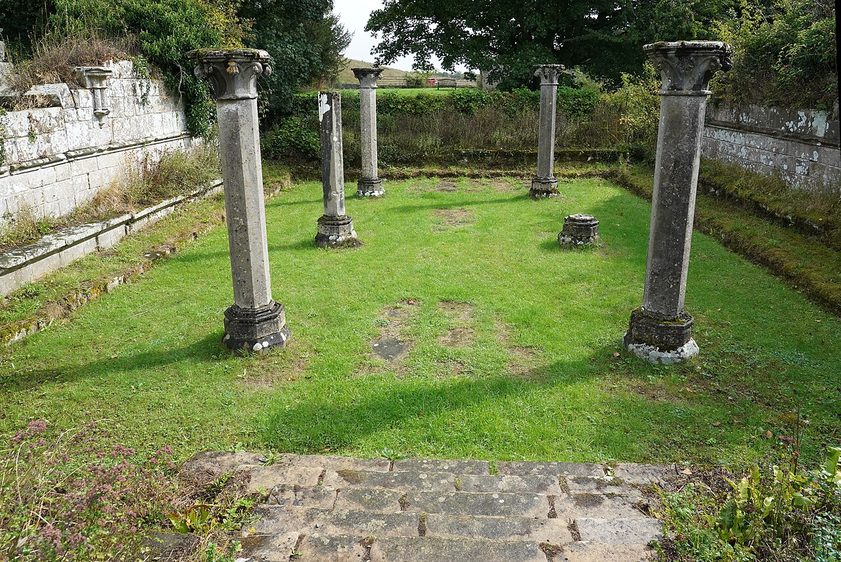
Next to the church is the chapter house, where the monks met every morning. Its vault has gone, but a group of the slender columns that held it up still stands on the grass.
The infirmary, the kitchen and the abbot’s lodging
To the south-east are the infirmary, later turned into the abbot’s house, and a great kitchen with three huge fireplaces, built in the later Middle Ages when the monks were allowed to eat meat. To the west was the long range of the lay brothers, among the earliest parts of the abbey.
The wild flowers
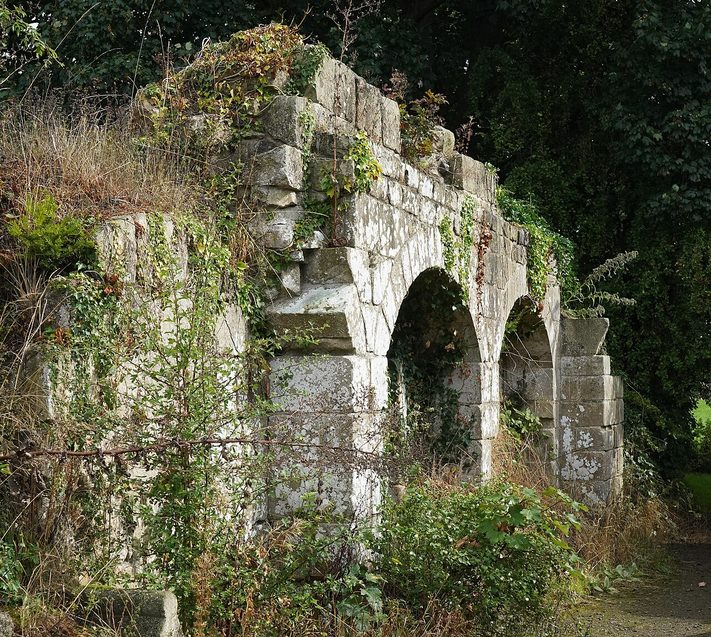
Above all, look at the plants. Wallflowers, valerian and many other species grow on the old stones, and the family manage the site to keep them. In late spring and early summer the ruins are at their most colourful.
Visiting
An honesty box, not a ticket
There is no fixed charge: leave a donation in the honesty box at the entrance, or give online. The abbey is open from dawn until dusk. There are no toilets or café on site, so plan a stop in Masham, Middleham or Leyburn.
The hotel link goes to Booking.com. This site earns nothing from it at present — it is here because it is the quickest way to check what is actually available.
Don't miss
- The dormitory wall The tallest part of the ruins, with its lancets.
- The south-west doorway The lay brothers’ way into the church.
- The chapter house columns Slender shafts standing on the lawn.
- The kitchen Three great fireplaces for cooking meat.
- The altar With its consecration crosses, in the transept.
- The wild flowers Best in late spring and early summer.
Insider tips
Make a Wensleydale day of it. Combine Jervaulx with Middleham, with its castle and racing stables, and Masham, with its two breweries. Bolton Castle, where Mary, Queen of Scots, was held, is farther up the dale, and Fountains Abbey is half an hour away for a comparison of two very different Cistercian ruins.
Common questions
Does it cost anything to visit Jervaulx Abbey?
There is no fixed charge. Jervaulx is privately owned and depends on donations, which you leave in the honesty box at the entrance or give online. Please give what you think the visit is worth.
When is Jervaulx Abbey open?
From dawn until dusk, with no entry after dark. It closes now and then for weddings and private events, which are listed on the abbey’s website.
Who owns Jervaulx Abbey?
The Burdon family, who bought the abbey and its estate in 1971. It is one of the largest Cistercian abbeys in Britain in private hands, and the family look after it themselves, without state funding.
Is it true that Wensleydale cheese began at Jervaulx?
Yes, according to tradition. The monks of Jervaulx are said to have made the first Wensleydale cheese, originally from ewes’ milk, and the recipe passed to the farmers of the dale after the Dissolution.
How do you get to Jervaulx Abbey?
It is on the A6108 between Masham and Leyburn, in Wensleydale. Use the postcode HG4 4PH and look for Park House rather than searching for the abbey itself. The car park is across the road. There is no railway station nearby, and there are no toilets on site.
Where to stay and eat nearby
Masham, Middleham and Leyburn have pubs, tea rooms and inns, and Ripon is about fourteen miles away.
More English churches
- Fountains Abbey — the greatest Cistercian ruin in England
- Byland Abbey — the mother house that took Jervaulx under its wing
- Ripon Cathedral — with its Saxon crypt, fourteen miles away
See all the cathedrals and churches worth visiting in England →