
Mission San Xavier del Bac, Tucson
Nine miles south of Tucson, on the land of the Tohono O’odham Nation, a white church rises out of the Sonoran Desert. San Xavier del Bac was built between 1783 and 1797 by Franciscan missionaries and O’odham workers, and its painted and gilded interior is one of the finest of Spanish colonial America. It is still the parish church of the community of Wa:k. Entry is free.

Kino and the Franciscans
The Jesuit Eusebio Francisco Kino founded the mission in 1692, at the O’odham village of Bac, and in 1700 laid the foundations of a large church that seems never to have risen far. A smaller adobe church served from the 1760s. After the Jesuits were expelled from the Spanish empire in 1767, Franciscans took over, and in 1783 Father Juan Bautista Velderrain began the present church, to a design attributed to the architect Ignacio Gaona, with 7,000 pesos borrowed from a Sonoran businessman. Velderrain died in 1790; Father Juan Bautista Llorens finished the church in 1797.
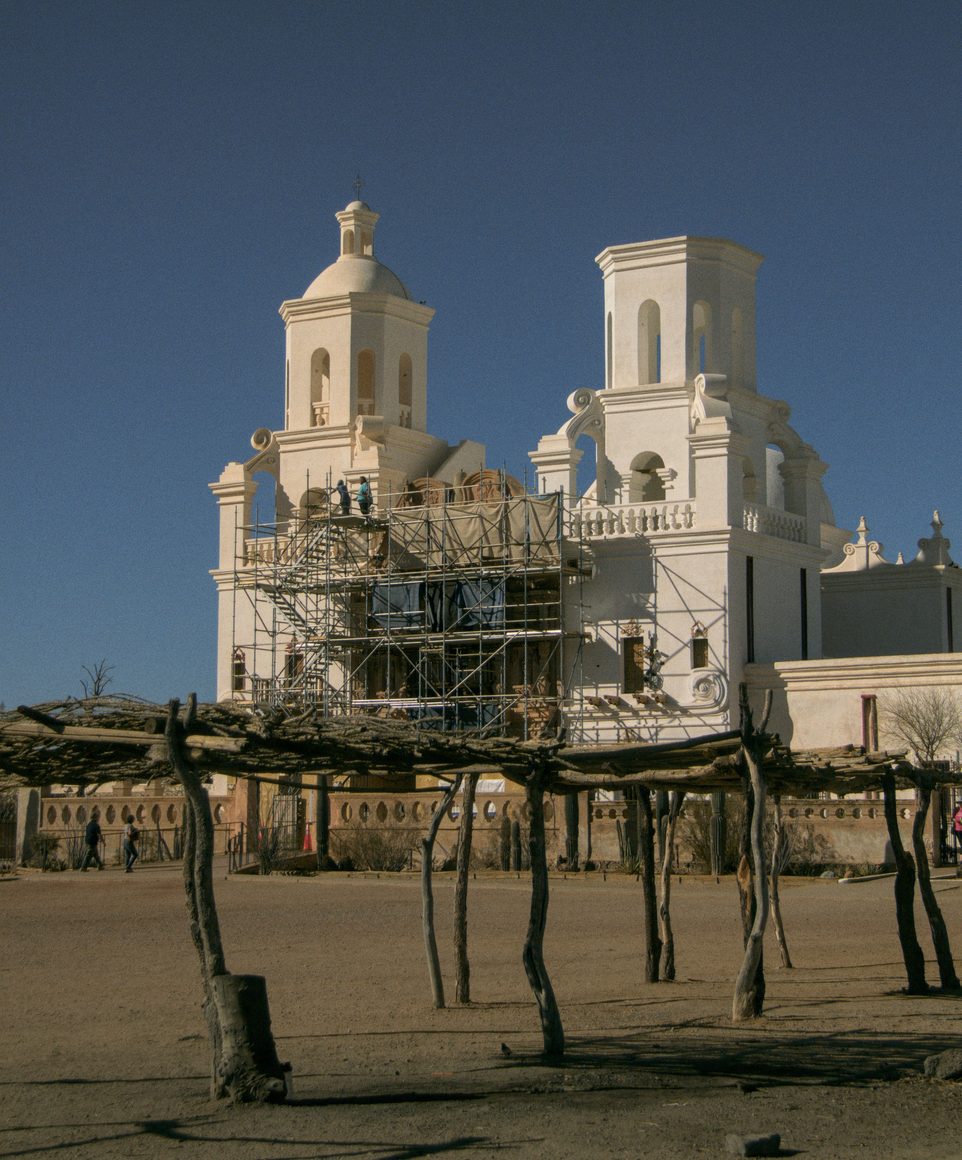
It is built of fired brick and lime mortar, with a dome over the crossing and twin towers at the front. The east tower was never completed, probably because the money ran out. After Mexican independence in 1821 the Spanish Franciscans left, and there was no resident friar after 1837; the Franciscans returned in 1913. San Xavier became one of the first National Historic Landmarks in 1960.


The visitor’s cheat sheet
| Where | 1950 W San Xavier Road, Tucson, Arizona, on the Tohono O’odham Nation, 9 miles south of downtown (I-19, exit 92) |
|---|---|
| Opening hours | Church, museum and mortuary chapel daily 9am–4pm; gift shop 8am–5pm |
| Admission | Free; donations welcome |
| Tours | Free docent tours, about 30 minutes, Monday–Saturday (times vary; Saturdays not guaranteed), outside only |
| Mass | Mon–Fri 6.30am; Sat 5pm; Sun 10am and noon |
| Climate | No air conditioning or heating in the church; little shade outside |
| Getting there | Car or taxi from Tucson, about 20 minutes; free parking |
| How long | An hour, more with a tour and Grotto Hill |
Hours and admission checked against the official site in November 2026. They change; the official site is always the last word.
Saving the White Dove
The desert is hard on lime plaster, and repairs in the twentieth century made things worse: cement applied in the 1950s trapped water in the walls. The Patronato San Xavier, a non-profit founded in 1978, has raised more than $18 million to conserve the church, using only traditional materials since 1989. A team led by Paul Schwartzbaum conserved the interior paintings and statues between 1992 and 1997, and members of the Wa:k community have carried the work on since; the east tower was conserved between 2014 and 2022.
The current project is the carved centre of the façade, where the 1950s cement is being replaced with lime plaster. The work is done only in the cooler months, so from autumn to spring expect scaffolding over the front; it is expected to continue through at least the winter of 2026–27, possibly into 2028.
What to see
The façade
Between the white towers, the entrance is framed by a richly carved panel in brick and plaster, with scrolls, niches and saints. Look in the lower corners for a carved cat and mouse: local lore says that when the cat catches the mouse, the world will end.
The interior
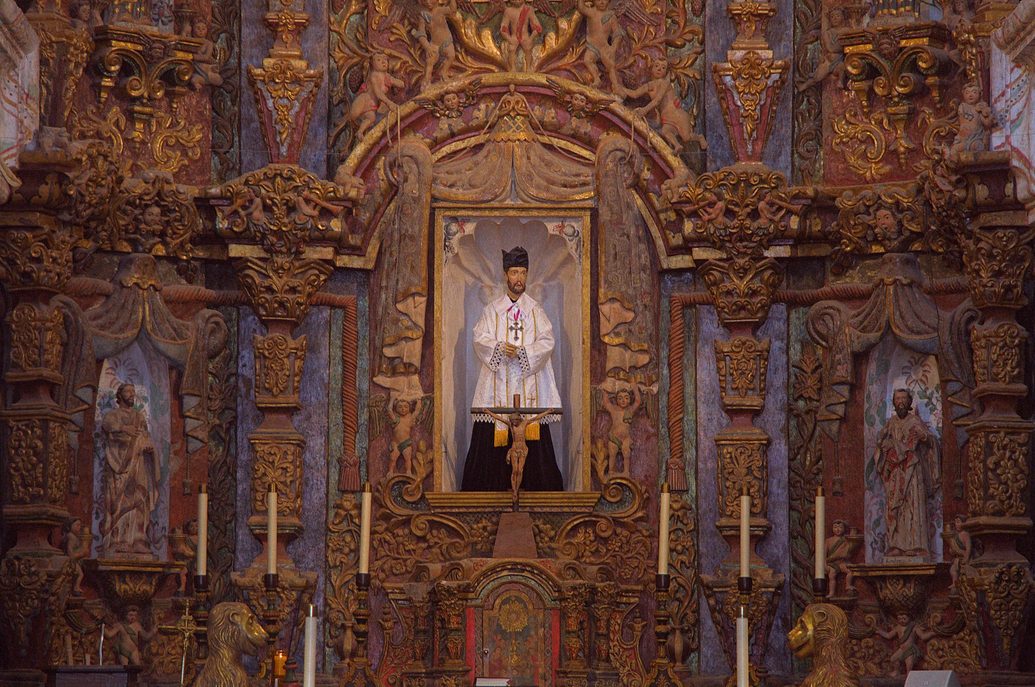
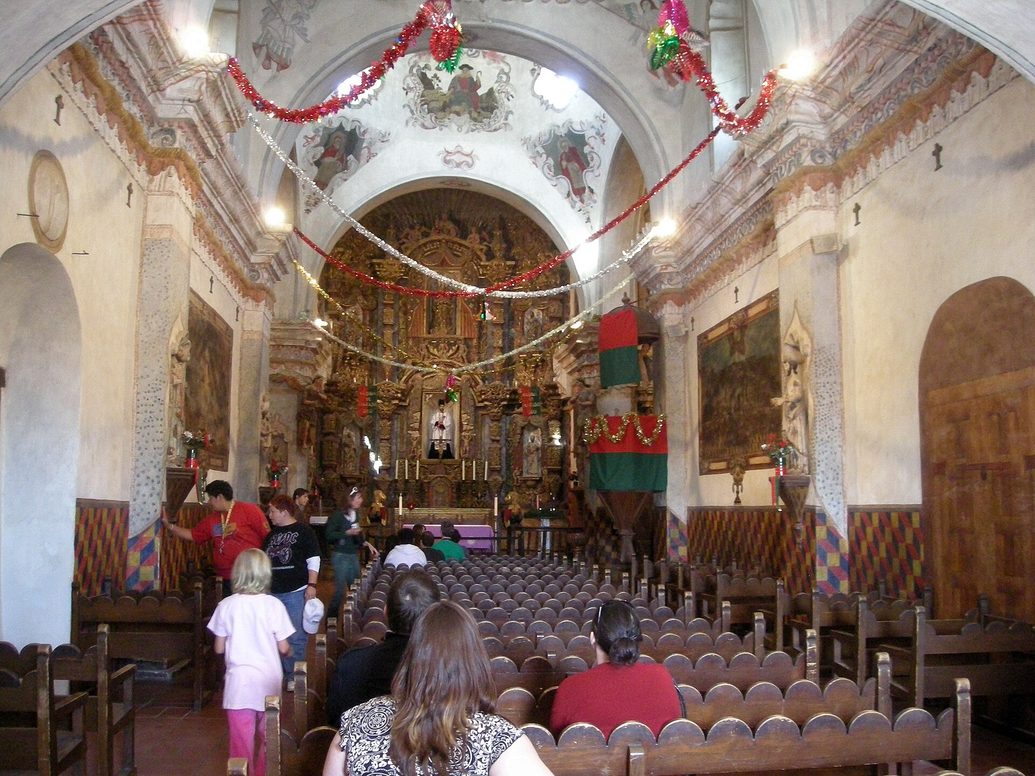
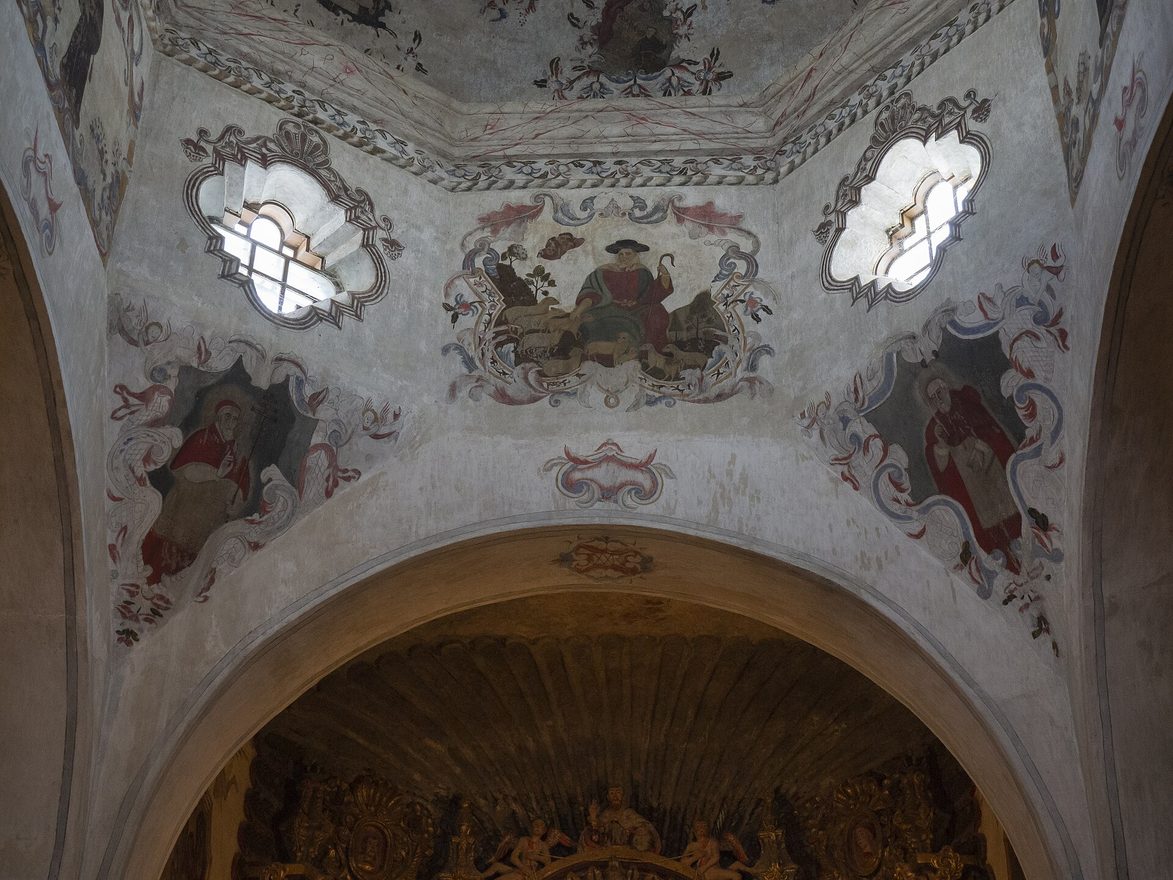
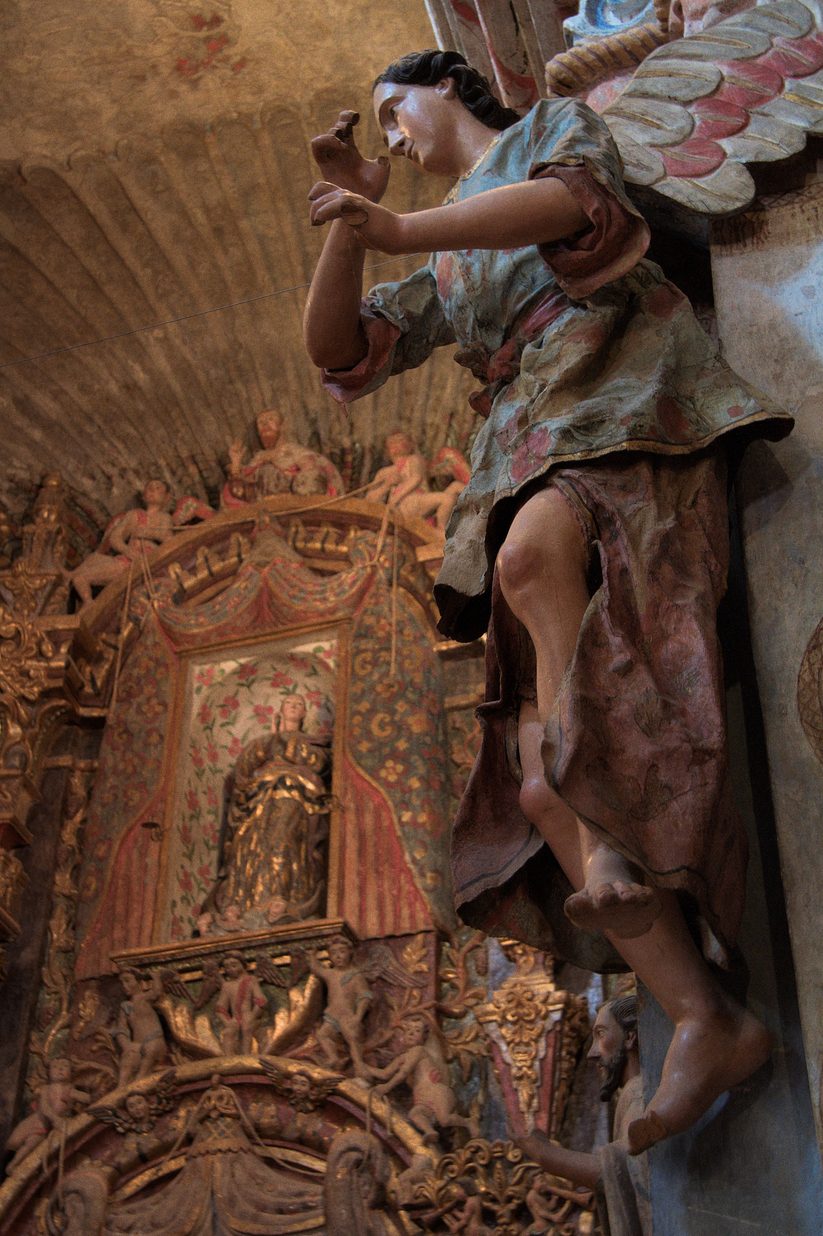
Inside, almost every surface is painted: murals of the life of Christ and the Virgin, saints, angels and painted drapery, by at least three different artists, with carved and gilded statues that were probably made in Querétaro and brought north by mule. The main altarpiece, behind the altar, has St Francis Xavier at its centre. In the west transept lies a reclining figure of St Francis Xavier in a glass case, the object of great local devotion; it began life as a crucified Christ, brought from Tumacácori, and was re-identified as St Francis Xavier around the First World War.
The museum and Grotto Hill
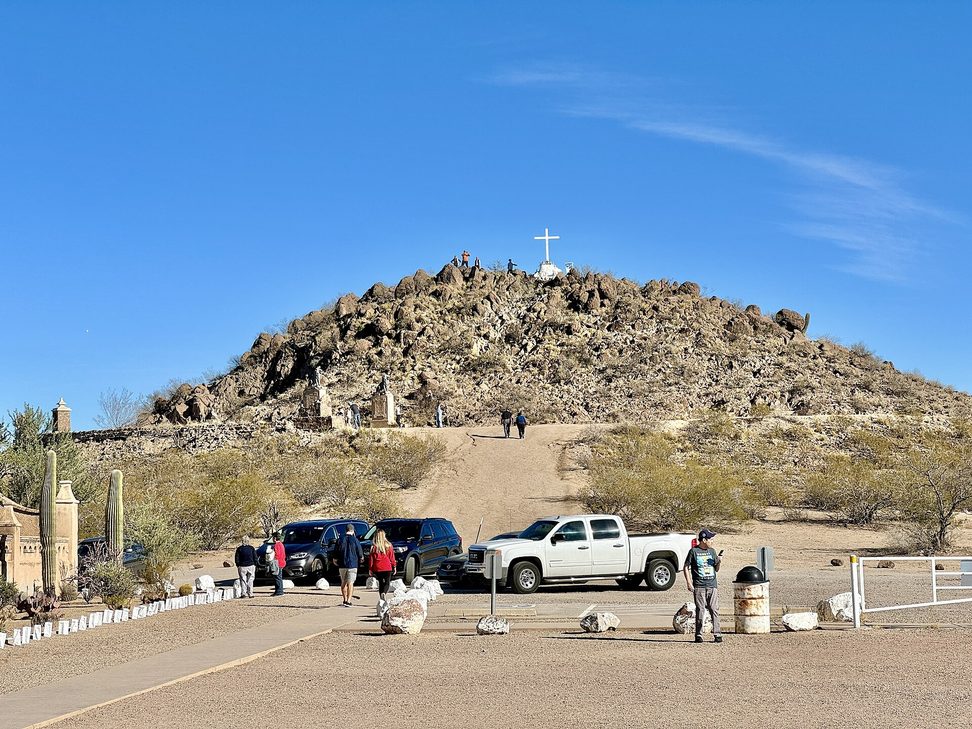
A small museum tells the story of the mission and its people. On the low hill east of the church, a quarter-mile path climbs past a shrine set in a rocky grotto, put up by the Bishop of Tucson in 1908, with a view over the church and the desert.
Visiting respectfully
San Xavier is an active parish church on tribal land, and follows the Nation’s rules. Speak quietly, don’t eat or drink in the church, and keep well clear of Masses, weddings and funerals, which are for the community. Stalls on the plaza in front of the church sell fry bread on most days from late morning. The church has no air conditioning or heating: in summer come early, bring water and sun protection; in winter, a warm layer.
Feasts
The feast of St Francis Xavier on 3 December begins the evening before, when the statue from the altarpiece is carried in procession round the plaza, with fireworks. In early October the community keeps the feast of St Francis, linked to the pilgrimage to Magdalena de Kino in Sonora, with processions and dances. The Wa:k Pow Wow is held in the spring, usually in March.
Getting there
The mission is about 9 miles (15 km) south of downtown Tucson, just off Interstate 19 at exit 92; follow the signs. Parking is free. There is no convenient public transport, so drive or take a taxi or ride-share, about 20 minutes from downtown. Tucson International Airport is about 15 minutes’ drive away.
Where to stay
Most visitors stay in Tucson and come for a morning, which is also the coolest time to visit.
This link goes to Booking.com. This site earns nothing from it at present — it is here because it is the quickest way to check what is actually available.
Don’t miss
- The main altarpiece Gilded and painted, with St Francis Xavier at its heart.
- The cat and mouse In the lower corners of the façade.
- Grotto Hill The view back over the church.
- Fry bread on the plaza Most days, from late morning.
Insider tips
Come at opening time. The light on the white front is best in the morning, the coach tours arrive later, and in summer the afternoon heat is fierce.
Join a docent tour first. The free outdoor tour explains what you are about to see inside, and the volunteers know every detail of the conservation work.
Common questions
Is San Xavier del Bac free to visit?
Yes. There is no admission charge and parking is free; donations are welcome. The church, the museum and the mortuary chapel are open daily from 9am to 4pm.
Are there guided tours?
Volunteer docents from Patronato San Xavier give free tours of about 30 minutes from Monday to Saturday (Saturdays are not guaranteed); donations are welcome, and times vary by season. The tours stay outside: you visit the church on your own. They are cancelled when it is hotter than 95°F.
Why is one tower unfinished?
Nobody knows for certain. The likeliest explanation is that the money ran out when the church was being finished in the 1790s. Local legends of a builder falling from the tower have no evidence behind them.
Can you take photos inside?
There is no published rule; photography is generally accepted outside Mass. Be discreet, keep voices low and don’t photograph services or people at prayer. Drones are covered by the mission’s drone policy: don’t fly without permission.
More churches nearby
The nearest other guides are in California and Mexico:
- Mission San Juan Capistrano — the Franciscan mission of Alta California, with its ruined Great Stone Church.
- Basilica of Guadalupe, Mexico City — the great shrine of New Spain.