
Trinity Church, Wall Street
At the top of Wall Street, where the canyon of banks meets Broadway, stands a brownstone Gothic church with a spire that was once the tallest thing in New York. Trinity Church is one of the oldest parishes in the city, chartered in 1697, and its churchyard holds Alexander Hamilton, Robert Fulton and three centuries of New Yorkers. It is free, open every day and a short walk from the 9/11 Memorial.
Three churches on one site
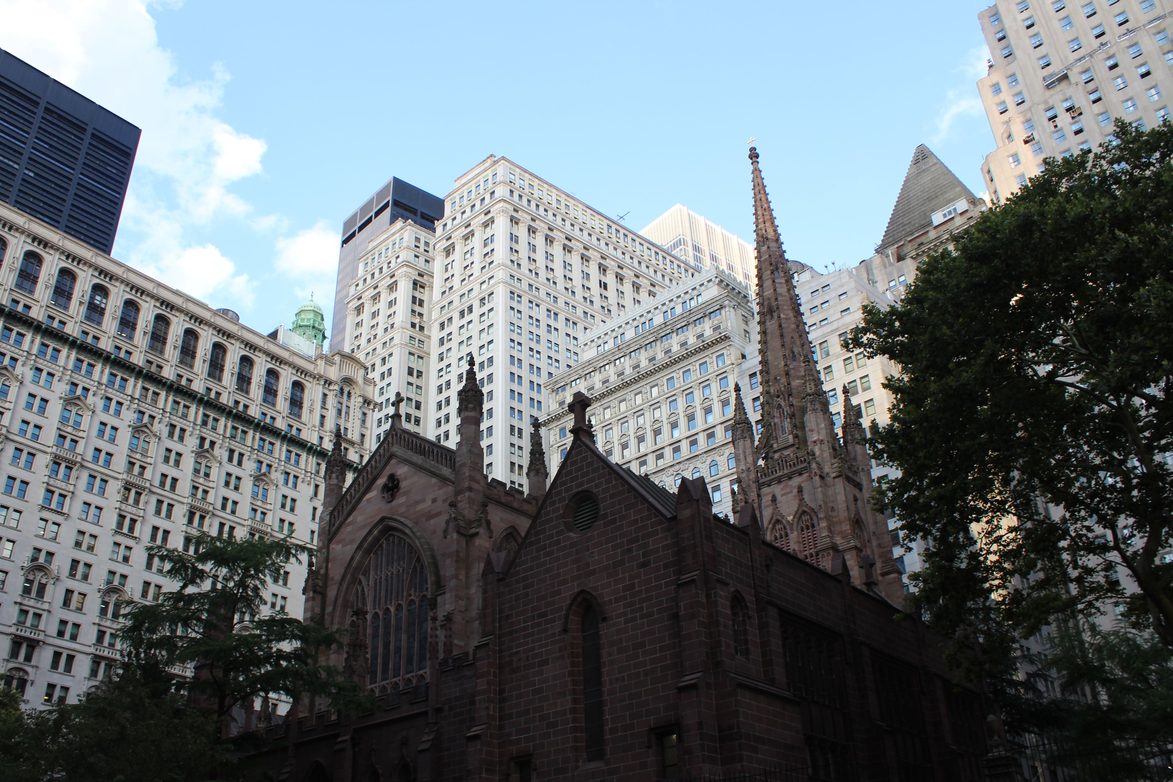
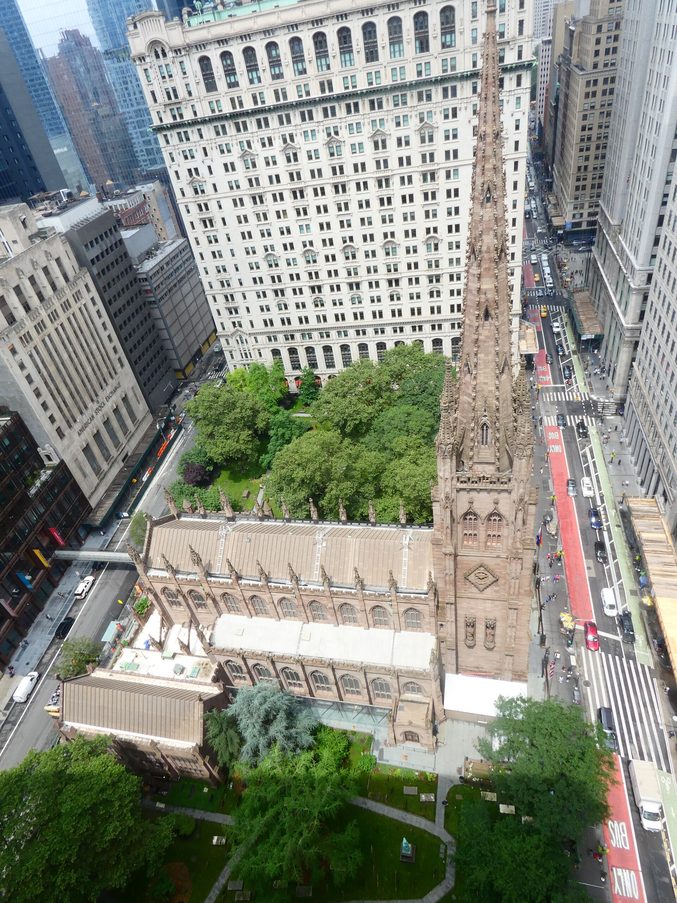
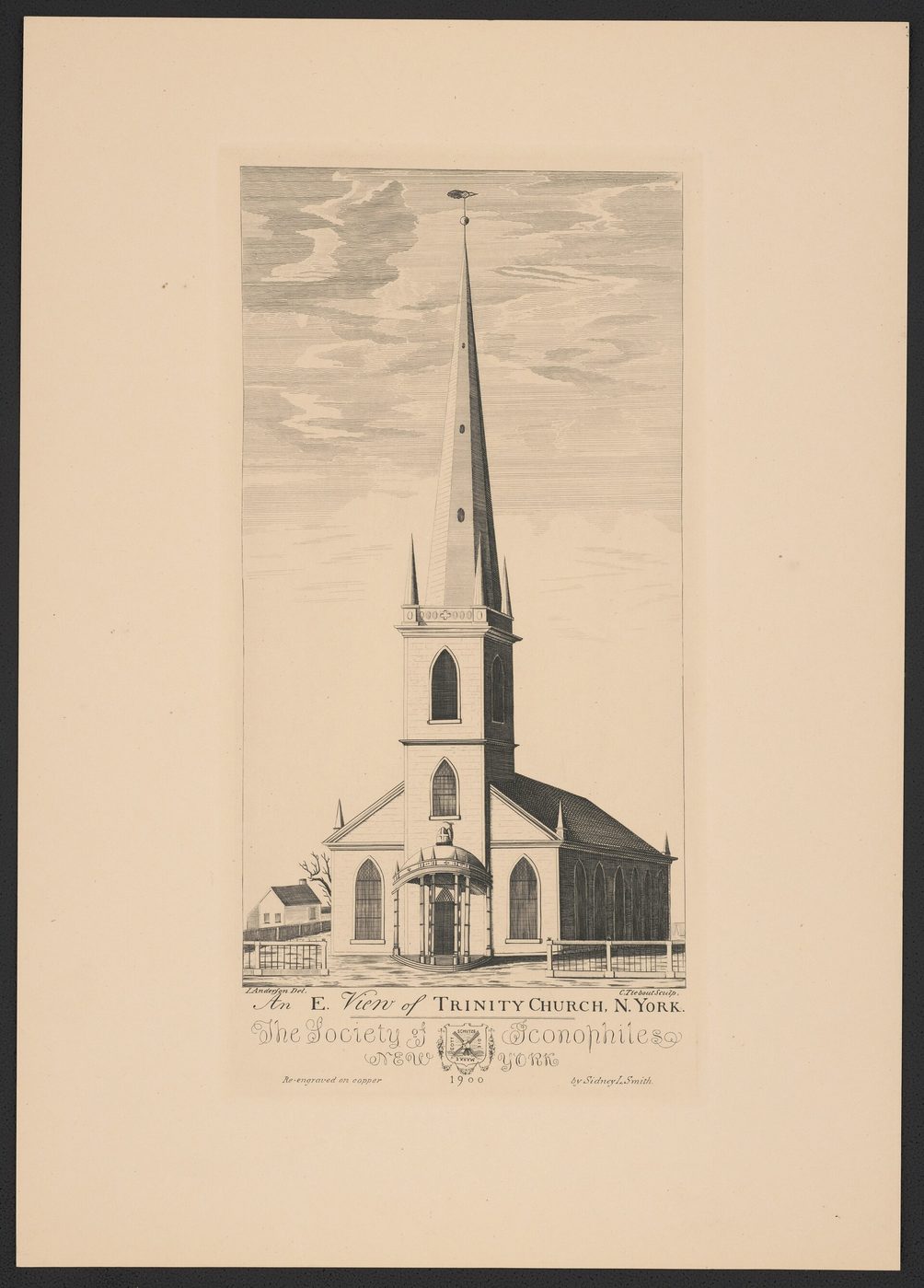
The parish was founded by royal charter in 1697, and its first church opened on this spot in 1698. That church burned in the Great Fire of 1776. Its successor, consecrated in 1790, was the parish church of Alexander Hamilton, but heavy snow in 1839 damaged it so badly that it was taken down. The present church, by the architect Richard Upjohn, was consecrated on Ascension Day 1846. It was one of the first great Gothic Revival churches in America, and its 281-foot spire was the tallest building in New York until 1890.
A land grant from Queen Anne in 1705 made Trinity one of the richest churches in the world, and the parish is still one of New York’s largest landowners, chiefly in Hudson Square. Between 2018 and 2020 it spent a reported $112 million restoring the church: the brownstone columns were cleaned, and the chancel was brought back to its original line. A new main organ, set in the 1846 organ case, was unveiled in September 2026.
The visitor’s cheat sheet
| Opening hours | Church daily 8.30am–6pm; churchyard 8.30am–4pm in winter. Early closings for events are posted on Trinity’s website |
|---|---|
| Admission | Free |
| Security | Security check at the door; no outside food or drink |
| Services | Sunday 8am, 9am and 11.15am; weekday Eucharist at 12.05pm in the Chapel of All Saints |
| Free music | Lunchtime concerts on Wednesdays at 1pm (free, reserve online) |
| Photography | Personal photos allowed; no tripods or external flash |
| Getting there | Subway 4 or 5 to Wall Street, opposite the church; R (or weekday W) to Rector Street, behind it |
| How long | 30–45 minutes; add an hour for St Paul’s Chapel and the 9/11 Memorial |
Hours and admission checked against the official site in November 2026. They change; the official site is always the last word.
What to see
The bronze doors
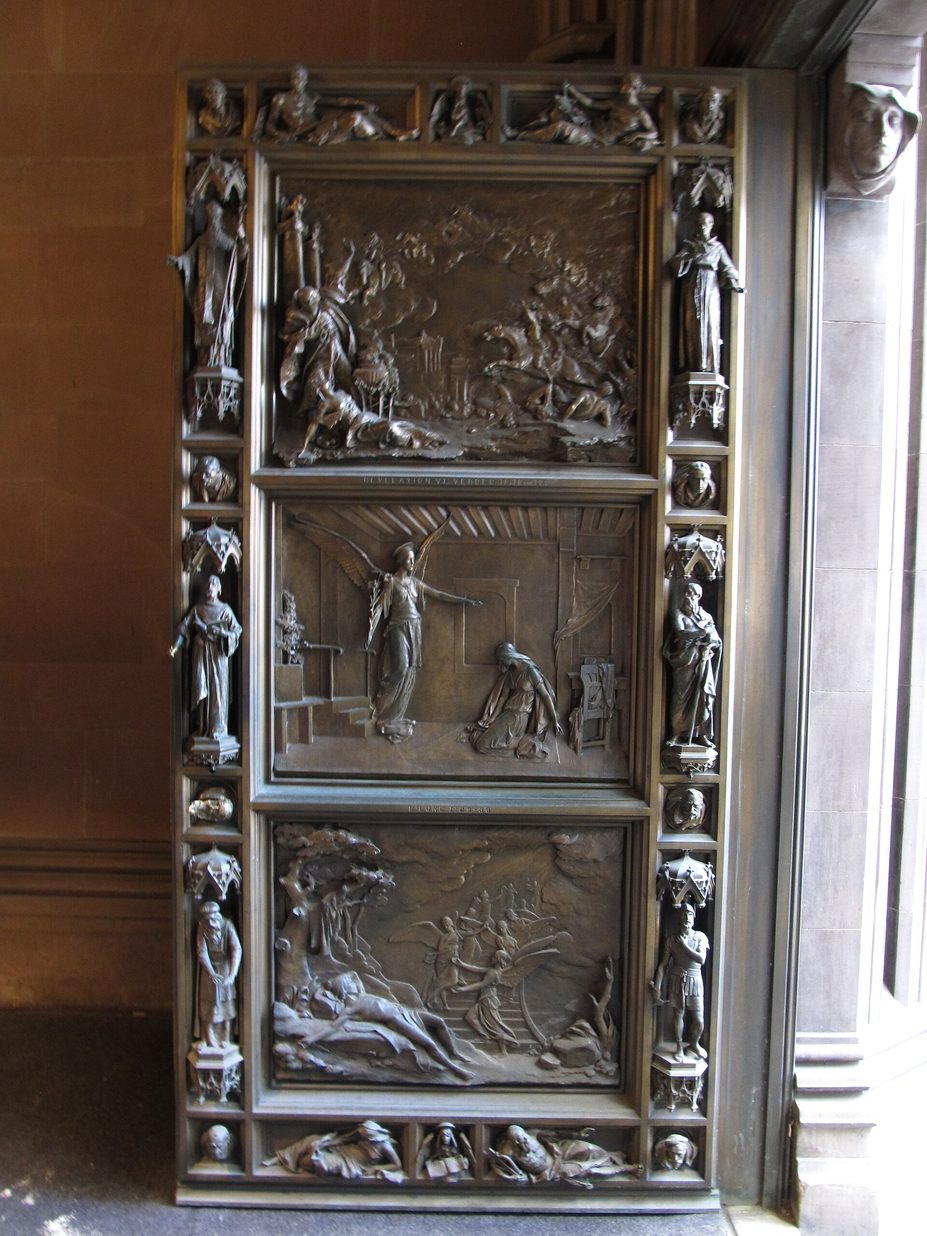
The three doorways have bronze doors given by William Waldorf Astor in 1893 and designed by Richard Morris Hunt. Karl Bitter sculpted the main door on Broadway, with scenes from the Bible; Charles Niehaus the north door; and J. Massey Rhind the south door, whose panels tell the history of New York.
The nave and the reredos
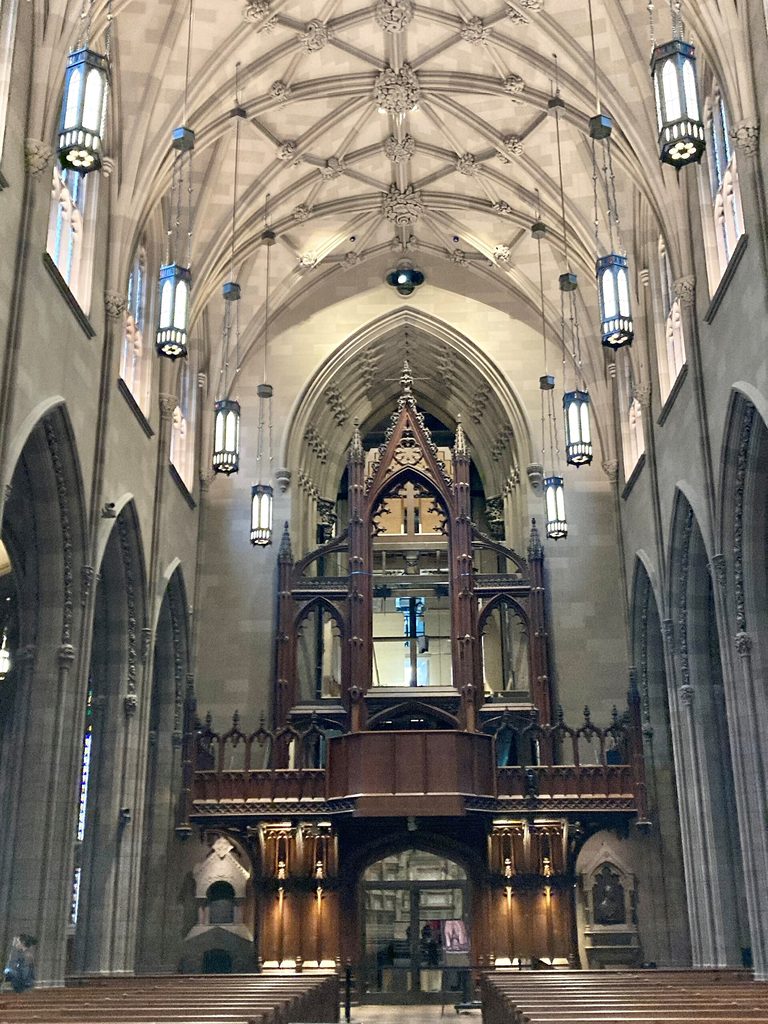
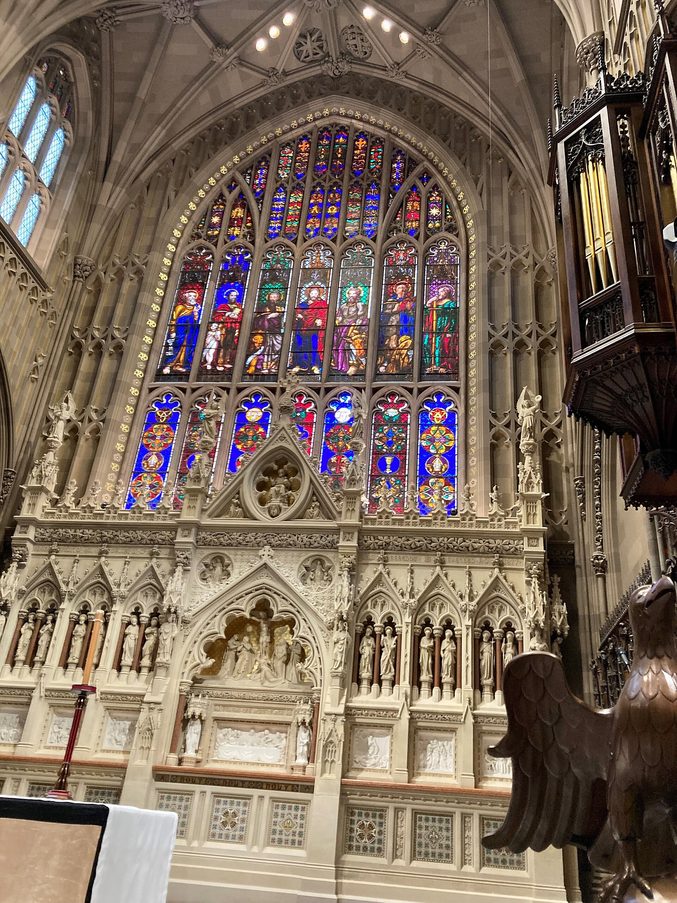
Inside, the restored nave rises to a ribbed vault above brownstone columns. At the far end, the white marble reredos and altar of 1876–77, designed by Frederick Clarke Withers in memory of William Backhouse Astor, stand beneath an early American stained-glass window. Turn round as you leave: above the entrance is a large window of 2022 by the English artist Thomas Denny, lit from behind the organ loft.
On the north side, the Chapel of All Saints, added in the 1910s, is where the weekday lunchtime Eucharist is held.
The churchyard
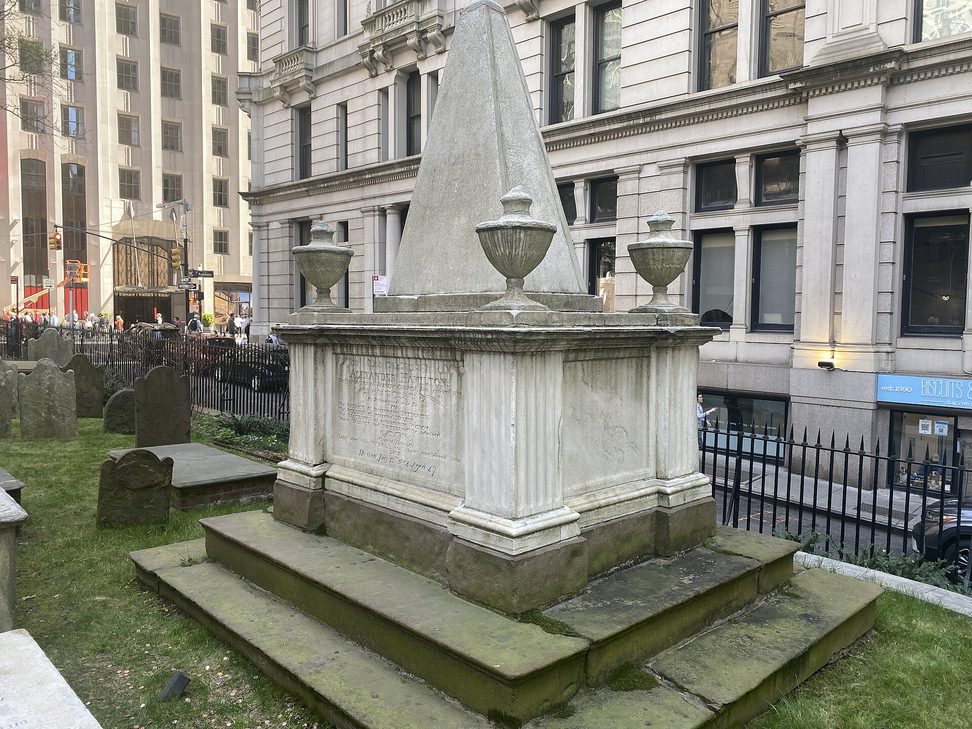
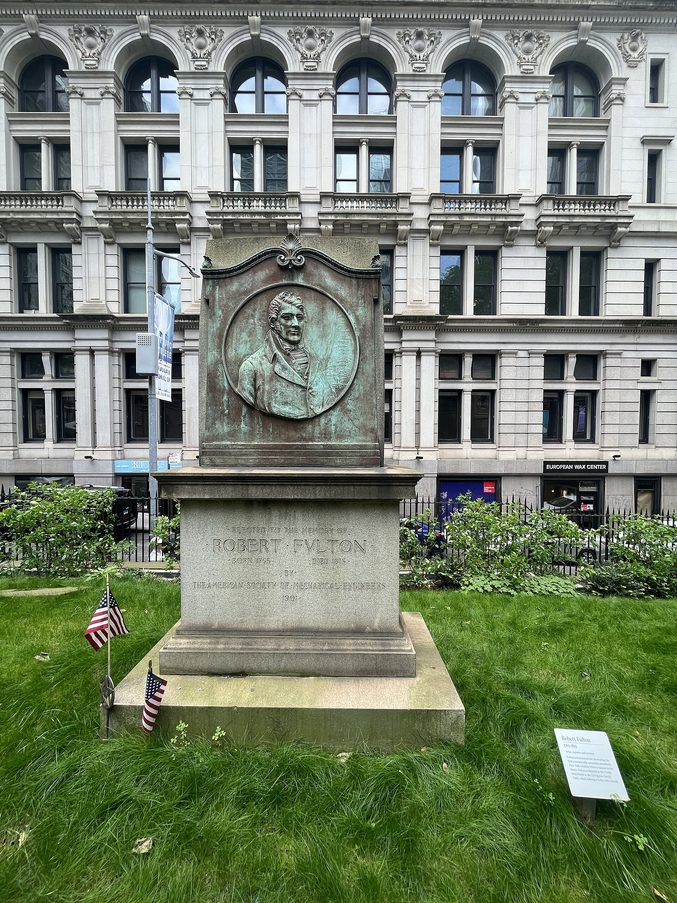
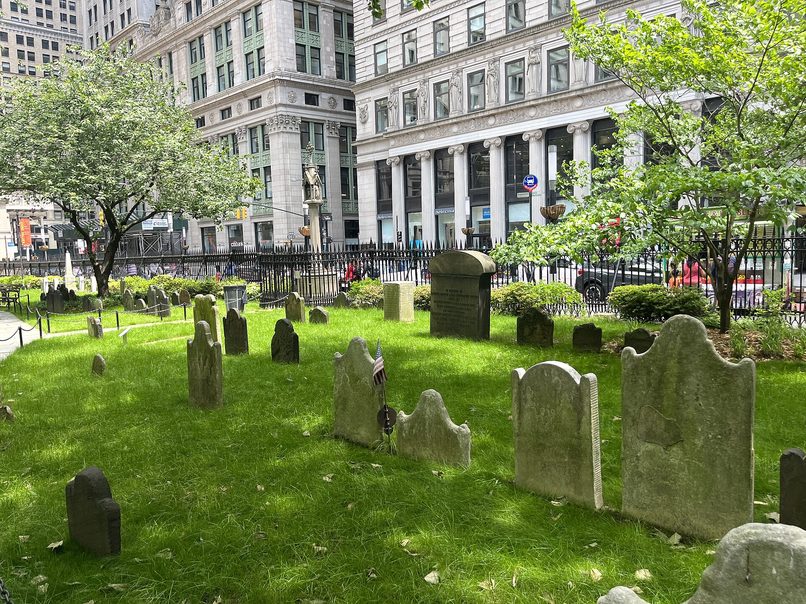
Trinity’s churchyard lies on either side of the church, to the north and south. In the south churchyard, near the Rector Street fence, is the grave of Alexander Hamilton, killed in his duel with Aaron Burr in 1804; his wife Eliza lies beside him. A few feet west is a monument to Robert Fulton, of steamboat fame, though Fulton is actually buried in the Livingston family vault, now in the north churchyard, where a marker also remembers Hamilton’s sister-in-law Angelica Schuyler Church.
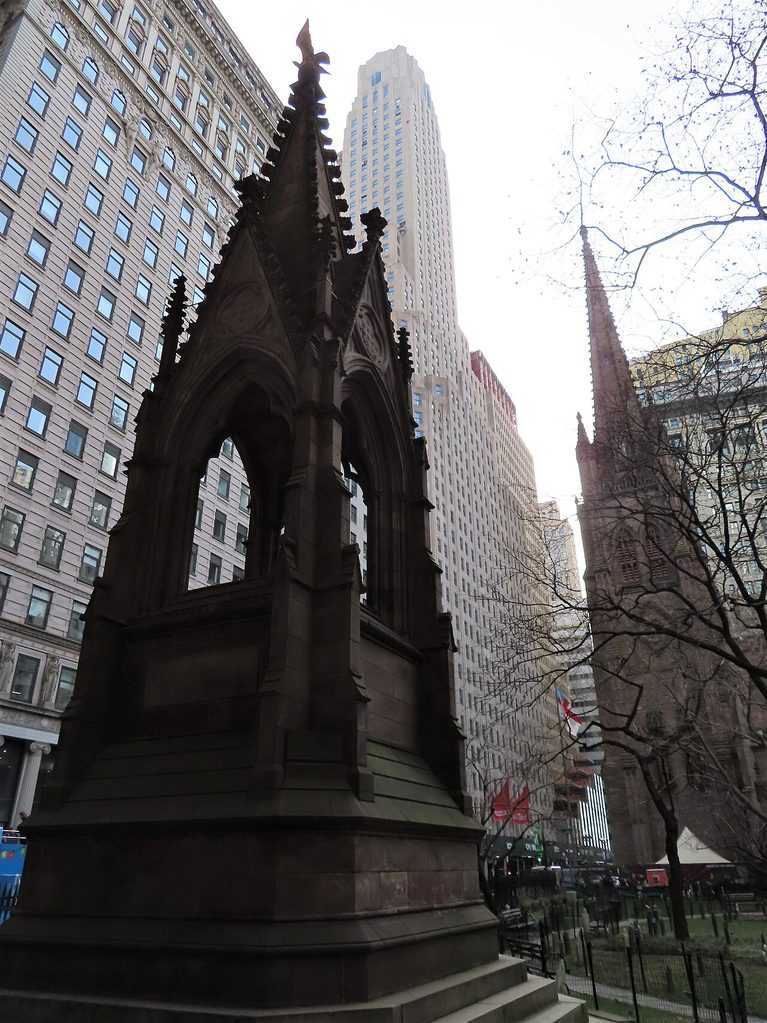
The north churchyard holds the oldest legible gravestone, of 1681, older than the church itself; the grave of Albert Gallatin, Treasury Secretary to Jefferson and Madison; and, in its north-east corner, the Gothic spire of the Soldiers’ Monument to the American prisoners who died in the city during the Revolution.
St Paul’s Chapel
Five blocks north on Broadway is Trinity’s chapel of St Paul, completed in 1766, the oldest church in Manhattan still standing, where George Washington worshipped after his inauguration in 1789. Across the road from Ground Zero, it survived 11 September 2001 without a broken window and became a refuge for the recovery workers, open day and night for nine months. Its churchyard keeps the same hours as Trinity’s.
Getting there
Trinity is at 89 Broadway, at the head of Wall Street. The 4 and 5 trains stop at Wall Street, right opposite; the R (and the weekday W) at Rector Street, behind the church; the 1 at Rector Street, a few minutes’ walk; the 2 and 3 at Wall Street, a short walk east; and the J (and rush-hour Z) at Broad Street. The Staten Island ferry and the boats to the Statue of Liberty leave from Battery Park, about a 10-minute walk south.
Tours and where to stay
The church needs no ticket. Walking tours of Lower Manhattan and the Financial District usually stop here.
These links go to GetYourGuide and Booking.com. This site earns nothing from them at present — they are here because they are the quickest way to check what is actually available.
Don’t miss
- Hamilton’s grave South churchyard, by Rector Street.
- The bronze doors Hunt, Bitter, Niehaus and Rhind.
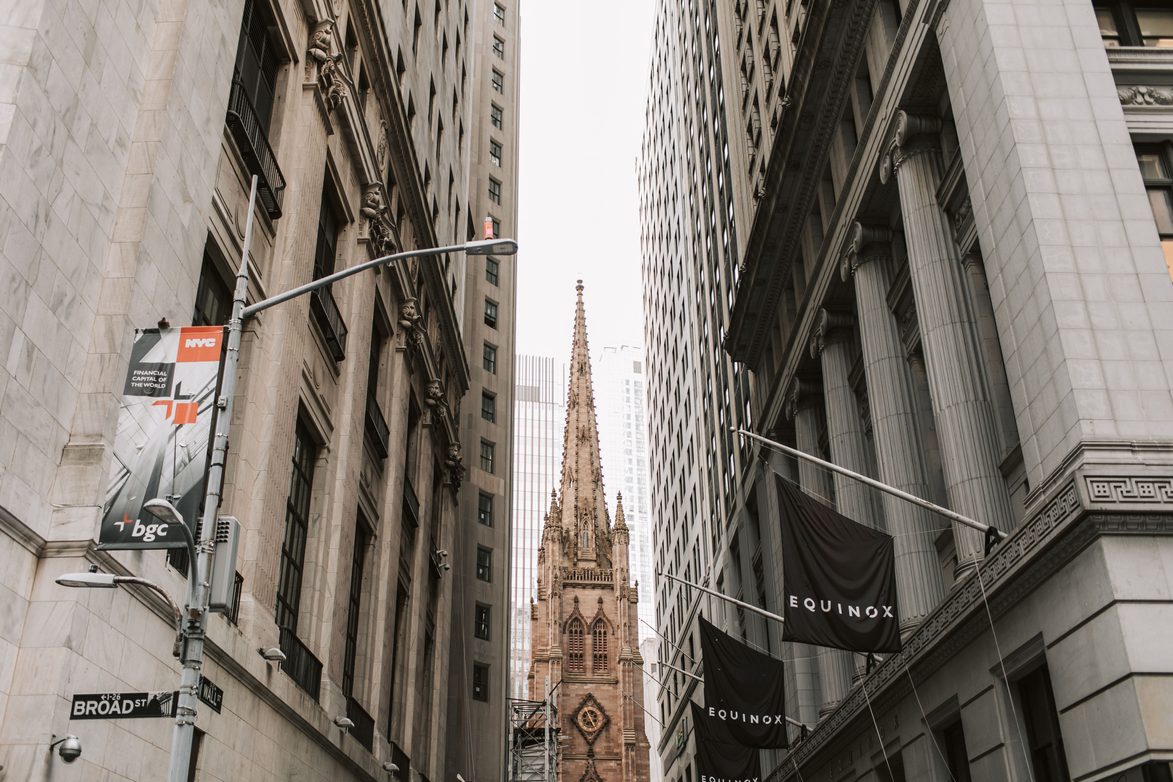
- The view down Wall Street From the church steps.
- A Wednesday concert Free, at 1pm.
- St Paul’s Chapel Five blocks north.
Insider tips
Go before 4pm in winter. From November the churchyard, with Hamilton’s grave, closes at 4pm, two hours before the church.
Catch a lunchtime concert. Most Wednesdays at 1pm Trinity puts on a free concert, Bach, jazz or choral music; reserve a free place online.
Common questions
Is Trinity Church free to visit?
Yes. There is no charge for the church or the churchyard. There is a security check at the door, and outside food and drink are not allowed.
Where is Alexander Hamilton buried?
In the south churchyard, near the fence on Rector Street, under a white marble monument. His wife Eliza lies beside him.
What are the opening hours?
The church is open every day from 8.30am to 6pm. In winter the churchyard closes at 4pm. The church sometimes closes early for concerts and events, so check its website before you go.
Is Angelica Schuyler buried with Hamilton?
Not beside him. She is buried at Trinity, but her exact resting place is not known; a marker for her stands at the Livingston family vault on the west side of the north churchyard.
What happened at Trinity on 11 September 2001?
The church and churchyard were showered with paper and dust when the towers fell. It was Trinity’s chapel, St Paul’s, a few blocks north and closer to the site, that survived to become a round-the-clock refuge for the recovery workers for nine months.
Can I take photographs?
Yes, for personal use, without tripods or external flash units. Commercial filming inside the church is not allowed.
More churches in the United States
- Cathedral of St John the Divine — New York’s unfinished giant.
- Washington National Cathedral — Gothic high above the capital.