
Búðakirkja, the Black Church at Búðir
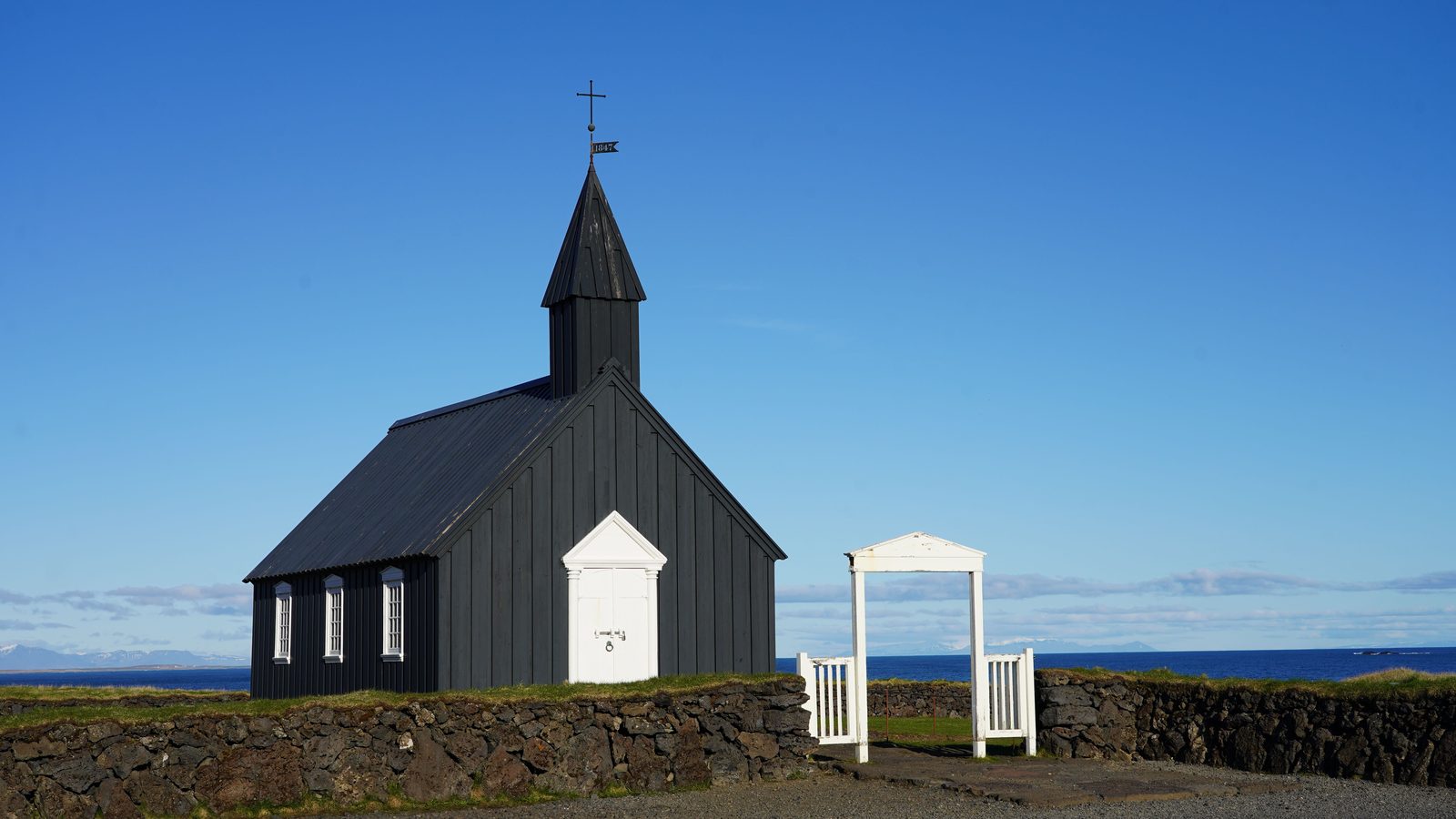
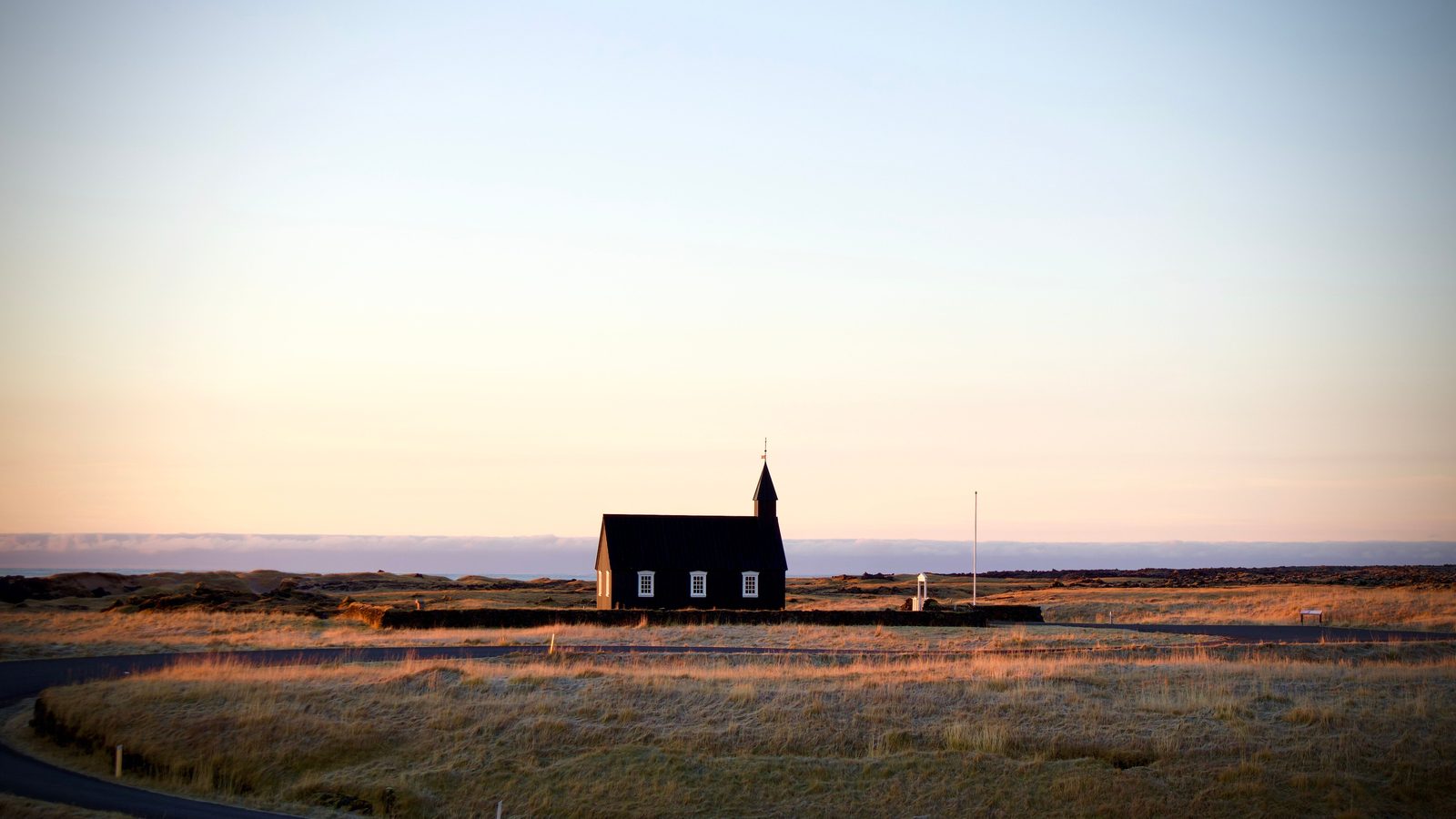
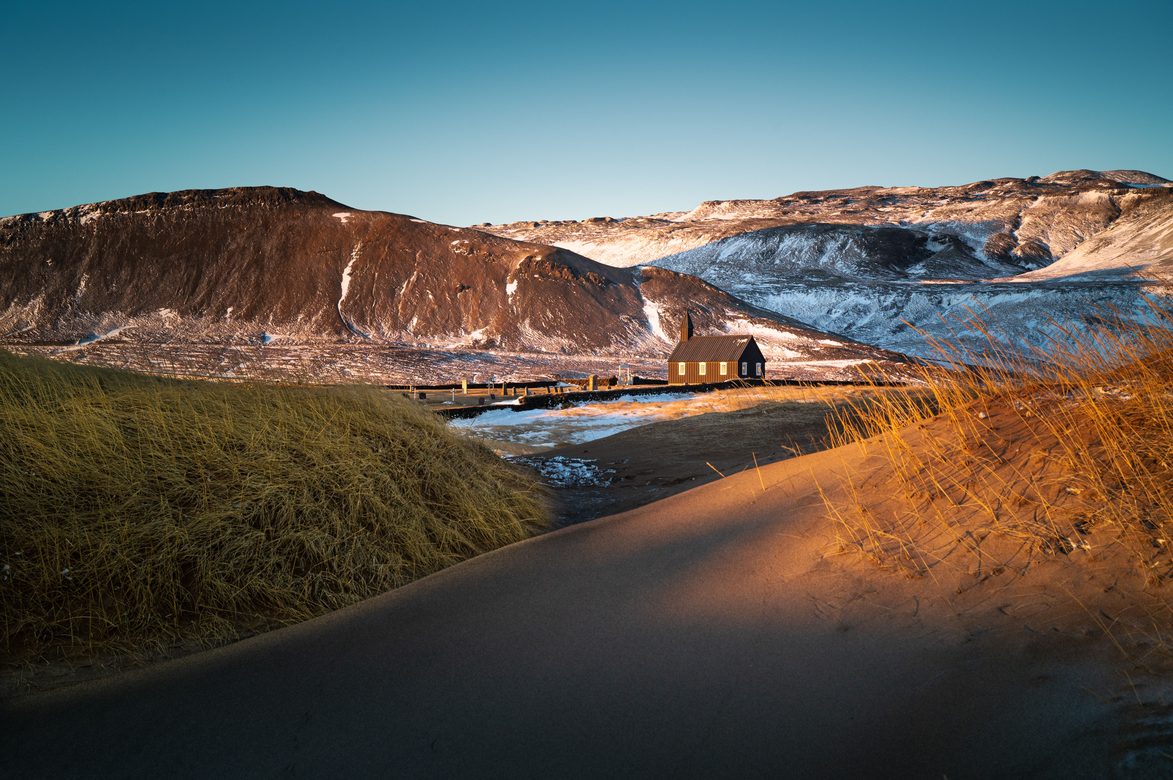
On the south coast of the Snæfellsnes peninsula, where a lava field meets the sea, a small tarred-black timber church stands alone behind a wall of lava stones, with a hotel the only other building in sight. Búðakirkja is a favourite of photographers, and one of the simplest churches in Iceland: a single room, a small spire, a white door.
A church at a trading post
Búðir was once a trading post, and its first church, a small turf church with a churchyard, was built in 1703; burials began in 1705. As the trade moved away, the parish was abolished in 1816 and the old church was taken down. A local widow, Steinunn Sveinsdóttir, applied to rebuild it and paid for the new church herself; it was built in 1848 and consecrated in 1851. It was moved to its present site in 1984, rebuilt to its 1848 form and reconsecrated in 1987, and is still used for services and weddings. Inside it keeps two bells, dated 1672 and 1702, and a Danish altarpiece of 1750.
The visitor’s cheat sheet
| Where | Búðir, on the south coast of the Snæfellsnes peninsula, beside Hótel Búðir; turn off Route 574 at the sign |
|---|---|
| Opening hours | Outside and churchyard open at all times; the church is usually locked except for services, weddings and concerts |
| Admission | Free |
| Parking | Small free gravel car park at the end of the lane; it fills in summer. No toilets at the church |
| Drones | Permission needed in Snæfellsjökull National Park; check the Environment Agency’s rules |
| How long | Twenty minutes to half an hour |
Hours and admission checked against the official site in November 2026. They change; the official site is always the last word.
What to see
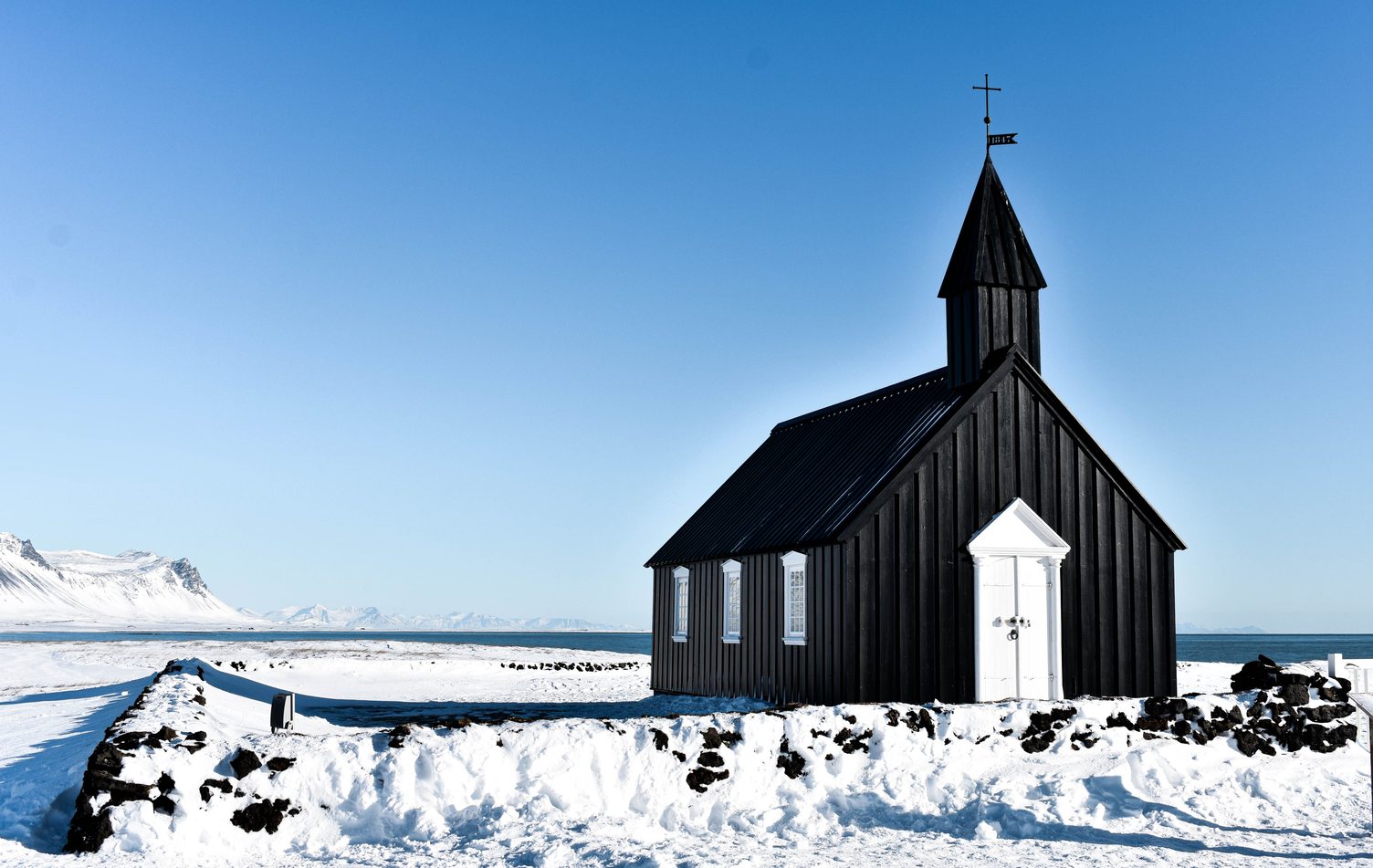
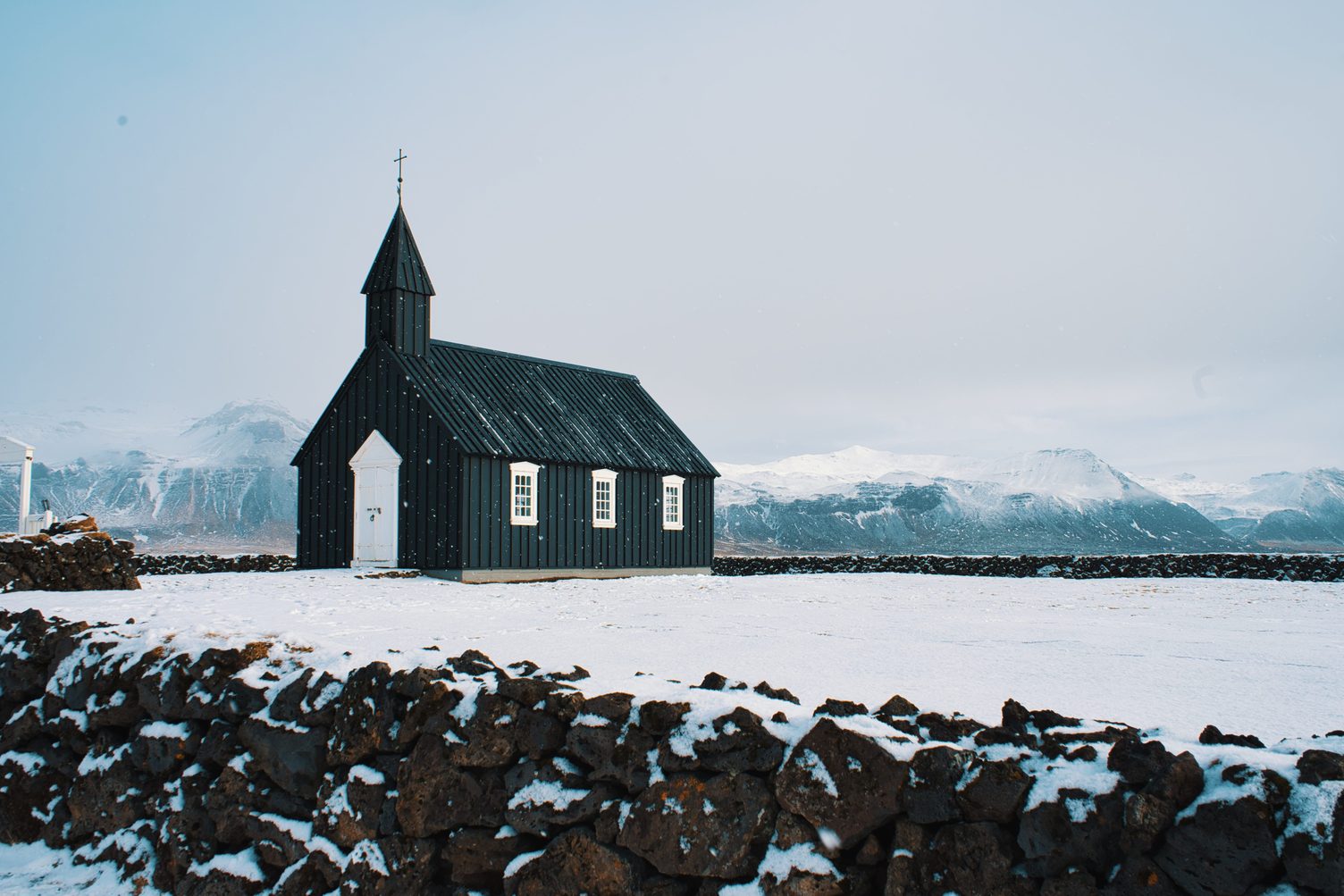
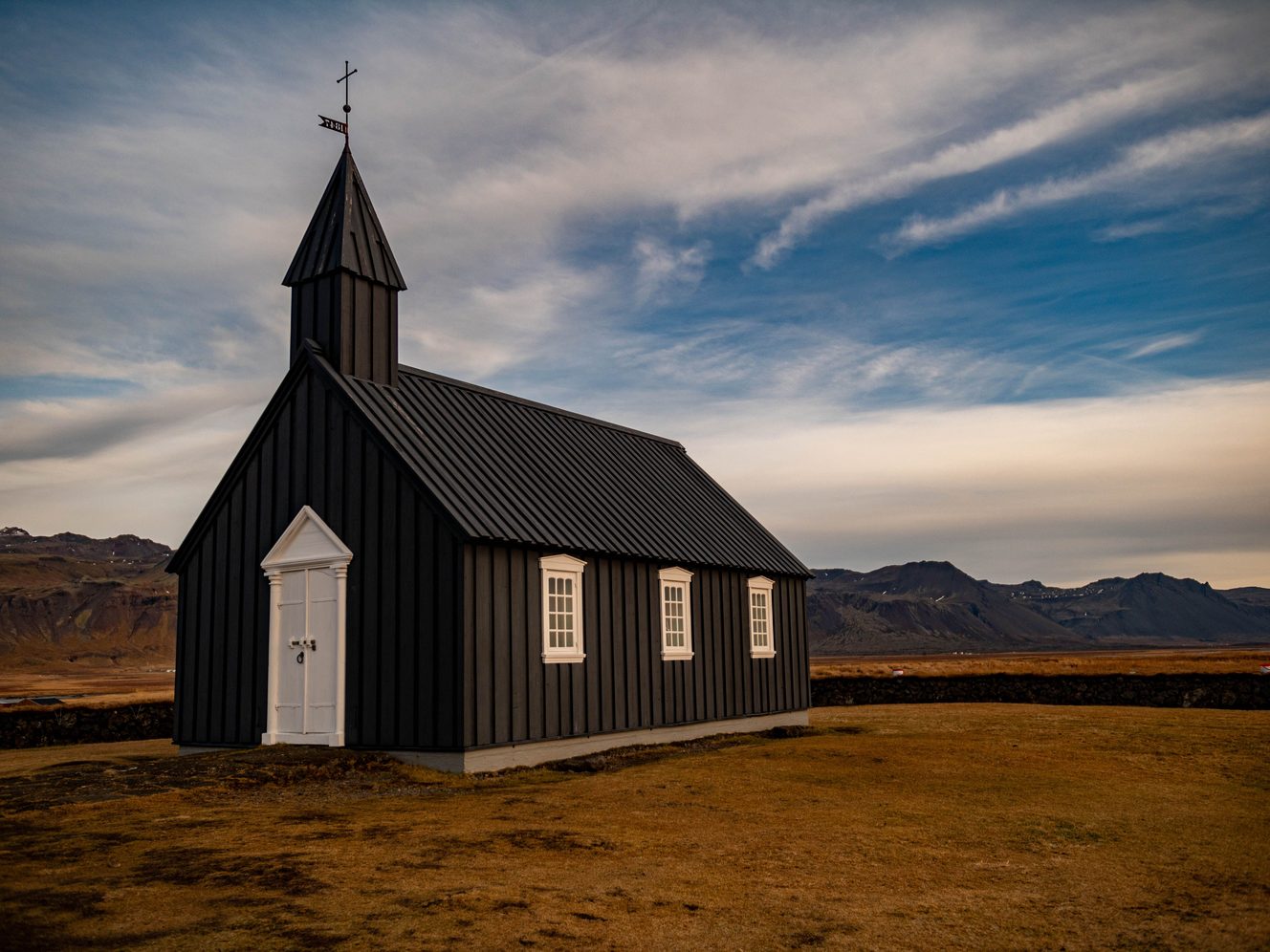
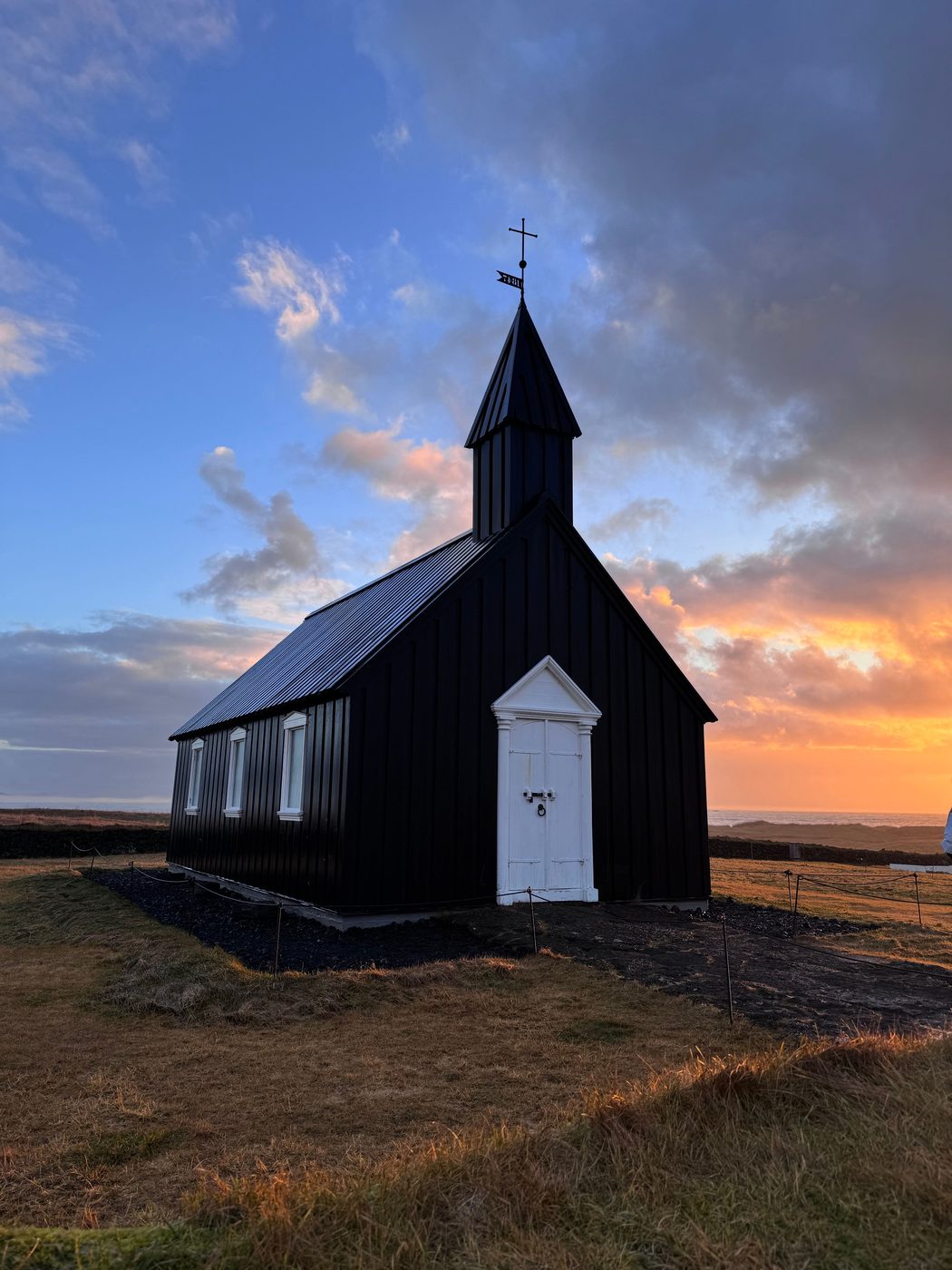
The church is the whole sight: a black wooden nave with white door and window frames, a small tower and spire above the door at the gable end, and a churchyard of old graves inside a low wall of lava stones. Walk round it for the views: the sea on one side, the Búðahraun lava field on the other, and on a clear day the ice cap of Snæfellsjökull to the west.
Inside, when it is open, the church seats about fifty, with an organ and the old altarpiece. It has no heating.
Around Búðir
Hótel Búðir is a short walk away, and so is the beach. The Búðahraun lava field around the church is a nature reserve, protected since 1977, where more than 130 plant species have been recorded. Further west are the cliffs of Arnarstapi and Hellnar and Snæfellsjökull National Park, whose visitor centres are at Malarrif and Hellissandur; Kirkjufell, the peninsula’s most famous mountain, is on the north coast.
Getting there
Búðir is about 175 km from Reykjavík, roughly two and a half hours by car: Route 1 north to Borgarnes, then Route 54 along the peninsula and Route 574 to the signposted lane for Búðir. There is no public transport; many day tours of Snæfellsnes from Reykjavík stop here. In winter, check the road conditions at umferdin.is or by calling 1777 before you set out, and allow for short daylight.
Tours and where to stay
Day tours of the Snæfellsnes peninsula from Reykjavík often stop at Búðir; to see it in the evening light, stay on the peninsula.
These links go to GetYourGuide and Booking.com. This site earns nothing from them at present — they are here because they are the quickest way to check what is actually available.
Don’t miss
- The view west To Snæfellsjökull on a clear day.
- The lava wall Round the churchyard.
- The shore A short walk from the church to the beach.
- Evening light If you are staying on the peninsula.
Insider tips
Come early or late. Day tours arrive in the middle of the day; early morning and evening are quieter, and the low light suits the black church.
Be respectful. The churchyard is still in use: keep to the paths, do not climb on the walls or the steps, and keep your distance if a wedding is under way.
Common questions
Can you go inside Búðakirkja?
Usually not. The church has no regular opening hours and is generally kept locked; it opens for services, weddings and concerts. The churchyard and the outside are open at all times and free.
How far is Búðir from Reykjavík?
About 175 km, roughly two and a half hours by car without stops, by Route 1 to Borgarnes, then Route 54 and Route 574 to the turning for Búðir.
Why is the church black?
The timber is coated with pitch (tar), the traditional way of protecting wood against the Icelandic weather.
Can you fly a drone at Búðir?
Check first. Snæfellsjökull National Park, on the peninsula, is one of the protected areas where drones need permission; check whether your flight is affected before you go. Do not fly over people or during a wedding.
More churches to visit
- Hallgrímskirkja — Reykjavík’s great concrete church, on the way.
- Churches in Norway — the stave churches across the sea.
- Churches in Scotland — small churches on the edge of the Atlantic.