
Cusco Cathedral
On the Plaza de Armas of Cusco, the old Inca capital, the cathedral stands on the site of an Inca palace, built partly of stone taken from the fortress of Sacsayhuamán. With the churches of El Triunfo and the Holy Family on either side, it holds one of the great collections of the Cusco school of painting, a high altar of silver, and the Lord of the Earthquakes, the image of Christ that the city has carried in procession since the earthquake of 1650.
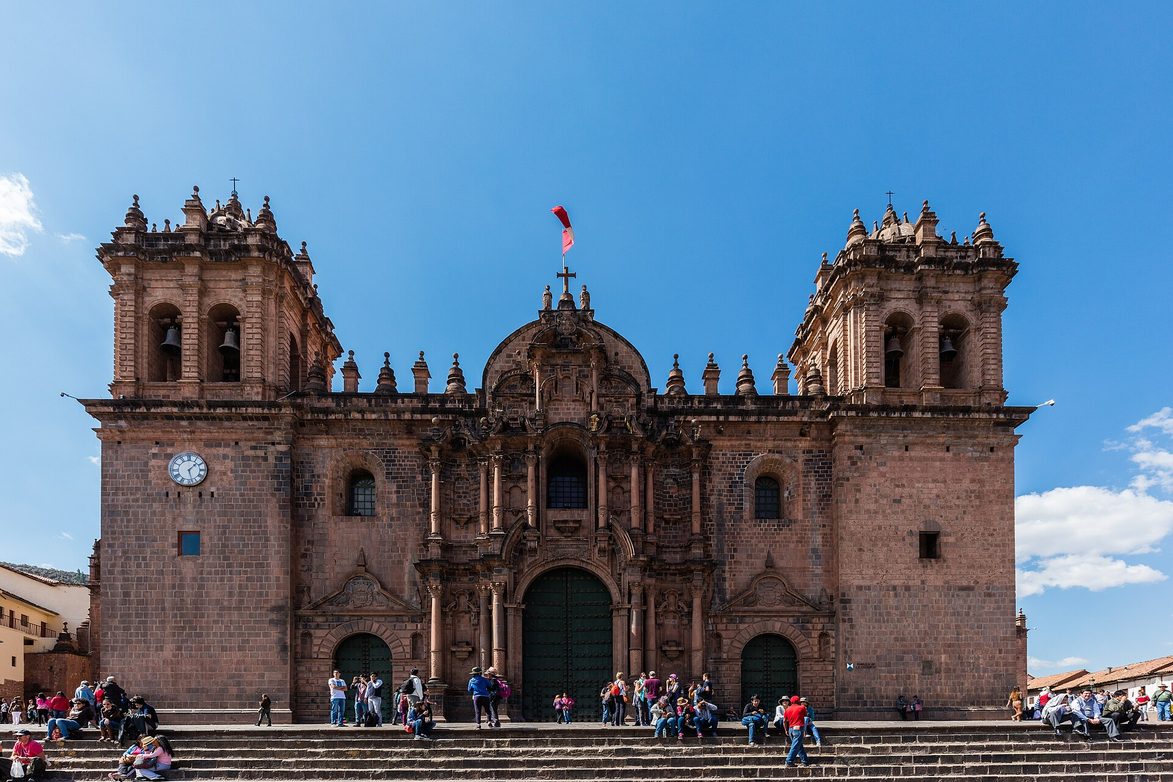
An Inca city and a Spanish cathedral
When the Spanish took Cusco in the 1530s, they built their first church, El Triunfo, on the site of an Inca building on the main square, and the city became the seat of a bishop. The present cathedral, next to it, was begun around 1560 on the site of the palace of the Inca Viracocha, and the red stone of its walls was partly taken from Sacsayhuamán, the Inca fortress above the city.
The work took almost a century. On 31 March 1650 a great earthquake struck Cusco; in the unfinished cathedral the vault collapsed, and it was completed after the disaster. The first Mass was said in the finished church on 15 August 1654, and it was consecrated in 1668. The cathedral and the two churches beside it form a single complex, and the old city of Cusco has been a UNESCO World Heritage Site since 1983.


The visitor’s cheat sheet
| Where | Plaza de Armas, Cusco; visitors’ entrance through the church of El Triunfo |
|---|---|
| Opening hours | Daily from 10–10.30am to 5–6pm for visitors; early-morning Mass for worshippers; hours change in Holy Week |
| Admission | Cathedral S/40 (Peruvians S/25); Circuito Religioso ticket with San Cristóbal and the Museum of Religious Art S/50. Not on the Boleto Turístico |
| Photography | Not allowed inside |
| Dress | Cover shoulders and knees; men remove hats |
| Altitude | Cusco is at about 3,400 metres: take the visit slowly on your first day |
| How long | About an hour |
Hours and admission checked against the official site in November 2026. They change; the official site is always the last word.
What to see
The front and towers
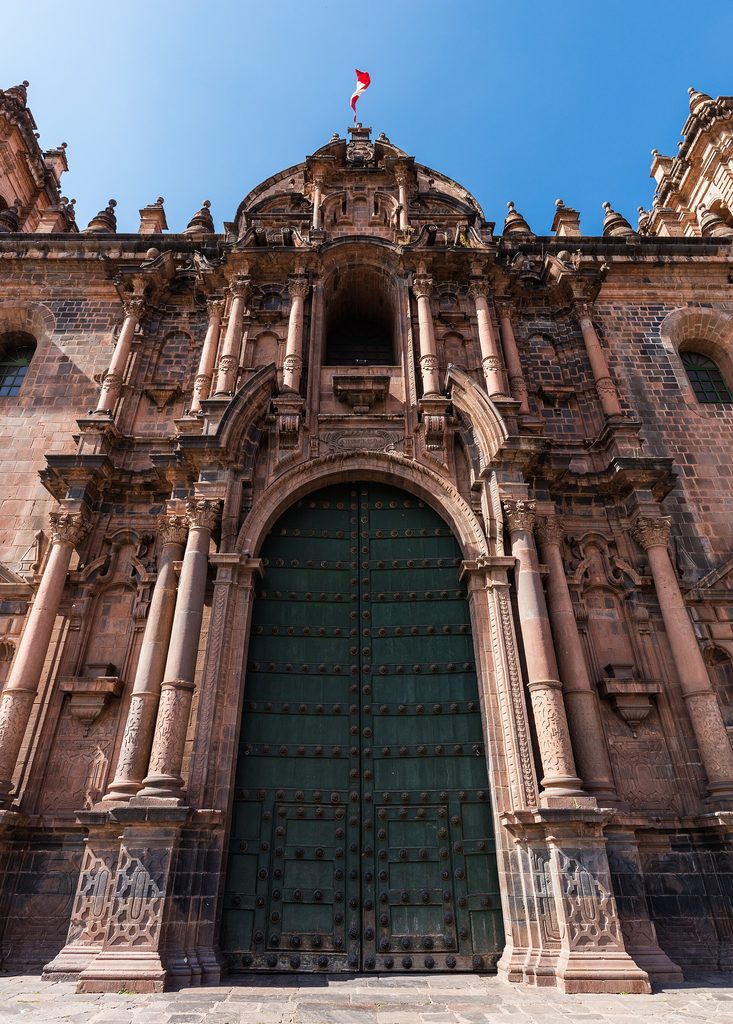
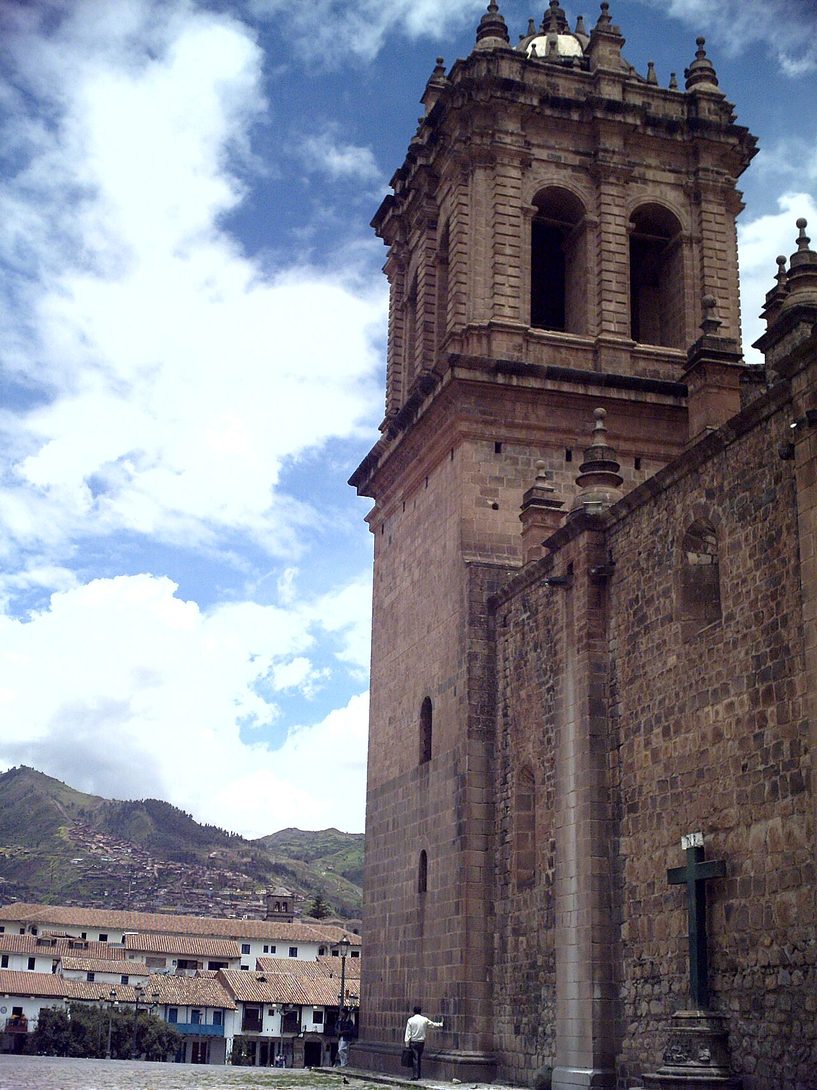
The cathedral stands above a flight of steps on the north-east side of the square. Its front is carved in the reddish stone of the region, with a central portal of columns and niches, and its two bell towers are low and massive. The largest bell, the María Angola, was cast in 1659.

Inside the cathedral
Photography is not allowed inside, but there is much to see. The cathedral holds hundreds of paintings of the Cusco school, in which Andean painters reworked European models: the most famous is the Last Supper by Marcos Zapata, in which the main dish on the table is usually identified as a roast cuy, the Andean guinea pig. The high altar is covered in silver, the choir has carved cedar stalls, and in a side chapel near the entrance is the Señor de los Temblores, the Lord of the Earthquakes, a dark crucifix credited with protecting the city in 1650 and carried in procession through the centre every Holy Monday.
El Triunfo and the Holy Family
Visitors enter through El Triunfo, on the right of the cathedral, the first Christian church of Cusco; its name recalls the Spanish victory in the siege of 1536, and it was later rebuilt. On the other side, the church of the Holy Family, or Jesús María, was built in the eighteenth century. Both are included in the ticket and connect with the cathedral inside.


A note on our pictures
Because photography is forbidden inside the cathedral, the pictures on this page show the outside and the square, with an old photograph and a seventeenth-century painting of the city.
Around the cathedral
The Plaza de Armas was the great square of Inca Cusco, and the Jesuit church of La Compañía stands across it from the cathedral. A few blocks away are the Qorikancha, the Inca temple of the sun, with the church of Santo Domingo built on top of it, and the steep streets of San Blas, the old artists’ quarter, with the Inca walls of Hatun Rumiyoc and its twelve-angled stone on the way.


Getting there
Cusco has flights from Lima, about an hour and a half; the airport is a short taxi ride from the centre. The cathedral is on the Plaza de Armas, the centre of the old town, and most hotels in the centre are within walking distance. At 3,400 metres, Cusco is high: walk slowly and drink plenty of water on your first day.
Tours and where to stay
Most visitors stay a few nights in Cusco before or after Machu Picchu, and the historic centre puts the cathedral and the Inca walls on your doorstep.
These links go to GetYourGuide and Booking.com. This site earns nothing from them at present — they are here because they are the quickest way to check what is actually available.
Don’t miss
- Zapata’s Last Supper With cuy on the table.
- The Lord of the Earthquakes The crucifix carried in procession on Holy Monday.
- The silver high altar In the heart of the cathedral.
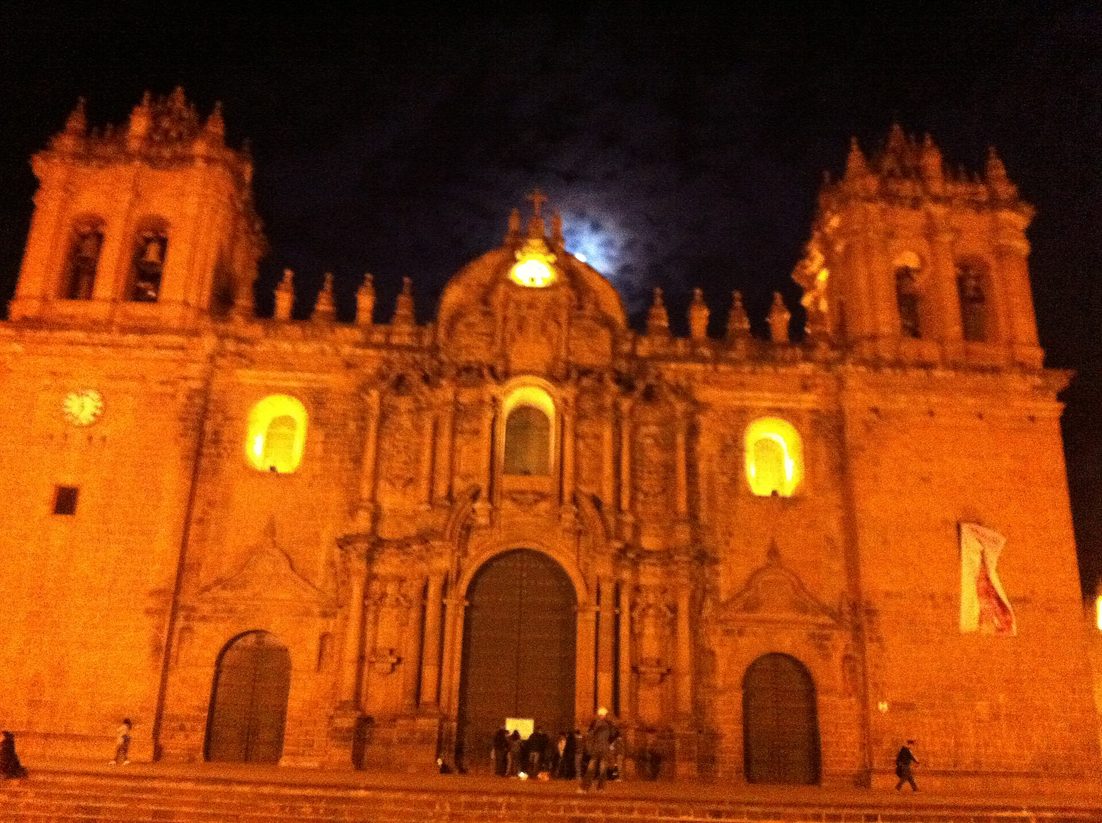
- The Plaza de Armas The cathedral at dusk, from the square.
Insider tips
Consider a guide. With no photography allowed and few labels, a guide or audio guide is the best way to find your way through the three churches and the paintings.
Consider the Circuito Religioso. For a little more than the cathedral ticket it adds San Cristóbal, above the city, and the Museum of Religious Art in the Archbishop’s Palace, on the street of the twelve-angled stone.
Common questions
How much does it cost to visit Cusco Cathedral?
A ticket for the cathedral alone costs S/40 for foreign adults and S/25 for Peruvians. The Circuito Religioso ticket, which adds the church of San Cristóbal and the Museum of Religious Art in the Archbishop’s Palace, costs S/50 for foreign adults. Tickets are sold at the entrance through the church of El Triunfo. The cathedral is not on the city’s Boleto Turístico.
Can you take photos inside Cusco Cathedral?
No. Photography is not allowed inside the cathedral, with or without flash, which is why the pictures on this page are of the outside.
Is it true there is a guinea pig in the Last Supper?
Yes. In the large Last Supper painted by Marcos Zapata in the eighteenth century, the dish in the middle of the table is usually identified as a roast cuy, the guinea pig eaten in the Andes, served with local fruits.
When is Cusco Cathedral open?
For visitors, daily from 10am or 10.30am to 5pm or 6pm (published times vary). Early in the morning a side door is open for worshippers coming to Mass. Hours change in Holy Week and on major feasts.
More churches to visit
- Las Lajas Sanctuary, Colombia — the neo-Gothic shrine on a bridge over a canyon in the Andes.
- Metropolitan Cathedral, Mexico City — another cathedral built on the ruins of an Indigenous capital.
- Puebla Cathedral — a great colonial cathedral of New Spain.