
Dryburgh Abbey, Scottish Borders
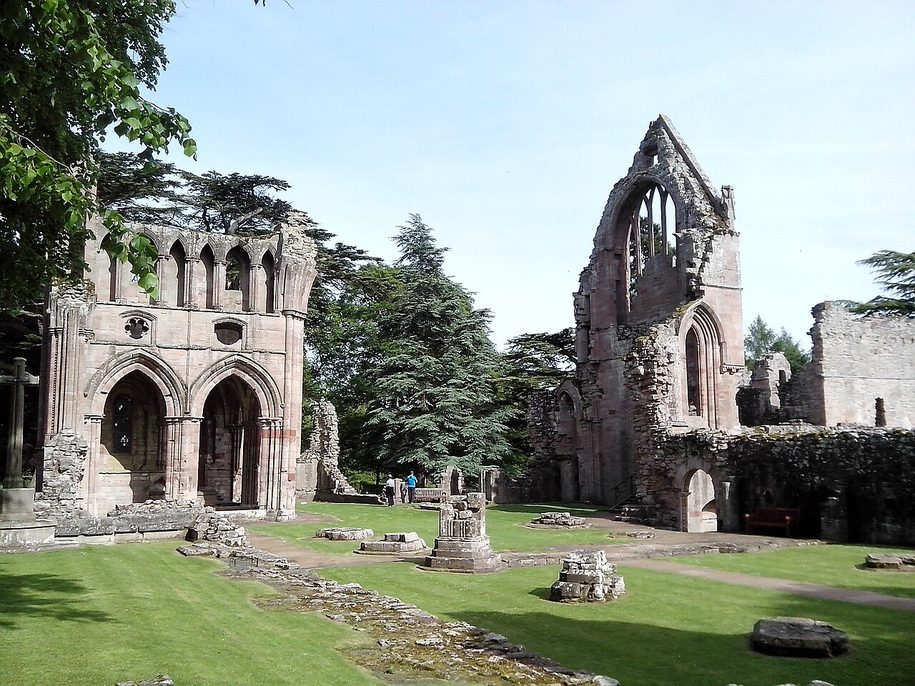
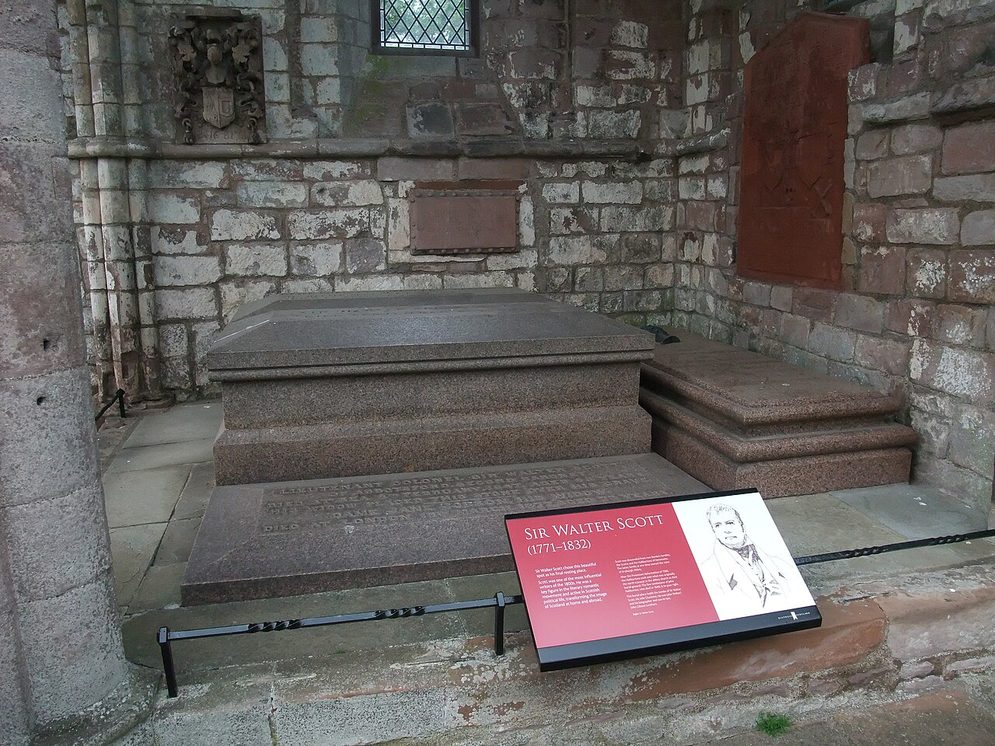
Dryburgh is the quietest of the four great Border abbeys. It stands among old trees in a loop of the River Tweed, away from any town, and its ruins of pink sandstone include some of the most complete monastic buildings in Scotland. Sir Walter Scott chose to be buried here, in the ruined north transept, and Earl Haig lies beside him.
Canons of the Tweed
Dryburgh was founded in 1150 by Hugh de Morville, Constable of Scotland, for Premonstratensian canons from Alnwick in Northumberland, the first house of that order in Scotland. The canons arrived in 1152. Like the other Border abbeys, it was repeatedly attacked by English armies: burned in 1322 and 1385, and again in 1544 by the Earl of Hertford. Monastic life ended at the Reformation of 1560.
In 1786 the estate was bought by David Erskine, Earl of Buchan, an antiquary who landscaped the grounds, put up the Temple of the Muses and the Wallace Statue, and is buried in the abbey. Sir Walter Scott, whose ancestors held the right of burial here, was buried in the north transept in 1832.
The visitor's cheat sheet
| Where | Dryburgh, St Boswells, Melrose, Scottish Borders, TD6 0RQ |
|---|---|
| Getting there | About 10 minutes’ drive from St Boswells, with a small car park; on foot, about 30 minutes from Newtown St Boswells by the footbridge over the Tweed; buses to Newtown St Boswells |
| Opening hours | 1 April–30 September daily 9.30am–5pm; 1 October–31 March daily 10am–4pm; last entry 30 minutes before closing |
| Admission | Adults £7.50 online, £8.50 on the door; concessions £6.00 / £6.80; children £4.50 / £5.00; Historic Scotland members free |
| How long | About an hour |
| Best time | A quiet weekday, with the Wallace Statue and Scott’s View the same afternoon |
| Dress code | Outdoor shoes; grass, gravel and steps |
| Tours | No regular guided tours; booking ahead online is recommended |
Hours and admission checked against the official site in October 2026. They change; the official site is always the last word.
The Dryburgh Yew. Among the trees around the abbey is a yew that is one of the oldest trees in Scotland, said to have been planted when the abbey was founded. The cedars nearby were planted in the nineteenth century.
What to see, in the order you meet it
The church
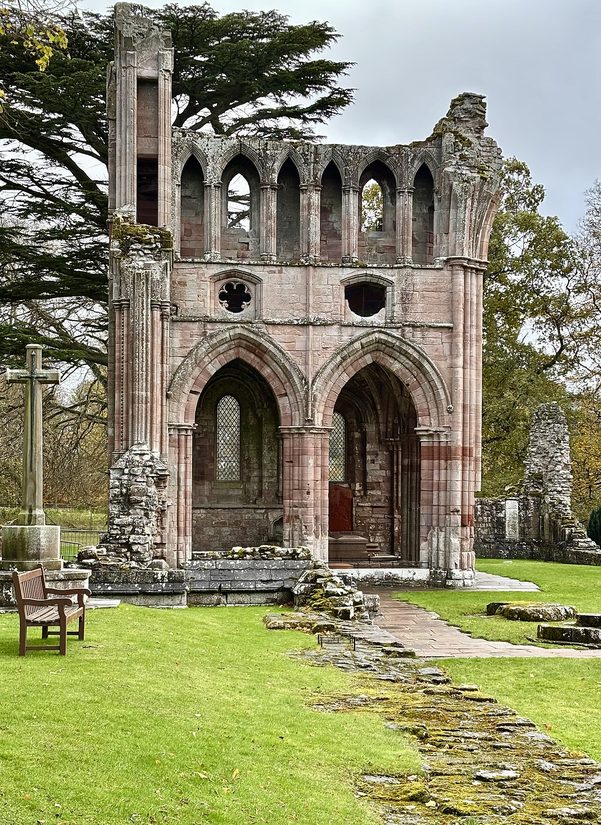
Little is left of the nave, but the west doorway still stands, and at the east end parts of the transepts and presbytery survive. The north transept, the most complete part, shelters the burial places of the Haliburtons, Scott’s ancestors, of Scott himself and of Earl Haig.
The cloister and the chapter house
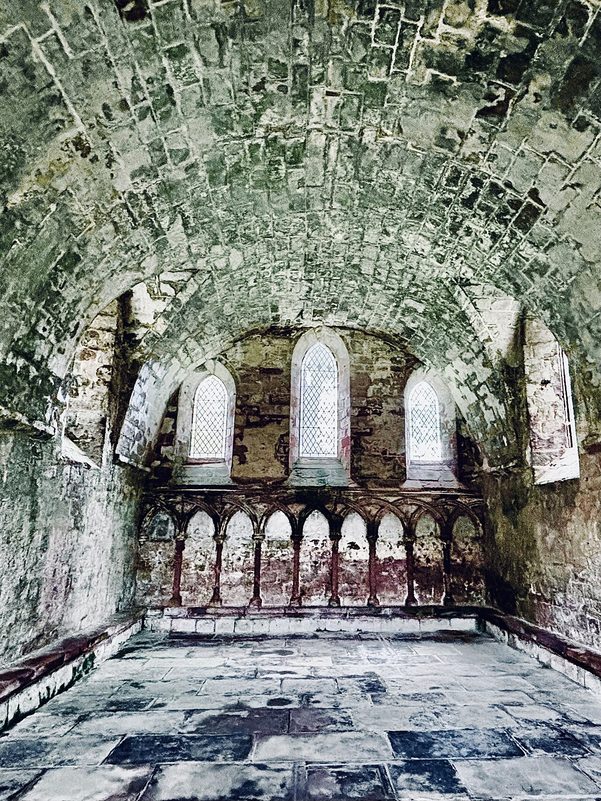
South of the church, down a flight of uneven steps, is the cloister. Its east range is remarkably well preserved: the sacristy, the parlour and the chapter house, where the canons met each day. The chapter house still has the plaster and painted decoration of the thirteenth century.
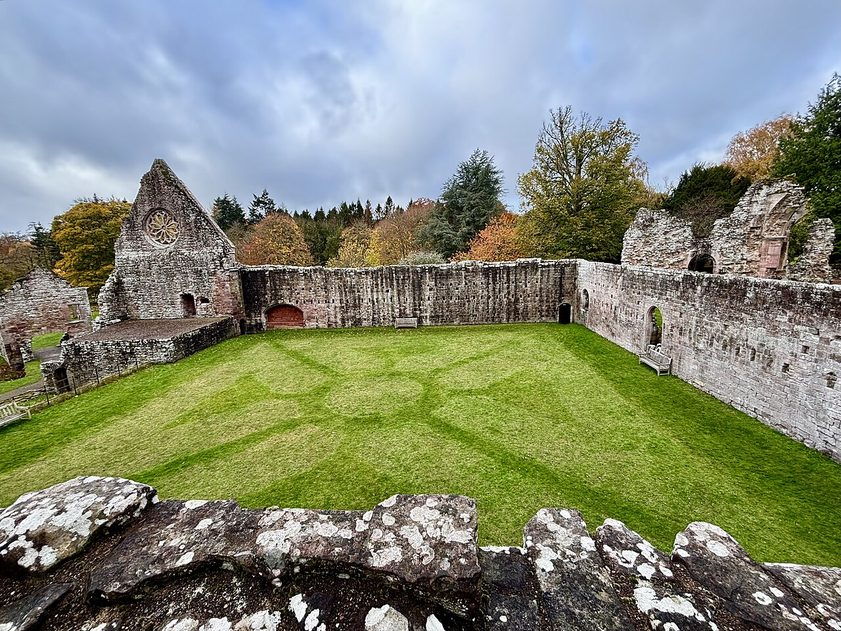
The grounds
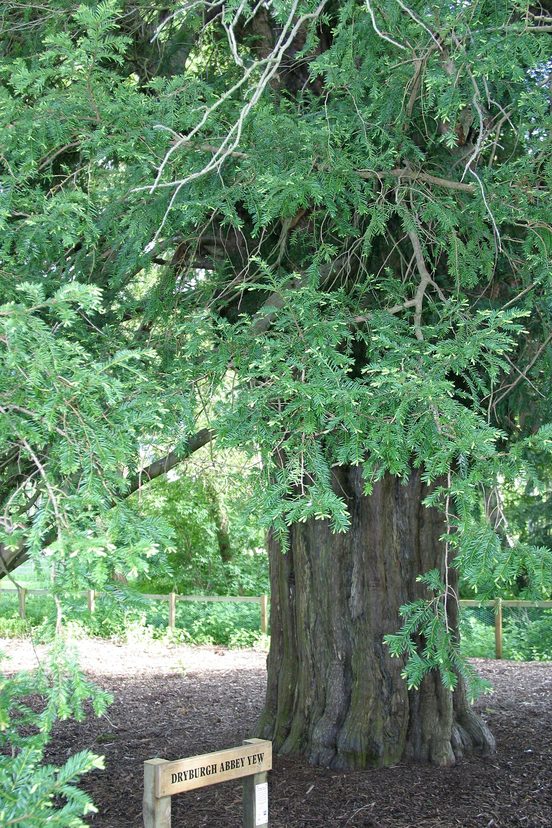
Allow time to walk among the trees: the old yew, the cedars and the river below. The Earl of Buchan’s obelisk to Hugh de Morville stands nearby.
Visiting
Tickets
Tickets are sold online through Historic Environment Scotland, which recommends booking ahead, and at the entrance. Booking online is £1 cheaper for adults.
The hotel link goes to Booking.com. This site earns nothing from it at present — it is here because it is the quickest way to check what is actually available.
Don't miss
- Scott’s grave In the north transept.
- The chapter house With its painted plaster.
- The cloister buildings Among the most complete in the Borders.
- The Dryburgh Yew One of Scotland’s oldest trees.
- The Wallace Statue Under a mile up the hill.
- Scott’s View The Eildons over the Tweed.
Insider tips
Do the Border abbeys in a day. Melrose is about three miles away, Jedburgh and Kelso a little further, and the Borders Abbeys Way links all four on foot. Stop at Scott’s View on the way to or from Melrose: tradition says the horses of Scott’s funeral procession paused there.
Common questions
How much does it cost to visit Dryburgh Abbey?
Dryburgh is run by Historic Environment Scotland. Online, an adult ticket is £7.50, concessions £6.00 and children £4.50; on the door they are £8.50, £6.80 and £5.00. Historic Scotland members and Explorer Pass holders go free.
When is Dryburgh Abbey open?
From 1 April to 30 September it is open daily from 9.30am to 5pm, and from 1 October to 31 March daily from 10am to 4pm. Last entry is 30 minutes before closing. It is closed on 25–26 December and 1–2 January.
Is Sir Walter Scott buried at Dryburgh?
Yes. Scott was buried in the north transept of the abbey church in 1832, in the burial place of his ancestors. Field Marshal Earl Haig, commander of the British army on the Western Front, was buried beside him in 1928.
Can you walk to Dryburgh from St Boswells?
Yes. A footbridge crosses the Tweed from the Newtown St Boswells side, and a riverside path leads past the little Temple of the Muses to the abbey. Historic Environment Scotland puts that walk at about 30 minutes from Newtown St Boswells. By road the abbey is about ten minutes’ drive from St Boswells, round the loop of the river.
What else is there to see near Dryburgh?
The huge red sandstone statue of William Wallace, put up in 1814, is under a mile north of the abbey. Scott’s View, the viewpoint over the Tweed and the Eildon Hills, is a few miles away by road. Melrose Abbey and Scott’s house at Abbotsford are also close.
Where to stay and eat nearby
The abbey has a small shop with self-service hot drinks and a picnic area. The Dryburgh Abbey Hotel is next door; St Boswells and Melrose have cafés, pubs and more places to stay.
More churches in Scotland
- Melrose Abbey — the finest of the Border abbeys, a few miles away
- Jedburgh Abbey — the most complete of the four
- Rosslyn Chapel — on the way back to Edinburgh