
St James’ Church, Louth
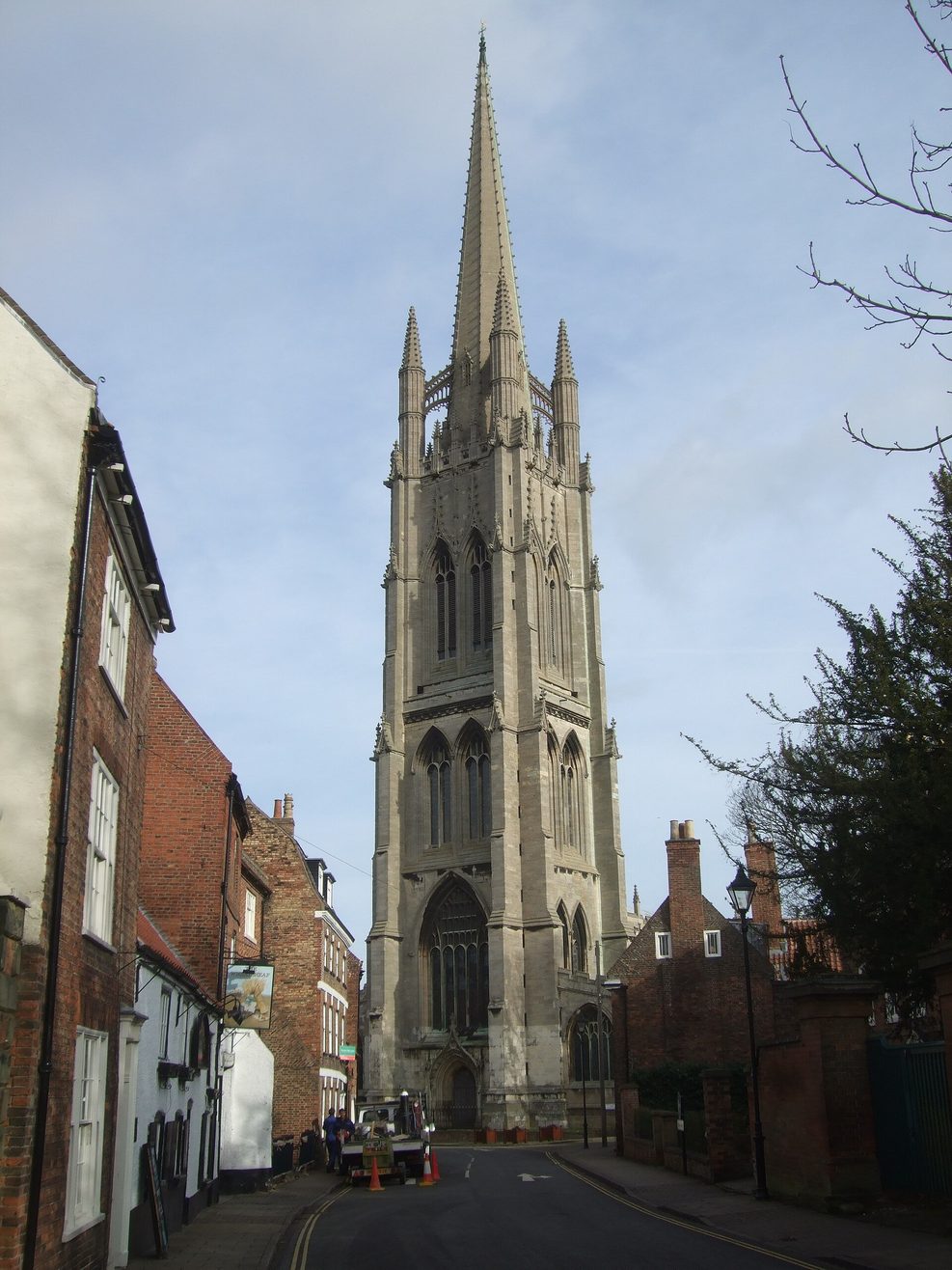
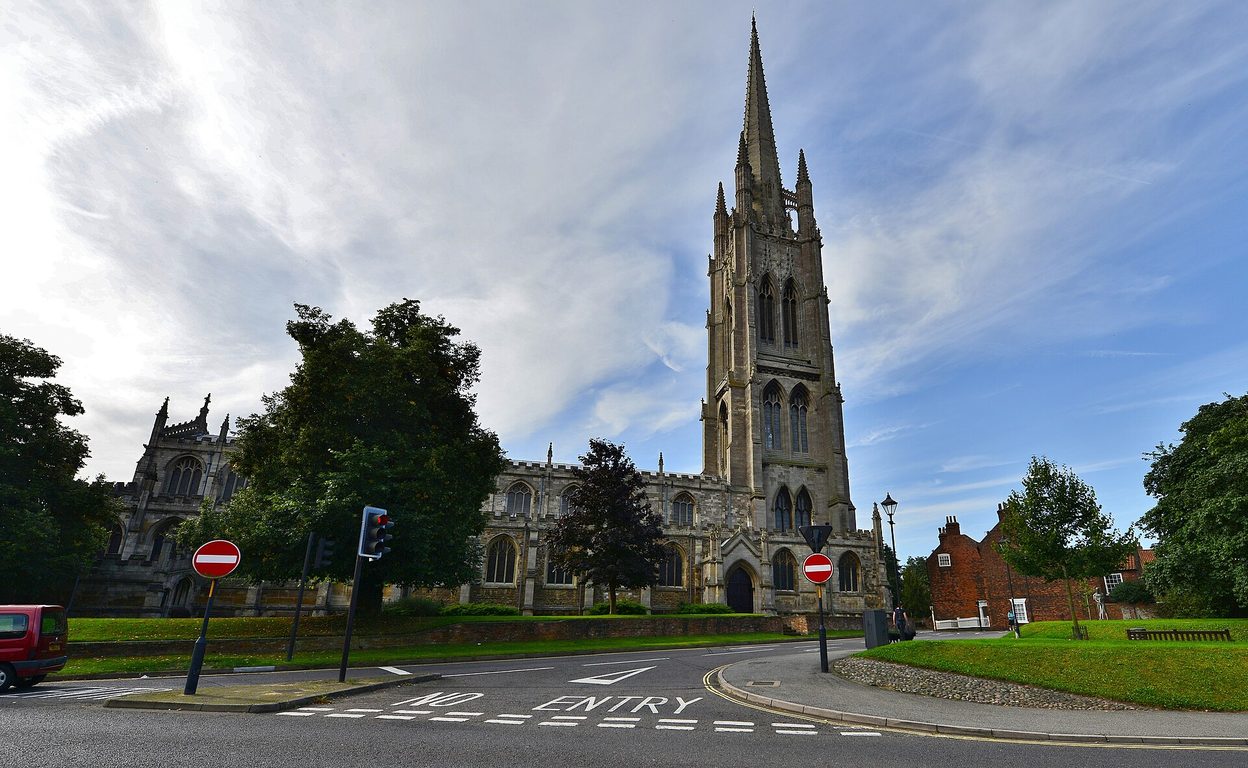
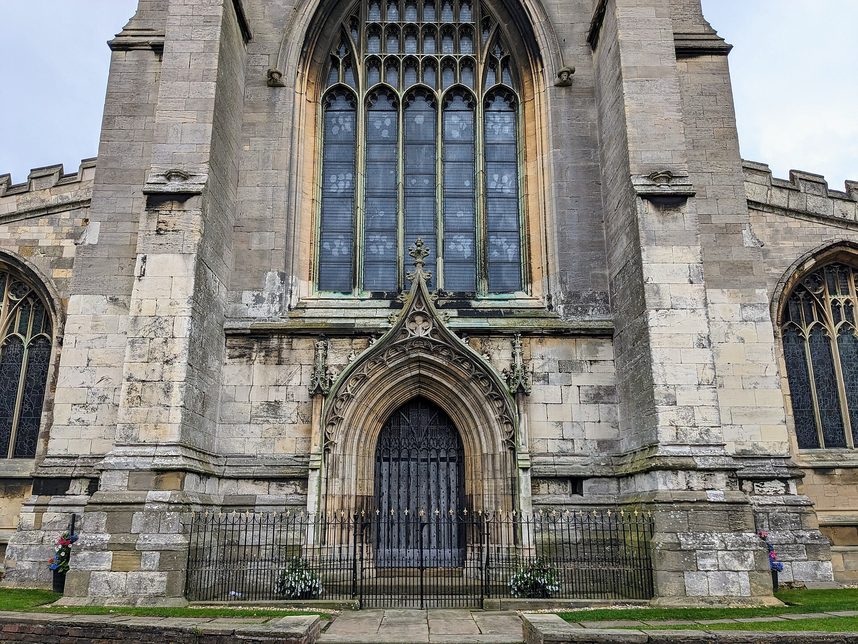
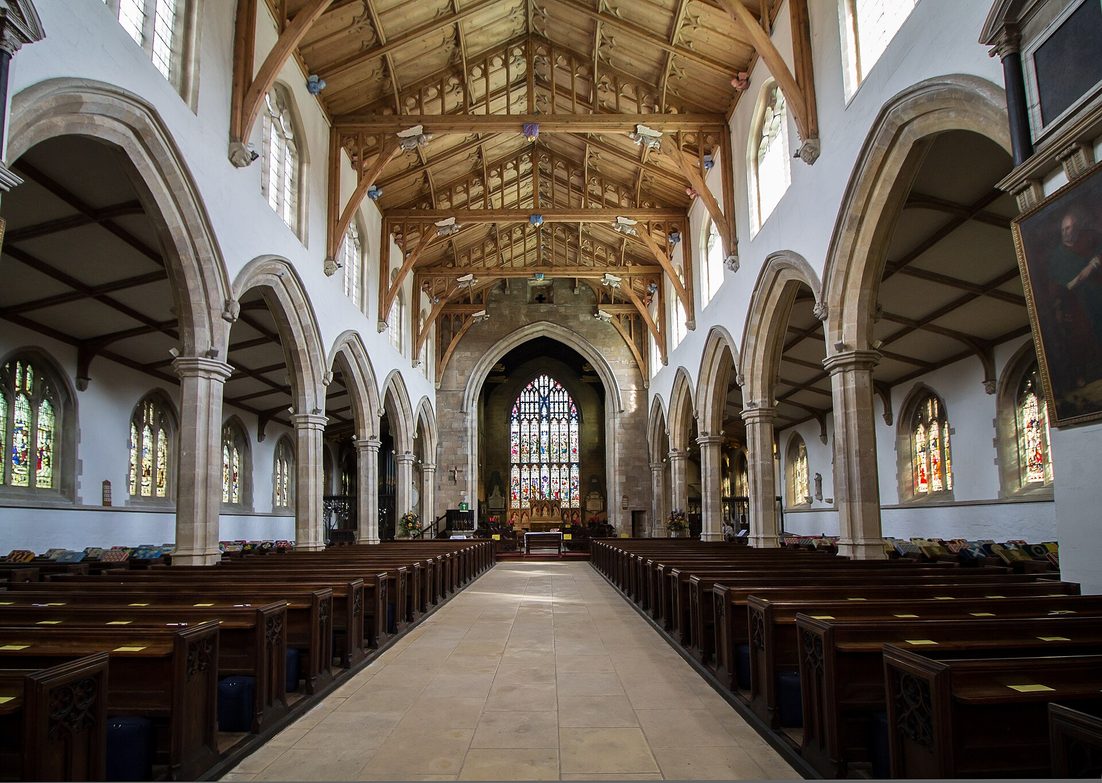
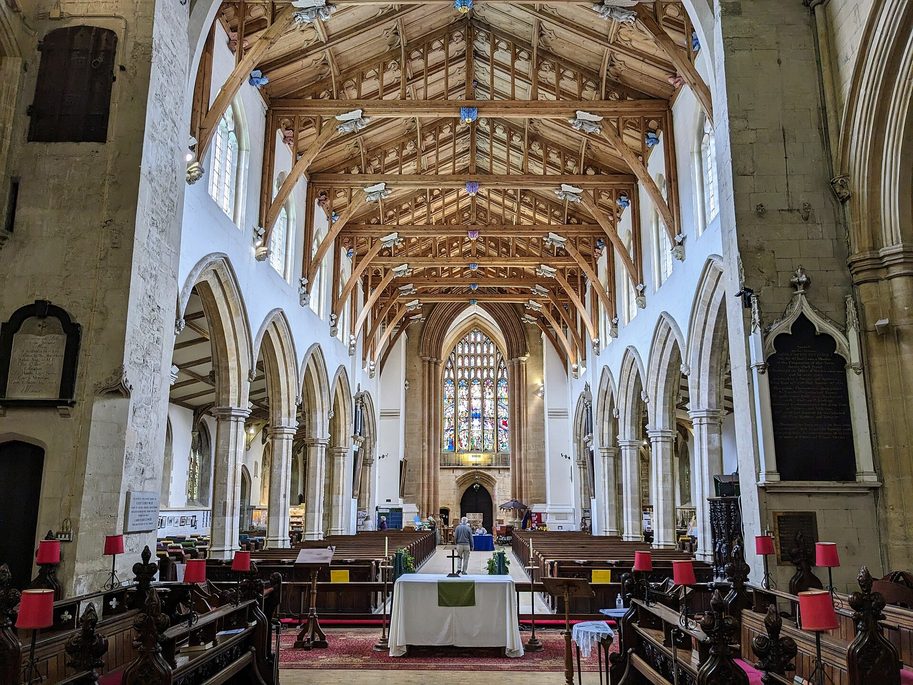
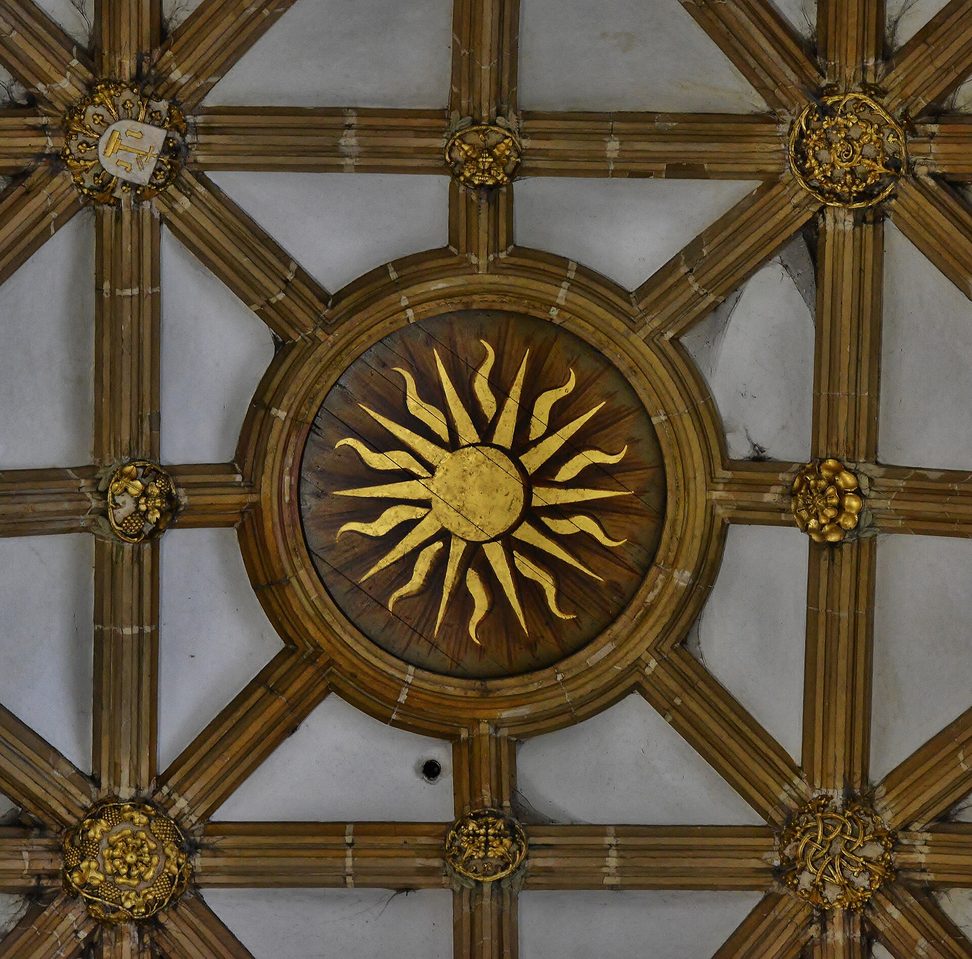
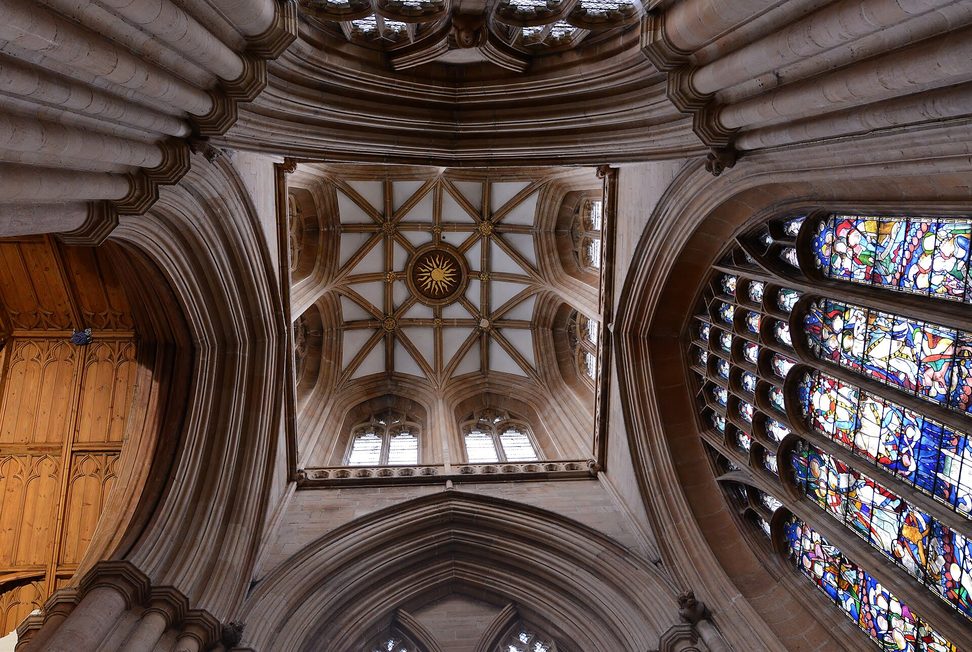
The spire of St James’ at Louth, finished in 1515, rises nearly 288 feet above a Lincolnshire market town, and is usually described as the tallest medieval spire on any parish church in England. Inside, the church is light and lofty, with a star-vaulted tower and a medieval treadwheel crane still in place.
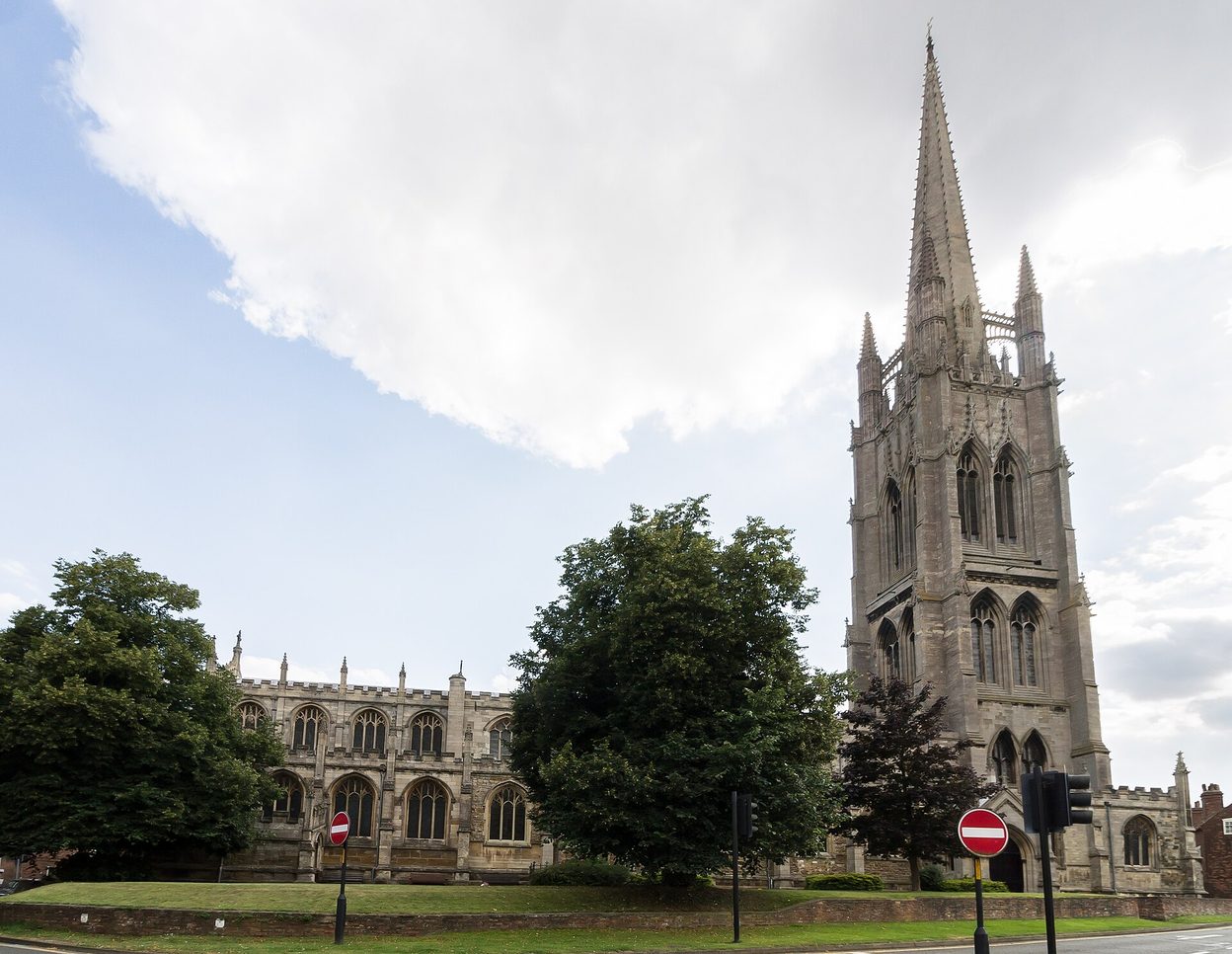
The tallest medieval parish spire
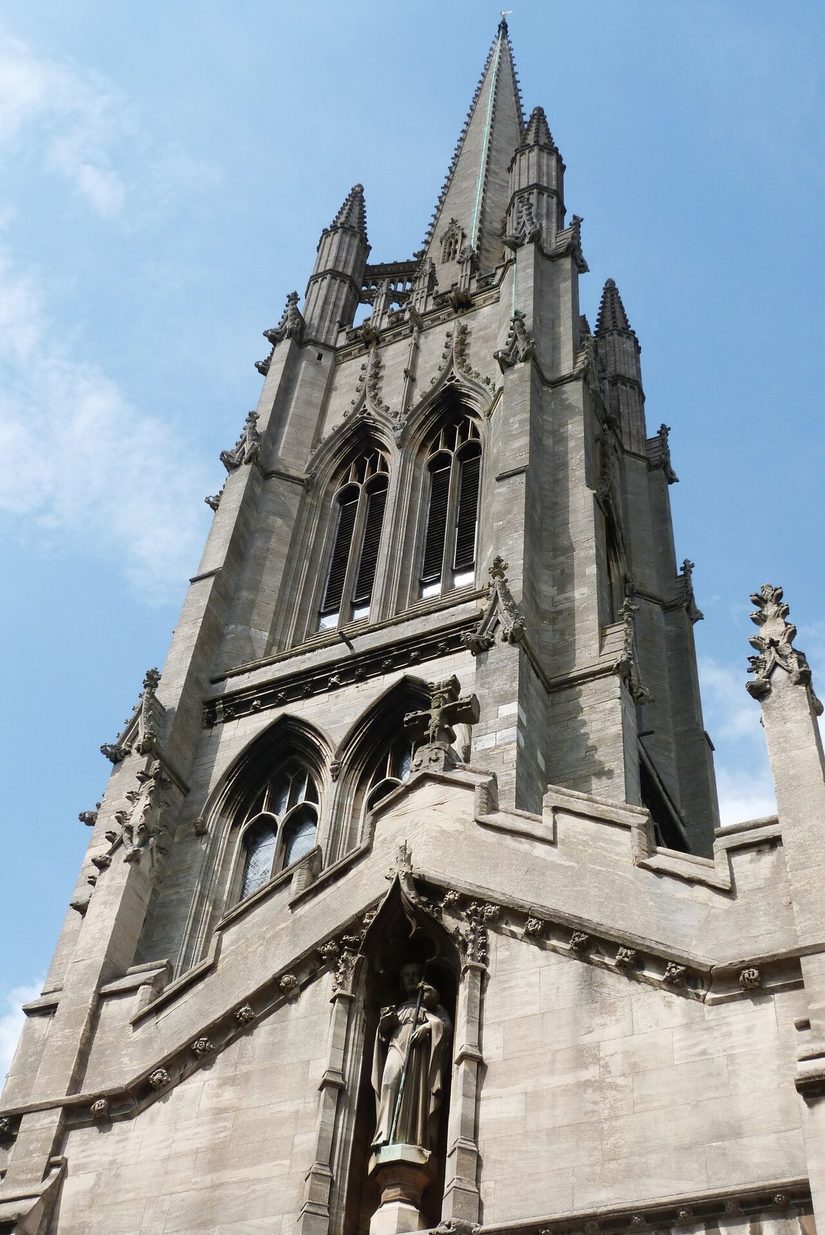
St James’ is the third church on the site. The nave and chancel were rebuilt in the fifteenth century, the tower was raised to its present height by 1499, and between 1501 and 1515 the town built the spire, under the masons John Cole, Christopher Scune and finally John Tempas of Boston. The weathercock went up on 13 September 1515; by tradition it is made from a copper basin taken from the Scots at Flodden. The stonework is 287 feet 6 inches high.
In October 1536 the Lincolnshire Rising against Henry VIII’s religious changes began in Louth, and the church was later stripped of its treasures. The spire has been damaged by storms many times and repaired; the church was restored by the Louth architect James Fowler in the 1860s.
The visitor’s cheat sheet
| Where | Westgate, Louth, Lincolnshire LN11 9YD |
|---|---|
| Opening hours | Usually Monday–Saturday 10am–1pm, often to 4pm when volunteers are available |
| Admission | Free; donations welcome |
| Tower climb | Wednesdays and Saturdays, by booking; 198 steps; not February to July (nesting peregrines) |
| Services | Sung Eucharist on Sundays at 10am |
| How long | Three-quarters of an hour; more with the tower climb |
Hours and admission checked against the official site in November 2026. They change; the official site is always the last word.
What to see
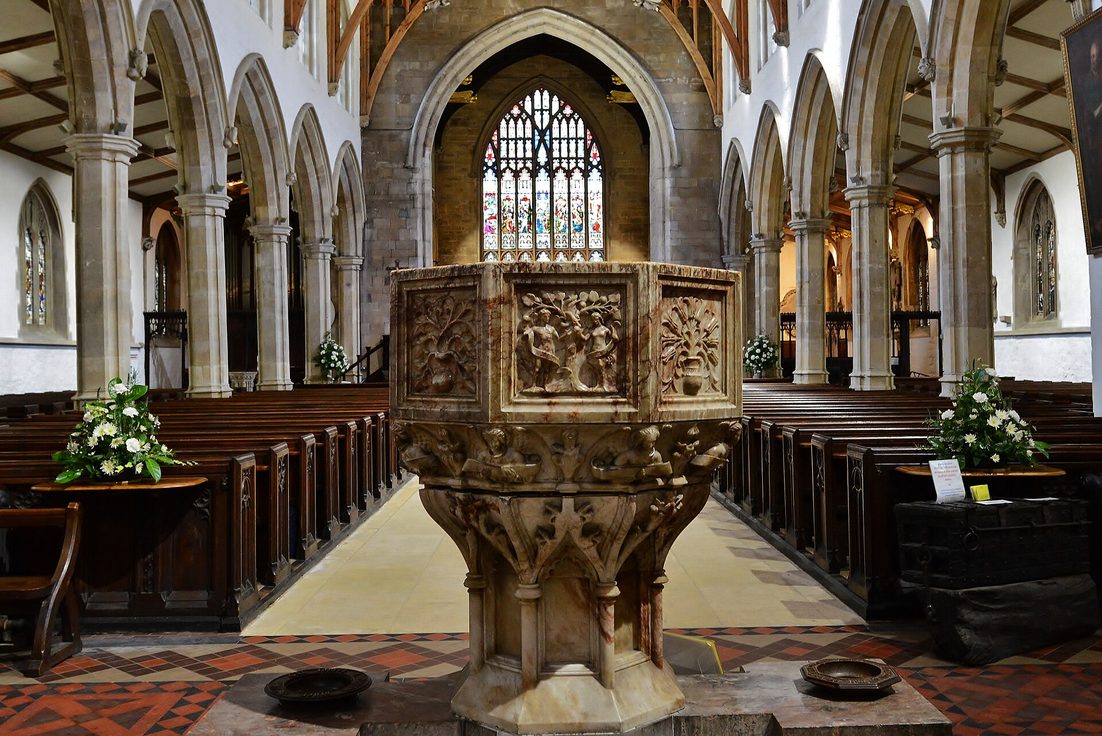
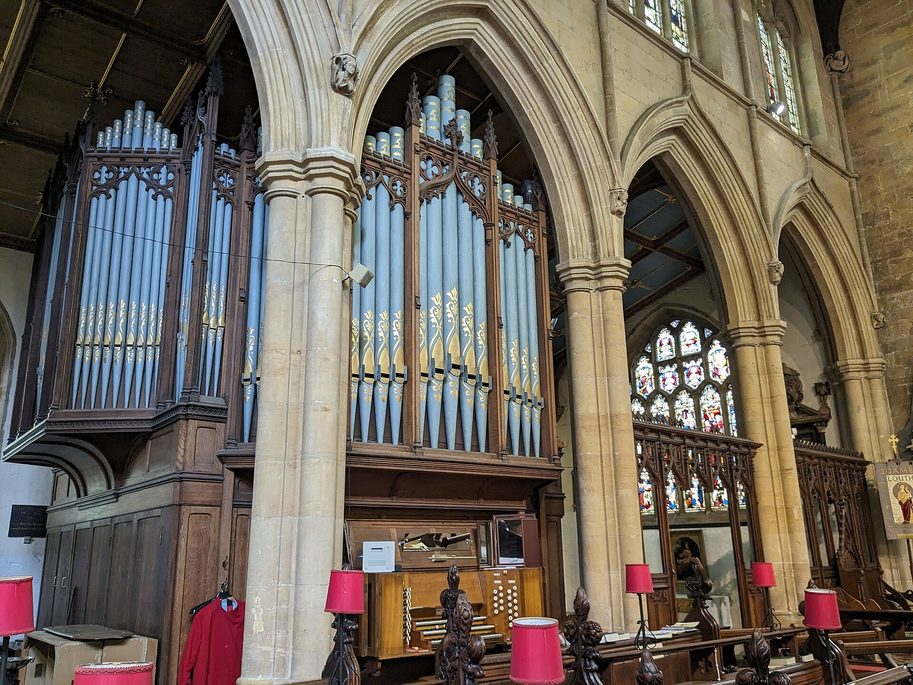
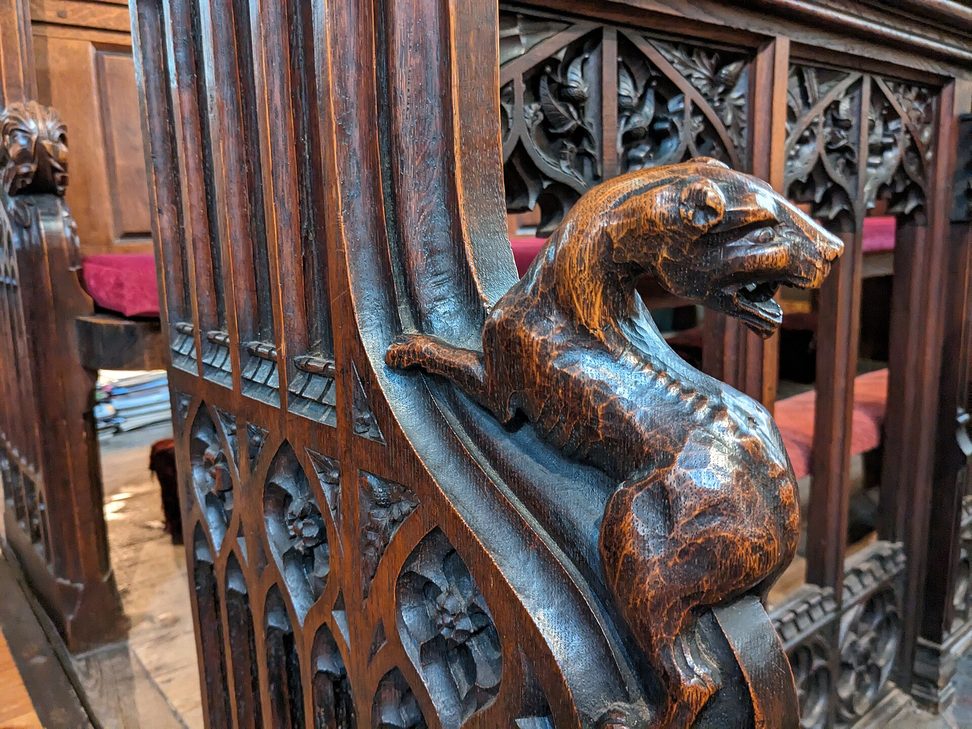
The interior is tall and full of light, with a high timber roof over the nave. The best moment is to stand under the tower and look up at the ribbed vault, with a golden sunburst, the badge of Edward IV, at its centre. Look for the pieces of the Louth Cross, Anglo-Saxon carved stones found in the rectory garden in 2015, and for the “Wild Mare”, a medieval treadwheel used to lift stone, which can be seen through a viewing door. The pew ends and other woodwork are nineteenth-century, as is the alabaster font.
Getting there
Louth is on the edge of the Lincolnshire Wolds, about 25 miles east-north-east of Lincoln. The town has had no passenger trains since 1970, so most visitors come by car; there are town-centre car parks within walking distance of the church, which stands on Westgate, close to the town centre.
Where to stay
Louth has a few hotels and guest houses in and around the town.
This link goes to Booking.com. This site earns nothing from it at present — it is here because it is the quickest way to check what is actually available.
Don’t miss
- The spire Finished 1515; 287 feet of stone.
- The tower vault With Edward IV’s sunburst.
- The Wild Mare A medieval treadwheel.
- The tower climb 198 steps, by booking.
Insider tips
See the spire from the Wolds. It is visible for miles; the views of it along Westgate and from the edge of the town are the classic ones.
Book the climb ahead. The tower climb runs only on Wednesdays and Saturdays outside the nesting season.
Common questions
How tall is Louth church spire?
The stonework rises 287 feet 6 inches (87.6 m), and with the weathercock the spire is about 293 feet. It was built between 1501 and 1515 and is the tallest medieval spire on a parish church in England.
Can you climb Louth church tower?
The tower (not the spire) can be climbed on Wednesdays and Saturdays by booking ahead: 198 steps up a winding stair. Climbs stop from February to the end of July while peregrine falcons nest on the spire.
When is St James’ open?
Usually Monday to Saturday from 10am, with volunteers on hand until about 4pm when they are available. Check with the parish before a special trip.
Is it free to visit?
There is no admission charge; donations are welcome.
How do you get to Louth?
Louth has no railway station, so most visitors come by car or bus. The church is on Westgate, close to the town centre.
More English churches
- Boston Stump — the other great Lincolnshire tower
- Lincoln Cathedral — the cathedral of Lincolnshire
- Heckington Church — a Decorated village church in Lincolnshire
See all the cathedrals and churches worth visiting in England →