
St Nicholas’ Church, Studland
A short walk from the beach at Studland, in Dorset’s Isle of Purbeck, St Nicholas’ is one of the most complete Norman village churches in England: a sturdy little building of the twelfth century with a squat tower, vaulted chancel, and a row of carved heads and figures under its eaves.
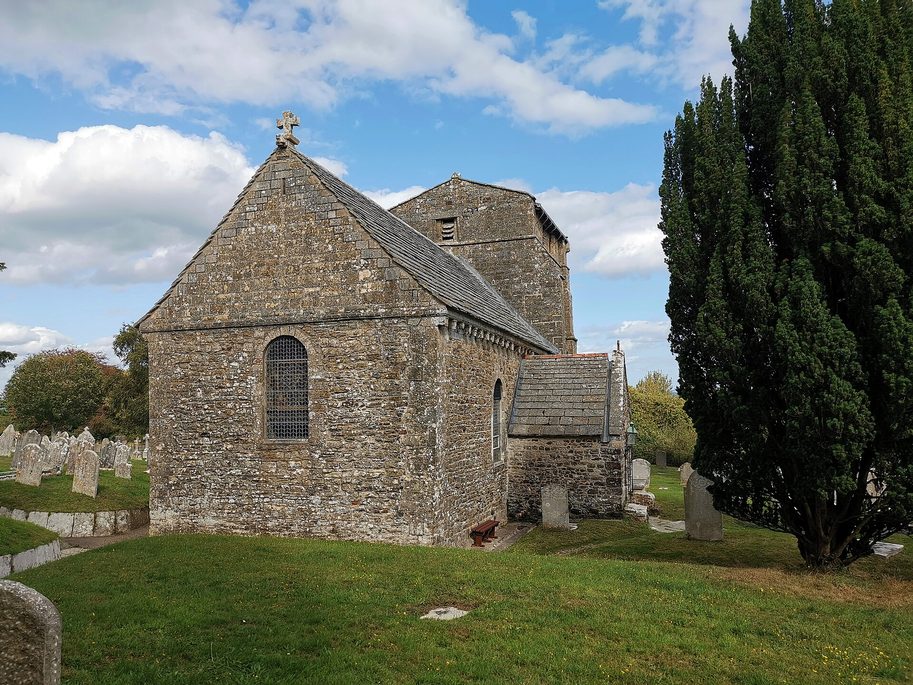
A complete Norman church
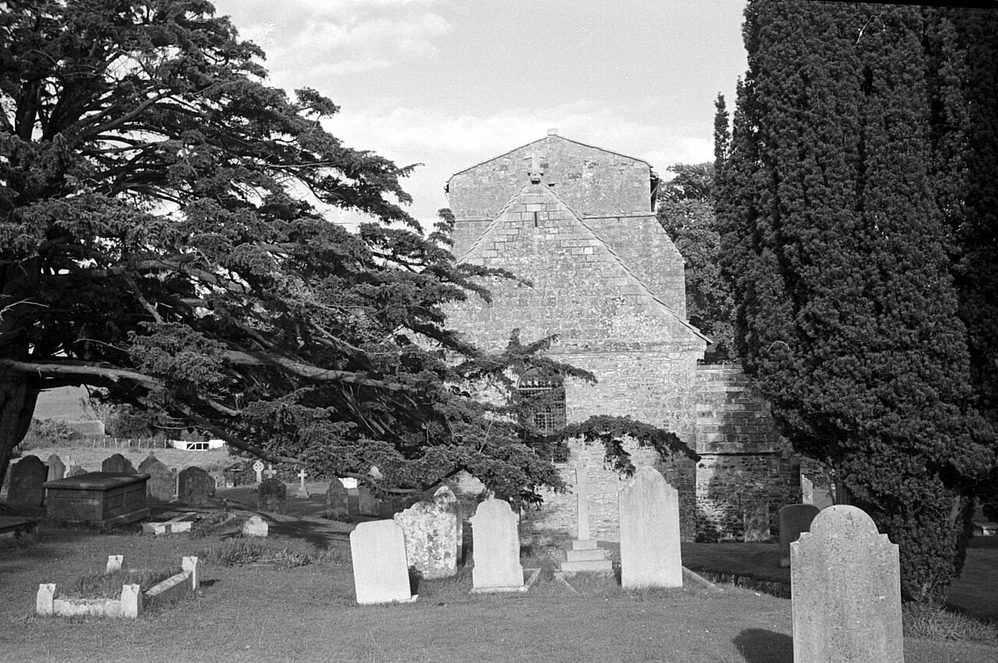
There was a church at Studland in Saxon times, and parts of the walls may be older than the Conquest, but the church as it stands is Norman, built in the second quarter of the twelfth century: nave, a short central tower and chancel. The tower was left unfinished, its third stage incomplete, and has a low roof. Pevsner is quoted as calling it one of the most complete Norman village churches in England. The walls were underpinned around 1880, and the nave roof was rebuilt in 1930–31.
The visitor’s cheat sheet
| Where | Church Road, Studland, Swanage, Dorset BH19 3AT |
|---|---|
| Opening hours | Usually open daily in daylight |
| Admission | Free; donations welcome |
| Services | Sundays at 10am |
| Parking | National Trust and village car parks a short walk away |
| How long | Half an hour |
Hours and admission checked against the official site in November 2026. They change; the official site is always the last word.
What to see
The corbel table
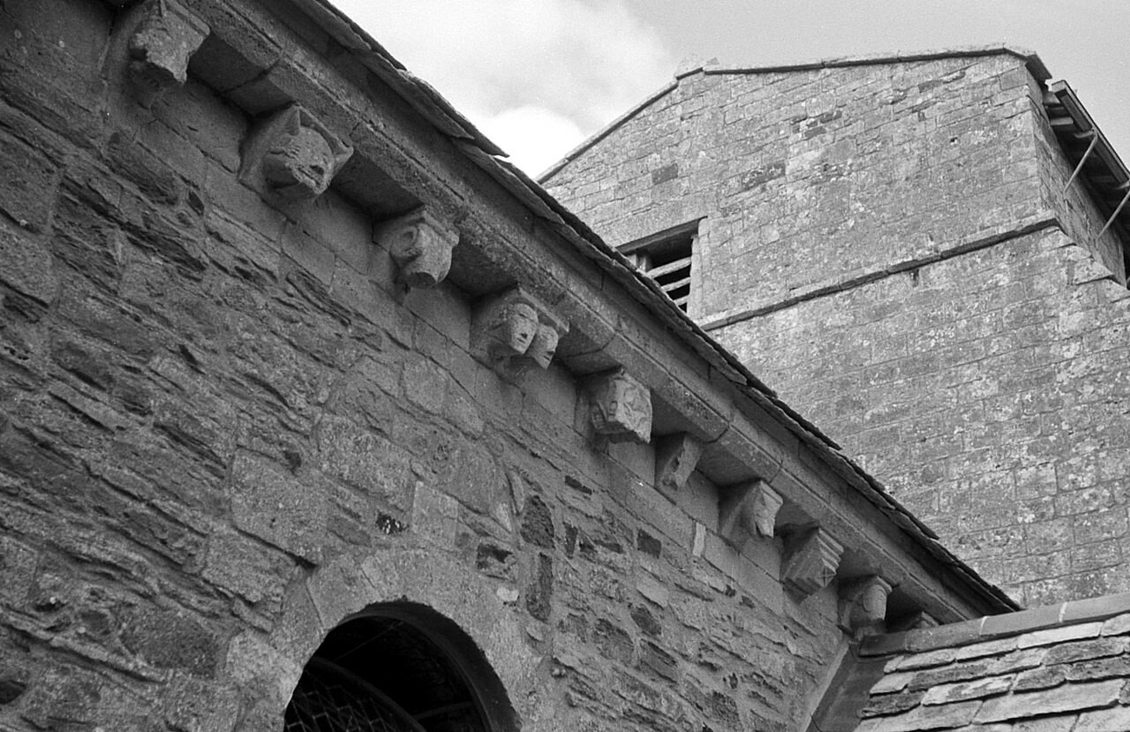
Under the eaves of the nave, on both sides, is a row of carved twelfth-century corbels: grotesque heads, animals and human figures, including a sheela-na-gig and a couple embracing. Some were defaced long ago, but many are still sharp.
Inside
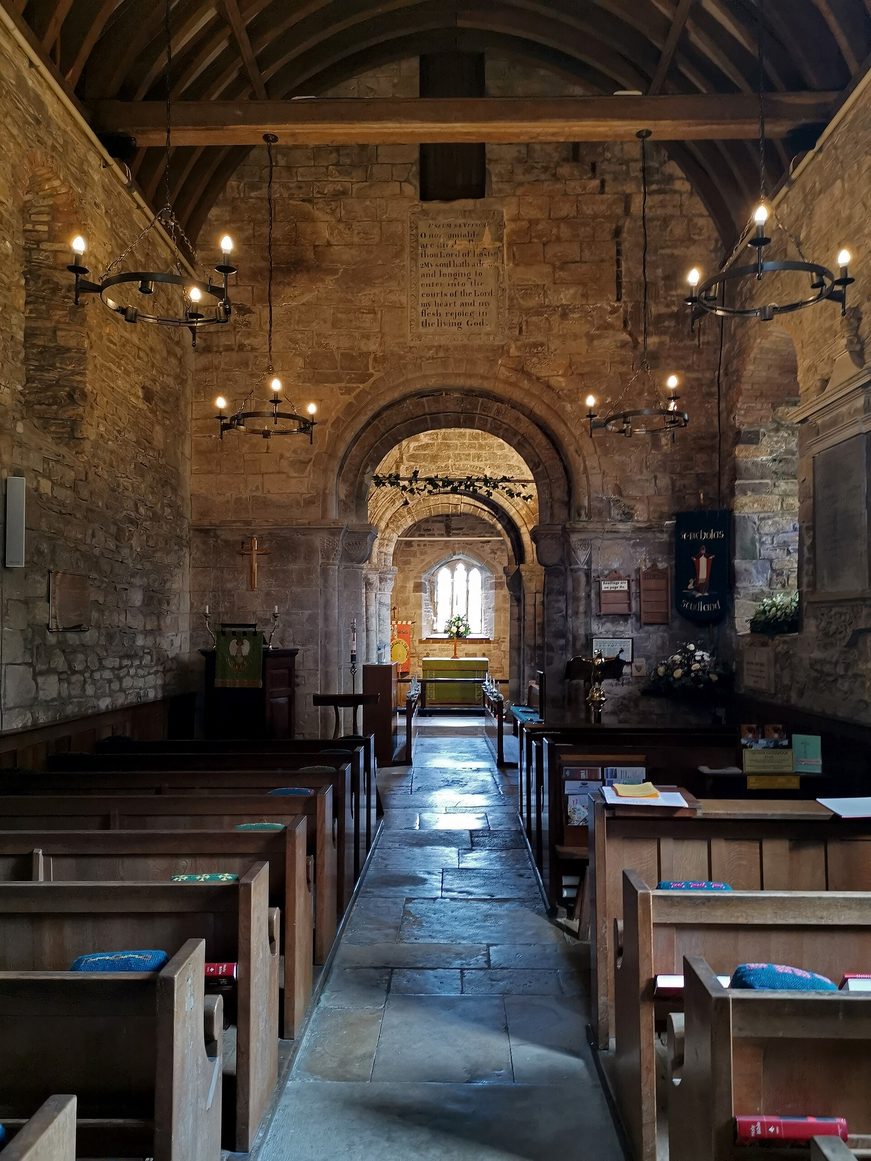
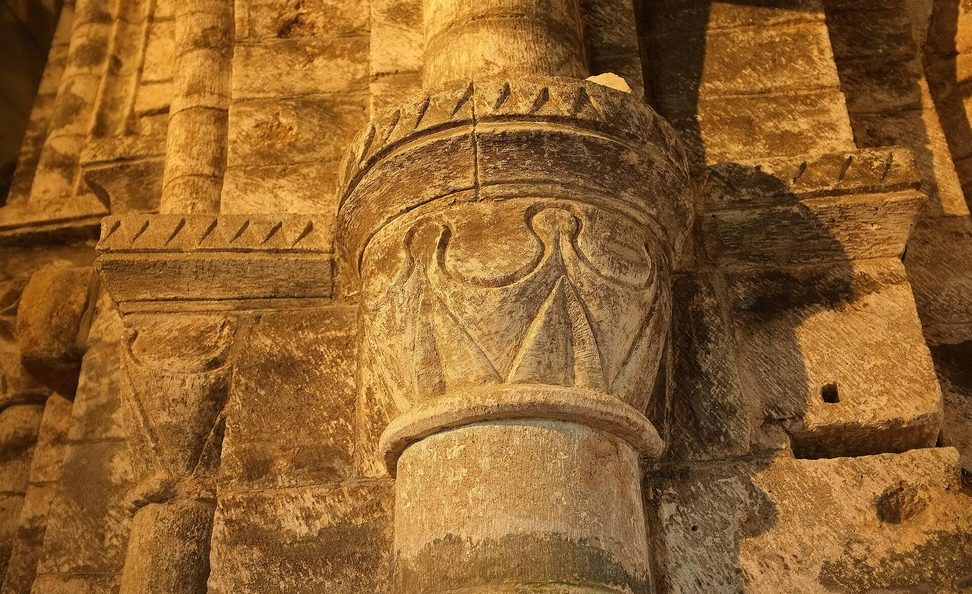
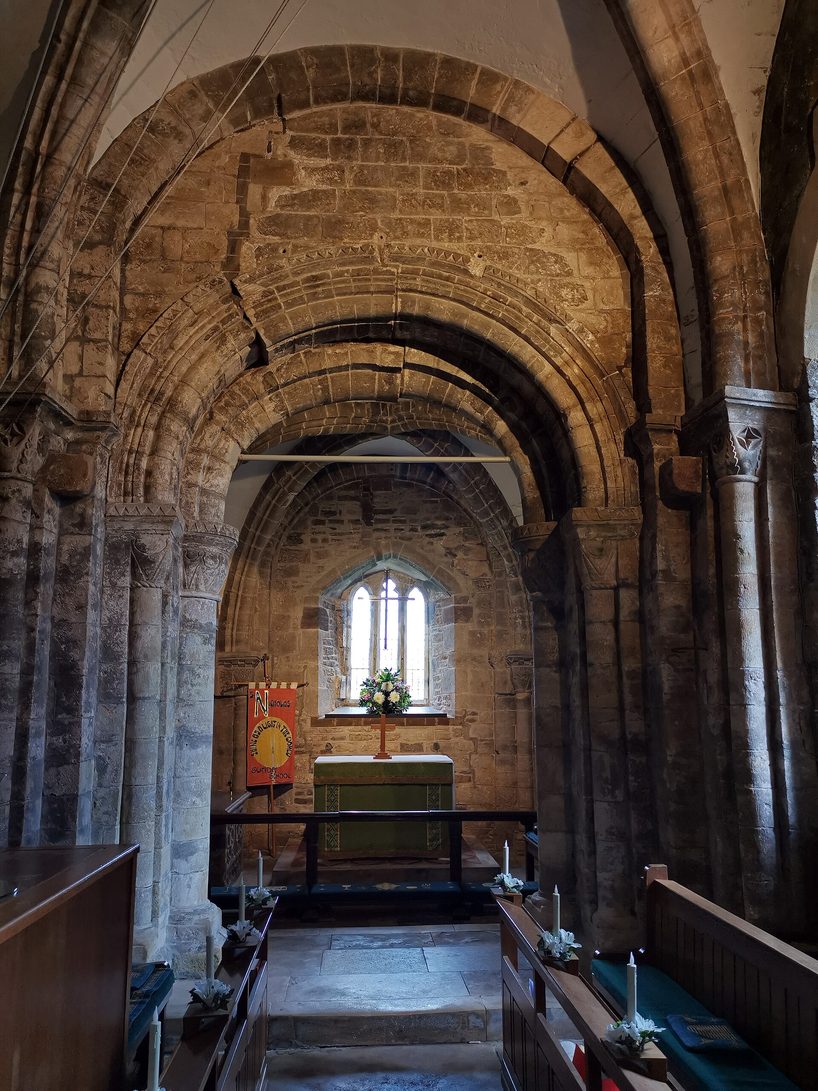
Inside, the church is small and dim, with round arches under the tower carved with chevron and with carved capitals, and a rib-vaulted chancel and sanctuary. There is a sixteenth-century table tomb in the sanctuary and memorials to Studland families.

Getting there
Studland is on the B3351 in the Isle of Purbeck, between Swanage and the Sandbanks chain ferry from Poole; the church is a short walk from the beach and the village car parks. The Purbeck Breezer bus 50 normally runs between Bournemouth and Swanage via the ferry; while the ferry is out of service, check Morebus for the revised service, and the road route from Poole is through Wareham and Corfe Castle. Old Harry Rocks is a walk away along the coast path.
Where to stay
Swanage, two to three miles south, has the most places to stay; Studland itself has a few hotels.
This link goes to Booking.com. This site earns nothing from it at present — it is here because it is the quickest way to check what is actually available.
Don’t miss
- The corbel table Twelfth-century heads and figures.
- The tower arches Norman chevron.
- The chancel Rib-vaulted.
- The setting A walk from the beach.
Insider tips
Walk to Old Harry. The coast path to Old Harry Rocks, the chalk stacks at the end of the Purbeck hills, is reached from the village; the National Trust’s circular walk from South Beach car park is about three and a half miles.
Check the ferry first. If you are coming from Poole or Bournemouth, check that the Sandbanks ferry is running, or allow for the long way round.
Common questions
How old is Studland church?
Most of it was built in the twelfth century, between about 1125 and 1140, on the site of an earlier Saxon church. It is listed Grade I.
What are the carvings on the outside?
A corbel table runs under the eaves of the nave: a row of carved stones with grotesque heads, animals and figures, some of them frankly bawdy, as Romanesque carving often was.
When is it open?
Usually every day in daylight hours.
Is it free?
Yes; donations are welcome.
Is the Sandbanks ferry running?
The chain ferry from Sandbanks to Studland was paused from 2 November 2026 for a scheduled refit, reported as about seven weeks; check the ferry company’s website. The road route is through Wareham, Corfe Castle and Swanage.
More English churches
- Wimborne Minster — the chained library of Dorset
- Christchurch Priory — a great priory church by the sea
- Sherborne Abbey — fan vaulting in north Dorset
See all the cathedrals and churches worth visiting in England →