
Watts Cemetery Chapel, Compton
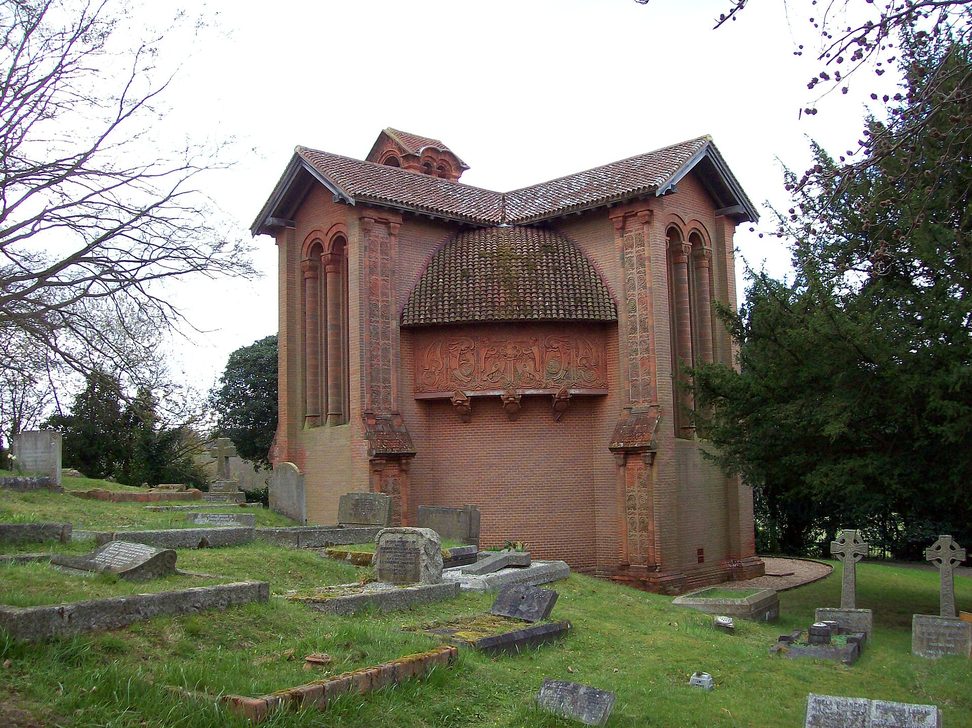
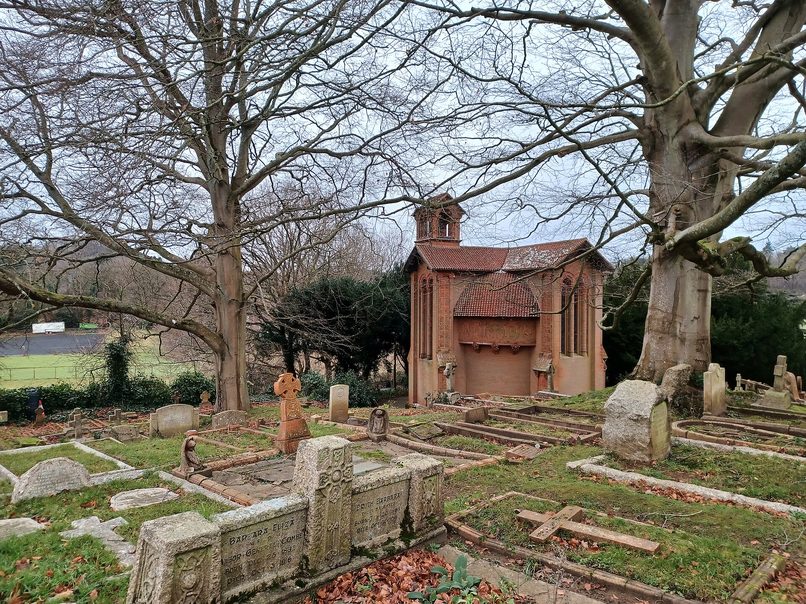
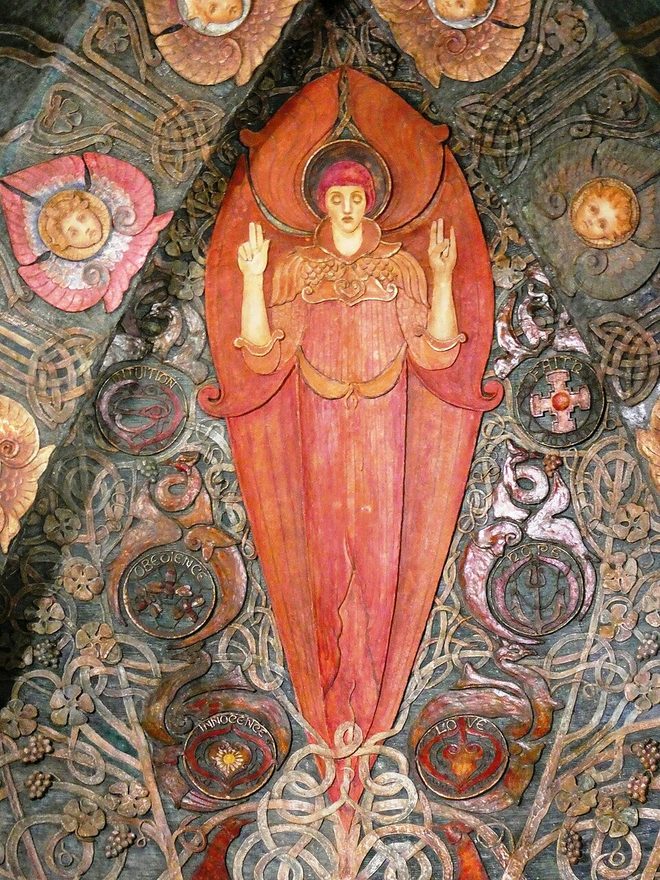
On a hillside cemetery at Compton, near Guildford, the Watts Cemetery Chapel is a small red-brick building covered inside and out in Arts and Crafts decoration: terracotta made by the villagers, and an interior glowing with painted angels and a tree of life. It was designed by Mary Seton Watts, wife of the painter G. F. Watts, whose gallery is down the lane.
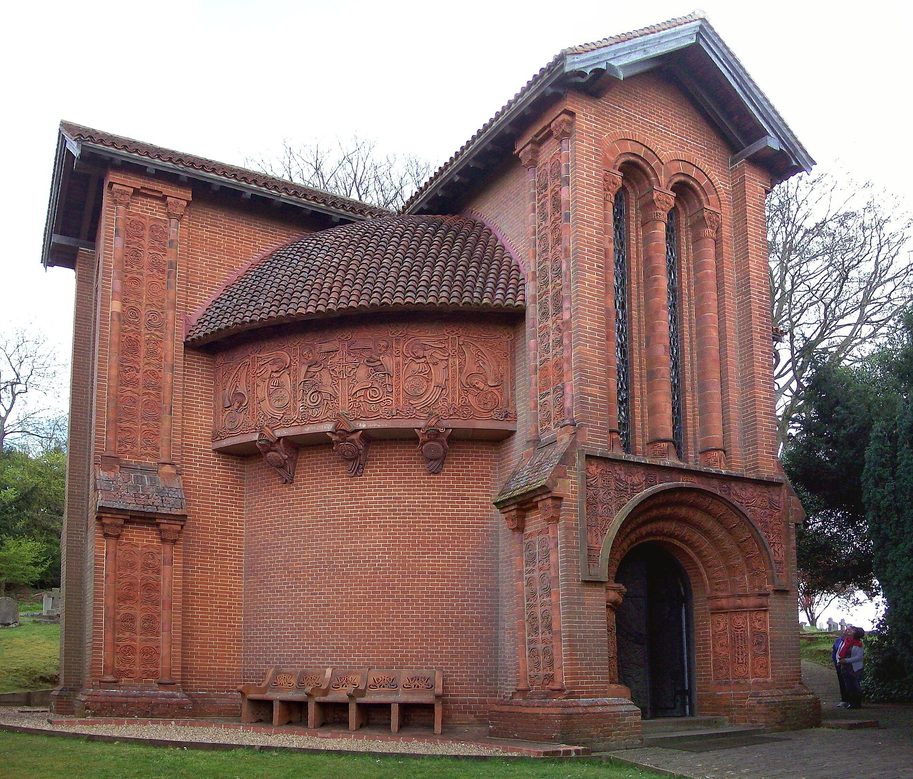
A village chapel by Mary Watts
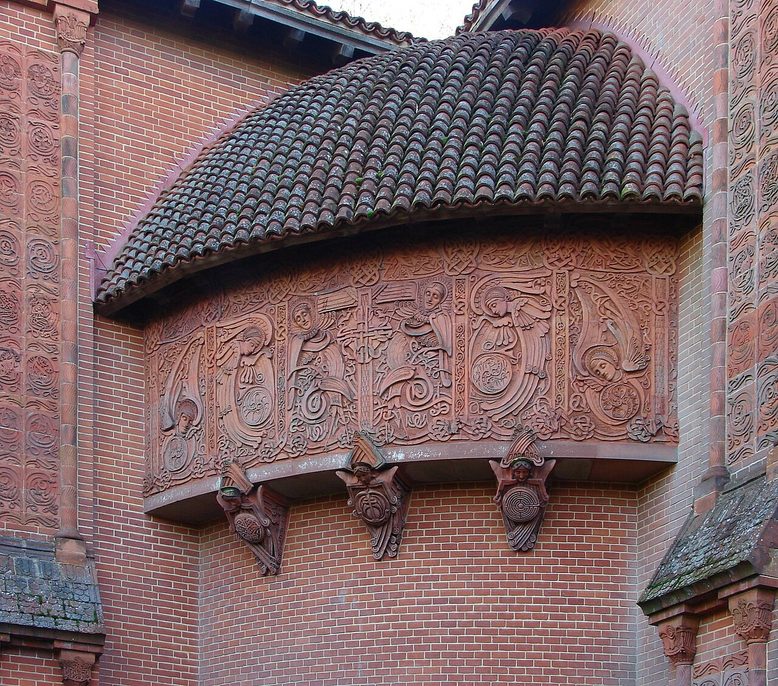
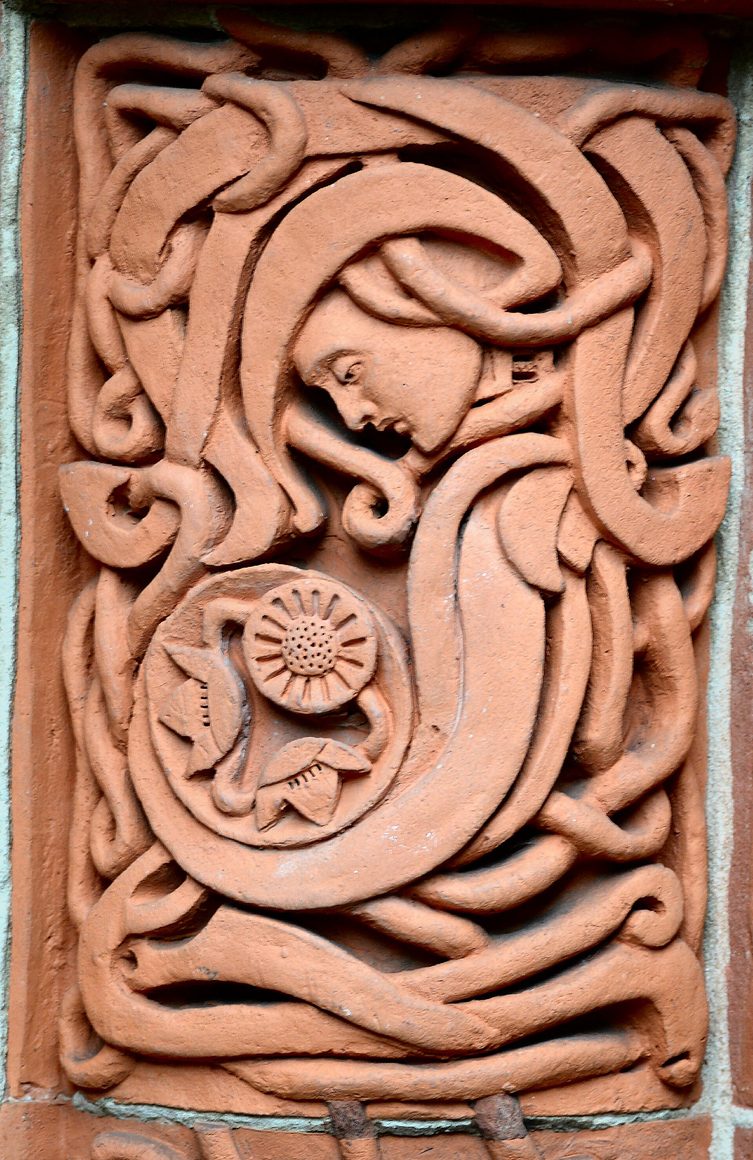
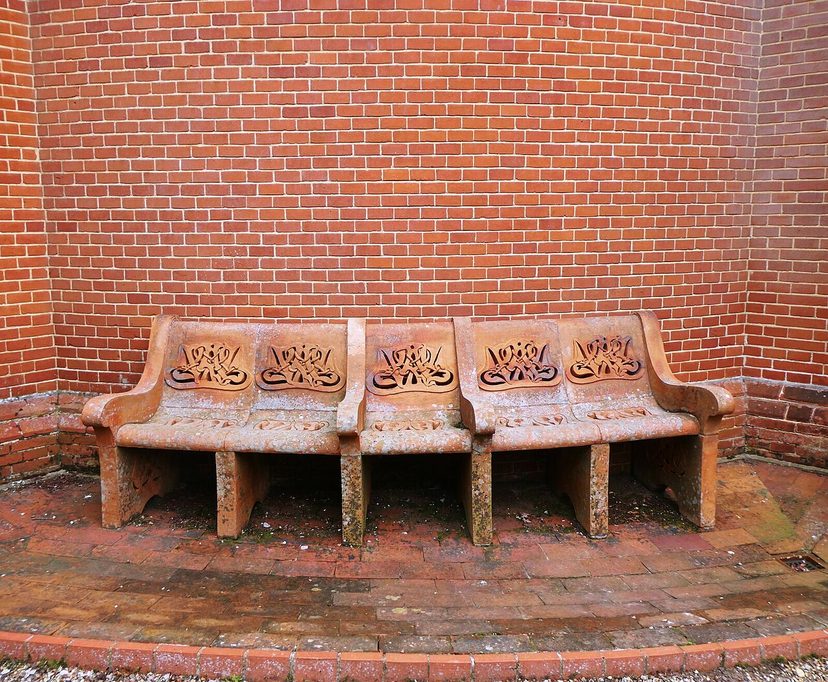
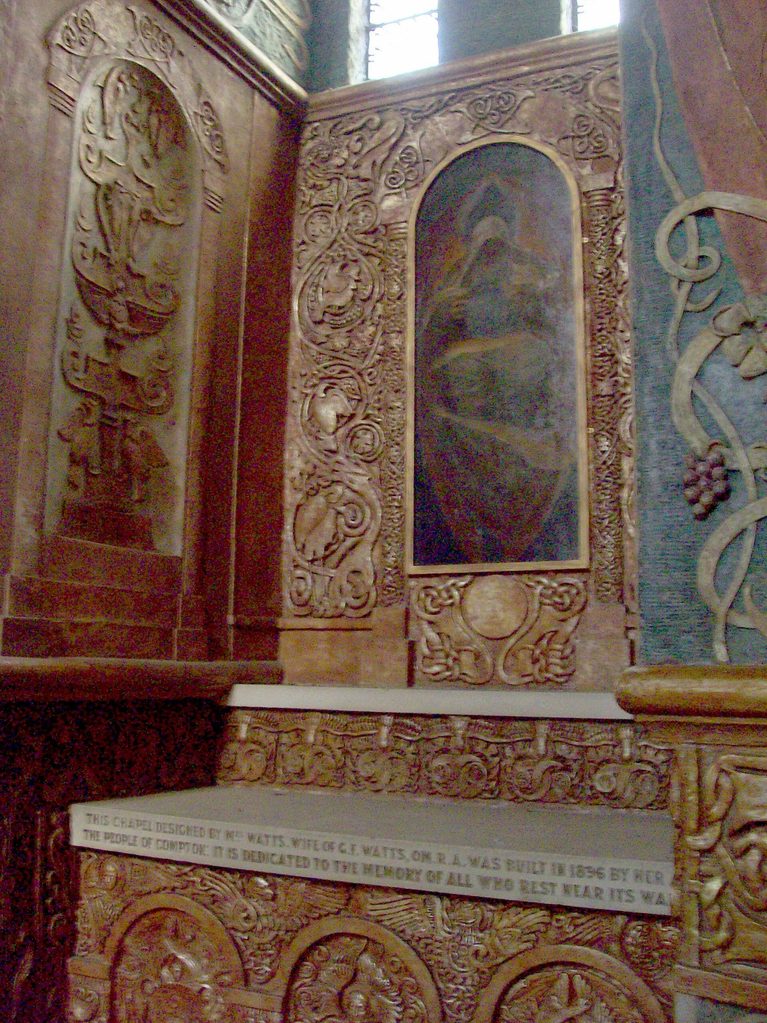
When Compton opened a new cemetery in the 1890s, Mary Watts offered to build its chapel. She designed it herself, and it was built in 1896–98, mostly paid for by her husband, the painter George Frederic Watts. She organised evening classes in clay modelling, taught by Louis Deuchars, and some seventy villagers made the terracotta that covers the building; from these classes grew the Compton Potters’ Arts Guild. The interior was decorated with painted gesso panels from 1901, a project that ran to about 1904.
The building is a mixture of Celtic, Romanesque and Art Nouveau: a circular plan with four arms, red brick and terracotta outside, and inside an explosion of colour. It is listed Grade I.
The visitor’s cheat sheet
| Where | Down Lane, Compton, Guildford, Surrey GU3 1DQ |
|---|---|
| Opening hours | Chapel daily 10am–4pm; closed 24–26 December. Watts Gallery Wednesday–Sunday and bank holidays 10.30am–4pm |
| Admission | Chapel and cemetery free; Watts Gallery and Limnerslease by ticket |
| Tours | Chapel tours on Fridays; ask at the Watts Gallery visitor centre |
| Parking | Watts Gallery car park (small charge) |
| How long | Half an hour for the chapel; half a day with the gallery |
Hours and admission checked against the official site in November 2026. They change; the official site is always the last word.
What to see
The terracotta
Walk round the outside first: the terracotta bands, panels and doorway are full of symbols, angels and interlace, each made by hand in Compton.
The interior
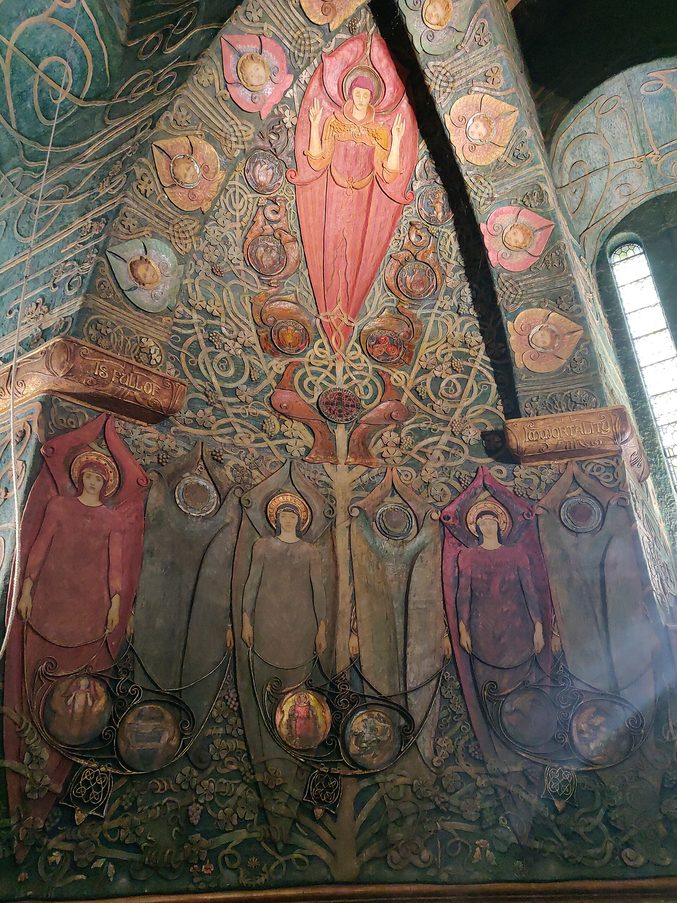
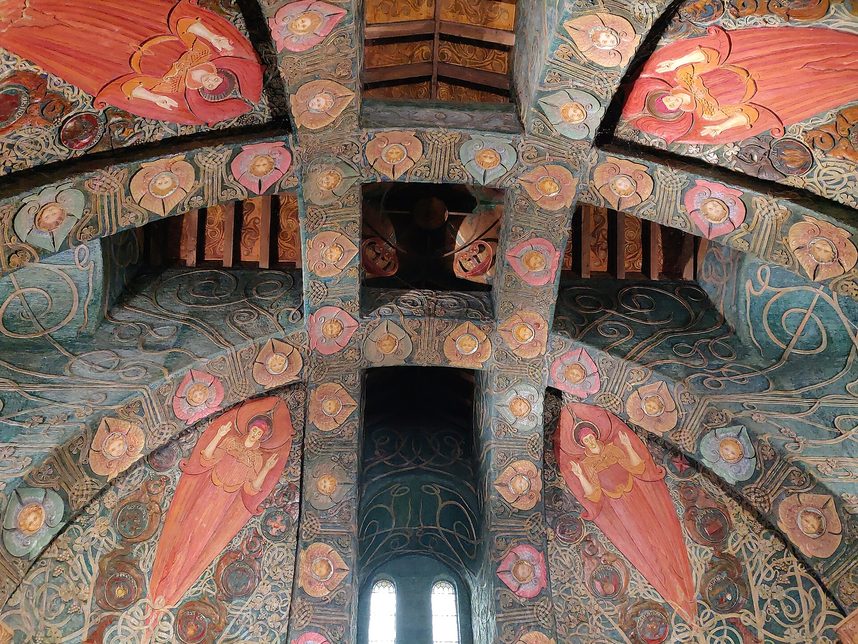
Inside, the walls and ceiling are covered in raised and painted gesso: a tree of life, and angels in deep reds and golds rising to the centre of the roof. Over the altar is The All-Pervading, a painting by G. F. Watts.

The Watts Gallery
Down the lane is the Watts Gallery – Artists’ Village, opened in 1904 to show G. F. Watts’s work, with the Watts’ home and studios at Limnerslease, a shop and a café. The galleries are open Wednesday to Sunday and need a ticket.
Getting there
Compton is just off the A3 about three miles south-west of Guildford. The chapel is on Down Lane, a five- to ten-minute walk from the Watts Gallery. Bus 46 from Guildford runs hourly from Monday to Saturday to the Watts Gallery stop.
Where to stay
Guildford, three miles away, has the widest choice; Godalming is close too.
This link goes to Booking.com. This site earns nothing from it at present — it is here because it is the quickest way to check what is actually available.
Don’t miss
- The terracotta Made by the villagers.
- The interior Painted angels and a tree of life.
- The altar A painting by G. F. Watts.
- The cemetery Memorials of the Wattses; Aldous Huxley’s ashes.
Insider tips
Visit the chapel any day. It is open daily and free, even when the galleries are closed on Mondays and Tuesdays (except bank holidays).
Combine with Guildford. Guildford Cathedral is a short drive away.
Common questions
Who designed the Watts Chapel?
Mary Seton Watts (1849–1938), artist and wife of the painter G. F. Watts. She designed it, and villagers made the terracotta for it in evening classes she organised.
Is the Watts Chapel free to visit?
Yes. The chapel and cemetery are free; the Watts Gallery galleries and the Watts’ house, Limnerslease, need a ticket.
When is the chapel open?
Daily, 10am to 4pm, except Christmas Eve, Christmas Day and Boxing Day; it may close for private services.
Who is buried in the cemetery?
G. F. and Mary Watts are commemorated in the cloister of the cemetery, and the ashes of the writer Aldous Huxley lie in his parents’ grave.
How do you get there?
Compton is just off the A3, three miles south-west of Guildford. Bus 46 from Guildford runs hourly Monday to Saturday to the Watts Gallery stop; the chapel is a five- to ten-minute walk from the gallery.
More English churches
- Guildford Cathedral — a twentieth-century cathedral on a hill
- Winchester Cathedral — the longest Gothic nave in Europe
- Chichester Cathedral — the cathedral of Sussex
See all the cathedrals and churches worth visiting in England →