
Leicester Cathedral
For more than five hundred years nobody knew where Richard III lay. Then in 2012 archaeologists found his skeleton under a council car park in Leicester, and in March 2015 the last English king to die in battle was reburied in the cathedral across the road. Leicester Cathedral is a modest medieval parish church with a Victorian spire, and his tomb has made it one of the most visited churches in the Midlands.
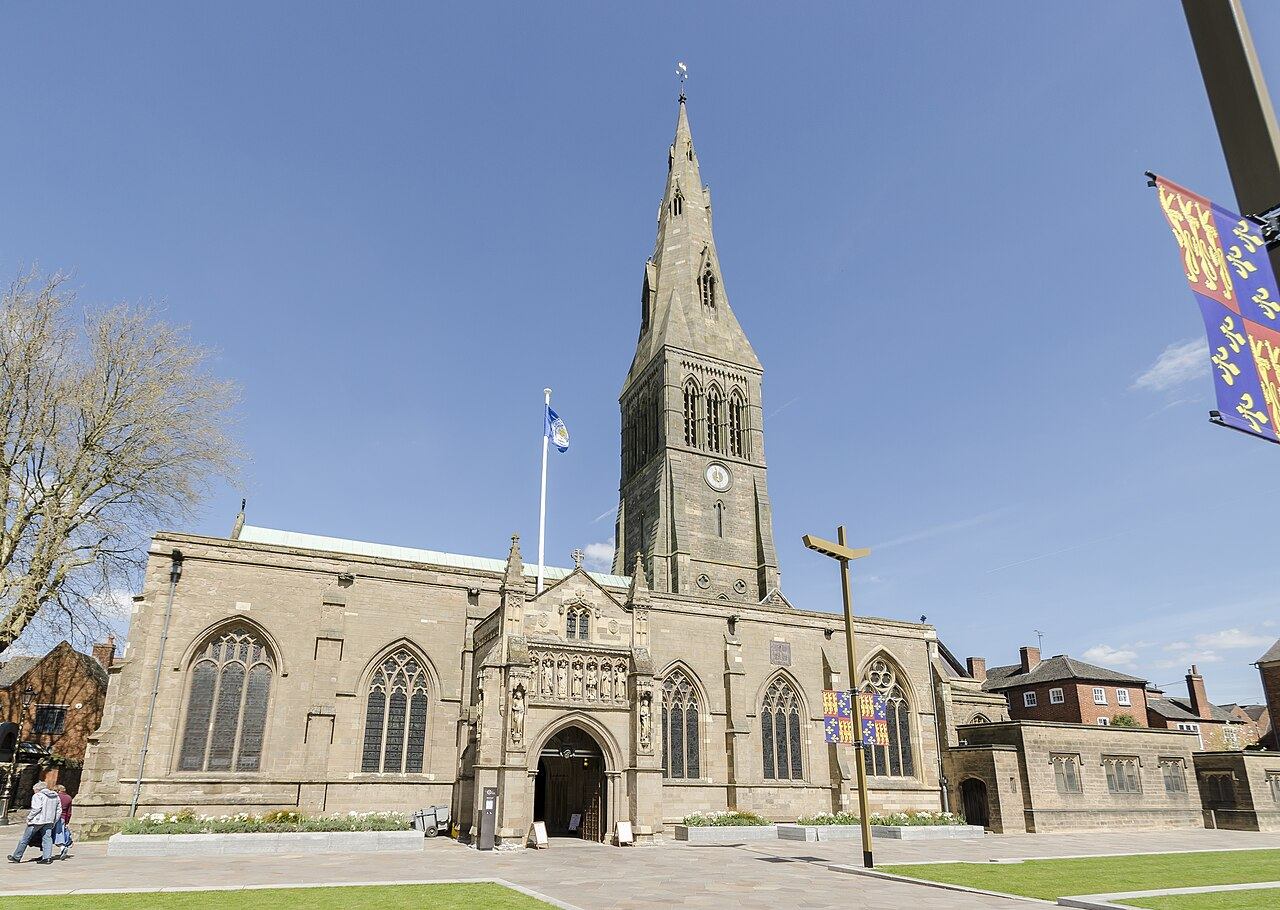
St Martin's: parish church to cathedral
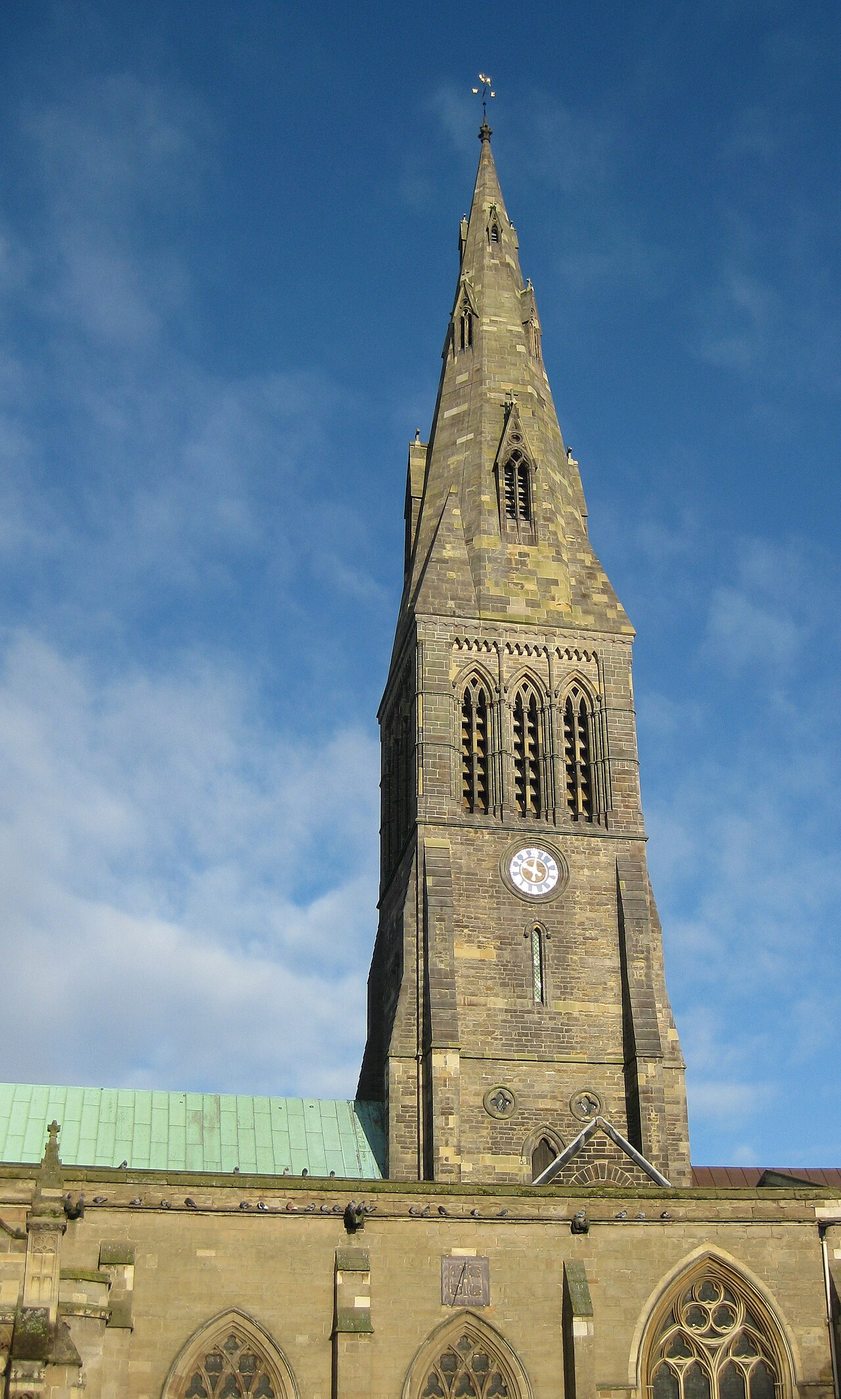
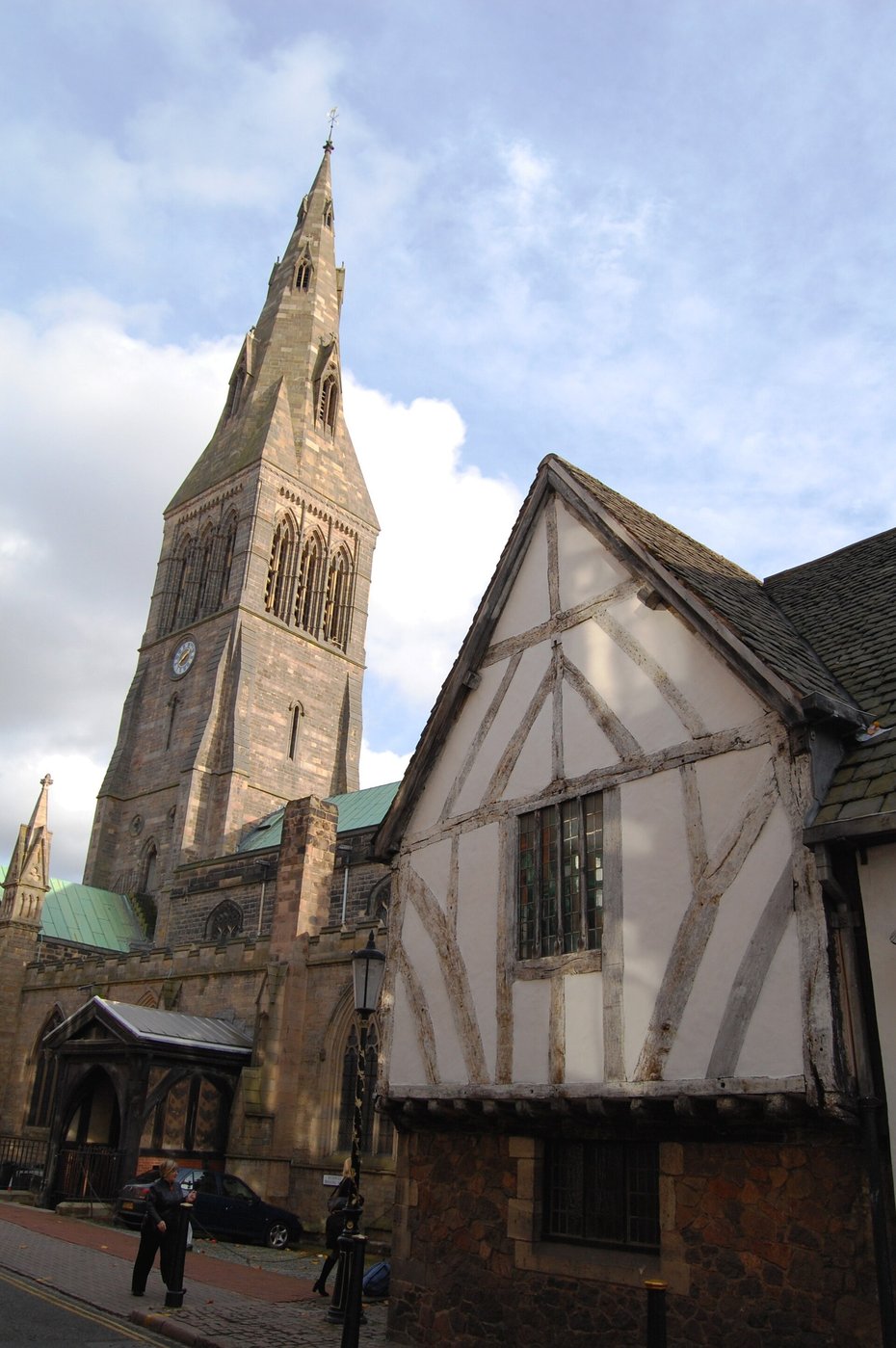
There has been a place of worship here for nearly 2,000 years, over part of the Roman town, and by the late eleventh century the Normans had built a church on the site; as St Martin’s it was rebuilt and enlarged between the thirteenth and fifteenth centuries as the civic church of Leicester’s merchants and guilds. The Victorians restored it heavily: Raphael Brandon designed the tower and spire, about 220 feet high and completed in 1867, and the Vaughan Porch was added in 1896.
When the Diocese of Leicester was revived in the 1920s, St Martin’s became its cathedral, in 1927. After the reburial of Richard III the building was transformed again: it closed for 22 months of work and reopened in November 2023, and a new Heritage & Learning Centre telling the story of the site followed in 2024.
The visitor's cheat sheet
| Where | St Martin’s, Leicester, in the city centre beside the Guildhall |
|---|---|
| Getting there | About 15 minutes’ walk from Leicester station; city-centre car parks |
| Opening hours | Mon–Sat 10.30am–4.30pm; Sun 12pm–3pm. Parts of the building close during services; the closures page lists other changes |
| Admission | Free; suggested donation £5 per adult. Richard III tour £7 |
| How long | About 1 hour; 2–3 hours with the King Richard III Visitor Centre |
| Best time | A weekday morning, ideally with the 11.30am Richard III tour |
| Dress code | No formal code; respectful dress as in any working church |
| Tours | Richard III tour, about 45 minutes, £7 (under-16s free with an adult): Tue and Wed 11.30am, Fri 2.30pm, Sat 11.30am and 2.30pm |
Hours and admission checked against the official site in October 2026. They change; the official site is always the last word.
The king in the car park. Richard III was killed at Bosworth in August 1485 and buried in the church of the Greyfriars in Leicester. The friary was demolished at the Reformation and the grave was lost. In August 2012 the University of Leicester found his skeleton under a car park on the site, and DNA confirmed it in 2013.
What to see, in the order you meet it
The porch and the nave
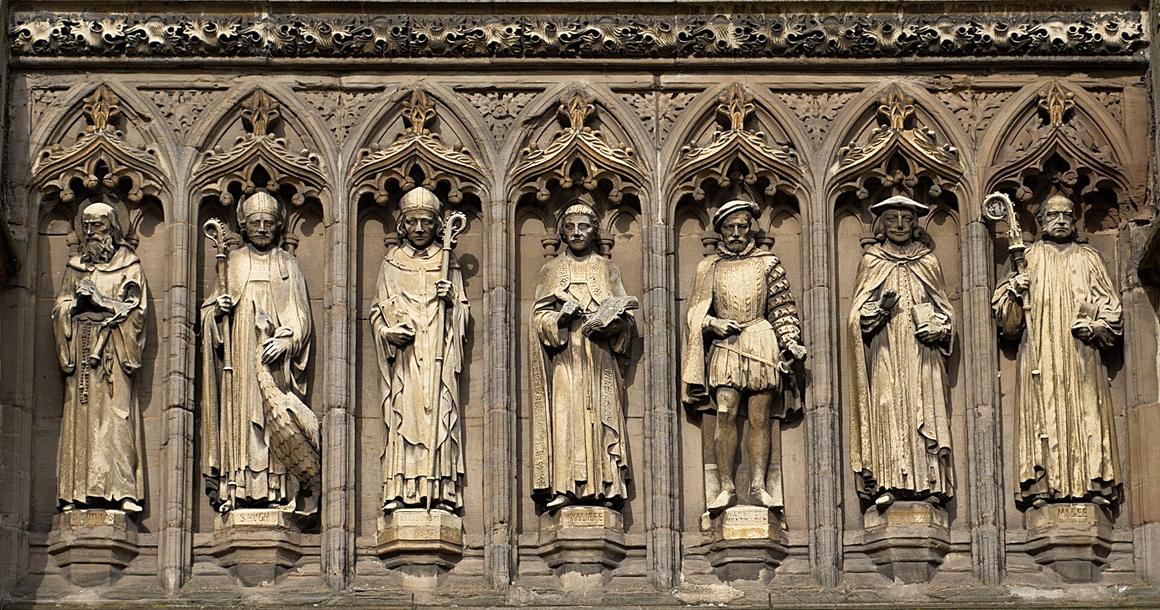
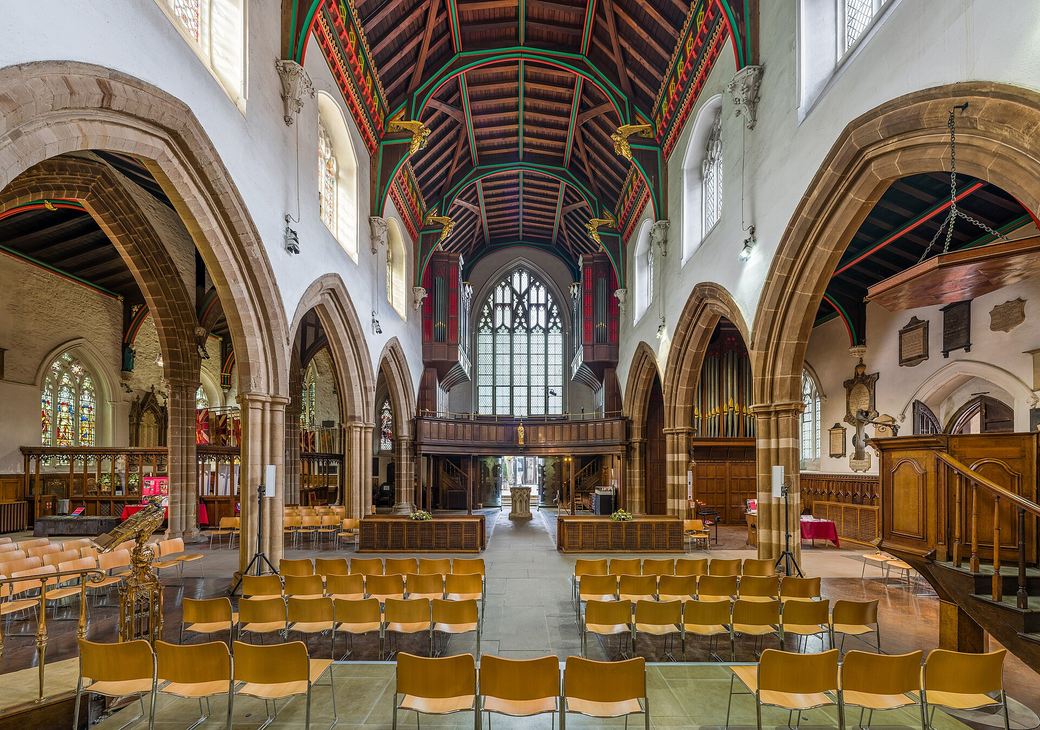
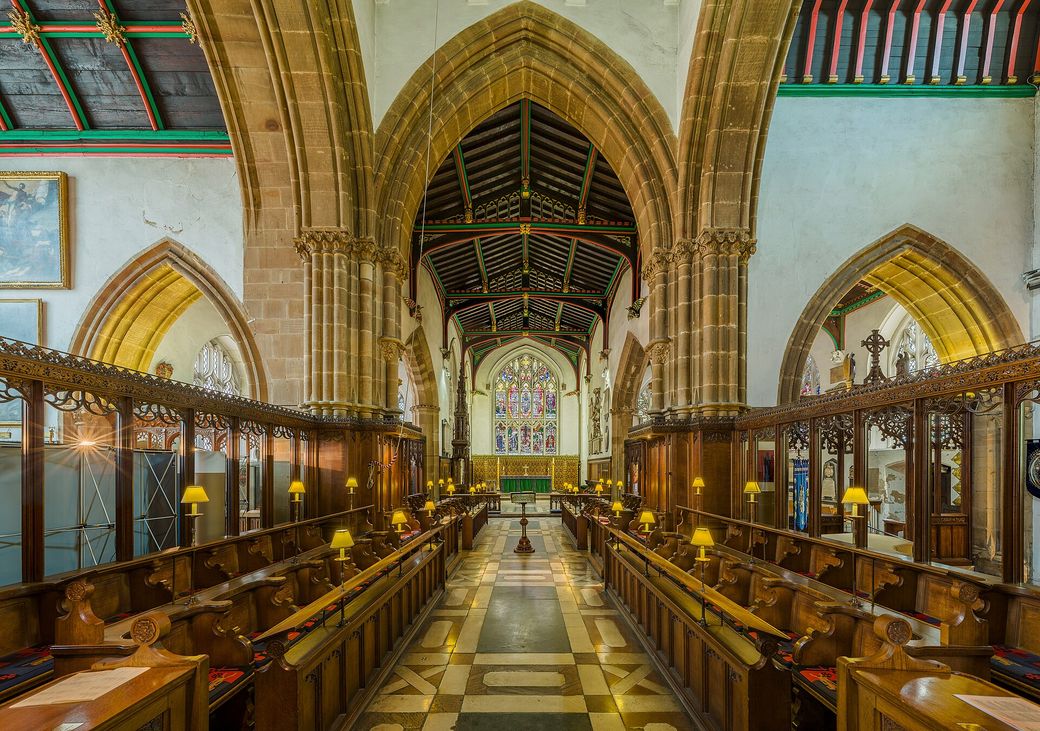
On the south side, the Vaughan Porch is lined with statues. Inside, the nave is broad and medieval, with a Victorian roof and Arts and Crafts glass of the 1890s. The cathedral sits beside the timber-framed Guildhall, which is worth a look on the way in or out.
The tomb of Richard III
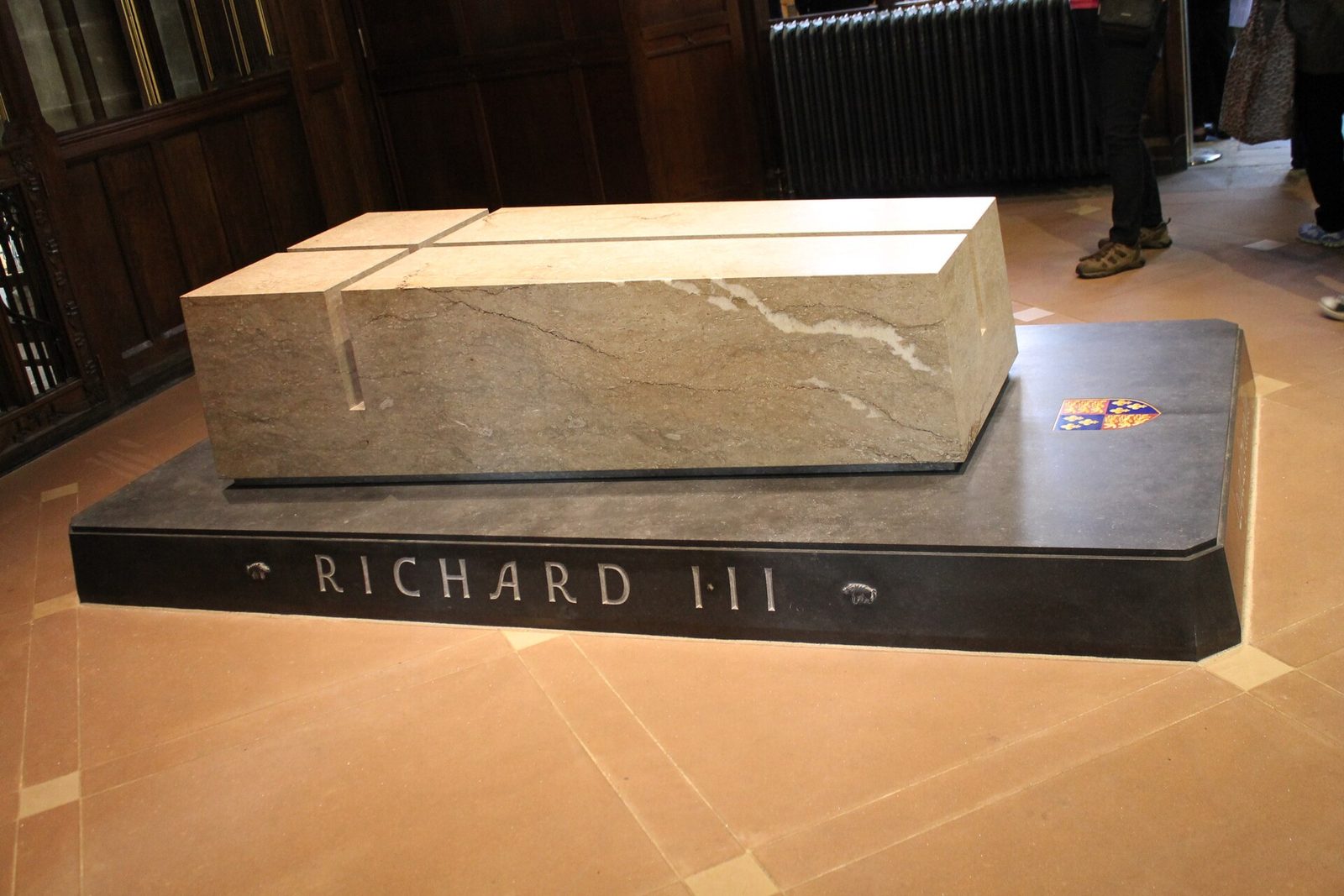
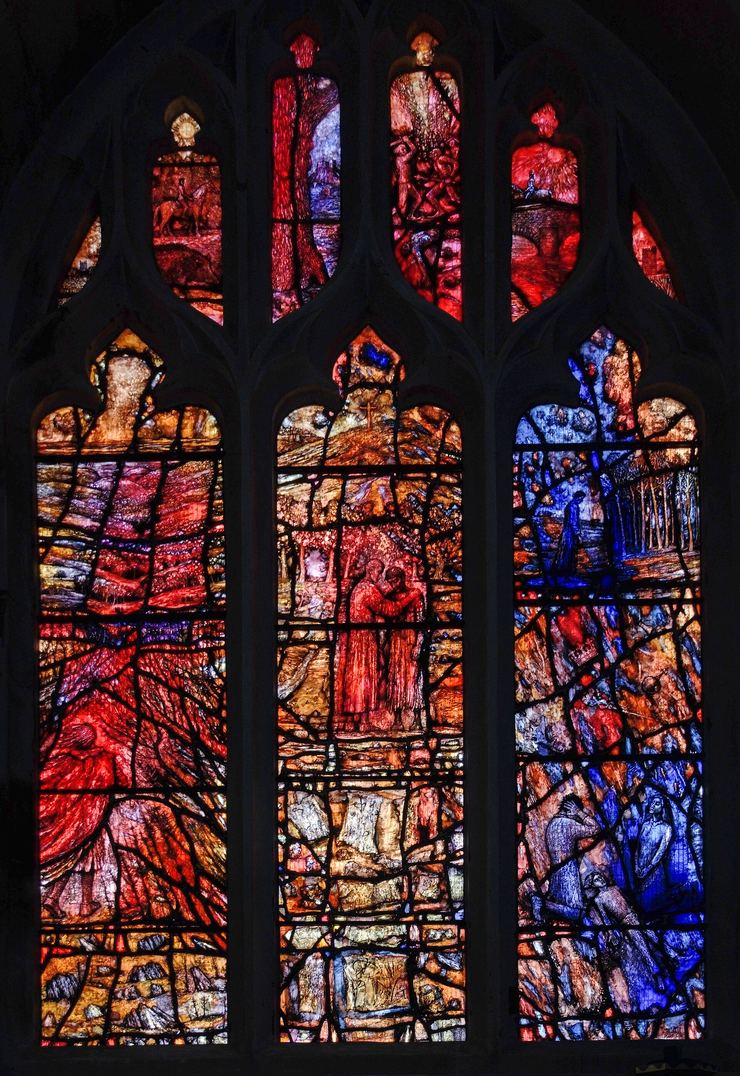
At the east end lies the tomb, designed by van Heyningen and Haward Architects: a block of pale Swaledale fossil stone, deeply incised with a cross, on a dark plinth carved with his name, dates and motto. Nearby are the two Redemption windows by Tom Denny, which mix scenes of struggle and grief with images of comfort, and in the Herrick chapel the memorial to the family of the poet Robert Herrick.
Tickets and tours
Suggested donation and the Richard III tour
Entry is by a suggested donation of £5 per adult, which covers the tomb and the Heritage & Learning Centre. The Richard III tour, about 45 minutes, costs £7 for adults, with accompanied under-16s free; it runs on Tuesdays and Wednesdays at 11.30am, Fridays at 2.30pm and Saturdays at 11.30am and 2.30pm. Book online or at the Welcome Desk on the day. The King Richard III Visitor Centre across the road is separate and has its own tickets.
The hotel link goes to Booking.com. This site earns nothing from it at present — it is here because it is the quickest way to check what is actually available.
Don't miss
- Richard III's tomb Swaledale stone, incised with a cross.
- The Redemption windows Tom Denny’s glass, made for the reburial.
- The Heritage & Learning Centre The story of the site, from Roman times.
- The Vaughan Porch A Victorian porch full of statues.
- The Guildhall Timber-framed, right next door.
- The visitor centre Across the road, over the site of the grave.
Insider tips
Do it in order. See the King Richard III Visitor Centre first, where you can look down on the site of the grave, then cross the road to the tomb. Check the closures page before you go: the cathedral closes for some services and for lunchtime recitals.
Public toilets, with baby changing, are in the Heritage & Learning Centre. The Guildhall, Jewry Wall and the medieval streets around the cathedral are all within a few minutes’ walk.
Common questions
Is Leicester Cathedral free to visit?
Entry is by a suggested voluntary donation of £5 per adult. The tomb of Richard III and the Heritage & Learning Centre are included. Some events have separate charges.
Where is Richard III buried?
In Leicester Cathedral, in a tomb at the east end of the cathedral. His remains were found in 2012 under a car park on the site of the Greyfriars friary, where he had been buried after the Battle of Bosworth in 1485, and were reburied here on 26 March 2015.
Is there a Richard III tour?
Yes. A tour of about 45 minutes visits the tomb, the Herrick memorial chapel and the Redemption windows. It costs £7 for adults; accompanied children under 16 go free. Tours run on Tuesdays and Wednesdays at 11.30am, Fridays at 2.30pm and Saturdays at 11.30am and 2.30pm; book online or at the Welcome Desk.
Is the King Richard III Visitor Centre part of the cathedral?
No. The visitor centre across the road, built over the site where his grave was found, is run separately and has its own tickets.
How do you get to Leicester Cathedral?
It is in the city centre, about 15 minutes’ walk from Leicester station, next to the Guildhall and opposite the King Richard III Visitor Centre.
Where to stay and eat nearby
The Cathedral Quarter and the city centre around it have plenty of cafés, restaurants and hotels.
More English churches
- Lichfield Cathedral — three spires, under an hour away
- Coventry Cathedral — ruins and rebirth, half an hour by train
- Peterborough Cathedral — the grave of another royal, Katherine of Aragon
See all the cathedrals and churches worth visiting in England →