
St Patrick’s Cathedral, Melbourne
On Eastern Hill, just behind the Victorian Parliament, stands the largest church in Victoria: a Gothic cathedral of dark bluestone with three spires, the tallest of them 105 metres high. St Patrick’s is the Catholic cathedral of Melbourne, designed in 1858 by William Wardell and eighty years in the building. It is free to enter and open every day.
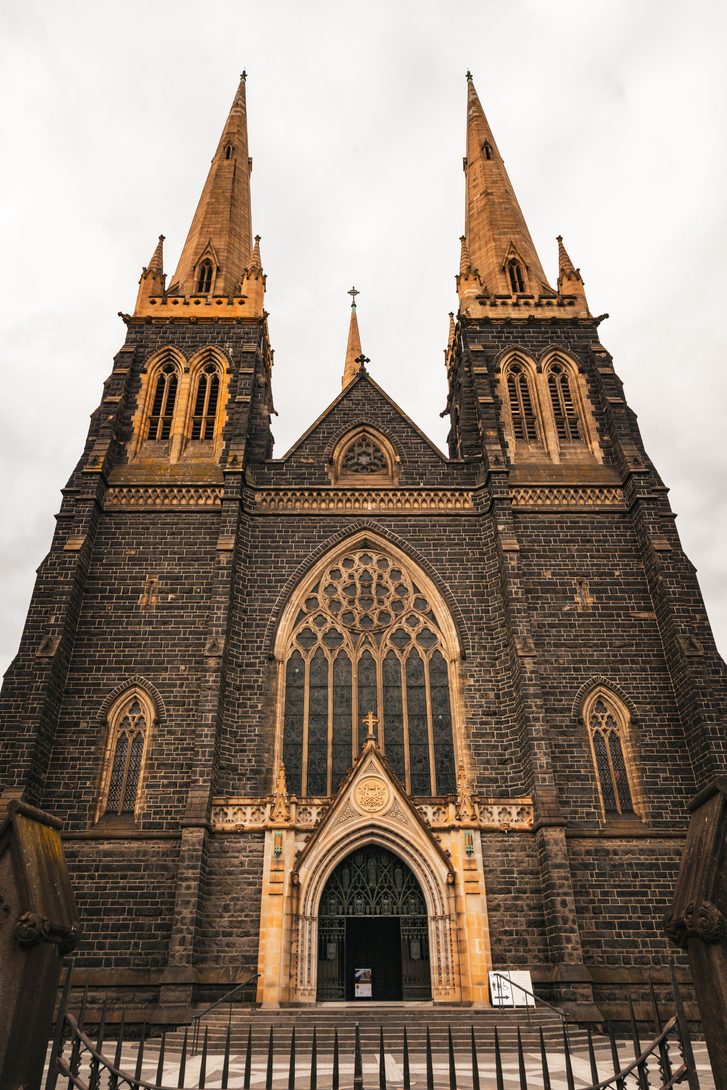
Eighty years in the building
Two earlier churches had been started on this site when William Wilkinson Wardell, an English architect and a follower of Pugin, arrived in Melbourne in 1858. He drew up plans for a full-scale Gothic cathedral almost at once, and they were followed with little change. The gold rush had made Melbourne rich, but the work still went slowly: the nave was finished in 1868, the tower and the east end with its chapels in the 1880s and 1890s, and the cathedral was consecrated in October 1897. Wardell died two years later, still designing its altars and fittings. He also designed St Mary’s Cathedral in Sydney.
The spires came last. Archbishop Daniel Mannix had them built taller than Wardell intended, and they were finished in 1939. Pope Paul VI made the cathedral a minor basilica in 1974, and Pope John Paul II visited in November 1986.


The visitor’s cheat sheet
| Where | 1 Cathedral Place, East Melbourne, on Eastern Hill behind Parliament House |
|---|---|
| Opening hours | Mon–Fri 6.30am–5.30pm (later on evenings with a service); Sat–Sun 7.30am–7.30pm |
| Admission | Free; donations welcome |
| Mass | Mon–Fri 7am and 1pm; Sat 8am and 6pm; Sun 8am, 9.30am, 11am and 6pm; public holidays 11am |
| Tours | No regular public tours are advertised; ask the parish office about groups |
| Photography | Not during Mass; commercial photography by arrangement with the parish office |
| Getting there | Tram routes 11, 12 or 109 to stop 11 (Albert St & Gisborne St); Parliament Station is one tram stop away |
| How long | Half an hour to an hour |
Hours and admission checked against the official site in November 2026. They change; the official site is always the last word.
Restoration under way
In March 2026 the archdiocese launched a restoration and renewal project for the cathedral and its precinct, costed at A$190 million: repairs to the weathered stonework, roof and floor, new lighting and sound, and more accessible entrances. The work is planned in stages over five to ten years, beginning with urgent repairs to the cathedral itself. No closures had been announced when we checked, but expect to find scaffolding or fenced-off areas.
What to see
The outside
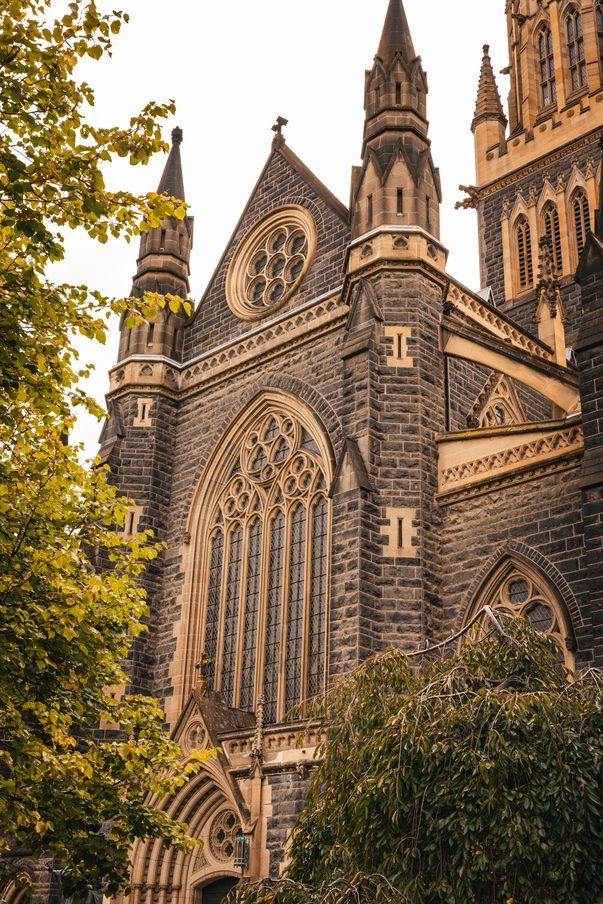
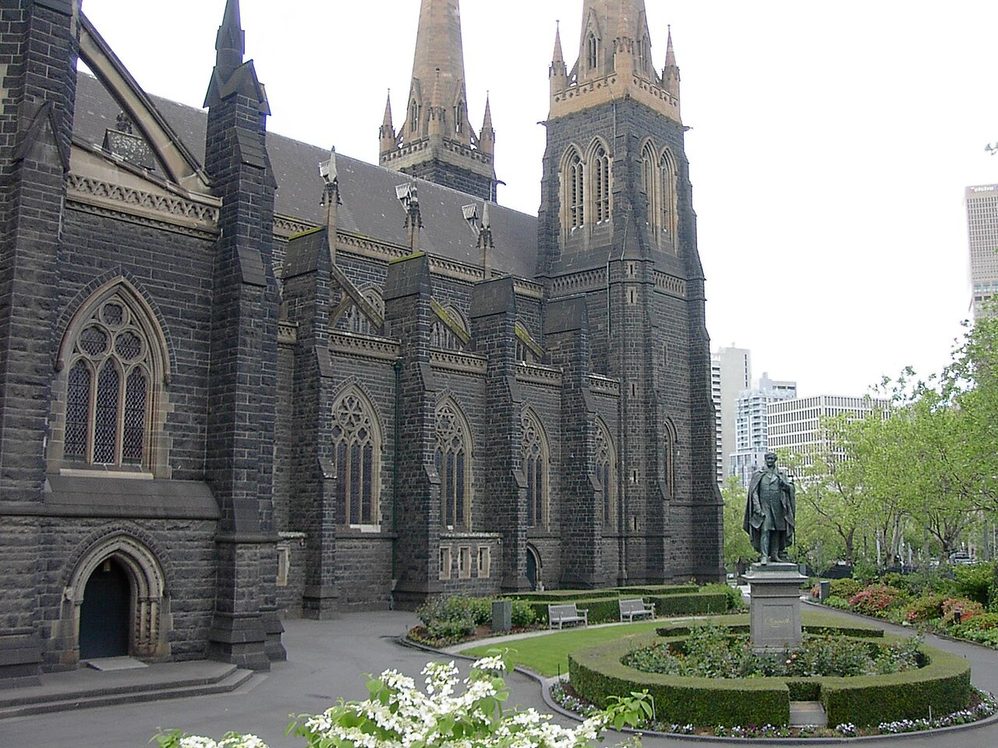
Walk round the cathedral before going in. The walls are of Melbourne bluestone, a dark basalt, with paler stone for the windows, pinnacles and spires. The style is the Decorated Gothic of English cathedrals of about 1300, but the east end is French in plan: an ambulatory with a ring of seven chapels, best seen from the Lansdowne Street side. In the grounds beside the cathedral stands a bronze statue of Daniel O’Connell, the Irish “Liberator”, by Thomas Brock, unveiled in 1891.
The nave
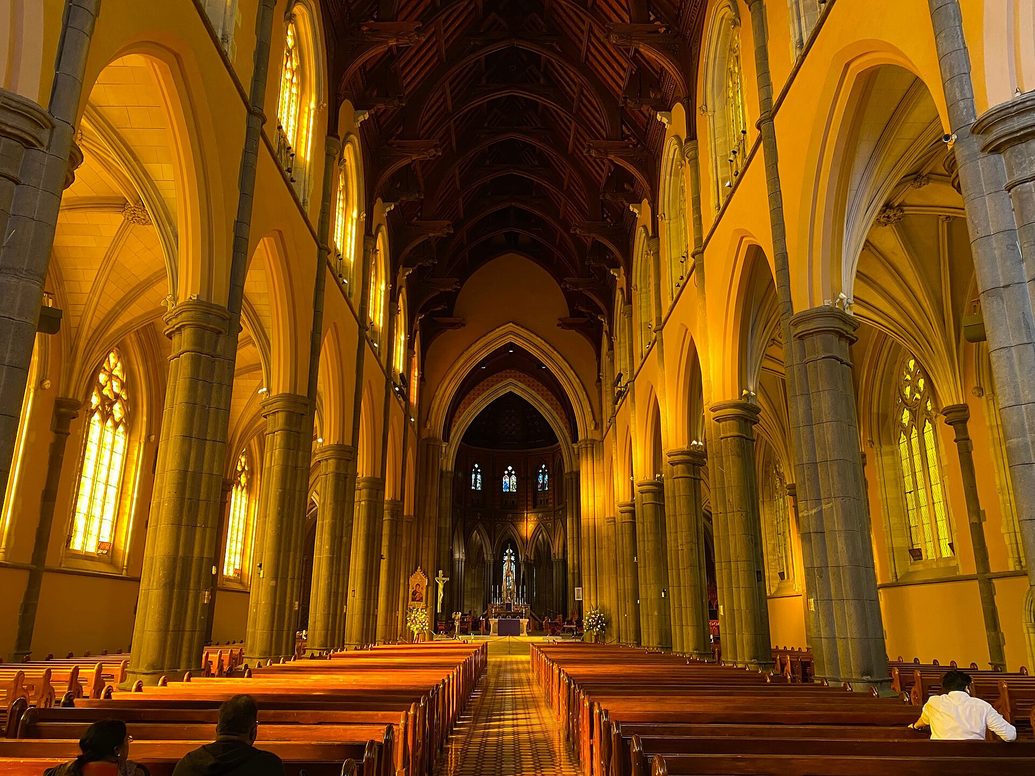
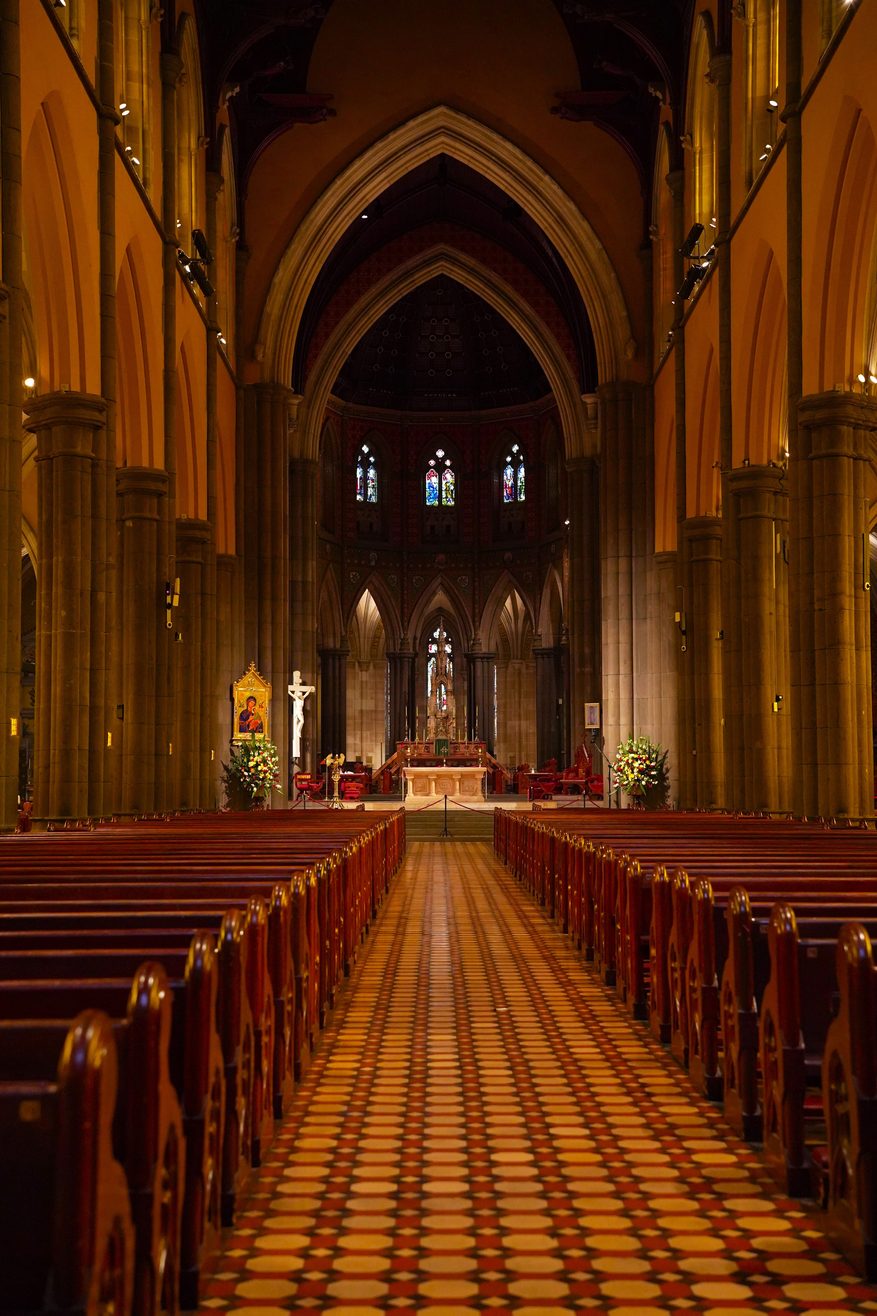
The first surprise inside is the light. The nave windows are glazed in amber glass, and on a bright day the whole interior, bluestone piers and all, glows gold. The nave is nearly 29 metres high under a timber roof, and the floor is laid with patterned tiles.
The sanctuary and the seven chapels
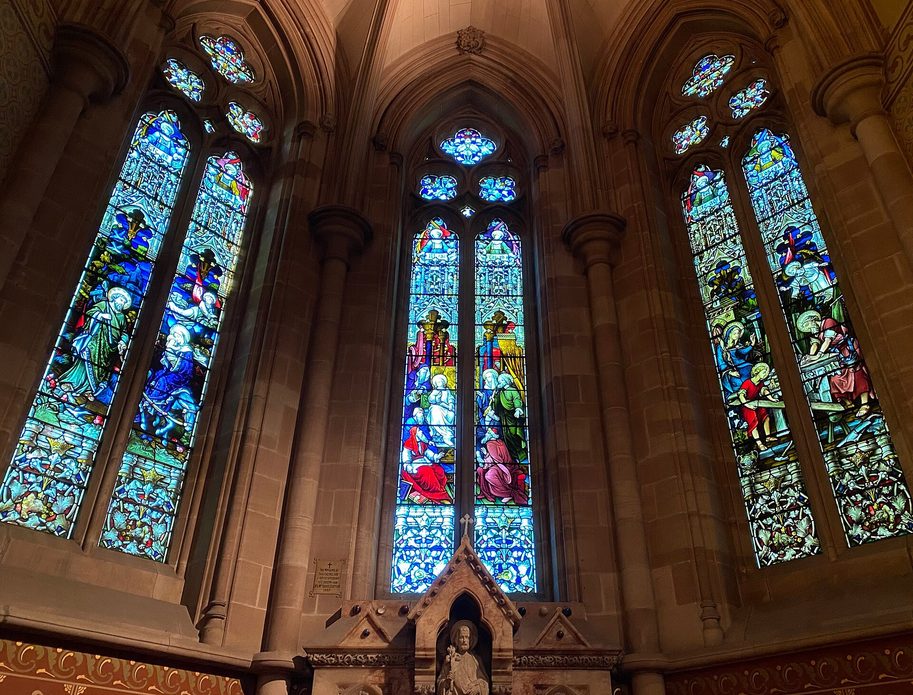
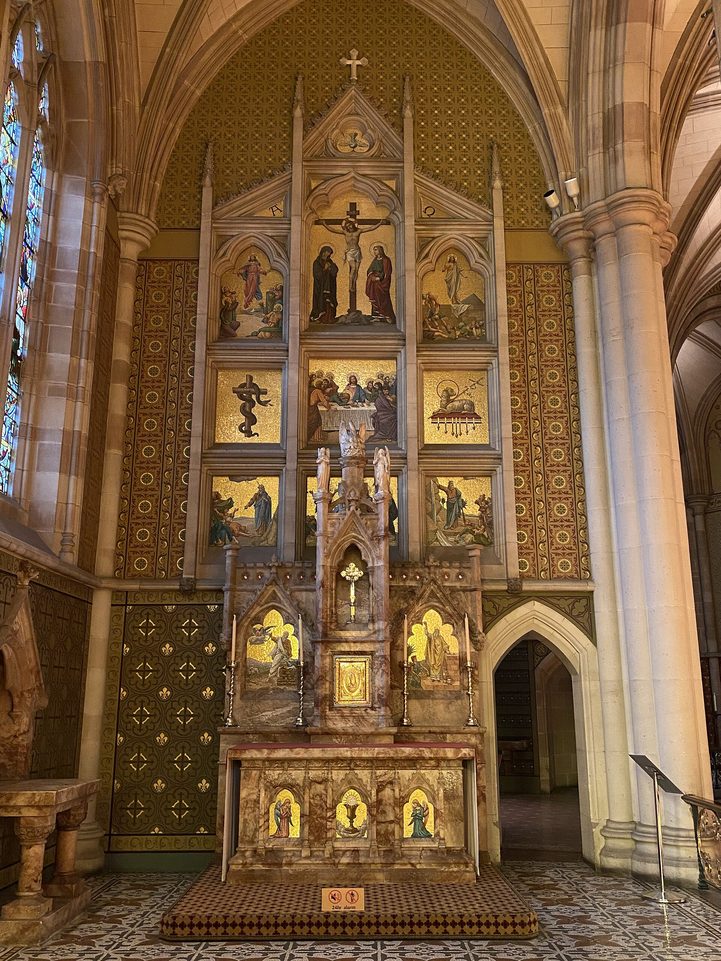
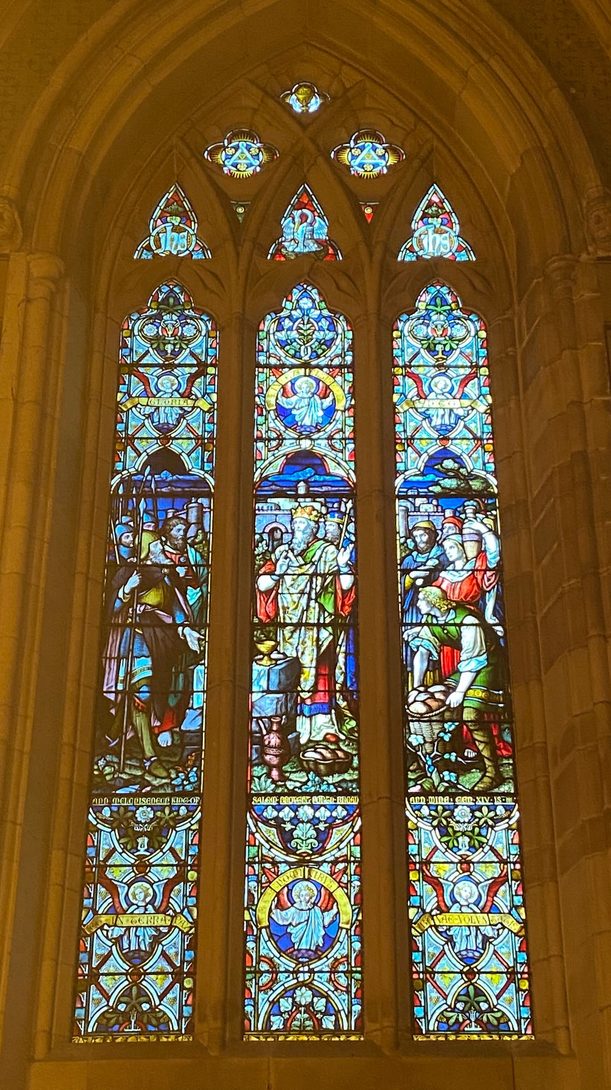
Beyond the crossing, the ambulatory leads round behind the sanctuary past seven chapels, each with its own carved altar, mosaics and stained glass. The largest, in the centre, is the Ladye Chapel, with an alabaster altar. Most of the stained glass in the cathedral was made by Hardman of Birmingham, and the richest of it is here at the east end.

The organ and the west window
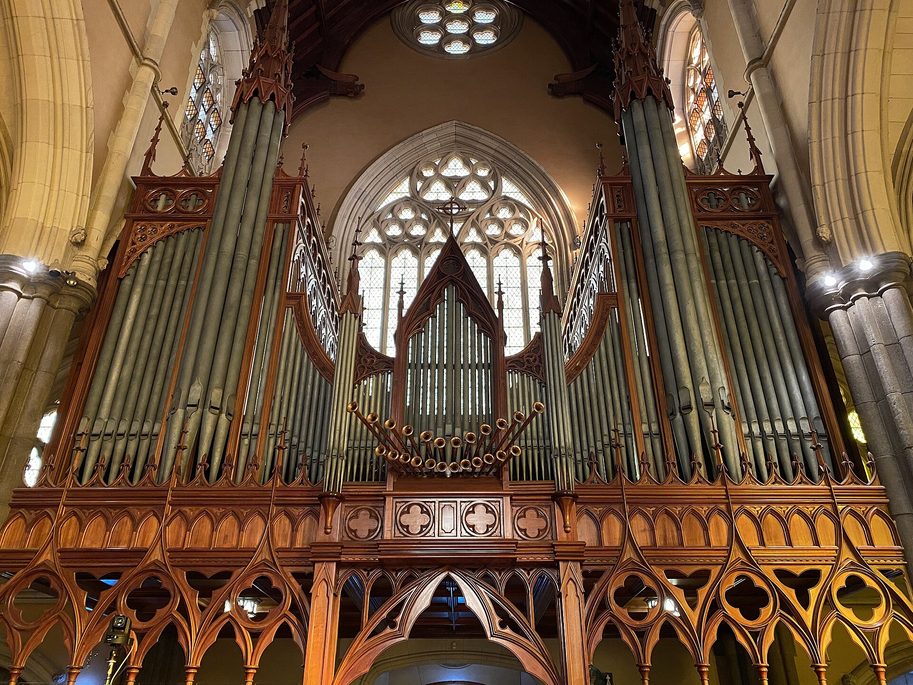
Turn round at the crossing to see the organ, built by George Fincham & Sons in 1962–64, its pipes arranged on either side of the great west window in the gallery.
Getting there
The cathedral is on the eastern edge of the city centre. Tram routes 11, 12 and 109 stop beside it at Albert Street and Gisborne Street (stop 11), one stop after Parliament Station, which is the nearest railway station. From Parliament House itself it is a short walk up the hill.
Tours and where to stay
Entry is free and no ticket is needed. Some walking tours of the city include the cathedral, and the city-centre hotels are all within easy reach by tram.
These links go to GetYourGuide and Booking.com. This site earns nothing from them at present — they are here because they are the quickest way to check what is actually available.
Don’t miss
- The amber light in the nave Best on a sunny day.
- The seven chapels Round the ambulatory behind the sanctuary.
- The view from the east Three spires above the ring of chapels.
- The O’Connell statue Thomas Brock’s bronze of 1891, in the grounds.
Insider tips
Avoid the 1pm Mass on weekdays if you want to walk round freely; visitors are asked not to tour or take photographs during Mass.
Two Wardell cathedrals. If you are also going to Sydney, compare this with St Mary’s: the same architect, golden sandstone instead of bluestone.
Common questions
Is St Patrick’s Cathedral free to visit?
Yes. There is no admission charge; donations are welcome.
When is St Patrick’s Cathedral open?
Monday to Friday from 6.30am to 5.30pm, and Saturday and Sunday from 7.30am to 7.30pm. Access can be restricted during weddings and special services.
How tall is St Patrick’s Cathedral?
The central spire is 105 metres high and the two western spires about 62 metres. The cathedral is 103.6 metres long, and is the largest church in Victoria.
Which tram goes to St Patrick’s Cathedral?
Tram routes 11, 12 and 109 stop at Albert Street and Gisborne Street (stop 11), beside the cathedral, one stop after Parliament Station.
More churches nearby
- St Mary’s Cathedral, Sydney — Wardell’s other great cathedral, in golden sandstone opposite Hyde Park.