
Saint-Sulpice, Paris
Saint-Sulpice is the second-largest church in Paris, a vast classical building on the Left Bank, between Saint-Germain-des-Prés and the Luxembourg Gardens. It is free to visit, and inside are three paintings by Delacroix, holy-water stoups made from giant clam shells, one of the great organs of the world and the brass line in the floor made famous by The Da Vinci Code. Come on Sunday morning to hear the organ.
Over a century in the building
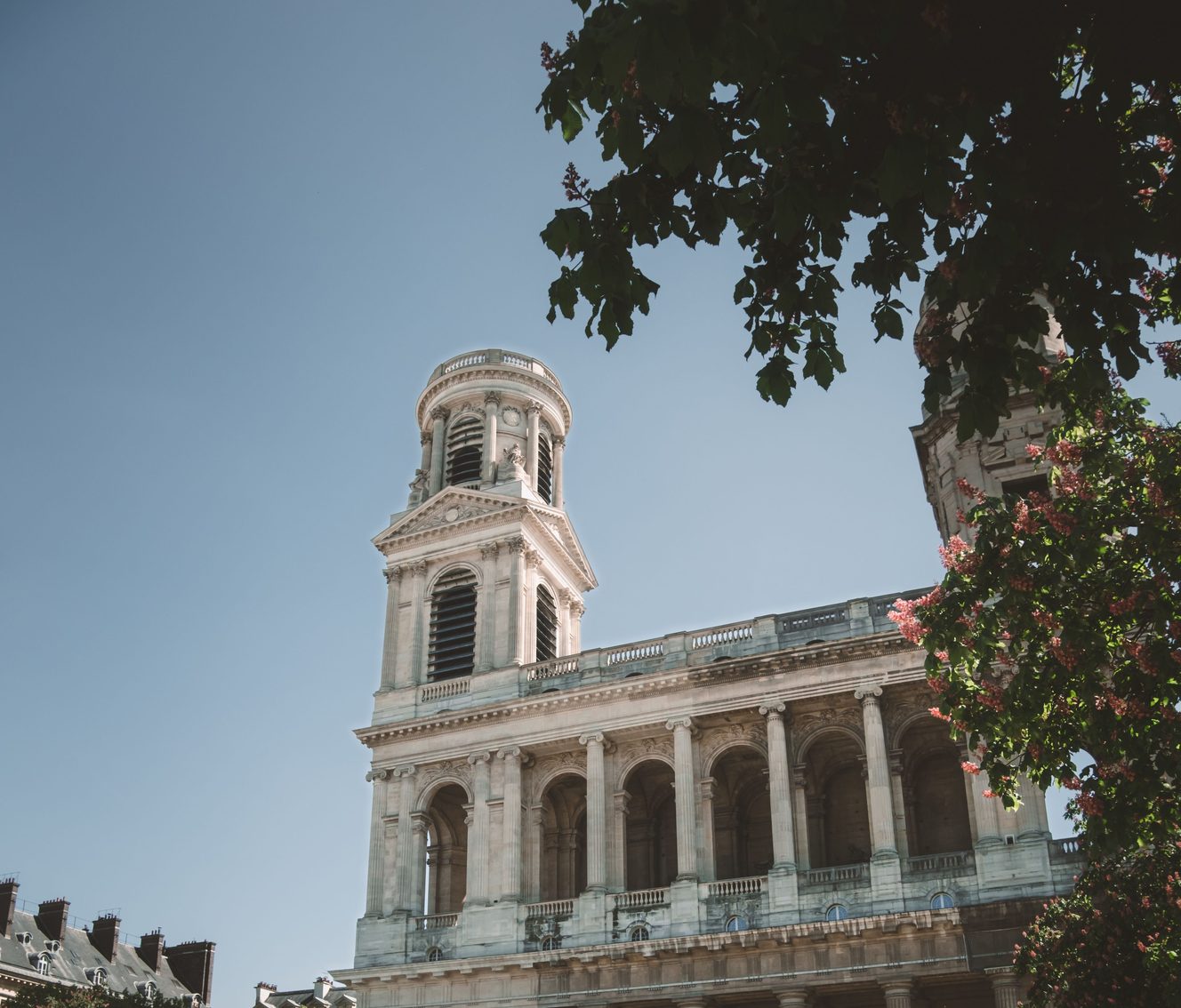
A new church for the growing parish of Saint-Sulpice was begun in 1646, but money ran out, and by 1660 only the Lady Chapel was built. Daniel Gittard built the choir and transepts in the 1670s; the nave followed from 1719, and the church was consecrated in 1745. In 1732 the Italian-born Giovanni Servandoni won the competition for the west front, with its two storeys of columns. The towers caused trouble: the north tower was rebuilt by Chalgrin in 1777–80, and the south tower was never finished.
The Marquis de Sade was baptised here in 1740, and Victor Hugo was married here in 1822. In the 1850s Eugène Delacroix painted the Chapel of the Holy Angels, his last great work. In March 2019 an arson attack damaged the south transept; it was restored and reopened in 2023, and the Lady Chapel has been restored too.
The visitor’s cheat sheet
| Where | Place Saint-Sulpice (2 rue Palatine), 75006 Paris |
|---|---|
| Opening hours | Daily 8am–7.45pm |
| Admission | Free |
| Mass | Sundays 7, 9 and 11am (the great organ at 11) and 6.30pm; weekdays several times a day; please don’t sightsee during services |
| Tours | Volunteer tours on Sundays, in English at 12.15pm; free audio guide by QR code |
| Getting there | Metro Saint-Sulpice (line 4) or Mabillon (line 10); a few minutes from the Luxembourg Gardens |
| How long | Half an hour to an hour |
Hours and admission checked against the official site in October 2026. They change; the official site is always the last word.
Free, and best on a Sunday. The church opens every day from 8am to 7.45pm. On Sundays the great organ plays at the 11am Mass, volunteers give a tour in English at 12.15pm, and on some Sundays there is a free organ recital. During Masses, please stay at the back or come back later.
What to see, in the order you meet it
The stoups
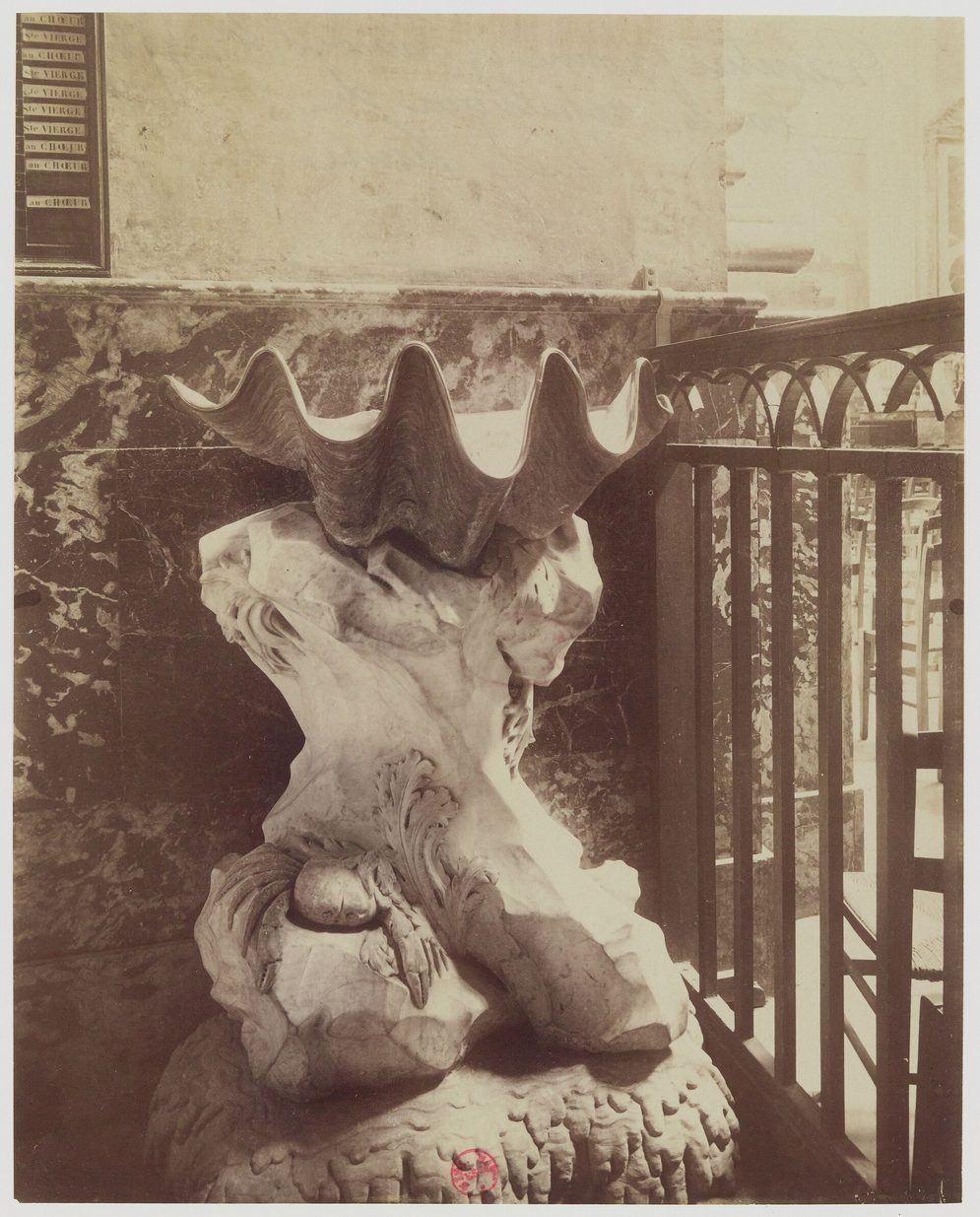
Just inside the west doors, two holy-water stoups are made from the halves of a giant clam shell, given to King Francis I by the Republic of Venice. The sculptor Pigalle carved their bases as rocks.
Delacroix’s chapel
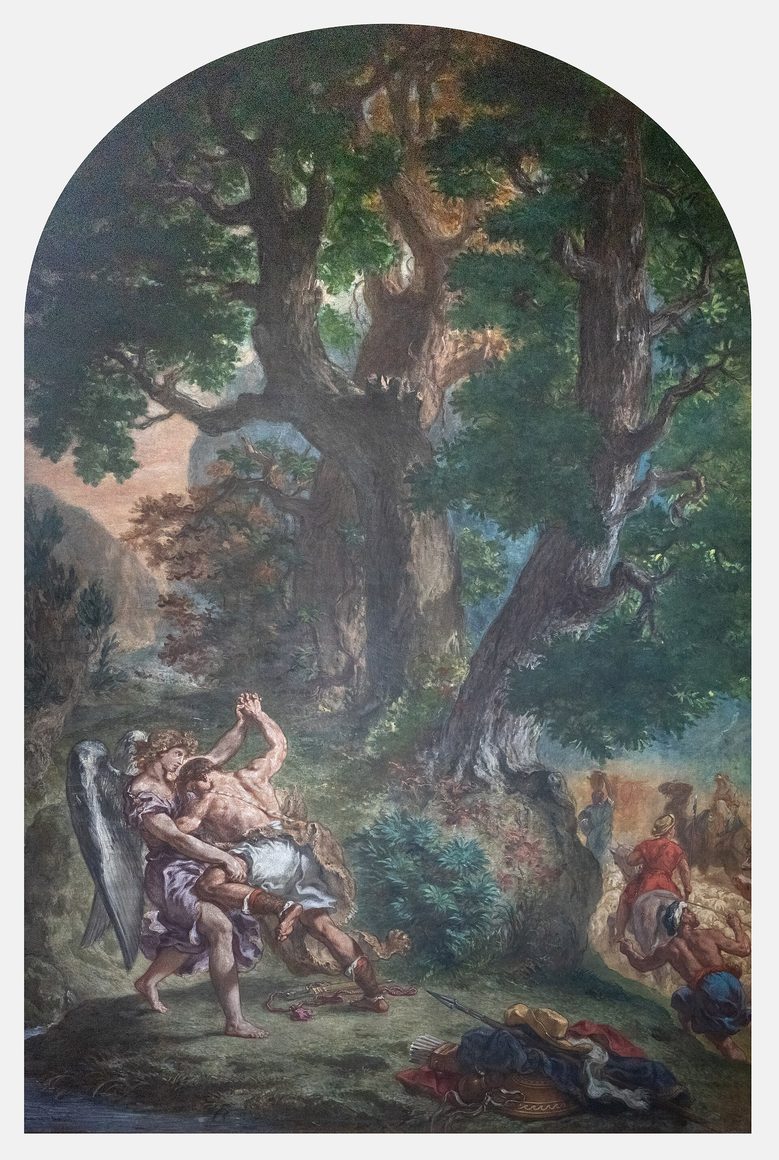
The first chapel on the right, the Chapel of the Holy Angels, was commissioned from Delacroix in 1849 and painted mainly between 1855 and 1861. On one wall Jacob wrestles with the angel beneath enormous trees; on the other, Heliodorus is driven from the Temple by an armed horseman and two avenging angels; on the ceiling St Michael defeats the devil. The chapel was restored in 2015–16.
The nave and the gnomon
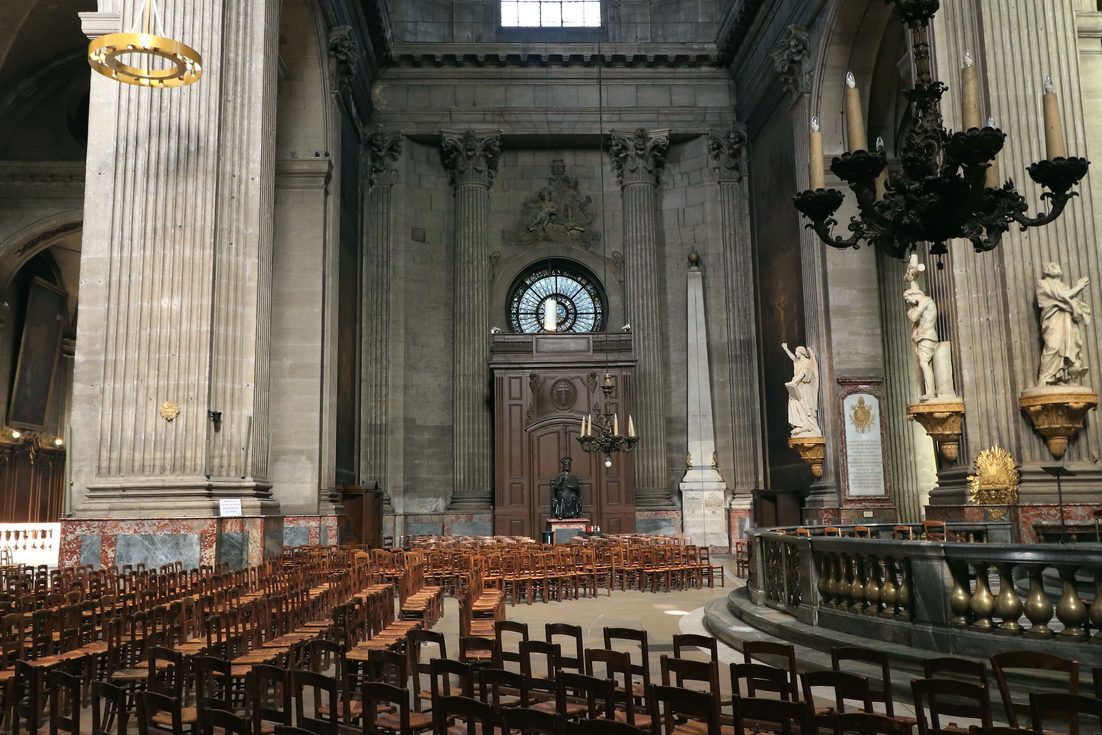
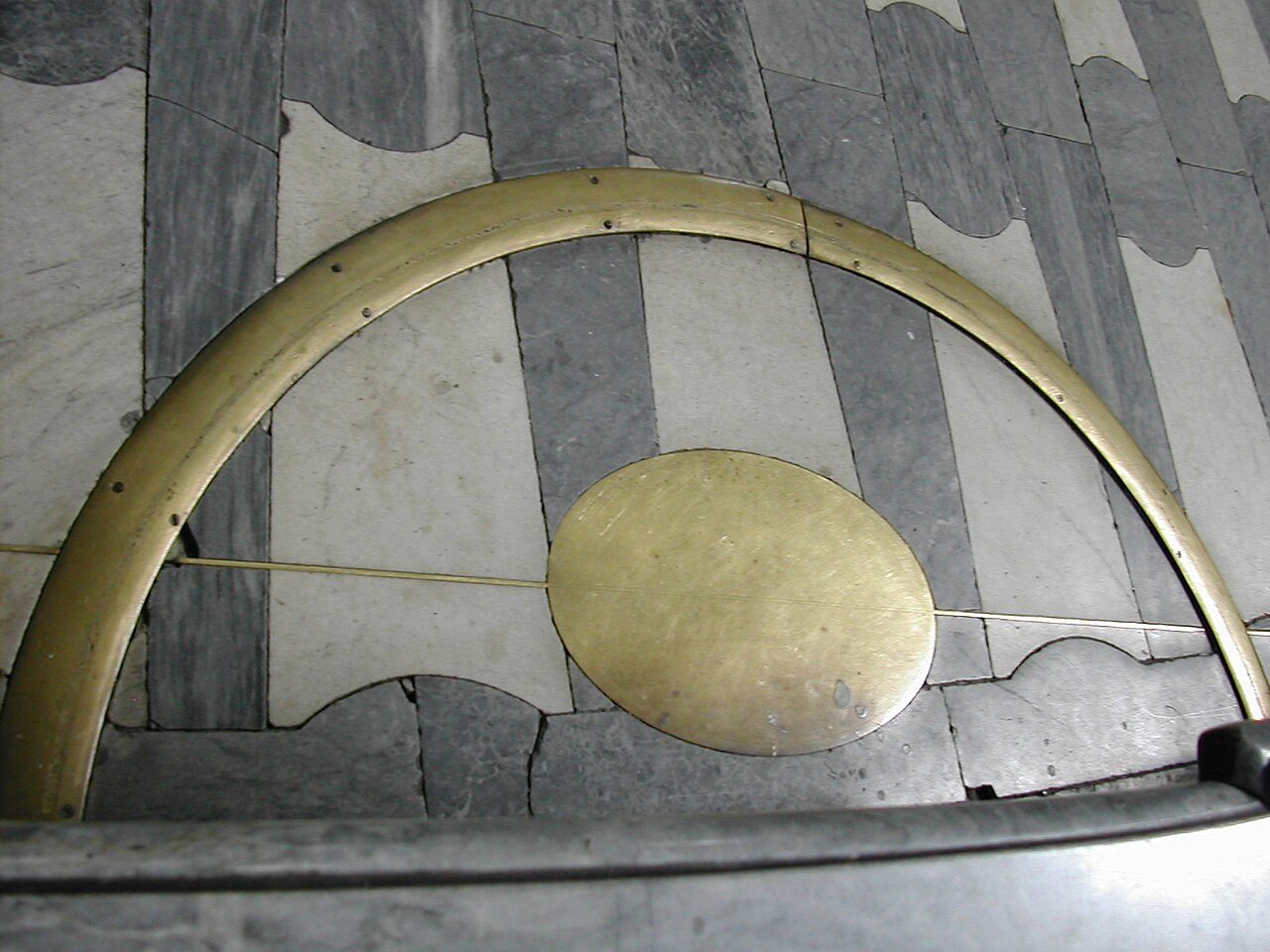
The nave is immense and calm. Across the floor of the transept runs a brass line, ending at a marble obelisk on the north side. It is a gnomon, built in the 1720s and 1740s by the English clockmaker Henry Sully and others: sunlight through a small lens in a south window falls on the line, and at the spring and autumn equinoxes on the oval plate, which helped fix the date of Easter. It is nothing to do with the “Rose Line” of The Da Vinci Code, as a notice beside it points out.

The Lady Chapel
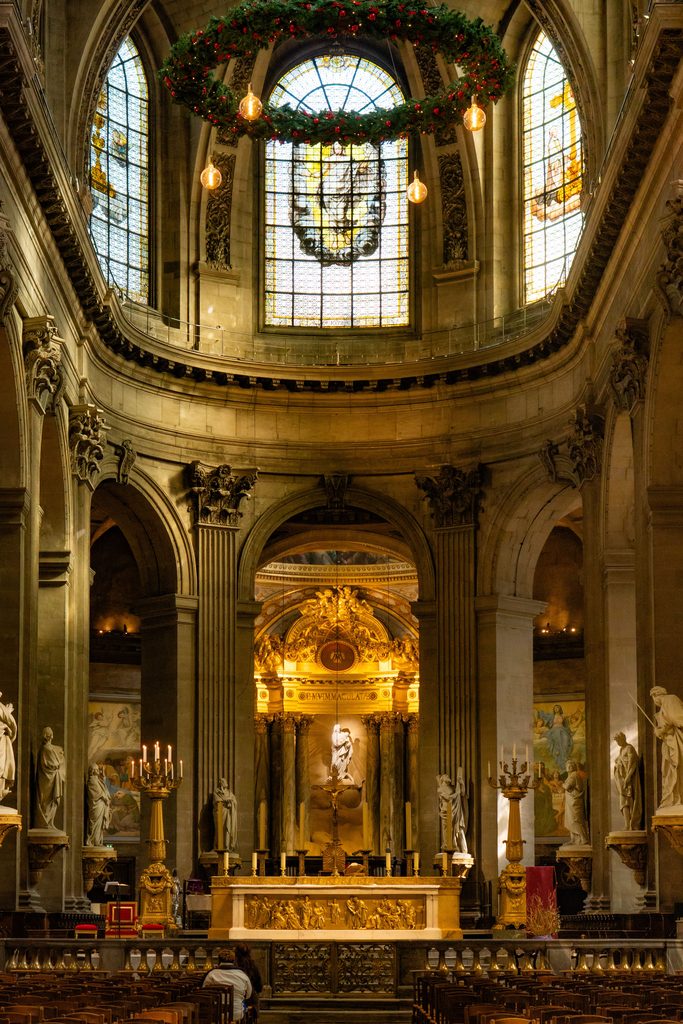
At the far east end, behind the altar, the Lady Chapel has Pigalle’s marble Virgin and Child, lit by hidden windows, under a painted dome by Lemoyne. It was restored between 2022 and 2024.
The great organ
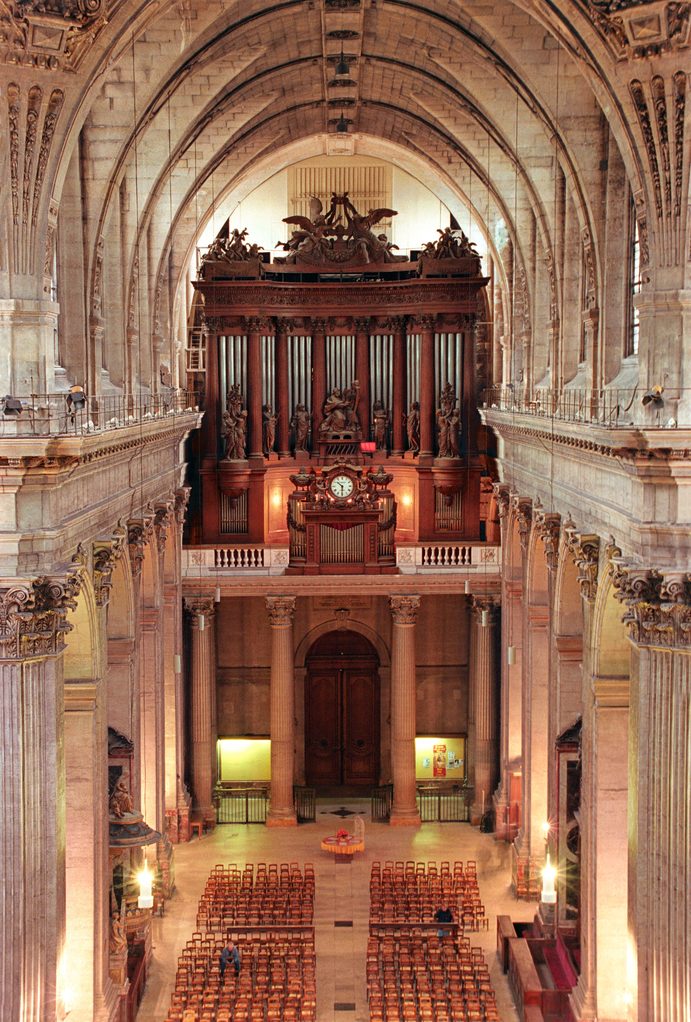
Turn round to see the organ above the west door, rebuilt by Aristide Cavaillé-Coll in 1862 from Clicquot’s organ of 1781, inside its eighteenth-century case. With five keyboards and 102 stops, it is one of the most famous in the world; Charles-Marie Widor and Marcel Dupré were organists here.
Tours and where to stay
Tours and hotels
The parish’s volunteer guides give tours on Sundays, including one in English, and themed visits of the crypts, the gnomon and the Delacroix chapel on certain days; groups book by email. The streets of Saint-Germain around the church are full of hotels.
The hotel link goes to Booking.com. This site earns nothing from it at present — it is here because it is the quickest way to check what is actually available.
Don’t miss
- Delacroix’s murals First chapel on the right.
- The clam-shell stoups Inside the west doors.
- The gnomon The brass line and the obelisk.
- The great organ Sunday at 11am.
- The Lady Chapel Newly restored, at the east end.
Insider tips
Come at solar noon. The gnomon works only when the sun shines through the south window at solar noon, about 1pm in winter and 2pm in summer. Delacroix’s chapel is darker; a sunny afternoon helps.
Outside, the Place Saint-Sulpice has a fountain of the 1840s with statues of four great French preachers. The Luxembourg Gardens are a few minutes’ walk south, and Saint-Germain-des-Prés a few minutes north.
Common questions
Is Saint-Sulpice free to visit?
Yes. The church is open every day from 8am to 7.45pm, and entry is free. Volunteers give guided tours, including one in English at 12.15pm on Sundays, and there is a free audio guide by QR code.
Is the Rose Line in The Da Vinci Code real?
No. The brass line in the floor is part of an astronomical gnomon built in the eighteenth century to fix the date of the spring equinox, and so of Easter. The church puts up a notice saying the line has nothing to do with a pagan temple, and that the letters P and S in the windows stand for Peter and Sulpice, not a “Priory of Sion”.
Where are the Delacroix murals?
In the Chapel of the Holy Angels, the first chapel on the right as you enter. Delacroix painted Jacob Wrestling with the Angel and Heliodorus Driven from the Temple on the walls and St Michael on the ceiling; they were unveiled in 1861 and restored in 2015–16.
Can I hear the organ at Saint-Sulpice?
Yes. The great organ usually plays at the 11am Sunday Mass, and on some Sundays there is a free recital at 10am or 4pm, announced on the organ association’s website. No booking is needed.
Why are the towers different?
The north tower was rebuilt by Chalgrin in 1777–80; the south tower was never rebuilt to match, and is still unfinished.
Where to stay and eat nearby
The Saint-Germain and Odéon area around the church is full of cafés, bookshops and small hotels, and Notre-Dame is about 20 minutes’ walk away.
More churches in Paris
- Notre-Dame de Paris — about 20 minutes’ walk away.
- Sainte-Chapelle — on the Île de la Cité.