
Albi Cathedral
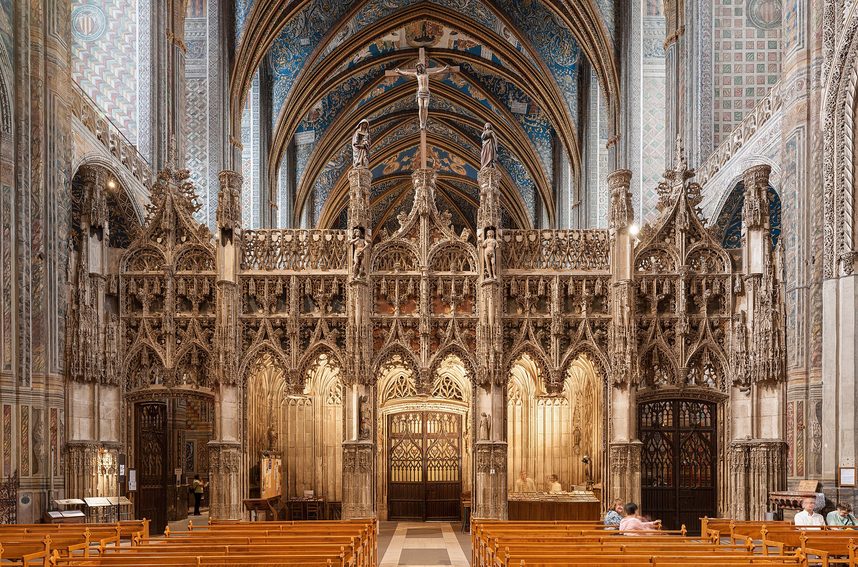
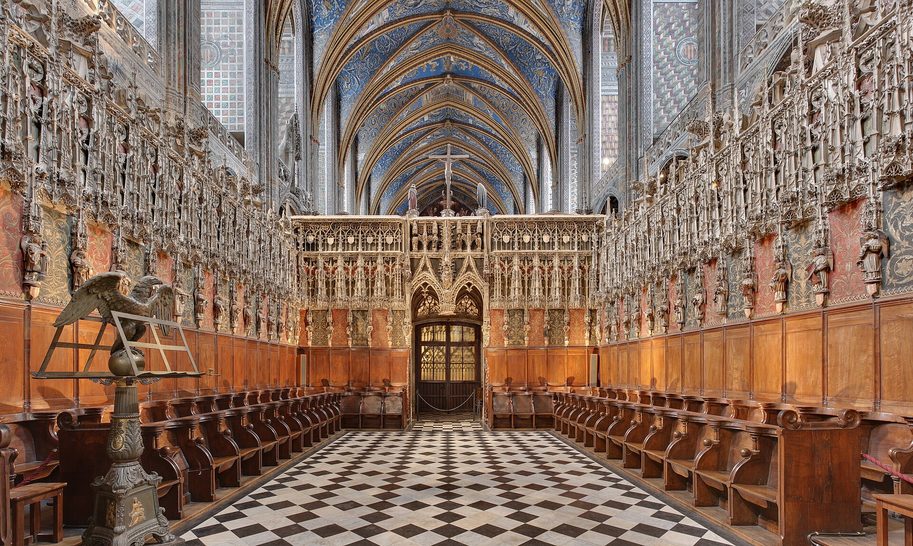
From outside, Albi’s Cathedral of Sainte-Cécile looks like a fortress: a single block of red brick, with walls like buttressed towers and a bell tower 78 metres high, above the River Tarn. Inside it is the opposite: every vault painted blue and gold by Italian artists, a huge medieval Last Judgement, and a choir closed off by a screen of white stone lace and painted statues. The nave is free; the choir and treasury cost €6. It is about an hour from Toulouse by train.
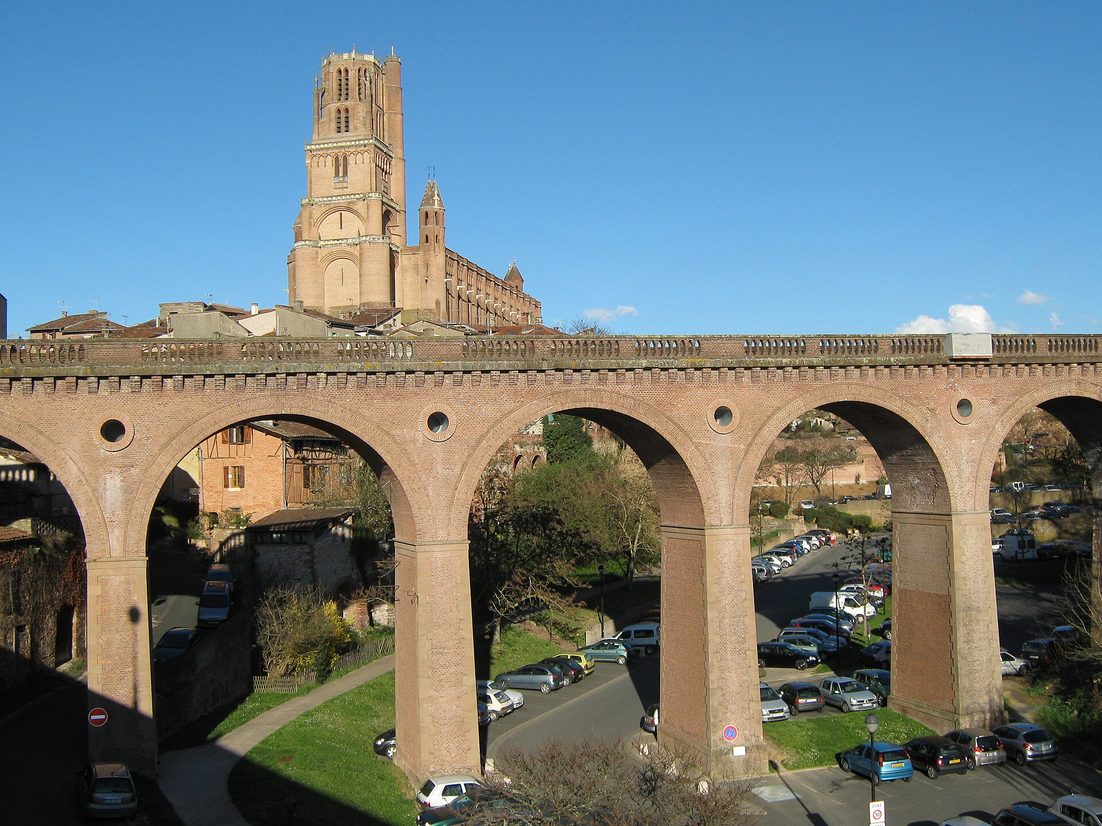
A cathedral built to be obeyed
Albi gave its name to the Albigensian Crusade, launched in 1209 against the Cathars of the south, and the cathedral was begun in its aftermath. On 15 August 1282 Bishop Bernard de Castanet laid the first stone (or rather brick) of a new cathedral, which has usually been read as a statement of the Church’s power over a defeated land. It was built in the local manner, in brick, with one vast nave and no transepts; the main structure was complete by about 1390, and the high altar was consecrated on 23 April 1480. The top three storeys of the bell tower followed in 1485–93.
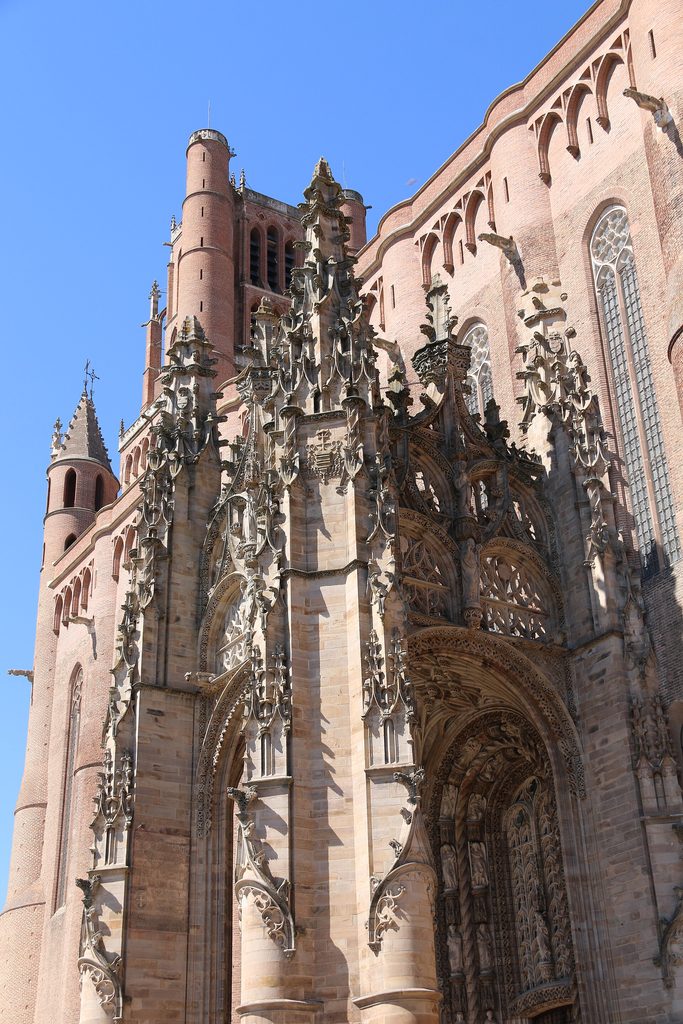
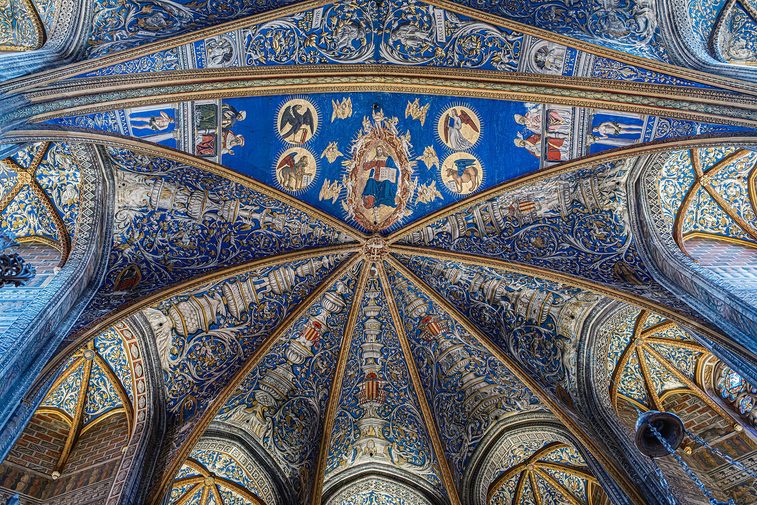
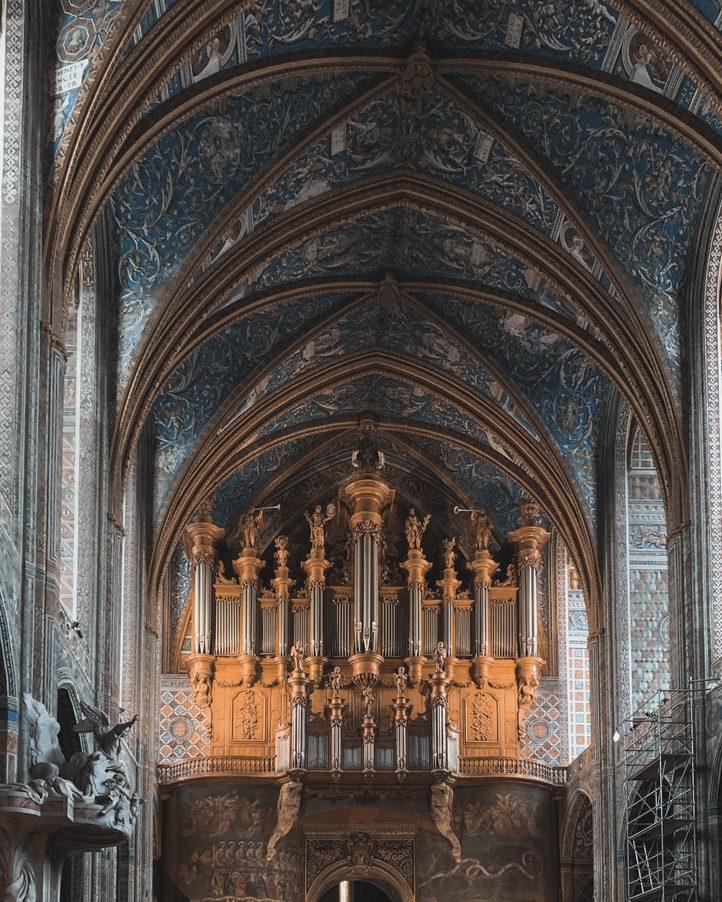
Then the inside was made magnificent. Bishop Louis I d’Amboise (1474–1503) commissioned the choir enclosure and its statues and, probably, the Last Judgement; his nephew Louis II brought Italian painters who covered the vaults between 1509 and the early 1510s. The south porch was added in about 1519–35, and Christophe Moucherel built the great organ in 1734–36. In 2010 the cathedral and the bishops’ town around it became a UNESCO World Heritage Site, the Episcopal City of Albi.
The visitor’s cheat sheet
| Where | Place Sainte-Cécile, Albi; about 15 minutes’ walk from Albi-Ville station |
|---|---|
| Opening hours | Visits Monday–Saturday 10am–6pm; Sundays and public holidays 1pm–5.15pm; open all year. No sightseeing during services |
| Admission | Free to the nave. Grand Chœur and treasury €6 with audio guide; under-14s free; Albi City Pass €15 includes it |
| Mass | Sundays 10.30am and 6pm; Monday–Friday 6.30pm; Saturday 9am |
| Access | Step-free entrance on the north side; the main south door is up a long flight of steps |
| Photography | Allowed without flash |
| How long | An hour, or more with the audio guide |
Hours and admission checked against the official site in October 2026. They change; the official site is always the last word.
What to see
The outside and the south porch
Walk round before you go in. The south side, on Place Sainte-Cécile, is all smooth brick, rounded buttresses and narrow windows; the only softening is the baldaquin, the white stone canopy over the south entrance, in Flamboyant Gothic, reached by a long flight of steps. The best view of the whole is from across the Tarn, by the Pont-Vieux.
The painted vaults
Inside, the nave is one space about 30 metres high, and every inch of the vaults is painted: saints, prophets and Renaissance ornament in gold on the deep blue known as bleu de France. The work was done between 1509 and the early 1510s by a team of northern Italian painters, mostly from Emilia, and is often described as one of the largest ensembles of Italian Renaissance painting in France.
The Last Judgement
The west wall, under the organ, carries a Last Judgement painted in the late 15th century by unnamed painters working in a Flemish-influenced style. The dead rise from their graves on the left, and the damned suffer the punishments for the deadly sins on the right, each labelled; one of the seven was lost when the centre was cut through. The centre, with Christ the Judge, was cut away in 1693 to make an opening into a chapel under the bell tower. The cathedral calls it the largest medieval Last Judgement in the world.

The Grand Chœur
The paid part of the visit is the canons’ choir, enclosed by a screen of carved white limestone made under Louis I d’Amboise in the late 15th century and attributed, tentatively, to Antoine Le Moiturier or Michel Colombe. On the outside stand Old Testament figures; inside, facing them back to back, the apostles, with some 70 angels. The rood screen across the west end, the jubé, lost the 72 statues on its west face in 1794, during the Revolution, but the rest survived; very few French cathedrals kept their medieval choir screens at all. The same ticket takes in the treasury, reopened in 2023 after restoration.
Getting to Albi
Regional trains from Toulouse-Matabiau take about an hour to Albi-Ville station, from which the cathedral is about 15 minutes’ walk. Drivers can use the Parking de la Cathédrale on Boulevard du Général Sibille, close by. The Palais de la Berbie, the bishops’ palace next door, now houses the Musée Toulouse-Lautrec (€10); the Albi City Pass at €15 covers both the museum and the Grand Chœur.
Tours and where to stay
Albi is an easy day trip from Toulouse, but the brick town glows in the evening light, and Cordes-sur-Ciel is half an hour away.
These links go to GetYourGuide and Booking.com. This site earns nothing from them at present — they are here because they are the quickest way to check what is actually available.
Don’t miss
- The vaults Blue and gold, end to end.
- The Last Judgement Six of the seven deadly sins, labelled.
- The choir enclosure Stone lace and painted statues.
- The organ Moucherel’s, of 1734–36.
- The view from the Pont-Vieux The whole cathedral above the Tarn.
Insider tips
Pay for the choir. The nave alone is impressive, but the enclosure is the reason the cathedral is famous, and the €6 ticket includes a good audio guide. On Sundays visits only begin in the afternoon. In summer there are free organ concerts on some Sunday afternoons, and the Sainte-Cécile concerts fall in November.
Common questions
How much does it cost to visit Albi Cathedral?
The nave is free. The Grand Chœur — the canons’ choir inside the stone enclosure — and the treasury share one ticket of €6, including the audio guide; under-14s go free. The Albi City Pass (€15) covers the choir and the Musée Toulouse-Lautrec.
When is Albi Cathedral open?
For visits, Monday to Saturday 10am to 6pm and Sundays and public holidays from 1pm to about 5.15pm, all year; last entry 15 minutes before closing. There is no sightseeing during services.
Is it the largest brick building in the world?
It is usually described as the largest brick cathedral in the world, which is the safer claim. It is about 113 metres long, with walls up to two and a half metres thick at the base and a bell tower 78 metres high.
Why is there a hole in the Last Judgement?
In 1693 the centre of the painting, where Christ the Judge would have been, was cut through to make a passage into a chapel under the bell tower. What survives are the dead rising and the torments of the damned.
Can you take photographs?
Yes, but flash is not allowed, to protect the paintings. Dogs are not allowed inside, even carried.
More churches in France
- Amiens Cathedral — usually called France’s largest Gothic cathedral by interior volume, with its own choir stalls.
- Chartres Cathedral — for the medieval glass.
- Notre-Dame de Fourvière, Lyon — another church covered in colour, four centuries later.