
Binham Priory, Norfolk
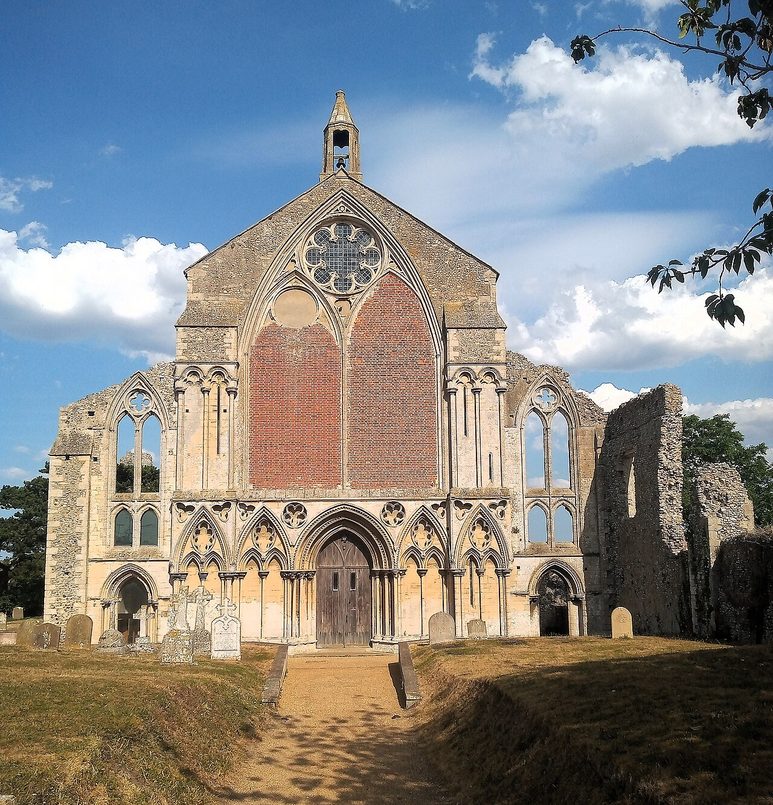
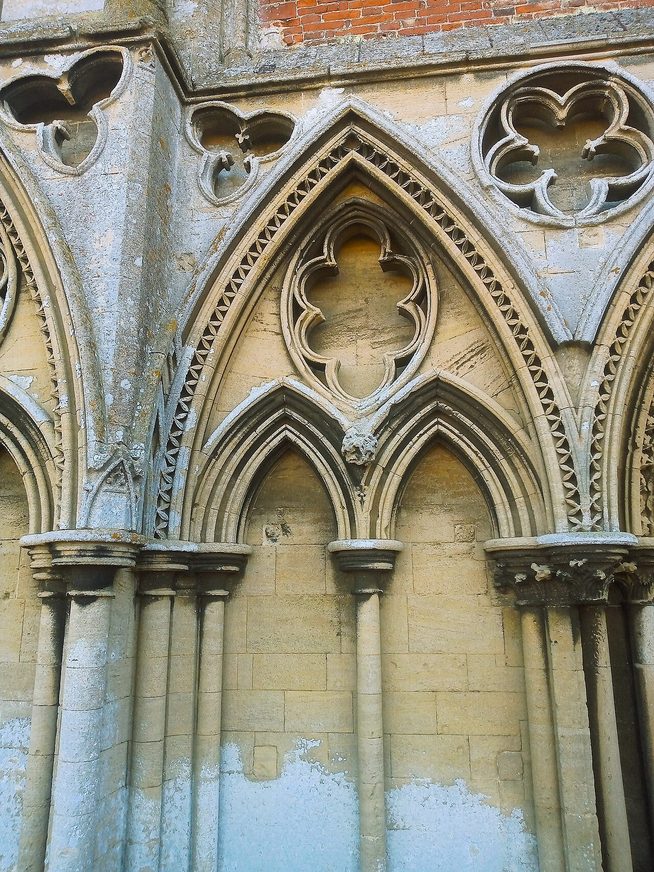
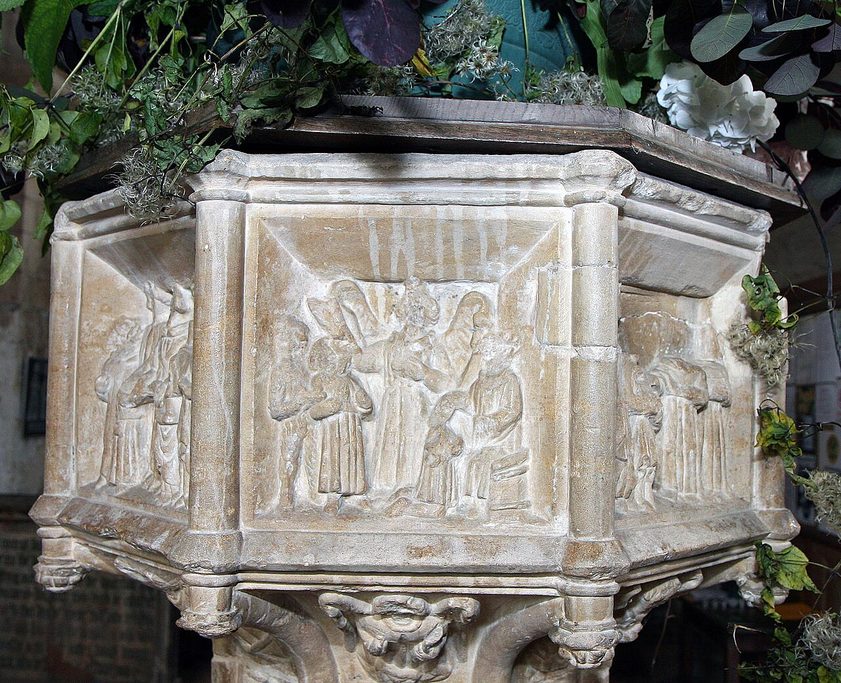
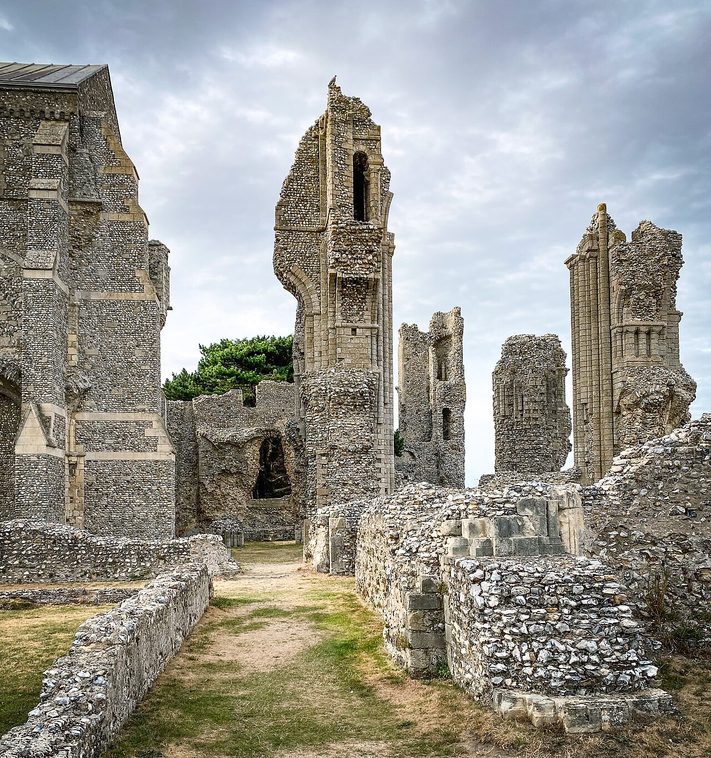
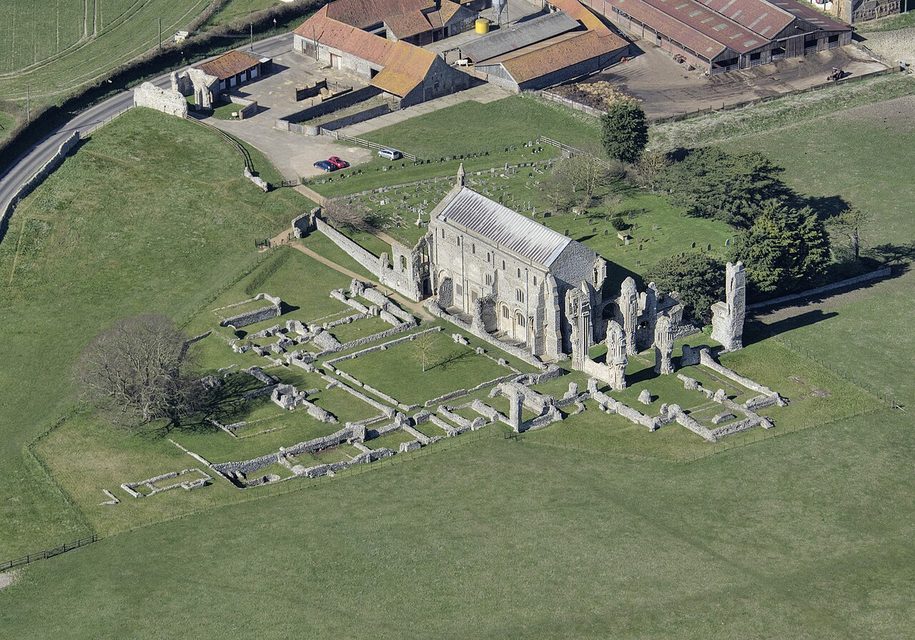
In open country a few miles from the north Norfolk coast stands the nave of a Benedictine priory, still in use as the parish church, with the ruins of the rest of the monastery around it. Its west front of about 1245 may have the earliest bar tracery in England, and inside are a Norman nave, a carved Seven Sacrament font and a screen on which medieval saints are surfacing through Reformation texts.
A priory of St Albans
Binham Priory was founded in 1091 by Peter de Valognes, a nephew of William the Conqueror, and his wife Albreda, as a cell of the great abbey of St Albans. The nave was built from around 1100, and the west front was begun under Prior Richard de Parco (1227–44) and complete by about 1245, as recorded by the St Albans chronicler Matthew Paris. English Heritage describes the priory’s history as one of almost continuous scandal, with quarrelling priors and, in 1212, a siege by Robert FitzWalter.
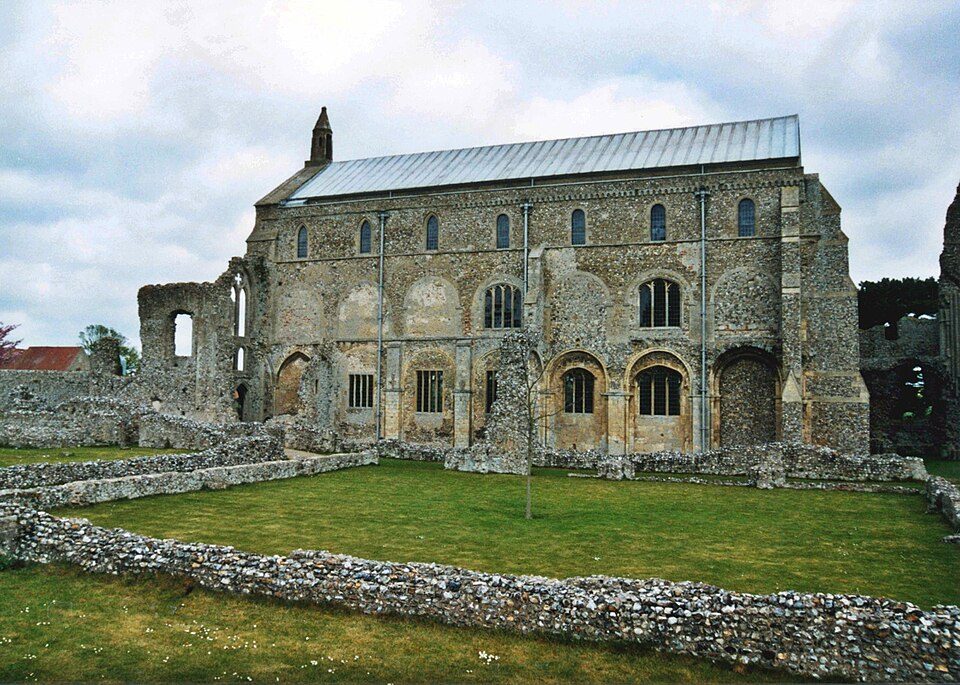
The priory was dissolved in 1539 and granted to Sir Thomas Paston, who demolished the east end and reused its stone. The parishioners kept the nave as their church. The arcades were walled up and the aisles later demolished (the north aisle survived into the early nineteenth century), which is why the church today looks so tall and narrow.
The visitor's cheat sheet
| Where | Binham Priory, Warham Road, Binham, near Fakenham, Norfolk, NR21 0DQ |
|---|---|
| Getting there | About 5 miles south-east of Wells-next-the-Sea; bus 46 (Holt–Cley–Wells); small car park through the gatehouse |
| Opening hours | Church daily from 10am, closing 4pm (5pm in summer); ruins at any reasonable time in daylight |
| Admission | Free; guided tours May–September for a suggested donation of £2 |
| How long | An hour |
| Best time | A late summer afternoon, with the low sun on the west front |
| Dress code | Outdoor shoes for the ruins |
| Tours | Guided tours May–September, booked by phone; café by the car park; toilets in the church |
Hours and admission checked against the official site in October 2026. They change; the official site is always the last word.
Saints through the paint. The lower panels of the rood screen, now kept in the church, were painted with saints in the fifteenth century. At the Reformation they were whitewashed and painted with black-letter texts from the Bible. As the later paint has flaked, the saints have started to reappear underneath.
What to see, in the order you meet it
The west front
Approach through the gatehouse and stand back from the west front. Its great window, now filled with brick, still shows the pattern of its tracery, among the first of its kind in England.
The nave
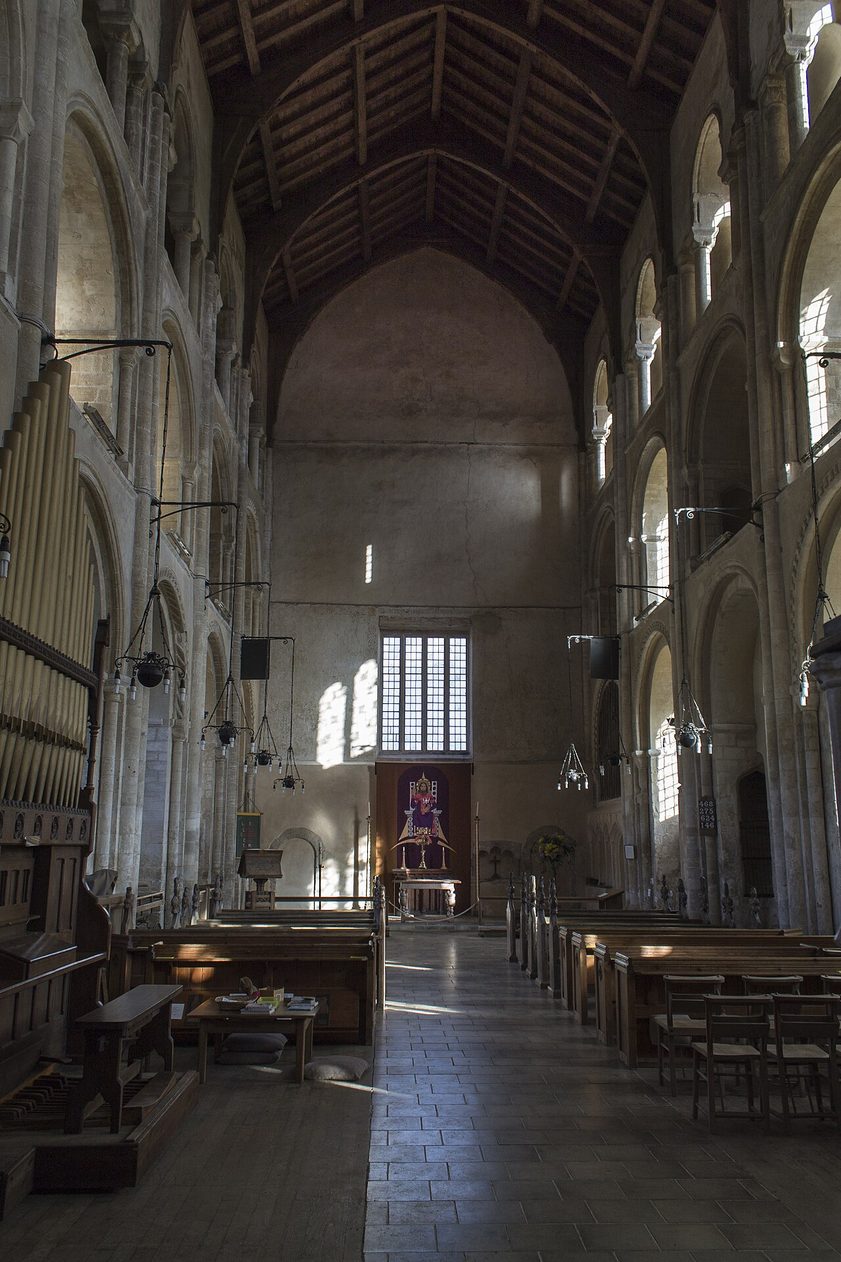
Inside, the Norman nave rises through three storeys of round arches. The arcades are walled up, but the scale of the priory church is clear.
The font, benches and screen
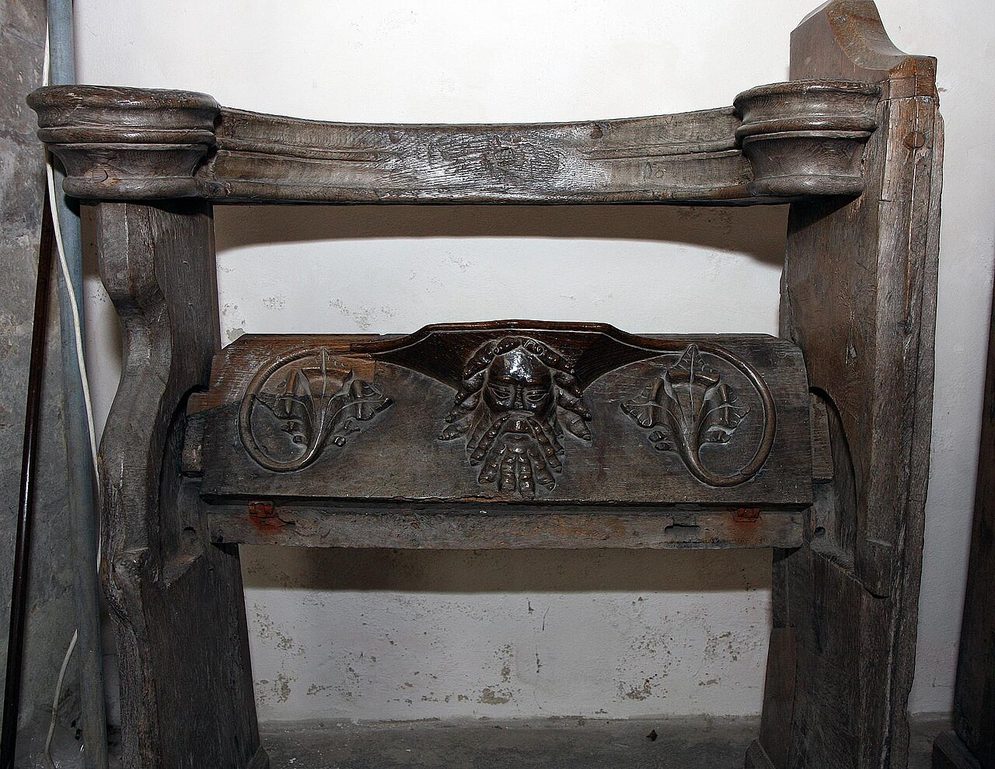
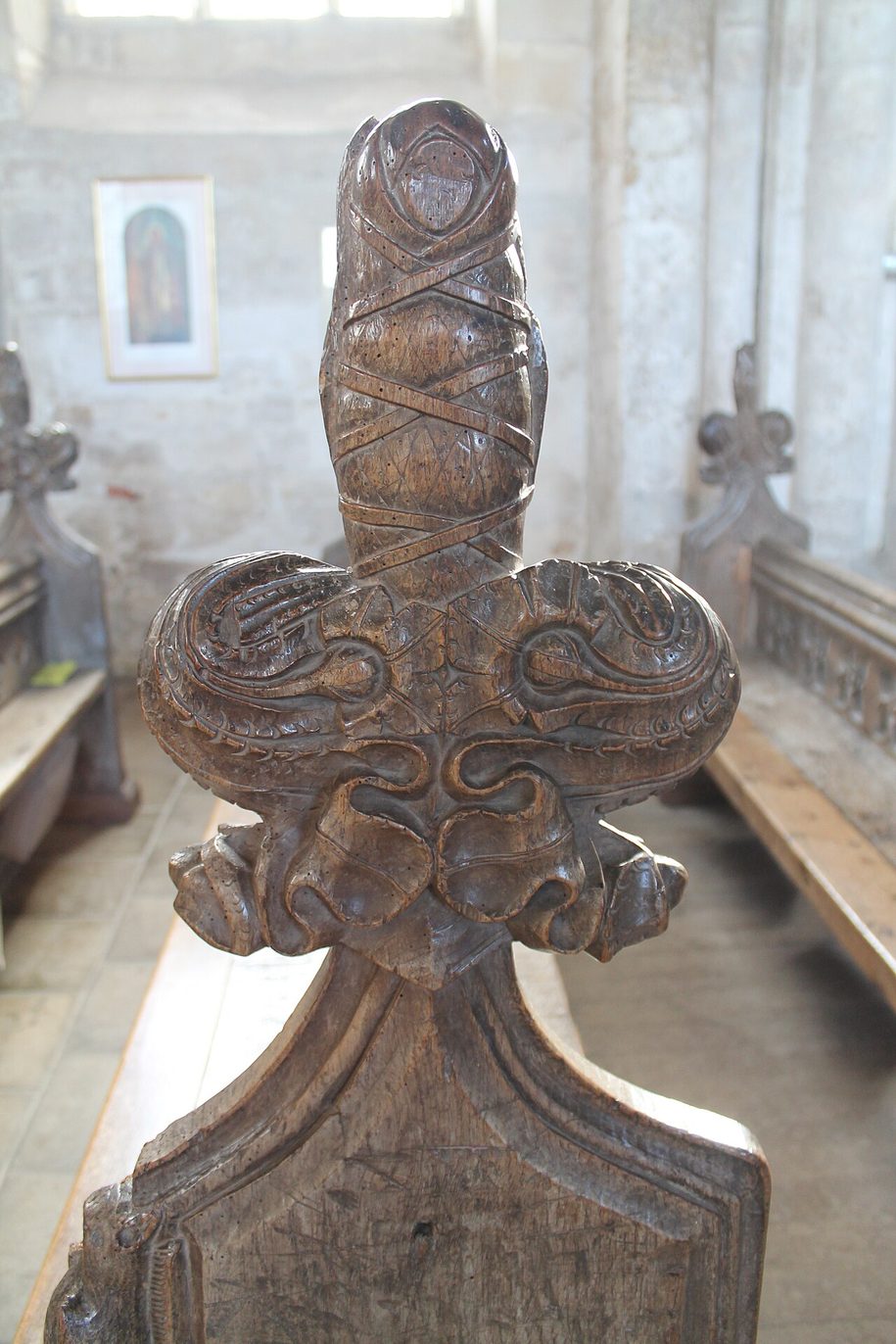
Near the door is the octagonal Seven Sacrament font, carved in the fifteenth century with the seven sacraments of the church. The benches have carved ends and there are carved seats; look for the swaddled baby. Look too for the painted panels of the rood screen.
The ruins
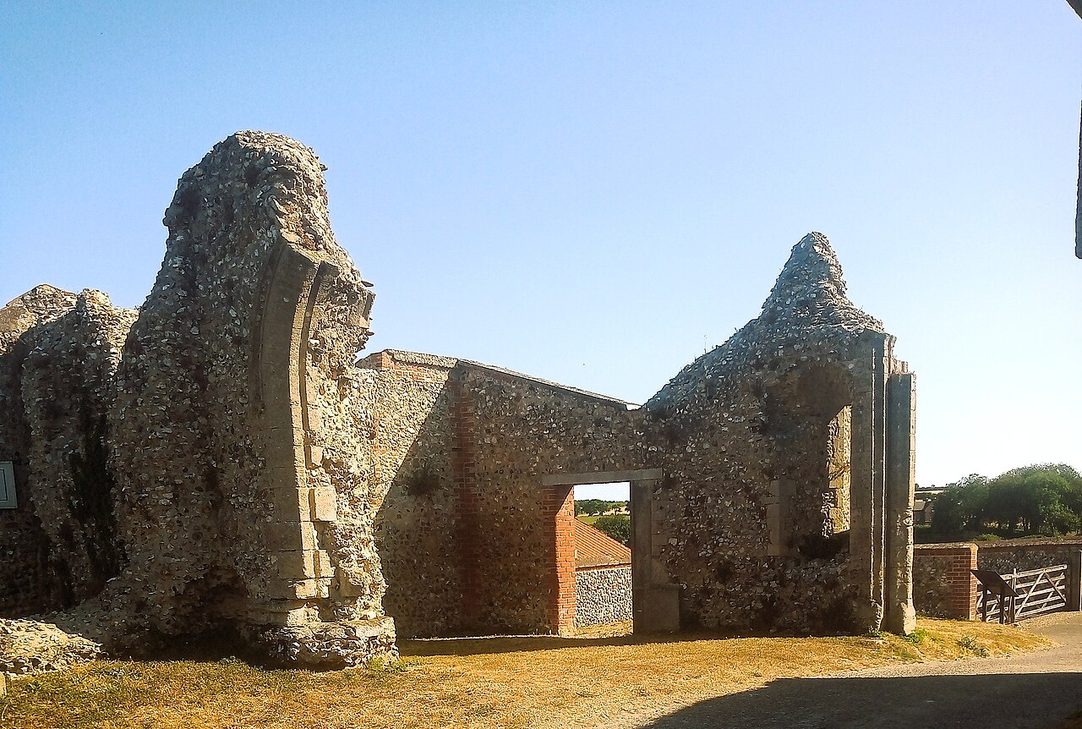
Walk round the east end into the ruins: the broken piers of the crossing and transepts, the chapter house, cloister and domestic buildings, and the fifteenth-century gatehouse.
Visiting
Free to visit
The church and ruins are free. Guided tours run from May to September; donations help to keep the church open. There is a café by the car park.
The hotel link goes to Booking.com. This site earns nothing from it at present — it is here because it is the quickest way to check what is actually available.
Don't miss
- The west front Early bar tracery, about 1245.
- The painted screen Saints showing through texts.
- The Seven Sacrament font Fifteenth-century carving.
- The Norman nave Three tiers of arches.
- The swaddled baby On a bench end.
- The ruins Crossing, cloister and gatehouse.
Insider tips
Combine it with Walsingham. The pilgrim village of Walsingham is a few miles south, and the coast at Wells and Blakeney is close by. In Binham village, look for the medieval market cross on the green.
Common questions
Is Binham Priory free to visit?
Yes. The church is free, and so are the ruins of the priory around it, cared for by English Heritage. Guided tours of about an hour run from May to September for a suggested donation of £2 a head, booked by phone.
When is Binham Priory open?
The ruins are open at any reasonable time in daylight. The church is open daily from 10am; it closes at 4pm, or at 5pm in summer according to English Heritage. Check before travelling late in the day.
Why is the west window bricked up?
The great west window of about 1245 began to fail after the Dissolution. Parts of the west front were bricked up from 1738, and the great window in 1809, but the tracery survives, and you can still see its pattern in the brick.
What is painted on the screen?
The lower panels of the medieval rood screen were painted with saints, then painted over at the Reformation with texts from the English Bible. As the later paint has worn, the saints have begun to show through.
How do you get to Binham?
Binham is about five miles south-east of Wells-next-the-Sea. Bus 46 runs between Holt, Cley and Wells through the village. There is a small car park inside the priory gatehouse.
Where to stay and eat nearby
Binham has a pub and a village shop; Wells-next-the-Sea and Holt have more places to stay and eat.
More English churches
- Walsingham — England’s Nazareth, a few miles south
- Castle Acre Priory — another great Norfolk priory ruin
- Salle Church — a cathedral-sized church in the Norfolk fields