
Torcello Cathedral
Before there was Venice, there was Torcello. On this marshy island in the northern lagoon the first refugees from the mainland built a town, and in 639 a cathedral. The town has almost gone, but the cathedral of Santa Maria Assunta still stands, with some of the finest Byzantine mosaics in Italy: a vast Last Judgement and a lonely Virgin on a sea of gold. It is a short boat ride from Burano.
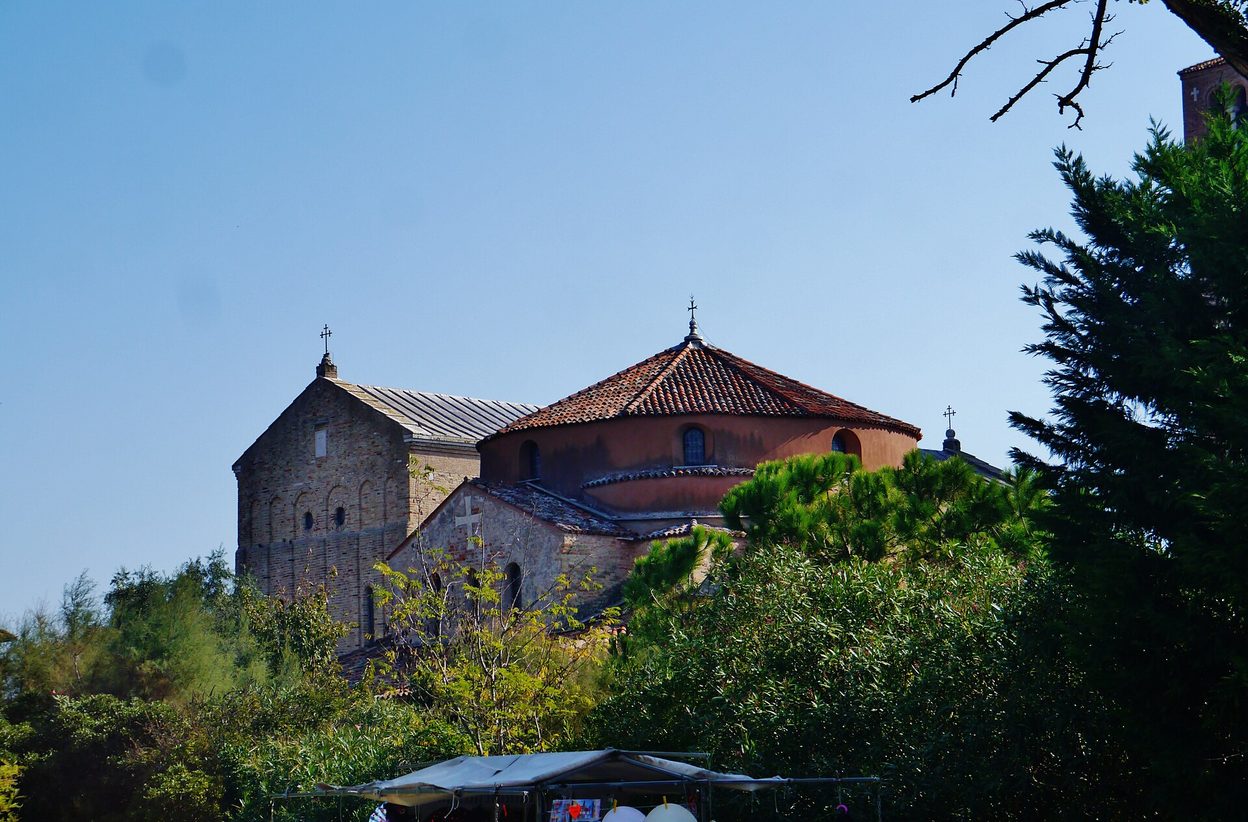
The mother of Venice
An inscription in the cathedral records its foundation in 639, in the time of the Byzantine exarch Isaac of Ravenna. Torcello grew into a busy town of churches, palaces and trade, and the cathedral was rebuilt in the 9th century and again in 1008, under Bishop Orso Orseolo, son of the doge. But as Venice rose, Torcello declined: the lagoon around it silted up, malaria spread, and people left. The bishop moved to Murano in 1689. Today a handful of people live on the island, and the cathedral, the round church of Santa Fosca, a museum and a few inns are almost all that remain.
The visitor’s cheat sheet
| Where | Piazza Torcello, on the island of Torcello in the northern Venetian lagoon; 10–15 minutes’ walk from the vaporetto stop |
|---|---|
| Opening hours | November–February 10am–5pm; March–October 10.30am–6pm. Last entry 30 minutes before closing. Closed 25 December and 1 January; the bell tower closes earlier (4.45pm in winter, 5.30pm in summer) |
| Admission | Basilica €5 (reduced €4); bell tower €5 (reduced €4); both with audio guide €9 (reduced €8). A St Mark’s Basilica ticket gives free entry to the basilica and the reduced €4 rate for the bell tower |
| Santa Fosca | Usually free |
| Getting there | Vaporetto 12 from Fondamente Nove to Burano, then the line 9 shuttle (every 15 minutes or so, daytime) |
| Museo di Torcello | Separate ticket; closed Mondays |
| How long | An hour; half a day with Burano |
Hours and admission checked against the official site in October 2026. They change; the official site is always the last word.
What to see
The Last Judgement
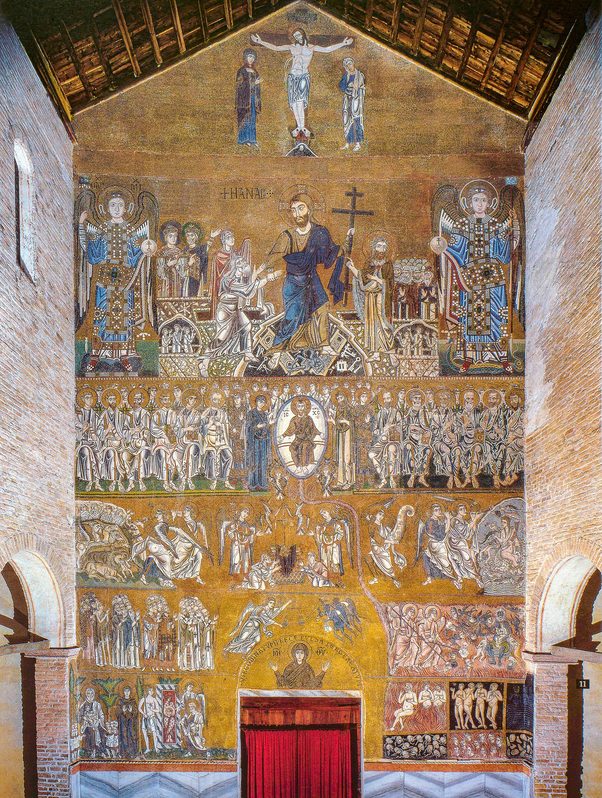
Turn round as you enter. The whole of the west wall is covered by a mosaic largely of the 12th century, with later work, in tiers: the Crucifixion, Christ descending into Hell, and below it the Last Judgement, with the dead rising from earth and sea, the weighing of souls, and the damned in torment, all on a background of gold.
The apse
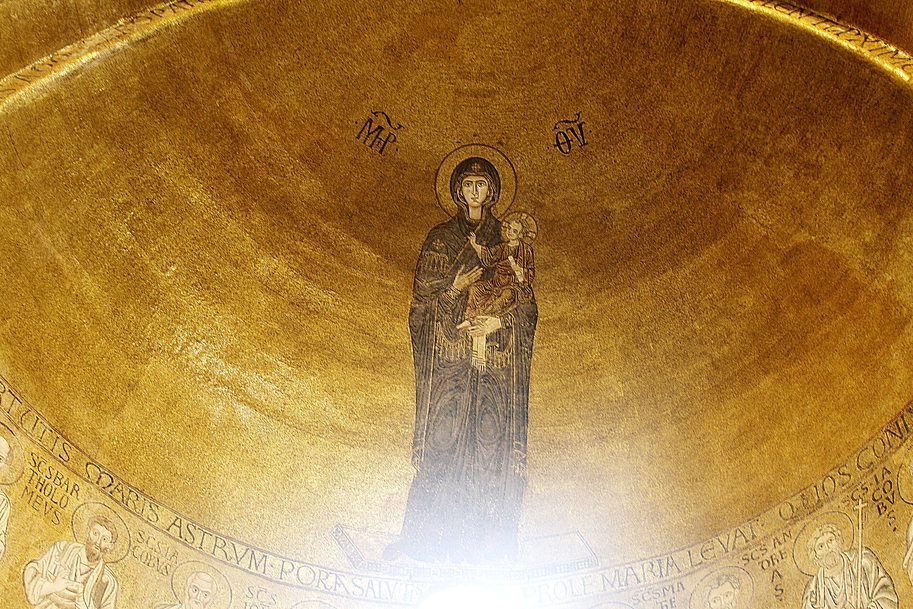
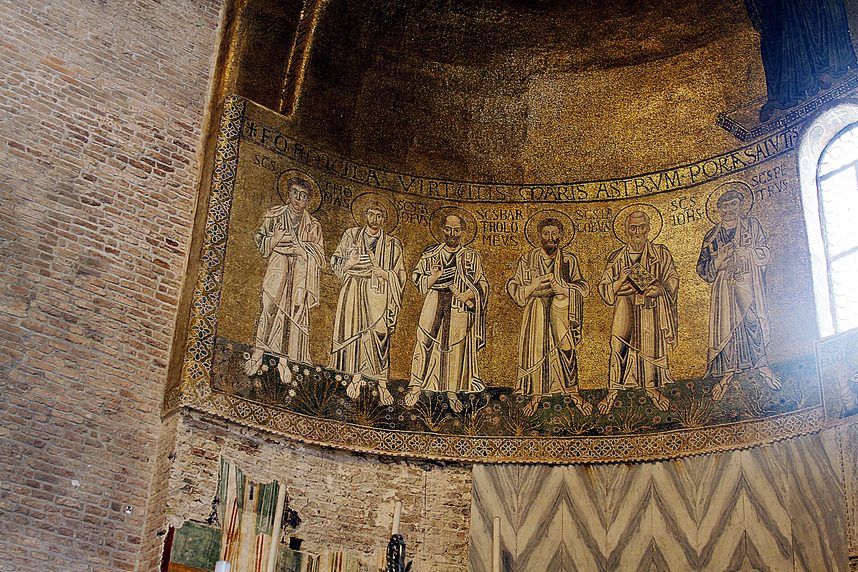
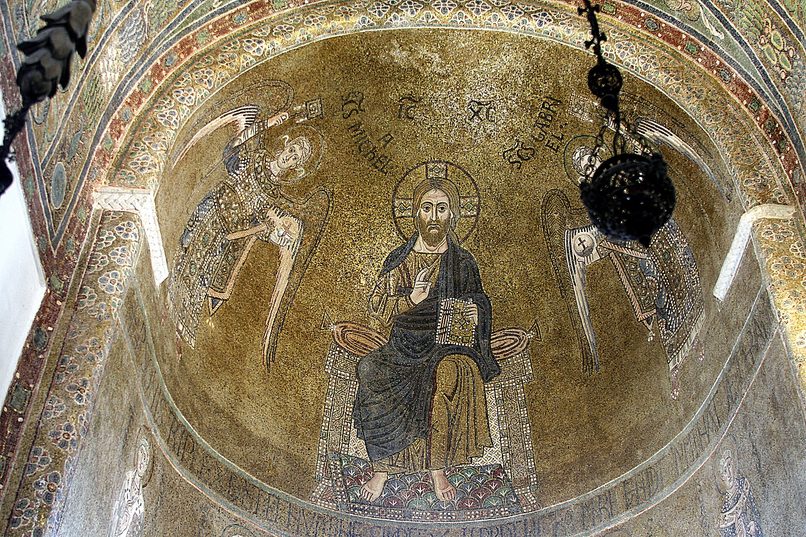
At the far end, the half-dome of the apse holds one of the most famous images in Byzantine art: the tall, slender Virgin holding the Christ Child, standing alone on an expanse of gold. Below her are the Twelve Apostles, and in the chapel to the right, Christ between the archangels Michael and Gabriel. The apse mosaics were restored in 2019–22.
The nave and the screen
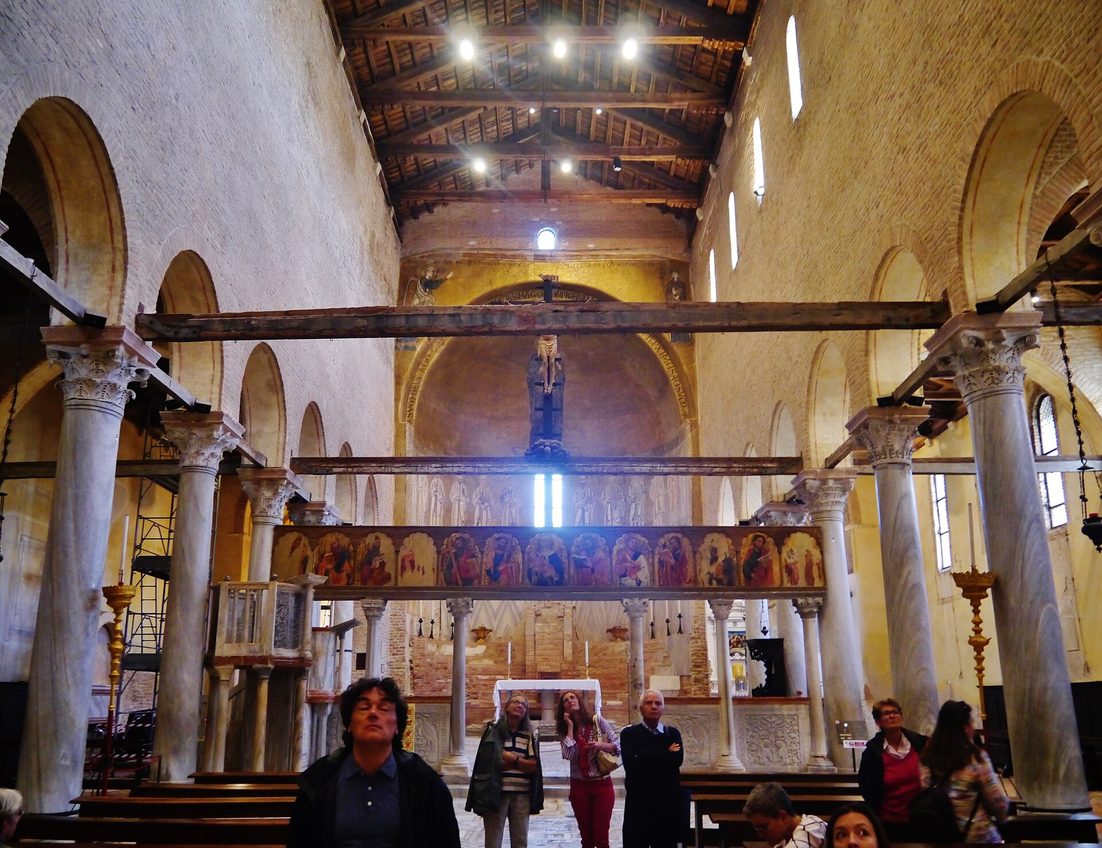
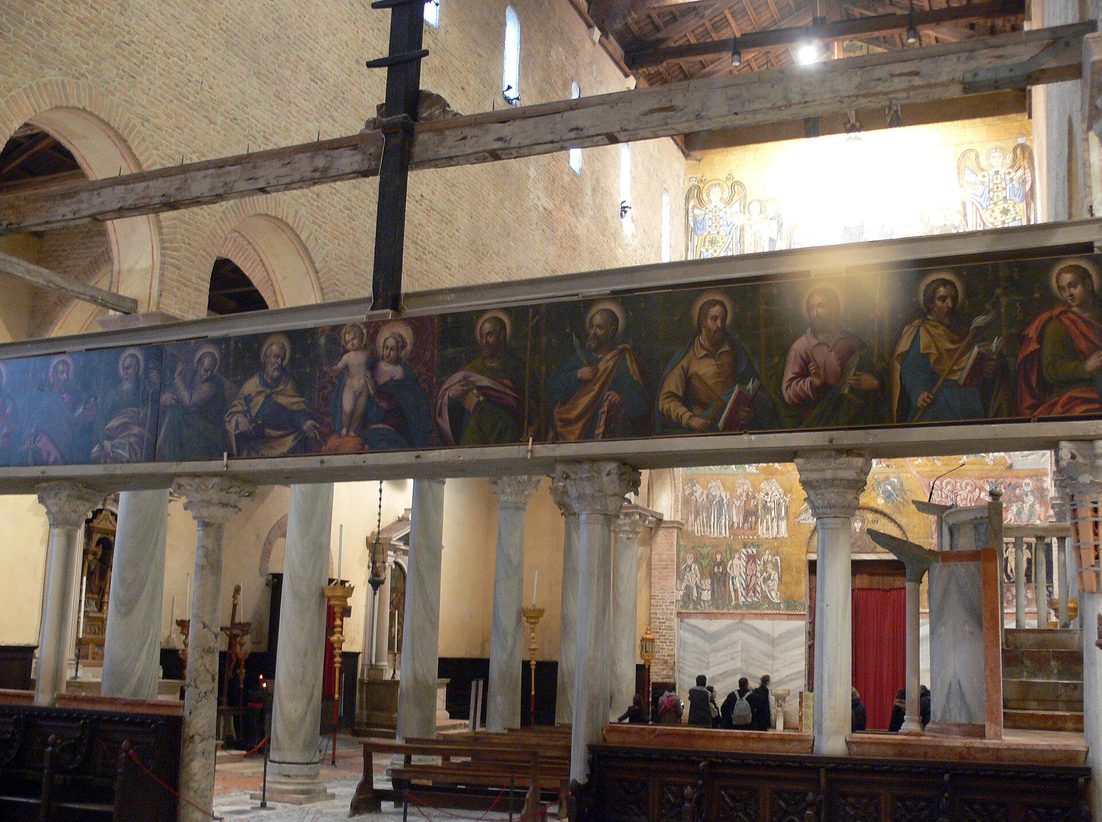
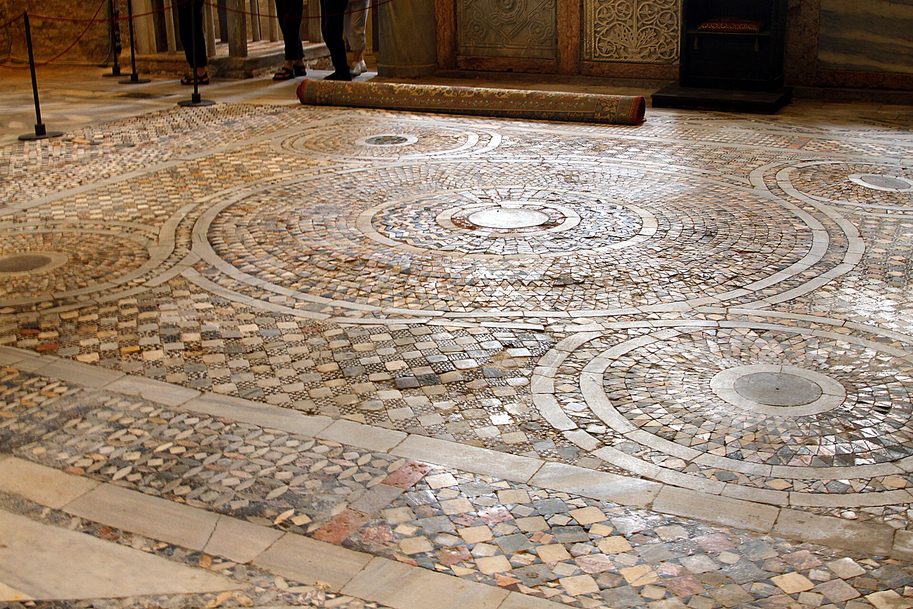
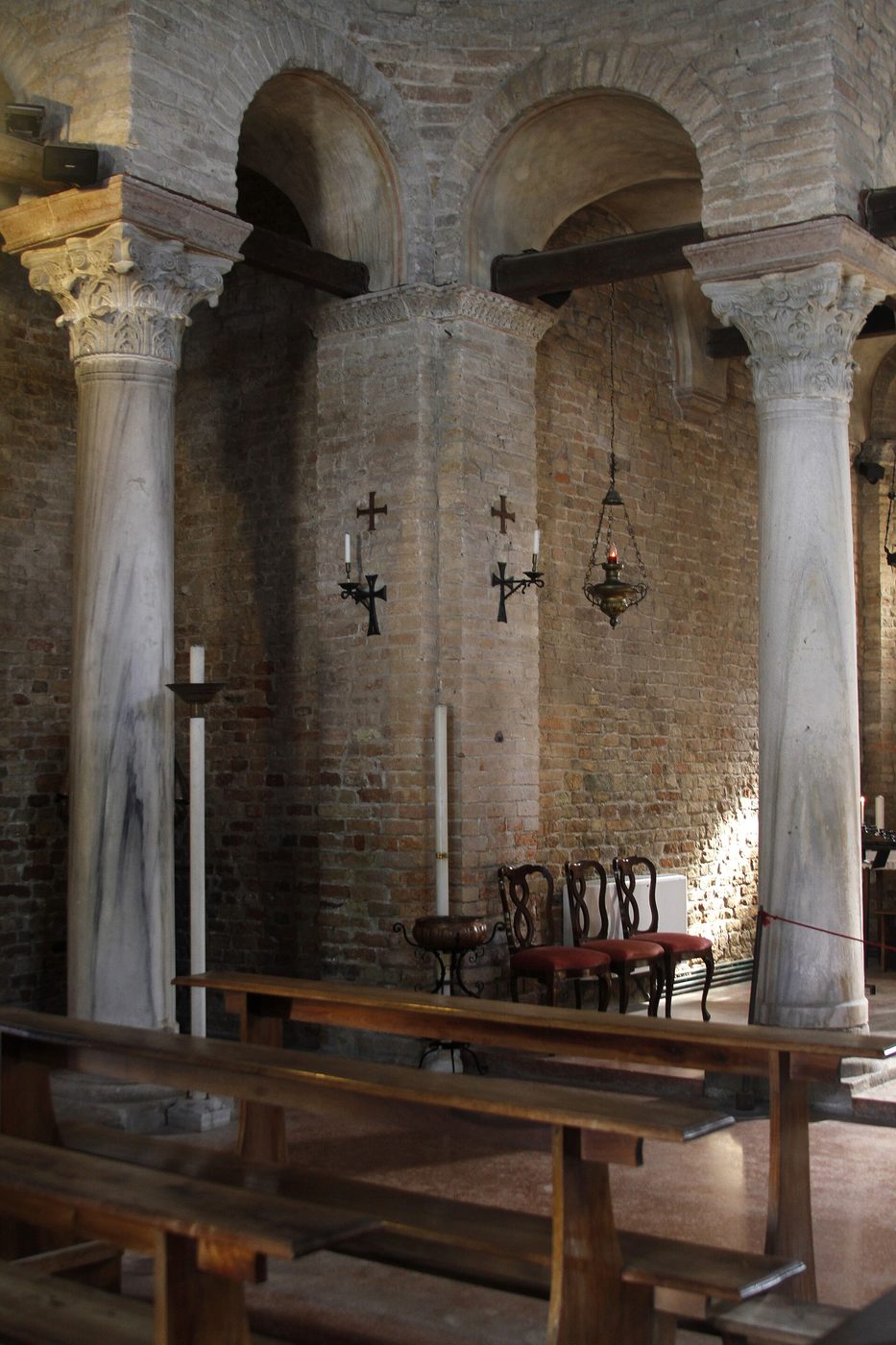
The nave is simple: marble columns with fine capitals, a wooden roof and a patterned marble floor. Across the sanctuary runs a screen of carved marble panels, with peacocks and lions, and above it a row of painted saints of the 15th century.
The campanile and Santa Fosca
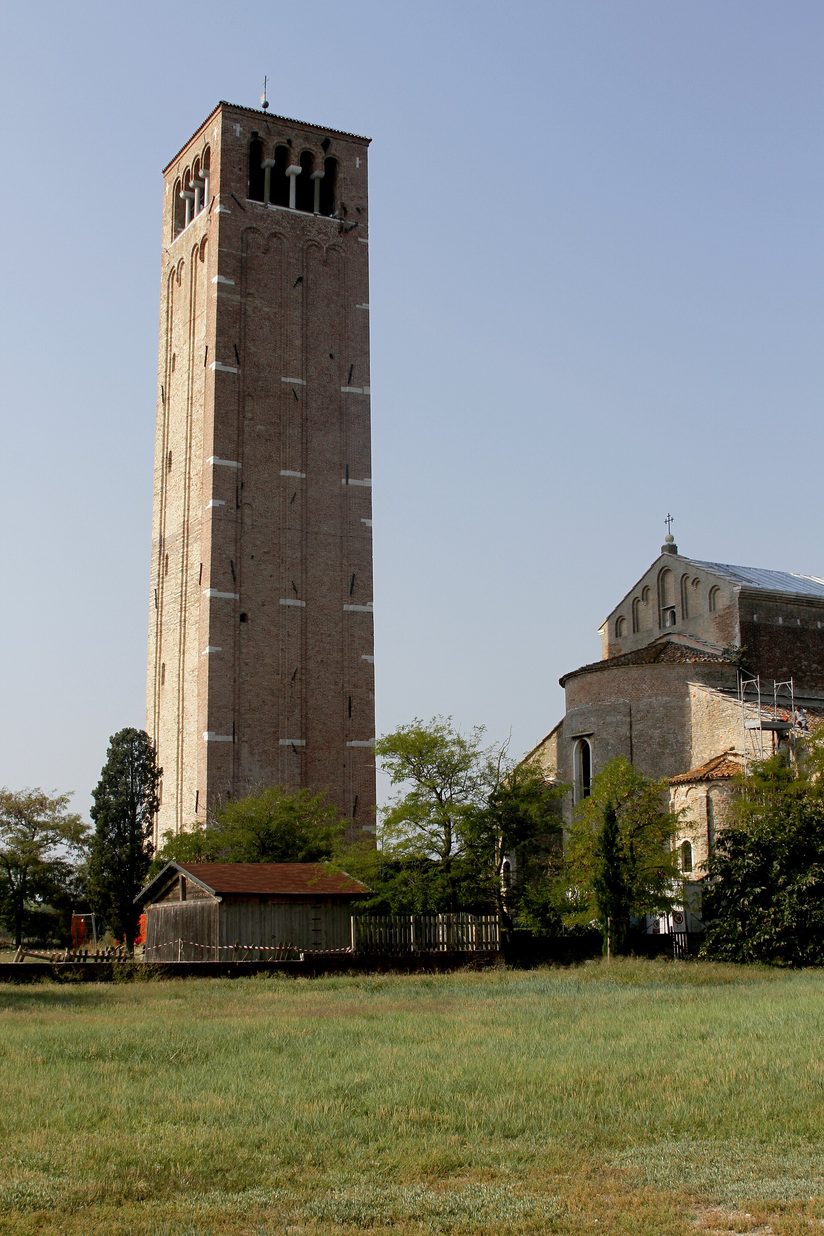
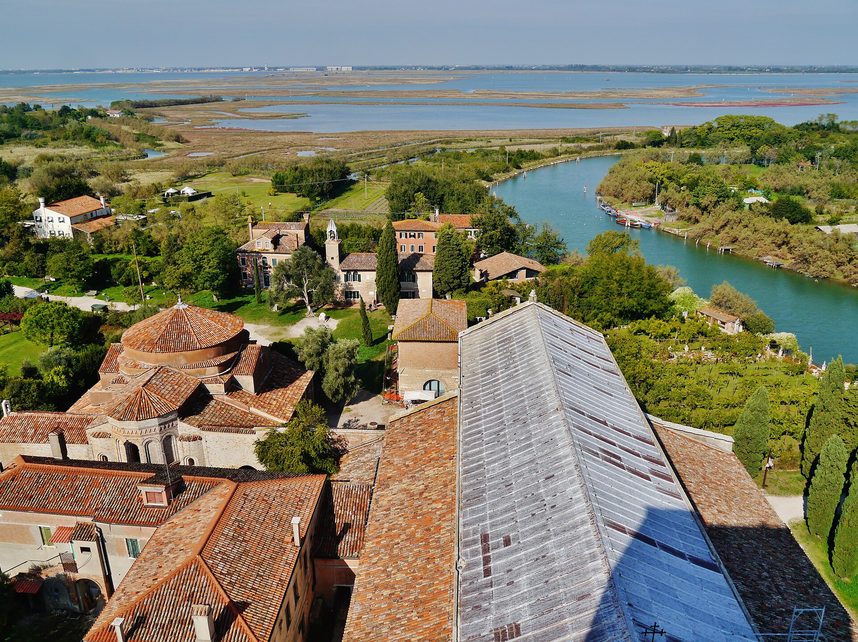
The tall brick campanile can be climbed again, for a view over the islands and marshes of the northern lagoon. Beside the cathedral is Santa Fosca, a small round church of the 11th and 12th centuries with a portico around most of it, usually free to enter. In the grass outside the museum is a stone chair known as Attila’s Throne, which has nothing to do with Attila.
Getting there
From Fondamente Nove in Venice, take vaporetto line 12 to Burano, about 40 minutes, then the line 9 shuttle across to Torcello, about five minutes; in the daytime it runs every quarter of an hour or so, and the last line 9 shuttle back leaves Torcello at 5.55pm. From the landing stage, walk 10–15 minutes along the canal, past the Devil’s Bridge, to the cathedral square. Combine it with Burano, the island of coloured houses and lace.
Tours and where to stay
Basilica and campanile tickets are sold on the island. Many boat tours from Venice visit Murano, Burano and Torcello together; for those, and for hotels in Venice, try these.
These links go to GetYourGuide and Booking.com. This site earns nothing from them at present — they are here because they are the quickest way to check what is actually available.
Don’t miss
- The Last Judgement Turn round when you go in.
- The Virgin of the apse Alone on a field of gold.
- The marble screen Peacocks and lions.
- The campanile For the view across the lagoon.
- Santa Fosca Free, and next door.
Insider tips
Go early, or late in the afternoon. Boat tours arrive in the middle of the day; at opening time, or in the last hour, the island is peaceful. Do Torcello first and Burano afterwards, and check the time of the last line 9 boat back, at 5.55pm.
Common questions
How much does Torcello Cathedral cost?
€5 for the basilica (reduced €4) and €5 for the bell tower, or €9 for both with an audio guide. A ticket for St Mark’s Basilica in Venice also gives free entry to the basilica, and the reduced €4 rate for the bell tower.
When is Torcello Cathedral open?
From November to February 10am to 5pm, and from March to October 10.30am to 6pm, with last entry half an hour before closing. It is closed on Christmas Day and New Year’s Day.
How do you get to Torcello?
Take vaporetto line 12 from Fondamente Nove to Burano, about 40 minutes, then the line 9 shuttle across to Torcello, about five minutes; it runs every quarter of an hour or so in the daytime. From the landing stage it is a 10–15 minute walk along the canal.
Can you climb the bell tower?
Yes. The campanile is open again, with its own ticket, and gives a wide view over the islands and marshes of the northern lagoon.
What is Attila's Throne?
A stone chair in the grass outside the museum. Despite the name it has nothing to do with Attila; it was probably used by the island’s magistrates or bishops.
More churches in Italy
- St Mark’s Basilica — Venice’s own golden Byzantine church, whose ticket also gives free entry to Torcello’s basilica.
- Santa Maria della Salute — the great Baroque church at the mouth of the Grand Canal.
- San Vitale, Ravenna — the Byzantine mosaics of Ravenna, a few hours south.