
St Mary’s Church, Kempley
In the fields near the Herefordshire border, the little church of St Mary at Kempley keeps one of the most complete sets of Romanesque wall paintings in northern Europe, under a roof of the early twelfth century. A mile away is St Edward’s, an Arts and Crafts church of 1903; in March the lanes between them are full of wild daffodils.
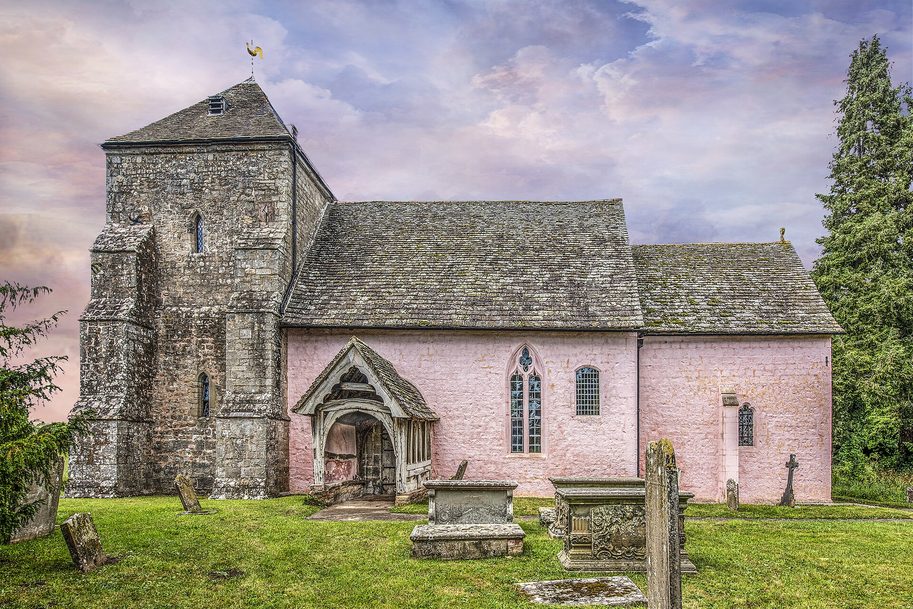
A Norman church and its paintings
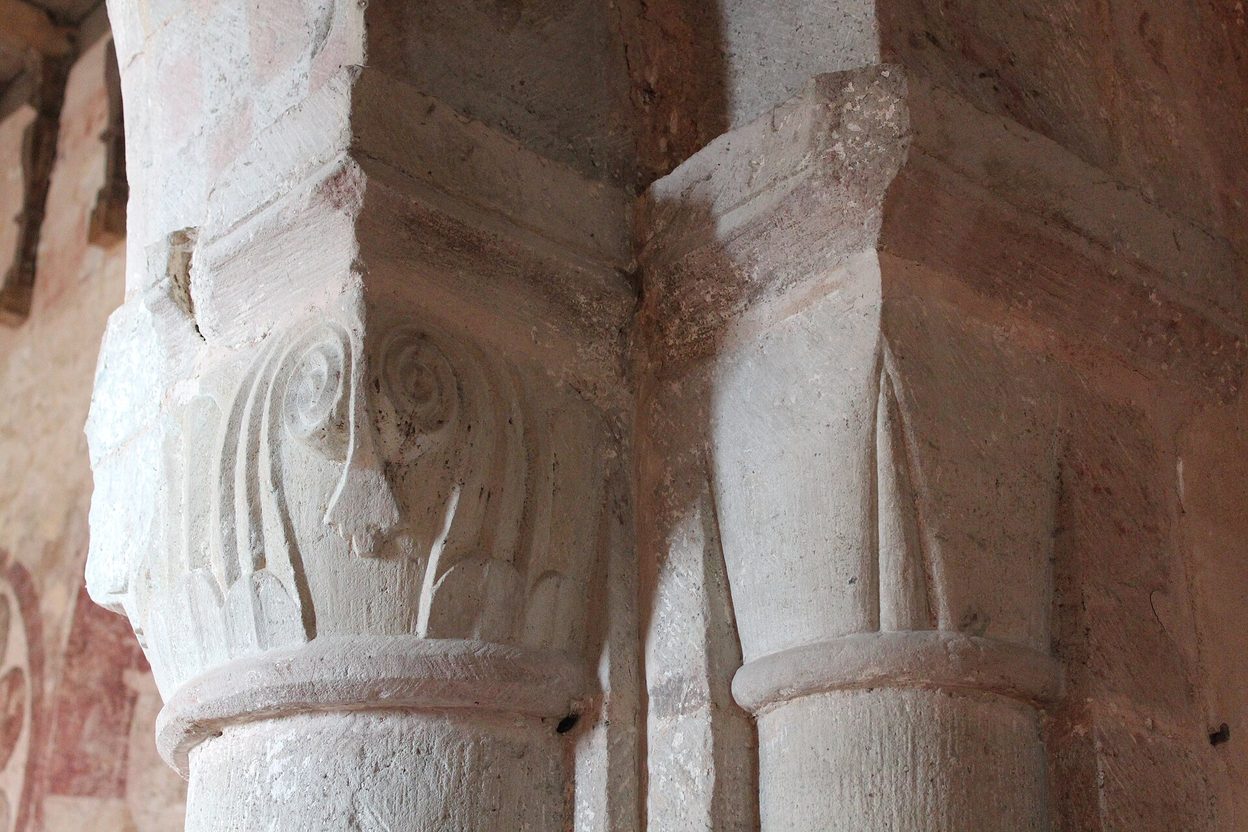
St Mary’s was built in the early twelfth century, probably for Hugh de Lacy. Tree-ring dating of the roof timbers of the nave in 1999 gave a date of 1120–50, making it one of the oldest timber roofs in England, and the planks of the west door are of the same period. The tower was added in the thirteenth century and the timber porch in the fourteenth.
The paintings were hidden under whitewash for centuries and rediscovered in 1872. When a new church, St Edward’s, was built nearer the village, St Mary’s fell out of use; it was declared redundant in 1975 and is now looked after by English Heritage with the Friends of Kempley Churches.


The visitor’s cheat sheet
| Where | St Mary’s, Kempley, near Dymock, Gloucestershire GL18 2AT; off the B4024, about six miles north-east of Ross-on-Wye |
|---|---|
| Opening hours | English Heritage: daily, 10am–6pm March–October, 10am–4pm November–February (the Friends say winter weekends only; check) |
| Admission | Free (English Heritage) |
| St Edward’s | Usually open about 9am–4pm daily |
| Parking | Limited free roadside parking opposite St Mary’s |
| How long | Half an hour for St Mary’s; an hour with St Edward’s |
Hours and admission checked against the official site in November 2026. They change; the official site is always the last word.
What to see
The chancel paintings
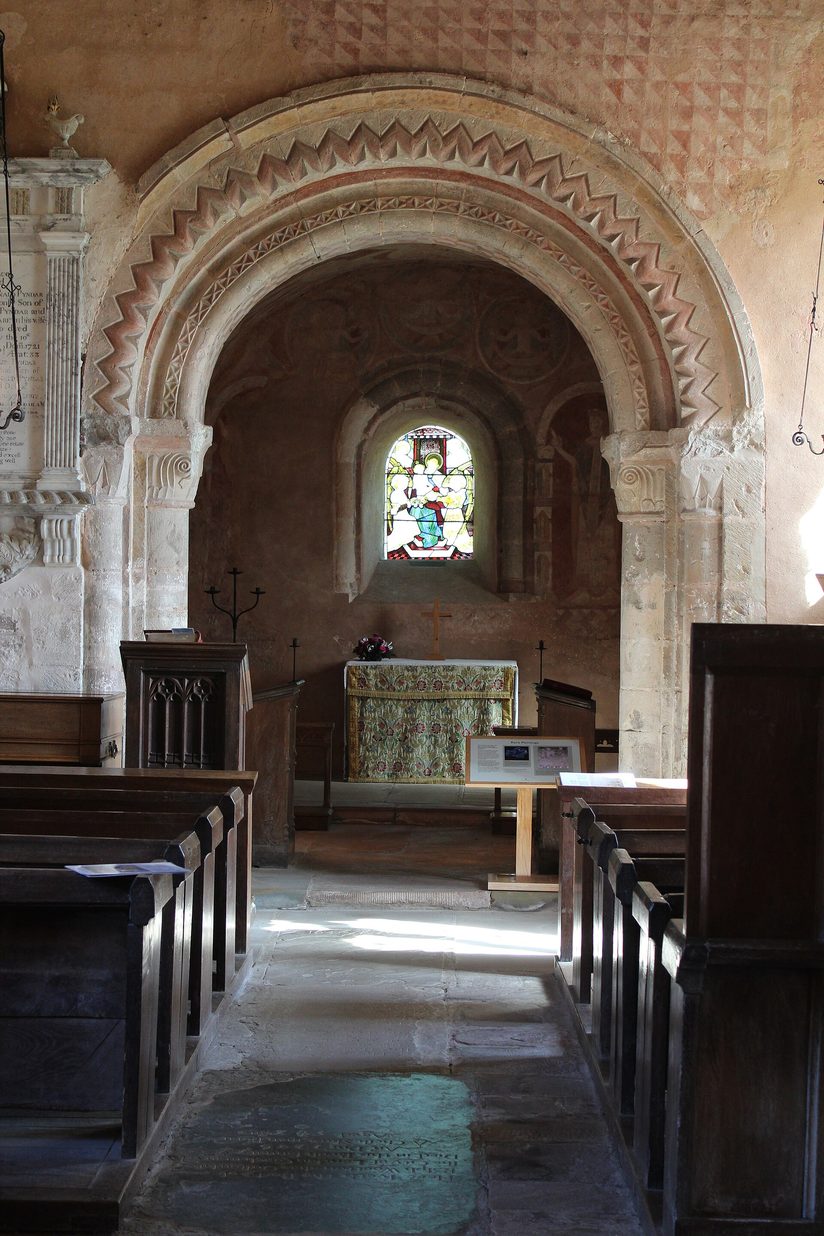
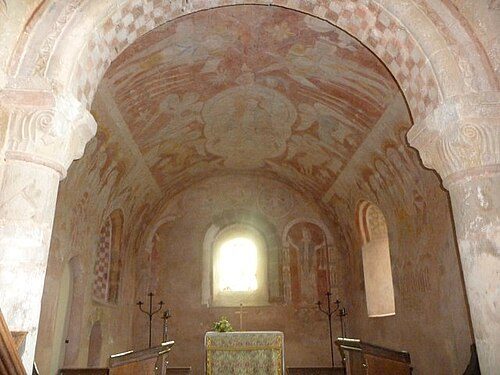
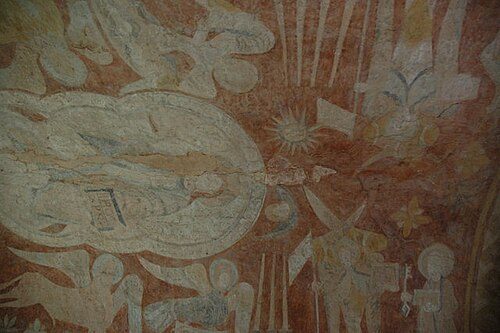
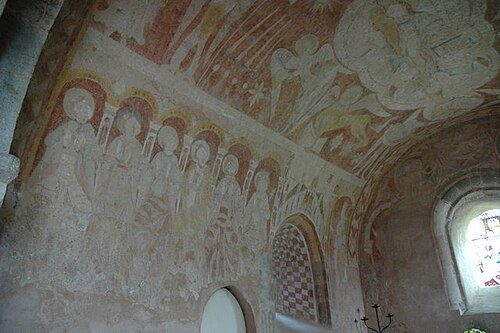
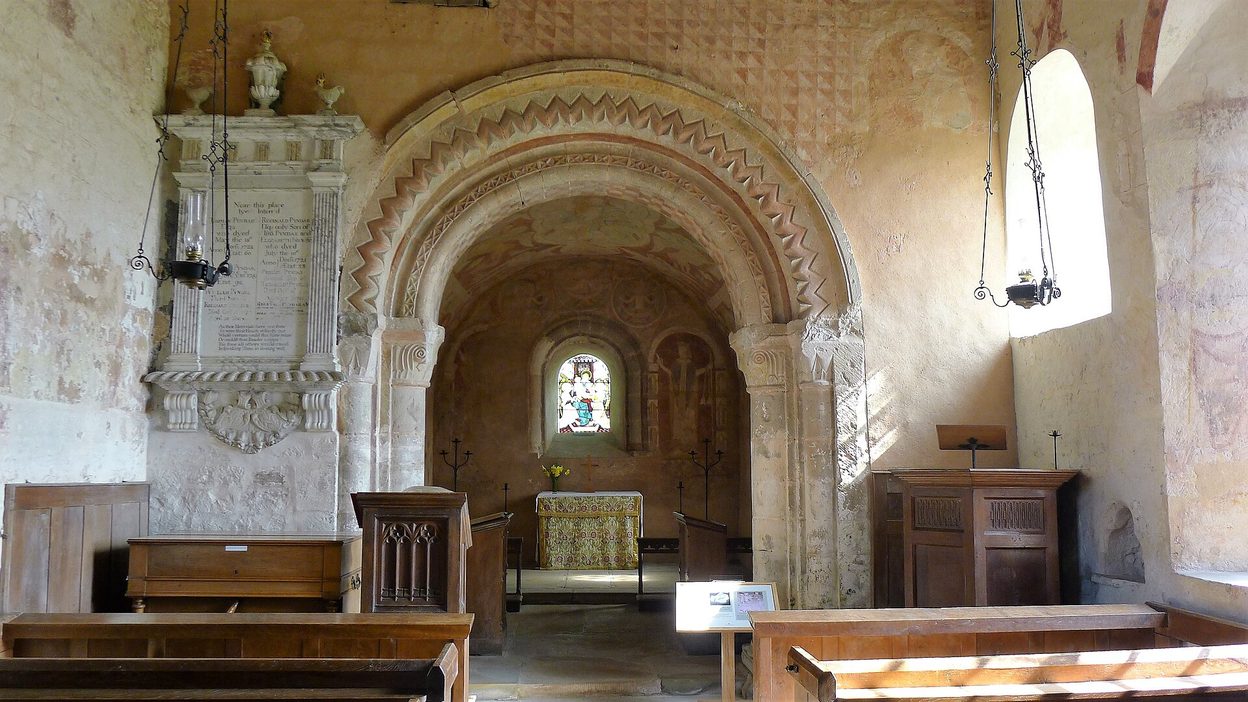
The chancel paintings were painted largely in fresco, on wet plaster, in the first half of the twelfth century. On the barrel vault Christ sits in majesty, surrounded by the symbols of the evangelists, the sun and moon and angels; on the walls below sit the apostles, looking up at him. The colours have faded, but the scheme is complete.
The nave
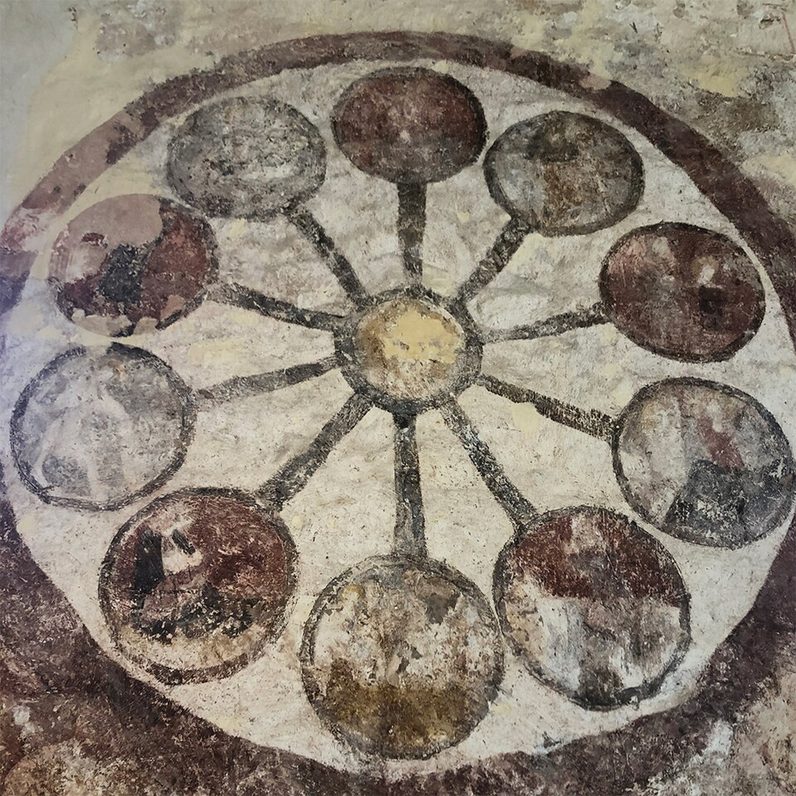
Most of the nave paintings are later, of the fourteenth and fifteenth centuries, and painted on dry plaster: among them a Wheel of Life, St Anthony and the weighing of souls. The east window is by C. E. Kempe, of 1876.
St Edward’s church
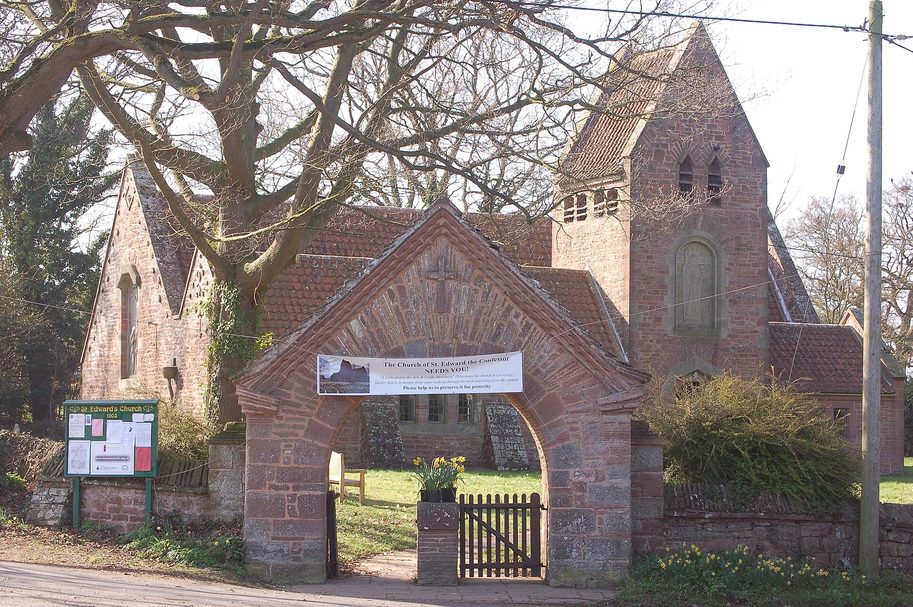
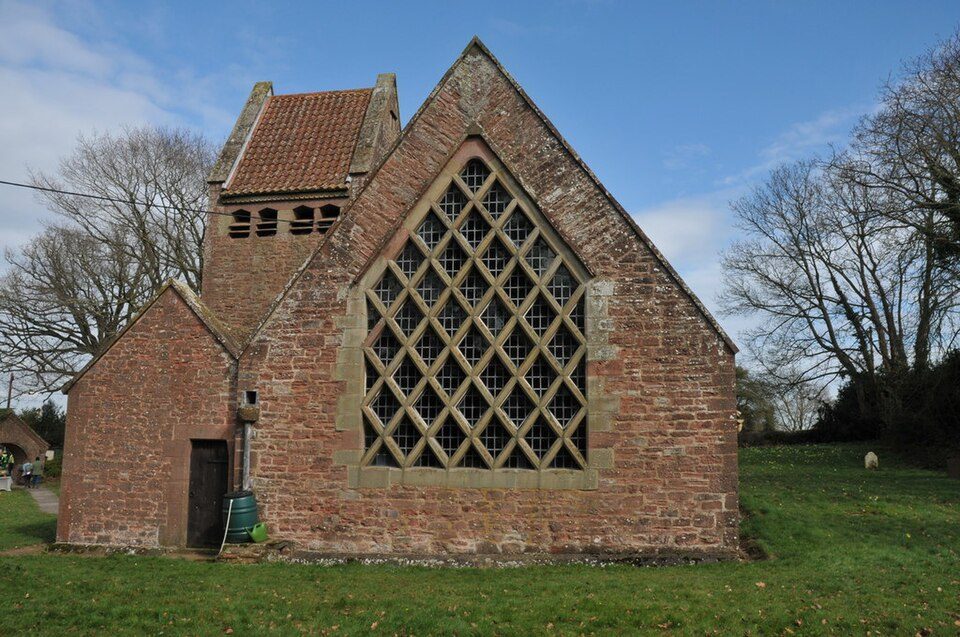
St Edward the Confessor’s, built in 1903–4 for the 7th Earl Beauchamp to designs by Randall Wells, is a church of local red sandstone and estate oak, with furnishings by craftsmen of the Arts and Crafts movement, among them a lectern designed by Ernest Barnsley. It is about a mile south of St Mary’s and is the parish church today.
Getting there
St Mary’s stands alone in the fields about a mile north of Kempley village, off the B4024 roughly six miles north-east of Ross-on-Wye. Ledbury, about eight miles away, is the nearest station. A bus (Young’s 677) runs only on Tuesdays and Fridays, so most visitors come by car or bicycle; the church is on the National Cycle Network.
Where to stay
Ledbury, a black-and-white market town about eight miles to the north-east, and Ross-on-Wye are the nearest bases.
This link goes to Booking.com. This site earns nothing from it at present — it is here because it is the quickest way to check what is actually available.
Don’t miss
- The chancel Twelfth-century frescoes.
- The roof Timber of 1120–50.
- St Edward’s An Arts and Crafts church of 1903.
- Daffodils Wild, in March.
Insider tips
Come in March. The wild daffodils of the Dymock area flower in the fields and churchyards around Kempley; the Daffodil Weekend has guided walks.
Look up in the chancel. The best paintings are on the vault, and they are easier to read once your eyes adjust to the dim light.
Common questions
Why is Kempley church famous?
For its wall paintings. The chancel of St Mary’s keeps a painted scheme of the early twelfth century, with Christ in Majesty on the vault and the apostles below, described by Historic England as the most complete sequence in England.
Is St Mary’s, Kempley open?
English Heritage gives daily opening, 10am–6pm from March to October and 10am–4pm from November to February. The local Friends say it opens only at weekends in winter, so check before a winter visit.
Is it free to visit?
Yes. Entry is free; large groups should book through the Friends of Kempley Churches.
When are the daffodils out?
Usually in March. Kempley holds a Daffodil Weekend in mid-March, with guided walks from St Edward’s church; check the local website for the dates.
What is St Edward’s church?
The parish church of Kempley since St Mary’s was made redundant, built in 1903–4 for Earl Beauchamp to designs by Randall Wells; John Betjeman called it a mini-cathedral of the Arts and Crafts movement. It is about a mile south of St Mary’s.
More English churches
- Deerhurst — a Saxon church and Odda’s Chapel
- Kilpeck Church — Norman carving in Herefordshire
- Hereford Cathedral — the Mappa Mundi and the chained library
See all the cathedrals and churches worth visiting in England →