
Nieuwe Kerk, Amsterdam
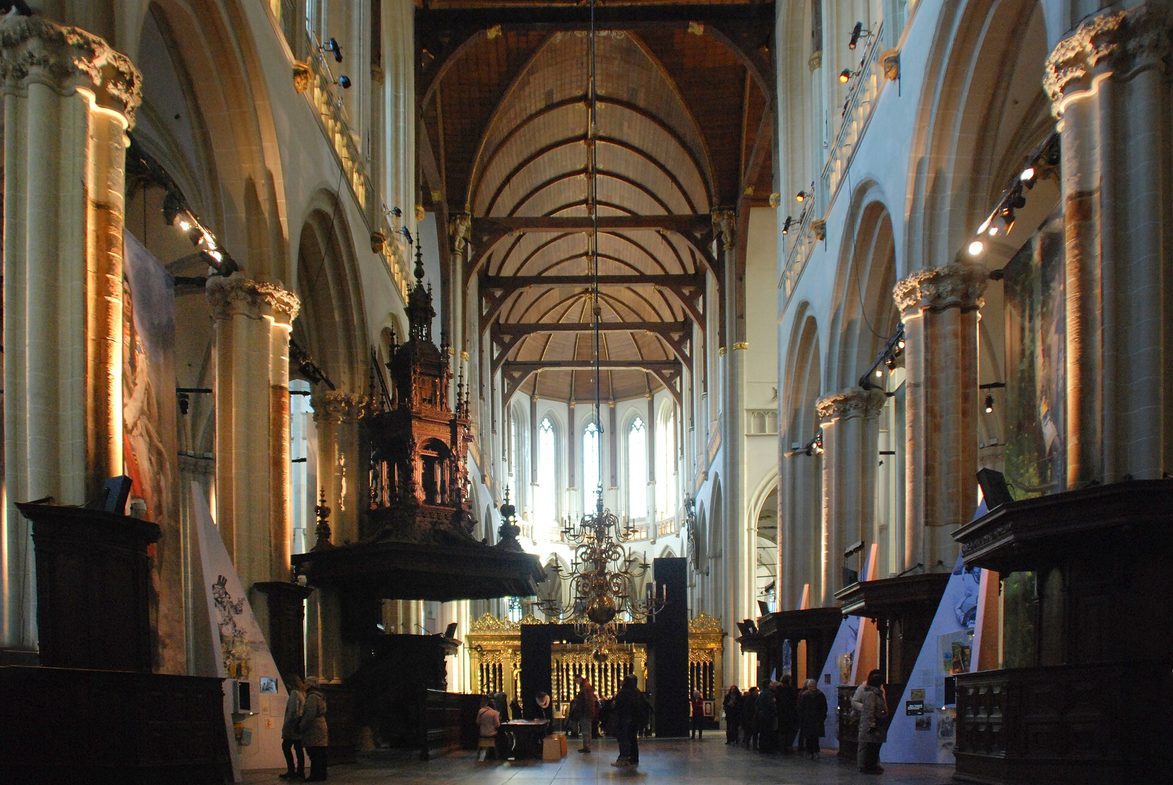
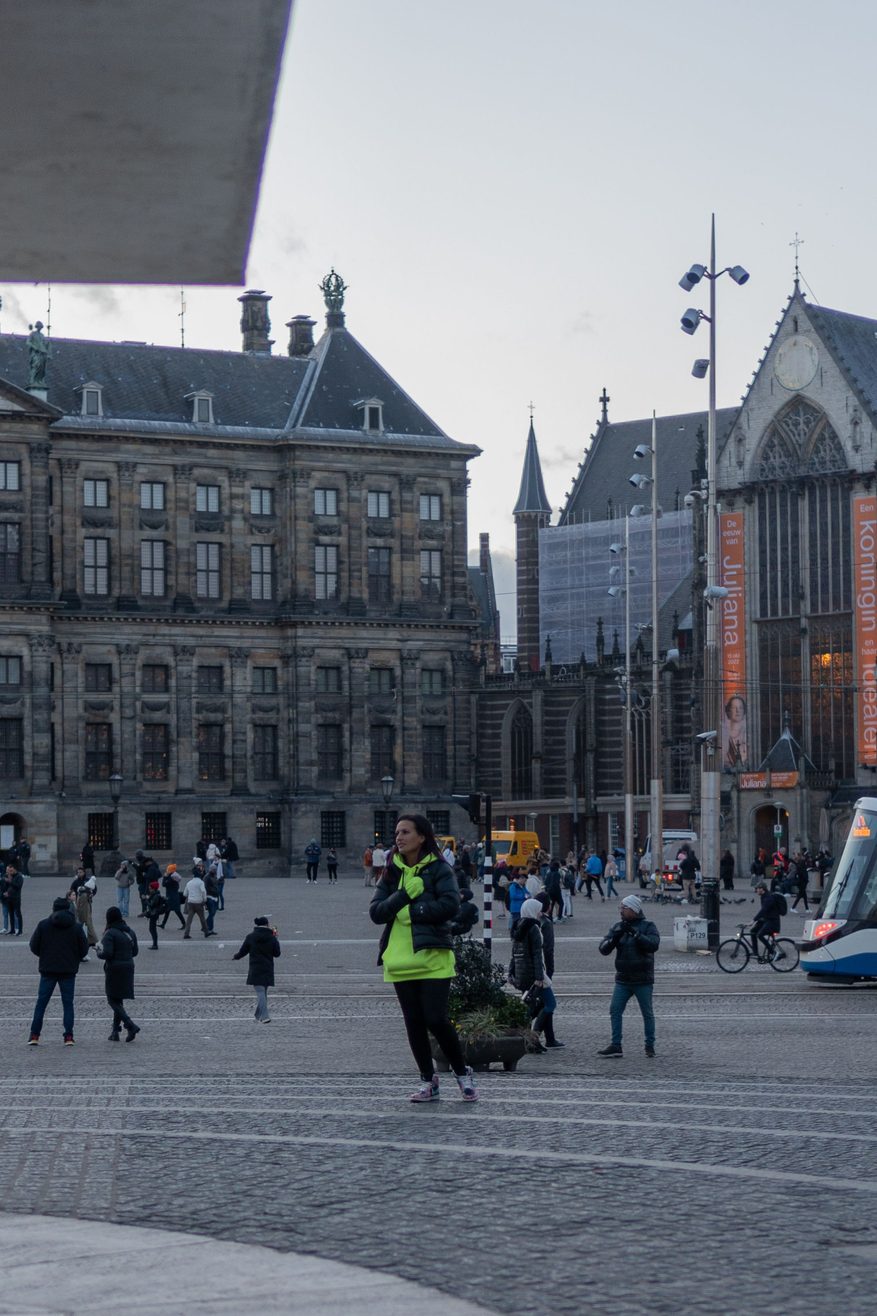
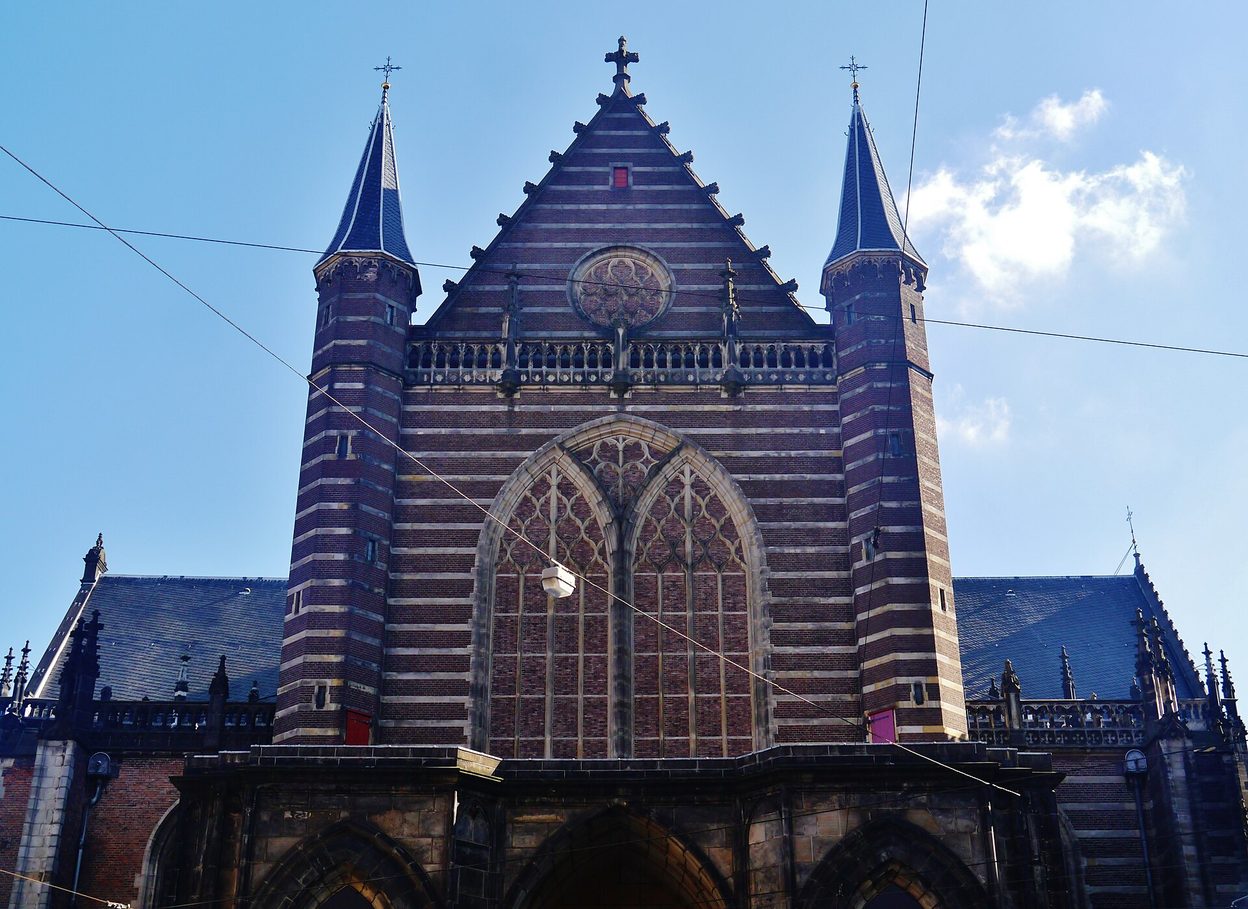
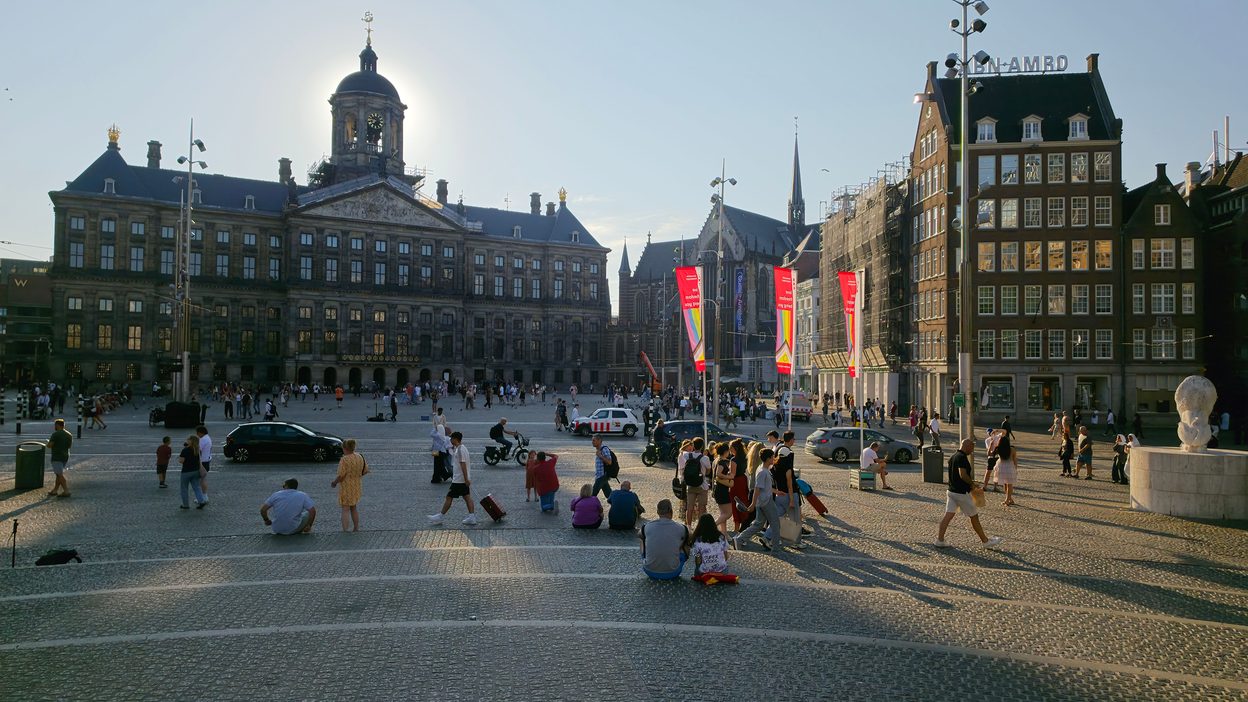
The New Church stands on Dam Square, shoulder to shoulder with the Royal Palace, and it is where the kings and queens of the Netherlands are sworn in. It has not held regular services since the 1950s: today it is run as an exhibition venue, so you come for the current show and stay for a great Gothic hall rebuilt after the fire of 1645, with a brass choir screen, a towering carved pulpit, a great organ in a case designed by Jacob van Campen and the tomb of Admiral de Ruyter.
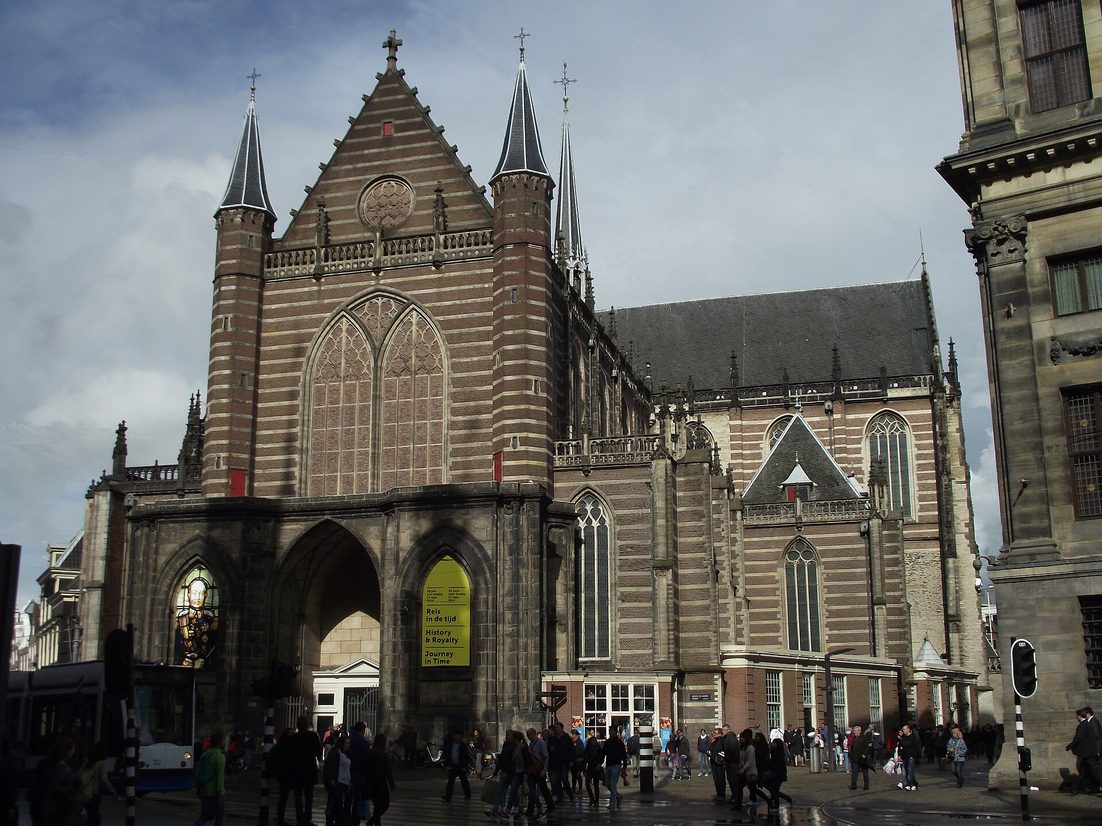
The second church of Amsterdam
By the late fourteenth century the town had outgrown its one parish church, the Oude Kerk, and the Bishop of Utrecht allowed a second. Building began around 1380 on land beside the orchard of the merchant Willem Eggert, and the new church was consecrated on 25 November 1409. Like its older sister it grew for more than a century, with chapels founded by guilds and families; city fires damaged it in 1421 and 1452.
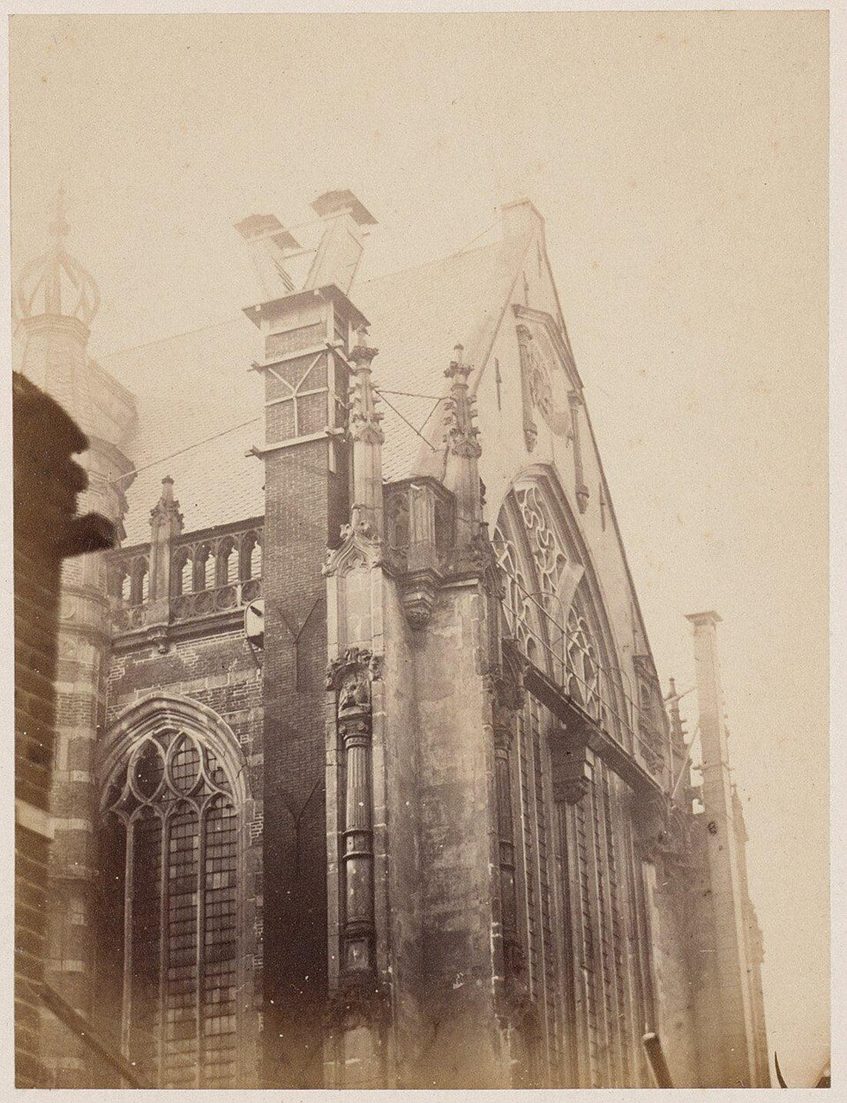
Amsterdam turned Protestant in 1578 (the Alteratie), and the altars and images went. Then, on 11 January 1645, plumbers working on the roof left a fire pot burning during their break, and the church burned out: only the choir and its ring of chapels survived. It was rebuilt in its Gothic form and reopened in 1648, and the city spent lavishly on the interior, which is why almost everything you see inside is of the mid-seventeenth century.

The visitor’s cheat sheet
| Where | Dam, 1012 NP Amsterdam, on Dam Square beside the Royal Palace |
|---|---|
| Opening hours | Daily 10am–5pm, last entry 4.30pm, while an exhibition is on. Closed 27 April, 25 December, 1 January, on some days of national ceremonies and between exhibitions |
| Admission | For the current exhibition: €20 adults; €13.50 ages 12–17 and students; under-12s free; free with the Museumkaart and the I amsterdam City Card |
| Tickets | Online or at the desk; booking a time slot is advised but not required. Card payment only, no cash |
| Exhibition | Queer Amsterdam, the Pink City, 9 July 2026–4 April 2027. The next show is World Press Photo, provisionally from 24 April 2027 |
| Included | Digital guide in the free Bloomberg Connects app, with a tour of the building’s history |
| Services | No regular services; on 4 May the national Remembrance of the Dead begins here, before the ceremony on the Dam |
| Photography | Allowed for personal use without flash, tripods, selfie sticks or drones; follow any signs in the exhibition |
| Getting there | 10 minutes on foot from Centraal Station; trams to Dam; metro 52 to Rokin, 5 minutes’ walk |
| How long | An hour to an hour and a half, depending on the exhibition |
Hours and admission checked against the official site in November 2026. They change; the official site is always the last word.
The church of inaugurations
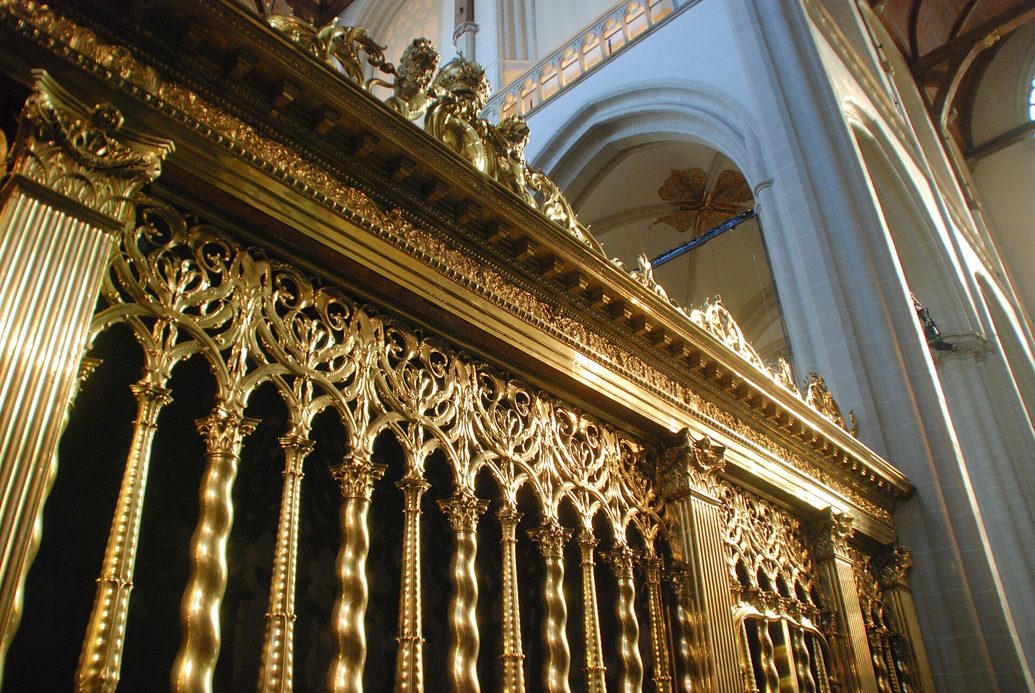
Dutch monarchs are not crowned but inaugurated: they swear an oath to the constitution before the two houses of parliament, and they do it here, in front of the brass choir screen. Willem I took his oath as sovereign prince here in 1814, and the line runs through Wilhelmina in 1898, Juliana in 1948 and Beatrix in 1980 to Willem-Alexander on 30 April 2013. The church blessing of his wedding to Máxima was held here in 2002. Every 4 May the national Remembrance of the Dead begins in the church before the wreath-laying at the National Monument across the square.
By the mid-twentieth century the Protestant church could no longer afford the upkeep, and the last regular services were held in the 1950s. A long restoration from 1959 to 1980 saved the building, and in 1980 it passed to a national foundation that runs it today.
What to see
The choir screen
The brass screen across the entrance to the choir, made around 1650 by the silversmith Johannes Lutma, is the backdrop to every inauguration. Look closely at the balusters and the scrolling foliage.
The pulpit
Albert Vinckenbrinck spent fifteen years, from 1649 to 1664, carving the pulpit, which rises more than 13 metres under a canopy crowded with figures. The Evangelists and the Virtues are on the drum, and the carving runs right down the stair rail.

The great organ
The church calls its main organ the largest historic organ in the Netherlands. It was built in 1650–55 by Hans Wolff Schonat, in a case designed by the architect Jacob van Campen, with carving by Artus Quellinus and painted shutters by Jan Gerritsz. van Bronckhorst. The shutters are usually closed; they open for concerts and great occasions.
De Ruyter and the other tombs
Where the high altar once stood is the white marble tomb of Admiral Michiel de Ruyter, who died of his wounds in 1676, carved by Rombout Verhulst and finished in the early 1680s; the relief behind the admiral shows a sea battle. Other naval heroes lie nearby, among them Jan van Galen and Jan van Speijk, and the poet Joost van den Vondel, buried here in 1679, is remembered by a plaque of 1772 in the north transept, among the memorial stones to Dutch writers that are still being added today.

The windows
The big window in the south transept, on the Dam side, was given by the people for Queen Wilhelmina’s inauguration in 1898; Otto Mengelberg designed it. Later windows mark her jubilee in 1938, the fiftieth anniversary of the Liberation in 1995 and Queen Beatrix’s silver jubilee in 2005.
The tower that never was
The church has only a slender spire over the crossing. In the 1640s the city planned a great west tower, meant to outdo the Dom in Utrecht, and drove more than six thousand piles for it. Work stopped in 1653 because the new Town Hall next door, today’s Royal Palace, was swallowing the money, and most of the stump was taken down in 1783; its base survives at the west front.
The exhibitions
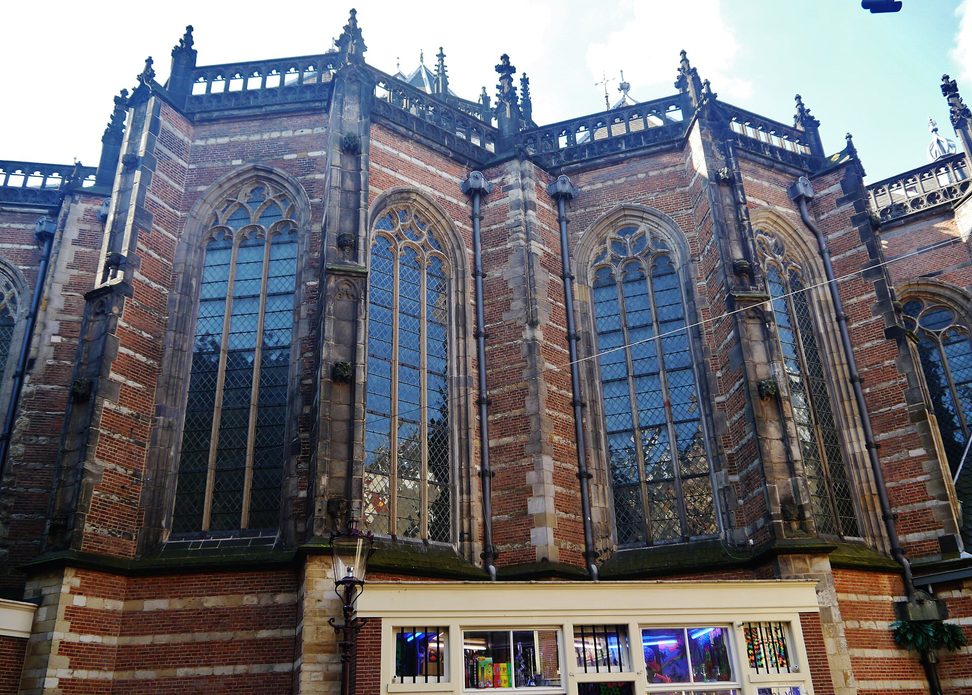
The foundation stages two or three big exhibitions a year, on history, culture and photography. Until 4 April 2027 the show is Queer Amsterdam, the Pink City, four centuries of queer history in more than ninety objects and stories; World Press Photo is due to follow from 24 April 2027 (dates provisional). The church is likely to close while the exhibitions change over, so check the website before visiting in April 2027.
A note on our pictures. The exhibitions, the modern memorial stones and the windows of 1938, 1995 and 2005 are in copyright, so our photographs show the historic building and its seventeenth-century furnishings only.
Getting there
The church is a ten-minute walk down the Damrak from Centraal Station. Nearly every tram from the station stops at Dam, and metro line 52 stops at Rokin, four or five minutes away. There is a guarded bike park on the Beursplein. From Schiphol, the train to Centraal takes about a quarter of an hour.
Where to stay
Tickets are sold by the church itself, online or at the desk. Anywhere in the canal ring puts the Dam within a short walk.
This link goes to Booking.com. This site earns nothing from it at present — it is here because it is the quickest way to check what is actually available.
Don’t miss
- The choir screen Lutma’s brass screen, where every monarch since 1814 has sworn the oath.
- The pulpit Fifteen years of carving, more than 13 metres high.
- The organ case Van Campen’s design, with Quellinus’s carving.
- De Ruyter’s tomb The admiral in marble, where the high altar stood.
Insider tips
Use your Museumkaart. With the Museumkaart or the I amsterdam City Card entry is free, and City Card holders do not need a time slot.
Pair it with the Oude Kerk. The Oude Kerk, the church this one was built to relieve, is a six- to eight-minute walk away across the Damrak. Do both in a morning.
Listen for the organ. The church holds organ concerts through the year, including candlelit concerts on Christmas Day and New Year’s Day; dates and tickets appear on the activities page of its website.
Common questions
How much does it cost to visit the Nieuwe Kerk?
The church is open as an exhibition venue, so you pay for the current show: €20 for adults and €13.50 for ages 12 to 17 and students, with under-12s free. The Museumkaart and the I amsterdam City Card give free entry. Payment is by card only. Prices change with each exhibition.
When is the Nieuwe Kerk open?
Daily 10am to 5pm (last entry 4.30pm) while an exhibition is on. It is closed on 27 April, 25 December and 1 January, on some days of national ceremonies, and while exhibitions are being changed.
Is the Nieuwe Kerk still a church?
Not for regular worship: the last regular Sunday services were held in the 1950s, and since 1980 a national foundation has run the building as a venue for exhibitions, organ concerts and state occasions. Dutch monarchs are still sworn in here, most recently King Willem-Alexander in 2013.
How far is the Nieuwe Kerk from the Oude Kerk?
About half a kilometre: a walk of six to eight minutes across the Damrak into the old quarter.
More churches to visit
- Oude Kerk, Amsterdam — Amsterdam’s oldest building, a few minutes’ walk away.
- Grote Kerk (St Bavo), Haarlem — the Müller organ that Mozart played, a quarter of an hour by train.
- Dom Church and Dom Tower, Utrecht — the tower the Nieuwe Kerk’s was meant to outdo.