
Netley Abbey, Hampshire
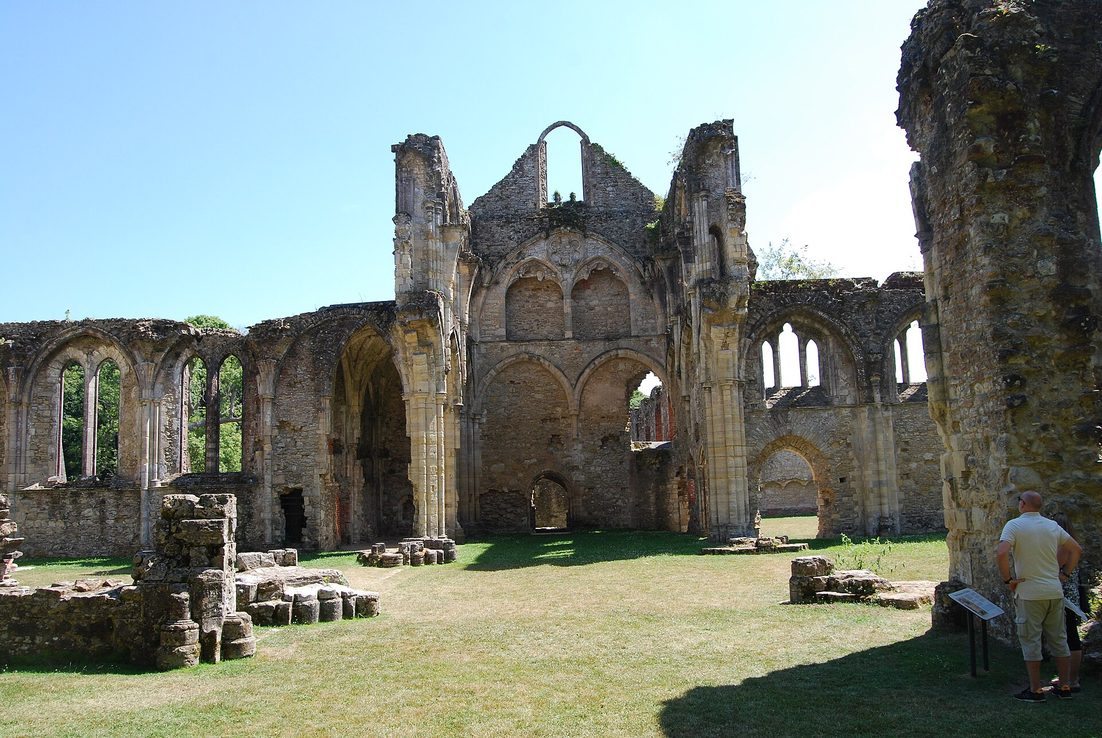
On a wooded slope above Southampton Water stand the ruins of Netley Abbey, a Cistercian monastery of the thirteenth century. English Heritage calls it the most complete surviving Cistercian abbey in southern England: almost all the walls of its church still stand, with the buildings round the cloister. After the Dissolution it became a Tudor mansion, and in the eighteenth century, half-buried in ivy, it became one of the most admired Romantic ruins in England. It is free to visit and open every day.
The king’s abbey
Peter des Roches, bishop of Winchester, began the abbey but died in 1238 before it was finished. In July 1239 monks arrived from Beaulieu, across the water in the New Forest, and Henry III took the new house under his protection; he was usually called its founder, and inscriptions naming him are carved on the bases of the crossing piers. The abbey was dedicated to St Mary and St Edward the Confessor.
Building began at the east end about 1244. The east window followed, and the nave and west front were finished in the early fourteenth century. Netley was never rich: about fifteen monks lived here, with lay brothers and servants, and by the 1530s there were only seven monks.

The visitor’s cheat sheet
| Where | Abbey Hill, Netley, Hampshire, SO31 5FB |
|---|---|
| Opening hours | Daily 10am–4pm; closed 25 December |
| Admission | Free (English Heritage) |
| Parking | Small free car park on site (10–12 cars, locked at 4pm); more beside Abbey Hall recreation ground |
| Facilities | No toilets on site; shops and cafés in the village |
| Access | Steps and uneven ground, but most of the site can be reached by wheelchair; dogs on leads welcome |
| Getting there | Train to Netley (about a mile); buses from Southampton |
| How long | About an hour |
Hours and admission checked against the official site in November 2026. They change; the official site is always the last word.
From abbey to mansion to ruin
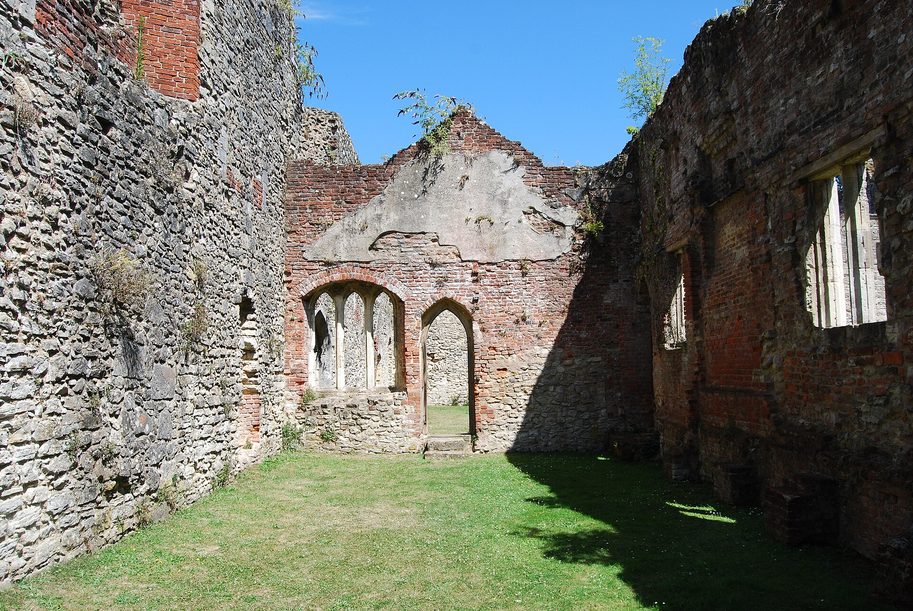
Netley was closed in 1536 as one of the lesser monasteries, and its monks went to Beaulieu. The site was granted to Sir William Paulet, later Marquess of Winchester, who turned it into a courtyard house, largely of brick: the nave became his great hall and the presbytery his chapel. In 1704 the house was sold for its building materials, and the demolition stopped only when a falling piece of window tracery killed a builder.
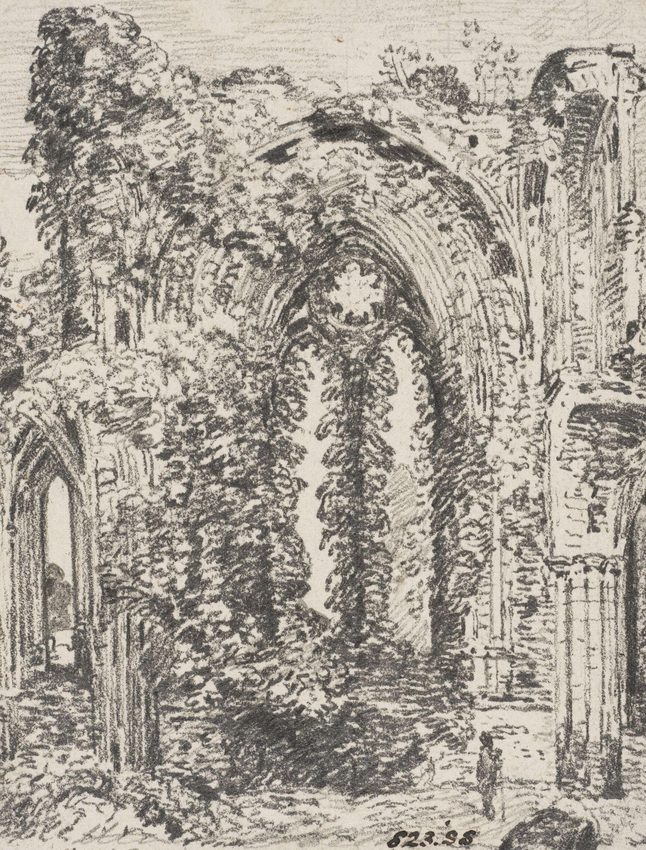
Left to the ivy and trees, the ruin became a sight. Horace Walpole visited in 1755 and wrote that “they are not the ruins of Netley, but of Paradise”. Poets and painters followed; John Constable drew the east window in 1816, and a comic opera called Netley Abbey played at Covent Garden in 1794. In the nineteenth century the Tudor additions were stripped out, and in 1922 the abbey was placed in the care of the state.

What to see
The church
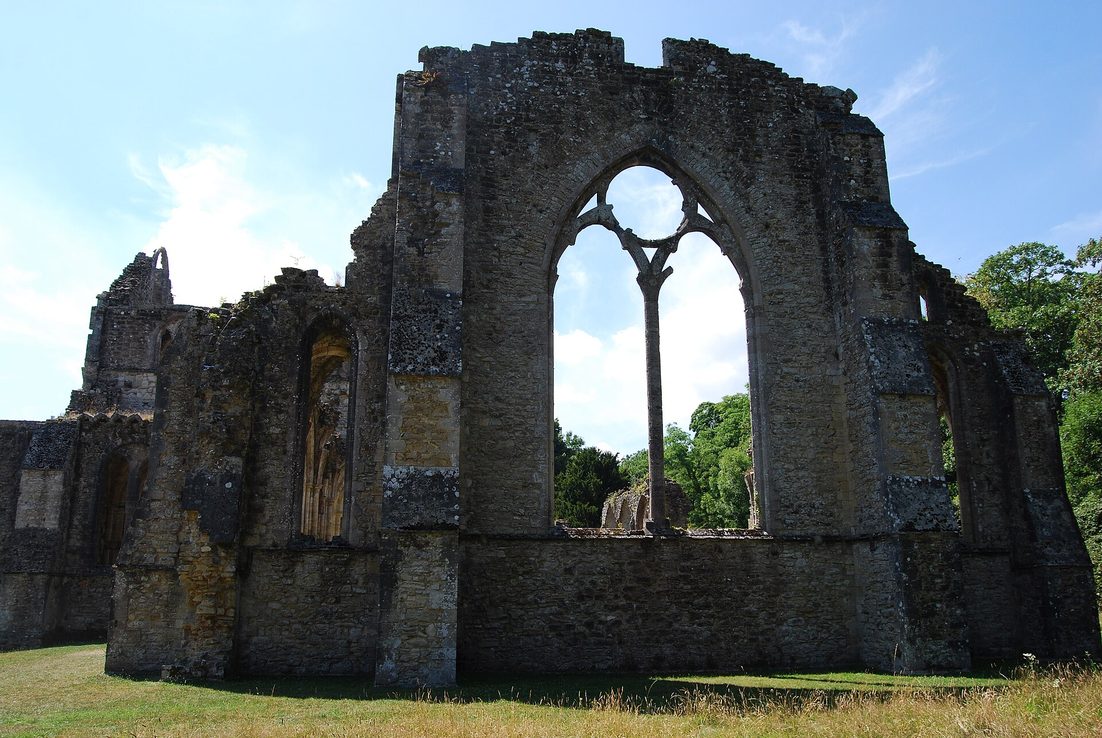
The church is roofless but its outer walls stand almost to full height: the presbytery, the south transept with its vaulted chapels, and the long nave. The great windows, now empty of glass and tracery, are early Gothic of the kind the Cistercians brought from France.
The cloister buildings
Round the cloister, the east range survives to roof height, with the chapter house, the parlour and the monks’ day room below the dormitory. Several rooms keep their stone vaults, among them the sacristy and library, where medieval tiles from the abbey are displayed. Look also for the abbot’s house to the east, and for the red brick of Paulet’s Tudor mansion among the grey stone.

Getting there
Netley is on the east shore of Southampton Water, about 4 miles by road south-east of Southampton. Netley station, on the line between Southampton and Portsmouth, is about a mile from the abbey, around 20 minutes on foot. Buses run to Netley from Southampton. The small free car park at the abbey holds only 10 to 12 cars and is locked at 4pm. The Royal Victoria Country Park, on the site of the great Victorian military hospital, is a short walk further along the shore.
Tours and where to stay
Entry to the abbey is free and needs no booking. Southampton, a few miles away, has the nearest choice of hotels.
These links go to GetYourGuide and Booking.com. This site earns nothing from them at present — they are here because they are the quickest way to check what is actually available.
Don’t miss
- The east window The one Constable drew.
- The south transept Its chapels still vaulted.
- The east range Chapter house, parlour and day room under the dormitory.
- The Tudor brickwork Traces of Paulet’s mansion.
Insider tips
Come by train in summer. The car park is tiny and fills quickly on fine days; Netley station is a 20-minute walk away.
Pair it with Beaulieu. Netley’s monks came from Beaulieu, about half an hour away round the head of Southampton Water.
Common questions
Is Netley Abbey free to visit?
Yes. Netley Abbey is cared for by English Heritage and entry is free. It is open daily from 10am to 4pm and closed on 25 December.
Is there parking at Netley Abbey?
There is a small free car park on site for 10 to 12 cars, locked at 4pm, which often fills in summer. More parking is beside the Abbey Hall recreation ground, about five minutes’ walk away across a busy road. There are no toilets on site, but there are shops and cafés in Netley village.
Who founded Netley Abbey?
The abbey was begun by Peter des Roches, bishop of Winchester, who died in 1238 before it was finished. Monks from Beaulieu arrived in 1239, and Henry III took over as its patron; inscriptions naming him are carved on the bases of the crossing piers.
How do you get to Netley Abbey by train?
Netley station, on the line between Southampton and Portsmouth, is about a mile from the abbey, a walk of about 20 minutes.
More churches nearby
- Beaulieu Abbey — Netley’s mother house, in the New Forest.
- Winchester Cathedral — the cathedral of Netley’s founding bishop.
- Romsey Abbey — a Norman abbey church saved by its town.