
St Martin’s Church, Canterbury
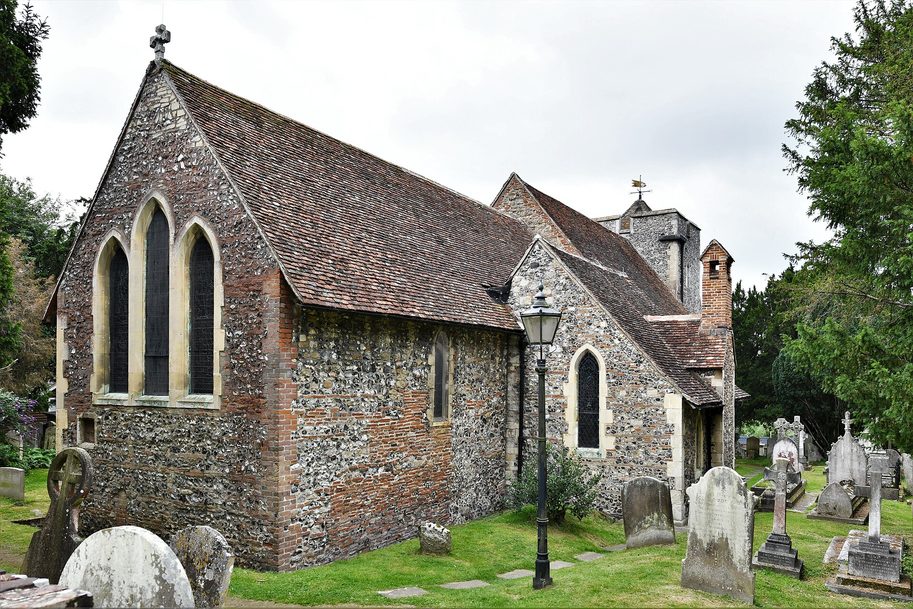
On a slope just outside Canterbury’s old walls, the small flint church of St Martin is the place where, by tradition, the Christian queen Bertha worshipped before Augustine arrived in 597. Its chancel walls are full of Roman brick, and with the Cathedral and St Augustine’s Abbey it forms part of the Canterbury World Heritage Site.
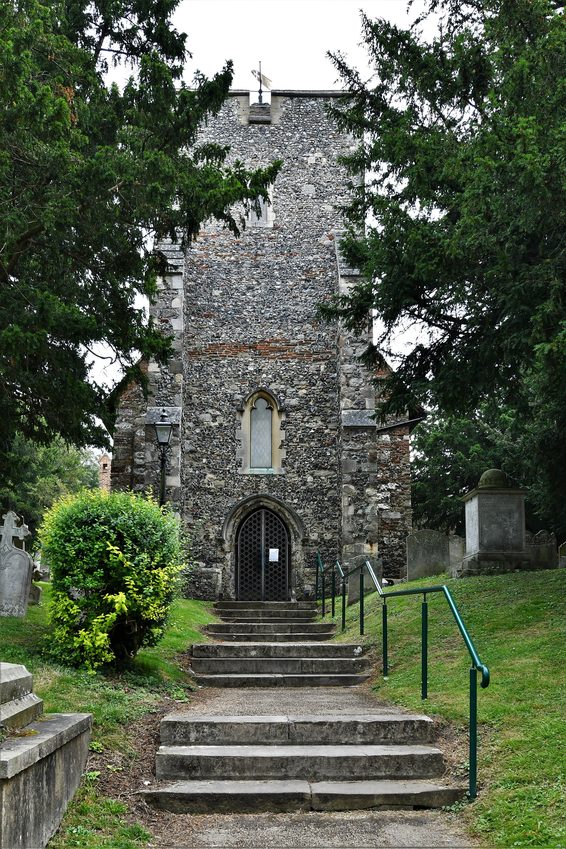
Queen Bertha’s church
St Martin’s story begins before the English were Christian. Bertha, a Christian Frankish princess, married Æthelberht, King of Kent, and came to Canterbury with her chaplain, Bishop Liudhard. According to tradition she was allowed to restore an old building outside the city, about 580, as her chapel, and dedicated it to St Martin of Tours. Whether that building really dated from Roman times is questioned by modern scholars, and the early dates are uncertain.
When Augustine arrived from Rome in 597 on his mission to the English, St Martin’s became his base, and Æthelberht is traditionally said to have been baptised soon afterwards. Once the Cathedral and St Augustine’s Abbey were founded in the following years, the little church lost its importance, but it carried on as a place of worship. The church describes itself as a community of prayer “since before 597AD”.
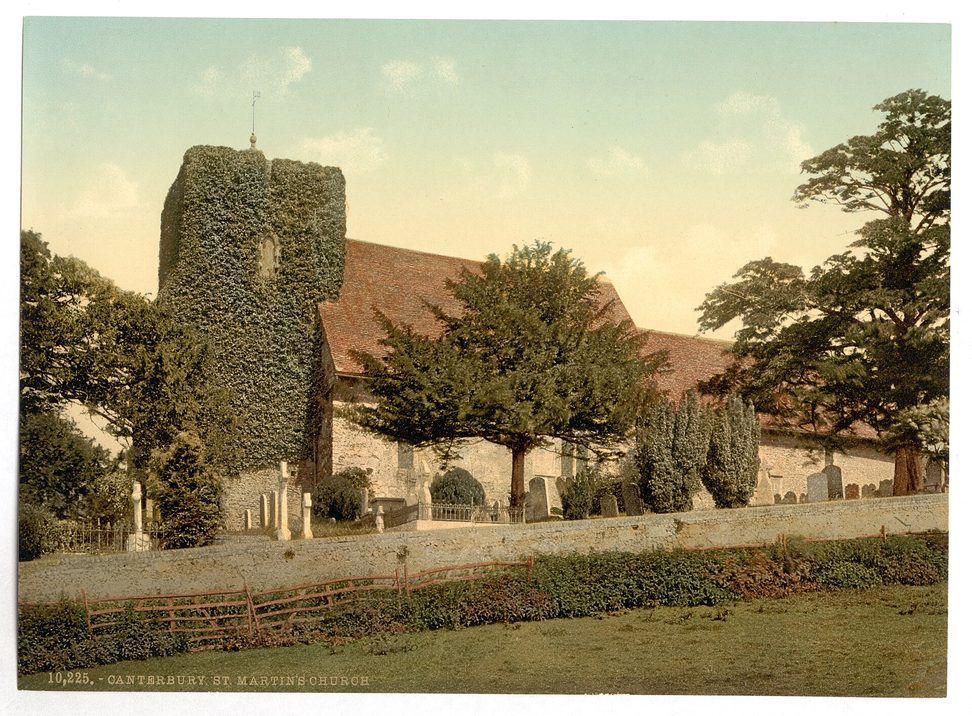
Later centuries
Historic England dates the chancel to the seventh century, altered in the fourteenth, when the squat crenellated west tower was added. In the seventeenth century the parish was joined with St Paul’s, its neighbour; the two still form one benefice, and the main parish Sunday service is held at St Paul’s. In 1849 a fourteenth-century chrismatory, a box for holy oils, was found here. Shortly before 1844 a small hoard of gold coins had come to light in the churchyard, among them a gold medalet bearing a bust and an inscription naming Liudhard, perhaps of the late sixth century; it is not on show in the church. Historic England first listed the church at Grade I in 1949, and in 1988 UNESCO named “Canterbury Cathedral, St Augustine’s Abbey, and St Martin’s Church” a World Heritage Site.
Is it the oldest church in England? Canterbury’s tourist board calls it “the oldest church in the English-speaking world still in use”; UNESCO’s description calls it “the oldest church in England”; Historic England, more cautiously, says it is “reputed to be the oldest Parish Church in England”. Worship here since the sixth century is the tradition, and it is the claim most often made for the church, but it cannot be proved that use was never broken.
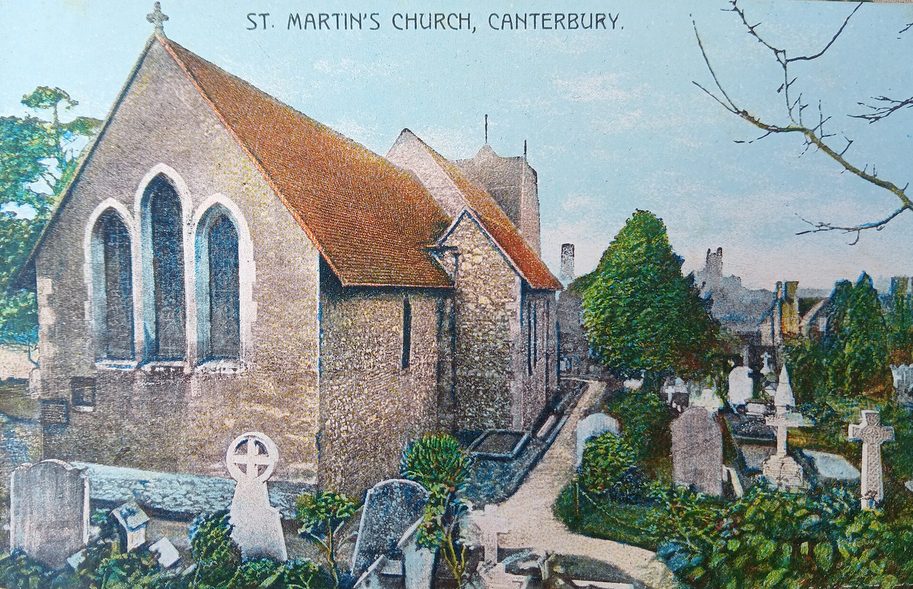
The visitor’s cheat sheet
| Where | North Holmes Road / St Martin’s Hill, Canterbury, Kent (sources give the postcode as CT1 1PW or CT1 1QJ) |
|---|---|
| Opening hours | Usually Wednesday to Sunday, about 11am–3pm (tourist sources); closed to sightseeing during the Thursday service at about 12–12.30pm, and sometimes for weddings and private events. The church’s own page is out of date: ring 01227 768072 to check before you go. The churchyard is always open. |
| Admission | Free; donations welcome |
| Services | Sundays at 9am (a said Eucharist; sung on the first Sunday of the month); a short service on Thursdays at midday (the Sunday service is before the church opens to sightseers at about 11am) |
| Tours | No regular tours; groups can arrange visits through the parish office (01227 768072). The Cathedral’s three-site UNESCO tour runs in July and August |
| Access | Not easy: several steps in the churchyard and inside the church |
| Parking | Very limited: on-street on North Holmes Road (cars cannot enter it from St Martin’s Hill) and St Martin’s Avenue (pay and display, two hours, Monday–Friday 8am–6.30pm, per the church’s 2021 page) |
| Toilets | None on site; the nearest are at St Augustine’s Abbey and the Cathedral |
| How long | Half an hour to an hour, including the churchyard |
Hours and admission checked against the official site in November 2026. They change; the official site is always the last word.
What to see
Begin outside: the churchyard and the chancel walls are as much the point of a visit as the interior, and the churchyard is open even when the church is closed.
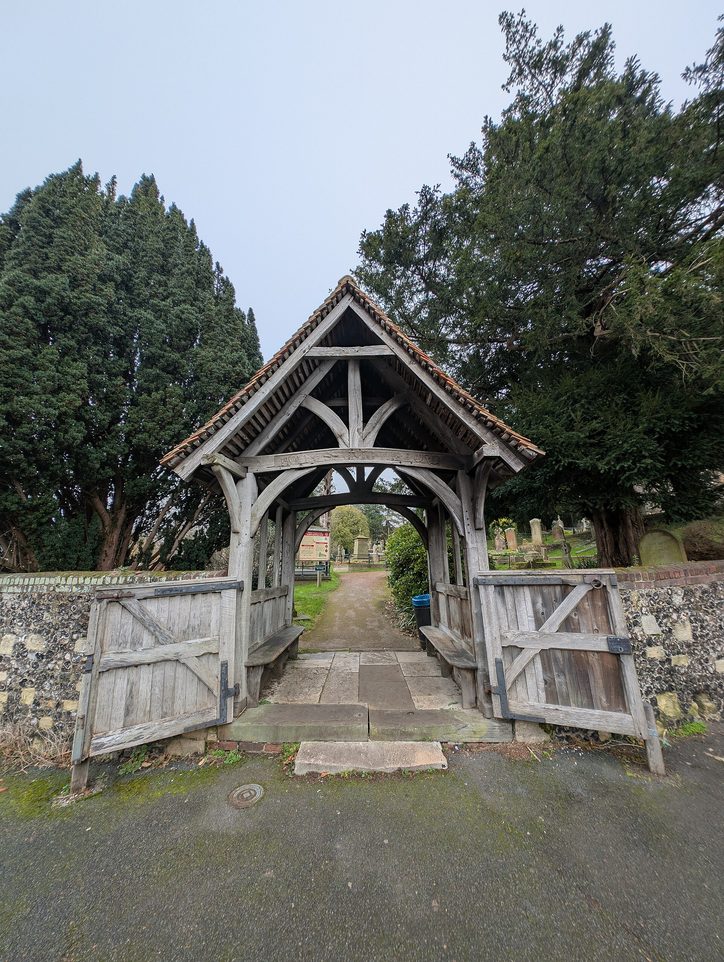
The lychgate and the churchyard
Go in through the timber lychgate and climb the churchyard, which rises in terraces up the hill. On the highest terrace, to the left as you face the church, is the grave of Mary Tourtel (1874–1948), who created Rupert Bear for the Daily Express in 1920 and drew him until 1935; she lies with her husband Herbert. The painter Thomas Sidney Cooper, who died in 1902, is buried here too, as are the churchman Henry Alford and Canon William Cadman, and there are eleven Commonwealth war graves. Look also for the memorial to Queen Bertha.
The tower
Stone steps lead up between yews to the low west tower of the fourteenth century, which holds three bells. It is much later than the rest of the church. Inside the tower is a tablet to Sir John Finch (died 1660), Speaker of the House of Commons.
The chancel walls
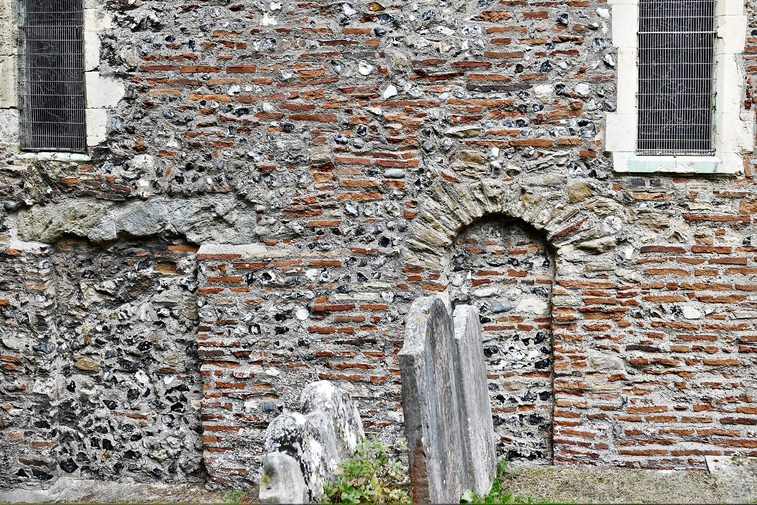
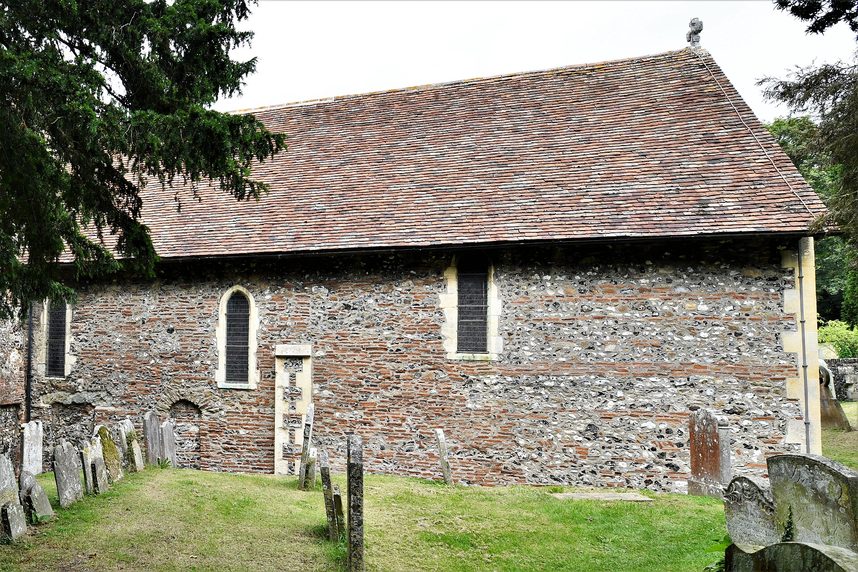
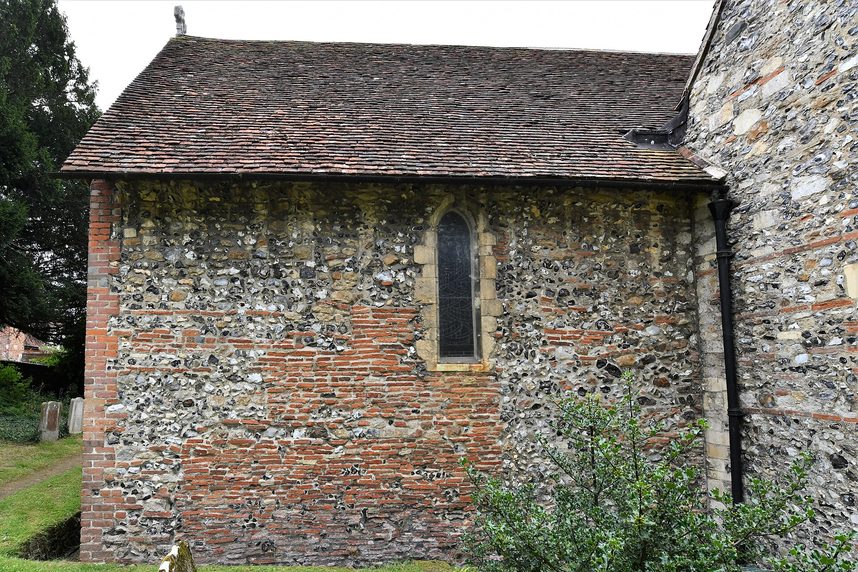
Walk round to the south side of the chancel. Historic England describes the walls as flint, Roman brick and rubble, and here the thin red Roman bricks are easy to pick out. Whether they are Roman work still standing or Roman material reused later is not certain. The blocked square-headed doorway is sometimes said to have been the entrance to Bertha’s church, though some specialists think it led to a small porch; and the round-headed doorway nearby is thought to be of the seventh century. One source says the remains of a Roman tomb are built into the core of the church; others do not mention it, so treat this with caution. Round on the north side, the chancel wall is of flint and brick.
The nave
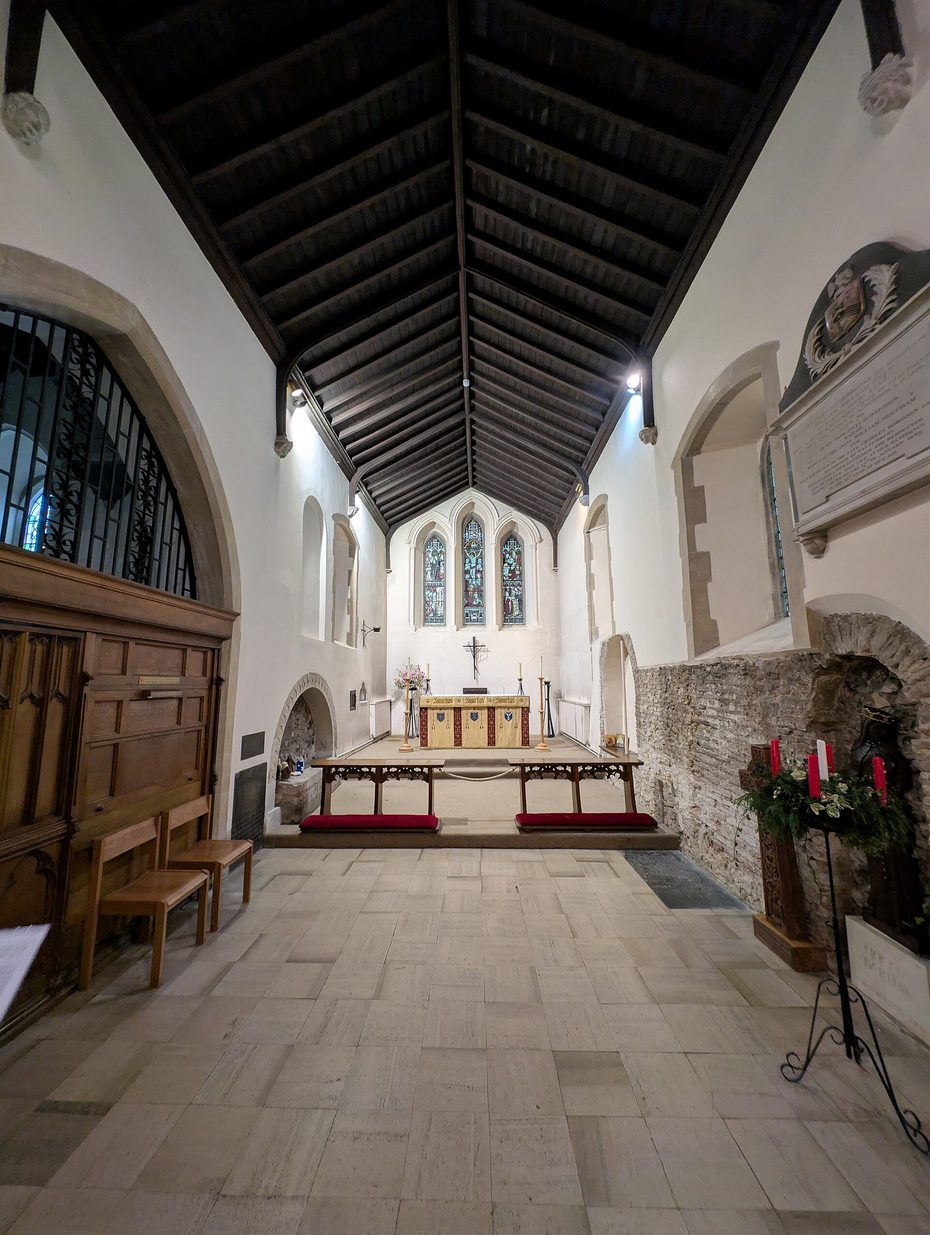
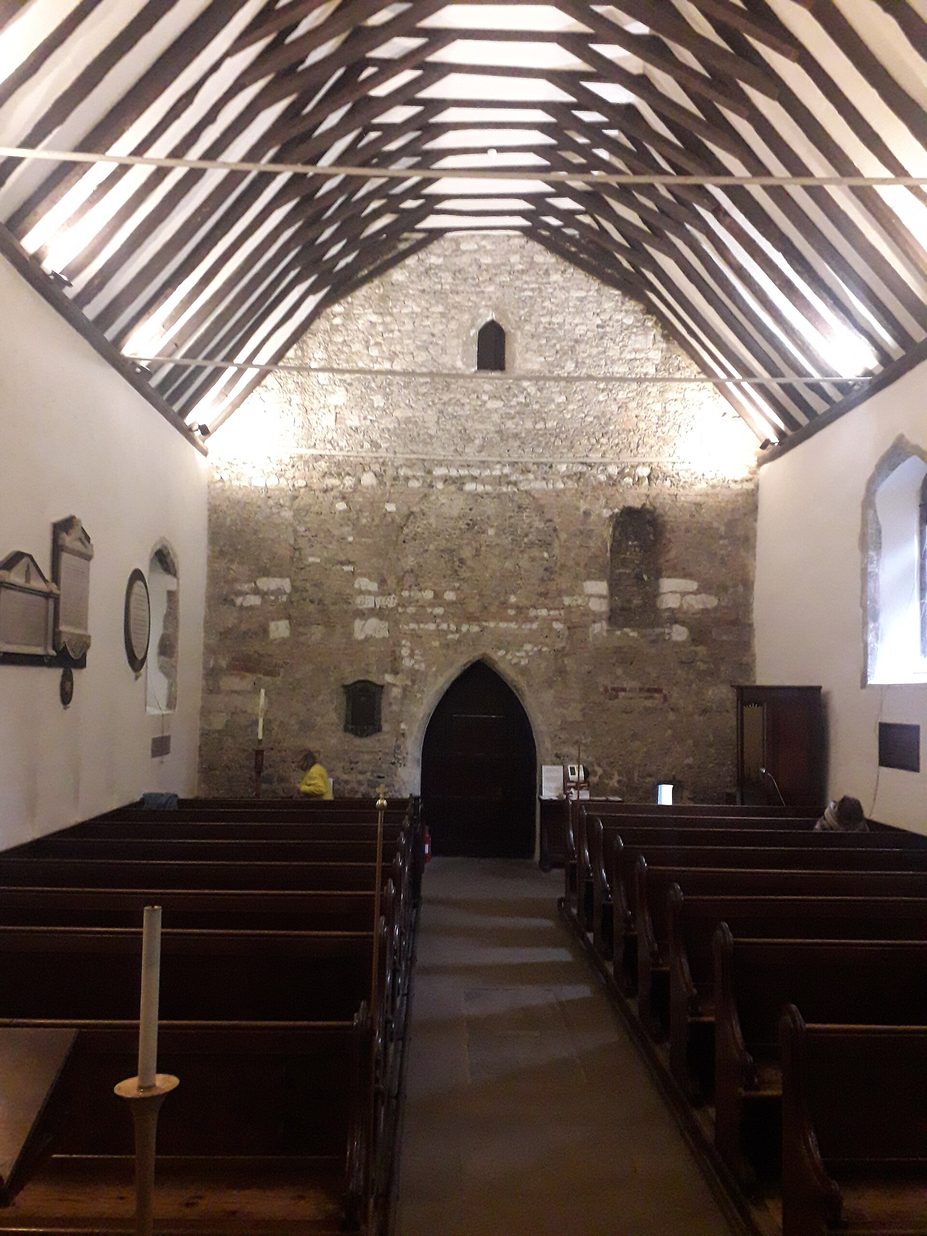
Inside, the church is small and plain, with a timber roof. The nave is thought to be of the seventh or eighth century; its original east apse has gone. In the west wall are blocked Saxon windows and a medieval squint, said to have been for lepers. Historic England also lists a Norman piscina and a holy water stoup. A replica of the chrismatory found in 1849 sits in a niche in the north wall of the nave; the original is in the Cathedral crypt.
The font
The large tub font of Caen stone is carved with interlaced circles and arcading. It is traditionally linked with the baptism of Æthelberht, but its date is debated: Historic England calls it Saxon, other writers Norman, and it may reuse older pieces. A window above it shows the font itself.
The chancel
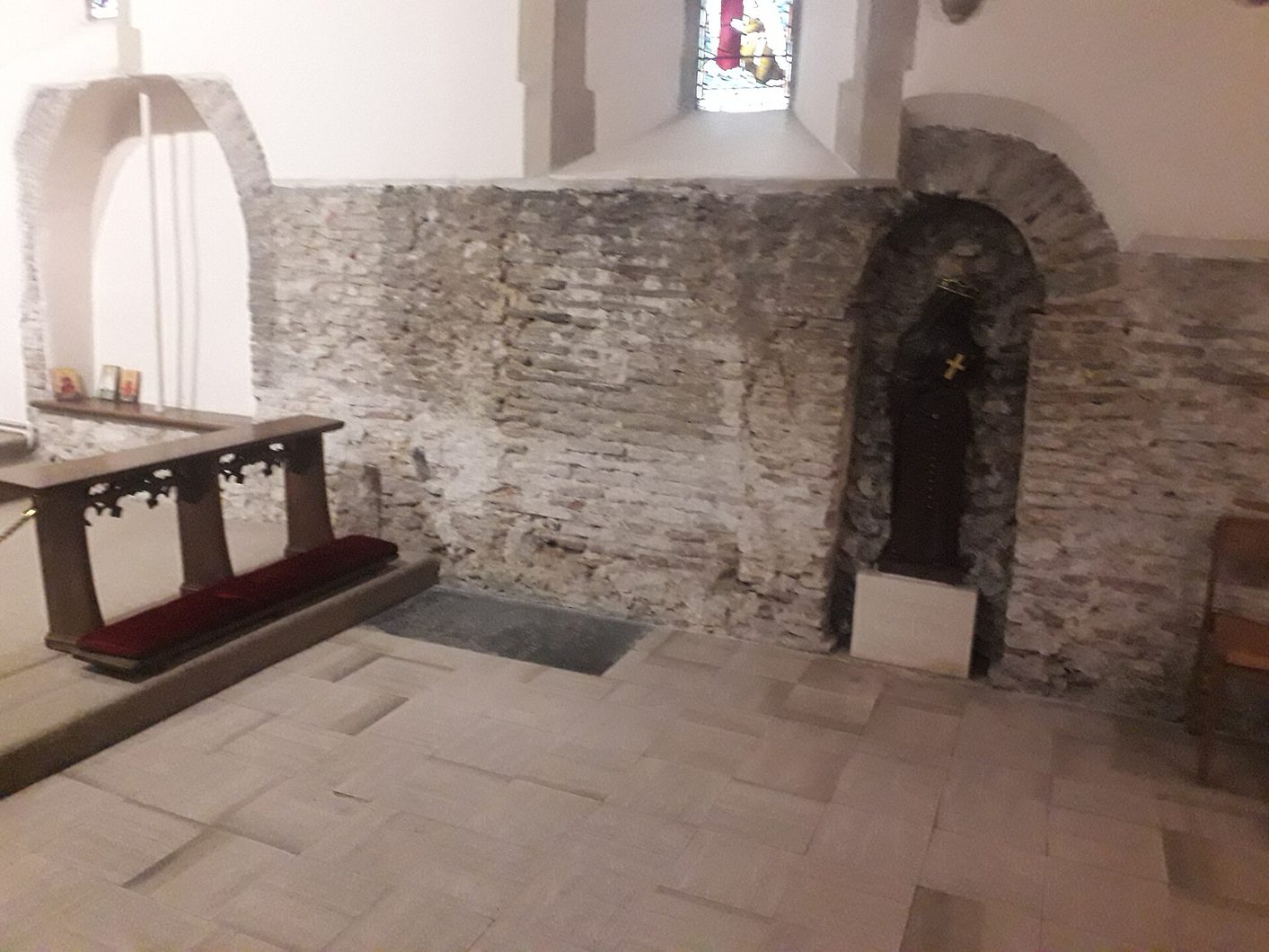
Step through into the chancel to see the south wall from inside, rough masonry with a blocked arched opening and a niche. In the north chancel wall is a tomb niche. Among the monuments are brasses, including one to Thomas Stoughton. The stained glass is a mix of medieval fragments and later glass; a medieval panel in the nave shows St Martin on horseback, and other windows show St Martin sharing his cloak, Bertha, and scenes with Æthelberht and Augustine.
A note on our pictures. We have not shown the stained glass, because the makers and dates are not known and some of it may still be in copyright.
Getting there
St Martin’s stands east of the city centre, about ten to fifteen minutes’ walk from the middle of Canterbury by way of Longport, with a gentle climb at the end. The usual way is to combine it with the other two World Heritage sites: St Augustine’s Abbey is a few hundred metres west, and the Cathedral about ten minutes beyond that, so the round of all three is almost a mile on foot. Canterbury East is the nearer station, about a mile on foot (allow 20–25 minutes); Canterbury West is further. Parking is very limited, and cars cannot enter North Holmes Road from St Martin’s Hill (the A257), so it is better to walk from the city.
Where to stay
Canterbury has plenty of places to stay within walking distance of St Martin’s and the Cathedral.
This link goes to Booking.com. This site earns nothing from it at present — it is here because it is the quickest way to check what is actually available.
Don’t miss
- The Roman brick In the chancel’s south wall.
- The blocked doorway Said to be Bertha’s entrance.
- The font Linked by tradition with Æthelberht.
- Mary Tourtel’s grave The creator of Rupert Bear, on the top terrace.
Insider tips
Ring first. Opening times come from tourist sources and the church sometimes closes for weddings and private events, so call 01227 768072 before a special journey.
Avoid Thursday lunchtime. During the short service at about 12 to 12.30pm you can only see the churchyard, unless you join the service.
Walk the three sites. Start at St Martin’s, the oldest of the three, then the Abbey, then the Cathedral: the same order as the Cathedral’s own three-site tour.
Common questions
Is it really the oldest church in England?
It is widely described that way, but the wording varies. Canterbury’s tourist board calls it “the oldest church in the English-speaking world still in use”; UNESCO calls it “the oldest church in England”; Historic England says it is “reputed to be the oldest Parish Church in England”. Unbroken use since the sixth century is the tradition rather than something that can be proved.
When is it open?
Tourist sources give Wednesday to Sunday, about 11am to 3pm, with the church closed to sightseeing during the short Thursday midday service. The church’s own visiting page is out of date, so ring 01227 768072 before a special trip. The churchyard is always open.
Is there a charge?
No. Admission is free, and donations towards the upkeep of the church are welcome.
Are there toilets?
No. The nearest are at St Augustine’s Abbey and the Cathedral.
Can I see all three World Heritage sites in one visit?
Yes. St Augustine’s Abbey is a few hundred metres away and the Cathedral about ten minutes’ walk beyond it. In July and August the Cathedral runs a guided day tour of all three, starting at St Martin’s; book through the Cathedral.
Where is the creator of Rupert Bear buried?
Mary Tourtel, who created Rupert Bear in 1920, is buried with her husband Herbert on the highest terrace of the churchyard, to the left as you face the church.
More English churches
- Canterbury Cathedral — the mother church, a short walk away
- Barfreston Church — a Norman church in east Kent
- Escomb Church — a Saxon church in County Durham
See all the cathedrals and churches worth visiting in England →