
Paoay Church, Philippines
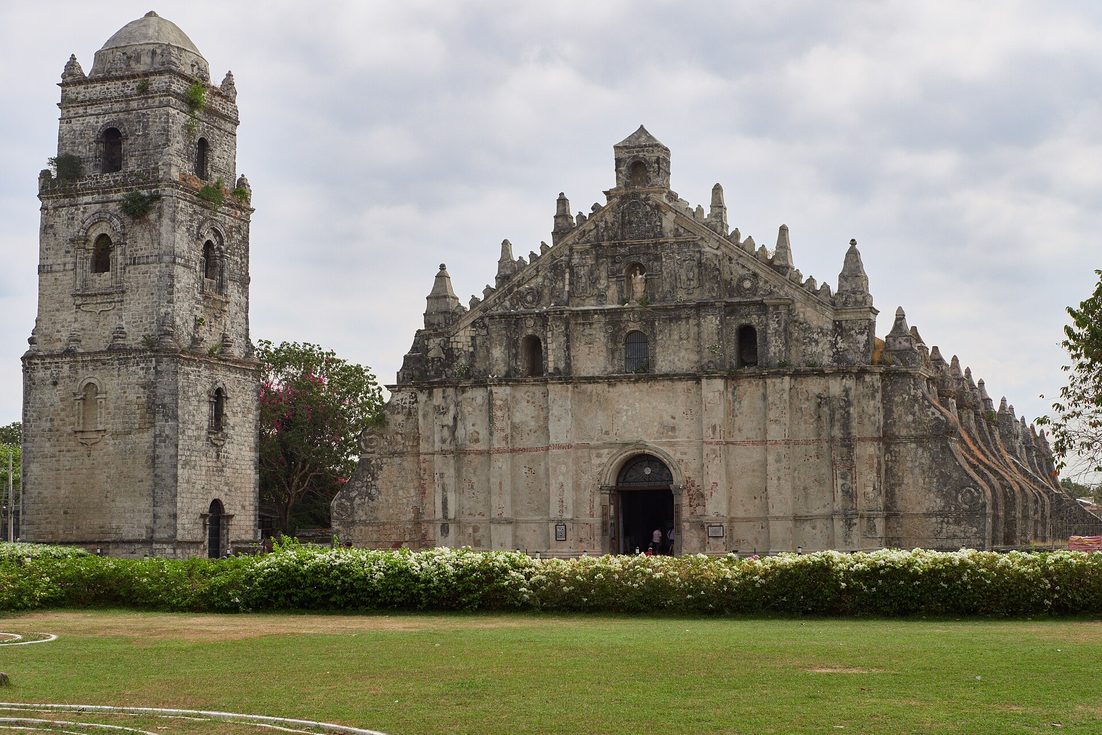
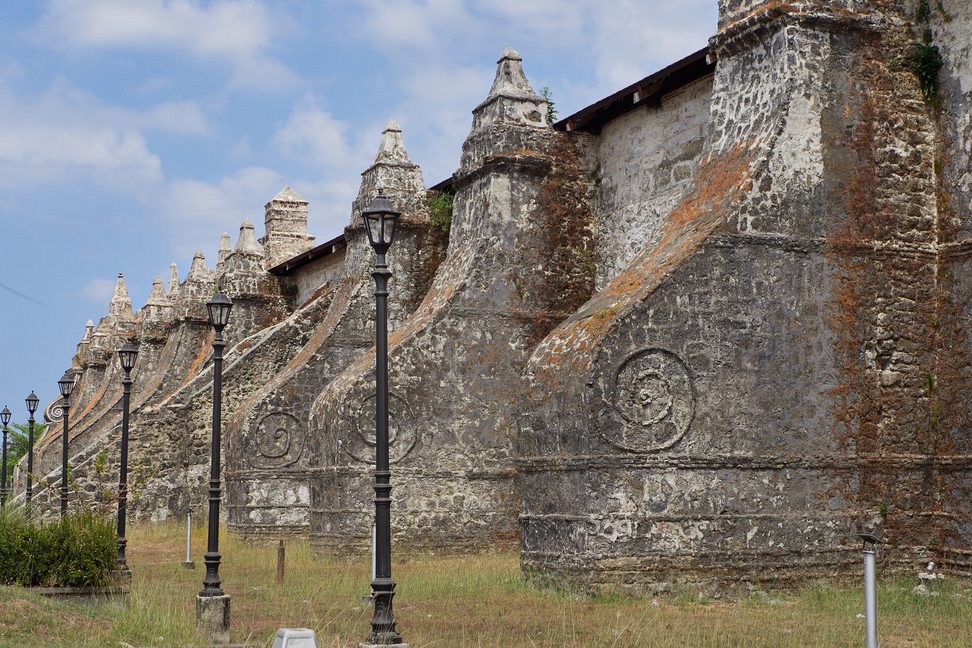
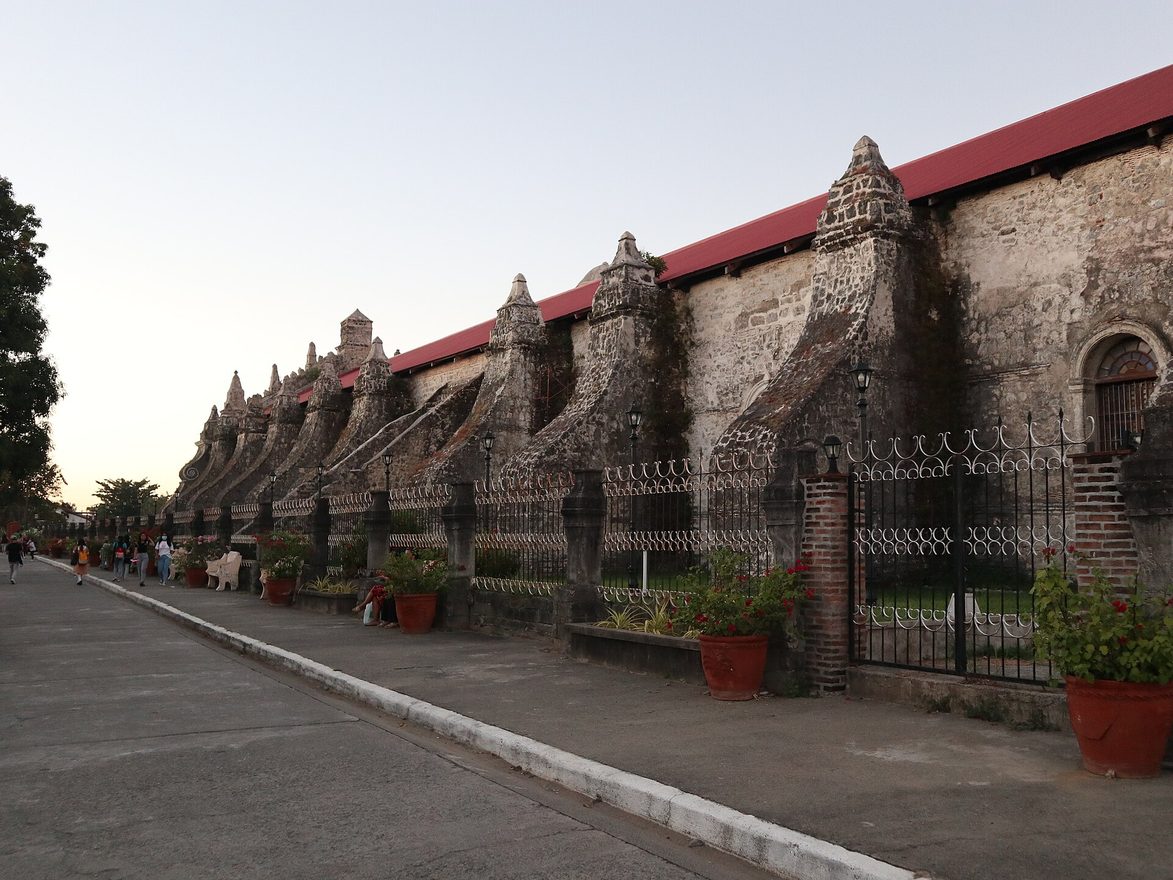
Paoay Church, in the province of Ilocos Norte in the far north of Luzon, looks like no other church: a broad, low mass of coral stone and brick, its walls propped by two dozen enormous buttresses that step down to the ground in great scrolls. It was built by Augustinian friars to stand up to earthquakes, and it is one of the four Baroque Churches of the Philippines on UNESCO’s World Heritage list.

A church built for earthquakes
The Augustinians had a mission at Paoay from 1593, and it became a parish of its own in 1686. The present church, properly the church of St Augustine, is usually said to have been begun in 1694 under Father Antonio Estavillo and finished in 1710; the historical marker at the church records a cornerstone laid in 1704 and an inauguration only in 1896. The bell tower was begun in 1793.
Its style has been called Earthquake Baroque: European Baroque adapted, by trial and painful error, to a country of earthquakes. The answer here was thick walls, a low profile and buttresses of astonishing size. It was declared a National Cultural Treasure in 1973 and inscribed by UNESCO in December 1993, together with San Agustin in Manila, Santa Maria in Ilocos Sur and Miagao in Iloilo.
The visitor’s cheat sheet
| Where | Marcos Avenue, Paoay, Ilocos Norte, about 20 km south of Laoag |
|---|---|
| Opening hours | Outside: any time. Interior: about 8am–noon and 1.30–5pm daily, according to recent guides; not officially published |
| Admission | Free, as far as we could establish; donations welcome |
| Mass | A working parish church: Sunday Masses run from early morning, and there are evening Masses on some weekdays. Times are posted at the church |
| Photography | No rule is published; do not photograph during Mass or weddings |
| Dress | No rule is published; cover shoulders and knees, as in any parish church |
| Getting there | Jeepney, tricycle tour or car from Laoag, about half an hour by road |
| How long | An hour, with a walk right round the outside |
Hours and admission checked against the official site in November 2026. They change; the official site is always the last word.
What to see
The buttresses
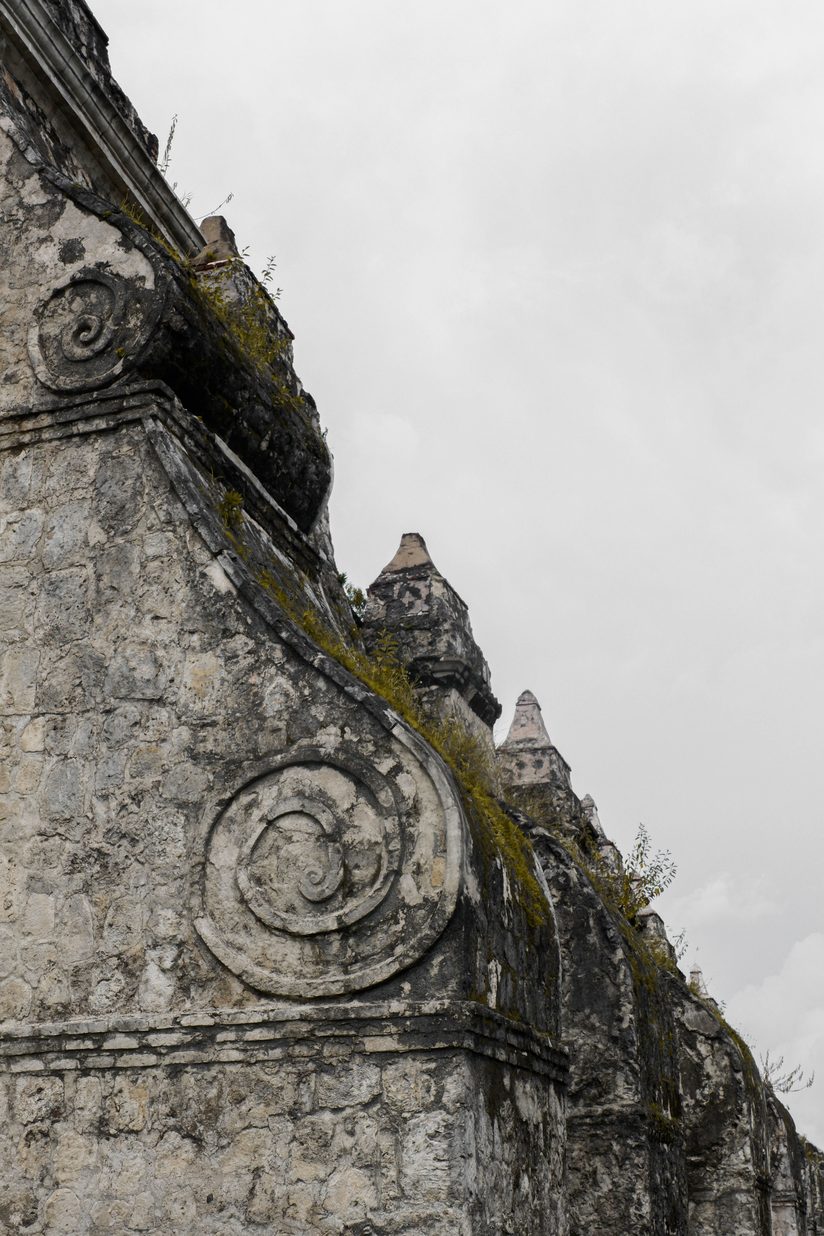
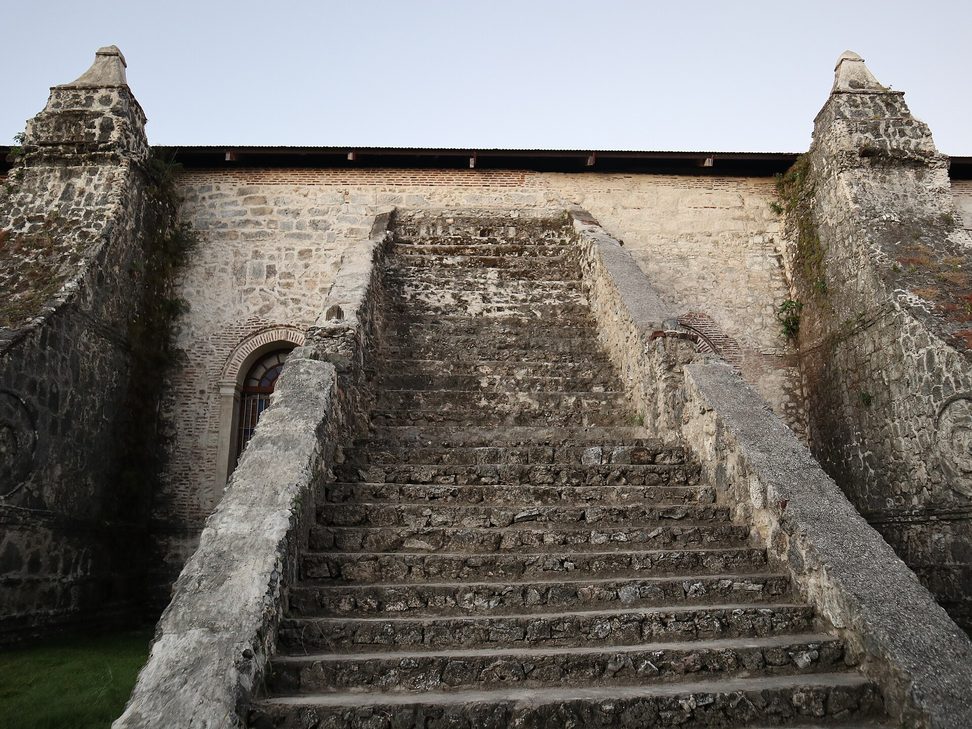
Walk all the way round. There are 24 buttresses along the sides and the back, each about 1.7 metres thick, rising from the ground in a sweeping curve that ends in a scroll, with a pointed finial on top. The stepped ones along the sides may have served as stairs to the roof. The walls are of coral stone and brick; the mortar is said to have been mixed with sugarcane juice. In the low light of early morning or late afternoon the whole building turns gold.
The façade
The front is a single great triangle of stone, divided by pilasters and cornices and edged with finials, with the Augustinian emblem among its carvings. Writers have compared its stepped outline to the temples of Java, and seen Gothic and Chinese touches in its details; these are impressions, but they catch something of how unEuropean it looks.
The bell tower
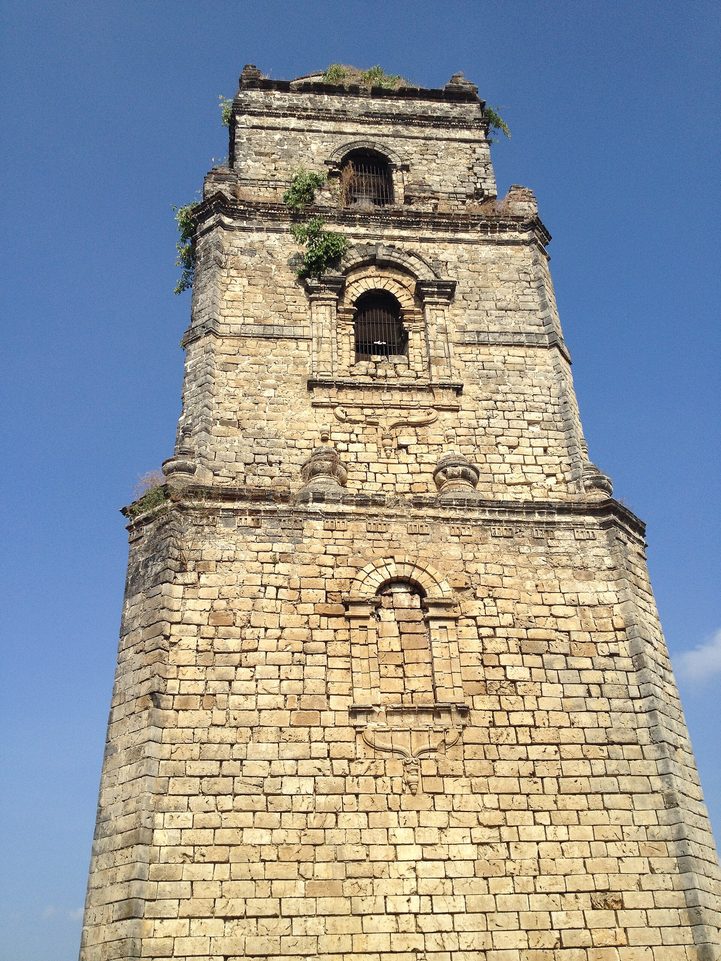
The three-storey bell tower of coral stone stands some way to the right of the façade, kept apart so that if an earthquake brought it down it would not fall on the church. It is said to have served as a lookout for Filipino revolutionaries against the Spanish in 1898 and for guerrillas during the Japanese occupation in the Second World War.
Inside
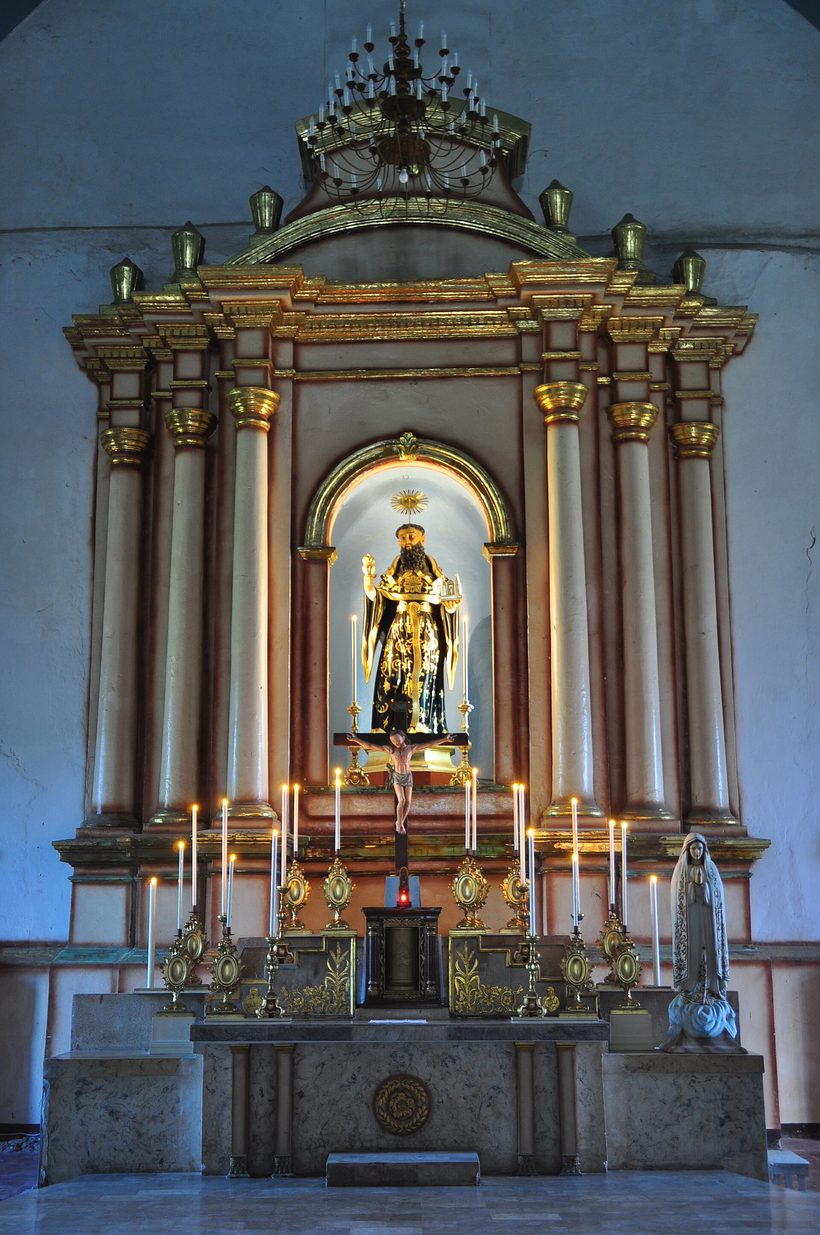
After the drama outside, the interior is plain: a long, light nave with a simple retablo holding a statue of St Augustine. The church was conserved by the National Historical Commission in 2019–20, when the walls and buttresses were repaired, the roof renewed and a ceiling fitted, and it reopened in November 2020.

The back and the convent ruins
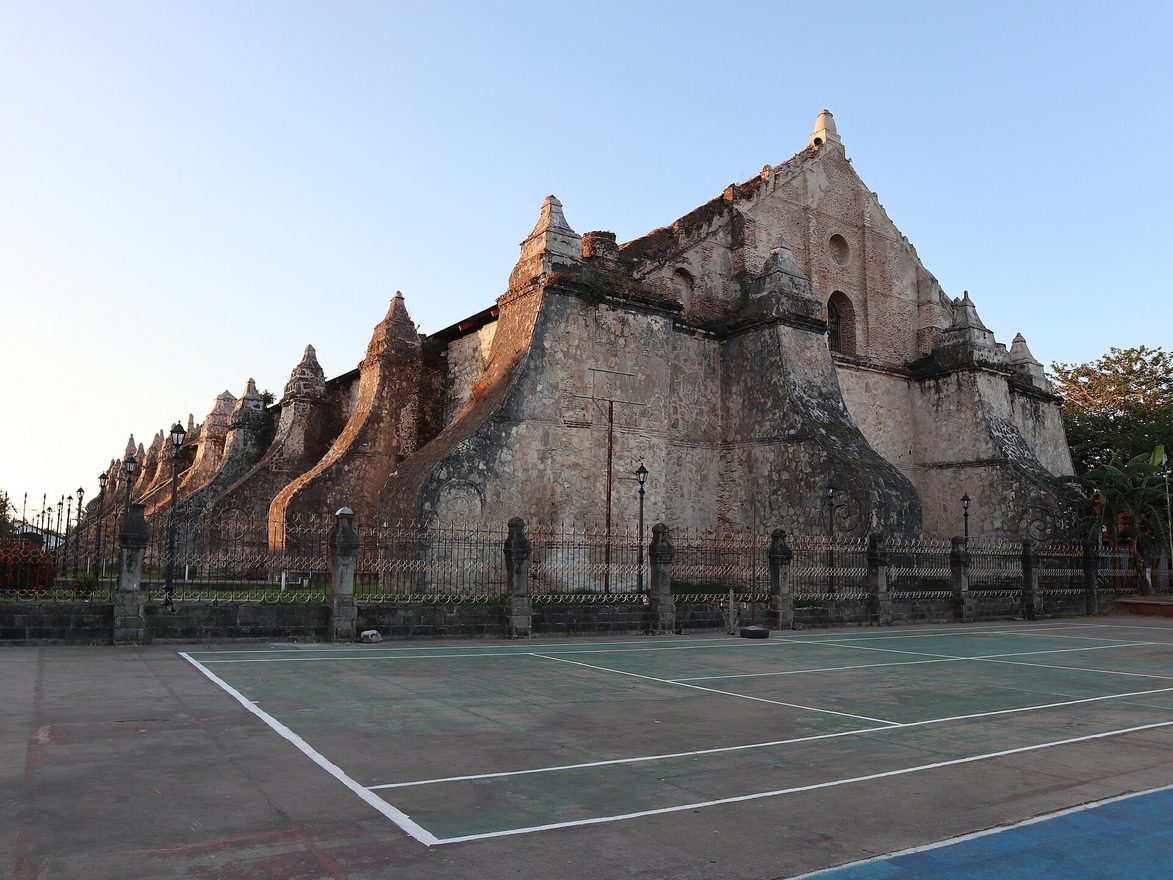
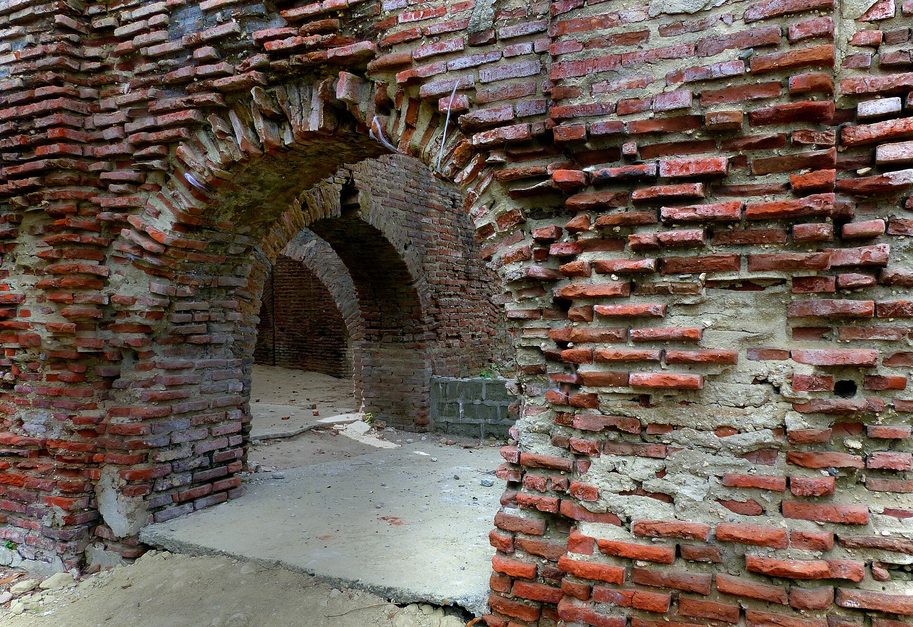
The rear of the church is buttressed like the sides. Beside the church are the roofless brick ruins of the convent, whose cornerstone was laid in 1707. They are easily seen from outside; access to the ruins themselves may be restricted.
Getting there
Paoay is a small town about 20 km south of Laoag, the provincial capital. From Laoag, jeepneys run to Paoay in about half an hour; many visitors hire a tricycle or a car with a driver for a day’s circuit that also takes in the Malacañang of the North, the former presidential rest house on Paoay Lake, and the Paoay sand dunes. Laoag’s airport has flights from Manila, a little over an hour; the bus from Manila takes 9 to 12 hours, usually overnight.
Where to stay
Paoay itself has little accommodation; most visitors stay in Laoag and come out for half a day.
This link goes to Booking.com. This site earns nothing from it at present — it is here because it is the quickest way to check what is actually available.
Don’t miss
- The side buttresses Two dozen of them, each ending in a great scroll.
- The façade at sunset The coral stone turns gold in low light.
- The detached bell tower Built apart, in case of earthquakes.
- The convent ruins Roofless brick arches beside the church.
Insider tips
Go early or late. The middle of the day is hot and the light flat, and the interior is reported to close to visitors over lunch.
Mind the season. Typhoons mostly come between June and November, and northern Luzon is often in their path. Check the forecast before you travel then.
Common questions
Is there an entrance fee for Paoay Church?
None is charged, as far as we could establish: the parish publishes no visitor information of its own, and no guide we found mentions a fee. Donations are welcome.
When is Paoay Church open?
The outside and the plaza can be seen at any time. Recent guides give the visiting hours for the interior as about 8am to noon and 1.30pm to 5pm daily; it is a working parish church, so sightseeing stops during Mass.
Why does it have such big buttresses?
To resist earthquakes. Paoay is the best-known example of what is called Earthquake Baroque: a low, broad church held up by 24 massive buttresses, with the bell tower built apart so that it would not fall on the church.
How do you get to Paoay?
Paoay is about 20 km south of Laoag, the capital of Ilocos Norte, half an hour by road. Laoag has an airport with flights from Manila; by bus Manila to Laoag takes 9 to 12 hours.
More churches nearby
- Miagao Church, Iloilo — another of the four UNESCO Baroque churches, with St Christopher and a coconut tree on its front.
- San Agustin Church, Manila — the oldest stone church in the country, and another of the four World Heritage Baroque churches.