
St Mary’s Church, Bloxham
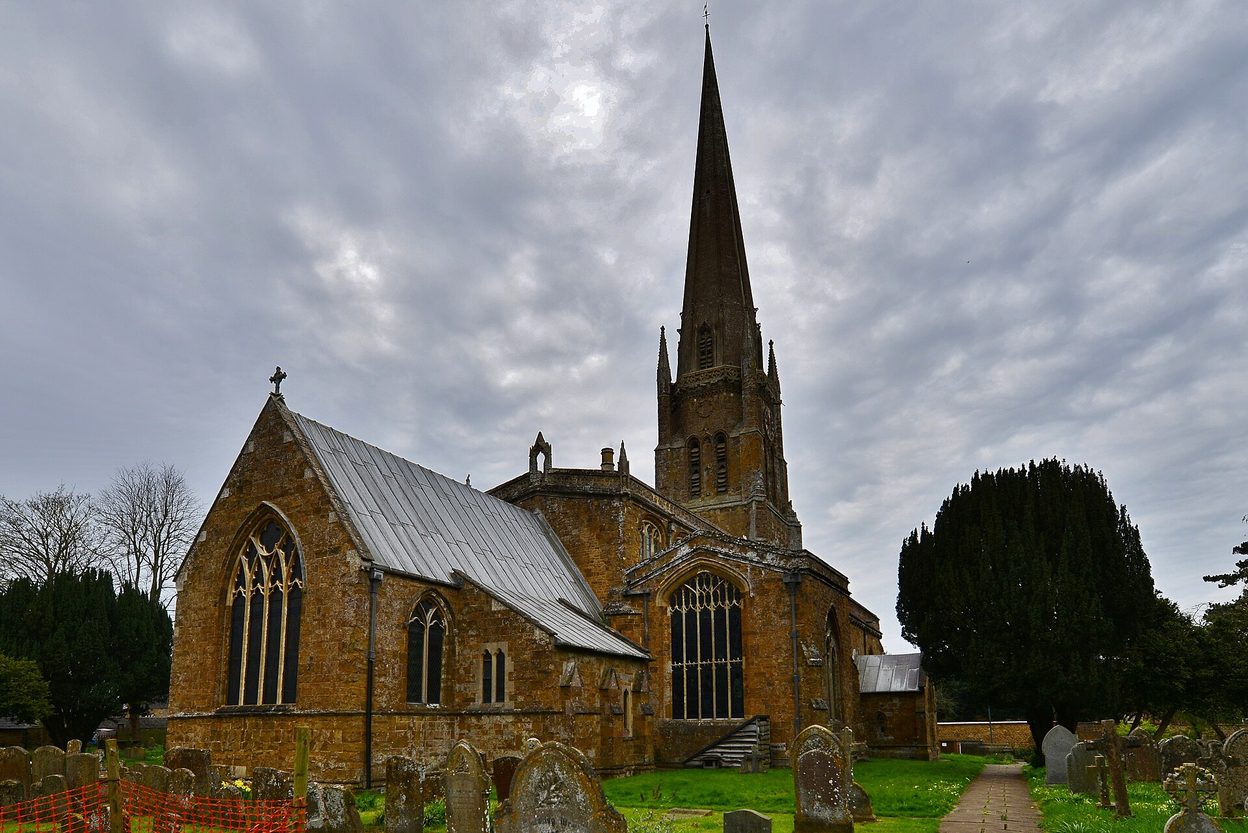
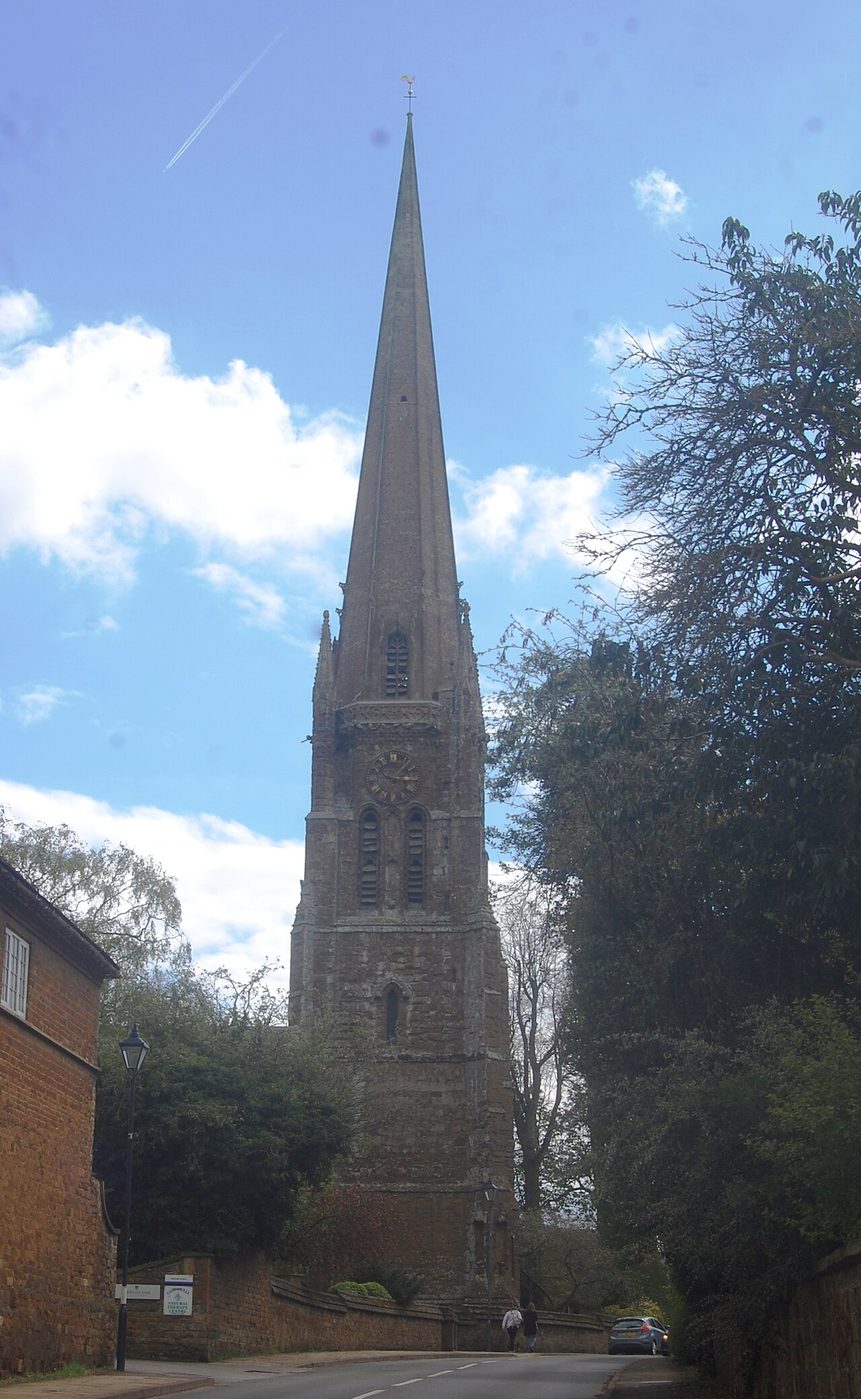
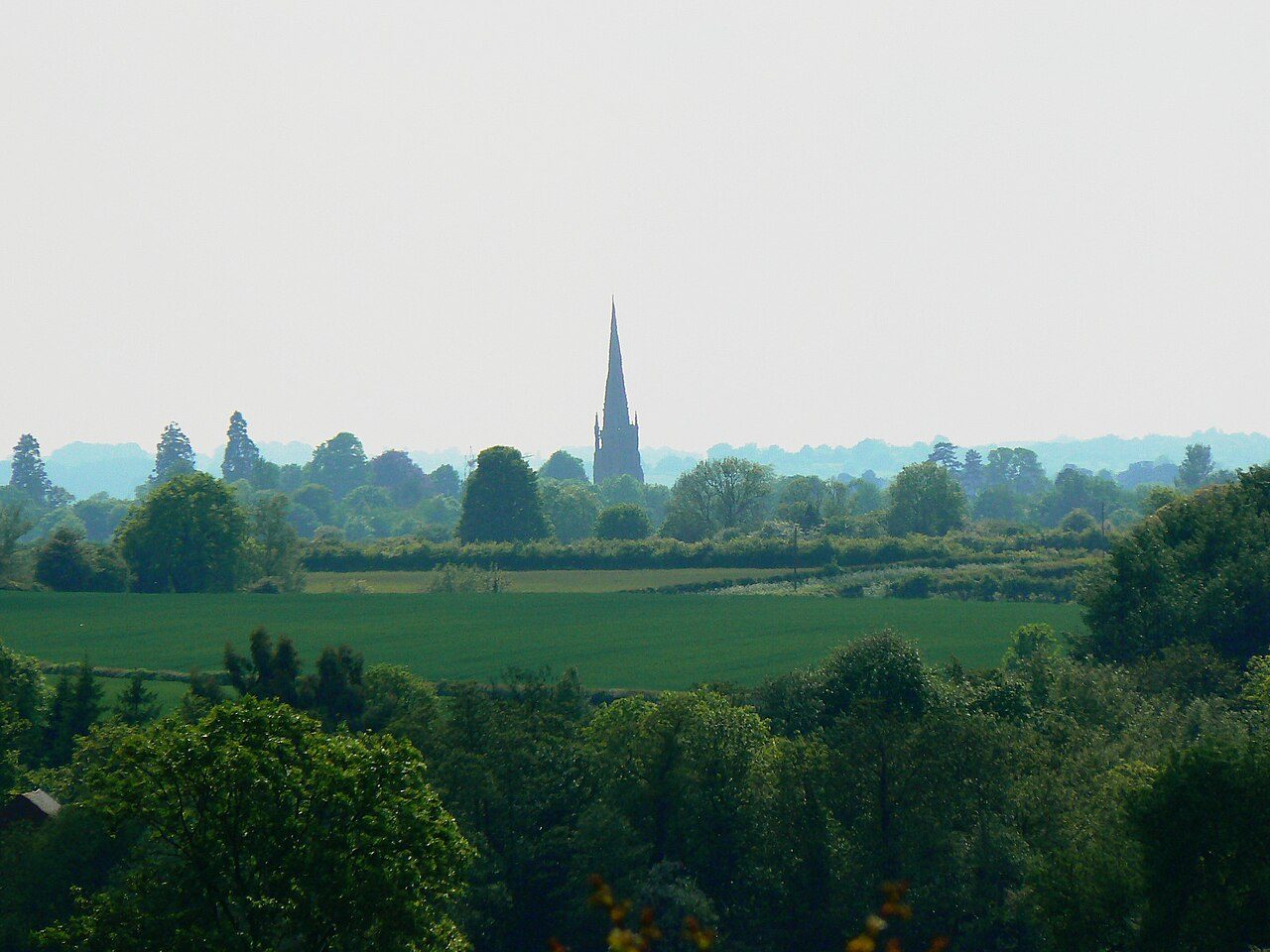
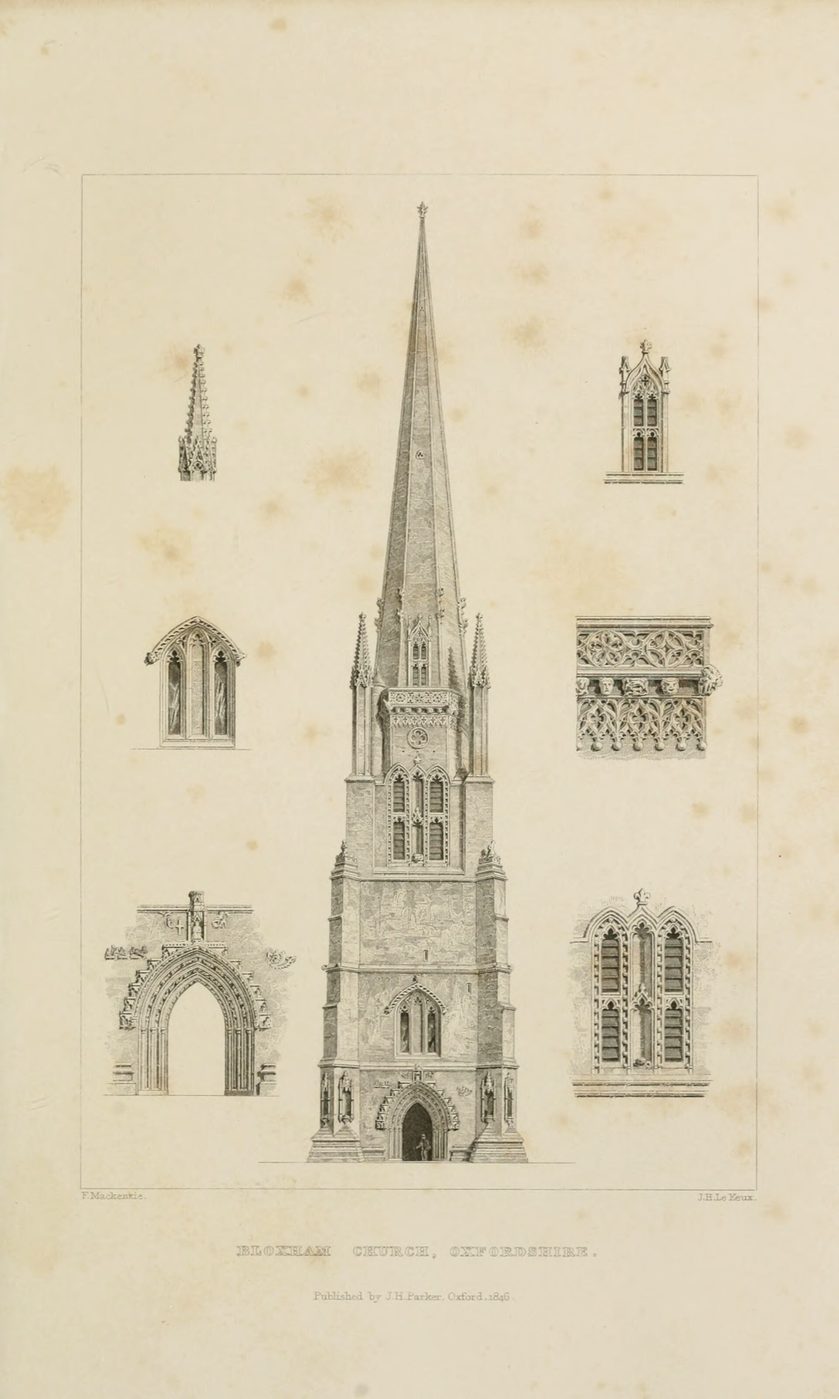
South-west of Banbury, the spire of St Mary’s at Bloxham rises 198 feet over the Oxfordshire ironstone country. The church is famous for its fourteenth-century carving: a Last Judgement round the west doorway, beasts and musicians in its corbel tables and cornices, and inside, a painted screen, medieval wall paintings and an east window by Morris and Co.
A great church of the ironstone country
William I gave the church to Westminster Abbey in 1067, and Norman work survives in a doorhead and in the chancel. In the fourteenth century the aisles were widened and the tower and spire built, with carving thought to be by the masons who also worked at Adderbury and Hanwell; the Milcombe Chapel and the clerestory followed in the fifteenth century. The church was restored by G. E. Street in 1864–66 and is listed Grade I. A local rhyme runs “Bloxham for length, Adderbury for strength, and King’s Sutton for beauty”.
The visitor’s cheat sheet
| Where | Church Street, Bloxham, Banbury, Oxfordshire OX15 4ET |
|---|---|
| Opening hours | Open daily; the National Churches Trust gives 10am–5.30pm from March to October; winter hours not published |
| Admission | Free |
| Services | Sundays at 8am (BCP), 9.30am and 6pm |
| Access | Step-free from the pavement; level access to the main areas |
| Parking | Street parking; the Godswell Surgery car park may be used at weekends (check the signs) |
| How long | An hour |
Hours and admission checked against the official site in November 2026. They change; the official site is always the last word.
What to see
The west doorway
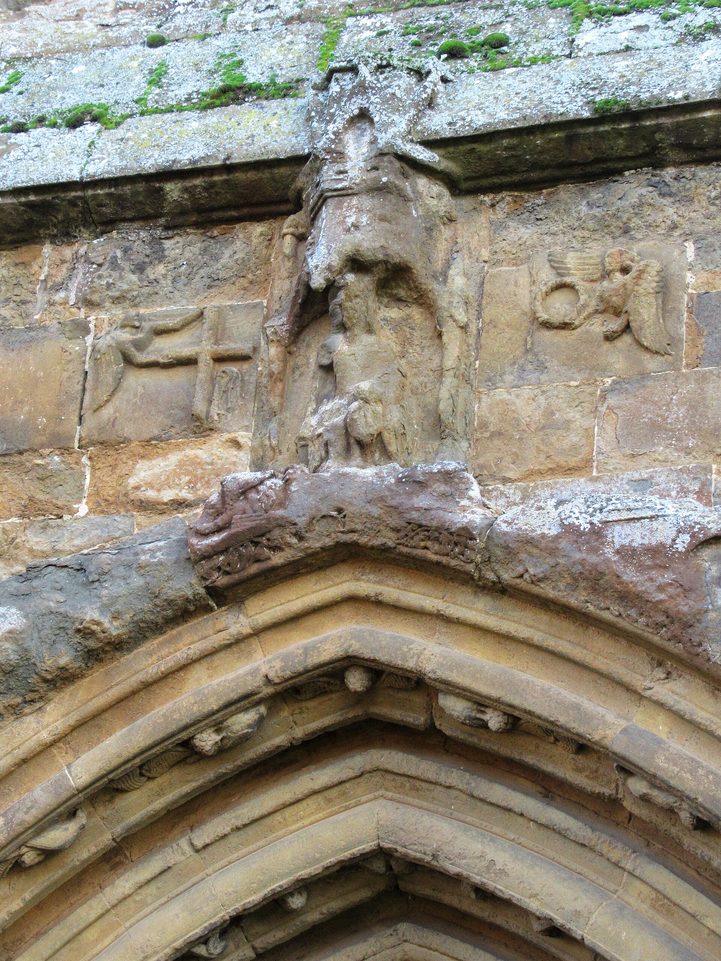
Start at the west front. The doorway has carved heads in place of capitals and trailing leaves, birds and ballflower in its mouldings. Above it the hood rises in steps, each a canopied seat for an Apostle, to Christ in judgement between angels bearing the instruments of the Passion. On one side the dead rise from their coffins; on the other the damned are driven into Hell’s mouth.
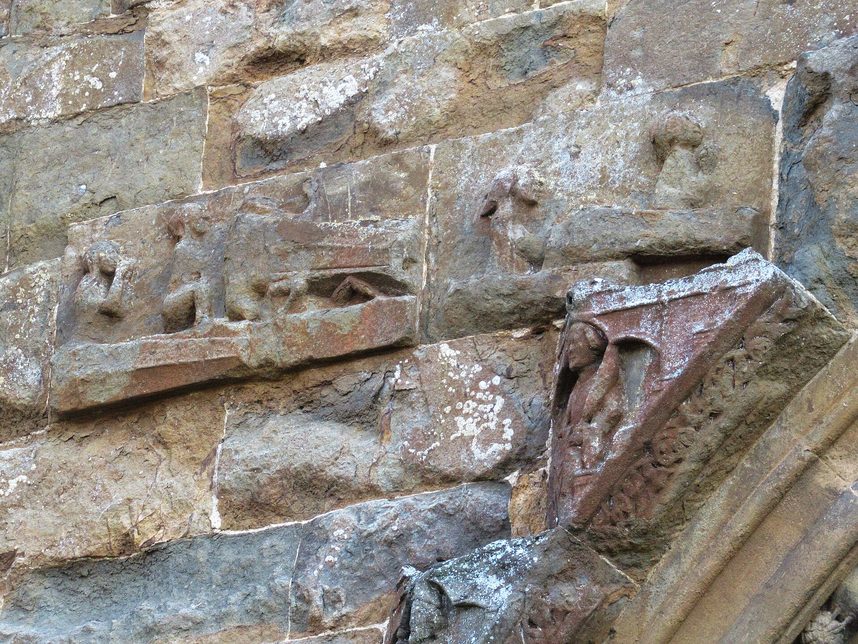
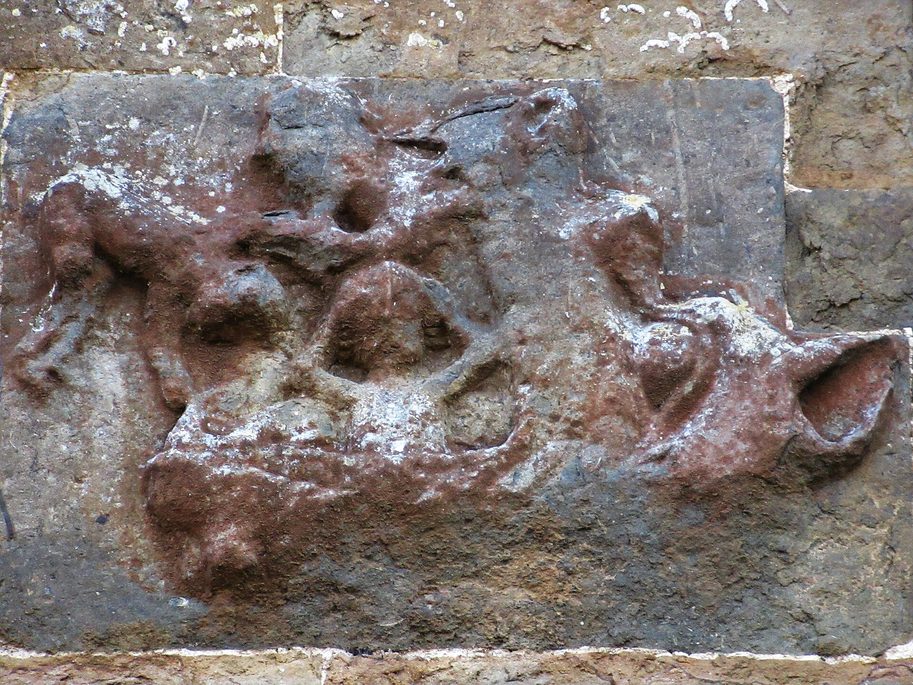
The carving round the walls
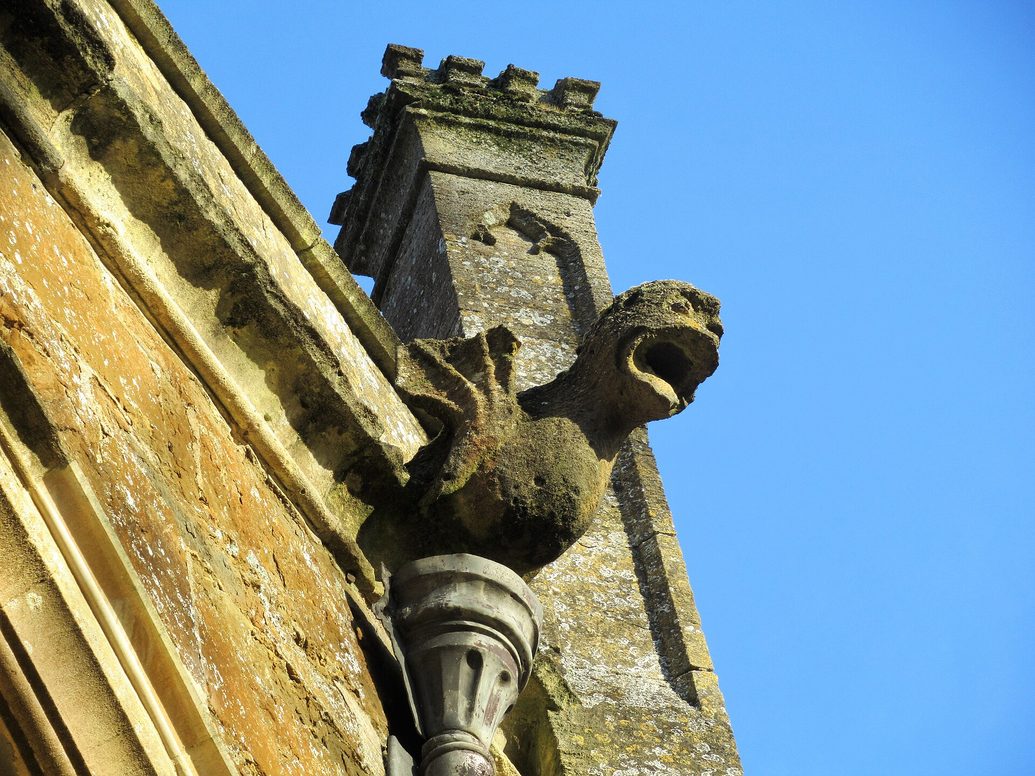
High on the tower, at the parapet round the base of the spire, a corbel table carries musicians, a monkey with a jug and crowned heads. Walk round the north side: the aisle cornice shows two men fighting with swords, a man blowing a horn, monkeys, hounds after a rabbit, a sow with her piglets and thieving foxes. The aisle west windows have unusual tracery, one with a six-pointed star, and carved heads can be seen outside the west window.
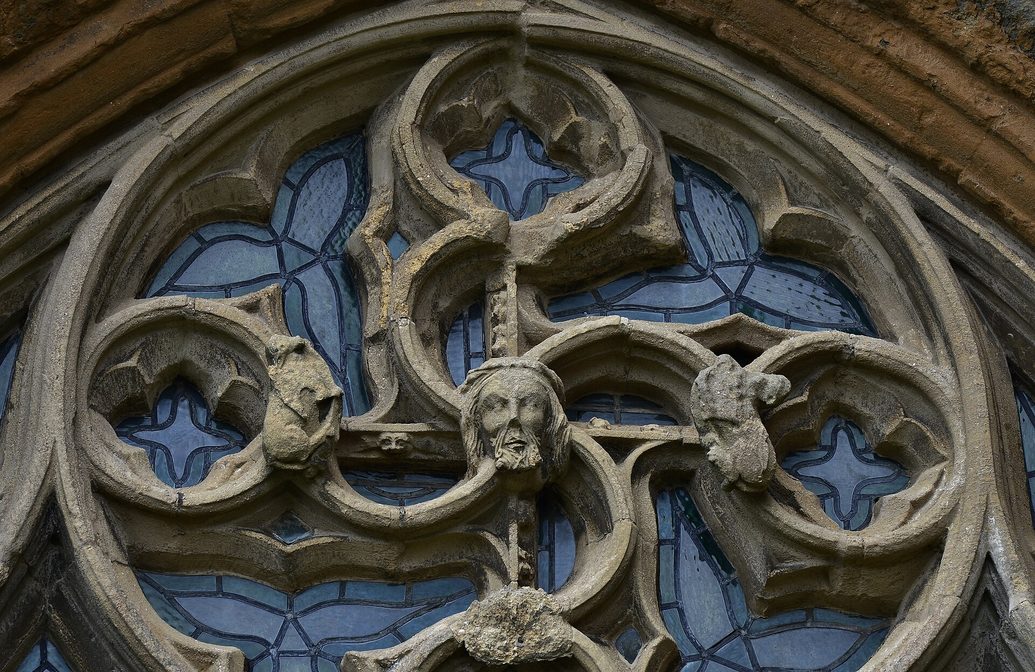
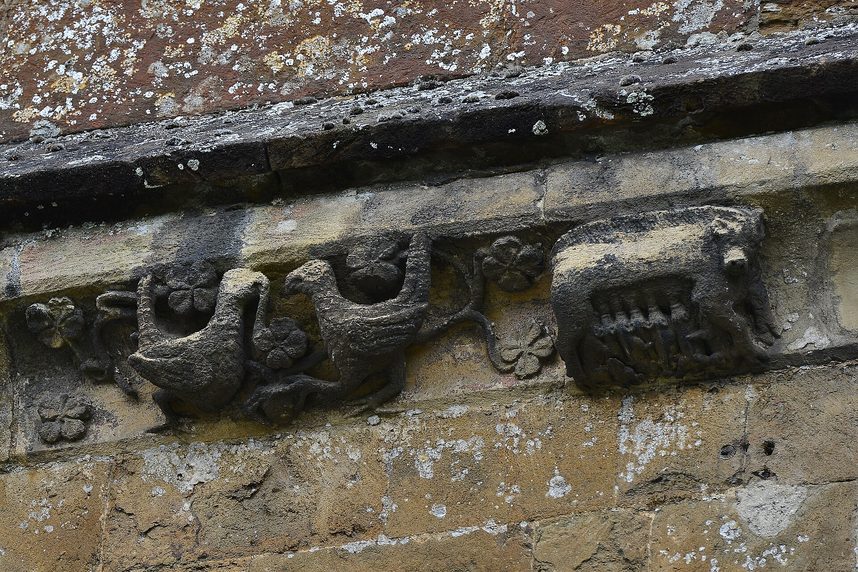
The nave and the chancel
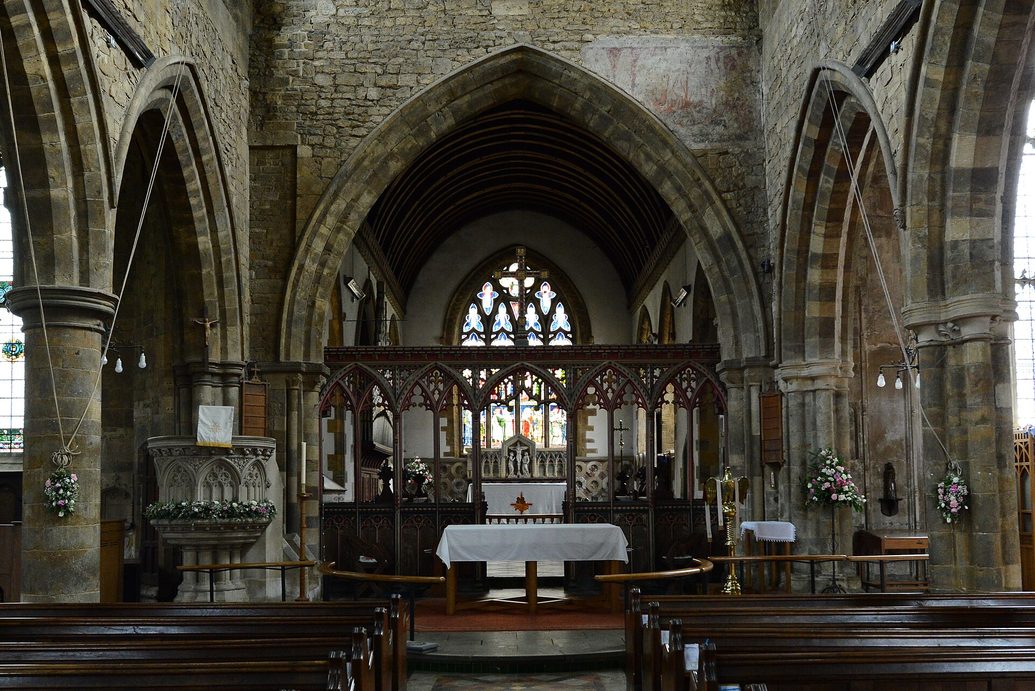
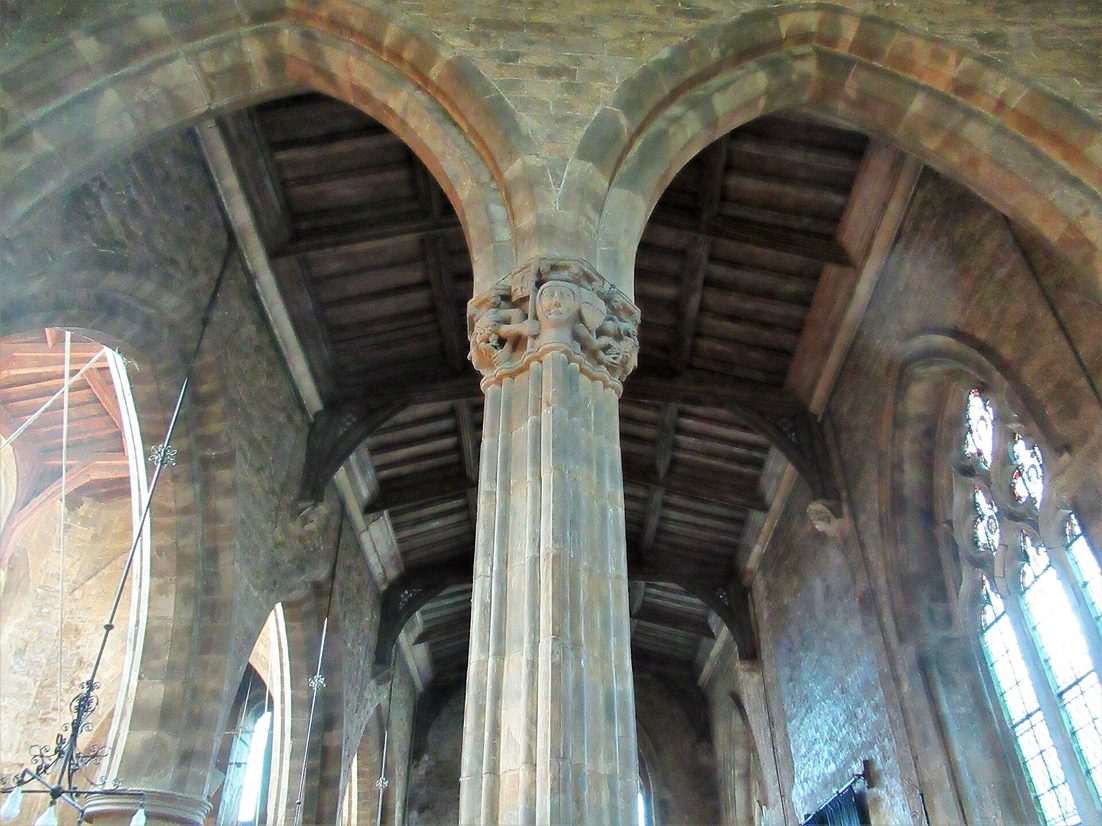
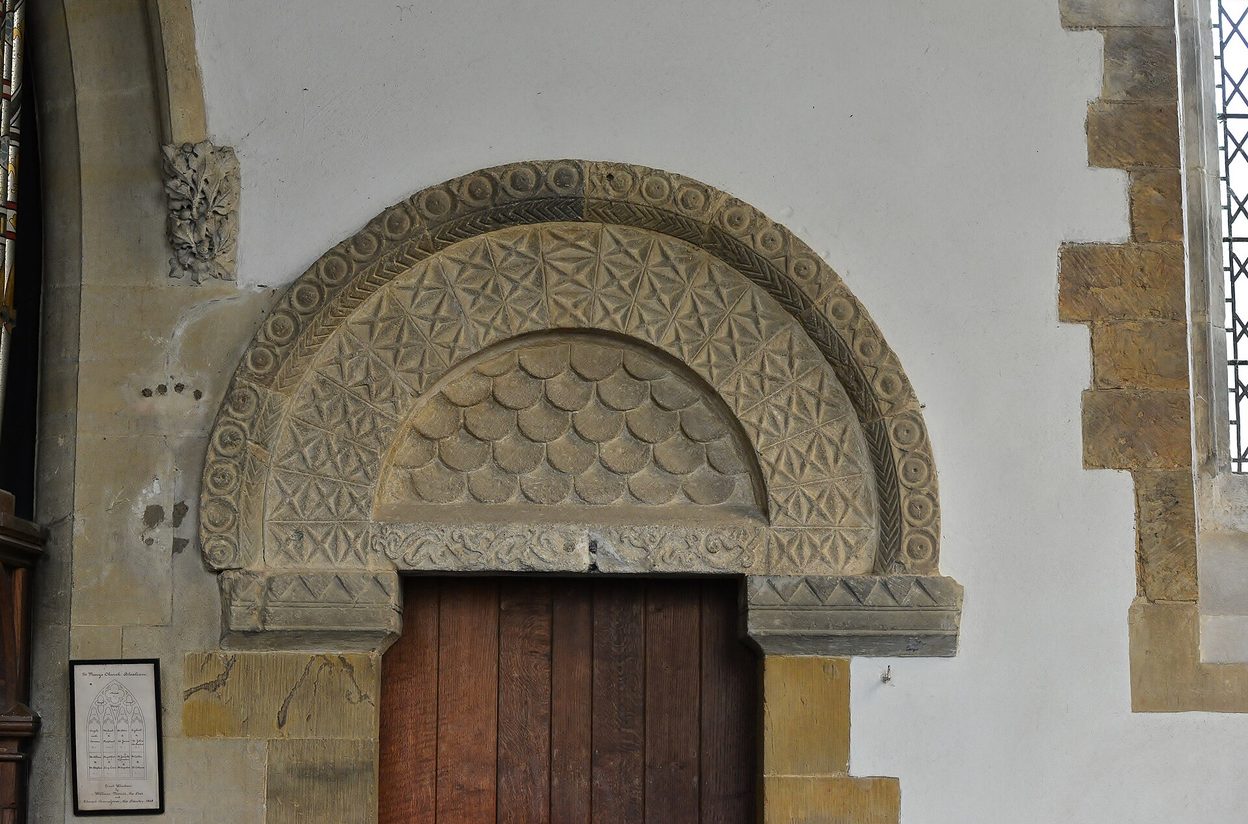
Inside, look up at the corbels: humble folk in the north aisle and a bishop, a king and a queen in the south aisle. A pillar at the north transept has a capital of knights and ladies with linked arms. The chancel is of the thirteenth century, refitted by Street. A Norman doorhead is set in its north wall, and twelfth-century carving with zigzag and beakheads, reused when the chancel was rebuilt, surrounds the south windows.
The screen and the wall paintings
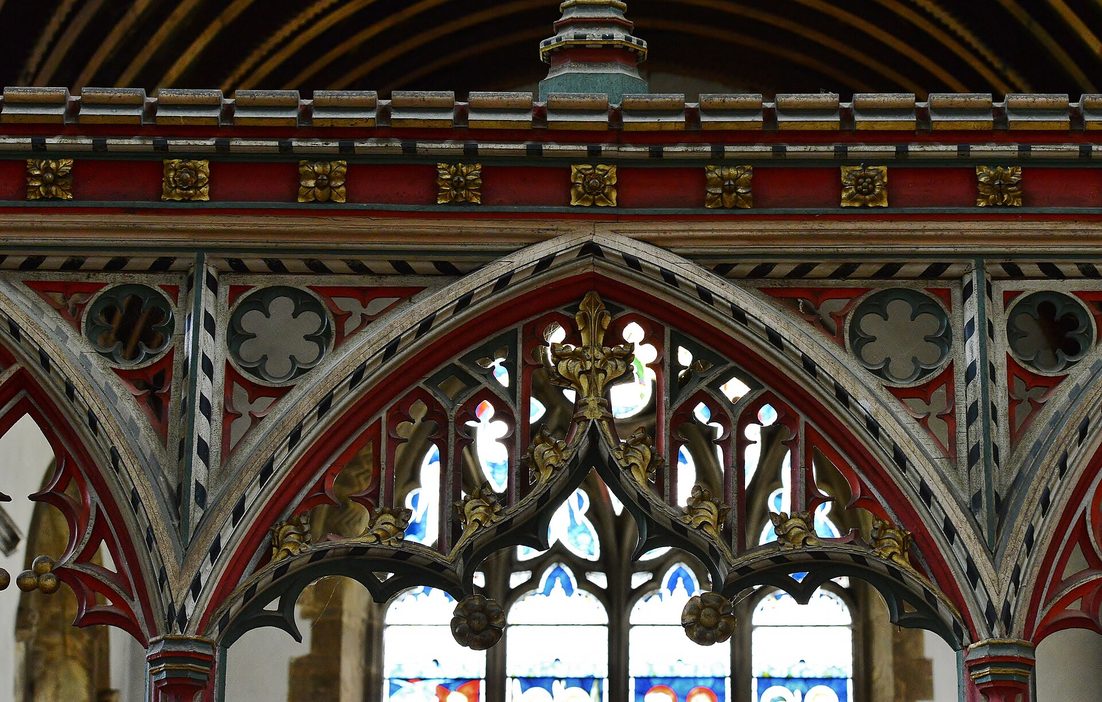
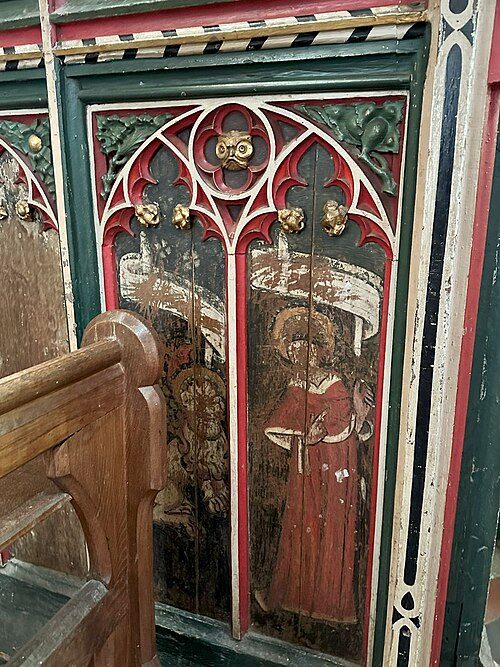
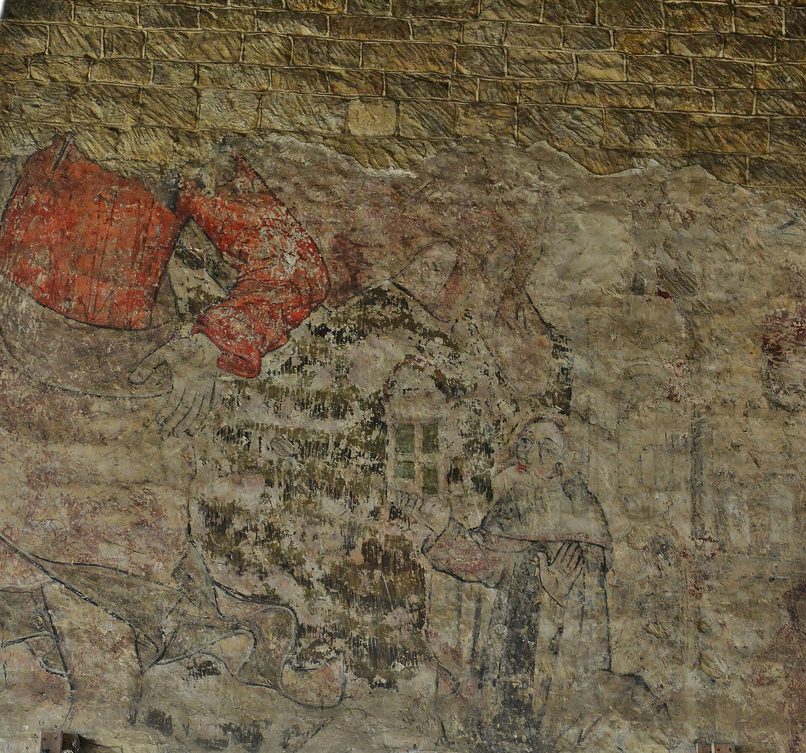
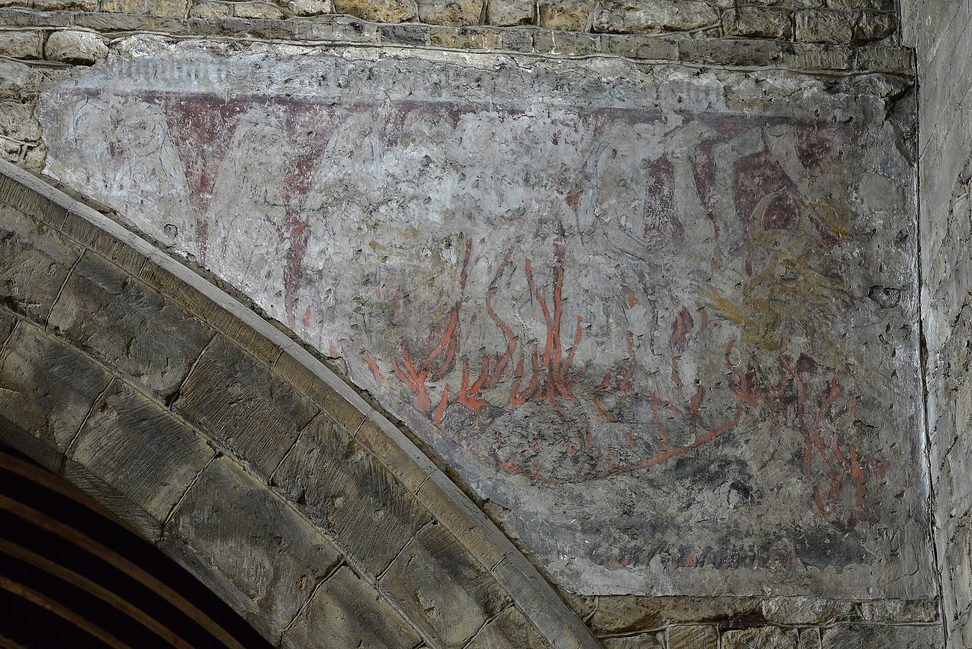
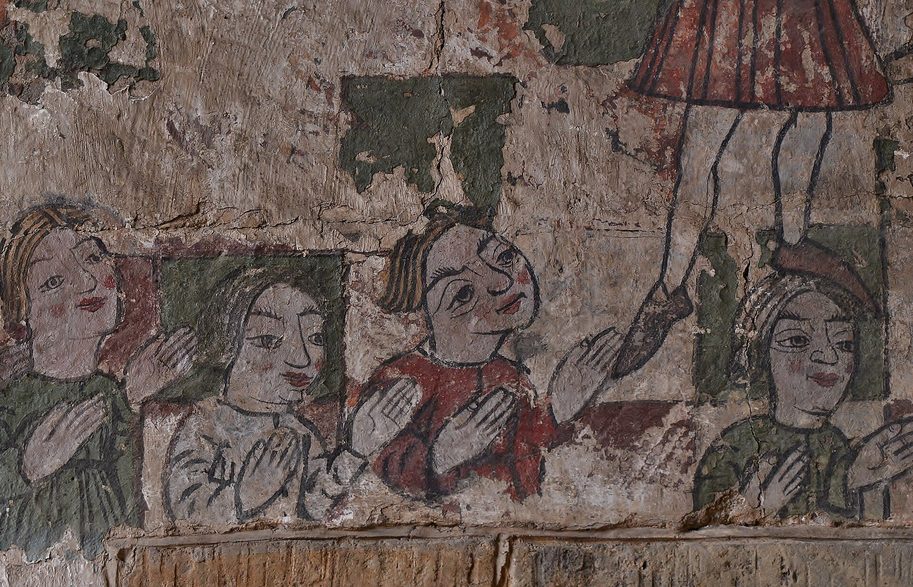
The fifteenth-century screen has painted lower panels of the Four Doctors of the Church with the symbols of the Evangelists, and saints and angels; the upper colouring is Street’s. Three late medieval wall paintings were uncovered in the 1860s: a giant St Christopher over the north door, a fragment of the Doom by the chancel arch, and in the Milcombe Chapel scenes that seem to tell the story of a young martyr.
The glass, the Milcombe Chapel and the font
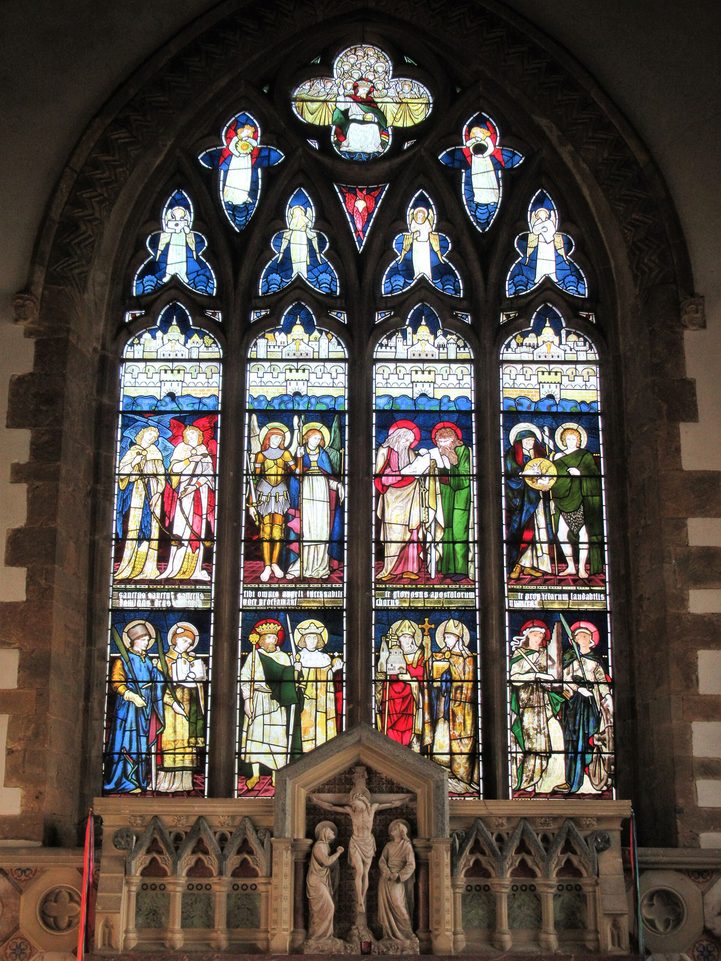
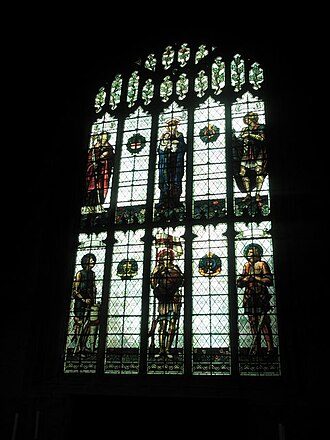
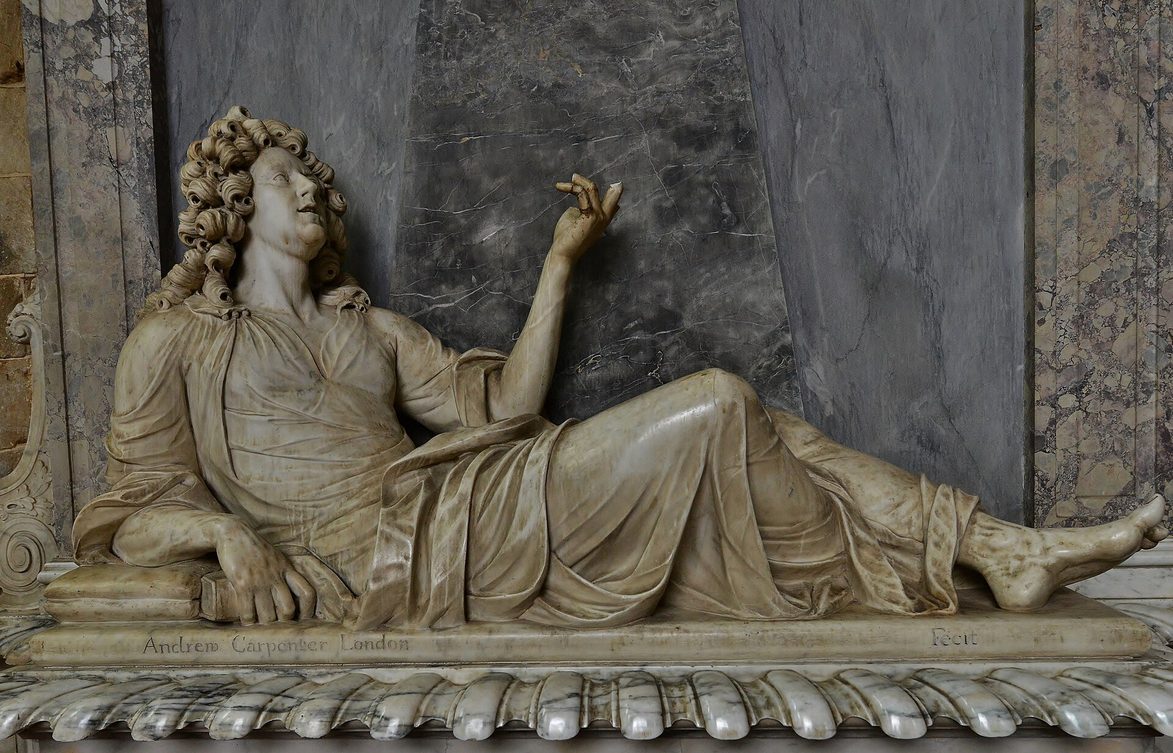
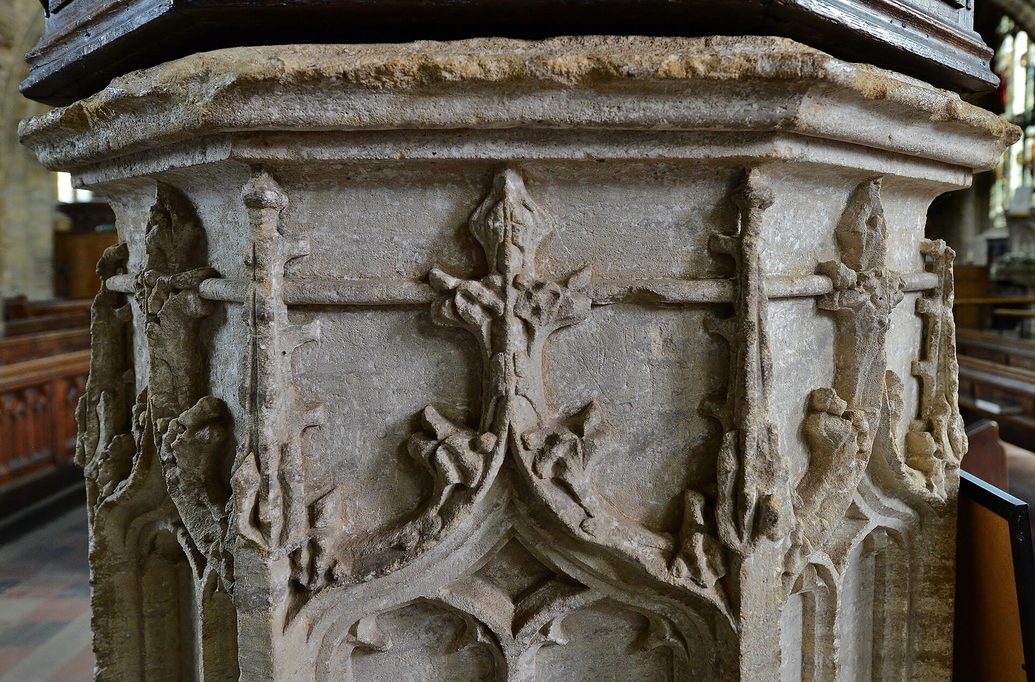
The east window, made by Morris’s firm in 1869, shows the heavenly city above and a procession from the Te Deum below, with saints, kings and martyrs. In the chancel, a St Christopher window made by Morris and Co. around 1920 follows an earlier Burne-Jones design. The north aisle east window, also by Morris and Co., is a memorial of 1921 to men killed in the First World War, and fragments of fourteenth-century glass survive in the north aisle. The Milcombe Chapel, with its great windows, is thought to be the work of the master mason Richard Winchcombe; it holds the marble monument to Sir John Thornycroft, who died in 1725, shown reclining in his periwig. The octagonal fifteenth-century font, with its Jacobean oak cover, was moved to the south aisle in Street’s restoration.
Getting there
Bloxham is on the A361 about three miles south-west of Banbury, which has a station on the line from London Marylebone to Birmingham. Stagecoach buses 488 and 489 from Banbury serve the village, with a stop by the church (check times). The Elephant and Castle, a Hook Norton pub, is in the village; no toilets are listed at the church. Next to the church, Bloxham Village Museum opens at weekends and on bank holiday Mondays, 2.30pm to 5pm, from Easter Sunday to October. Broughton Castle, home of the Fiennes family, is about two miles away and reopens on 4 April 2027 (Wednesdays, Sundays and bank holiday Mondays, 2pm to 5pm), and the wall paintings at South Newington are about two miles south-west.
Where to stay
Banbury, about three miles away, has the most places to stay.
This link goes to Booking.com. This site earns nothing from it at present — it is here because it is the quickest way to check what is actually available.
Don’t miss
- The spire 198 feet.
- The west doorway A carved Last Judgement.
- The wall paintings St Christopher and the Doom.
- The east window Morris and Co., 1869.
Insider tips
Come for the Christmas Tree Festival. In 2026 it runs from 3 to 6 December, 11am to 5.30pm, with free entry.
Walk round outside first. Much of the carving is on the outside: the west front, the north aisle cornice and the windows.
Common questions
How tall is Bloxham spire?
The church gives its height as 198 feet, and it is often called the tallest in Oxfordshire. The tower and spire were built in the fourteenth century and have been repaired after storms many times.
What is carved round the west doorway?
A Last Judgement of the fourteenth century, now weathered; the section on the west doorway above says what to look for.
Is the east window by Burne-Jones?
Partly. It is by Morris, Marshall, Faulkner and Co., the firm later called Morris and Co., of 1869, designed by Philip Webb, Edward Burne-Jones and William Morris. The St Christopher window in the chancel, made by Morris and Co. around 1920, is based on an earlier Burne-Jones design.
When is the church open?
The church says it is open every day; the National Churches Trust gives 10am to 5.30pm from March to October. Winter hours are not published.
Is it free?
Yes; there is no charge to visit.
More English churches
- Burford Church — a Cotswold wool church
- Iffley Church — a carved Norman church near Oxford
- Christ Church Cathedral, Oxford — the cathedral of Oxford
See all the cathedrals and churches worth visiting in England →