
St Nicholas’ Church, Castle Hedingham
Below the great Norman keep of the de Veres, the church of St Nicholas at Castle Hedingham in Essex is a late Norman church of about 1180, with a wheel window and twelfth-century doors still hung with their ironwork. Inside are a medieval screen, a medieval set of misericords, a double hammerbeam roof and the black marble tomb of the 15th Earl of Oxford.
A Norman church below a Norman keep
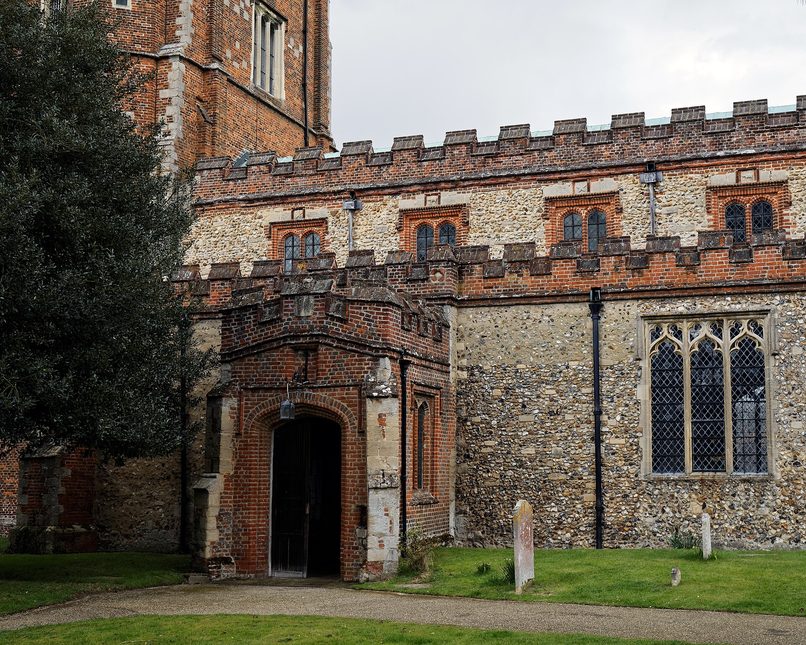
Castle Hedingham was the seat of the de Vere earls of Oxford, whose great keep of the twelfth century still stands above the village. The church was rebuilt in about 1180 and keeps most of its late Norman form: the chancel, nave, aisles and clerestory. The eastern bays of the aisles were altered in the fourteenth century, and in the sixteenth century the church was given its red-brick porch and tower and its great roof. The church is listed Grade I.
The visitor’s cheat sheet
| Where | Falcon Square, Castle Hedingham, Halstead, Essex CO9 3ER |
|---|---|
| Opening hours | Daily, 9am–5pm (per the church; winter hours not stated separately) |
| Admission | Free (donations welcome) |
| Services | Holy Communion at 11am, usually on the first and third Sundays; check the church listing |
| Parking | No church car park; park in the village, observing local signs |
| Access | Not described by the church; ask if you need step-free access |
| How long | Three-quarters of an hour; the castle is closed to general admission until the new year |
Hours and admission checked against the official site in November 2026. They change; the official site is always the last word.
What to see
Outside: tower, doors and wheel window
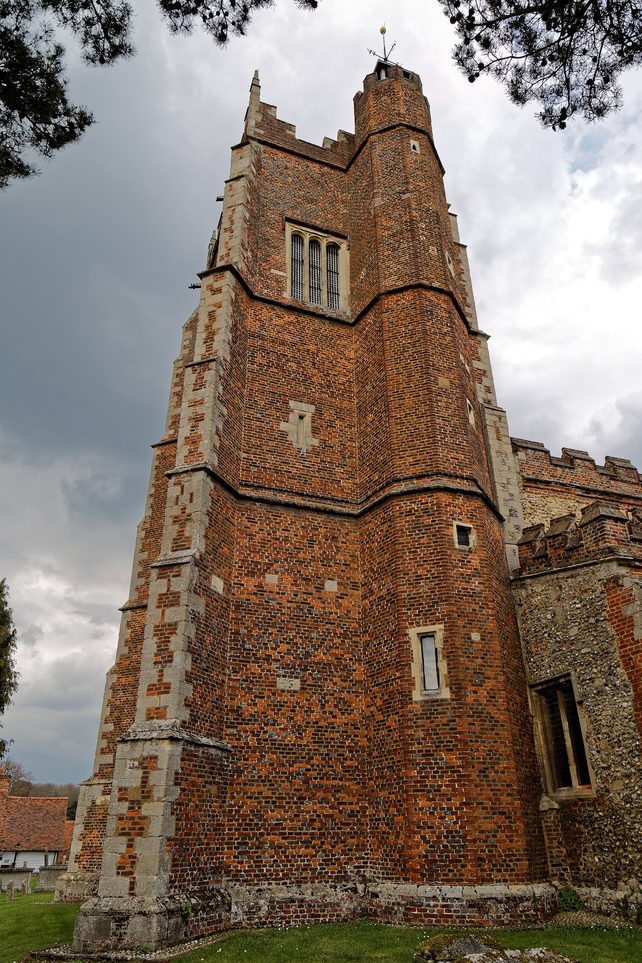
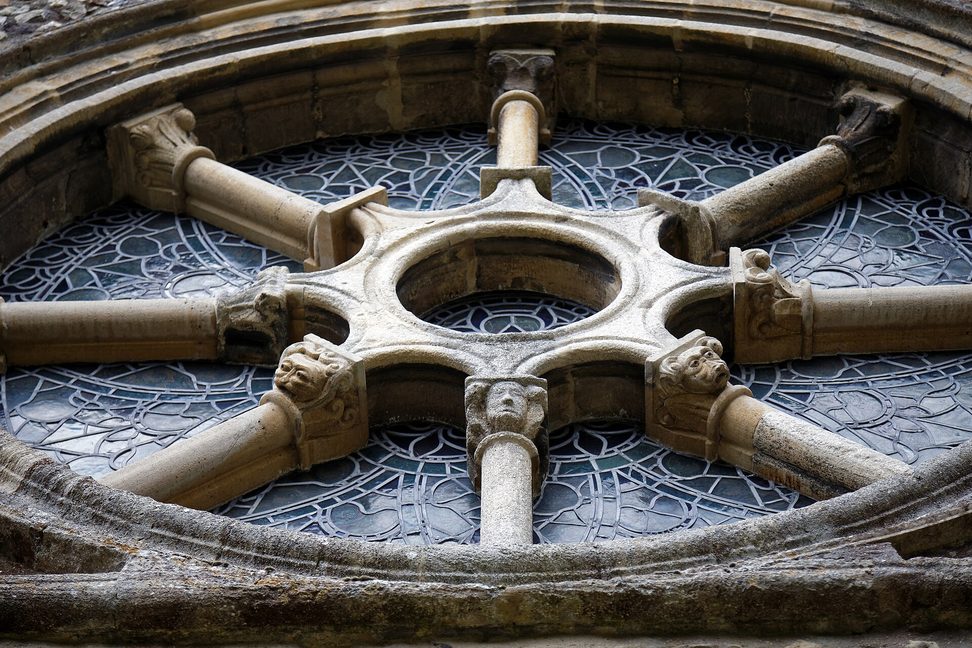
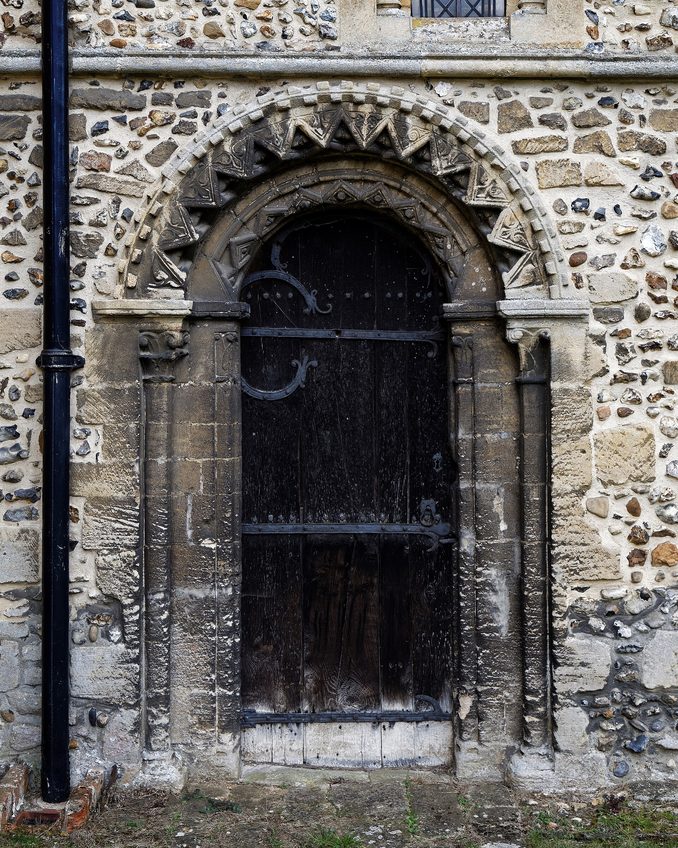
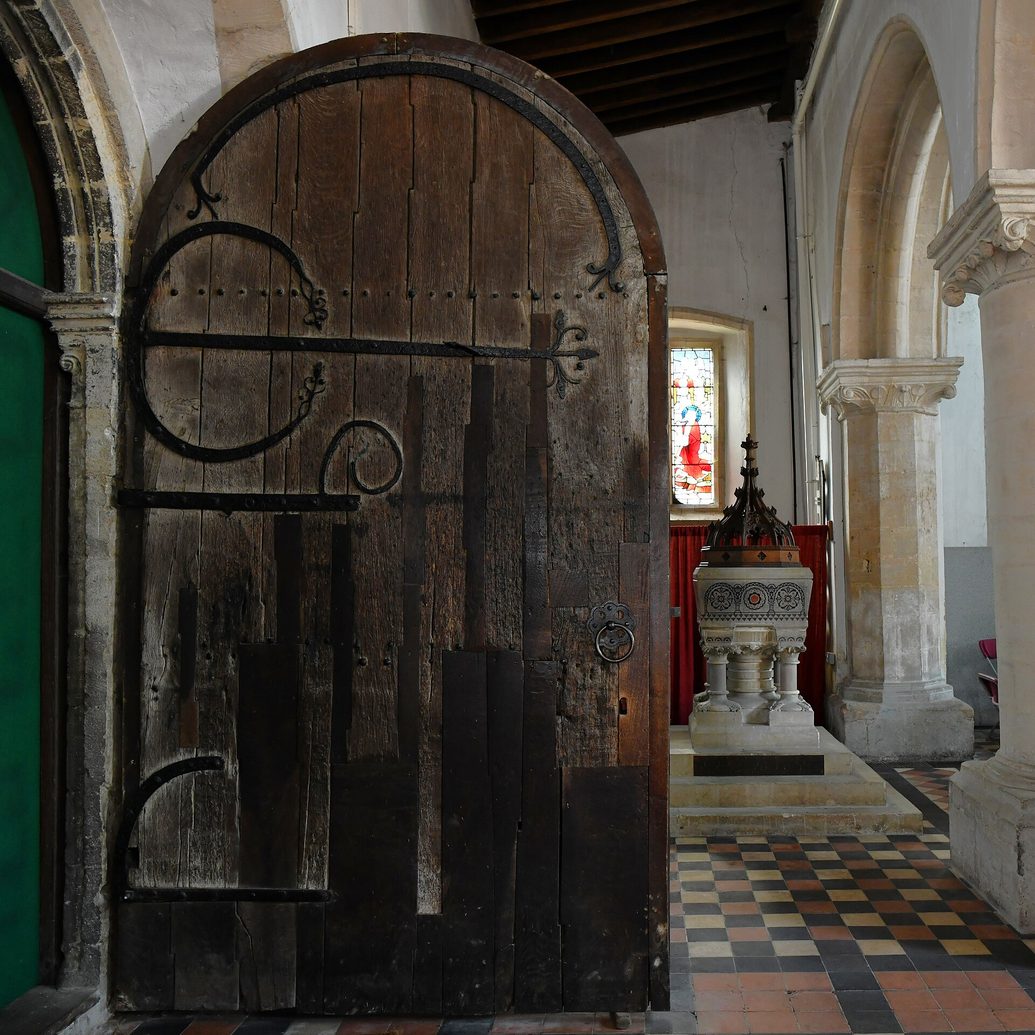
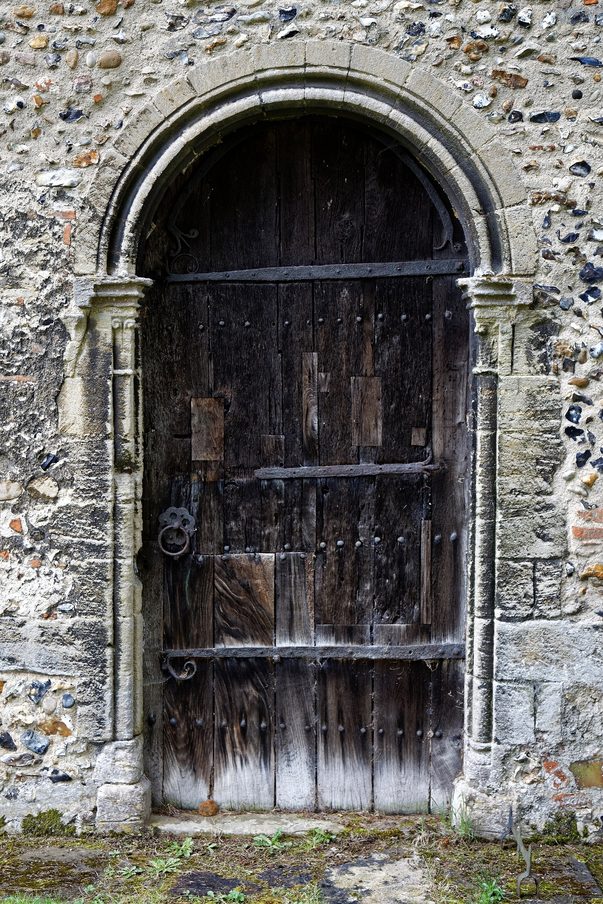
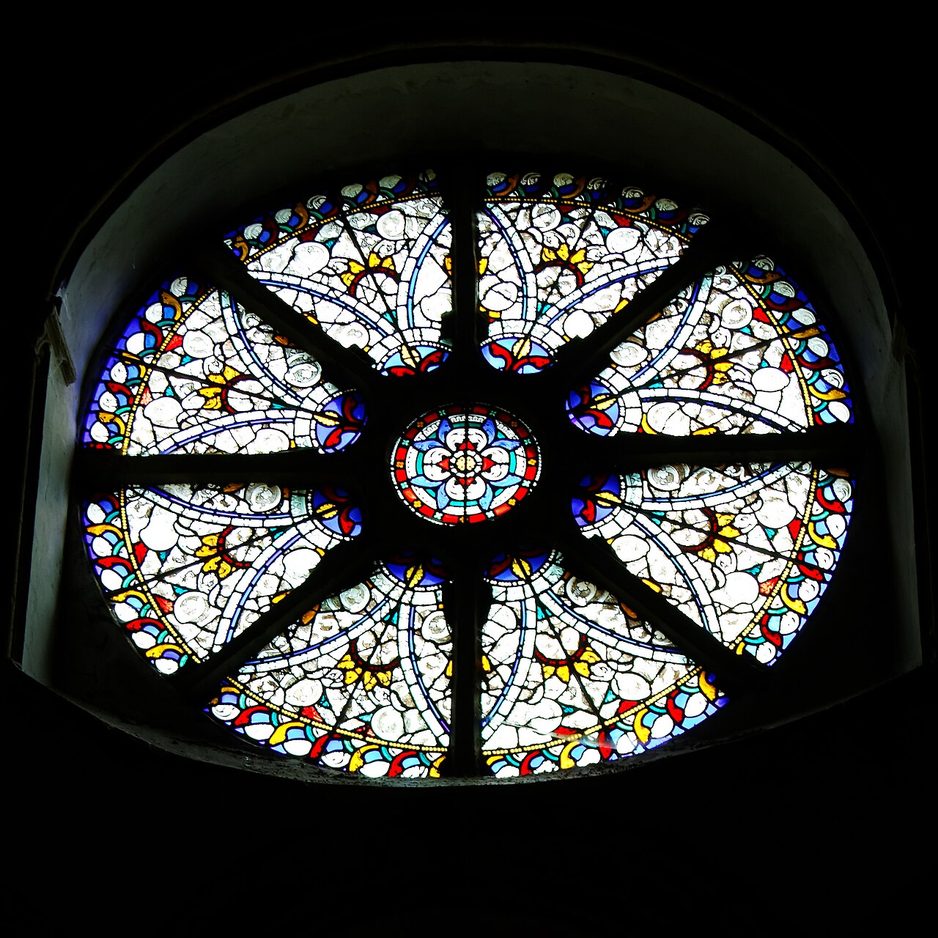
The red-brick tower, of the sixteenth century, has battlements, pinnacles and an inscription naming Robert Archer, master builder, and the date 1616, probably recording a restoration. The church keeps three twelfth-century doors, said to retain their original ironwork: the south door, inside the brick porch patterned in darker bricks; another in the south wall of the chancel, in a richly carved doorway with zigzag; and one in the north aisle. Walk round to the east end to see the Norman wheel window above the chancel windows, a rare survival.
The roof and the arcades
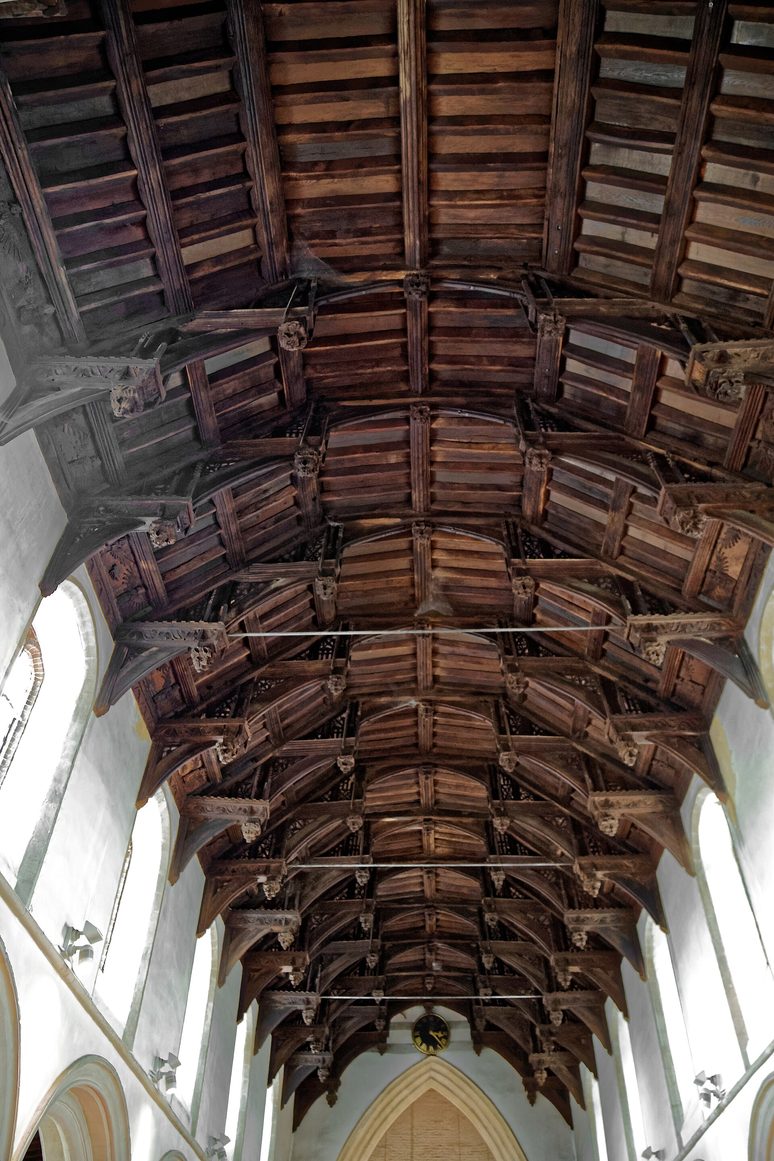
Inside, the late Norman arcades have carved capitals. Above them is the double hammerbeam roof of the early sixteenth century, with carved angels, attributed to Thomas Loveday. The de Vere boar and star badges appear in the brick panels of the clerestory and in the roof carving.
The screen and the choir
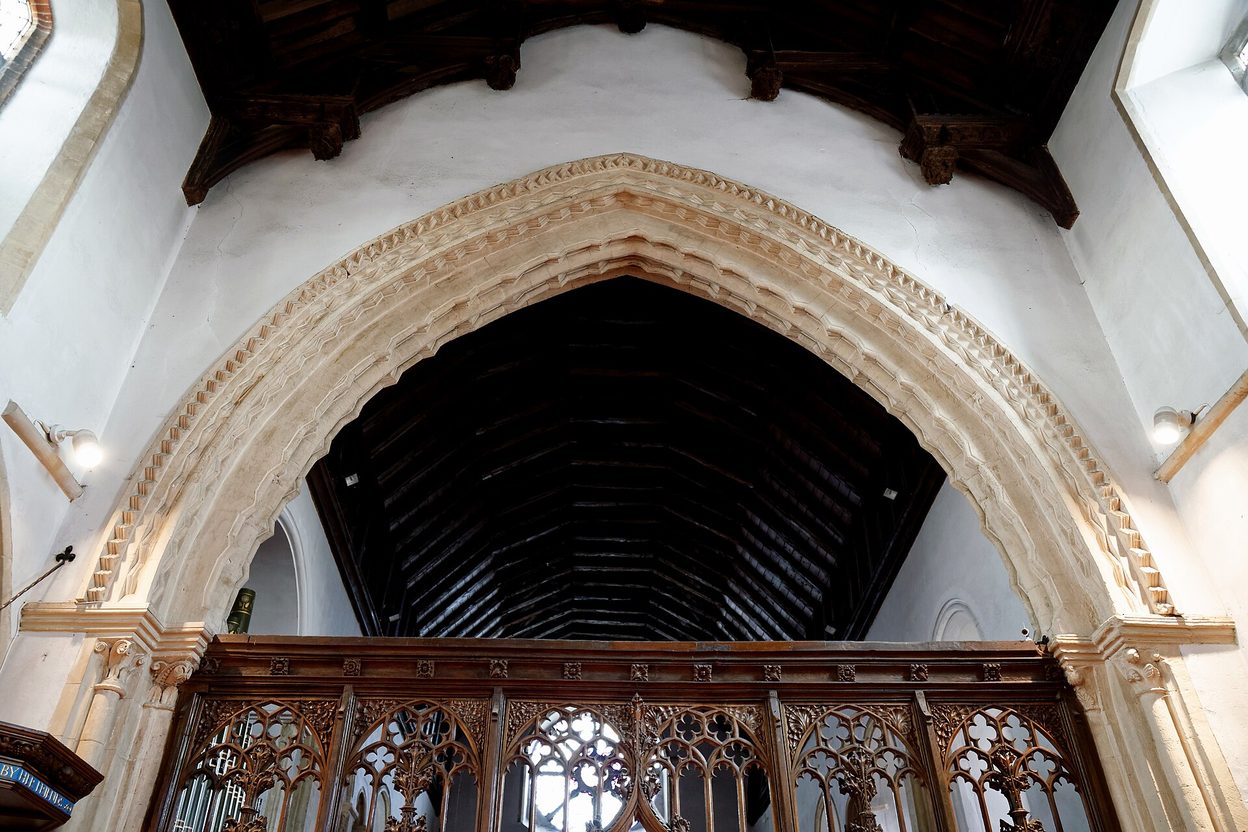
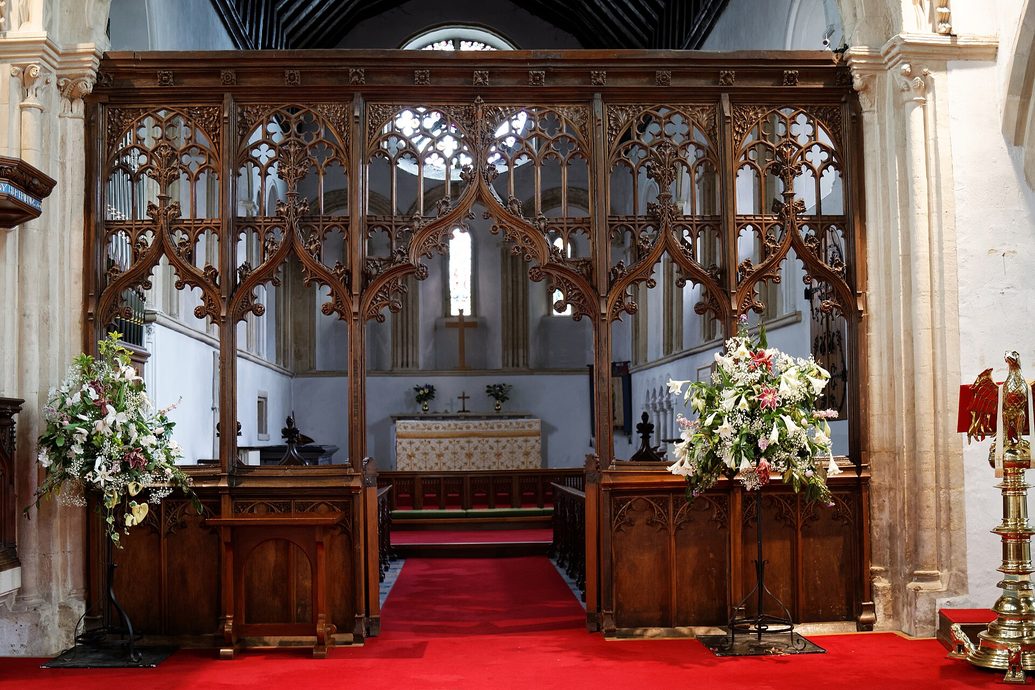
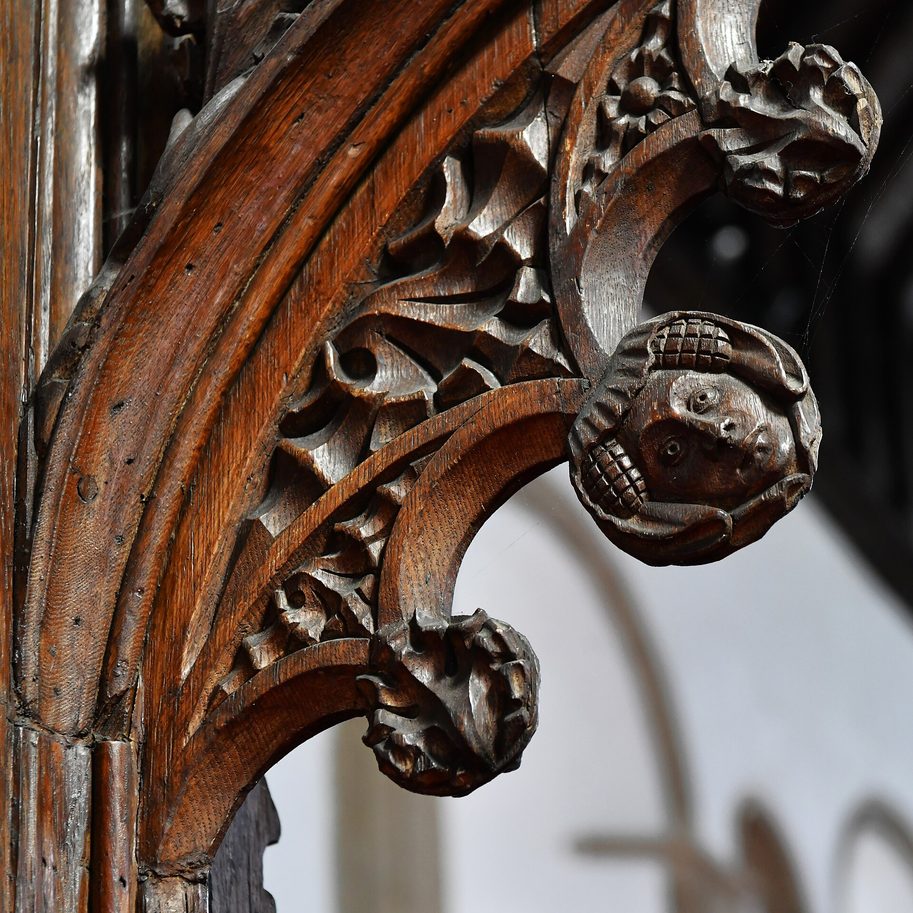
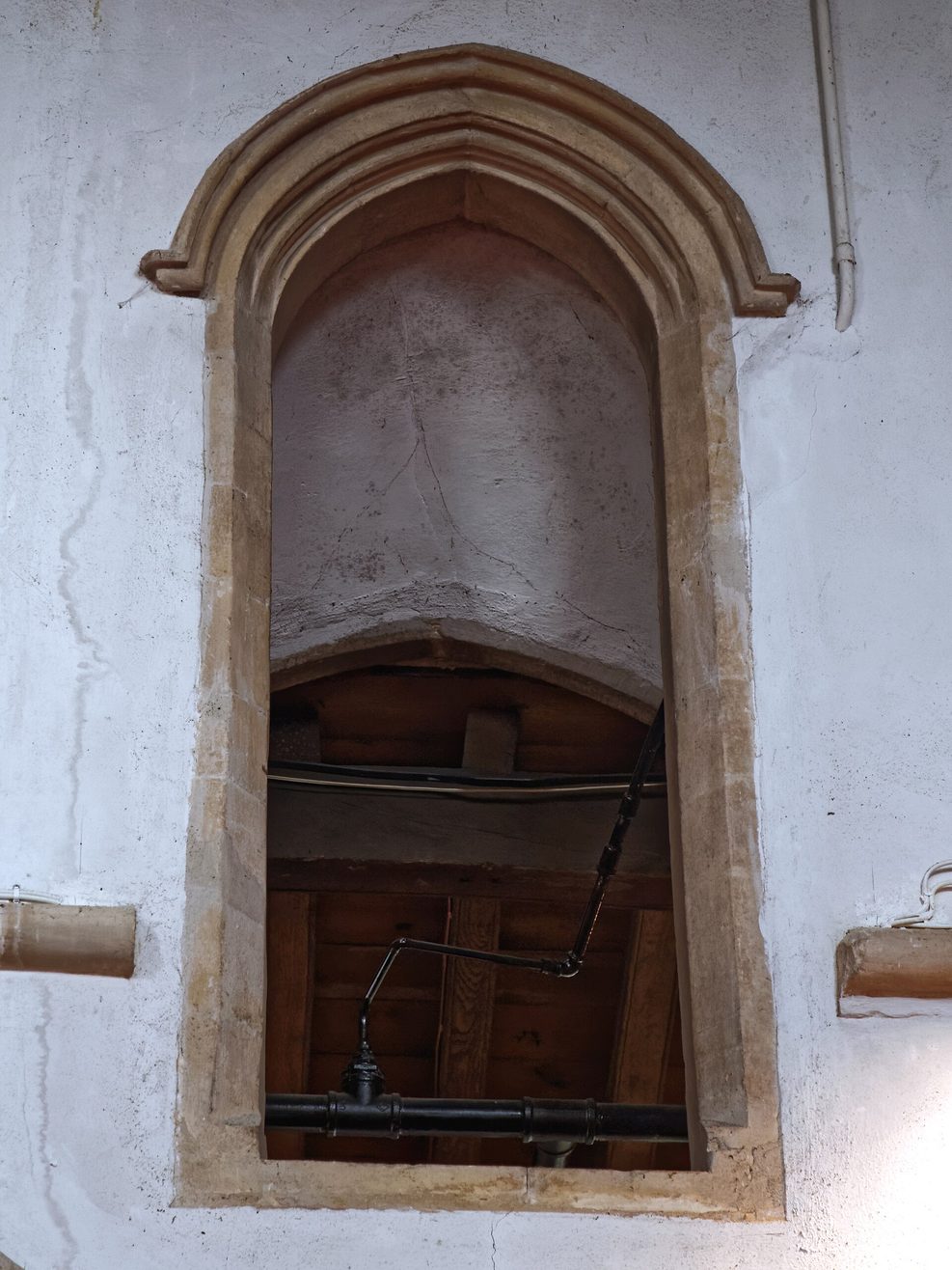
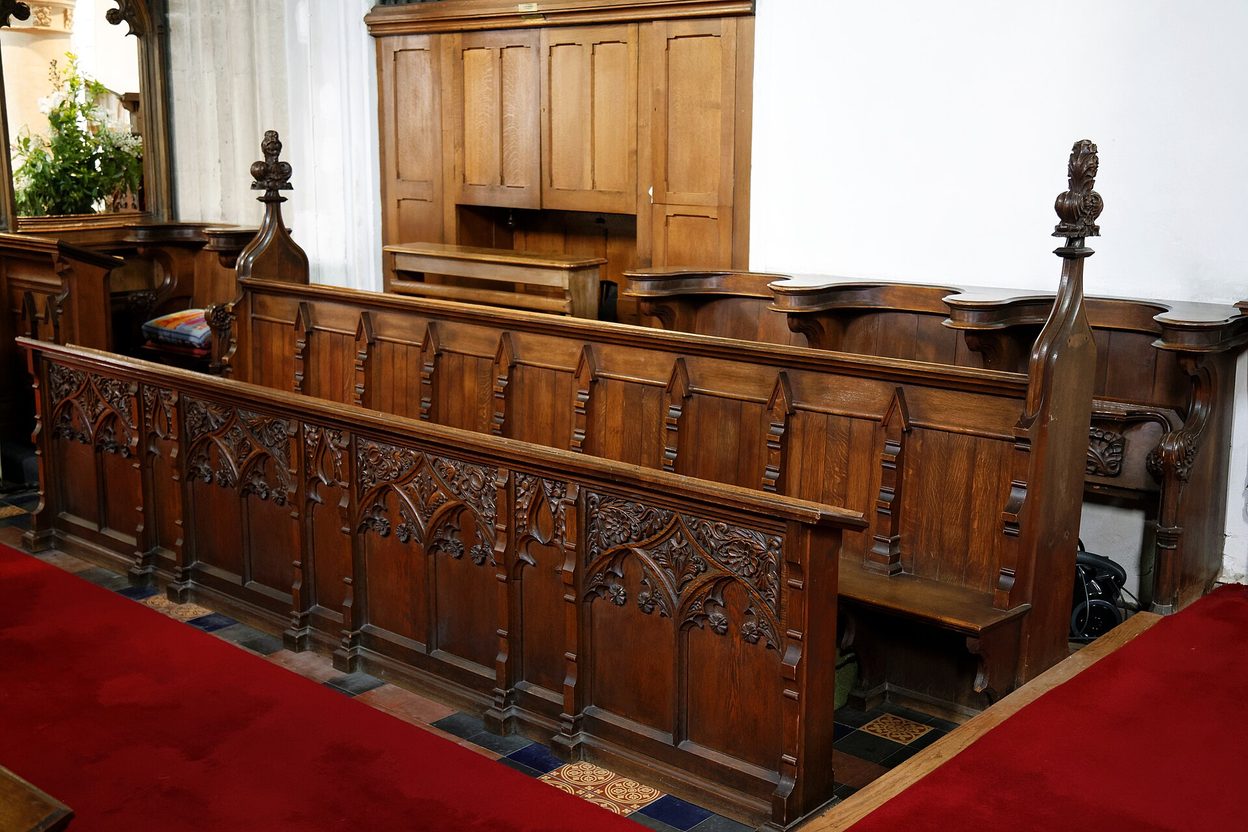
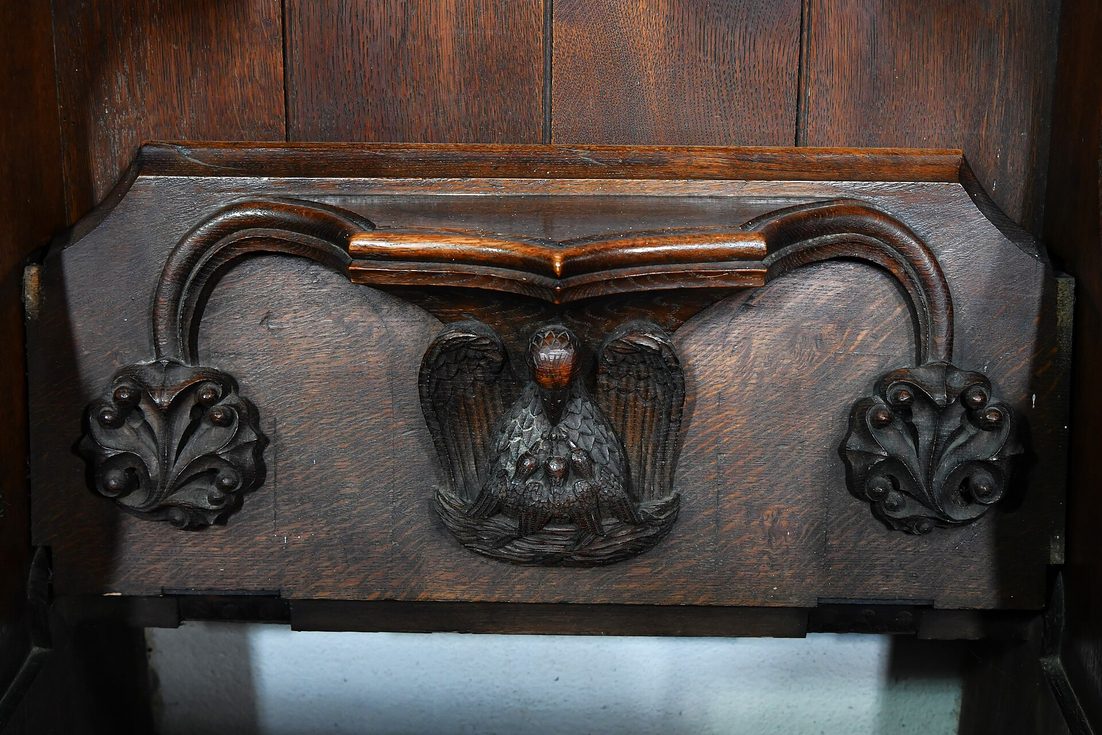
Across the chancel arch is a medieval screen of six bays with a central doorway; its date is given variously from the fourteenth to the fifteenth century. Look for the small doorway to the former rood loft. In the chancel the choir stalls keep their misericords, believed to be one of only two medieval sets in Essex.
The de Vere tomb and the glass
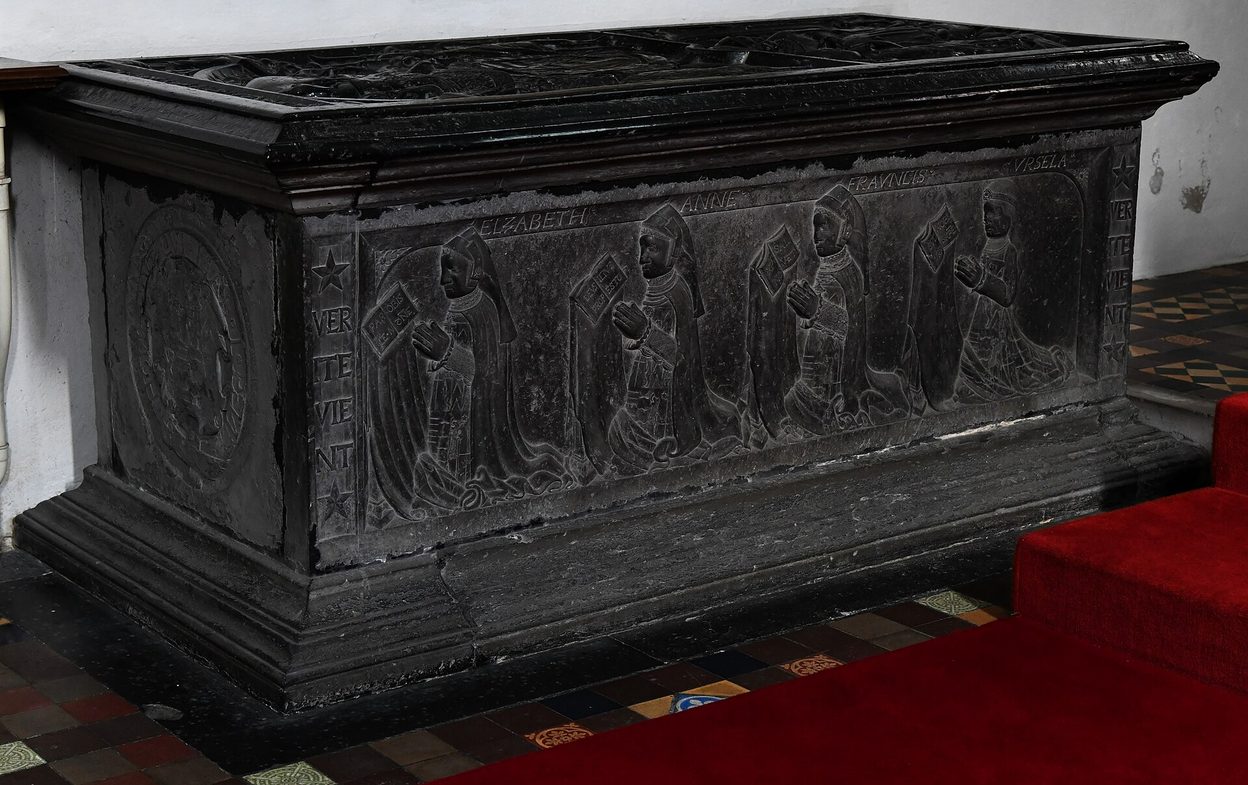
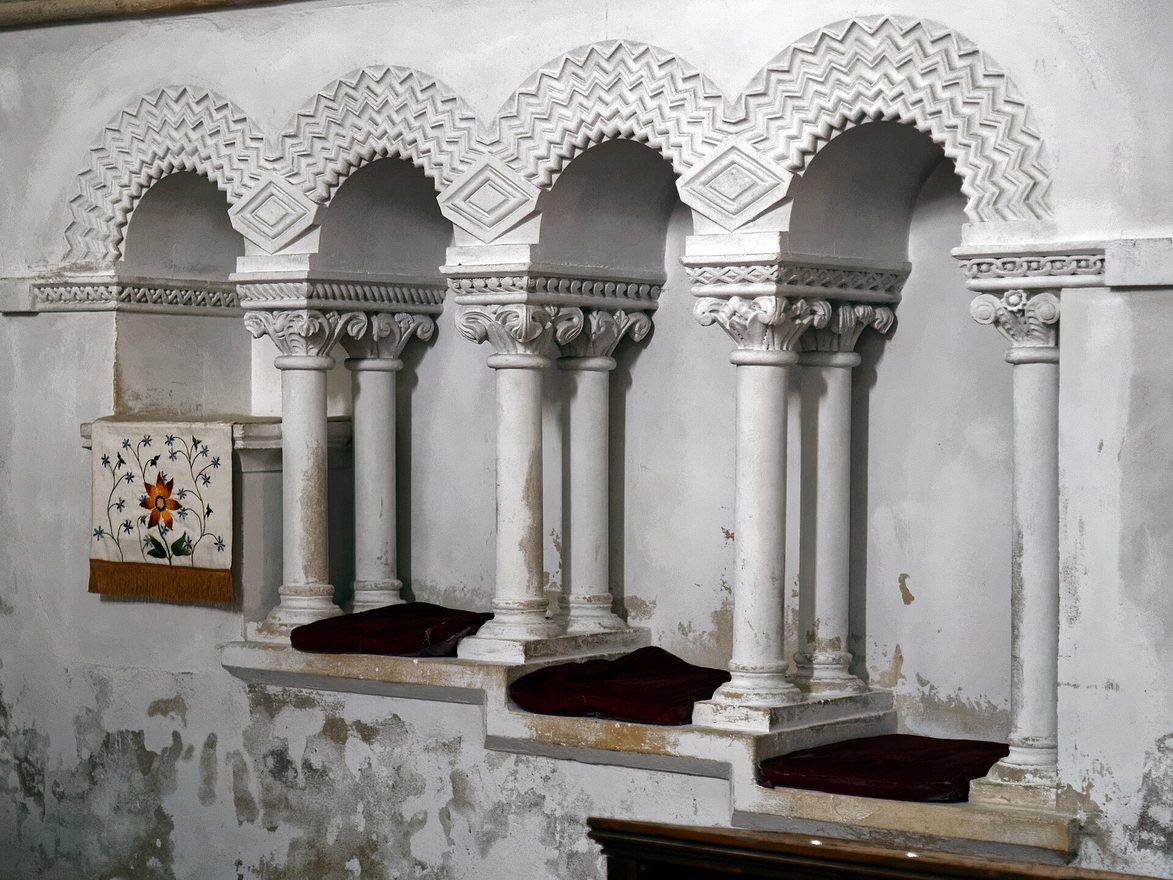
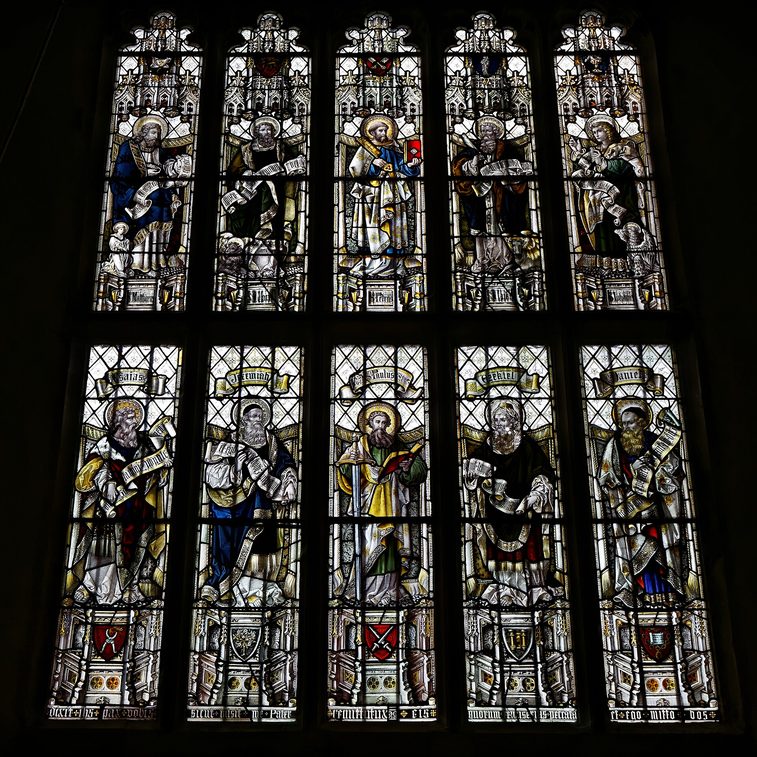
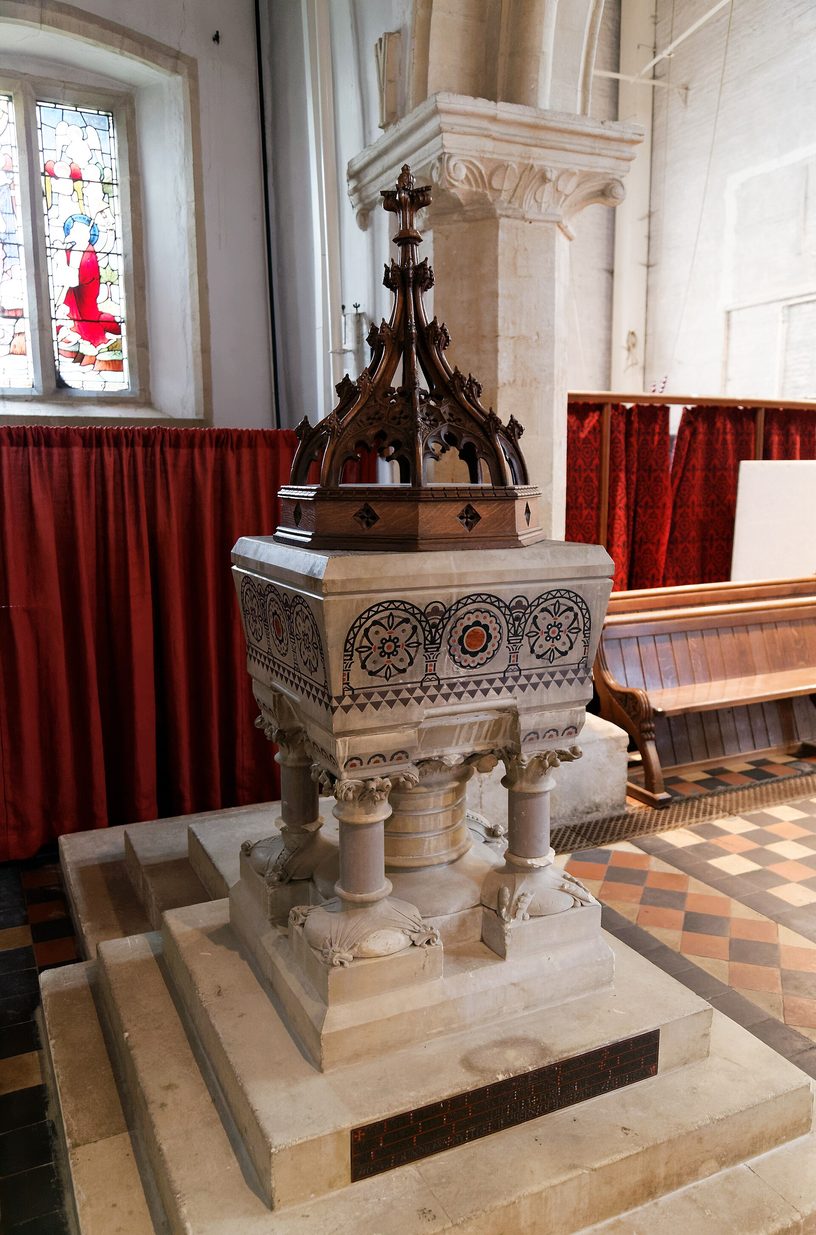
In the chancel is the black marble tomb of John de Vere, 15th Earl of Oxford, who died in 1540, and his wife Elizabeth Trussell. The sedilia are in Norman style but much restored. The wheel window is filled with coloured glass, and the tower west window has glass of saints. The font stands near the entrance. There are no toilets listed at the church; the Bell Inn is the nearest place for refreshments.
Getting there
Castle Hedingham is in north Essex, about four miles north-west of Halstead. The church is in the village centre, on Falcon Square, and the castle is a short walk up the hill. There is no station; since 30 August 2026 buses 86 (Sudbury–Braintree) and 89 (to Colchester) serve the village, so check current times with the operator. The Bell Inn, a timber-framed inn on St James Street, serves food on most days, and the Colne Valley Railway, a heritage steam line, is about a mile away.
Where to stay
Halstead, about four miles away, is the nearest town for places to stay.
This link goes to Booking.com. This site earns nothing from it at present — it is here because it is the quickest way to check what is actually available.
Don’t miss
- The wheel window Norman, in the east wall.
- The doors Twelfth-century ironwork.
- The roof A double hammerbeam.
- The misericords A rare set for Essex.
Insider tips
Look at the doors closely. The iron hinges and straps are thought to be of the twelfth century.
Walk the village. A circular walk of about three and a half miles starts at the church and climbs the castle lane; check a map for the route.
Common questions
How old is Castle Hedingham church?
Most of it is late Norman, of about 1180: chancel, nave, aisles and clerestory. The brick tower and porch are of the sixteenth century; an inscription on the tower names Robert Archer as master builder in 1616, probably of a restoration.
What is special about the roof?
The nave has a double hammerbeam roof of the early sixteenth century, attributed to the carpenter Thomas Loveday, who died in 1535.
Whose is the black marble tomb?
It is the tomb of John de Vere, 15th Earl of Oxford, who died in 1540, and his wife Elizabeth Trussell, made about 1539.
Is the church open?
The church says it is open to visitors every day from 9am to 5pm.
Can I visit the castle too?
Hedingham Castle, the de Vere keep of the twelfth century, is privately owned and opens on set days; it is closed for general admission for the rest of 2026 and reopens in the new year for snowdrop walks, so check its website for dates.
More English churches
- Lavenham Church — a great Suffolk wool church
- Long Melford Church — glass and light in Suffolk
- Thaxted Church — a great Essex church
See all the cathedrals and churches worth visiting in England →