
Trier Cathedral
Trier Cathedral, the Hoher Dom St. Peter, has been a bishop’s church for some 1,700 years, and the walls of a Roman hall begun around 340 still stand inside it. Around that core are a Romanesque west front of the 11th century, a Baroque chapel for the Holy Robe, and, through a doorway in the south aisle, the Liebfrauenkirche, one of Germany’s two earliest Gothic churches. Both are free and stand together near the Hauptmarkt, a short walk from the Porta Nigra.
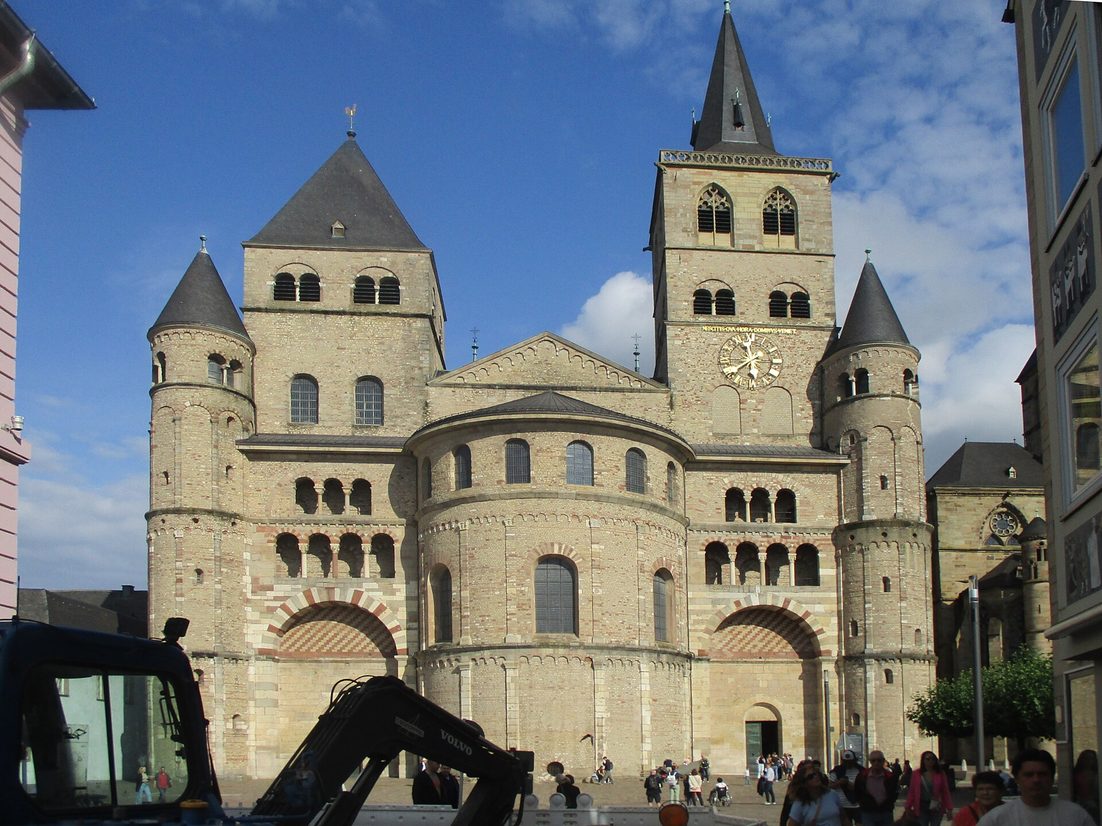
From Constantine’s city to the present church
Trier, the Roman Augusta Treverorum, was an imperial capital in the 4th century, and it has had bishops since the second half of the 3rd. Between about 310 and 320, under Bishop Agritius, a large basilica was built here over the remains of a Roman house; under Bishop Maximin (329–346) the site grew into one of the largest church complexes of its time, with four basilicas and a baptistery. Tradition links the gift of the house to the Empress Helena, Constantine’s mother; the excavated ceiling paintings from it are now in the Museum am Dom. From about 340 a square hall, the “Quadratbau”, was built on the site of the present cathedral, and its walls still form the heart of the building. One of its four granite columns, the broken Domstein, lies outside the main door.
The complex was wrecked in the 5th century and again by the Vikings in 882. Archbishop Poppo (died 1047) extended the church westwards and built the west front, with its apse and towers, a masterpiece of Salian Romanesque. The east choir was consecrated in 1196, and the Holy Robe was sealed into its altar. Baroque refurnishing began after the Thirty Years’ War and continued after a fire in 1717; after war damage and structural problems it was restored between 1960 and 1974. Together with Trier’s Roman monuments and the Liebfrauenkirche it became a UNESCO World Heritage Site in 1986.
The visitor’s cheat sheet
| Where | Domfreihof, in the centre of Trier; about 10–15 minutes’ walk from the Hauptbahnhof and 7 from the Porta Nigra |
|---|---|
| Opening hours | Daily 6.30am–6pm April–October, 6.30am–5.30pm November–March; no sightseeing during services. Liebfrauenkirche daily 10am–4pm |
| Admission | Free to the cathedral and the Liebfrauenkirche. Treasury €3 (Mon–Sat 11am–5pm, Sun 12.30–5pm); Museum am Dom €5 (closed Mondays); combined ticket €5.50 |
| Guided tours | Public tour (normally in German) at 2pm, 75 minutes, €8.60, from the Dom-Information (Liebfrauenstraße 12); most days June–October; in winter only on Advent Fridays and Saturdays and 28–30 December; 2027 dates not yet published |
| Dress code | Dress modestly: shorts, miniskirts and sleeveless, off-shoulder or low-cut clothing are considered inappropriate; men remove hats; no tripods without permission |
| Access | Nave, aisles and cloister step-free; treasury, Holy Robe chapel and crypts by steps only |
| How long | An hour for the cathedral and the Liebfrauenkirche; two or more with the treasury and museum |
Hours and admission checked against the official site in October 2026. They change; the official site is always the last word.
What to see
The west front
The face the cathedral turns to the Domfreihof is Poppo’s, begun in the 1030s or 1040s: a rounded apse between square towers, with arcades of the Roman-inspired sort that Salian builders liked. The south-west tower was heightened only around 1515, and the two west towers do not match. Look along the north side, too, where the different building periods show in the masonry, from Roman brick and stone upwards.
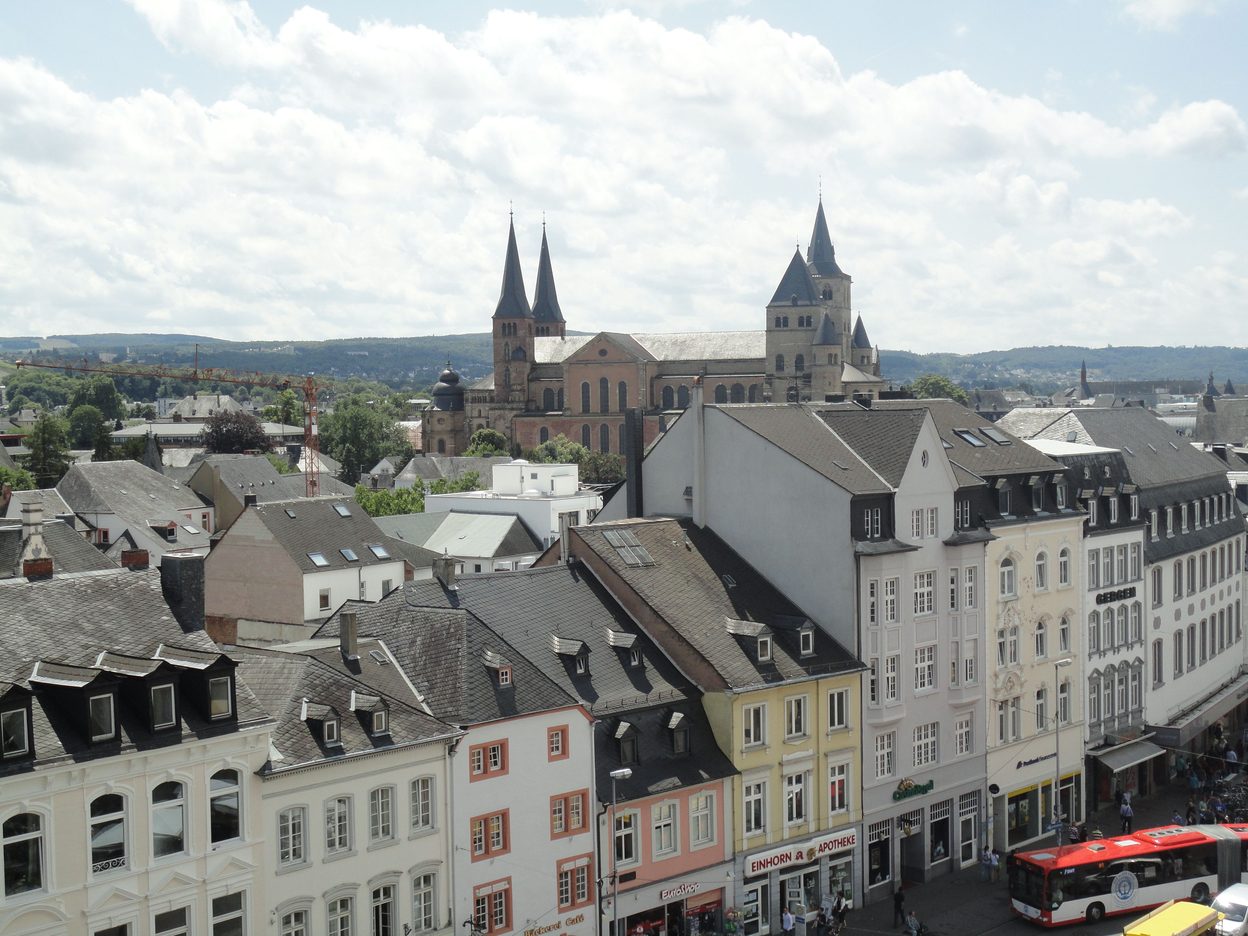
The nave and the Roman core
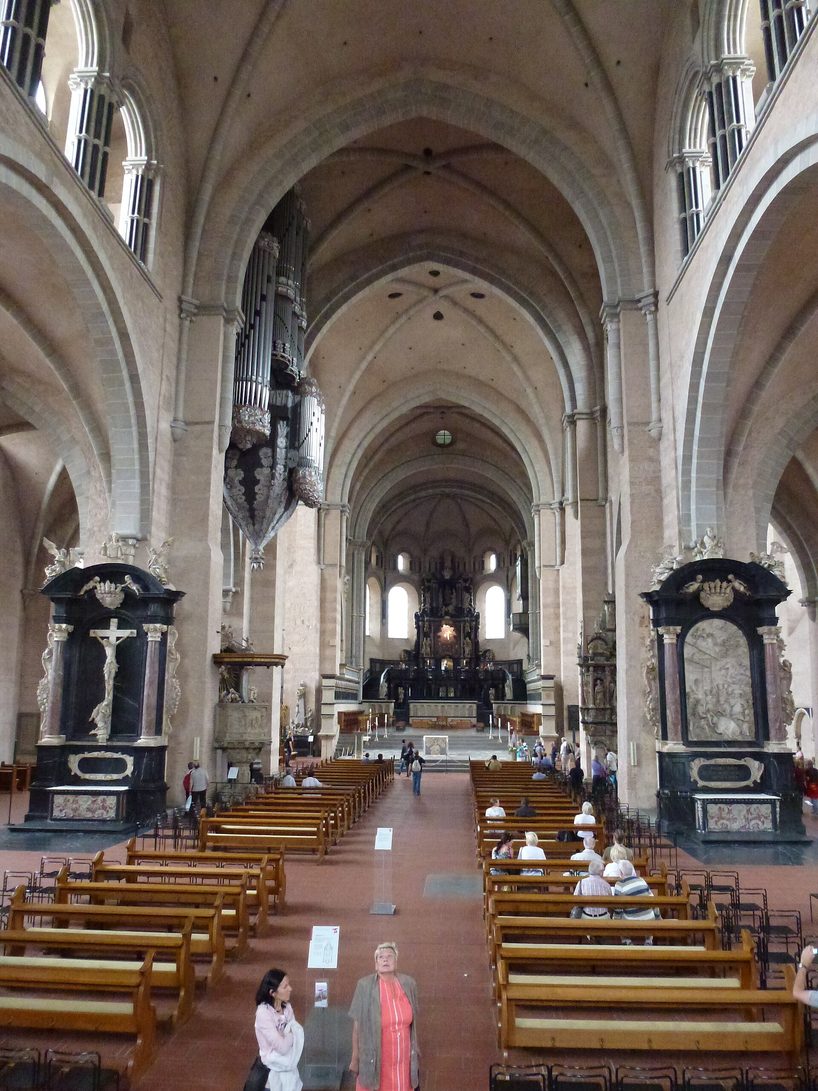
Inside, the walls of the Roman hall survive within the central bays of the nave. At the east end the Romanesque choir, with its Baroque altar structure, rises above the crypt, and behind it, up the pilgrims’ stairs, is the Heiltumskammer, the Holy Robe chapel added around 1700. Along the aisles are tomb monuments of the archbishops of Trier, among them the Renaissance tomb of Johann III von Metzenhausen.

The Holy Robe
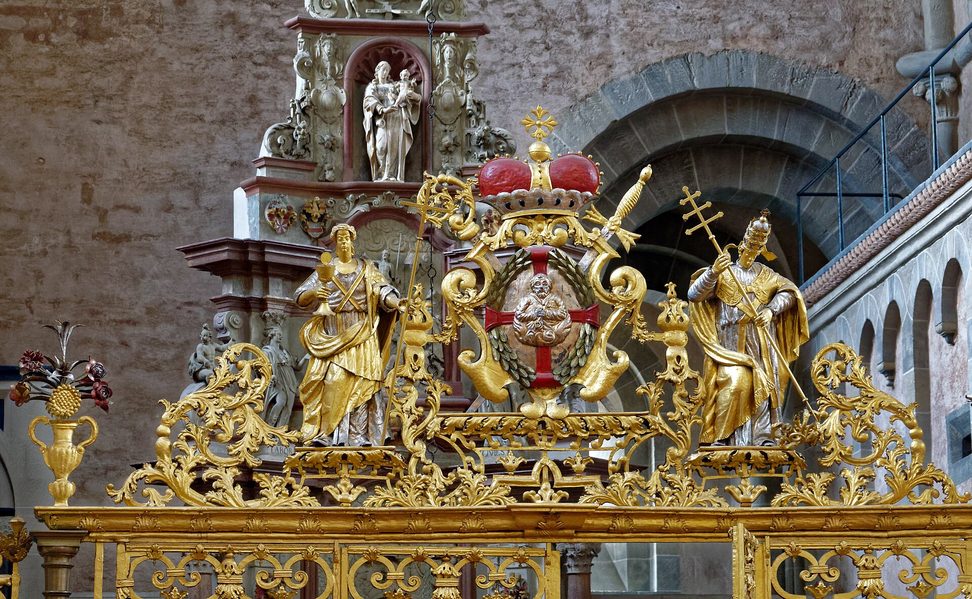
According to a tradition first written down in the early 12th century, the Empress Helena brought Christ’s seamless robe to Trier; the cathedral itself says its authenticity cannot be proved. In 1512, at the wish of the Emperor Maximilian I, the altar was opened and the robe shown, and it has been shown at long intervals ever since; the pilgrimage of 1933 drew some two million people, and the most recent was in 2012. The robe now lies flat in a shrine under glass and is not on view. The diocese holds the Heilig-Rock-Tage festival every spring (9–18 April in 2027), when the chapel opens (the robe itself stays out of sight), and has announced a new showing of the robe for 2033.
The cloister and the treasury
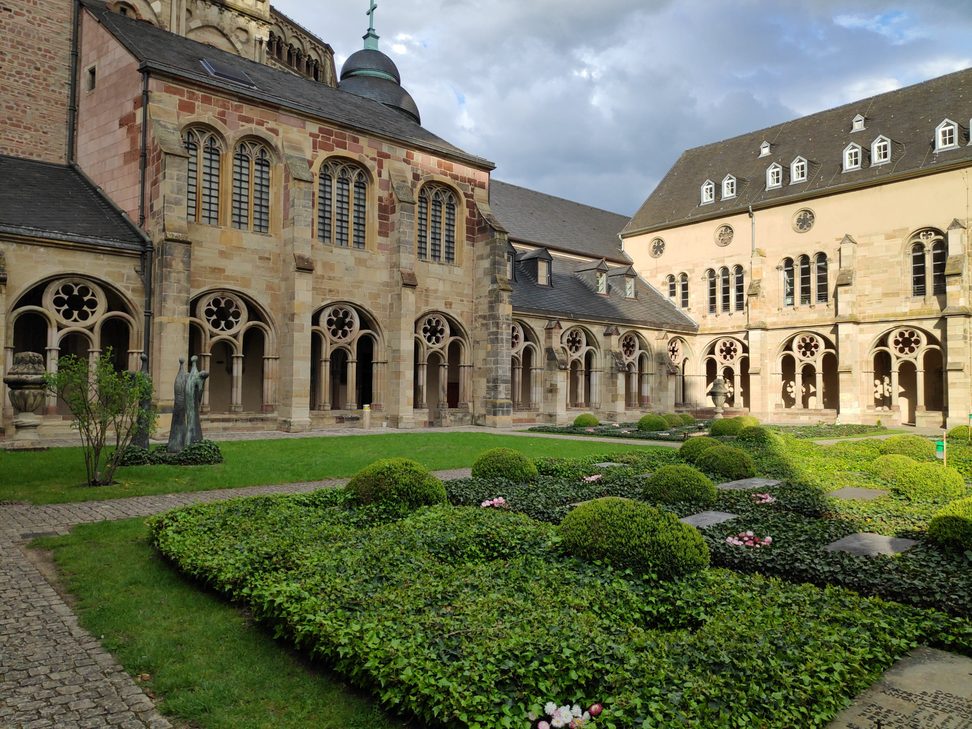
The cloister, built in the mid-13th century between the cathedral and the Liebfrauenkirche, is a cemetery, so keep your voice down. From the south aisle, steps lead up to the Domschatz, the treasury, whose star is Archbishop Egbert’s portable altar of the 10th century, made to hold a sandal of St Andrew; there are also the Holy Nail reliquary and illuminated manuscripts.
The Liebfrauenkirche
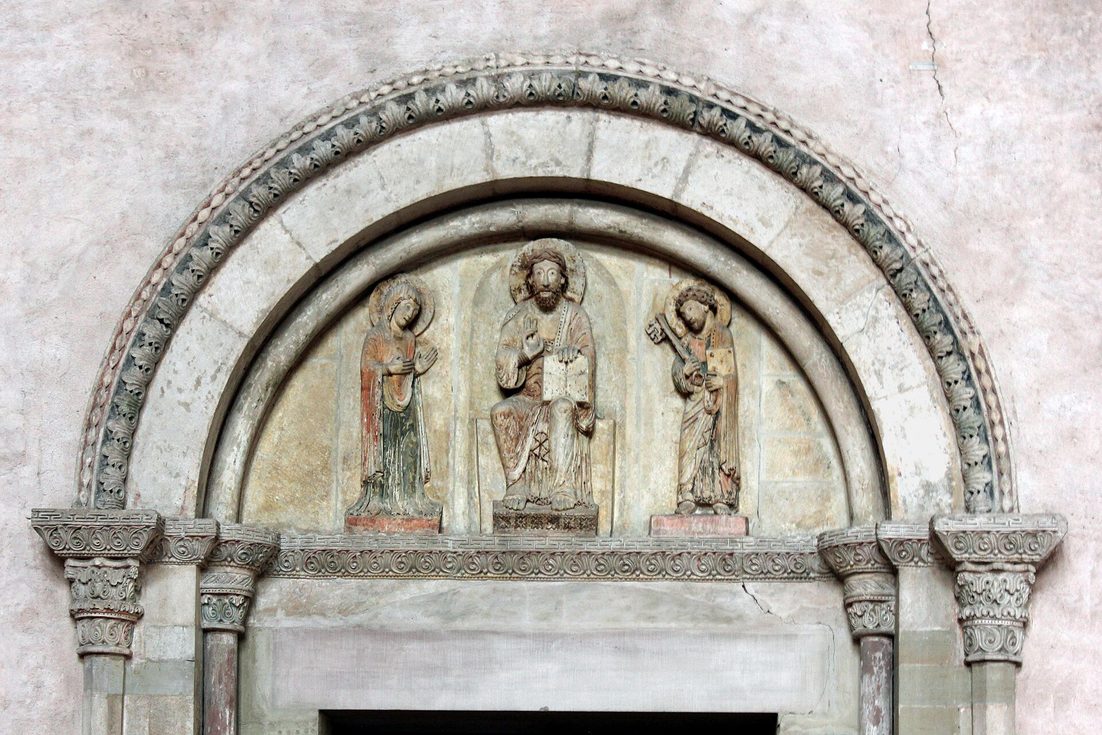
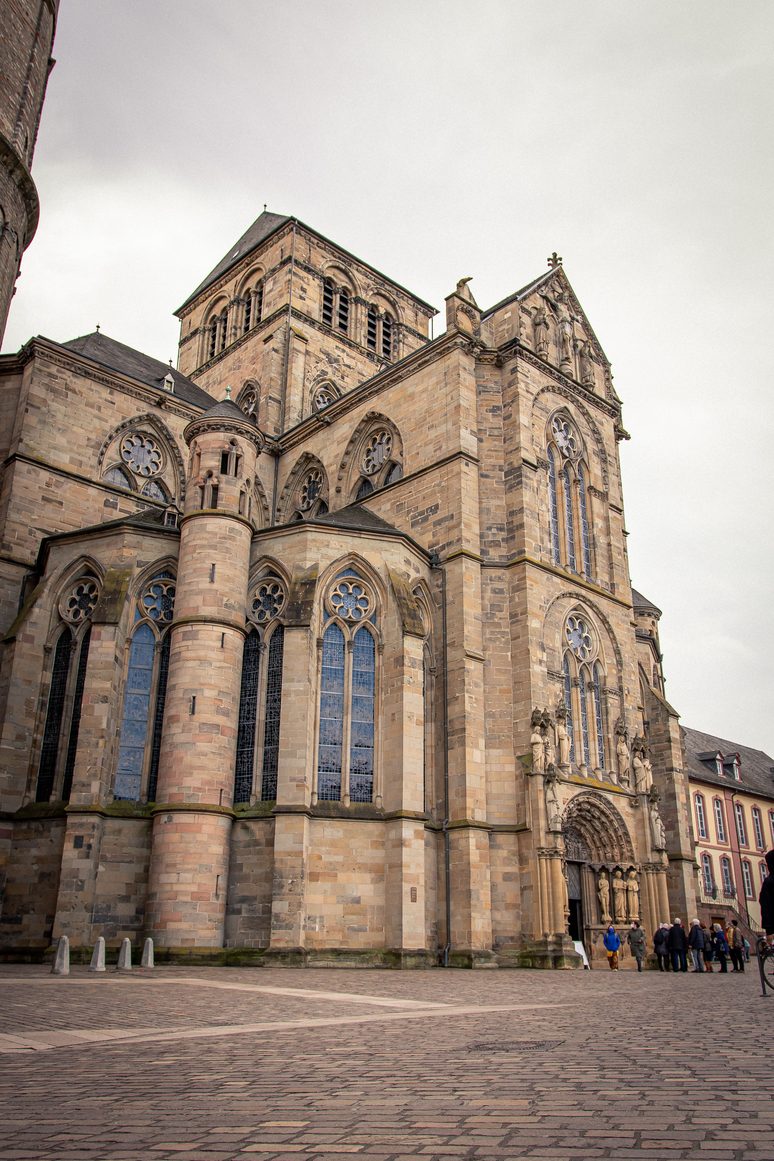
A doorway in the cathedral’s south side, under a Romanesque tympanum of Christ with the Virgin and St Peter, leads into the Liebfrauenkirche. It was begun around 1230 on the foundations of the Roman south church, in the new French Gothic style, and finished around 1260. Its plan is a Greek cross with chapels set diagonally between the arms, so that from above it looks like a rose, and twelve columns, by tradition for the twelve apostles, carry the vault. With St Elizabeth’s in Marburg it is counted among the two earliest Gothic churches in Germany. Its windows are modern; the church is barely heated in winter.
Getting to Trier
The cathedral is in the pedestrian centre of Trier, about 850 metres (10–15 minutes’ walk) from the Hauptbahnhof and 7 minutes from the Porta Nigra by way of the Hauptmarkt. Trains run about hourly from Luxembourg (about 50 minutes) and Koblenz (about 1 hour 25 minutes on the RE 1). From Cologne, direct trains generally run on the Eifel line until 25 March 2027 (check for weekend engineering works), after which more building work is planned; otherwise change at Koblenz. Drivers should use the multi-storey car parks on the edge of the old town, such as the Parkhaus Konstantin.
Where to stay
Trier is small enough to see on foot in a day, but most visitors also want the Roman sites — the Porta Nigra, the baths and the Konstantinbasilika — which makes a night here worthwhile.
This link goes to Booking.com. This site earns nothing from it at present — it is here because it is the quickest way to check what is actually available.
Don’t miss
- The Domstein A broken Roman column outside the door.
- The west front Salian Romanesque, from the Domfreihof.
- The Liebfrauenkirche Early Gothic, through a door in the south aisle.
- The treasury Egbert’s portable altar.
- The cloister The best view of both churches together.
Insider tips
Come in the afternoon. Weekday morning Mass and the Sunday morning services close the nave to sightseers, while after lunch the cathedral, the treasury and the Liebfrauenkirche are all open together. From 20 November to 22 December 2026 the Christmas market fills the Domfreihof in front of the west front.
Common questions
Is Trier Cathedral free to visit?
Yes, the cathedral and the Liebfrauenkirche next door are free. You pay only for the cathedral treasury (€3), the Museum am Dom (€5; €5.50 for both) and guided tours.
When is Trier Cathedral open?
Every day from 6.30am to 6pm from April to October, and to 5.30pm from November to March. There is no sightseeing during services, so avoid weekday mornings around 9am and Sunday mornings until after the 10am High Mass. The Liebfrauenkirche is open 10am to 4pm.
Is it really the oldest cathedral in Germany?
The cathedral calls itself Germany’s oldest bishop’s church: its core is a square hall begun around 340, part of a 4th-century church complex, and its walls still stand inside the present building. UNESCO more cautiously calls it one of the oldest church buildings in the Western world.
Can you see the Holy Robe?
Not normally. The robe, which tradition says was Christ’s seamless tunic, lies flat in a climate-controlled case in the Baroque chapel behind the east choir; it was last shown publicly in 2012. The chapel itself opens only during the Heilig-Rock-Tage each spring, though even then the robe stays out of sight, and on 27 September 2026 the bishop announced that the robe will be shown again in 2033.
Is there a guided tour in English?
The public tour at 2pm is normally in German (75 minutes, €8.60). English and other languages are offered for groups booked through the Dom-Information or the Tourist-Information opposite the Liebfrauenkirche, and only the cathedral’s own guides may lead groups inside.
More churches in Germany
- Aachen Cathedral — Charlemagne’s chapel, the other great early church of the Rhineland.
- Cologne Cathedral — the Gothic giant, about three hours away by train.
- Speyer Cathedral — the Salian emperors’ cathedral, from the same age as Trier’s west front.