
Lindisfarne Priory
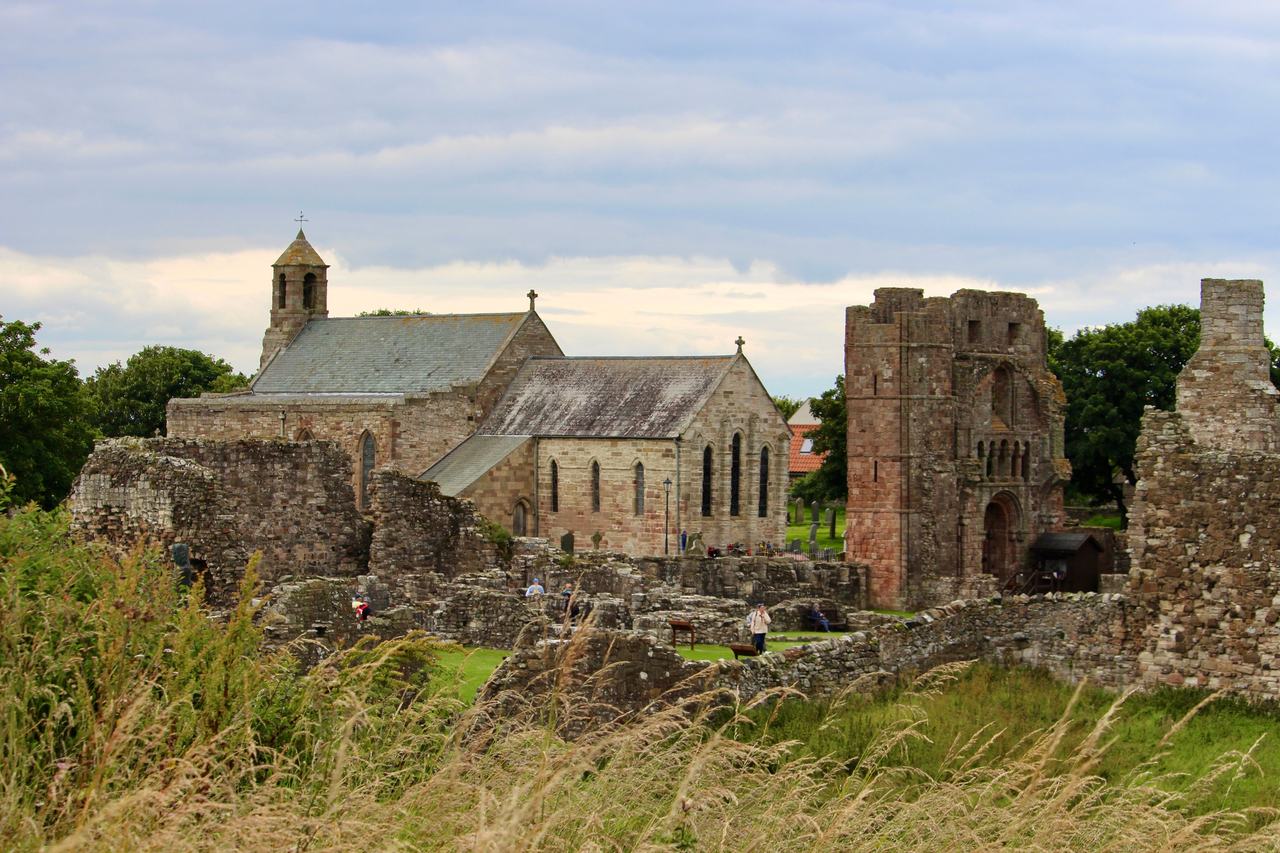
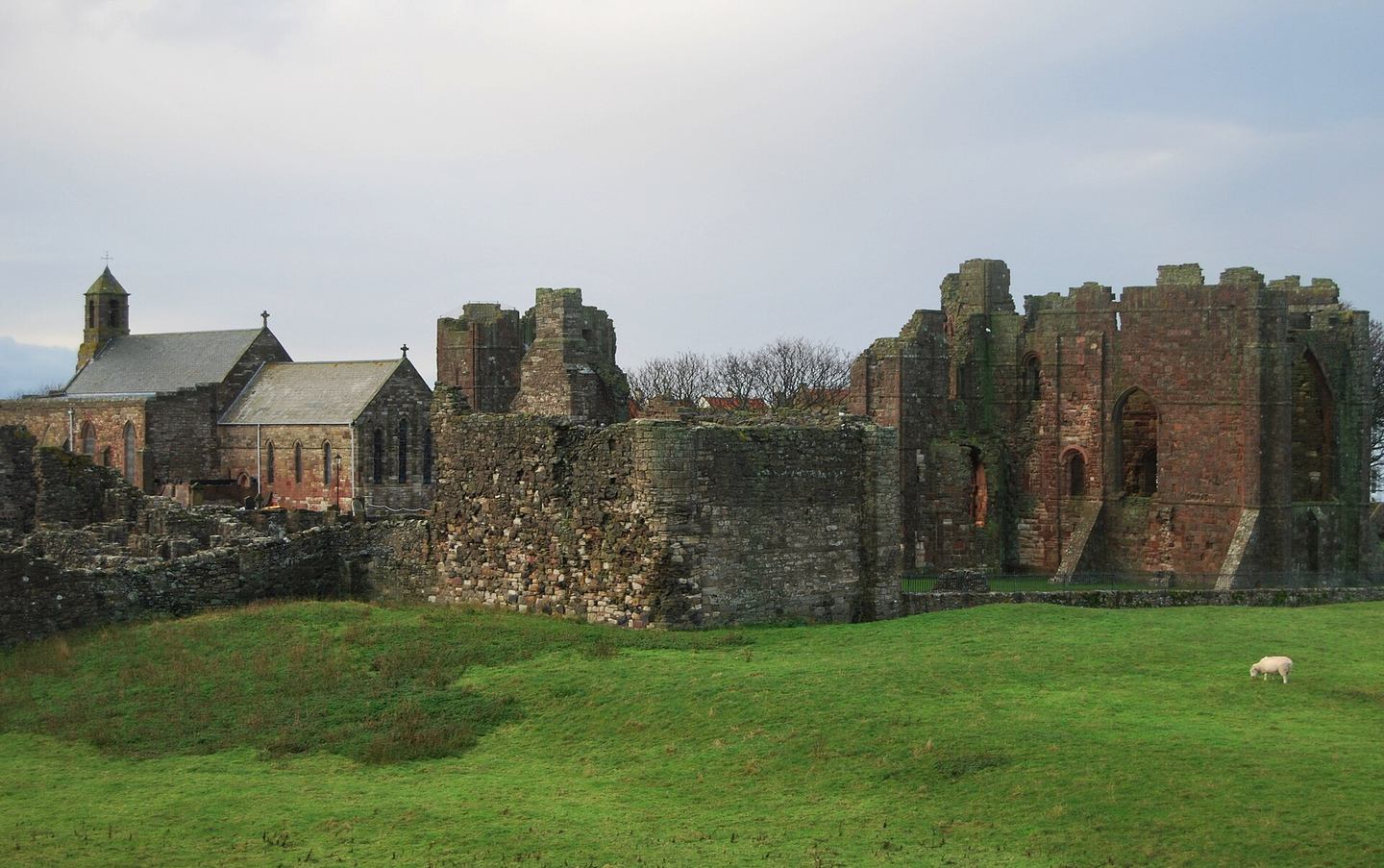
Lindisfarne, the Holy Island, is one of the birthplaces of English Christianity: the island where St Aidan founded his monastery, where St Cuthbert lived and was buried, where the Lindisfarne Gospels were made, and where the first great Viking raid on England fell in 793. Cut off by the tide twice a day, it is reached by a causeway across the sands. The ruins of the later priory, with their famous rainbow arch, stand beside the parish church in the village.
Aidan, Cuthbert and the Vikings
In 635 King Oswald of Northumbria gave the island to Aidan, a monk from Iona, to found a monastery from which to convert his people. Its most famous member was Cuthbert, who became bishop and died in 687; when his coffin was opened in 698 his body was found incorrupt, and Lindisfarne became a place of pilgrimage. In the early eighth century the monks made the Lindisfarne Gospels in his honour.
In 793 Viking raiders attacked the monastery, an event that shocked Christian Europe. The community stayed for another eighty years, but in 875 the monks left, carrying Cuthbert’s body with them; it rests today in Durham Cathedral.
The visitor's cheat sheet
| Where | Holy Island, Berwick-upon-Tweed, Northumberland, TD15 2RX |
|---|---|
| Getting there | By car over the tidal causeway from Beal, off the A1, at low tide only; pay-and-display car park in the village; nearest station Berwick-upon-Tweed |
| Opening hours | Open daily, with hours that vary with the tides; check the English Heritage website and the causeway crossing times before you go |
| Admission | English Heritage ticket, from about £11 for adults, cheaper booked online; free for English Heritage members. St Mary’s Church is free |
| How long | 1 to 1.5 hours for the priory; a full tide window for the island |
| Best time | Arrive as the causeway opens, before the day visitors, and stay for a whole tide window |
| Dress code | Outdoor site; windproof clothes |
| Tours | Museum of carved stones and finds; St Mary’s Church next door |
Hours and admission checked against the official site in October 2026. They change; the official site is always the last word.
An island twice a day. At high tide the causeway is under water and Holy Island is cut off. Drivers are still caught out every year; the crossing times are published by Northumberland County Council, and the refuge box on stilts beside the road is there for a reason.
What to see, in the order you meet it
The museum
Start in the museum, which tells the story of the island and displays carved stones from the early monastery, among them the so-called ‘Viking raider stone’, a ninth-century grave marker carved on one side with a line of armed warriors and on the other with a scene of the Day of Judgement.
The priory church
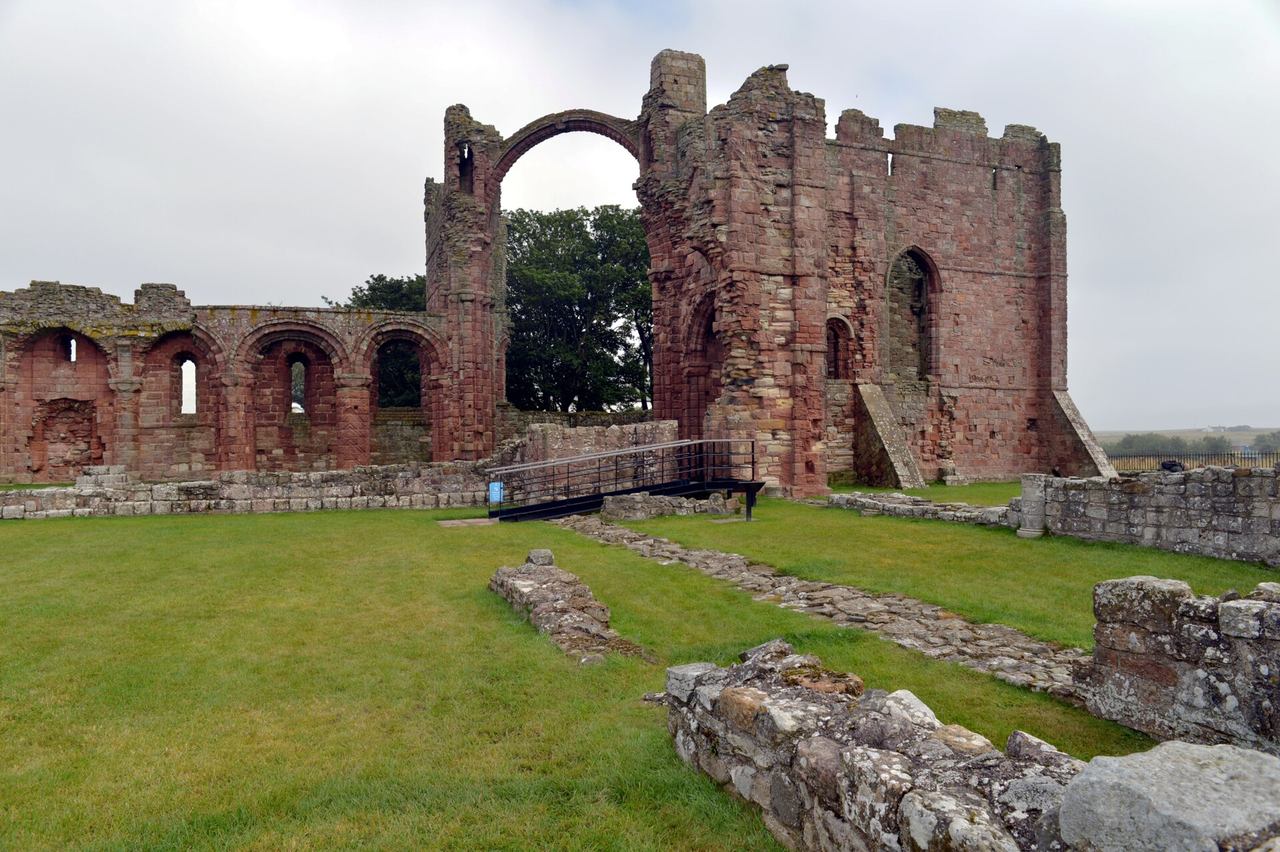
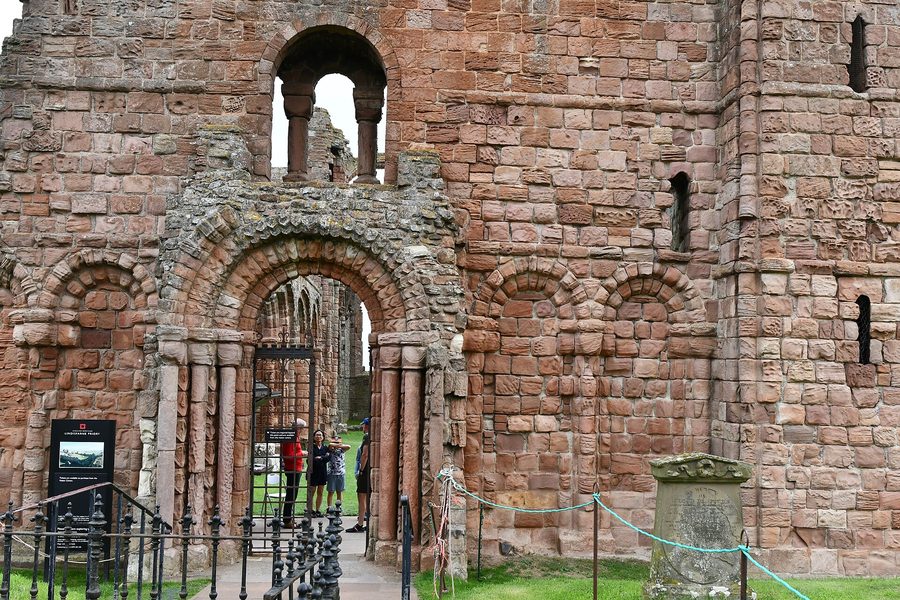
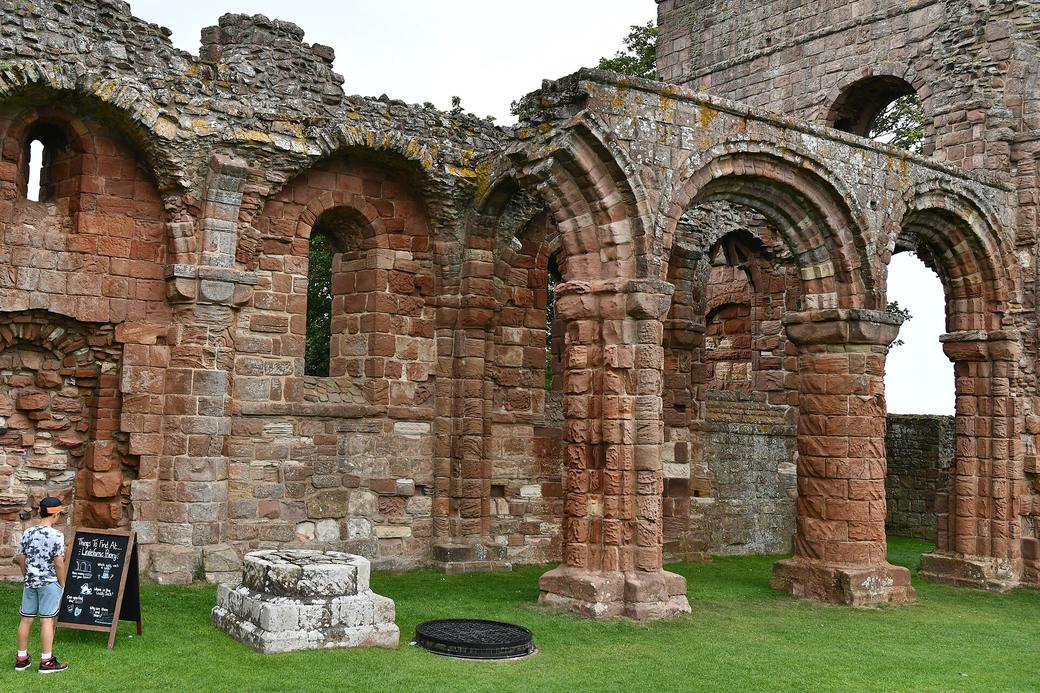
In the twelfth century monks from Durham founded a new priory here, as a small offshoot of their own monastery, and built a church that consciously echoed Durham Cathedral, with patterned pillars and a richly decorated west front. Its best-known feature is the ‘rainbow arch’: a single diagonal rib of the vault that once covered the crossing, still standing on its own across the sky.
The monastic buildings
South of the church are the remains of the cloister and the monks’ buildings. In the border wars of the fourteenth century the priory was fortified against Scottish raids. Henry VIII’s commissioners closed it in 1537.
St Mary’s Church
Next to the ruins is the parish church of St Mary, which is thought to stand on the site of the church of Aidan’s monastery. It is free to visit and full of reminders of the island’s saints.
Tickets and tours
English Heritage ticket
Expect to pay from about £11 for an adult, depending on the date, with savings for booking online in advance. English Heritage members go free. The priory is open daily, but its hours follow the tides: check the opening times and the causeway crossing times together before you travel.
The hotel link goes to Booking.com. This site earns nothing from it at present — it is here because it is the quickest way to check what is actually available.
Don't miss
- The rainbow arch One rib of the crossing vault, standing alone.
- The west front Norman decoration in red sandstone.
- The museum The Viking raider stone.
- St Mary’s Church Free, beside the ruins.
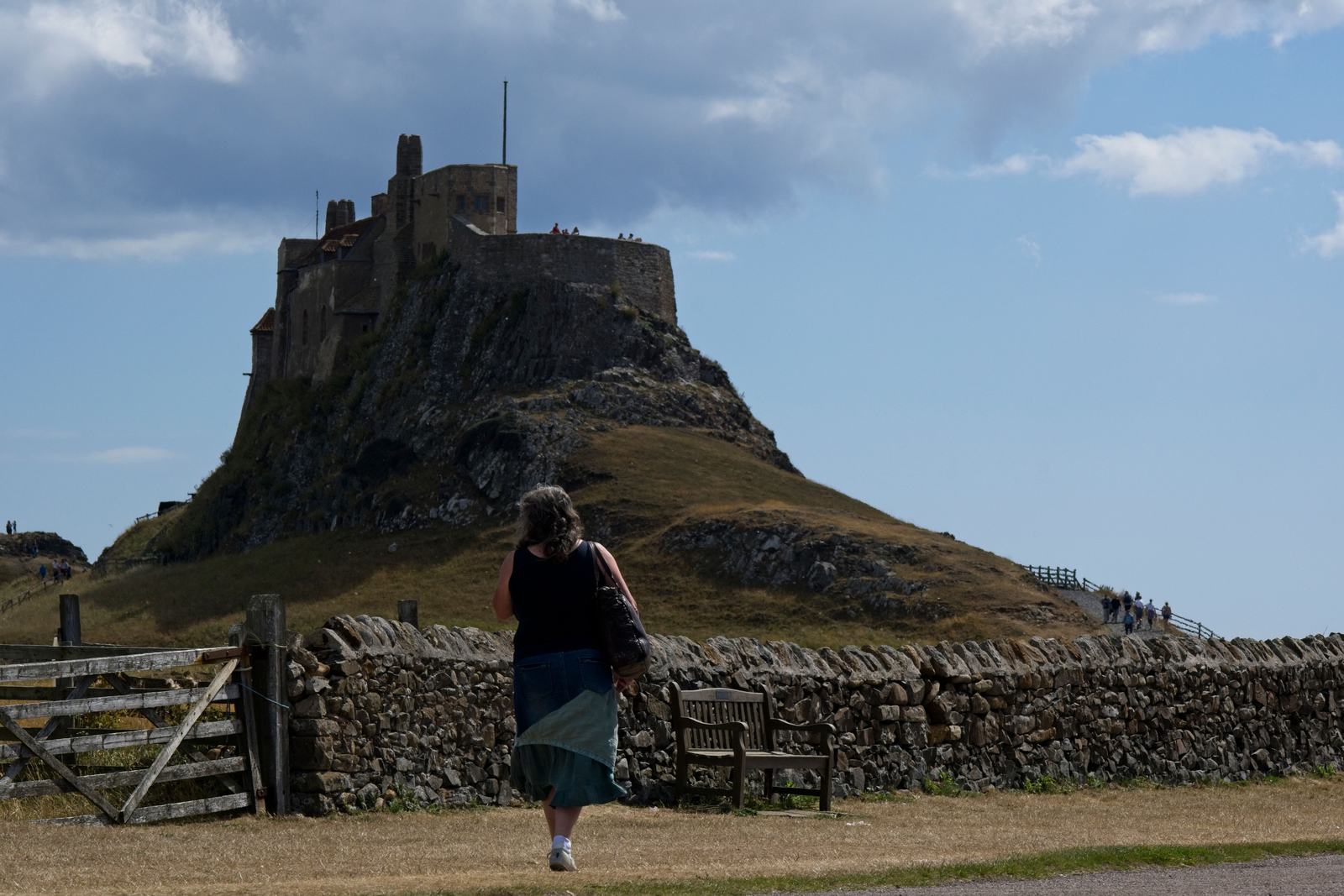
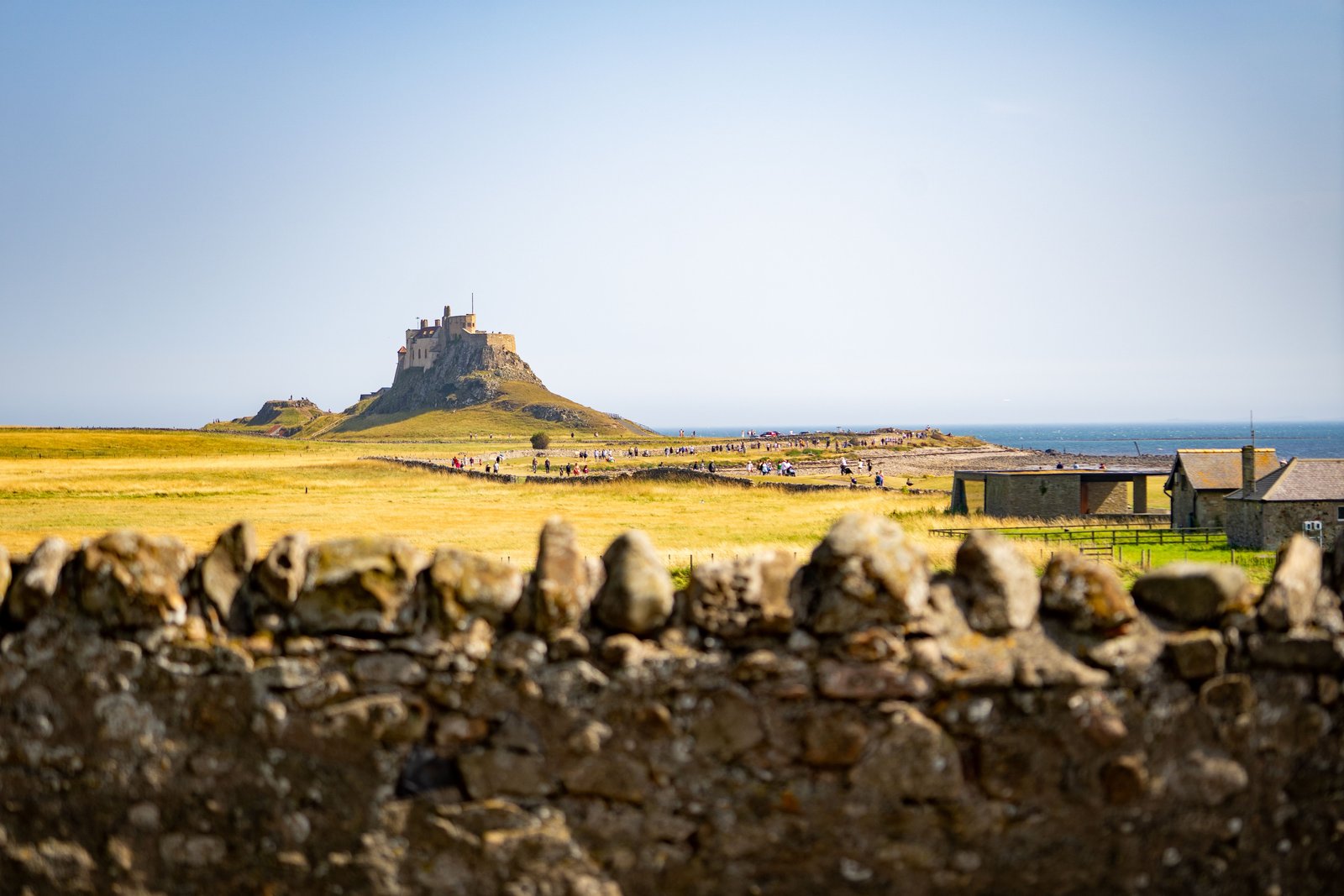
- Lindisfarne Castle On its crag, a short walk away.
- The causeway And the Pilgrims’ Way across the sands.
Insider tips
Stay over the tide. Most visitors arrive and leave in the same tide window. If you stay on the island while the causeway is closed, or overnight, you will have the priory, the village and the shore almost to yourself.
Lindisfarne Castle, a Tudor fort turned into a house by Edwin Lutyens, is about a mile from the priory and is run by the National Trust. On the mainland, Bamburgh Castle is a short drive south.
Common questions
How much does it cost to visit Lindisfarne Priory?
The priory is run by English Heritage, which sets prices by date: expect to pay from about £11 for an adult, less if you book online in advance. English Heritage members go free. The parish church of St Mary next door is free. Check the English Heritage website for today’s price.
When can I cross to Holy Island?
Only at low tide. The causeway floods twice a day, and the safe crossing times change daily. Check the Northumberland County Council crossing times before you set out, never try to cross when the water is over the road, and allow time to get back.
When is the priory open?
The priory is open daily, but its hours vary with the tides as well as the season. Check the English Heritage website for the opening times on the day you plan to go.
Are the Lindisfarne Gospels on the island?
No. The original book, made on Lindisfarne in the early eighth century, is in the British Library in London. The priory museum tells its story and displays carved stones from the early monastery.
How do you get to Lindisfarne?
Holy Island is off the Northumberland coast, about 10 miles south-east of Berwick-upon-Tweed (around 15 miles by road). Turn off the A1 at Beal and drive over the causeway at low tide; there is a pay-and-display car park as you reach the village. The nearest station is Berwick. You can also walk the marked Pilgrims’ Way across the sands, but only with the tide tables and good local advice.
Where to stay and eat nearby
The village on Holy Island has a few inns, cafés and places to stay; Berwick-upon-Tweed and the villages along the coast have more.
More English churches
- Durham Cathedral — where St Cuthbert is buried
- Hexham Abbey — with its Saxon crypt
- Whitby Abbey — another Northumbrian headland monastery
See all the cathedrals and churches worth visiting in England →