
St Mary and All Saints, Chesterfield: the Crooked Spire
Chesterfield’s parish church is known far beyond Derbyshire for its spire, which both twists and leans. Inside is a large medieval town church with Foljambe family tombs, four former guild chapels, a Jacobean pulpit and an organ that came from Glasgow after a fire in 1961. Entry to the church is free, and on selected dates from Easter to early November you can climb the tower.
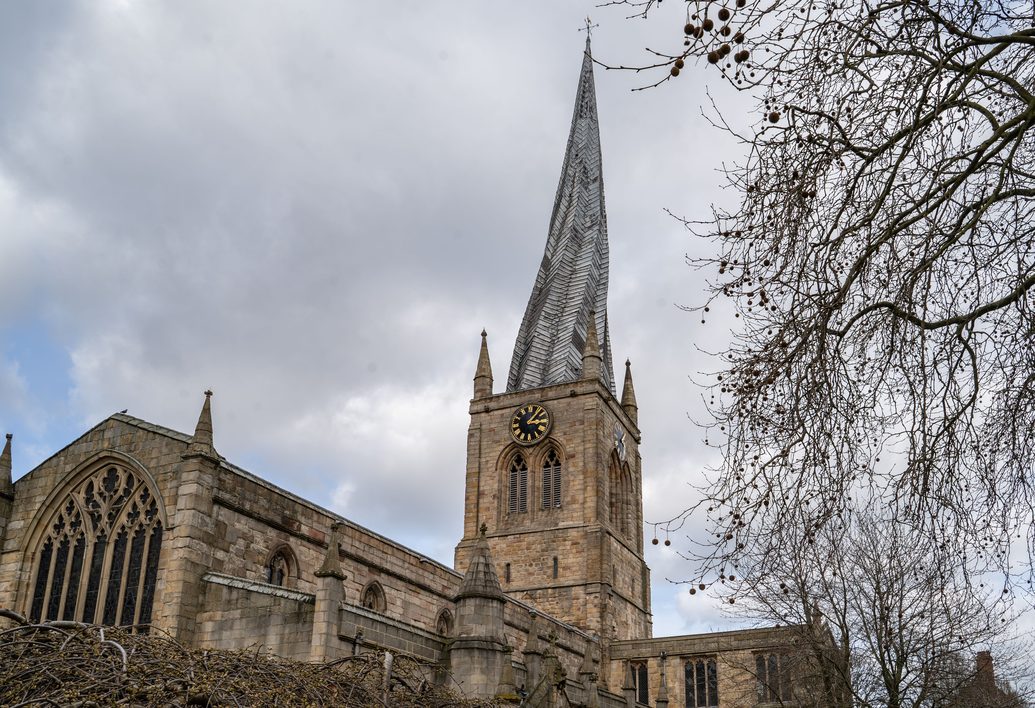
A great medieval town church
There was a church in Chesterfield before the Norman Conquest; one is recorded in the reign of Edward the Confessor. Building of the present church is traditionally dated to 1234, and the Early English columns of the crossing are said to have been dedicated that year. Most of what you see is fourteenth-century: the nave is dated to about 1350–75, and the church was essentially complete by around 1360, with Early English, Decorated and Perpendicular work side by side. It is listed Grade I.
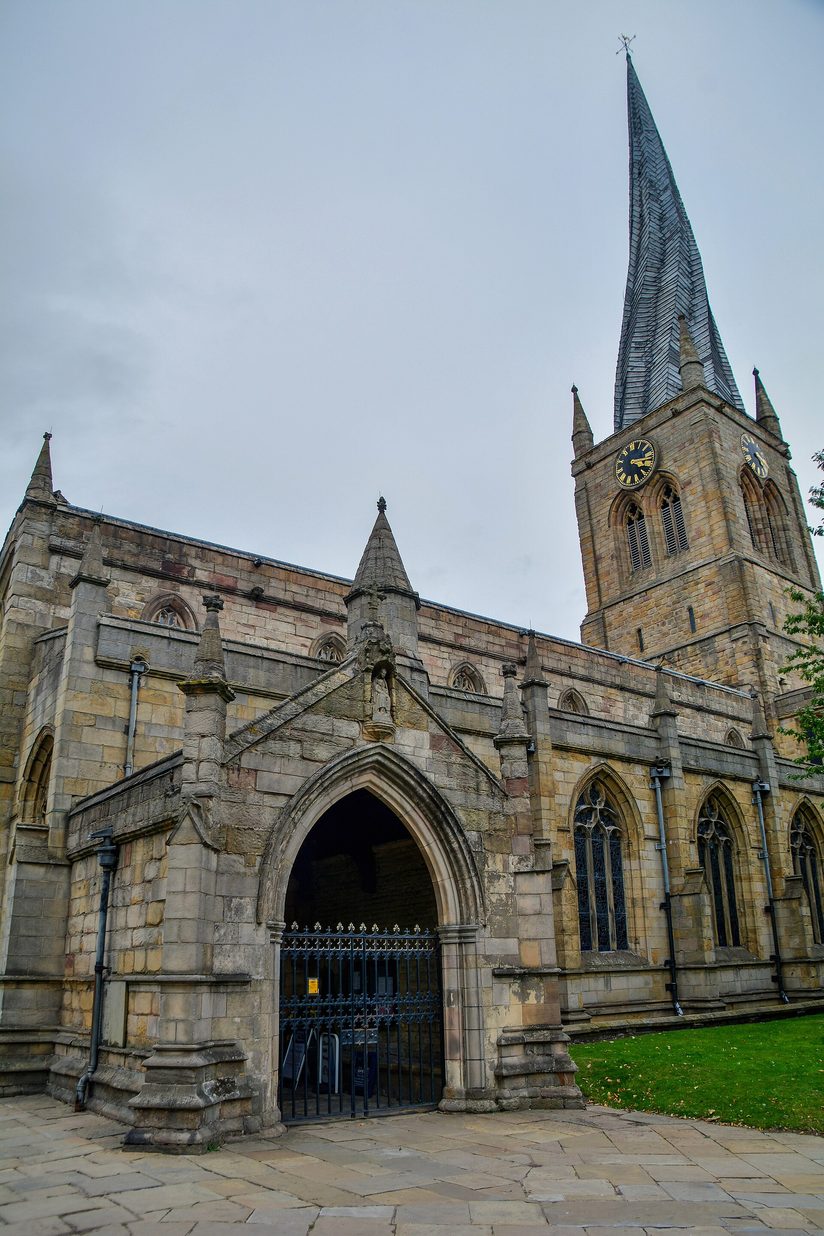
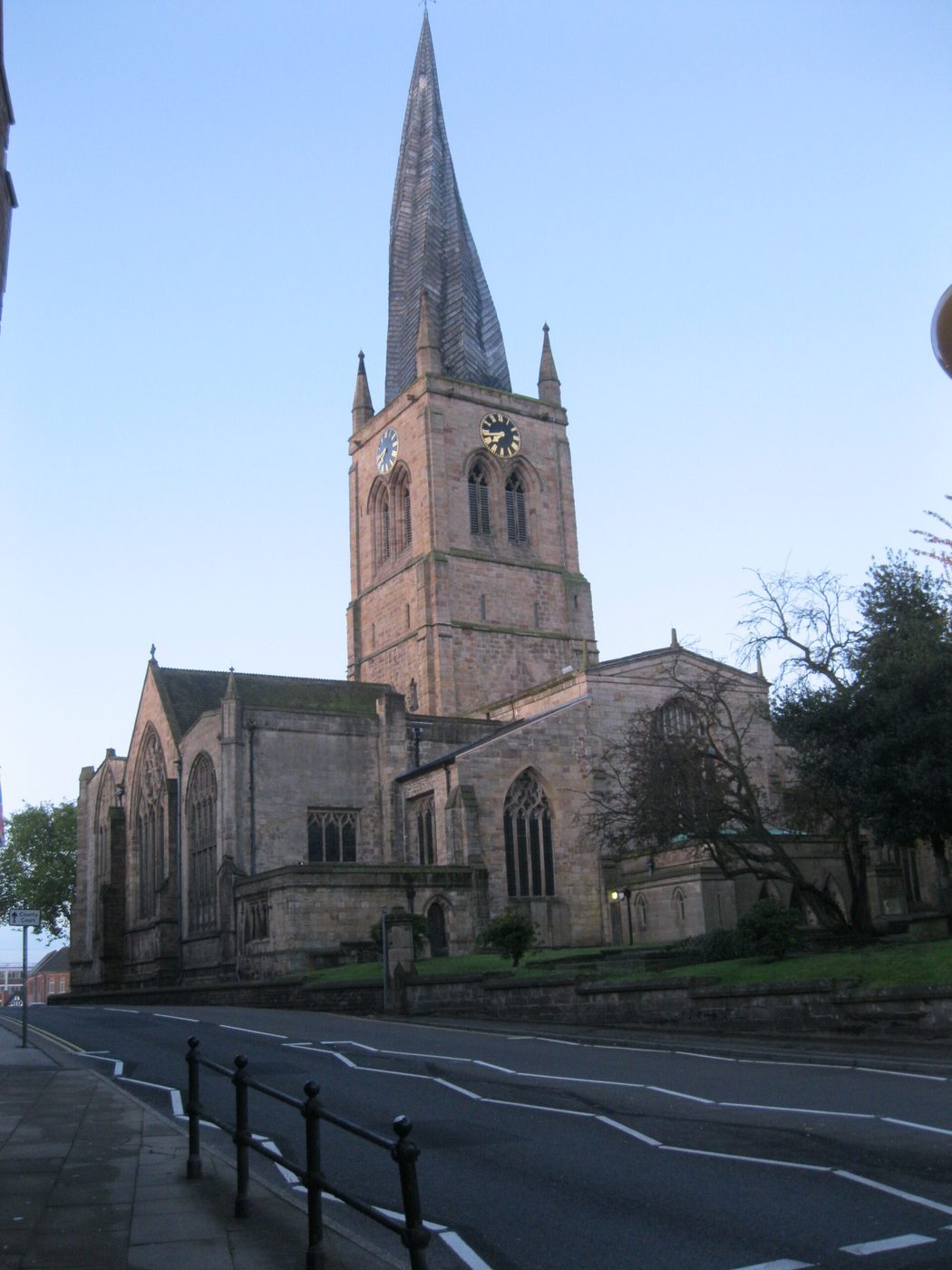
The spire and its twist
The spire was added in the early 1360s. It is a timber structure on top of the crossing tower, clad in lead plates laid in a herringbone pattern, and it rises to 228 feet (69 metres). It twists by roughly 45 degrees and leans too: the tip is usually given as about 9 feet 6 inches (2.9 metres) off centre, though measurements vary a little, and the listing describes it as leaning several feet in three directions.
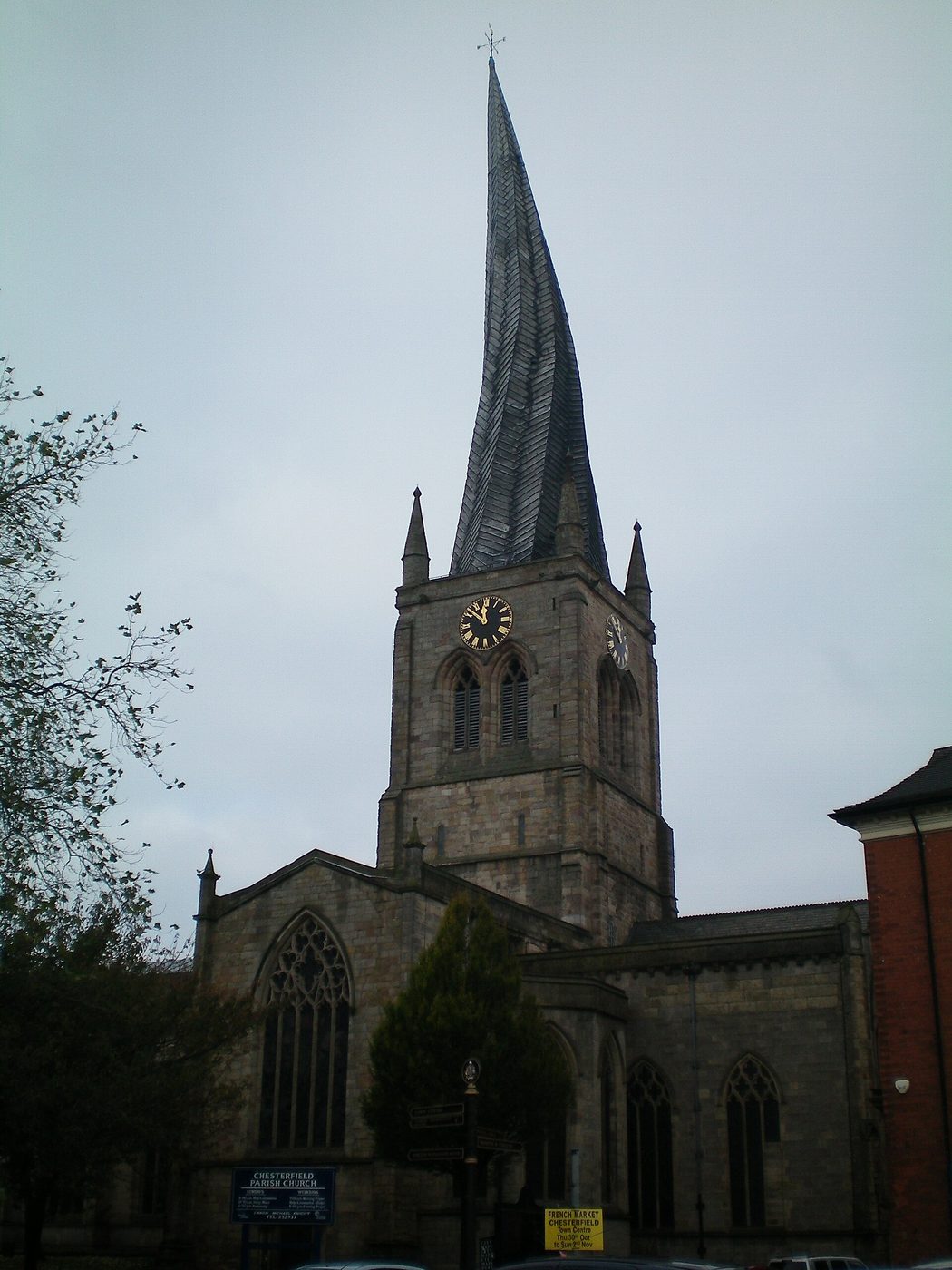
Why it twists has never been settled, and the town museum says the true reason may never be known. An early explanation is that the builders used unseasoned timber and left out cross-bracing, perhaps because the Black Death of 1348–50 had killed many skilled craftsmen. Another factor is the lead cladding, about 32–33 tonnes of it, generally said to have been added later, which the frame was not braced to carry. A third is the sun, which warms the lead on the south side more than the north, so that it expands unevenly.
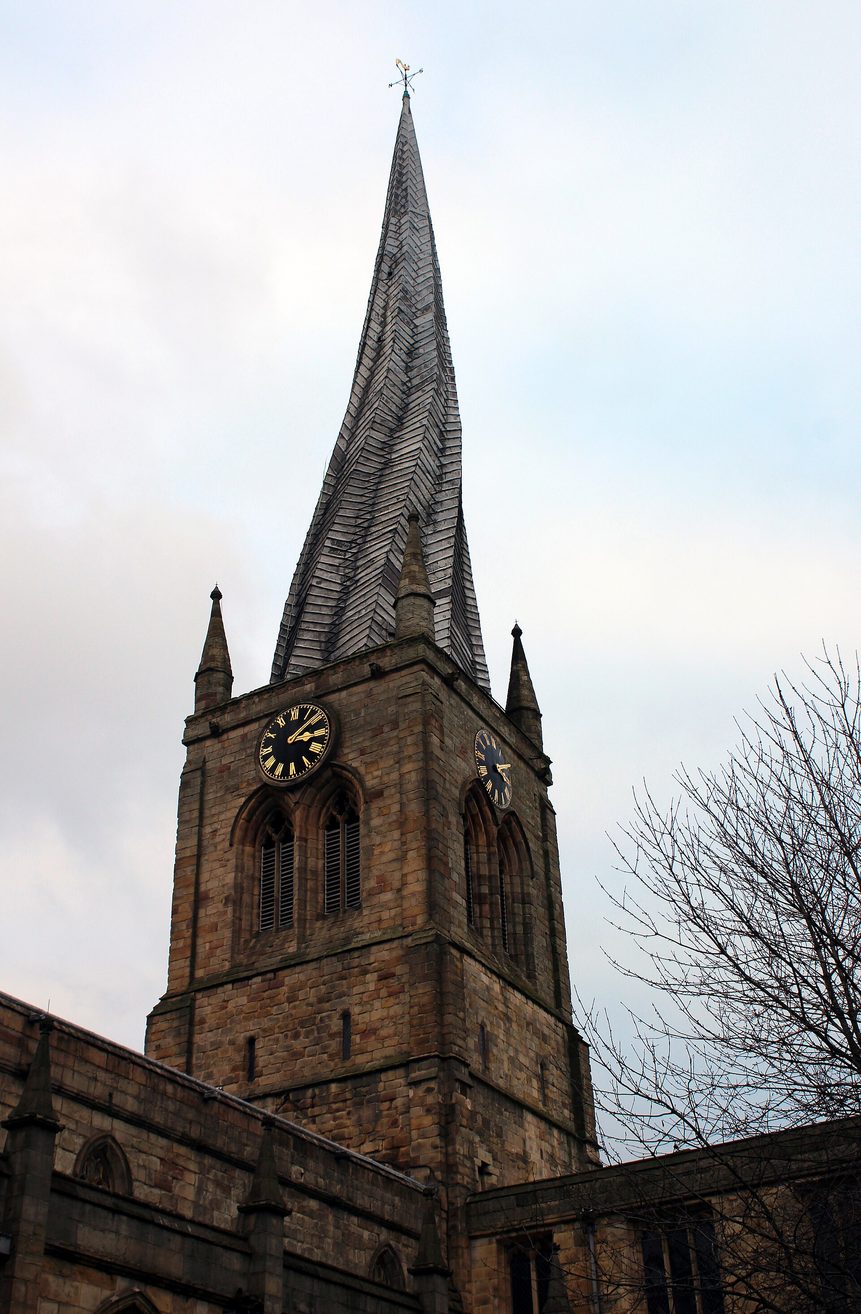
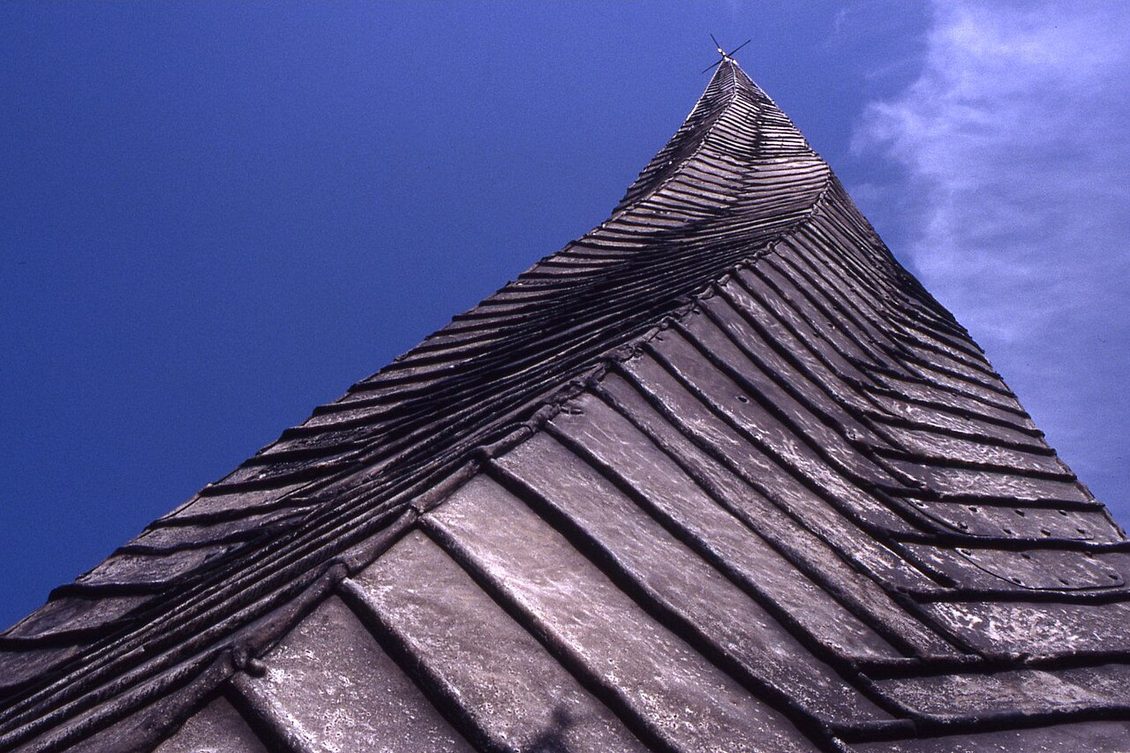
Local legend has livelier answers. In one, the Devil sat on the spire and sneezed at the smell of incense, or twisted it with his tail as he flew off. In another, a Bolsover blacksmith nailed a shoe to the Devil’s hoof and the Devil, kicking out, struck the spire. The best known says the spire turned to look at a bride who was a virgin, and will straighten again when another one marries in the church.
Restorations and the 1961 fire
The north transept was rebuilt in 1769, and a ring of ten bells was installed in 1810. In 1817 an inspection warned that the spire might fall, but it was repaired rather than taken down. George Gilbert Scott restored the church, which reopened in May 1843; lightning struck it in 1861, and Temple Moore carried out a further restoration in 1896–98. On 22 December 1961 a fire destroyed the roof, the choir room and most of the organ; water poured into the belfry by the firefighters helped to save the steeple.
The visitor’s cheat sheet
| Where | Church Way, Chesterfield S40 1XJ, in the town centre |
|---|---|
| Opening hours | Monday to Saturday, about 10am–4pm; the church’s pages give 9am for Wednesdays and, on one page, for Tuesday to Saturday. Sundays for services. Check before you go, especially over Christmas |
| Admission | Free to enter the church; tower tours are extra (see below) |
| Tower tours | On selected dates, typically from Easter to Remembrance Sunday; up to 15 people per tour, ages 7 and over; tickets from the church gift shop — ask the gift shop for prices and dates. The climb may not suit everyone; wear sturdy footwear |
| Services | Sunday Choral Mass 10.30am and Choral Evensong 6.30pm; Morning Prayer 9am and Evening Prayer 4pm Monday to Saturday, with a weekday Mass most days |
| Access | Step-free access to the church but not the tower; facilities for hearing-impaired visitors; guide and service dogs welcome |
| Parking | No church car park; paid town-centre car parks nearby, including St Mary’s Gate and New Beetwell Street |
| Toilets | No accessible toilets on site; use town-centre facilities |
| How long | Forty-five minutes to an hour; allow another hour for a tower tour |
Hours and admission checked against the official site in November 2026. They change; the official site is always the last word.
What to see
The churchyard and doorways
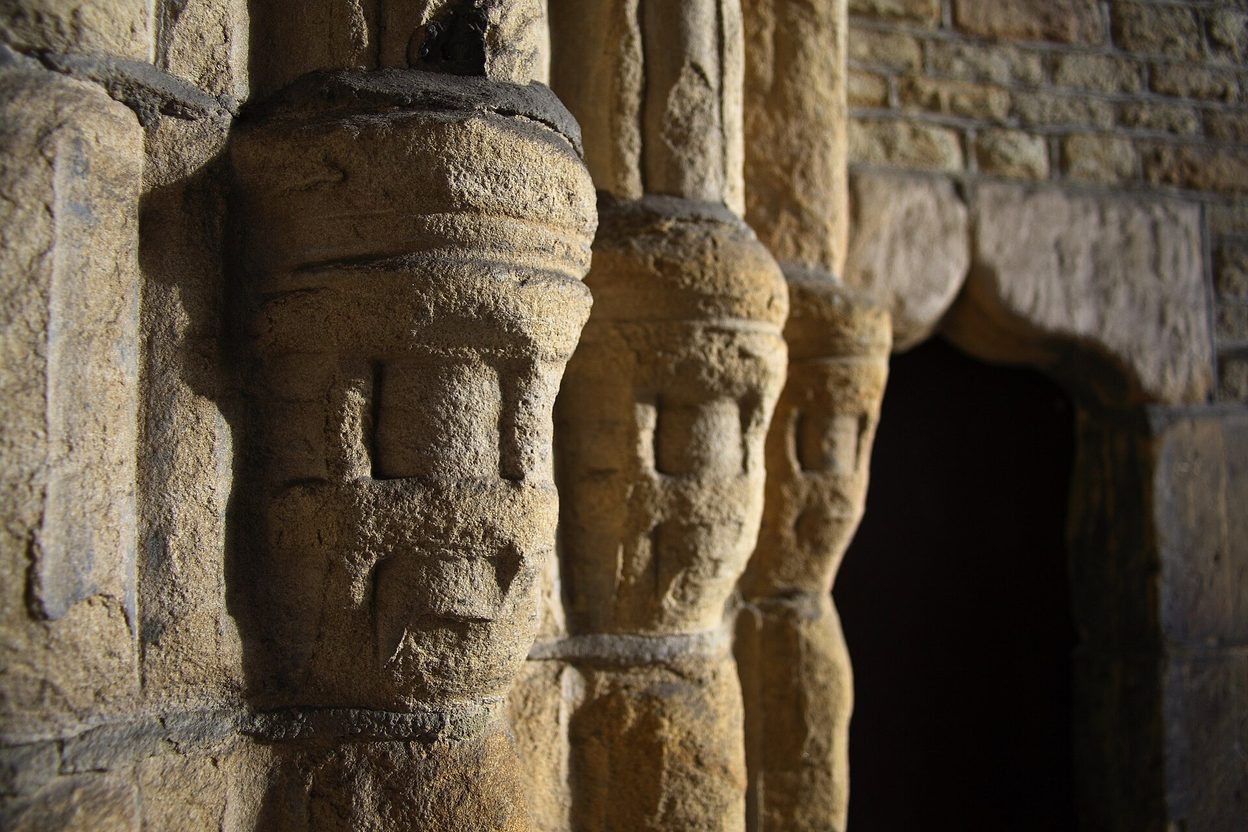
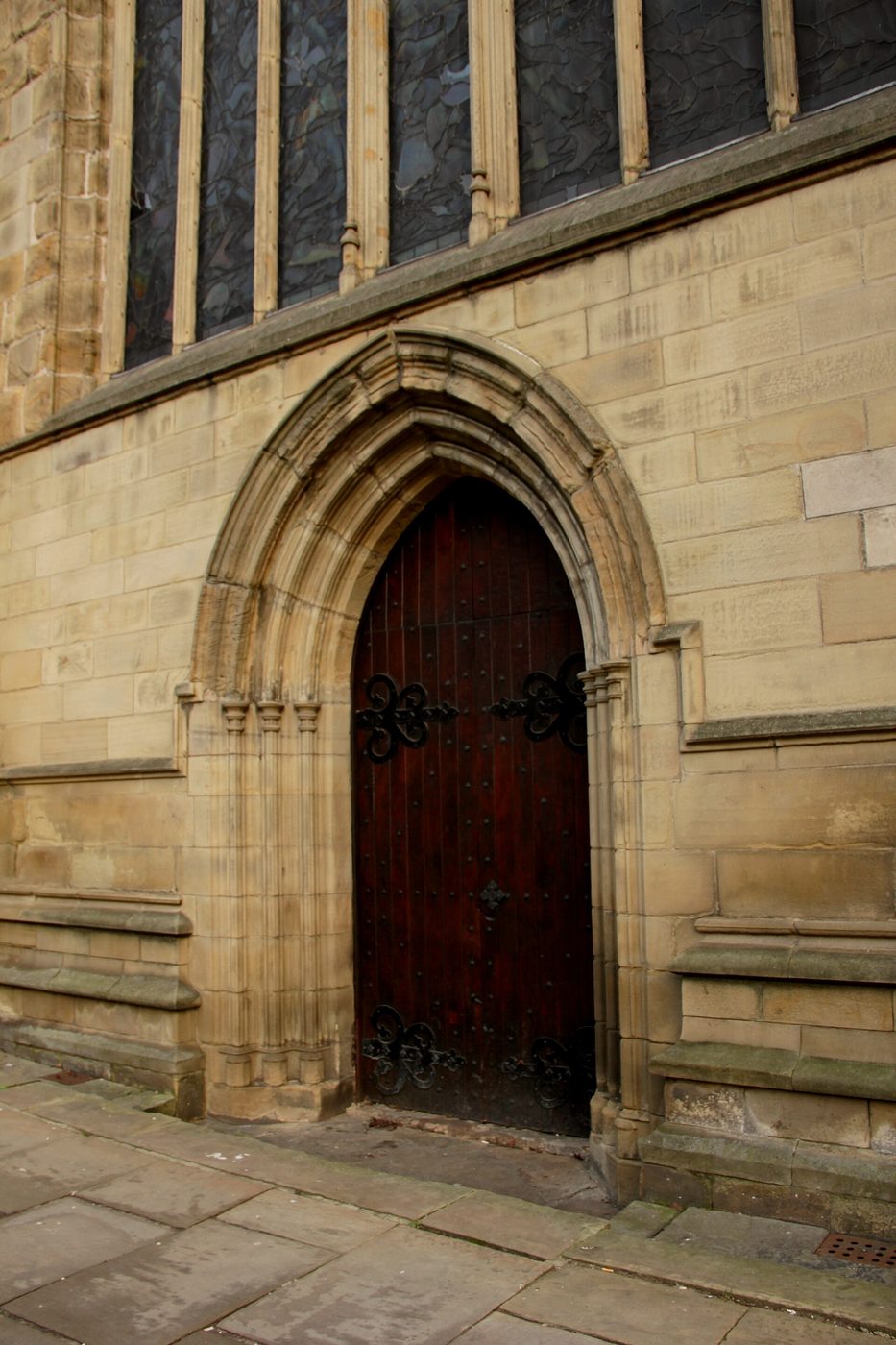
Walk round the outside first to see the spire from every side. In the churchyard is the grave of François Raingeard, a French officer who was a prisoner of the Napoleonic Wars, and a gas lamp of 1924 that once stood in the market place.
The nave and the font
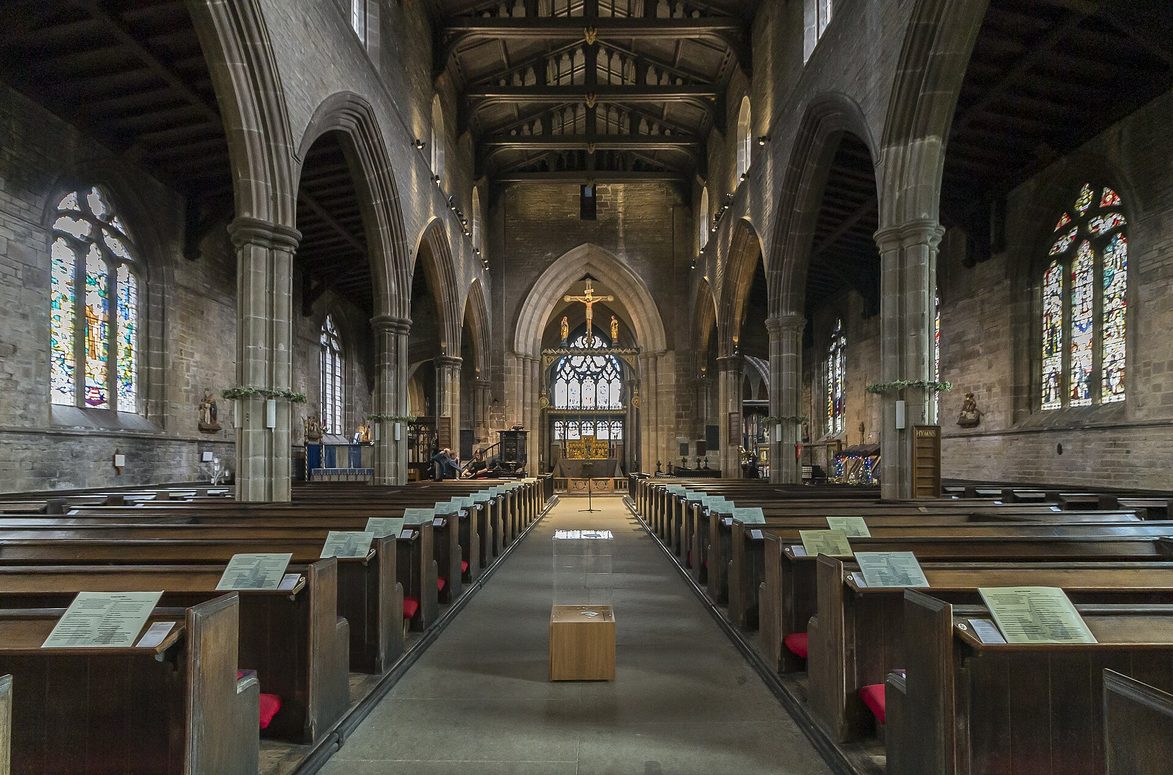
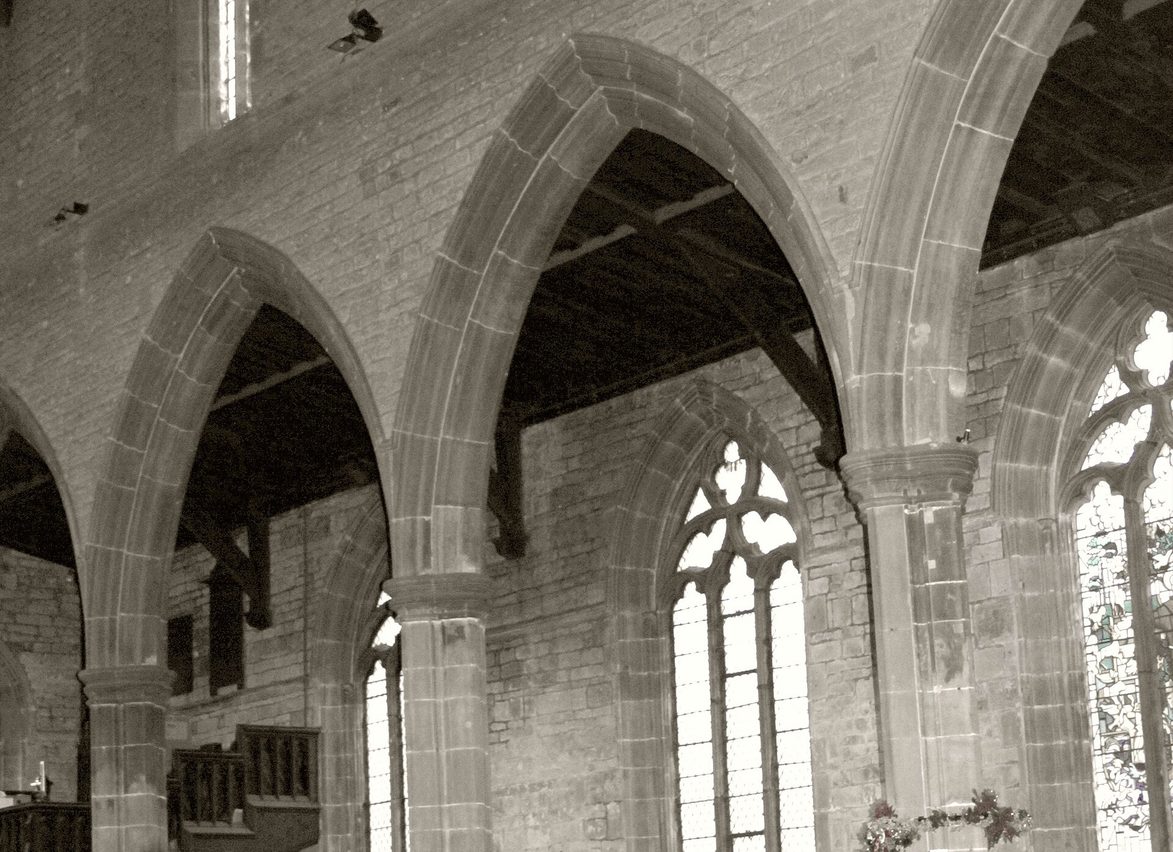
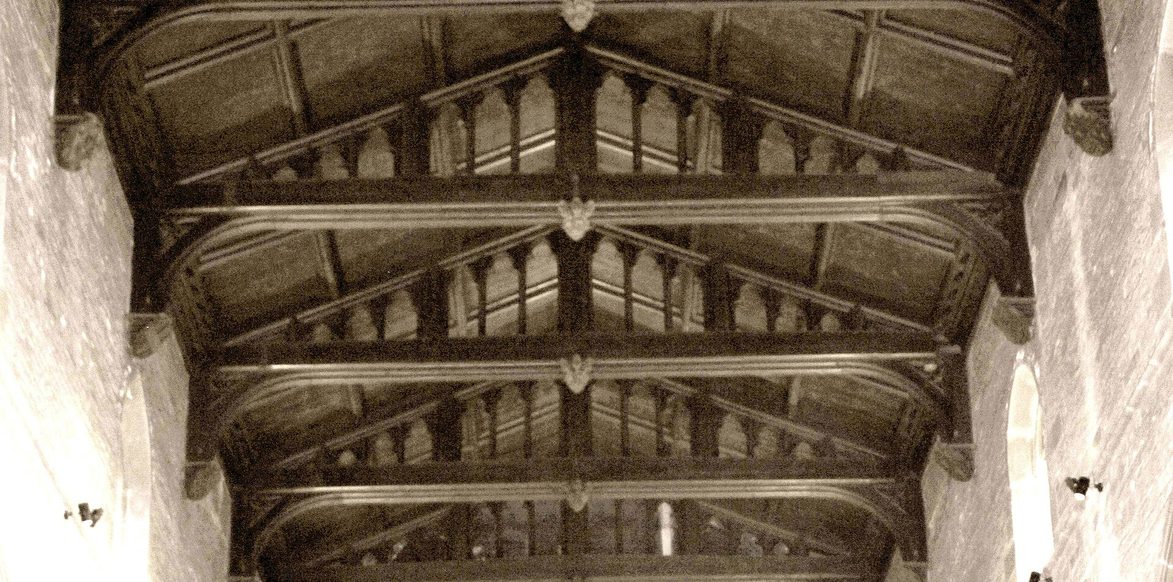
Inside, the nave runs east between tall pointed arcades to the crossing. The west window, known as the Judgment Window, dates from 1890 and was conserved in 2011. The font, of polished limestone with fossil corals in it, is often described as Norman, though dates from Anglo-Saxon to later have been suggested for it. The pulpit is Jacobean.
The crossing and the south transept
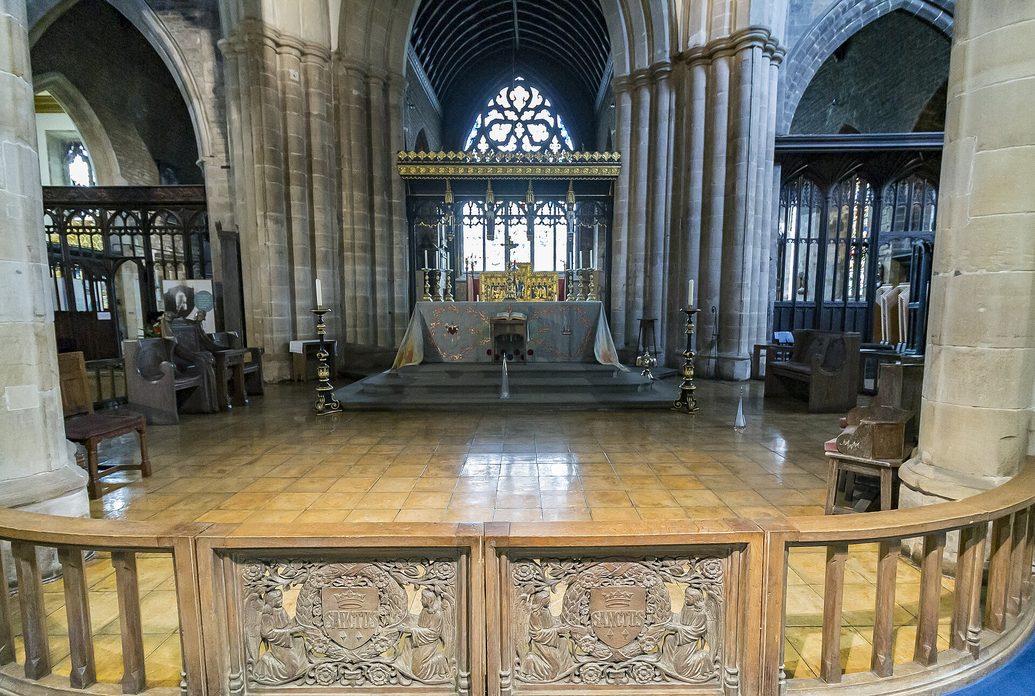
At the crossing stand the Early English columns of the older church, and a rood crucifix of 1915 hangs on the chancel arch. In the south transept are a carved wooden screen of about 1500, a parish chest of about 1600 and a seventeenth-century long-case clock topped by a cockerel. A window in the south aisle, made for the 750th anniversary in 1984, tells the town’s story, from the Battle of Chesterfield in 1266 to the Clay Cross mines, the Midland Railway station and a George Stephenson locomotive.
The chapels and the Foljambe tombs
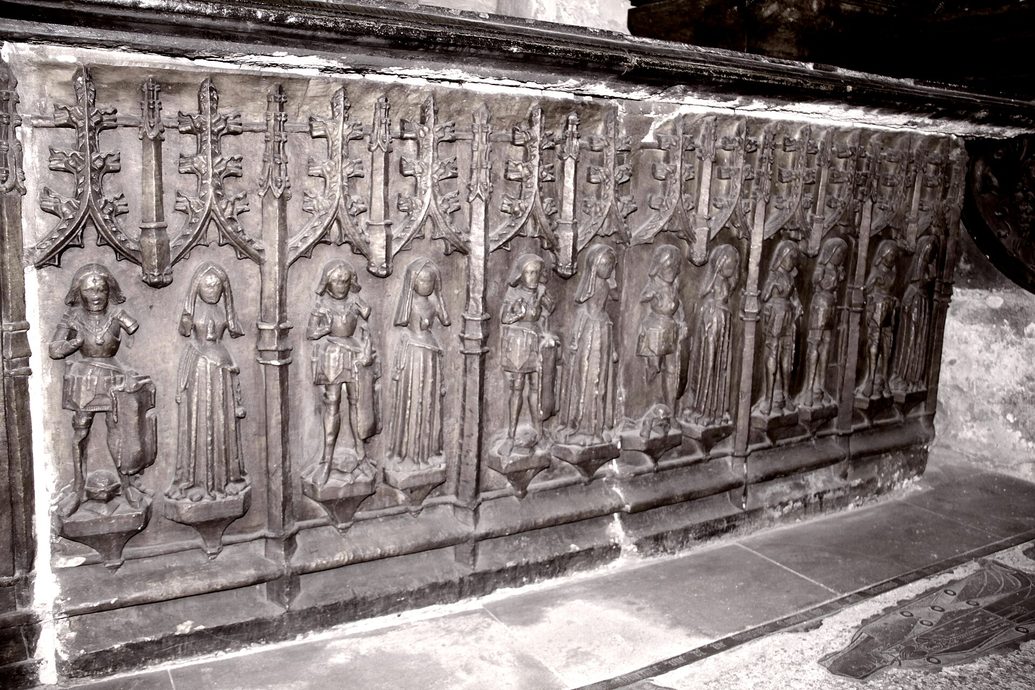
Around the chancel are four chapels, all originally chapels of the town’s guilds; three are described here. The Lady Chapel on the south side is the Foljambe Chantry, crowded with the monuments of the Foljambe family, mostly of the sixteenth century and many in alabaster. Look for the alabaster effigies of Godfrey Foljambe, who died in 1595, and his wife Isabel. Above hangs a pair of brass chandeliers dated 1760. On the north side, St Katherine’s Chapel keeps part of the original rood screen of about 1475, and the Holy Cross Chapel dates from about 1503.
The chancel and the organ
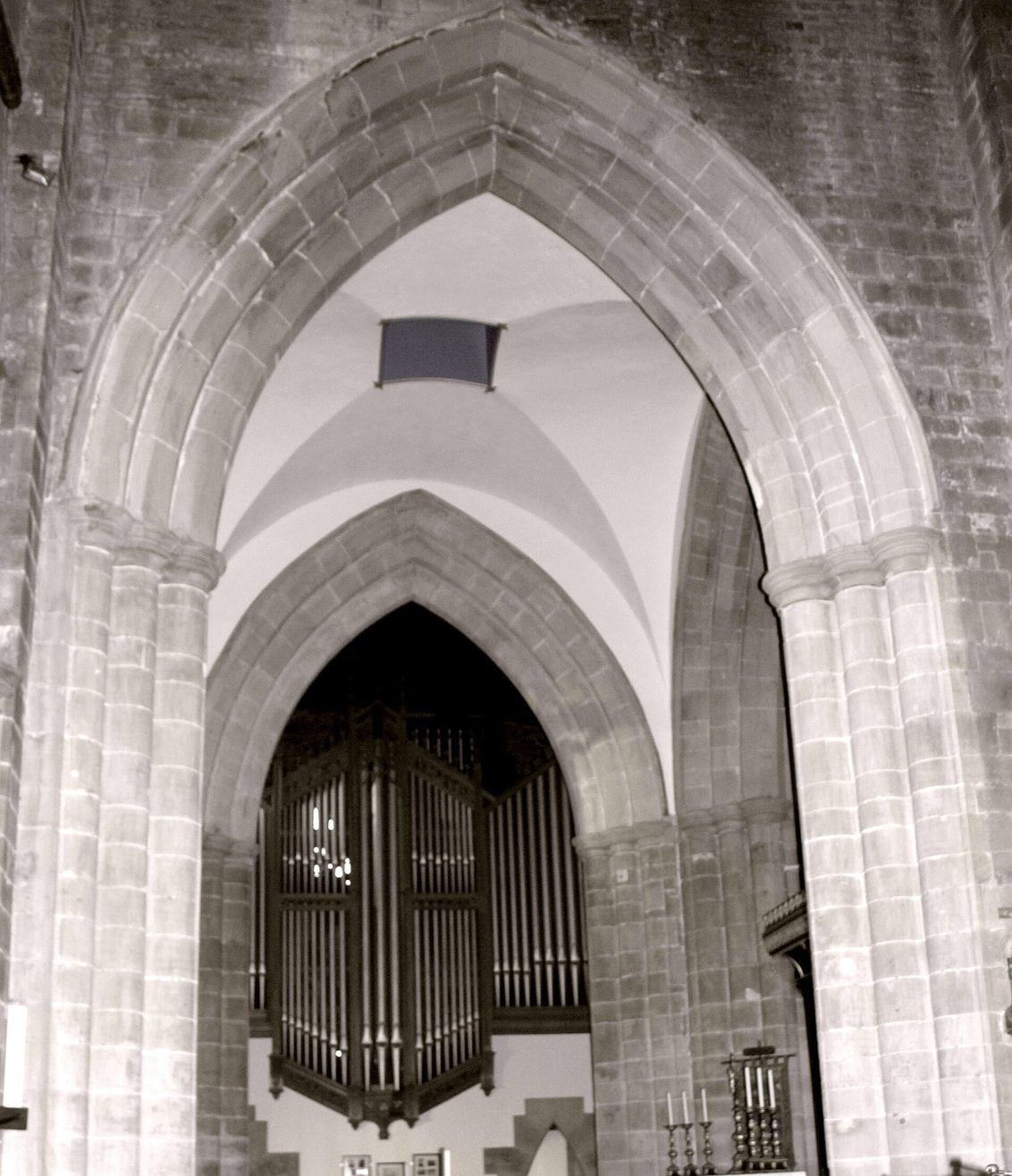
The high altar stands before a reredos of 1898 by Temple Moore. The great organ is not the church’s first: John Snetzler’s organ of 1756 was almost all destroyed in the 1961 fire, and in 1963 the church installed a T. C. Lewis organ of 1905 from Glasgow City Hall.
The tower
Tower tours run on selected dates, typically from Easter to Remembrance Sunday. A volunteer guide leads groups of up to 15 up 152 steps to the first stage, and nearly 200 in all to the base of the spire, as the church puts it, with views over Chesterfield and the Peak District. Tours are open to ages 7 and over; the climb may not suit everyone, so wear sturdy footwear. Tickets are sold at the gift shop: ask there for prices and dates.
A note on our pictures. Two of the twentieth-century windows are still in copyright, so we describe rather than show them: Sir Ninian Comper’s east window of 1941 in the Holy Cross Chapel, and Christopher Webb’s Reynolds Window of 1957 in St Katherine’s Chapel. We have not shown the 1984 window either, as we could not confirm its maker.
Getting there
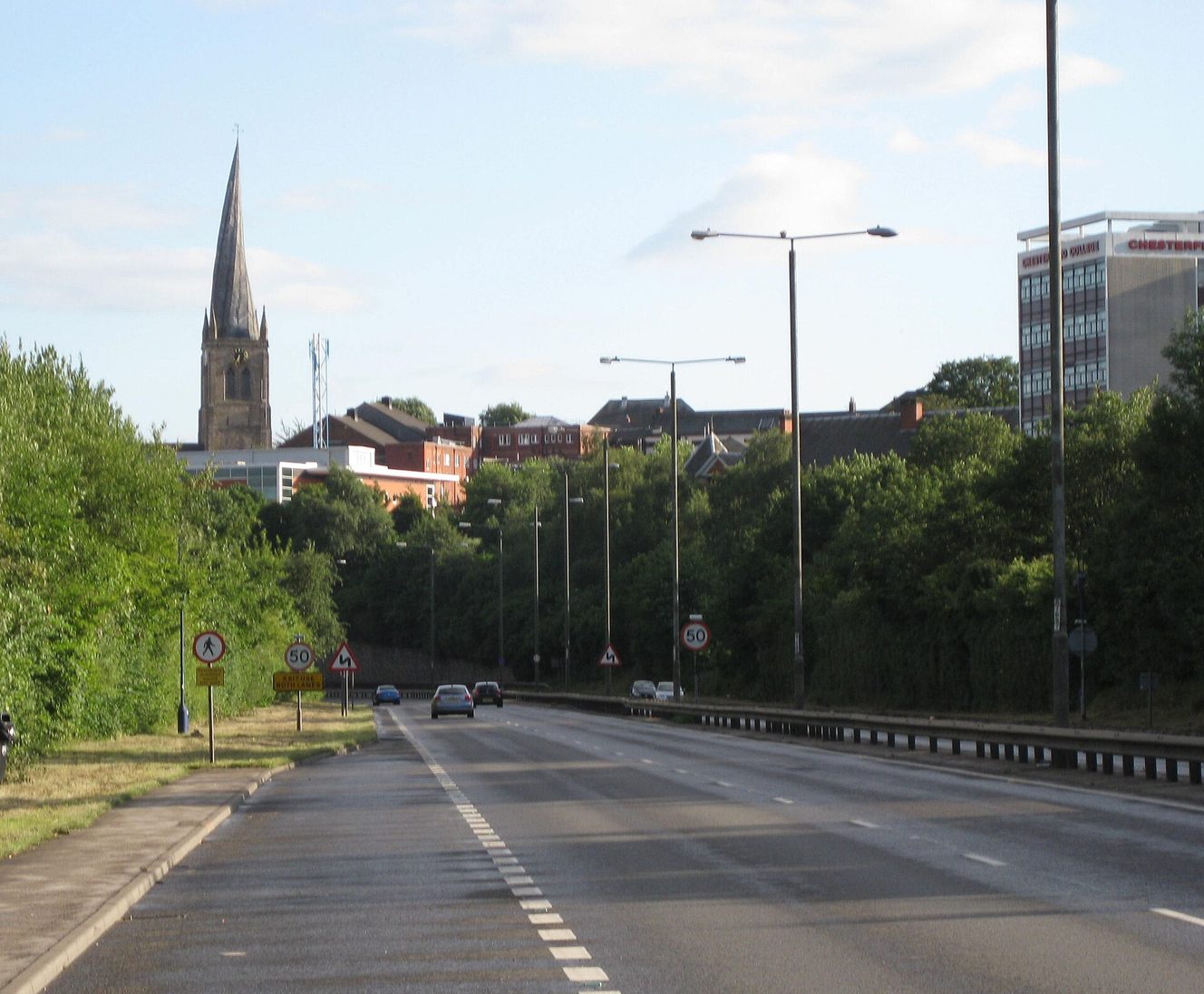
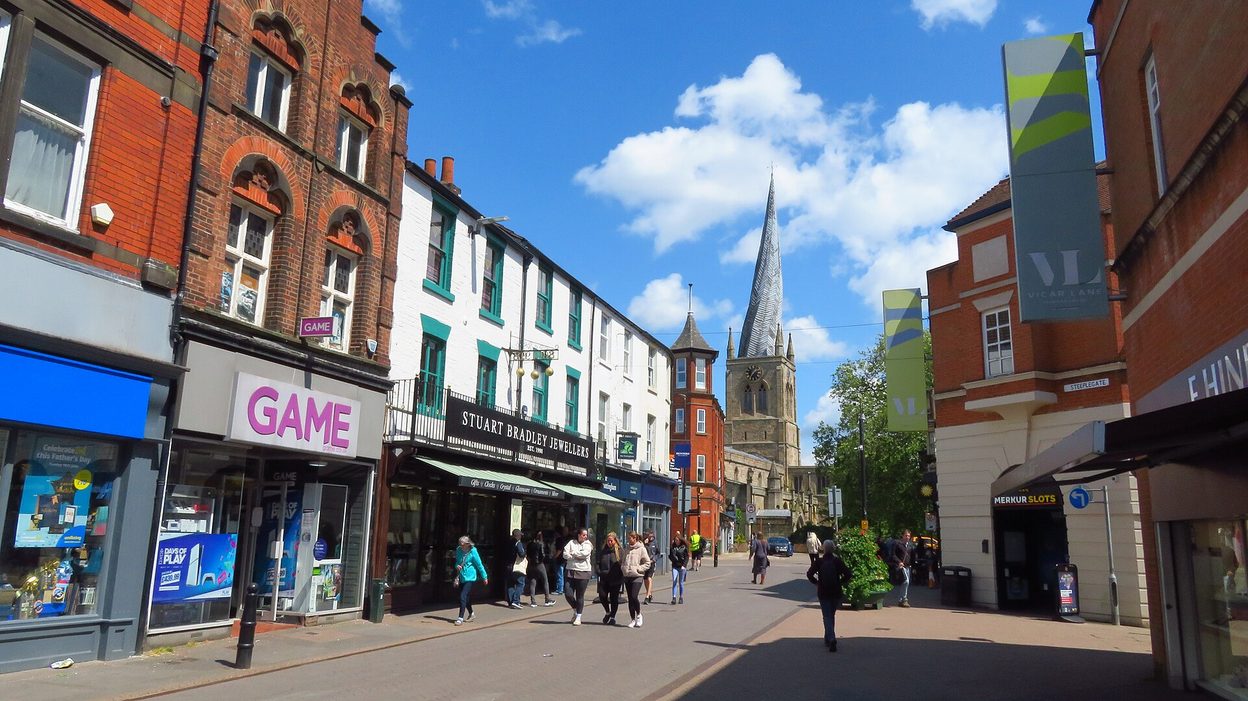
The church is in the centre of Chesterfield, a short walk from the Market Place and the Shambles, and the spire is visible from across the town. From Chesterfield railway station it is about 10 minutes on foot; just follow the spire. Buses stop in the town centre. By car, leave the M1 at junction 29 and take the A617 for about four miles into Chesterfield; the church has no car park, but St Mary’s Gate and New Beetwell Street car parks are close by.
Where to stay
Chesterfield has places to stay in and around the town centre.
This link goes to Booking.com. This site earns nothing from it at present — it is here because it is the quickest way to check what is actually available.
Don’t miss
- The spire from outside Walk right round the church.
- The Foljambe tombs Sixteenth-century alabaster in the Lady Chapel.
- The tower climb Nearly 200 steps, on selected dates from Easter to early November.
- The 1984 window Chesterfield’s history in glass.
Insider tips
Plan a tower tour ahead. Tour places are limited to 15, so book early at the gift shop.
Christmas 2026. Alfie the Elf’s Christmas Rescue, a family show, runs from 1 December 2026 to 2 January 2027, and there is a Come and Sing Carols on 4 December, 5–7pm. Christmas service times are posted on the church’s website.
Common questions
Why is the spire crooked?
Nobody knows for certain. The usual explanations are unseasoned timber and a lack of cross-bracing, perhaps because skilled craftsmen were scarce after the Black Death, combined with the weight of the lead added later and the sun warming the south side more than the north. The tales of the Devil are legends.
Is it free to visit?
Yes, entry to the church is free. Tower tours are charged; ask the gift shop for prices and dates.
Can I climb the tower in winter?
Not usually. Tours typically run on selected dates from Easter to Remembrance Sunday (early November), so there are normally none in winter.
How do I get tower tour tickets?
Tickets are sold at the church gift shop. Each tour takes up to 15 people and is open to ages 7 and over.
When is the church open?
Monday to Saturday, about 10am to 4pm; the church’s pages give 9am for Wednesdays and, on one page, for Tuesday to Saturday. On Sundays it is open for services at 10.30am and 6.30pm. Check before you go.
Is the church accessible?
There is step-free access to the church but not to the tower, and there are facilities for visitors with impaired hearing. There are no accessible toilets on site. Guide and service dogs are welcome.
More English churches
- Derby Cathedral — the cathedral of Derbyshire
- Tideswell Church — the “Cathedral of the Peak”
- Southwell Minster — a Norman minster in Nottinghamshire
See all the cathedrals and churches worth visiting in England →